82 Results for "

reconstructive surgery

" in MedChemExpress (MCE) Product Catalog:
Products (82)

82 Results for "reconstructive surgery" in MCE Product Catalog:

Cat. No.: HY-100516R
CAS No.: 265114-23-6
Synonyms: UR-8880 (Standard)
Cimicoxib (Standard) is the analytical standard of Cimicoxib. This product is intended for research and analytical applications. Cimicoxib (UR-8880) is an orally active, blood-brain barrier-permeable COX-2 inhibitor that also exerts targeted inhibition on CYP2D15. It has an IC50 of 66 nM against hCOX-2, an IC50 of 1.6 μM against canine CYP2D15, and an IC50 of 0.056 μM against feline CYP2D15. By inhibiting the COX-2 pathway to reduce the production of thromboxane B2 and prostaglandin E2, Cimicoxib exerts antipyretic, anti-inflammatory and analgesic effects. Cimicoxib is metabolized by CYP2D15 to form demethyl-cimicoxib, undergoes glucuronidation via UDP-glucuronosyltransferases, and exhibits biphasic elimination kinetics in beagle dogs. Cimicoxib is widely used in studies of inflammatory diseases, osteoarthritis, and perioperative pain associated with orthopedic or soft tissue surgeries .
loading...
    loading...
Cat. No.: HY-N0113A
CAS No.: 62493-39-4
Synonyms: Ordenina sulfate; Peyocactine sulfate
Hordenine sulfate (Ordenina sulfate; Peyocactine sulfate) is a multifunctional alkaloid with oral activity and blood-brain barrier penetration. Hordenine sulfate inhibits LPS-induced phosphorylation of p38, JNK, ERK1/2, p65, IκB, and AKT, prevents p65 nuclear translocation, and suppresses inflammatory cytokines and mediators. Hordenine sulfate promotes M2 macrophage polarization, restores blood-milk barrier integrity, alleviates oxidative stress by reducing ROS and MDA, and attenuates LPS-induced lung injury and pulmonary edema. Hordenine sulfate inhibits cAMP production, CREB phosphorylation, and MITF expression, thereby suppressing melanin synthesis in melanocytes and reconstructed epidermis. Hordenine sulfate activates the Wnt/β-catenin signaling pathway, promotes dermal papilla cell proliferation and hair shaft elongation, and accelerates hair regeneration. Hordenine sulfate activates DRD2, acts as a D3R partial agonist, α2A-AR full agonist, and 5-HT2A-R antagonist, and inhibits SERT and DAT. Hordenine sulfate inhibits α-synuclein accumulation and ameliorates motor deficits in Parkinson's disease models. Hordenine sulfate limits alcohol intake, reduces relapse drinking behavior, and modulates alcohol-induced conditioned place preference. Hordenine sulfate can be used for research on mastitis, skin pigmentation, acute lung injury, foodborne diseases, hair loss, Parkinson's disease, bacterial infections, and alcohol use disorder .
loading...
    loading...
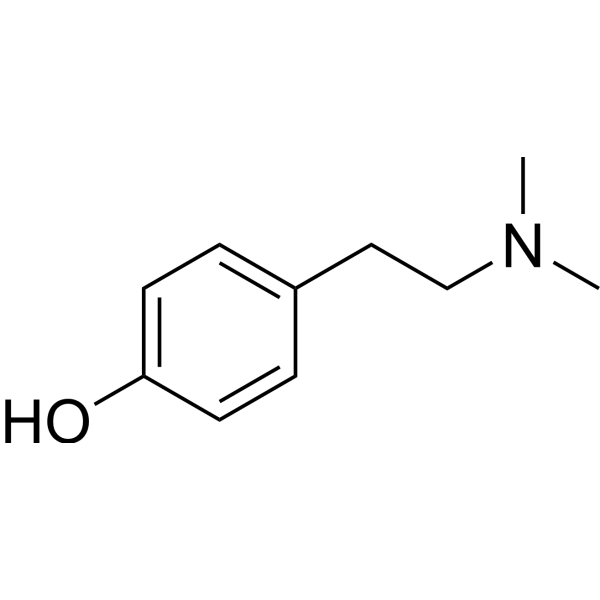
Cat. No.: HY-N0113R
CAS No.: 539-15-1
Synonyms: Ordenina (Standard); Peyocactine (Standard)
Hordenine (Standard) (Ordenina (Standard); Peyocactine (Standard)) is the analytical standard of Hordenine (HY-N0113). This product is intended for research and analytical applications. Hordenine (Ordenina; Peyocactine) is a multifunctional alkaloid with oral activity and blood-brain barrier penetration. Hordenine inhibits LPS-induced phosphorylation of p38, JNK, ERK1/2, p65, IκB, and AKT, prevents p65 nuclear translocation, and suppresses inflammatory cytokines and mediators. Hordenine promotes M2 macrophage polarization, restores blood-milk barrier integrity, alleviates oxidative stress by reducing ROS and MDA, and attenuates LPS-induced lung injury and pulmonary edema. Hordenine inhibits cAMP production, CREB phosphorylation, and MITF expression, thereby suppressing melanin synthesis in melanocytes and reconstructed epidermis. Hordenine activates the Wnt/β-catenin signaling pathway, promotes dermal papilla cell proliferation and hair shaft elongation, and accelerates hair regeneration. Hordenine activates DRD2, acts as a D3R partial agonist, α2A-AR full agonist, and 5-HT2A-R antagonist, and inhibits SERT and DAT. Hordenine inhibits α-synuclein accumulation and ameliorates motor deficits in Parkinson's disease models. Hordenine limits alcohol intake, reduces relapse drinking behavior, and modulates alcohol-induced conditioned place preference. Hordenine can be used for research on mastitis, skin pigmentation, acute lung injury, foodborne diseases, hair loss, Parkinson's disease, bacterial infections, and alcohol use disorder .
loading...
    loading...
Cat. No.: HY-163539A
CAS No.: 2230217-17-9
Synonyms: LUM015 free base
Target:  

Fluorescent Dye

Research Areas:  

Cancer

Pegulicianine is an activatable fluorescent imaging agent and can be used for fluorescence-guided surgery in breast cancer .
loading...
    loading...
Cat. No.: HY-182406
CAS No.: 1021707-76-5
Target:  

Ser/Thr Protease

Research Areas:  

Cardiovascular Disease

CU-2010 is a Serine protease inhibitor. In canine models, CU-2010 reduces blood loss after cardiac surgery in a dose-dependent manner and improves post-ischemic recovery .
loading...
    loading...
Cat. No.: HY-B1372R
CAS No.: 75-80-9
Synonyms: 2,2,2-Tribromoethanol (Standard); Narcolan (Standard)
Tribromoethyl alcohol (Standard) is the analytical standard of Tribromoethyl alcohol (HY-B1372). This product is intended for research and analytical applications. Tribromoethyl alcohol (2,2,2-Tribromoethanol) is used to animals, particularly rodents, before surgery.
loading...
    loading...
Cat. No.: HY-P3196
CAS No.: 1673565-40-6
Target:  

Inhibitory Antibodies

Research Areas:  

Cancer

Tozuleristide is a tumor-targeting agent covalently conjugated to a derivative of the near-infrared fluorescent dye indocyanine green (ICG). Tozuleristide has the ability to penetrate the blood-brain barrier. Tozuleristide can be used in research related to fluorescence-guided surgery (FGS) .
loading...
    loading...
Cat. No.: HY-66012A
CAS No.: 499-67-2
Synonyms: Proxymetacaine
Target:  

Sodium Channel

Research Areas:  

Neurological Disease

Proparacaine (Proxymetacaine) is a local anesthetic. Proparacaine blocks voltage-gated sodium channels on neuronal cell membranes, thereby inhibiting signal conduction and nociceptive signal transmission. Proparacaine blocks nociceptive signals in the eye and induces ocular muscle relaxation to reduce eye movement during surgery. Proparacaine is used in research related to cataracts .
loading...
    loading...
Cat. No.: HY-124396
CAS No.: 93771-82-5
Target:  

Potassium Channel

Research Areas:  

Metabolic Disease

Lanceotoxin A is a potent potassium channel inhibitor with activity in regulating cell membrane potential. Lanceotoxin A showed a significant negative correlation with extracellular metabolites in patients after metabolic surgery. The presence of lanceotoxin A may affect the composition of intestinal microorganisms and its association with insulin resistance. Lanceotoxin A may play an important role in the improvement of metabolic syndrome and diabetes .
loading...
    loading...
Cat. No.: HY-176895
CAS No.: 2377146-66-0
Target:  

Others

Research Areas:  

Cardiovascular Disease

L-Dopa precursor-1 (Compound 5a) is the precursor of 18F-L-Dopa. L-Dopa precursor-1 serves as a core basis for radioactive labeling precursors, allowing the introduction of non-metallic radioactive elements through radiolabeling reactions. L-Dopa precursor-1 can be used for the study of RDN surgery for refractory hypertension, chronic kidney disease .
loading...
    loading...
Cat. No.: HY-185185
Research Areas:  

Neurological Disease

S58 aptamer is a ssDNA aptamer targeting transforming growth factor-beta receptor II (TGF-β RII). S58 aptamer inhibits the TGF-β RII interaction with TGF-β. S58 aptamer effectively improves glaucoma filtration surgery (GFS) surgical outcomes by activating the intracellular antioxidant defense PI3K/Akt/Nrf2 signaling pathway .
loading...
    loading...
Cat. No.: HY-183037
CAS No.: 1354060-46-0
AGN 225660 is a multi-prostanoid receptor antagonist with human IC50 values of 70, 70, 5, 220 and 180 nM for EP1, EP4, TP, DP1, FP. AGN 225660 inhibits secretion of RANTES, IL-8, MCP-1, IL-12p70, and IL-23. AGN 225660 exhibits good ocular bioavailability and reduces ocular inflammation linked to phacoemulsification surgery and uveitis .
loading...
    loading...
Cat. No.: HY-177933
Target:  

CCR

mNOX-E36 is a murine-specific analogue of NOX-E36 (HY-148100), an anti-CCL-2 L-RNA aptamer that binds and neutralises the mouse chemokine CCL-2. mNOX-E36 reduces scarring in an experimental murine model of glaucoma filtration surgery (GFS). mNOX-E36 ameliorates lupus nephritis in mice. mNOX-E36 can be used for GFS and lupus nephritis research .
loading...
    loading...
Cat. No.: HY-108298R
CAS No.: 306-94-5
Synonyms: PP 5 (Standard); Perfluorodecahydronaphthalene (Standard)
Research Areas:  

Others

Perfluorodecalin (Standard) is the analytical standard of Perfluorodecalin (HY-108298). This product is intended for research and analytical applications. Perfluorodecalin liquids are largrly used in vitreoretinal surgery. Perfluorodecalin with tamponade lasting more than two days is detrimental to the retina in the case of rabbit. Perfluorodecalin can be used for the research of giant retinal tears . Perfluorodecalin is a non-toxic, non-flammable, thermally stable, non-bio-accumulating O2-carrier and used as artificial blood . Perfluorodecalin enhances bone regeneration and cell viability .
loading...
    loading...
Cat. No.: HY-L112
156 compounds

Chemotherapy is one of the most common treatments for cancer. It can be used alone for some types of cancer or in combination with other treatments such as radiation or surgery. Chemotherapy drugs usually target cells at different phases of the cell cycle and inhibit tumor proliferation and avoid cancer cell invasion and metastasis. It is a cancer treatment method that kills cancer cells with drugs.

Chemotherapeutic agents can be classified into alkylating agents, antimetabolites, antimicrotubular agents, antibiotics, etc. according to the mechanism of action. MCE offers a unique collection of 156 chemotherapy drugs, which is a useful tool for cancer treatment research.

Cat. No.: HY-121303
CAS No.: 6236-97-1
CK-102 is an interleukin-1 (IL-1) inhibitor. CK-102 reduces mRNA synthesis. CK-102 does not inhibit DNA synthesis. CK-102 only slightly inhibits protein synthesis, or has no effect on it. CK-102 delays wound healing after ophthalmic surgery and prolongs the failure time of trabeculectomy fistulas. CK-102 inhibits lens protein-induced ocular inflammation at both early and late stages. CK-102 inhibits endotoxin-induced uveitis. CK-102 does not inhibit interleukin-1-induced uveitis. CK-102 can be used in research related to glaucoma filtration failure and uveitis .
loading...
    loading...
Cat. No.: HY-184626
Thiol-modified magnetite nanoparticles are prepared via high-temperature pyrolysis and surface-modified with thiol functional groups. Magnetite is widely used in magnetic resonance imaging, magnetic separation, targeted drug delivery, tumor hyperthermia, cell labeling and separation, as a contrast agent, and in retinal detachment repair surgery due to its stable properties, good biocompatibility, high strength, and lack of toxicity. It is also used as a catalyst carrier, microwave absorbing material, and magnetic recording material. Xianfeng has developed numerous derivatives of magnetite, including oleic acid-modified magnetite, magnetite with different PEG ends, DMSA-modified magnetite, polylysine-modified magnetite, carboxylated dextran-modified magnetite nanoparticles, streptavidin-modified magnetite particles, thiol-modified magnetite magnetic nanoparticles, and polyethyleneimine (PEI)-modified magnetic magnetite nanoparticles, among others.
loading...
    loading...
Cat. No.: HY-D3186
CAS No.: 2163840-29-5
HMRef-βGal is a fluorescent probe and a substrate responsive to β-galactosidase (β-galactosidase) (Ex/Em=498 nm/505-600 nm). After being cleaved by β-galactosidase, HMRef-βGal triggers significant fluorescence enhancement via intramolecular spirocyclic function regulation. HMRef-βGal generates bright fluorescence in cancer cells with elevated β-galactosidase activity, enabling visualization of tiny peritoneal metastases in mouse models. HMRef-βGal exhibits low in vitro cytotoxicity and low acute in vivo toxicity in mice. HMRef-βGal can be used for preclinical fluorescence-guided diagnosis and cytoreductive surgery of peritoneal metastases, including compatibility with real-time naked-eye detection and endoscopic imaging, as well as for studies related to peritoneal metastases of ovarian cancer .
loading...
    loading...
Cat. No.: HY-184620
Ferric oxide (Fe3O4) is widely used in magnetic resonance imaging (MRI), magnetic separation, targeted drug delivery, tumor hyperthermia, cell labeling and separation, and as a contrast agent and enhancement agent in retinal detachment repair surgery due to its stable material properties, good biocompatibility, high strength, and lack of toxic side effects. It is also used as a catalyst carrier, microwave absorbing material, and magnetic recording material. Xianfeng has developed numerous derivatives of ferric oxide, including oleic acid-modified ferric oxide, PEG-terminated ferric oxide, DMSA-modified ferric oxide, polylysine-modified ferric oxide, carboxylated dextran-modified ferric oxide nanoparticles, streptavidin-modified ferric oxide particles, thiol-modified ferric oxide magnetic nanoparticles, and polyethyleneimine (PEI)-modified magnetic ferric oxide nanoparticles, among others. This wide range of modifications provides numerous options for subsequent experiments.
loading...
    loading...
Cat. No.: HY-L173
2,967 compounds

Ovarian cancer is the most common cause of death in female genital malignancies, with the highest mortality rate in female genital malignancies. It is characterized by difficulty in detection in the early stage of the disease, high recurrence rate and poor prognosis. In fact, ovarian cancer includes many pathologic types. It is usually divided into epithelial ovarian cancer, malignant germ cell tumors and sex cord stromal tumors, of which epithelial ovarian cancer is the most dominant form. Clinical treatment of ovarian cancer prioritizes surgery combined with paclitaxel chemotherapy. However, due to the spread and drug resistance of tumor cells, the recurrence of ovarian cancer is high. In this case, combined with traditional methods, the development of new therapeutic agents can help to improve the treatment effect of ovarian cancer.

MCE designs a unique collection of 2,967 compounds with definite or potential anti-ovarian cancer activity, which mainly targeting the main targets of ovarian cancer such as PARP, ATM/ATR, VEGFR and HIF/HIF Prolyl-Hydroxylase, etc. It is an essential tool for development and research of anti-ovarian compounds.

