
63 Results for "

Fe3

" in MedChemExpress (MCE) Product Catalog:
Products (63)

63 Results for "Fe3" in MCE Product Catalog:

Cat. No.: HY-174867
CAS No.: 3091513-13-9
Target:  

PROTACs Ferroptosis

Research Areas:  

Cancer

AY-4 (Compound AY-4) is an efficient PROTAC degrader targeting FTH1 (Kd = 3.17 nM). AY-4 effectively upregulates the levels of ferrous (Fe 2+) and ferric (Fe 3+) ions in cells. AY-4 is a potential anticancer candidate compound that regulates iron homeostasis through ferritin degradation and enhances the efficacy of existing drugs. AY-4 can effectively reduce the level of FTH1 in breast cancer cells (Pink: FTH1 ligand AY-2 (HY-174871); Blue: E3 ligand Pomalidomide (HY-10984); Black: Linker, Pomalidomide-PEG3-acid (HY-174872)) .
loading...
    loading...
Cat. No.: HY-B1306S
CAS No.: 1219805-41-0
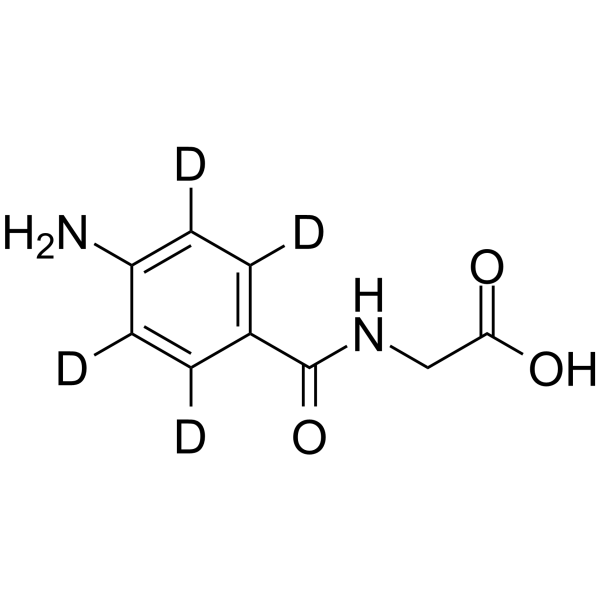
Synonyms: p-Aminohippuric acid-d4
4-Aminohippuric acid-d4 (p-Aminohippuric acid-d4) is the deuterium labeled 4-Aminohippuric acid (HY-B1306). 4-Aminohippuric acid (p-Aminohippuric acid) is a coordination ligand for metal ions (such as Cu 2+, Fe 3+, Hg 2+) and a functionalization reagent for nanomaterials. 4-Aminohippuric acid can coordinate with metal ions or modify the surface of materials such as carbon nanotubes and gold nanoparticles through amino and carboxyl groups. 4-Aminohippuric acid can form stable complexes with metal ions or participate in the synthesis of nanomaterials as a reducing agent/stabilizer, enriching metal ions or giving nanoparticles peroxidase-mimicking activity. 4-Aminohippuric acid can be used to construct highly sensitive electrochemical sensors or colorimetric sensors to detect and quantitatively analyze heavy metal ions such as copper, iron, and mercury in environmental water samples and biological samples. 4-Aminohippuric acid may also be a biomarker for attention-deficit/hyperactivity disorder (ADHD) [3] .
loading...
    loading...
Cat. No.: HY-100332
CAS No.: 752186-89-3
Research Areas:  

Others

CP 375 is a Fe 3+ chelating agent, with a log K1 value of 14.50.
loading...
    loading...
Cat. No.: HY-E70311
Synonyms: Thermomyces lanuginosus lipase
Target:  

Endogenous Metabolite

Research Areas:  

Others

1,3-specific lipase,Bacillus lanolin (Immobilized)(Thermomyces lanuginosus lipase) is a high-efficiency biocatalyst, a lipase from Thermomyces lanuginosus. 1,3-specific lipase,Bacillus lanolin (Immobilized) can be conjugated to magnetic nanoparticles and coupled to the surface of Fe(3)O(4)-COOH to obtain better temperature resistance and pH resistance. The activity unit (U) of lipase is defined as the amount of enzyme that produces 1 μmol of fatty acid per minute under experimental conditions .
loading...
    loading...
Cat. No.: HY-159943
Target:  

Cholinesterase (ChE)

Research Areas:  

Neurological Disease

ROS151 is an AChE inhibitor, with IC50s of 14 nM (hAChE), 1.68 μM (eqBChE), 8.17 μM (hFAAH) respectively. ROS151 is also a chelator of Fe 3+ and Cu 2+. ROS151 can be used for research of Alzheimer's disease .
loading...
    loading...
Cat. No.: HY-D2730
N14G-Fe, the Fe 3+-chelated form of N14G, identifies Mtb in sputum samples with tuberculosis, exhibiting exceptional fluorescence. N14G-Fe can effectively traverse the cell wall and inner membrane region where IrtAB is located .
loading...
    loading...
Cat. No.: HY-D2204
CAS No.: 2956720-62-8
SHP1-IN-1 (compound 5p) is a fluorescent probe for the protein tyrosine phosphatase SHP1 containing the Src homology 2 domain. SHP1-IN-1 has SHP1 inhibitory activity, selectivity for Fe 3+ ions and good fluorescence properties. SHP1-IN-1 exhibits aggregation post-quenching (ACQ) effect, good interference immunity and low detection limit (5.55 μM) .
loading...
    loading...
Cat. No.: HY-184630
Polylysine-modified magnetite nanoparticles are a composite material. Modifying Fe3O4 nanoparticles with PLL can form Fe3O4@PLL composite material, which combines the magnetic properties of Fe3O4 with the biocompatibility and multifunctionality of PLL.
loading...
    loading...
Cat. No.: HY-184625
Polyethyleneimine (PEI)-modified magnetic iron(III) oxide (Fe3O4) nanoparticles are a composite nanomaterial that combines the properties of magnetic nanoparticles and polyethyleneimine. Polyethyleneimine is a highly branched polymer with a high density of amino groups. These amino groups stabilize the Fe3O4 nanoparticles and provide sites for further functionalization. The amino groups of PEI impart a high surface positive charge to the Fe3O4 nanoparticles, which helps enhance their interaction with negatively charged cell membranes.
loading...
    loading...
Cat. No.: HY-184632
Fe3O4 nanorods are a type of nanomaterial with a unique morphology, consisting of a rod-shaped structure with a specific ratio between length and diameter.
loading...
    loading...
Cat. No.: HY-184635
Monodisperse Fe3O4 microspheres (Monodisperse iron oxide microspheres) are microspheres composed of magnetic materials, with iron oxide as the main component. These microspheres are very uniform in size and exhibit monodispersity, meaning that the sizes of the microspheres are very similar with minimal differences.
loading...
    loading...
Cat. No.: HY-184634
OA Coated Fe3O4 Nanoparticles (Oleic acid-modified iron(III) oxide nanoparticles) were prepared using a high-temperature pyrolysis method. Oleic acid was added as a surfactant to a solution containing an iron precursor. Oleic acid not only helps control the growth of nanoparticles but also forms a stable coating on the particle surface. The solution containing the iron precursor and oleic acid was heated to a high temperature, typically around 300°C, to promote the thermal decomposition of the iron precursor. At high temperatures, the iron precursor decomposes to produce iron atoms, which aggregate to form magnetic nanoparticles. During pyrolysis, the iron nanoparticles react with oxygen in the air to form iron(III) oxide (Fe3O4).
loading...
    loading...
Cat. No.: HY-184629
Ultra-small magnetic iron oxide nanoparticles refer to iron oxide (Fe3O4) nanoparticles with very small size. These nanoparticles typically have a diameter of less than 10 nanometers (<10 nm), and the size observed by TEM is usually in the range of 5-10 nm.
loading...
    loading...
Cat. No.: HY-184631
Carboxymethyl dextran-modified iron(III) oxide nanoparticles are composite materials in which carboxymethyl dextran (CMD) is introduced onto the surface of iron(III) oxide (Fe3O4) nanoparticles through chemical modification. Carboxymethyl dextran is a water-soluble polysaccharide; its hydrophilicity and biocompatibility are enhanced by converting the hydroxyl groups of the dextran into carboxymethyl groups (-COOH).
loading...
    loading...
Cat. No.: HY-184627
The core material of carboxylated dextran-modified iron oxide nanoparticles is iron oxide (Fe3O4), which possesses superparamagnetic properties, making it suitable for applications requiring magnetic field response. The surface is coated with carboxylated dextran, a modification that increases the nanoparticles' water solubility and biocompatibility, while also providing carboxyl functional groups, facilitating further chemical modification and biomolecular coupling.
loading...
    loading...
Cat. No.: HY-184633
Hollow mesoporous iron oxide nanoparticles are a type of nanomaterial with a special structure that combines hollow structure with mesoporous (mesoporous refers to pores with a diameter between 2 and 50 nanometers) characteristics. They are mainly composed of iron oxide (Fe3O4) with a hollow center. This structure can increase the specific surface area of the material while reducing its weight, thereby improving its application efficiency in fields such as catalysis and drug delivery.
loading...
    loading...
Cat. No.: HY-184620
Ferric oxide (Fe3O4) is widely used in magnetic resonance imaging (MRI), magnetic separation, targeted drug delivery, tumor hyperthermia, cell labeling and separation, and as a contrast agent and enhancement agent in retinal detachment repair surgery due to its stable material properties, good biocompatibility, high strength, and lack of toxic side effects. It is also used as a catalyst carrier, microwave absorbing material, and magnetic recording material. Xianfeng has developed numerous derivatives of ferric oxide, including oleic acid-modified ferric oxide, PEG-terminated ferric oxide, DMSA-modified ferric oxide, polylysine-modified ferric oxide, carboxylated dextran-modified ferric oxide nanoparticles, streptavidin-modified ferric oxide particles, thiol-modified ferric oxide magnetic nanoparticles, and polyethyleneimine (PEI)-modified magnetic ferric oxide nanoparticles, among others. This wide range of modifications provides numerous options for subsequent experiments.
loading...
    loading...
Cat. No.: HY-D3135
CAS No.: 2548763-07-9
Research Areas:  

Others

DRhFe is a reversible ratiometric FRET fluorescent probe for the specific detection of Fe 3+. DRhFe detects fluctuations in Fe 3+ concentration during cellular ferroptosis. DRhFe chelates Fe 3+ via the HEDTA group to induce spirolactam ring opening, which in turn activates the intramolecular FRET effect, thereby enabling ratiometric fluorescence detection of Fe 3+ (Ex/Em = 405 nm/483 nm (free form); Ex/Em = 543/576 nm (Fe 3+-bound form)) .
loading...
    loading...
Cat. No.: HY-D3126
CAS No.: 2420449-92-7
Target:  

Fluorescent Dye

Research Areas:  

Others

IOPBA is a fluorescent probe that can be used for the detection and bioimaging of trivalent iron ions Fe 3+ and fluoride ions F - in living cells. IOPBA emits blue fluorescence in its native state, but upon the introduction of Fe 3+, it forms a Fe 3+-IOPBA π-complex, where Fe 3+ ions coordinate with two phenyl groups of IOPBA, resulting in fluorescence quenching. IOPBA returns to its free state and recovers its original fluorescence after F - sequesters Fe 3+ to form the more stable [FeF6] 3- and dissociates the Fe 3+-IOPBA complex. The excitation wavelength of IOPBA is 342 nm, and its emission wavelength is 458 nm .
loading...
    loading...
Cat. No.: HY-184626
Thiol-modified magnetite nanoparticles are prepared via high-temperature pyrolysis and surface-modified with thiol functional groups. Magnetite is widely used in magnetic resonance imaging, magnetic separation, targeted drug delivery, tumor hyperthermia, cell labeling and separation, as a contrast agent, and in retinal detachment repair surgery due to its stable properties, good biocompatibility, high strength, and lack of toxicity. It is also used as a catalyst carrier, microwave absorbing material, and magnetic recording material. Xianfeng has developed numerous derivatives of magnetite, including oleic acid-modified magnetite, magnetite with different PEG ends, DMSA-modified magnetite, polylysine-modified magnetite, carboxylated dextran-modified magnetite nanoparticles, streptavidin-modified magnetite particles, thiol-modified magnetite magnetic nanoparticles, and polyethyleneimine (PEI)-modified magnetic magnetite nanoparticles, among others.
loading...
    loading...

