440 Results for "

MAOS

" in MedChemExpress (MCE) Product Catalog:
Products (440)

440 Results for "MAOS" in MCE Product Catalog:

Cat. No.: HY-149213
CAS No.: 4734-59-2
Purity:  99.20%
Synonyms: J54; J3-54
Research Areas:  

Cancer

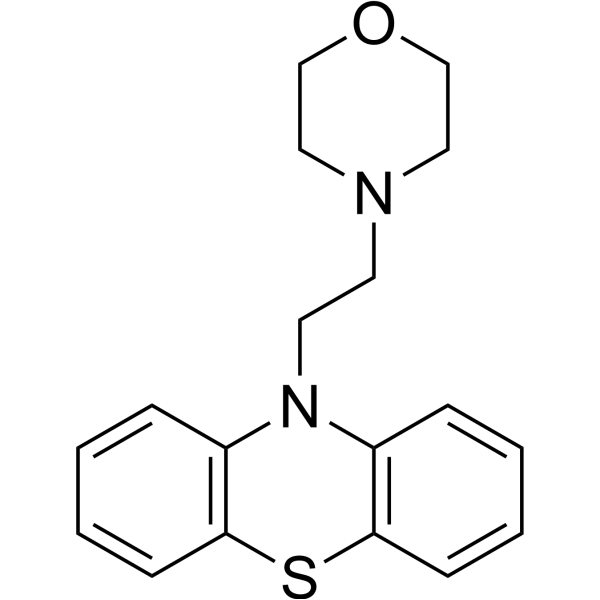
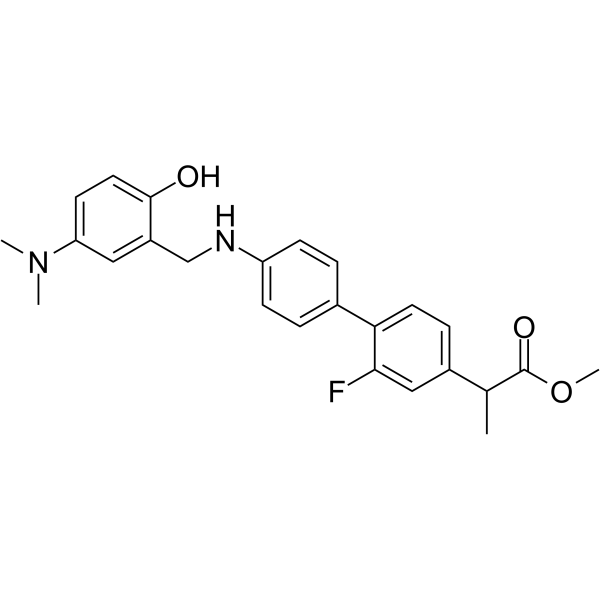
LSD1/TLK1-IN-1 is an orally active LSD1, TLK1, TLK2, TTK inhibitor with an LSD1 IC50 of 0.247 μM. LSD1/TLK1-IN-1 suppresses phosphorylation of Nek1 at T141 and Rad9 at S328, abrogates the TLK1>Nek1>ATR>Chk1 axis, protects H3K4me1/2 from demethylation, and does not affect LSD2, MAO-A, or MAO-B. LSD1/TLK1-IN-1 induces apoptosis, bypasses cell-cycle arrest, suppresses tumor growth, downregulates PD-L1 expression, enhances T-cell killing response, inhibits gastric cancer cell proliferation. LSD1/TLK1-IN-1 can be used for the research of prostate cancer and gastric cancer .
loading...
    loading...
Cat. No.: HY-114520
CAS No.: 1022367-69-6
Purity:  99.38%
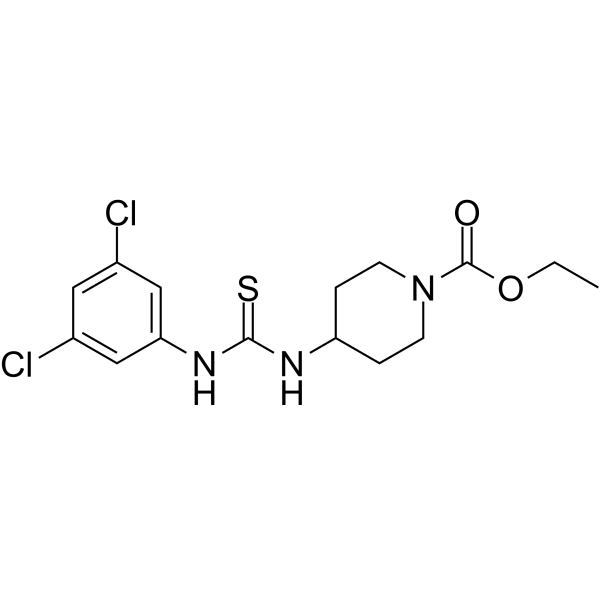
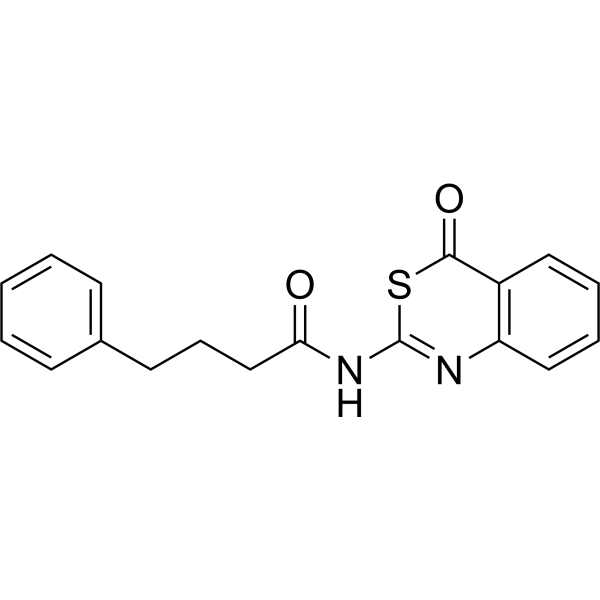
TT01001 is a selective and orally active mitoNEET agonist and a monoamine oxidase B (MAO-B) inhibitor (IC50 = 8.84 μM). TT01001 does not activate PPARγ but interacts with MitoNEET. TT01001 attenuates oxidative stress and neuronal apoptosis by preventing mitoNEET-mediated mitochondrial dysfunction. TT01001 improves type II diabetes and ameliorates mitochondrial function of mice. TT01001 can used for the studies of type II diabetes and neurological disorders .
loading...
    loading...
Cat. No.: HY-181146
CAS No.: 2706576-88-5
Synonyms: TBD09
Target:  

Bacterial

Research Areas:  

Infection

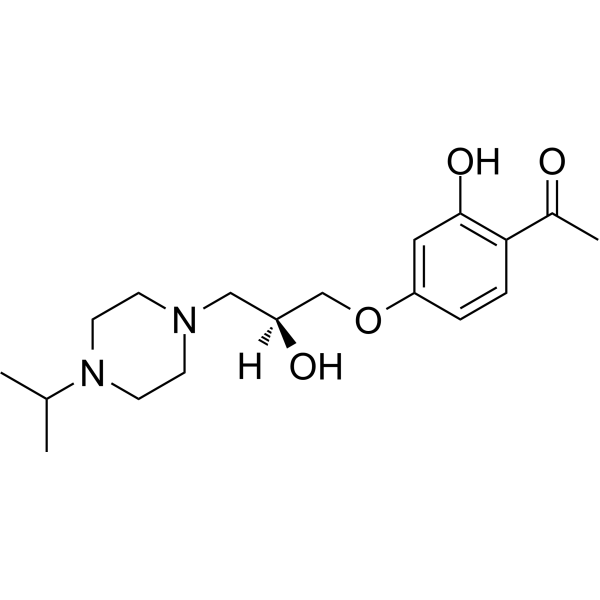
MK-7762 is an orally active xazolidinone compound with antitubercular activity. MK-7762 inhibits MAO-B and mammalian mitochondrial protein synthesis. MK-7762 reduces lung bacterial burden in BALB/c mouse models of acute and chronic tuberculosis infection, penetrates caseous necrotic lung lesions in C3HeB/FeJ mice, and maintains concentrations above unbound MIC in lesion compartments. MK-7762 can be used for the research of tuberculosis .
loading...
    loading...
Cat. No.: HY-W269511
CAS No.: 405-85-6
Target:  

Drug Derivative

Research Areas:  

Neurological Disease

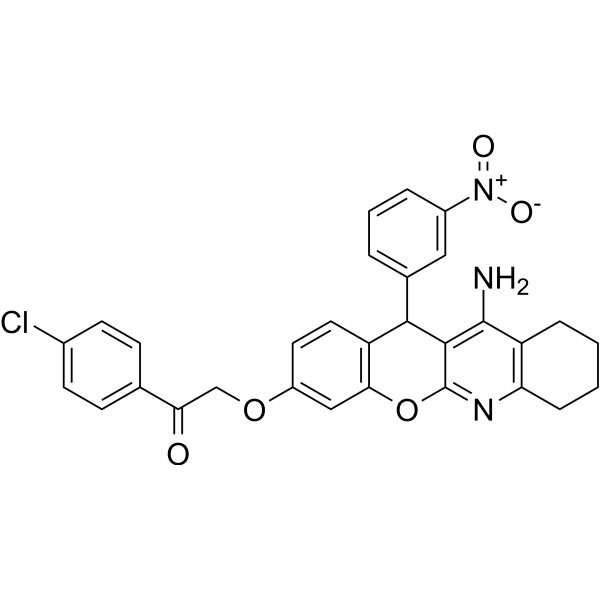
NW-1689 is a process-related impurity of safinamide mesilate (SAFM). SAFM can be used for the study of Parkinson's disease (PD). It is a highly selective and reversible inhibitor of monoamine oxidase-B (MAO-B) and also blocks sodium channels and N-type calcium channels. These effects of SAFM help reduce the breakdown of dopamine and inhibit the release of glutamate. NW-1689 has a similar chemical structure to SAFM and has some similar pharmacological effects as SAFM, and can be used in Parkinson's disease research .
loading...
    loading...
Cat. No.: HY-Y0882S
CAS No.: 40711-48-6
Hydroxylamine- 15N hydrochloride is the 15N-labeled Hydroxylamine hydrochloride (HY-Y0882). Hydroxylamine hydrochloride is a selective Monoamine oxidase (MAO) inhibitor used for inhibiting of platelet aggregation. Hydroxylamine hydrochloride is an intermediate of nitrogen cycle in aerobic ammonium oxidizers microorganisms, such as ammonium oxidizing bacteria (AOB), ammonium oxidizing archaea (AOA) and complete ammonium oxidizing bacteria (comammox). Hydroxylamine hydrochloride impacts NO and N2O emissions by aerobic ammonium oxidizers microorganisms and inhibits nitrite oxidizing bacteria (NOB) activity .
loading...
    loading...
Cat. No.: HY-115973
Target:  

Cholinesterase (ChE)

Research Areas:  

Neurological Disease

AChE-IN-11 (compound 5C) is a triple inhibitor targeting AChE/MAO-B/BACE1 (IC50=7.9 μM, 9.9 μM, 8.3 μM, respectively) and a selective metal ion chelators. AChE-IN-11 exhibits mixed AChE inhibitory effects, binding to both CAS and PAS of AChE. AChE-IN-11 also exhibits good antioxidant activity (ORAC=2.5 eq) and potential neuroprotective effects in Alzheimer's disease .
loading...
    loading...
Cat. No.: HY-155085
CAS No.: 2983723-56-2
hAChE-IN-3 (compounds 5c) is a potent and blood-brain barrier permeable AChE, BuChEMAO-B-IN-1 and BACE-1 inhibitor, with IC50 values of 0.44, 0.08, 5.15 and 0.38 μM, respectively. hAChE-IN-3 has antioxidant activity and metal chelating ability. In addition, hAChE-IN-3 can bind to peripheral anion sites, and affect β amyloid and reduce Alzheimer's-associated neurodegeneration. hAChE-IN-3 has the potential for the research of Alzheimer's disease .
loading...
    loading...
Cat. No.: HY-N0126R
CAS No.: 90-47-1
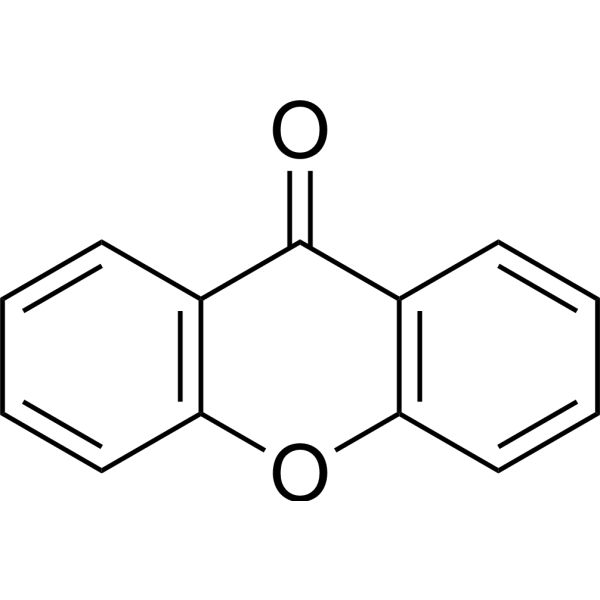
Xanthone (Standard) is the analytical standard of Xanthone (HY-N0126). This product is intended for research and analytical applications. Xanthone is a monoamine oxidase A (MAO-A) inhibitor with an IC50 of 0.84 µM. Xanthon inhibits Norepinephrine (HY-13715) and high-K +-induced vasoconstriction with IC50 values of 60.26 μM and 82.9 μM, respectively. Xanthon increases intracellular cyclic adenosine 3′,5′-monophosphate (cAMP) content and blocks Ca 2+ channels. Xanthone is the scaffold of several pharmacologically active compounds .
loading...
    loading...
Cat. No.: HY-N2510R
CAS No.: 607-91-0
Synonyms: Myristicine (Standard)
Myristicin (Standard) is the analytical standard of Myristicin. This product is intended for research and analytical applications. Myristicine is an orally bioavailable serotonin receptor antagonist and weak monoamine oxidase (MAO) inhibitor. Myristicine also exerts anti-cancer effects on gastric cancer cells by inhibiting the EGFR/ERK signaling pathway. Myristicine is the main component of nutmeg essential oil and has anti-cancer, anti-proliferative, antibacterial, anti-inflammatory and apoptosis-inducing effects. Myristicine abuse can produce hallucinogenic effects, organ damage, etc .
loading...
    loading...
Cat. No.: HY-N18471
CAS No.: 31363-74-3
Synonyms: 5,7-DHP
5,7-Dihydroxytryptamine (5,7-DHP) is an autofluorescent (λex≈365 nm), selective neurotoxin and a transport substrate for MAO-A and 5-HT. 5,7-Dihydroxytryptamine can specifically target and damage central and peripheral 5-HTergic neurons, while affecting 5-HT-related pathways and neurotransmitter balance. 5,7-Dihydroxytryptamine can be used to establish 5-HTergic neuron injury models for studies on neural development, neurodegenerative diseases, as well as mechanisms related to platelet function and retinal neurons .
loading...
    loading...
Cat. No.: HY-120826
CAS No.: 1439488-21-7
Purity:  ≥99.0%
A2AAR/hMAO-B-IN-1 (compoudn 17) is a non-xanthine dual-target inhibitor targeting the A2A adenosine receptor (A2AAR) (IC50: 34.9 nM) andMAO-B (Ki: 39.5 nM, human). A2AAR/hMAO-B-IN-1 inhibits A2AAR-induced cAMP accumulation and exhibits competitive, reversible inhibition of MAO-B. A2AAR/hMAO-B-IN-1 can be used in the study of neurodegenerative diseases such as Parkinson's disease (PD) .
loading...
    loading...
Cat. No.: HY-145259
CAS No.: 3023019-99-7
Purity:  ≥98.0%
Research Areas:  

Cancer

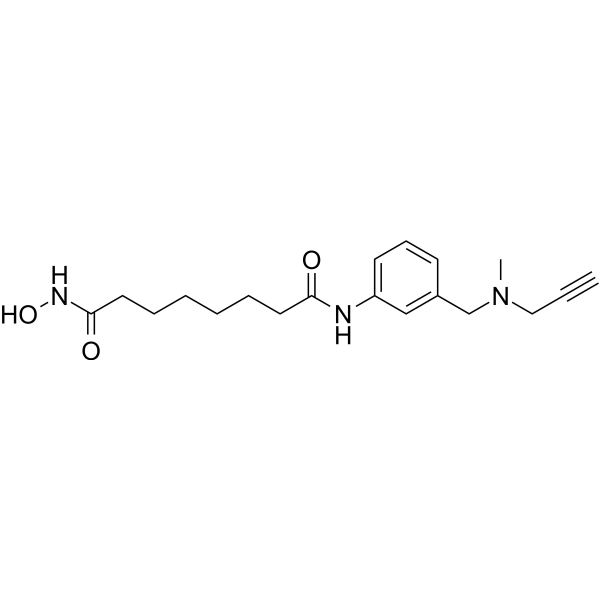
HDAC6-IN-3 (Compound 14), an antiprostate cancer agent, is a potent, orally active HDAC6 inhibitor with IC50s ranging from 0.02-1.54 μM for HDAC1/2/3/6/8/10. HDAC6-IN-3 is also an effective MAO-A (IC50=0.79 μM) and LSD1 inhibitor . HDAC6-IN-3 is a click chemistry reagent, it contains an Alkyne group and can undergo copper-catalyzed azide-alkyne cycloaddition (CuAAc) with molecules containing Azide groups.
loading...
    loading...
Cat. No.: HY-150563
CAS No.: 2361384-14-5
Neuroinflammatory-IN-2 is a potent anti-neuroinflammatory agent with an IC50 value of 10.30 μM for MAO-B, and 96.33% inhibition of 1-42 aggregation at 25 μM. Neuroinflammatory-IN-2 has neuroprotective activity in H2O2-induced PC-12 cell injury. Neuroinflammatory-IN-2 also has biometal chelating abilities, antioxidant activity, anti-neuroinflammatory activity and appropriate BBB permeability. Neuroinflammatory-IN-2 can be used for researching Alzheimer’s disease .
loading...
    loading...
Cat. No.: HY-14536A
CAS No.: 61-73-4
Purity:  ≥95.0%
Synonyms: Basic Blue 9 (purity≥70%); CI-52015 (purity≥70%); Methylthioninium chloride (purity≥70%)
Methylene blue (purity≥70%) is a guanylyl cyclase (sGC), monoamine oxidase A (MAO-A) and NO synthase (NOS) inhibitor. Methylene blue (purity≥70%) is a vasopressor and is often used as a dye in several medical procedures. Methylene blue (purity≥70%) through the nitric oxide syntase/guanylate cyclase signalling pathway to reduce prepulse inhibition. Methylene blue (purity≥70%) is a REDOX cycling compound and able to cross the blood-brain barrier. Methylene blue (purity≥70%) is a Tau aggregation inhibitor. Methylene blue reduces cerebral edema, attenuated microglial activation and reduced neuroinflammation .
loading...
    loading...
Cat. No.: HY-14536R
CAS No.: 61-73-4
Synonyms: Basic Blue 9 (Standard); CI-52015 (Standard); Methylthioninium chloride (Standard)
Methylene Blue (Standard) is the analytical standard of Methylene Blue. This product is intended for research and analytical applications. Methylene blue (Basic Blue 9) is a guanylyl cyclase (sGC), monoamine oxidase A (MAO-A) and NO synthase (NOS) inhibitor. Methylene blue is a vasopressor and is often used as a dye in several medical procedures. Methylene blue through the nitric oxide syntase/guanylate cyclase signalling pathway to reduce prepulse inhibition. Methylene blue is a REDOX cycling compound and able to cross the blood-brain barrier. Methylene blue is a Tau aggregation inhibitor. Methylene blue reduces cerebral edema, attenuated microglial activation and reduced neuroinflammation .
loading...
    loading...
Cat. No.: HY-163879
hMAO-B-IN-9 (Compound 25c) is a non-competitive inhibitor for monoamine oxidase B (MAO-B) with an IC50 of 1.58 µM (hMAO-B). hMAO-B-IN-9 forms complex with iron ions as a chelator, and inhibits Erastin (HY-15763)-induced ferroptosis. hMAO-B-IN-9 exhibits antioxidant activity by downregulating the level of reactive oxygen species (ROS). hMAO-B-IN-9 improves cognitive function in mice, without significant toxicity (30 mg/kg). hMAO-B-IN-9 is blood-brain barrier permeable, according to the in silico prediction .
loading...
    loading...
Cat. No.: HY-164099
CAS No.: 2982787-50-6
Research Areas:  

Cancer

LSD1/HDAC6-IN-2 (JBI-802) is an orally active LSD1/HDAC6/MAO-A inhibitor, with IC50 values of 5 nM, 11 nM, and 5 nM, respectively. LSD1/HDAC6-IN-2 can inhibit the growth of multiple myeloma cells MM.1S, MM.1R, and RPMI-8226. LSD1/HDAC6-IN-2 can be used for research on diseases such as acute myeloid leukemia and lymphoma .
loading...
    loading...
Cat. No.: HY-173123
Research Areas:  

Cancer

LSD1-IN-40 (Compound 9e) is a potent LSD1 inhibitor, with an IC50 of 9.85 nM. LSD1-IN-40 exhibits exceptional selectivity for LSD1 over both MAOs and hERG. LSD1-IN-40 exhibits significant inhibitory activity against leukemia cells (MV-4-11, HL-60, and THP-1 cells). LSD1-IN-40 can induce apoptosis in MV-4-11 cells. LSD1-IN-40 has the potential for the research of acute myeloid leukemia .
loading...
    loading...
Cat. No.: HY-178454
Multitarget AD-IN-3 is a brain-penetrant neuroprotective agent. Multitarget AD-IN-3 can selectively inhibit MAO-B with an IC50 of 4.42 μM and a SI of 18.12. Multitarget AD-IN-3 can eliminate ROS. Multitarget AD-IN-3 Multitarget AD-IN-3 can inhibit 1-42 self-aggregation and can reverse Aβ1-42-induced mitochondrial membrane depolarization and inhibit apoptosis. Multitarget AD-IN-3 can be used for the research of neurological disease, such as Alzheimer’s disease .
loading...
    loading...
Cat. No.: HY-180114
NSS-18 is a potent and reversible inhibitor of AChE and MAO-B, with IC50 values of 1.53 and 1.51 μM respectively. NSS-18 can inhibit the self-aggregation of . NSS-18 inhibits the intracellular generation of ROS induced by Aβ. NSS-18 shows a moderate neuroprotective effect against 6-OHDA (HY-B1081)-induced neurotoxicity. NSS-18 can form chelates with metal ions such as Cu²⁺, Fe³⁺, and Zn²⁺, with the strongest chelation being with Cu²⁺. NSS-18 can be used for the study of Alzheimer's disease .
loading...
    loading...

