496 Results for "

test

" in MedChemExpress (MCE) Product Catalog:
Products (496)

496 Results for "test" in MCE Product Catalog:

Cat. No.: HY-103151A
CAS No.: 131084-35-0
Target:  

5-HT Receptor

CP94253 is an orally active, brain-penetrant and selective 5-HT1B receptor agonist with an Ki of 2 nM. CP94253 induces antidepressant-like effects, waking enhancement, sleep inhibition, increased sleep latency, hyperlocomotion, and suppressed aggressive behavior. CP94253 can be used for the research of depression and heightened aggressive behavior .
loading...
    loading...
Cat. No.: HY-129862
CAS No.: 67450-45-7
Target:  

Adrenergic Receptor

Research Areas:  

Neurological Disease

Eclanamine maleate is an orally effective non-tricyclic antidepressant and an adrenergic receptor modulator. Eclanamine maleate blocks biogenic amine uptake and enhances α2-receptor sensitivity, and long-term administration induces downregulation and desensitization of cortical β-receptors. Eclanamine maleate is used in the study of depression .
loading...
    loading...
Cat. No.: HY-129862A
CAS No.: 67450-44-6
Target:  

Adrenergic Receptor

Research Areas:  

Neurological Disease

Eclanamine is an orally effective non-tricyclic antidepressant and an adrenergic receptor modulator. Eclanamine blocks biogenic amine uptake and enhances α2-receptor sensitivity, and long-term administration induces downregulation and desensitization of cortical β-receptors. Eclanamine is used in the study of depression .
loading...
    loading...
Cat. No.: HY-167227S
CAS No.: 1449371-87-2
Target:  

Monoamine Transporter

Research Areas:  

Neurological Disease

TAS-303 is an orally effective selective norepinephrine transporter (NET) inhibitor. TAS-303 inhibits human NET ligand binding with a Ki of 50.9 nM, and suppresses NET-mediated norepinephrine uptake with an IC50 of 38.9 nM. TAS-303 enhances norepinephrine-induced contraction in isolated rat urethral tissues, elevates plasma norepinephrine levels in rats, and increases urethral baseline pressure and leak point pressure. TAS-303 is applicable for research related to stress urinary incontinence, norepinephrine reuptake, and lower urinary tract function .

loading...
    loading...
Cat. No.: HY-169841
CAS No.: 2957888-70-7
Target:  

5-HT Receptor Arrestin

Research Areas:  

Neurological Disease

IHCH-7086 is a blood-brain barrier-permeable, partial β-arrestin-biased agonist of 5-HT2AR with a Ki of 12.59 nM. IHCH-7086 blocks D-lysergic acid diethylamide-induced head-twitch response in mice and alleviates depression-like behaviors in mice subjected to acute restraint stress or injected with Corticosterone (HY-B1618). IHCH-7086 is applicable to research related to depression .
loading...
    loading...
Cat. No.: HY-D0947
CAS No.: 531-53-3
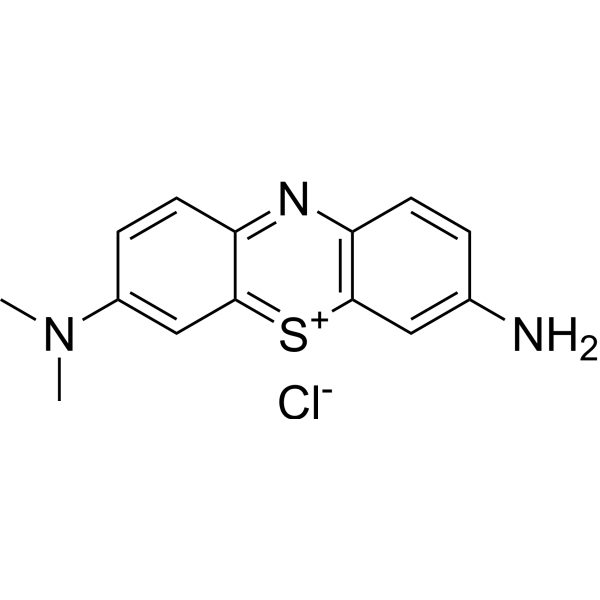
Azure A chloride is a phenothiazine dye. Azure A chloride is an alternative DNA dye used for the separation of DNA and protein fragments in agarose gel electrophoresis and PAGE. Azure A chloride can be chemisorbed on the surface of mild steel according to the Langmuir adsorption isotherm to form a protective film. Azure A chloride binds to double-stranded DNA in a non-cooperative manner via weak intercalation, triggering molecular conformational disturbance, restricted rotational motion, and changes in optical activity .
loading...
    loading...
Cat. No.: HY-182366
EED-IN-5 is an orally active, EZH2-selective trisubstituted pyridine-based EED-H3K27me3 inhibitor and immunomodulator with anti-inflammatory activity. The IC50 value of EED-IN-5 against EED is 28.21 nM. In mouse models, EED-IN-5 preferentially and persistently accumulates in lymph nodes after oral administration. By reducing the H3K27me3 level of dendritic cells and inhibiting their migration, EED-IN-5 decreases the infiltration of specific dendritic cells, macrophages and T cells into the spinal cord and brain. EED-IN-5 exhibits hERG inhibitory activity, shows negative results in the Mini-Ames test, and causes no obvious toxicity upon long-term high-dose administration. EED-IN-5 can be used for the research of multiple sclerosis .
loading...
    loading...
Cat. No.: HY-N18124
CAS No.: 122688-84-0
1-O-Tigloyl-1-O-debenzoylohchinal is an orally active limonoid-type triterpenoid anti-inflammatory and peripheral analgesic agent isolated from the fruits of Melia toosendan. 1-O-Tigloyl-1-O-debenzoylohchinal significantly inhibits acetic acid (HY-Y0319)-induced increase in vascular permeability, λ-Carrageenan (HY-N9470)-induced paw edema, and acetic acid-induced writhing response in mice. 1-O-Tigloyl-1-O-debenzoylohchinal shows no significant analgesic effect in the hot-plate test, and acts mainly on the peripheral rather than the central nervous system. 1-O-Tigloyl-1-O-debenzoylohchinal can be widely used in the research of acute or chronic inflammation, stomachache and other related diseases .
loading...
    loading...
Cat. No.: HY-N19899
CAS No.: 910050-51-0
Phaeosphaeride A is a STAT3 inhibitor with an IC50 of 0.61 mM against human STAT3. It exhibits higher selectivity for STAT3 over STAT1 and STAT5. Phaeosphaeride A inhibits the binding of STAT3 to DNA, STAT3-dependent transcriptional activity, as well as IL-6-induced phosphorylation and signaling of STAT3. Phaeosphaeride A activates the JNK, p38, Akt, CREB and STAT5A/B signaling pathways. Phaeosphaeride A induces oxidative stress (ROS), exerts antiproliferative and growth-inhibitory effects in cancer cells, and shows low cytotoxicity toward non-cancerous cells. Phaeosphaeride A is a phytotoxin and a weak animal toxin, with no antimicrobial activity against tested bacteria and fungi. Phaeosphaeride A can be used in research related to conditions such as cervical cancer and multiple myeloma, as well as weed infestations .
loading...
    loading...
Cat. No.: HY-180212
CAS No.: 2643940-93-4
Target:  

Opioid Receptor

Research Areas:  

Neurological Disease

SYK-1106 is a potent delta-opioid receptor (DOR) agonist with an EC50 of 89 pM and a Ki of 848 pM. SYK-1106 is selective for μ and κ opioid receptors, with Ki values of 9.54 nM and 2.45 nM, respectively. SYK-1106 induces dose-dependent antidepressant-like effects. SYK-1106 can be used for the research of depression .
loading...
    loading...
Cat. No.: HY-N6726
CAS No.: 1422359-85-0
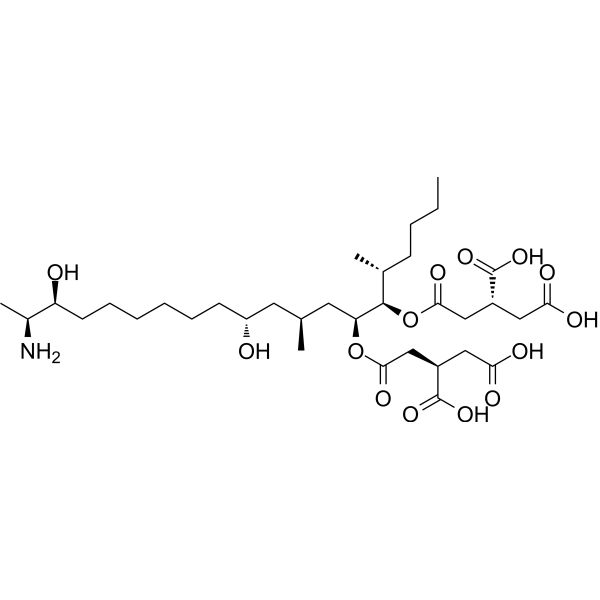
Fumonisin B3 is an orally active fumonisin Mycotoxin. Fumonisin B3 can be isolated from Fusarium moniliforme, Fusarium proliferatum and Fusarium nygamai. Fumonisin B3 induces precancerous lesions, triggers embryonic death of chicken embryos, causes severe hemorrhage in dead chicken embryos. Fumonisin B3 can be used in studies related to hepatocellular carcinoma .
loading...
    loading...
Cat. No.: HY-P992007
Synonyms: RN909

Target:  

GCGR

Research Areas:  

Metabolic Disease

PF-06293620 (RN909) is a monoclonal antibody antagonist of the glucagon receptor. PF-06293620 produces dose-dependent, durable lowering of fasting plasma glucose and reduces HbA1c levels. PF-06293620 can be used for the research of type 2 diabetes mellitus .
loading...
    loading...
Cat. No.: HY-137694A
Research Areas:  

Infection

ddTTP tetrasodium is a DNA polymerase γ inhibitor, with Ki values of 0.05 μM and 0.4 μM against bovine testicular DNA polymerase γ. ddTTP tetrasodium can be incorporated into DNA to cause termination of the extended DNA strand. ddTTP tetrasodium can be used in the research of HIV infection .
loading...
    loading...
Cat. No.: HY-137694B
Purity:  99.94%
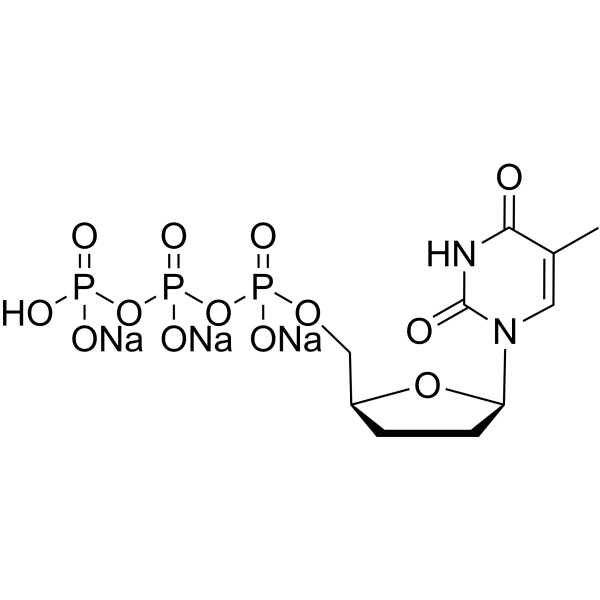
ddTTP trisodium solution (100 mM) is a DNA polymerase γ inhibitor, with Ki values of 0.05 μM and 0.4 μM against bovine testicular DNA polymerase γ. ddTTP trisodium solution (100 mM) can be incorporated into DNA to cause termination of the extended DNA strand. ddTTP trisodium solution (100 mM) can be used in the research of HIV infection .
loading...
    loading...
Cat. No.: HY-179729
Target:  

Glycosidase

Research Areas:  

Metabolic Disease

α-Glucosidase-IN-106 (Compound 17F) is an inhibitor of α-glucosidase with an IC50 of 14.9 μM. α-Glucosidase-IN-106 can effectively inhibit the peak of blood glucose after sucrose loading in normal mice, and shows a more significant anti-hyperglycemic effect in diabetic mice. α-Glucosidase-IN-106 can be used for research on diabetes .
loading...
    loading...
Cat. No.: HY-P991525
CAS No.: 2923542-55-4

Target:  

Fc Receptor (FcR)

Research Areas:  

Cancer

2141-V11 is an Fc-engineered agonistic antibody against human CD40 with selectively enhanced binding affinity for human FcγRIIB. 2141-V11 drives CD40 multimerization and agonistic signal transduction, activates dendritic cells, promotes antigen cross-presentation and CD8 + T cell priming, induces tertiary lymphoid structure formation, increases leukocyte infiltration, and mediates local and abscopal anti-tumor effects, systemic immune activation and immune memory. 2141-V11 exhibits extremely low systemic toxicity upon intratumoral or intravesical administration, with no dose-limiting toxicity observed at the tested intratumoral doses, whereas high-dose systemic administration induces thrombocytopenia and elevated transaminases. 2141-V11 can be used in research related to breast cancer, melanoma, BCG-unresponsive non-muscle invasive bladder cancer, and recurrent malignant glioma .
loading...
    loading...
Cat. No.: HY-169784
CAS No.: 1436673-69-6
Target:  

Drug Derivative

Research Areas:  

Metabolic Disease

PPI-1040 is an orally bioavailable vinyl ether synthetic plasmalogen. PPI-1040 acts as a precursor of plasmalogen. PPI-1040 increases plasmalogen levels in plasmalogen-deficient mice and normalizes hyperactive behaviors in these mice. In wild-type mice, PPI-1040 retains the sn-1 vinyl ether group and sn-3 phosphoethanolamine group, and is converted into endogenous ethanolamine plasmalogen. PPI-1040 can be used in studies related to rhizomelic chondrodysplasia punctata .
loading...
    loading...
Cat. No.: HY-W011848
CAS No.: 2528-16-7
Synonyms: 2-((Benzyloxy)carbonyl)benzoic acid
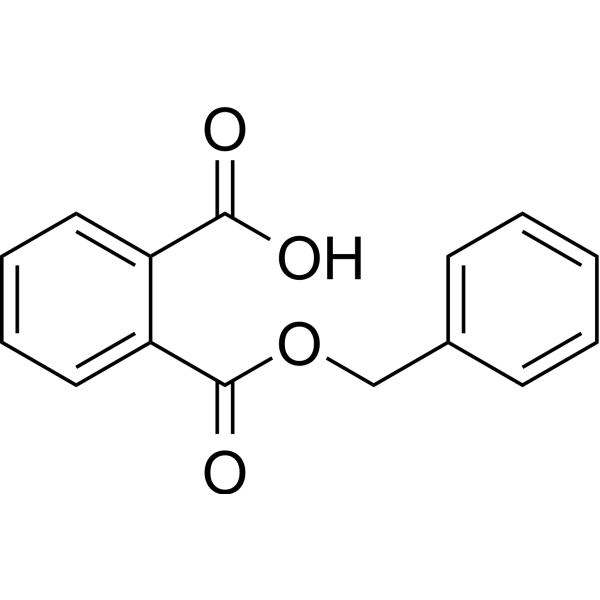
Monobenzyl phthalate is a phthalate metabolite (aromatic alkyl chain monophthalate) with oral activity, which acts as a male reproductive development inhibitor and antiandrogen in rat fetuses .
loading...
    loading...
Cat. No.: HY-101955A
CAS No.: 1430202-69-9
Purity:  99.61%
Synonyms: (2R,6R)-HNK hydrochloride
Target:  

Drug Metabolite

Research Areas:  

Neurological Disease

(2R,6R)-Hydroxynorketamine ((2R,6R)-HNK) hydrochloride is an active ketamine metabolite with no NMDAR binding activity. (2R,6R)-Hydroxynorketamine hydrochloride rescues impaired dorsal hippocampal long-term potentiation and restores robust long-term potentiation in the hippocampal SC-CA1 pathway. (2R,6R)-Hydroxynorketamine hydrochloride can be used for research on depression .
loading...
    loading...
Cat. No.: HY-103117
CAS No.: 847871-78-7
Target:  

5-HT Receptor

Research Areas:  

Neurological Disease

S 32212 hydrochloride is an inverse agonist of 5-HT receptors 5-HT2(CINI) and 5-HT2(CVSV) (Kis=6.6, 8.9 nM) and an antagonist of 5-HT2A and α2β-adrenergic receptors (Ki=5.8, 5.8 nM). S 32212 hydrochloride can reduce the binding of GTPγS to Gαq, and reduce the activity of phospholipase C (PLC) in HEK293 cells expressing 5-HT2(CINI) receptor and CHO cells expressing 5-HT2(CVSV) receptor (EC50=38 and 18.6 nM, respectively). S 32212 hydrochloride (2.5 mg/kg) reduces 5-HT receptor agonist-induced head twitches and penile erections in mice and rats. S 32212 hydrochloride (10, 40 mg/kg) reduces immobility time in the forced swim test and marble burying behavior in mice and rats, exerting antidepressant and anxiolytic activities.
loading...
    loading...

