533 Results for "

Differentiation inducer

" in MedChemExpress (MCE) Product Catalog:
Products (533)

533 Results for "Differentiation inducer" in MCE Product Catalog:

Cat. No.: HY-L017
2,931 compounds

Adult stem cells are important for tissue homeostasis and regeneration due to their ability to self-renew and generate multiple types of differentiated daughters. Self-renewal is reflected by their capacity to undergo multiple/limitless divisions. Several signaling pathways are involved in self-renewal of stem cells, that is, Notch, Wnt, and Hedgehog pathways or Polycomb family proteins. Recent studies mainly focus on cancer stem cell (CSCs), induced pluripotent stem cell (iPSCs), neural stem cell and maintenance of embryonic stem cell pluripotency. Among them, CSCs have been believed to be responsible for tumor initiation, growth, and recurrence that have implications for cancer therapy.

MCE owns a unique collection of 2,931 compounds that can be used for stem cell regulatory and signaling pathway research.

Cat. No.: HY-164826
CAS No.: 30881-23-3
Acetyl zingerone is an analog of Zingerone (HY-14621). Acetyl zingerone downregulates the expression of ROS metabolism-related genes, fibroblast senescence-related genes, keratinocyte differentiation-related genes, and IL-17A target genes. Acetyl zingerone inhibits the activities of MMP-1, MMP-3, and MMP-12, as well as the activation of NLRP3 inflammasome, pyroptosis (pyroptosis), ferroptosis (ferroptosis), cartilage destruction, and UVA-induced cyclobutane pyrimidine dimer formation. Acetyl zingerone upregulates the expression of collagen, proteoglycan, extracellular matrix glycoprotein, Notch pathway, and GPX4 gene, activates Nrf2 and HO-1, induces extracellular matrix synthesis and PINK1/Parkin-mediated mitophagy (mitophagy), and promotes chondrocyte survival. Acetyl zingerone alleviates the progression of osteoarthritis in mice . Acetyl zingerone can be used in research related to skin aging, inflammatory skin diseases, osteoarthritis, melanoma, and non-melanoma skin cancer .
loading...
    loading...
Cat. No.: HY-100754CR
CAS No.: 2192215-81-7
Synonyms: PF-06651600 tosylate (Standard)
Ritlecitinib (tosylate) (Standard) is the analytical standard of Ritlecitinib (tosylate) (HY-100754C). This product is intended for research and analytical applications. Ritlecitinib (PF-06651600) tosylate is a highly selective, orally active, irreversible covalent JAK3 inhibitor (IC50=33 nM) without inhibitory activity towards JAK1, JAK2, and TYK2 (IC50 >10 μ M). Ritlecitinib tosylate rapidly inactivates the JAK3 kinase, and blocks signaling and downstream STAT phosphorylation mediated by common gamma chain cytokines such as IL-2 and IL-15. Ritlecitinib tosylate can inhibit Th1/Th17 cell differentiation and function, and effectively suppress preclinical animal models such as alopecia areata, adjuvant-induced arthritis (AIA), and experimental autoimmune encephalomyelitis (EAE) .
loading...
    loading...
Cat. No.: HY-100754R
CAS No.: 1792180-81-4
Synonyms: PF-06651600 (Standard)
Ritlecitinib (Standard) is the analytical standard of Ritlecitinib (HY-100754). This product is intended for research and analytical applications. Ritlecitinib (PF-06651600) is a highly selective, orally active, irreversible covalent JAK3 inhibitor (IC50=33 nM) without inhibitory activity towards JAK1, JAK2, and TYK2 (IC50 >10 μ M). Ritlecitinib rapidly inactivates the JAK3 kinase, and blocks signaling and downstream STAT phosphorylation mediated by common gamma chain cytokines such as IL-2 and IL-15. Ritlecitinib can inhibit Th1/Th17 cell differentiation and function, and effectively suppress preclinical animal models such as alopecia areata, adjuvant-induced arthritis (AIA), and experimental autoimmune encephalomyelitis (EAE) .
loading...
    loading...
Cat. No.: HY-110038
CAS No.: 1217447-06-7
FTI-277 TFA is a farnesyltransferase (FTase) inhibitor. FTI-277 TFA inhibits Ras farnesylation, blocks the phosphorylation of downstream ERK1/2 and mTOR, and reduces membrane-bound active N-ras protein. FTI-277 TFA activates caspase 3, upregulates Bim expression, induces cell apoptosis, suppresses regulatory T cell expansion, enhances macrophage phagocytosis, and improves bacterial clearance. FTI-277 TFA activates the PI3K/Akt signaling pathway, inhibits osteoblast differentiation, and reduces the proliferation ability of neuroblastoma cells. FTI-277 TFA can be used in research related to head and neck squamous cell carcinoma, neuroblastoma, sepsis, and vascular calcification .
loading...
    loading...
Cat. No.: HY-114510
CAS No.: 1020399-52-3
PRMT/HKMT-IN-1 is an epigenetic multi-target protein arginine methyltransferases (PRMTs) and histone lysine methyltransferases (HKMTs) inhibitor. PRMT/HKMT-IN-1 inhibits Aspergillus nidulans RmtA with an IC50 of 29 μM. PRMT/HKMT-IN-1 inhibits human PRMT1, p300/CBP HAT, CARM1, SET7, SIRT1 and SIRT2. PRMT/HKMT-IN-1 inhibits methylation of histone H3K4, H4R3, and H3R17 residues. CBP/p300-IN-23 induces apoptosis, arrests cell cycle in S phase, and triggers granulocytic differentiation in leukemia cells. PRMT/HKMT-IN-1 can be used for the research of leukemia .
loading...
    loading...
Cat. No.: HY-159098
dWIZ-1 is an orally active molecular glue and chemical probe targeting the WIZ transcription factor, which based on an IMiD backbone, binding to human WIZ with an affinity of 3.5 μM. dWIZ-1 recruits WIZ to the cereblon-DDB1 complex via its ZF7 domain, thereby triggering proteasome-dependent degradation of WIZ. dWIZ-1 significantly induces fetal hemoglobin expression in erythroblasts while reducing the level of inhibitory H3K9 dimethylation at WIZ binding sites such as the β-globin locus. Meanwhile, dWIZ-1 does not affect the proliferation and differentiation of erythroblasts, and no cytotoxicity is observed in in vitro cells or cynomolgus monkey models. dWIZ-1 serves as a critical tool molecule for investigating the mechanism and underlying pathways of sickle cell disease .
loading...
    loading...
Cat. No.: HY-177277
CAS No.: 1549766-06-4
Target:  

PI3K

Research Areas:  

Inflammation/Immunology

HM5023507 is an orally active and selective PI3Kδ/γ inhibitor with IC50s of 4  and 5  μM for PI3Kδ and PI3Kγ over PI3Kβ and PI3Kα. HM5023507 attenuates the PI3Kδ/γ signaling in human basophils. HM5023507 also attenuates the activation and function of human B and T cells and cytokine and IgG production during cocultures, and Th17 differentiation of CD4 T cells. HM5023507 inhibited semiestablished collagen-induced arthritic inflammation in the rat models. HM5023507 can be used for inflammatory diseases like rheumatoid arthritis research .
loading...
    loading...
Cat. No.: HY-181887
CAS No.: 3109883-60-2
Target:  

Keap1-Nrf2 NF-κB p38 MAPK

Research Areas:  

Metabolic Disease

Nrf2 activator-23 is an orally active Keap1 binder and Nrf2 activator, with KD values of 28.68 nM and 54.55 nM for Keap1 and its Kelch domain, respectively. Nrf2 activator-23 disrupts the Keap1-Nrf2 interaction, reduces ubiquitination and degradation of Nrf2, and activates the Nrf2 signaling pathway. Nrf2 activator-23 inhibits RANKL-induced osteoclast formation, bone resorptive activity, ROS production, and activation of the MAPK and NF-κB signaling pathways, while downregulating the expression of osteoclast-specific genes and proteins. Nrf2 activator-23 attenuates bone loss and reduces osteoclast formation in vivo without affecting osteoblast differentiation and mineralization. Nrf2 activator-23 can be used for the research of osteoporosis .
loading...
    loading...
Cat. No.: HY-P991381
Synonyms: PPMX-T003; TSP-A18
JST‑TfR09 (PPMX‑T003) is a human monoclonal antibody (mAb) targeting transferrin receptor 1 (TfR1/CD71). JST‑TfR09 blocks the binding of transferrin to TfR1, inhibits TfR1 internalization, and suppresses cellular iron uptake. JST‑TfR09 triggers ferritin degradation via activating the autolysosomal system, promotes ROS production and lipid peroxidation, and ultimately induces ferroptosis. JST‑TfR09 exhibits cytotoxicity toward human erythroblasts differentiated from hematopoietic stem cells. JST-TfR09 can be used in leukemia research. Recommended isotype control: Human IgG1 lambda, Isotype Control (HY-P99992) .
loading...
    loading...
Cat. No.: HY-L171
4,388 compounds

Hematopathy, also known as hematopoietic system diseases, are a class of diseases that hematopoietic system has abnormal changes. Common hematopathy include: aplastic anemia, myeloproliferative diseases, thalassemia, leukemia, lymphoma, myeloma and hemophilia, etc. In recent years, treatments for hematopathy have been developed. In particular, the treatment of malignant hematopathy developed from chemotherapy, radiotherapy, bone marrow development to immunotherapy, induced differentiation therapy, cell therapy, gene therapy and hematopoietic stem cell transplantation. Although these therapies have greatly improved the survival rate of patients, there are still problems such as low cure rate and easy recurrence in the treatment of hematopathy. Therefore, it is of great significance to actively search for new hematopathy therapeutic drugs.

MCE designs a unique collection of 4,388 anti-hematopathy small molecules, which is an effective tool for development and research of anti-hematopathy compounds.

Cat. No.: HY-L172
150 compounds

Immunity refers to the ability of the body to resist the invasion of pathogenic microorganisms and resist a variety of diseases. Immunocompromised will inevitably lead to a series of diseases. Immunopotentiator are a class of compounds that enhance immune function and induce immune response. Immunopotentiator can activate the proliferation and differentiation of one or more kinds of immune active cells in the body, promote the secretion of lymphocytes, and then enhance the immune function of the body. Immunopotentiator are mainly used in the treatment of tumors, infectious diseases and immunodeficiency diseases. In addition, immunopotentiator are often used as adjuvants in combination with vaccine antigens to enhance the immunogenicity of vaccines.

MCE designs a unique collection of 150 compounds with definite or potential Immunopotentiating effect, mainly targeting the NOD-like Receptor (NLR), Toll-like Receptor (TLR), NF-κB, etc. It is an effective tool for development and research of anti-cancer, anti-infectious diseases and anti-immunodeficiency diseases compounds.

Cat. No.: HY-118828A
CAS No.: 71606-07-0
Purity:  ≥99.0%
Synonyms: (9S,13R)-12-OPDA
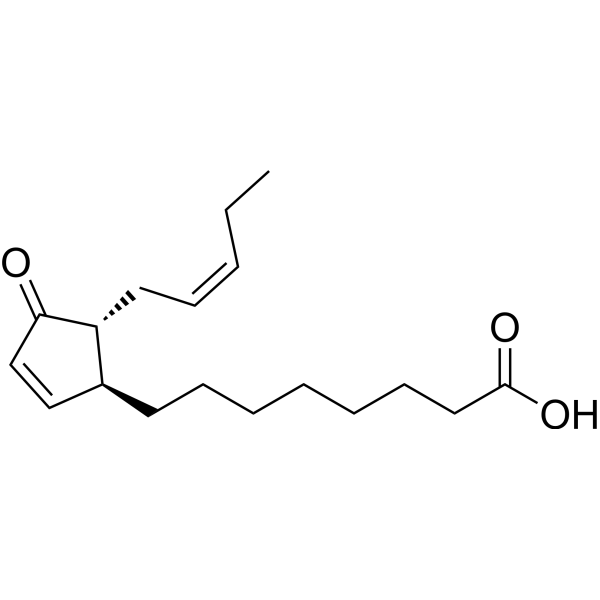
(9S,13R)-12-Oxo phytodienoic acid ((9S,13R)-12-OPDA) is a mPGES-1 inhibitor and Nrf2 activator. (9S,13R)-12-Oxo phytodienoic acid selectively inhibits mPGES-1 expression and reduces inducible PGE2 production without affecting COX-1 or COX-2. (9S,13R)-12-Oxo phytodienoic acid inhibits the phosphorylation of IKKβ, IκBα, and NF-κB (p65), blocks the nuclear translocation of p65, increases the nuclear translocation of Nrf2, and upregulates HO-1 expression. (9S,13R)-12-Oxo phytodienoic acid inhibits the differentiation of M0 macrophages toward the M1 phenotype and promotes differentiation toward the M2 phenotype. (9S,13R)-12-Oxo phytodienoic acid decreases the levels of NO, PGE2, IL-1β, IL-6, iNOS, and PGD2. (9S,13R)-12-Oxo phytodienoic acid can be used for inflammation research .
loading...
    loading...
Cat. No.: HY-P3075
CAS No.: 112540-82-6
Synonyms: pTHrP (1-34)
pTH-Related Protein (1-34) (human,mouse,rat) (pTHrP (1-34)) is a parathyroid hormone-related protein fragment. Binding of pTH-Related Protein (1-34) (human,mouse,rat) to PTH1R triggers cAMP/PKA and PKC signaling, PI3K-mediated Akt and ERK1/2 phosphorylation, NADPH oxidase-dependent ROS generation, and TGF-beta1 and p47phox expression. pTH-Related Protein (1-34) (human,mouse,rat) induces fibronectin upregulation, osteoblast differentiation, osteoclastic bone resorption, bone formation, eNOS/NO-mediated vasodilation, and sensitization of type II pneumocytes to ultraviolet-induced apoptosis (apoptosis) via caspase 3. pTH-Related Protein (1-34) (human,mouse,rat) can be used in research on diabetic nephropathy, breast cancer, acute lung injury, humoral hypercalcemia of malignancy, osteoporosis, and cartilage degeneration .
loading...
    loading...
Cat. No.: HY-N11231
CAS No.: 7176-02-5
Fucoxanthinol, a carotenoid, is a deacetylated Fucoxanthin (HY-N2302) metabolite with oral activity, and inhibits rat pancreatic lipase with an IC50 of 764 nM. Fucoxanthinol reduces expression of Bcl-2, Bcl-xL, survivin, XIAP, cIAP2, cyclin D1, cyclin D2, cyclin E, CDK4, CDK6, β-catenin, JunD, PPARγ, and induces GADD45α expression. Fucoxanthinol activates caspase-3, caspase-8, caspase-9, Nrf2/Keap1/ARE pathway, and inhibits activation of Akt, NF-κB, AP-1, PDPK1, GSK3β phosphorylation. Fucoxanthinol induces apoptosis, G0/G1 cell cycle arrest, inhibits cancer cell viability, proliferation, migration, invasiveness, tumour growth, adipocyte differentiation, oxidative stress, neurotoxicity, triglyceride absorption, angiogenesis, and obesity-induced inflammation. Fucoxanthinol can be used for the research of osteosarcoma, leukemia, lymphoma, adult T-cell leukemia, prostate cancer, colon cancer, breast cancer, hypertriglyceridaemia, Alzheimer’s disease, Parkinson’s disease, obesity, insulin resistance, malignant melanoma, and type II diabetes .
loading...
    loading...
Cat. No.: HY-N1970R
CAS No.: 31721-94-5
5,7-Dihydroxychromone (Standard) is the analytical standard of 5,7-Dihydroxychromone (HY-N1970). This product is intended for research and analytical applications. 5,7-Dihydroxychromone is a flavonoid compound with antioxidant properties. 5,7-Dihydroxychromone induces Nrf2 nuclear translocation, increases Nrf2/ARE binding activity, and up-regulates Nrf2-dependent antioxidant genes HO-1, NQO1, GCLc. 5,7-Dihydroxychromone attenuates excessive ROS generation, inhibits activated caspase-3, caspase-9, cleaved PARP expression, and prevents neuronal apoptosis and cell death. 5,7-Dihydroxychromone increases LXRα and PPARγ mRNA expression, induces preadipocyte differentiation, and regulates blood glucose levels. 5,7-Dihydroxychromone inhibits radial growth of soil pathogenic fungi, radicle elongation of select seedlings, and transiently inhibits Bradyrhizobium sp. growth in high mannitol medium. 5,7-Dihydroxychromone can be used for the research of Parkinson’s disease, type 2 diabetes mellitus and pathogenic fungal infection .
loading...
    loading...
Cat. No.: HY-W014937S
CAS No.: 93496-64-1
Synonyms: 4HBP-d4
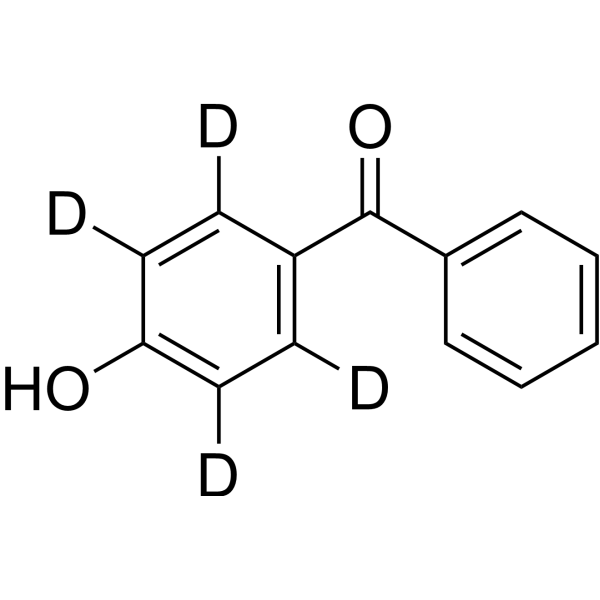
4-Hydroxybenzophenone-d4 (4HBP-d4) is the deuterated-labeled 4-Hydroxybenzophenone (HY-W014937). 4‑Hydroxybenzophenone (4HBP) is a major metabolite of Benzophenone (HY-Y0546) and is orally active. 4-Hydroxybenzophenone triggers endoplasmic reticulum stress and activates the PERK-eIF2α-ATF4-CHOP and IRE1α-XBP1s pathways, and inhibits IκB translation. 4-Hydroxybenzophenone induces endoplasmic reticulum stress, unfolded protein response activation, protein homeostasis imbalance, protein aggregation, oxidative stress, ROS accumulation, mitochondrial membrane potential decrease, ATP depletion, and cytotoxicity. 4-Hydroxybenzophenone induces neural stem cell apoptosis (apoptosis) and affects neuronal differentiation. 4-Hydroxybenzophenone promotes malignant proliferation of hepatocellular carcinoma cells and xenograft tumor growth in nude mice. 4-Hydroxybenzophenone can be used in research related to neurodevelopmental toxicity and hepatocellular carcinoma .
loading...
    loading...
Cat. No.: HY-W014937S1
CAS No.: 76478-47-2
Synonyms: 4HBP-d5
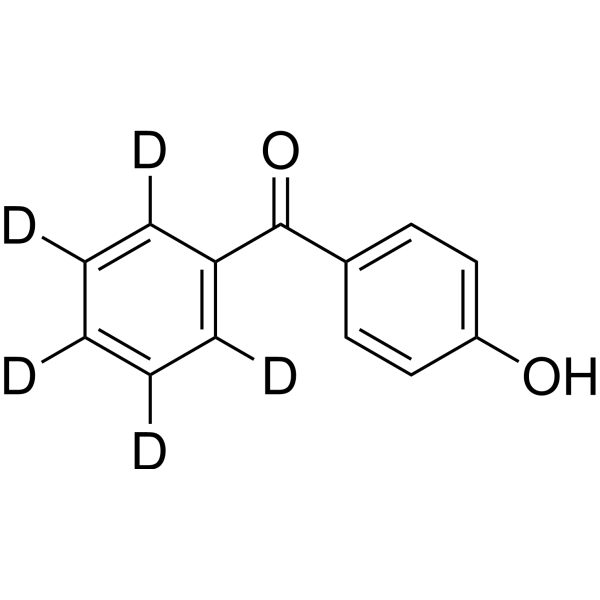
4-Hydroxybenzophenone-d5 (4HBP-d5) is the deuterated-labeled 4-Hydroxybenzophenone (HY-W014937). 4‑Hydroxybenzophenone (4HBP) is a major metabolite of Benzophenone (HY-Y0546) and is orally active. 4-Hydroxybenzophenone triggers endoplasmic reticulum stress and activates the PERK-eIF2α-ATF4-CHOP and IRE1α-XBP1s pathways, and inhibits IκB translation. 4-Hydroxybenzophenone induces endoplasmic reticulum stress, unfolded protein response activation, protein homeostasis imbalance, protein aggregation, oxidative stress, ROS accumulation, mitochondrial membrane potential decrease, ATP depletion, and cytotoxicity. 4-Hydroxybenzophenone induces neural stem cell apoptosis (apoptosis) and affects neuronal differentiation. 4-Hydroxybenzophenone promotes malignant proliferation of hepatocellular carcinoma cells and xenograft tumor growth in nude mice. 4-Hydroxybenzophenone can be used in research related to neurodevelopmental toxicity and hepatocellular carcinoma .
loading...
    loading...
Cat. No.: HY-101349
CAS No.: 156337-32-5
L 741742 is a highly selective and brain-penetrant D4 dopamine receptor antagonist, with Ki values of 3.5 nM, 770 nM and >1700 nM for human D4, D3 and D2 receptors, respectively. L 741742 suppresses PDGFRβ, ERK1/2, and mTOR signaling pathways, and impairs autophagic flux while disrupting lysosomal function.L 741742 induces G0/G1 cell-cycle arrest and apoptosis, promotes neuronal differentiation of normal human neural stem cells, selectively inhibits growth and clonogenic potential of glioblastoma neural stem cells and primary glioblastoma tumor cells, exerts synergistic effects with Temozolomide (TMZ) (HY-17364) against glioblastoma neural stem cells in vitro, and inhibits glioblastoma neural stem cell xenograft growth in immunocompromised mice. L 741742 can be used for the research of schizophrenia and glioblastoma .
loading...
    loading...
Cat. No.: HY-101349A
CAS No.: 874882-93-6
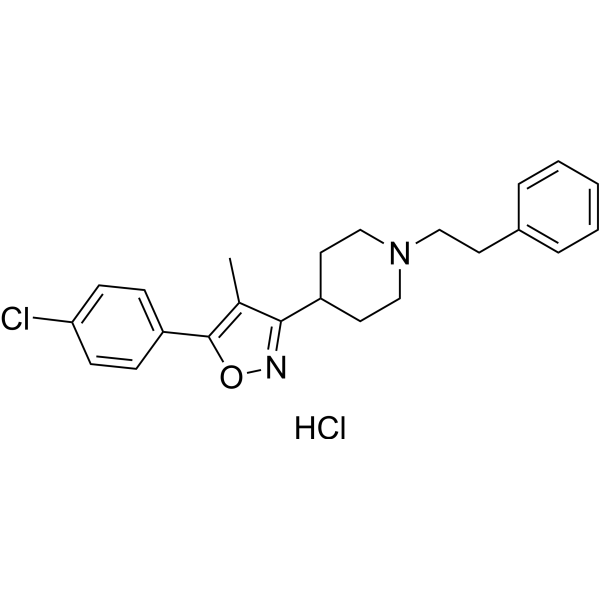
L 741742 hydrochloride is a highly selective and brain-penetrant D4 dopamine receptor antagonist, with Ki values of 3.5 nM, 770 nM and >1700 nM for human D4, D3 and D2 receptors, respectively. L 741742 hydrochloride suppresses PDGFRβ, ERK1/2, and mTOR signaling pathways, and impairs autophagic flux while disrupting lysosomal function.L 741742 hydrochloride induces G0/G1 cell-cycle arrest and apoptosis, promotes neuronal differentiation of normal human neural stem cells, selectively inhibits growth and clonogenic potential of glioblastoma neural stem cells and primary glioblastoma tumor cells, exerts synergistic effects with Temozolomide (TMZ) (HY-17364) against glioblastoma neural stem cells in vitro, and inhibits glioblastoma neural stem cell xenograft growth in immunocompromised mice. L 741742 hydrochloride can be used for the research of schizophrenia and glioblastoma .
loading...
    loading...

