
533 Results for "

Differentiation inducer

" in MedChemExpress (MCE) Product Catalog:
Products (533)

533 Results for "Differentiation inducer" in MCE Product Catalog:

Cat. No.: HY-164542
CAS No.: 2071196-10-4
Research Areas:  

Cancer

TQ05310 is an orally available inhibitor of IDH2 mutants, targeting both IDH2-R140Q (IC50=136.9 nM) and IDH2-R172K (IC50=37.9 nM) mutants. TQ05310 inhibits the production of 2-hydroxyglutarate (2-HG) and induces differentiation of cells expressing IDH2-R140Q and IDH2-R172K by inhibiting the enzymatic activity of mutant IDH2. TQ05310 can be used for the study of acute myeloid leukemia .
loading...
    loading...
Cat. No.: HY-182600
CAS No.: 2370980-52-0
KLK6-IN-1 is a reversible small‑molecule inhibitor of KLK6, KLK1, and plasmin. KLK6-IN-1 shows IC50 values of 1.57 μM (KLK6), 5.1 μM (KLK1), 7.4 μM (plasmin), and Ki values of 0.8 μM (KLK6), 2.4 μM (KLK1), 1.3 μM (plasmin). KLK6-IN-1 is highly selective for KLK6 and its proteolytic network. KLK6-IN-1 induces oligodendrocyte differentiation by promoting oligodendrocyte precursor cell maturation. KLK6-IN-1 can be used for the research of multiple sclerosis .
loading...
    loading...
Cat. No.: HY-183105
CAS No.: 2133291-32-2
Research Areas:  

Cancer

DC551040 is an orally active and selective lysine demethylase 1 (LSD1) inhibitor with a human IC50 of 2.14 nM. DC551040 binds to LSD1 via π-π stacking with Trp552, polar interactions with Phe538, and covalent adduct formation with FAD, and disrupts the LSD1-GFI1B-CoREST complex. DC551040 induces H3K4me2 accumulation, apoptosis, and cell differentiation, activates STAT5, NF-κB, AKT, and IL6-STAT3 pathways, and upregulates IL6 expression. DC551040 can be used for the research of acute myeloid leukemia .
loading...
    loading...
Cat. No.: HY-N18868
CAS No.: 1070166-56-1
Synonyms: PC(16:0/8:0)
1-Palmitoyl-2-capryloyl-sn-glycero-3-phosphocholine (PC(16:0/8:0)) is a phosphatidylcholine glycerophospholipid. 1-Palmitoyl-2-capryloyl-sn-glycero-3-phosphocholine promotes platelet aggregation and flow-induced platelet-dependent thrombus formation. 1-Palmitoyl-2-capryloyl-sn-glycero-3-phosphocholine is a valid biomarker for CAD risk, severity, and subtype differentiation. 1-Palmitoyl-2-capryloyl-sn-glycero-3-phosphocholine is suitable for basic research on various types of coronary artery disease .
loading...
    loading...
Cat. No.: HY-P4866
CAS No.: 1361235-89-3
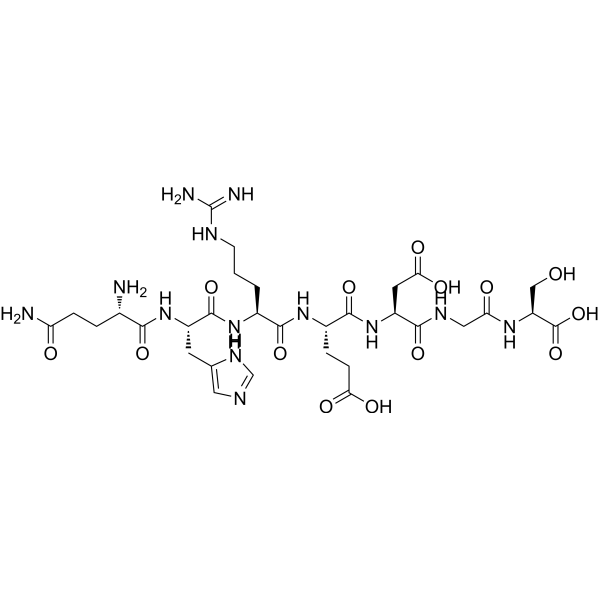
Q-Peptide is an angiopoietin-1 derived peptide (QHREDGS). Q-Peptide interacts with β1-integrin, binds to integrins on the surface of osteoblasts, and serves as an acyl donor substrate for Streptomyces mobaraensis transglutaminase. Q-Peptide activates Akt, MAPKp42/44, ILK, ERK1/2, and downregulates caspase-3/7. Q-Peptide inhibits cell apoptosis, enhances cell adhesion and migration, and promotes osteoblast differentiation, bone matrix deposition and mineralization. Q-Peptide can be used in studies related to myocardial infarction, bone regeneration, diabetic wound repair and human induced pluripotent stem cells .
loading...
    loading...
Cat. No.: HY-10966G
CAS No.: 405554-55-4
SB-590885 GMP is SB-590885 (HY-10966) produced by using GMP guidelines. GMP small molecules works appropriately as an auxiliary reagent for cell therapy manufacture. SB-590885 is a BRAF/c-Raf kinase inhibitor that selectively targets B-Raf, and it amplifies the ERK/MAPK signaling pathway in RAS-activated cells. SB-590885 effectively inhibits the malignant proliferation, transformation and tumorigenicity of oncogenic B-Raf cells; it also induces the proliferation of erythroid progenitor cells, delays their differentiation and promotes hemoglobin synthesis, thereby improving ineffective erythropoiesis and reducing apoptosis. SB-590885 exerts a synergistic effect with TGF-β inhibitors and glucocorticoids, significantly promoting the formation of erythroid colonies in cells from patients with Diamond-Blackfan anemia (DBA). SB-590885 is mainly used in relevant studies on DBA, cisplatin-induced myelosuppression-related anemia, and pan-cancers such as melanoma and colorectal cancer .
loading...
    loading...
Cat. No.: HY-14197AR
CAS No.: 17780-75-5
Synonyms: M&B 9302 hydrochloride (Standard)
Clorgyline hydrochloride (Standard) (M&B 9302 hydrochloride (Standard)) is the analytical standard of Clorgyline hydrochloride (HY-14197A). This product is intended for research and analytical applications. Clorgyline hydrochloride (M&B 9302 hydrochloride) is a selective, irreversible monoamine oxidase A (MAO-A) inhibitor that can cross the blood-brain barrier and exhibits activity against the 5-HT Receptor at very high doses. Clorgyline hydrochloride regulates monoamine neurotransmitter levels, the release of dopamine and acetylcholine, the uptake and effects of Tyramine (HY-W007606), noradrenergic function, circadian locomotor activity rhythms, feeding behavior, and body weight. Clorgyline hydrochloride induces tumor-suppressive transcriptional programs, secretory differentiation, androgen signaling regulation, Bcl-2 expression, and radioprotective effects in non-malignant cells. Clorgyline hydrochloride is used in the research of high-grade prostate cancer, Huntington's disease, major affective disorder, radiation-induced normal tissue toxicity, and obesity .
loading...
    loading...
Cat. No.: HY-P10984
CAS No.: 206536-96-1
FNIII14 is a β1-integrin inhibitory peptide. FNIII14 induces the conformational shift of β1-integrin from the active form to the inactive form, blocks integrin-mediated signaling pathways, disrupts the interaction between VLA-4 and fibronectin, inhibits the phosphorylation of FAK/Akt, suppresses cell adhesion, fibronectin fibril formation and chondrocyte proliferation, induces chondrocyte apoptosis and cartilage degeneration, upregulates the pro-apoptotic protein Bim, and binds to membrane-bound eEF1A. FNIII14 reversibly disrupts cell adhesion without reducing cell viability, accelerates adipocyte differentiation, and loosens tumor matrix architecture to enhance the permeability of nanotherapeutic agents. FNIII14 can be used in research related to neuroblastoma, pancreatic cancer, acute myeloid leukemia, colitis-associated colorectal cancer, osteoarthritis, and atherosclerosis .
loading...
    loading...
Cat. No.: HY-W014937
CAS No.: 1137-42-4
Synonyms: 4HBP
4‑Hydroxybenzophenone (4HBP) is a major metabolite of Benzophenone (HY-Y0546) and is orally active. 4-Hydroxybenzophenone triggers endoplasmic reticulum stress and activates the PERK-eIF2α-ATF4-CHOP and IRE1α-XBP1s pathways, and inhibits IκB translation. 4-Hydroxybenzophenone induces endoplasmic reticulum stress, unfolded protein response activation, protein homeostasis imbalance, protein aggregation, oxidative stress, ROS accumulation, mitochondrial membrane potential decrease, ATP depletion, and cytotoxicity. 4-Hydroxybenzophenone induces neural stem cell apoptosis (apoptosis) and affects neuronal differentiation. 4-Hydroxybenzophenone promotes malignant proliferation of hepatocellular carcinoma cells and xenograft tumor growth in nude mice. 4-Hydroxybenzophenone can be used in research related to neurodevelopmental toxicity and hepatocellular carcinoma .
loading...
    loading...
Cat. No.: HY-116969S
CAS No.: 1246302-93-1
Synonyms: Narthesterol-d7
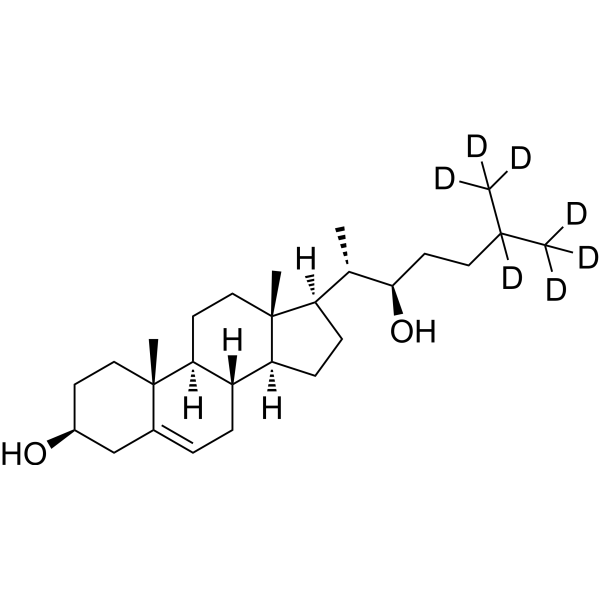
22(R)-Hydroxycholesterol-d7 (Narthesterol-d7) is the deuterated-labeled 22(R)-Hydroxycholesterol (HY-116969). 22 (R)-Hydroxycholesterol (Narthesterol) is a natural oxysterol, acting as a LXRα agonist that inhibits cancer cell proliferation. 22 (R)-Hydroxycholesterol activates LXRα-mediated upregulation of downstream ABCA1 expression, enhances apolipoprotein-dependent cholesterol efflux, reduces intracellular cholesterol content, and decreases the production of β-amyloid peptide. 22 (R)-Hydroxycholesterol induces the differentiation of human mesenchymal stem cells into functional dopaminergic neurons. 22 (R)-Hydroxycholesterol is applicable to research related to cancer, Alzheimer's disease, and Parkinson's disease .
loading...
    loading...
Cat. No.: HY-131763R
CAS No.: 55443-13-5
Synonyms: 2'-O-Monobutyryl cyclic AMP sodium (Standard)
Research Areas:  

Cancer

2'-O-MB-cAMP sodium (Standard) (2'-O-Monobutyryl cyclic AMP sodium (Standard)) is the analytical standard of 2'-O-MB-cAMP sodium (HY-131763). This product is intended for research and analytical applications. 2'-O-MB-cAMP (2'-O-Monobutyryl cyclic AMP) sodium is an inactive analog of Cyclic AMP. 2'-O-MB-cAMP sodium serves as a reference standard in FAB/MIKE mass spectrometry for the characterization of butyryl derivatives of cyclic nucleotides. 2'-O-MB-cAMP sodium does not induce differentiation or upregulate Nm23-R1 in glioma cells. 2'-O-MB-cAMP sodium can be used as a negative control cAMP analog for glioma-related research .
loading...
    loading...
Cat. No.: HY-137381
CAS No.: 30275-80-0
Synonyms: N6-Benzoyl-cAMP
Target:  

PKA Potassium Channel

Research Areas:  

Metabolic Disease

6-Bnz-cAMP, a derivative of cyclic adenosine monophosphate (cAMP), is a selective PKA activator with inhibitory activity against the bTREK-1 K + channel. 6-Bnz-cAMP does not activate the Epac signaling pathway. 6-Bnz-cAMP inhibits the bTREK-1 K + channel via a voltage-independent, ATP-dependent mechanism that is independent of the PKA/Epac/calmodulin kinase/MAP kinase pathway. 6-Bnz-cAMP activates CREB phosphorylation to regulate osteoblast-specific gene expression, induces osteoblast differentiation, promotes extracellular matrix mineralization, supports osteoblast proliferation, and shows no cytotoxicity toward osteoblasts. 6-Bnz-cAMP can be used in studies related to bone tissue repair and regeneration .
loading...
    loading...
Cat. No.: HY-139410
CAS No.: 9005-46-3
Sodium caseinates is a kind of sodium salts of major milk proteins, which act as protein-based biopolymers and innate immune system activators. Sodium caseinates induce granulopoiesis, activation and differentiation, promote the production of M-CSF, and increase serum levels of G-CSF and GM-CSF. Sodium caseinates inhibit the proliferation and reduce the viability of leukemia macrophage-like cells, thereby significantly improving the survival rate of mice inoculated with leukemia cells. Sodium caseinates can serve as carriers for probiotics in edible films and exhibit anti-Listeria activity. Sodium caseinates effectively protect vitamin A from degradation, enhance its stability, bioaccessibility and bioavailability, and regulate protein digestibility when complexed with vitamin A. Sodium caseinates can be applied to research related to acute monocytic leukemia and vitamin A deficiency .
loading...
    loading...
Cat. No.: HY-15872
CAS No.: 170006-73-2
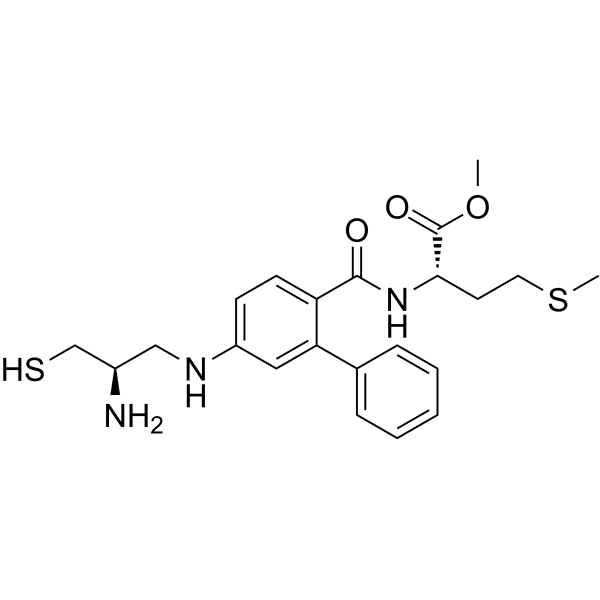
FTI-277 is a farnesyltransferase (FTase) inhibitor. FTI-277 inhibits Ras farnesylation, blocks the phosphorylation of downstream ERK1/2 and mTOR, and reduces membrane-bound active N-ras protein. FTI-277 activates caspase 3, upregulates Bim expression, induces cell apoptosis, suppresses regulatory T cell expansion, enhances macrophage phagocytosis, and improves bacterial clearance. FTI-277 activates the PI3K/Akt signaling pathway, inhibits osteoblast differentiation, and reduces the proliferation ability of neuroblastoma cells. FTI-277 can be used in research related to head and neck squamous cell carcinoma, neuroblastoma, sepsis, and vascular calcification .
loading...
    loading...
Cat. No.: HY-170965
Target:  

CDK DNA/RNA Synthesis

Research Areas:  

Cancer

Anticancer agent 264 (Compound 5w) is an anticancer agent that exhibits significant antiproliferative activity across tumor cell lines, with an IC50 range of 7.5-33.67 μM. Anticancer agent 264 significantly induces G2/M phase arrest in MDA-MB-231, MIA PaCa-2, and DU-145 cell lines. Anticancer agent 264 reduces the expression of key cell cycle proteins, including CDK1, CDK2, and Cyclin B1, in a dose-dependent manner, and shows strong binding affinity with inhibitor of differentiation (ID) proteins and DNA-binding proteins. Anticancer agent 264 can be used for research in the field of cancer-related diseases .
loading...
    loading...
Cat. No.: HY-183073
Research Areas:  

Cancer

TZ1104 is a PROTAC-based CDK7 degrader, with a DC50 of 0.88 nM. TZ1104 forms a ternary complex with VHL E3 ligase and CDK7 to trigger proteasome-dependent CDK7 degradation, destabilizing the CDK7-cyclin H-MAT1 complex. TZ1104 suppresses phosphorylation of RNA polymerase II CTD Ser5, CDK1 Thr161, and CDK2 Thr160. TZ1104 activates the p53-p21 axis and suppresses oncogenic Myc signaling. TZ1104 induces cell cycle arrest, apoptosis, and differentiation of acute leukemia cells. TZ1104 can be used for the research of acute leukemia .

loading...
    loading...
Cat. No.: HY-N10076
CAS No.: 1191255-15-8
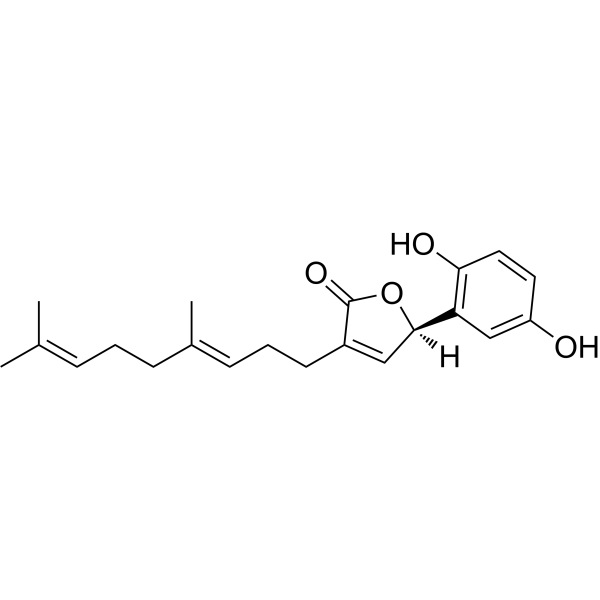
Ganomycin I is a non-competitive dual inhibitor of α-glucosidase and HMG-CoA reductase, with IC50 values of 0.3 μM and 12.3 μM, respectively. Ganomycin I inhibits HIV-1 protease, with an IC50 of 7.5 μg/mL. Ganomycin I also suppresses RANKL-induced osteoclast differentiation and bone resorption by inhibiting the activation of ERK, JNK and p38 MAPK, as well as downregulating the c-Fos/NFATc1 signaling pathway. Ganomycin I exhibits antibacterial activity against Gram-positive bacteria, and shows weak activity against Mycobacterium tuberculosis H37Ra. It can be used in research related to metabolic diseases, bone metabolism and anti-infection .
loading...
    loading...
Cat. No.: HY-N10359
CAS No.: 4176-96-9
Isoandrographolide is an orally active NLRP3 inflammasome inhibitor and AKT/GSK-3β/β-catenin pathway inhibitor. Isoandrographolide inhibits the expression of NLRP3, ASC, and caspase-1, and reduces the levels of phosphorylated AKT, phosphorylated GSK-3β, and β-catenin. Isoandrographolide alleviates inflammatory responses, reduces collagen deposition, suppresses epithelial-mesenchymal transition (EMT), induces differentiation of leukemia cells, inhibits the growth of leukemia cells, protects lung and kidney tissues, regulates cytokine levels, and also exhibits hepatoprotective effects. Isoandrographolide can be used in studies related to silicosis, murine myeloid leukemia, renal tubulointerstitial fibrosis, and non-alcoholic fatty liver disease .
loading...
    loading...
Cat. No.: HY-N20643
CAS No.: 160495-64-7
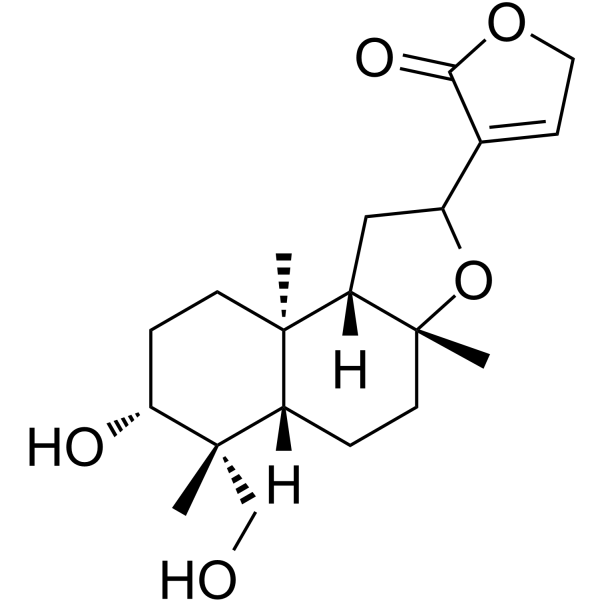
(1R,4aS,5R,6R,8aS)-14-Deoxy-12-hydroxyandrographolide is an ent-kaurane-type diterpenoid. (1R,4aS,5R,6R,8aS)-14-Deoxy-12-hydroxyandrographolide induces leukemia cell differentiation by enhancing phagocytosis and inhibits leukemia cell growth. (1R,4aS,5R,6R,8aS)-14-Deoxy-12-hydroxyandrographolide can be used in the research of murine myeloid leukemia .
loading...
    loading...
Cat. No.: HY-W115785
CAS No.: 1332-07-6
Research Areas:  

Metabolic Disease

Zinc borate is a bioactive inorganic substance with properties including osteogenic induction, pro-angiogenesis, antioxidation, antimutagenesis and cytotoxicity. In the field of bone tissue engineering, Zinc borate is often incorporated into chitosan scaffolds. By releasing zinc ions and borate ions, Zinc borate induces the differentiation of human dental pulp stem cells into osteoblasts, upregulates the expression of bone-related genes and promotes calcium deposition. Zinc borate also promotes angiogenesis by upregulating key factors such as vascular endothelial growth factor. Zinc borate exhibits antioxidant capacity to scavenge free radicals, and can specifically reduce mutagenicity under specific conditions. Zinc borate reduces the survival rate of mouse fibroblasts, but it can still be used in studies related to bone tissue engineering .
loading...
    loading...

