595 Results for "

F cells

" in MedChemExpress (MCE) Product Catalog:
Products (595)

595 Results for "F cells" in MCE Product Catalog:

Cat. No.: HY-132893
CAS No.: 2830555-70-7
Target:  

TAM Receptor

Research Areas:  

Neurological Disease Cancer

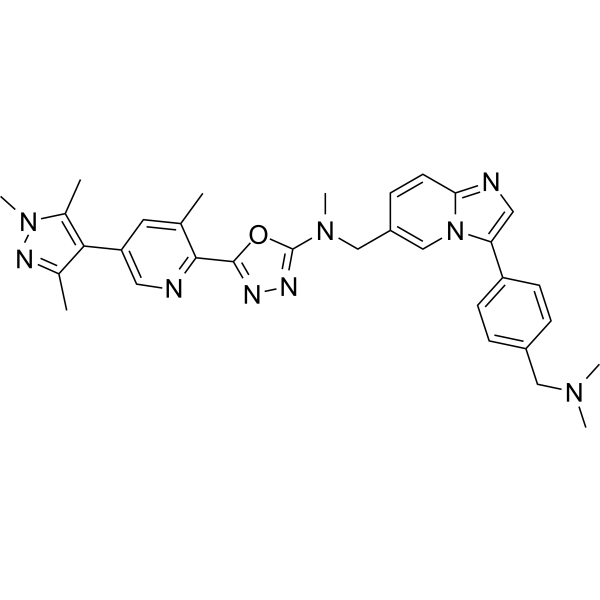
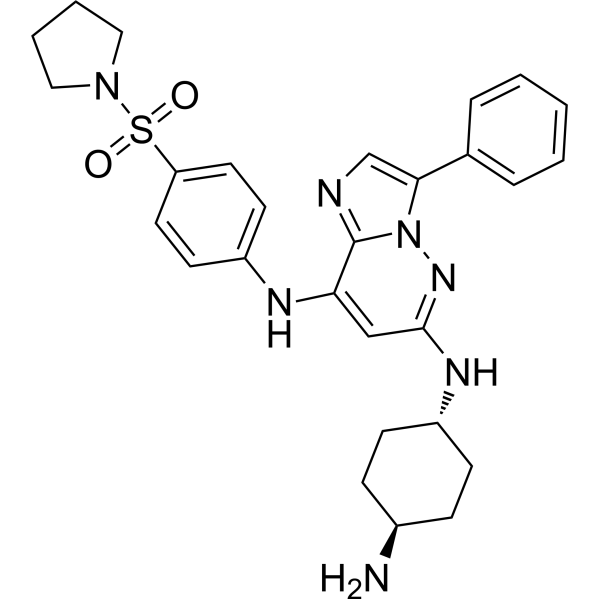
AZ14145845 is an orally active dual-target type 1½ kinase inhibitor of Mer/Axl, which inhibits Mer kinase (pIC50 = 9.0) and Axl kinase (pIC50 = 7.9) with high selectivity over Flt3 and Tyro3. AZ14145845 suppresses Mer- and Axl-dependent proliferation in Ba/F3 cells and inhibits efferocytosis in macrophages. AZ14145845 reduces the phagocytosis of photoreceptor outer segments by polarized human retinal epithelial cells. AZ14145845 inhibits tumor growth and induces tumor regression in vivo, and its combination with anti-PD1 antibody and ionizing radiation improves the survival rate of mice with colorectal cancer. AZ14145845 causes retinal degeneration in mice, with pathological changes similar to those in MERTK loss-of-function models. AZ14145845 can be used in studies related to retinal degeneration, lymphoma and colorectal cancer .
loading...
    loading...
Cat. No.: HY-180811
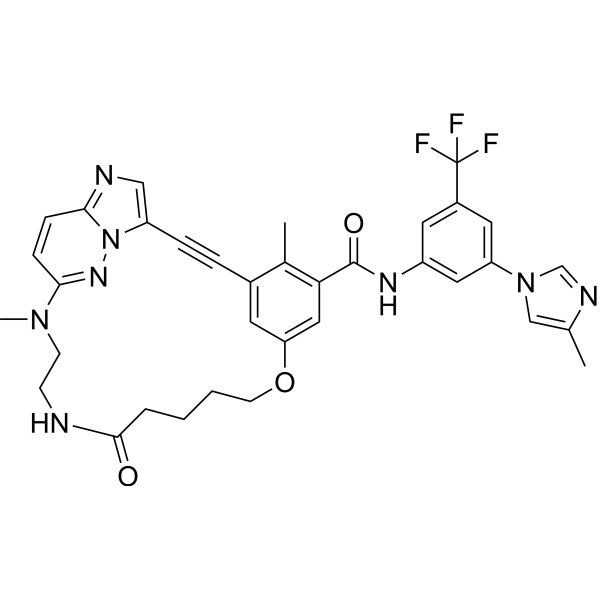
ALK/HDAC-IN-2 (Compound 19b) is an ALK/HDAC inhibitor with IC₅₀ values for ALK WT and total HDACs of 8 nM and 1.18 μM, respectively. ALK/HDAC-IN-2 exhibits inhibitory activity against ALK mutants G1202R, F1174L, and L1196M, with IC₅₀ values of 2.74, 9.23, and 34.28 nM, respectively. ALK/HDAC-IN-2 shows potent and selective inhibition against HDAC1 (IC₅₀ = 0.24 μM), while its inhibitory activity against HDAC7, HDAC6, and HDAC11 is weak (IC₅₀ > 10 μM). ALK/HDAC-IN-2 has broad-spectrum anti-proliferative activity against various cancer cells, inducing cell cycle arrest and apoptosis. ALK/HDAC-IN-2 can be used for the study of neuroblastoma .
loading...
    loading...
Cat. No.: HY-W1128879
CAS No.: 2271314-01-1
Synonyms: SKPer1
Research Areas:  

Cancer

XMU-MP-8 (SKPer1) is a potent molecular glue degrader that targets the oncoprotein SKP2. XMU-MP-8 simultaneously binds to the F-box domain of SKP2 (Kd ≈ 36 μM) and the N-terminal TPR domain of the E3 ligase STUB1 (Kd ≈ 2.5 μM), forming a stable SKP2-SKPer1-STUB1 ternary complex (Kd ≈ 8.9 nM) that induces SKP2 ubiquitination and proteasomal degradation. XMU-MP-8 selectively eliminates SKP2-expressing cancer cells. XMU-MP-8 exhibits substantial tumour suppression with good safety profiles in vivo. XMU-MP-8 can be used for cancer research, such as non-small cell lung adenocarcinoma (NSCLC) and prostatic adenocarcinoma .
loading...
    loading...
Cat. No.: HY-146807
CAS No.: 2937543-72-9
Target:  

Trk Receptor

Research Areas:  

Cancer

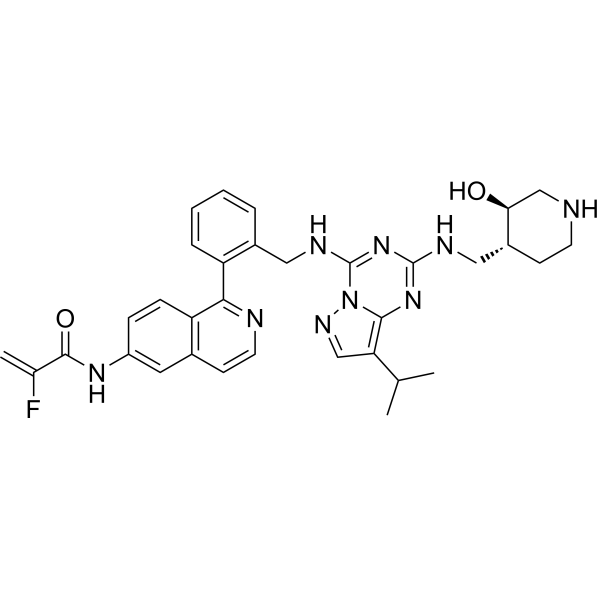
Type II TRK inhibitor 1 is a potent TRK inhibitor, which inhibits various TRK fusion protein variants and wild type. Type II TRK inhibitor 1 exhibits antiproliferative activity against Ba/F3 cells harboring CD74-TRKA G667C and ETV6-TRKC G696C fusion proteins with IC50s of 6 nM and 1.7 nM, respectively . Type II TRK inhibitor 1 is a click chemistry reagent, it contains an Alkyne group and can undergo copper-catalyzed azide-alkyne cycloaddition (CuAAc) with molecules containing Azide groups.
loading...
    loading...
Cat. No.: HY-153278
CAS No.: 2766124-39-2
Purity:  96.82%
Synonyms: CDK7-IN-21
Q901 (CDK7-IN-21) is a selective and potent CDK7 inhibitor with an IC50 of 10 nM. Q901 disrupts MYC and E2Fcell cycle control and DNA damage repair pathways. Q901 stabilizes TOP1-DPCs and sensitizes tumor to TOP1 inhibitors by suppressing RNAPII transition from initiation to elongation. Q901 can inhibit tumor growth and significantly enhances tumor growth inhibition combined with TOP1 inhibitors. Q901 can be used for the research of cancer, such as colon cancer and lung cancer .
loading...
    loading...
Cat. No.: HY-189204
CAS No.: 3110002-64-4
Target:  

FGFR

Research Areas:  

Cancer

FGFR2-IN-4 is a selective, orally active FGFR2 inhibitor, with IC50 values of 10.0 nM and 5.8 nM against wild-type FGFR2 and the FGFR2 V565F mutant, respectively. FGFR2-IN-4 induces necroptosis in FGFR2-driven tumor cells. FGFR2-IN-4 induces tumor regression in xenograft models harboring FGFR2 inhibitor-resistant mutations without altering serum phosphate levels. FGFR2-IN-4 is used to investigate FGFR2-driven malignancies, including intrahepatic cholangiocarcinoma and gastric cancer .
loading...
    loading...
Cat. No.: HY-B1751A
CAS No.: 50-54-4
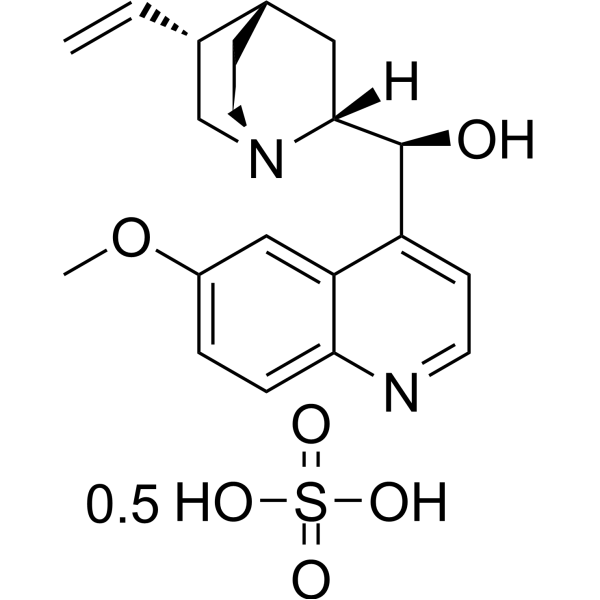
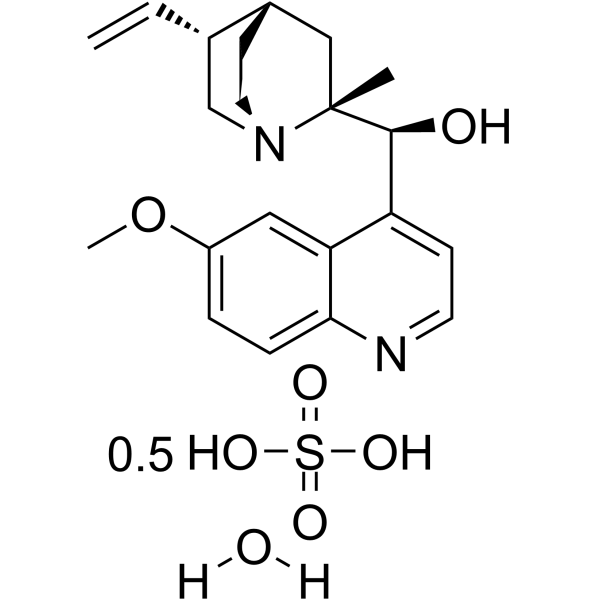
Quinidine sulfate is an orally active antiarrhythmic agent. Quinidine sulfate reduces the expression level of P-gp, inhibits P-gp-mediated efflux, increases the intracellular accumulation of P-gp substrates, induces PARP cleavage and Caspase-3 activation, and elevates the proportion of Apoptotic cells at the sub-G1 phase. Quinidine sulfate exerts sustained block and open-channel block effects on IK(f). Quinidine sulfate alters the urinary metabolic ratio of Amphetamine, modulates the Pentylenetetrazol-induced seizure threshold, and regulates the anticonvulsant effect of Dextromethorphan. Quinidine sulfate can be used in studies related to uterine sarcoma and seizures .
loading...
    loading...
Cat. No.: HY-B1751E
CAS No.: 27555-34-6
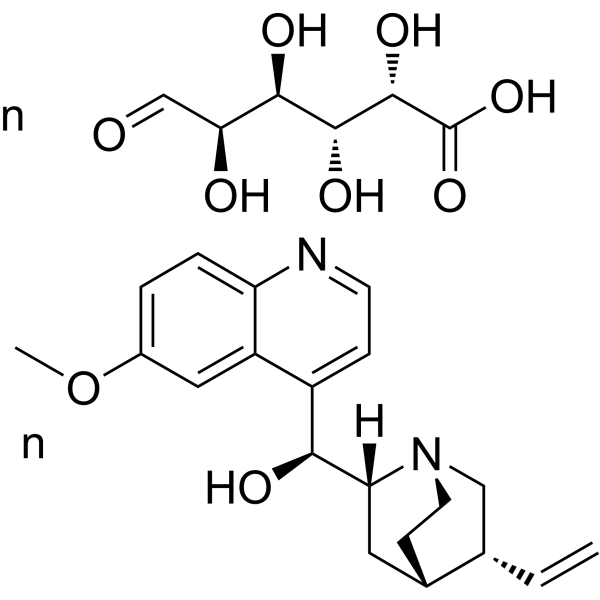
Quinidine polygalacturonate is an orally active antiarrhythmic agent. Quinidine polygalacturonate reduces the expression level of P-gp, inhibits P-gp-mediated efflux, increases the intracellular accumulation of P-gp substrates, induces PARP cleavage and Caspase-3 activation, and elevates the proportion of Apoptotic cells at the sub-G1 phase. Quinidine polygalacturonate exerts sustained block and open-channel block effects on IK(f). Quinidine polygalacturonate alters the urinary metabolic ratio of Amphetamine, modulates the Pentylenetetrazol-induced seizure threshold, and regulates the anticonvulsant effect of Dextromethorphan. Quinidine polygalacturonate can be used in studies related to uterine sarcoma and seizures .
loading...
    loading...
Cat. No.: HY-B1751F
CAS No.: 7054-25-3
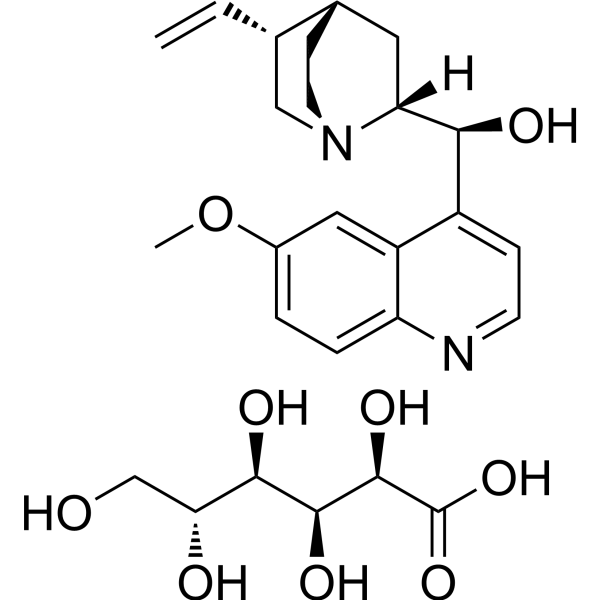
Quinidine gluconic acid is an orally active antiarrhythmic agent. Quinidine gluconic acid reduces the expression level of P-gp, inhibits P-gp-mediated efflux, increases the intracellular accumulation of P-gp substrates, induces PARP cleavage and Caspase-3 activation, and elevates the proportion of Apoptotic cells at the sub-G1 phase. Quinidine gluconic acid exerts sustained block and open-channel block effects on IK(f). Quinidine gluconic acid alters the urinary metabolic ratio of Amphetamine, modulates the Pentylenetetrazol-induced seizure threshold, and regulates the anticonvulsant effect of Dextromethorphan. Quinidine gluconic acid can be used in studies related to uterine sarcoma and seizures .
loading...
    loading...
Cat. No.: HY-153278A
Synonyms: CDK7-IN-21 TFA
Q901 (CDK7-IN-21) TFA is a selective and potent CDK7 inhibitor with an IC50 of 10 nM. Q901 TFA disrupts MYC and E2Fcell cycle control and DNA damage repair pathways. Q901 TFA stabilizes TOP1-DPCs and sensitizes tumor to TOP1 inhibitors by suppressing RNAPII transition from initiation to elongation. Q901 TFA can inhibit tumor growth and significantly enhances tumor growth inhibition combined with TOP1 inhibitors. Q901 TFA can be used for the research of cancer, such as colon cancer and lung cancer .
loading...
    loading...
Cat. No.: HY-155770
Target:  

FLT3

Research Areas:  

Cancer

FLT3-IN-20 (compound 34f) is a potent FLT3 inhibitor with IC50 values of 1 and 4 nM for FLT3-D835Y and FLT3-ITD, respectively. FLT3-IN-20 has anti-proliferation efficacy in FLT3-ITD-positive AML cell lines MV4-11 and MOLM-13 (7 and 9 nM, respectively) and the MOLM-13 variant (4 nM) with the FLT3-ITD-D835Y mutation. FLT3-IN-20 can be used in research of cancer .
loading...
    loading...
Cat. No.: HY-179382
CAS No.: 3022265-51-3
Target:  

FLT3 Apoptosis

Research Areas:  

Cancer

HSB401 is an orally active FLT3 inhibitor (IC50: 28, 5, 72, 51 nM for FLT3-WT, FLT3-D835Y, FLT3-ITD-F691L, FLT3-ITD, respectively). HSB401 downregulates FLT3 signaling and induces cell cycle arrest and apoptosis. HSB401 spares c-KIT inhibition, thereby reducing the risk of myelosuppression. HSB401 significantly suppresses tumor growth in the MV4-11 xenograft mouse model. HSB401 can be used for the research of acute myeloid leukemia .
loading...
    loading...
Cat. No.: HY-189230
CAS No.: 3108114-67-3
Target:  

Ligands for E3 Ligase

Research Areas:  

Infection

NEP48 is a small-molecule antagonist targeting the ZER1 (E3 ubiquitin ligase)-E7 oncogenic axis. NEP48 binds to the MHGD/N-degron binding pocket within the ARM repeat domain of ZER1, competitively blocking E7-ZER1 binding and ZER1-mediated substrate degradation. NEP48 disrupts the ZER1-E7 interaction, leading to Rb stabilization and silencing of E2F-driven transcriptional programs. NEP48 inhibits the proliferation of HPV-positive cancer cells and can be used for research on HPV-positive cervical cancer .
loading...
    loading...
Cat. No.: HY-B0984R
CAS No.: 13636-18-5
Fendiline (hydrochloride) (Standard) is the analytical standard of Fendiline (hydrochloride). This product is intended for research and analytical applications. Fendiline hydrochloride, a diphenylalkylamine type of antianginal agent, is an L-type calcium channel blocker (IC50 of 17 µM). Fendiline hydrochloride is also a selective K-Ras inhibitor, and has no effect on H-Ras and N-Ras. Fendiline hydrochloride inhibits K-Ras plasma membrane localization (IC50 of 9.64 μM), inhibits K-Ras signal output and blocks the proliferation of pancreatic, colon, lung, and endometrial cancer cell lines expressing oncogenic mutant K-Ras. Fendiline hydrochloride is a STING agonist and is able to inhibit the growth of multiple refractory cold tumors (MC38, CT26 and B16F10) .
loading...
    loading...
Cat. No.: HY-B1751D
CAS No.: 6591-63-5
Quinidine sulfate dihydrate is an orally active antiarrhythmic agent. Quinidine sulfate dihydrate reduces the expression level of P-gp, inhibits P-gp-mediated efflux, increases the intracellular accumulation of P-gp substrates, induces PARP cleavage and Caspase-3 activation, and elevates the proportion of Apoptotic cells at the sub-G1 phase. Quinidine sulfate dihydrate exerts sustained block and open-channel block effects on IK(f). Quinidine sulfate dihydrate alters the urinary metabolic ratio of Amphetamine, modulates the Pentylenetetrazol-induced seizure threshold, and regulates the anticonvulsant effect of Dextromethorphan. Quinidine sulfate dihydrate can be used in studies related to uterine sarcoma and seizures .
loading...
    loading...
Cat. No.: HY-B0426AS2
Synonyms: ALO4943A-d6 hydrochloride; KW4679-d6 hydrochloride
Olopatadine-d6 (ALO4943A-d6; KW4679-d6) hydrochloride is deuterium-labeled Olopatadine (hydrochloride) (HY-B0426A). Olopatadine hydrochloride (ALO4943A; KW4679) is an orally active histamine H1 receptor antagonist and mast cell stabilizer. Olopatadine hydrochloride exerts antiallergic effects by blocking histamine H1 receptor-mediated activities. Olopatadine hydrochloride inhibits exocytosis, chemokine release, F-actin polymerization, CXCL10-induced calcium influx, and T cell chemotactic activity. Olopatadine hydrochloride also reduces the expression levels of CXCR3 on the surface of CD4 + and CD8 + T cells. Olopatadine hydrochloride inhibits scratching behavior, improves dermatitis scores, and suppresses intraepidermal neurite outgrowth. Olopatadine hydrochloride simultaneously decreases the levels of inflammatory markers, growth factors, histamine, and specific IgE, while increasing the expression of ErbB3A/HER3A. Olopatadine hydrochloride can be used in research related to seasonal pollinosis, chronic rhinitis, urticaria, allergic conjunctivitis, alopecia areata, and atopic dermatitis .
loading...
    loading...
Cat. No.: HY-174468
Target:  

LYTACs PD-1/PD-L1 HSP

Research Areas:  

Cancer

dPDL1-4 is a potent and selective eHSPTAC eHSP90 PD-L1 degrader with DC50s of 7.77 μM and 6.52 μM in HeLa and B16F10 cells. dPDL1-4 bridges eHSP90 with the target protein, inducing lysosomal degradation. dPDL1-4 can degrade PD-L1 significantly and inhibits tumor growth. dPDL1-4 can be used for the study of cervical cancer and melanoma. ((Pink: eHSP90 ligand (HY-174476); Blue: PD-L1 ligand (HY-116274); Black: Linker (HY-W021787); HSP ligand + linker: HY-174799)) .
loading...
    loading...
Cat. No.: HY-182757
CAS No.: 2812381-74-9
Y1693 is an orally active RANKL inhibitor with a Kd of 5.03 μM for hRANKL. Y1693 inhibits the activation of the downstream c-fos/NFATc1 signaling pathway by blocking its interaction with RANK. Y1693 significantly inhibits RANKL-induced osteoclast differentiation, F-actin ring formation and bone resorptive activity, while downregulating the mRNA and protein expressions of TRAP, cathepsin K, c-fos and NFATc1. Y1693 shows no obvious cytotoxicity to bone marrow-derived macrophages and osteoclast precursor cells, and exhibits favorable ADME properties. Y1693 improves ovariectomy-induced osteoporosis in mice and reverses ligation-induced periodontal alveolar bone loss. Y1693 is applicable to research related to osteoporosis and periodontal diseases .
loading...
    loading...
Cat. No.: HY-B1302R
CAS No.: 6151-40-2
Quinidine hydrochloride monohydrate (Standard) is the analytical standard of Quinidine hydrochloride monohydrate (HY-B1302). This product is intended for research and analytical applications. Quinidine hydrochloride monohydrate is an orally active antiarrhythmic agent. Quinidine hydrochloride monohydrate reduces the expression level of P-gp, inhibits P-gp-mediated efflux, increases the intracellular accumulation of P-gp substrates, induces PARP cleavage and Caspase-3 activation, and elevates the proportion of Apoptotic cells at the sub-G1 phase. Quinidine hydrochloride monohydrate exerts sustained block and open-channel block effects on IK(f). Quinidine hydrochloride monohydrate alters the urinary metabolic ratio of Amphetamine, modulates the Pentylenetetrazol-induced seizure threshold, and regulates the anticonvulsant effect of Dextromethorphan. Quinidine hydrochloride monohydrate can be used in studies related to uterine sarcoma and seizures .
loading...
    loading...
Cat. No.: HY-B1751S1
Quinidine- 13C, d2 hydrochloride is the 13C, d2 labeled Quinidine hydrochloride (HY-W115674). Quinidine hydrochloride is an orally active antiarrhythmic agent. Quinidine hydrochloride reduces the expression level of P-gp, inhibits P-gp-mediated efflux, increases the intracellular accumulation of P-gp substrates, induces PARP cleavage and Caspase-3 activation, and elevates the proportion of Apoptotic cells at the sub-G1 phase. Quinidine hydrochloride exerts sustained block and open-channel block effects on IK(f). Quinidine hydrochloride alters the urinary metabolic ratio of Amphetamine, modulates the Pentylenetetrazol-induced seizure threshold, and regulates the anticonvulsant effect of Dextromethorphan. Quinidine hydrochloride can be used in studies related to uterine sarcoma and seizures .
loading...
    loading...

