
105 Results for "

Drug interaction

" in MedChemExpress (MCE) Product Catalog:
Products (105)

105 Results for "Drug interaction" in MCE Product Catalog:

Cat. No.: HY-136926
CAS No.: 58591-23-4
Synonyms: FR-008I
Target:  

Fungal

Research Areas:  

Infection

Candicidin A3 (FR-008I) is an antifungal antibiotic with significant biological activity. Candicidin A3 can effectively inhibit the growth of fungi through its unique three-dimensional structure and seven-membered ring geometry. The absolute configuration of Candicidin A3 is a specific arrangement of multiple chiral centers, which may affect its biological activity and interaction with targets. Candicidin A3 can be used as a potential drug to inhibit fungal infections .
loading...
    loading...
Cat. No.: HY-121057
CAS No.: 67739-71-3
Synonyms: 3-OH FNTZ
Research Areas:  

Metabolic Disease

3-Hydroxyflunitrazepam (3-OH FNTZ) is the major metabolite of Flunitrazepam (FNTZ), generated via 3-hydroxylation by CYP3A4 (Km = 286 μM), and represents the dominant metabolic pathway (>80%) in liver microsomes. Its formation is significantly inhibited by CYP3A4 inhibitors such as Ketoconazole (HY-B0105) (IC50 = 0.11 μM) and Ritonavir (HY-90001) (IC50 = 0.041 μM), indicating a strong dependence on CYP3A4 activity and potential drug interactions .
loading...
    loading...
Cat. No.: HY-125858B
CAS No.: 1410738-90-7
Research Areas:  

Others

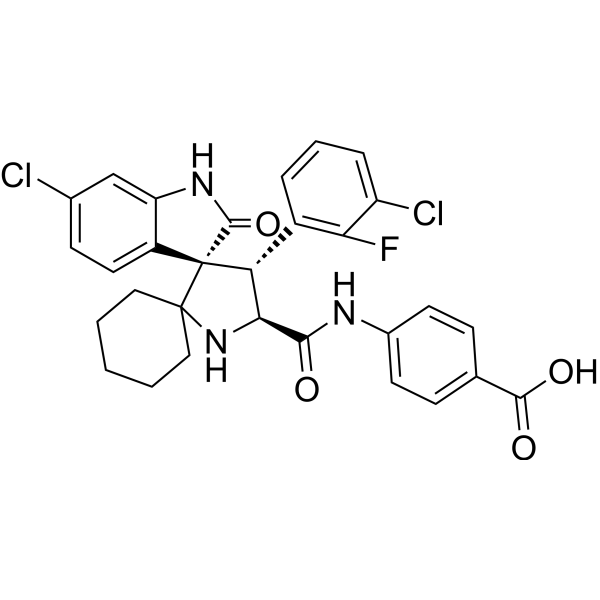
(S,R,S)-MI-1061 is the isomer of MI-1061(HY-125858). (S,R,S)-MI-1061 can used to synthesize Antibody-Drug Conjugates (ADCs). MI-1061 is a potent, orally bioavailable, and chemically stable MDM2 (MDM2-p53 interaction) inhibitor (IC50=4.4 nM; Ki=0.16 nM). MI-1061 potently activates p53 and induces apoptosis in the SJSA-1 xenograft tumor tissue in mice. Anti-tumor activity .
loading...
    loading...
Cat. No.: HY-172960
CAS No.: 3020713-53-2
Target:  

SARS-CoV Virus Protease

Research Areas:  

Infection Inflammation/Immunology

SARS-CoV-2 Mpro-IN-44 (Compound 25) is a broad-spectrum coronavirus main protease (Mpro) inhibitor. SARS-CoV-2 Mpro-IN-44 has inhibitory activity against a variety of high-risk coronaviruses (including SARS-CoV-2 and PEDV, etc.) (IC50: < 0.6 μM). SARS-CoV-2 Mpro-IN-44 achieves broad-spectrum inhibition of coronaviruses by enhancing the interaction with the conserved sites of Mpro. SARS-CoV-2 Mpro-IN-44 can be used for anti-coronavirus drug development .
loading...
    loading...
Cat. No.: HY-W250179
CAS No.: 5168-91-2
Synonyms: Polyoxyethylene (6) cetyl ether
Hexaethylene glycol monohexadecyl ether, is a nonionic surfactant belonging to the polyethylene glycol (PEG) ether family. It has a hydrophilic head and a lipophilic tail, which makes it suitable for a wide range of applications. Specifically, Hexaethylene glycol monohexadecyl ether is commonly used in membrane protein research, for solubilization and stabilization of proteins, and for structural analysis techniques such as X-ray crystallography and electron microscopy. Additionally, Hexaethylene glycol monohexadecyl ether is used in a variety of other industrial and research applications, including drug delivery systems, nanotechnology, and diagnostic analysis. Its unique properties make it ideal for facilitating interactions between molecules with different physicochemical properties.
loading...
    loading...
Cat. No.: HY-D0932S
CAS No.: 1014689-18-9
Synonyms: Solvent Red 24-d6; C.I. 26105-d6
Sudan IV-d6 (Solvent Red 24-d6) is the deuterium labeled Sudan IV(HY-D0932). Sudan IV is an agonist of the aryl hydrocarbon receptor (AhR) that activates downstream signaling pathways and induces CYP1A1 expression. Sudan IV promotes CYP1A1 gene transcription by activating AhR-ARNT heterodimers and binding to exogenous response elements (XREs) on DNA, thereby enhancing drug metabolizing enzyme activity. Sudan IV can be used to study the toxicity mechanisms of industrial dyes and the effects of interactions with serum proteins (such as bovine serum albumin (BSA)) on their distribution in vivo. Sudan IV is a fat-soluble diazo dye that can be used to stain lipids, triglycerides, and lipoproteins on frozen sections .
loading...
    loading...
Cat. No.: HY-78985S
CAS No.: 62790-27-6
Synonyms: Trimesic acid-d3
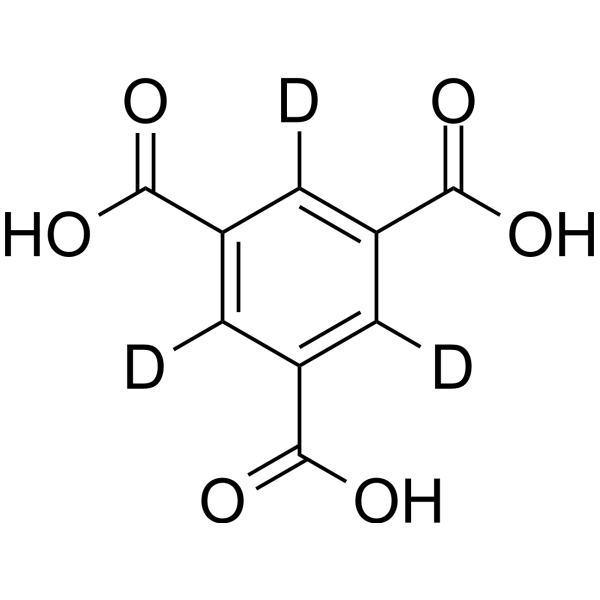
Benzene-1,3,5-tricarboxylic acid-d3 (Trimesic acid-d3) is the deuterium labeled Benzene-1,3,5-tricarboxylic acid (HY-78985). Benzene-1,3,5-tricarboxylic acid (Trimesic acid) is a rigid planar small-molecule scaffold and crosslinker. Benzene-1,3,5-tricarboxylic acid induces bicyclic peptides to adopt a planar conformation, so as to maximize surface area and bind to the flat protein surfaces involved in protein-protein interactions. Benzene-1,3,5-tricarboxylic acid forms ionic crosslinks, hydrogen bonds and π-π bonds with chitosan, thereby constructing a hydrogel network. Benzene-1,3,5-tricarboxylic acid endows chitosan hydrogel systems with specific mechanical properties, enabling sustained release of cancer therapeutic drugs including 5-Fluorouracil (HY-90006) .
loading...
    loading...
Cat. No.: HY-L041
468 compounds

Macrocycles, molecules containing 12-membered or larger rings, are receiving increased attention in small-molecule drug discovery. The reasons are several, including providing access to novel chemical space, challenging new protein targets, showing favorable ADME- and PK-properties. Macrocycles have demonstrated repeated success when addressing targets that have proved to be highly challenging for standard small-molecule drug discovery, especially in modulating macromolecular processes such as protein–protein interactions (PPI). Otherwise, the size and complexity of macrocyclic compounds make possible to ensure numerous and spatially distributed binding interactions, thereby increasing both binding affinity and selectivity.

MCE offers a unique collection of 468 macrocyclic compounds which can be used for drug discovery for high throughput screening (HTS) and high content screening (HCS). MCE Macrocyclic Compound Library is a useful tool for discovering new drugs, especially for “undruggable” targets and protein–protein interactions.

Cat. No.: HY-L033
370 compounds

Peptidomimetics are compounds whose essential elements (pharmacophore) mimic a natural peptide or protein in 3D space and which retain the ability to interact with the biological target and produce the same biological effect. Peptidomimetics are designed to circumvent some of the problems associated with a natural peptide: e.g. stability against proteolysis (duration of activity) and poor bioavailability. Certain other properties, such as receptor selectivity or potency, often can be substantially improved. The design and synthesis of peptidomimetics are most important because of the dominant position peptide and protein-protein interactions play in molecular recognition and signaling, especially in living systems. Hence mimics have great potential in drug discovery.

MCE Peptidomimetic Library contains 370 compounds including peptoid, α-helix mimetics, β-turn/sheets mimetics, etc. This library is an indispensable tool of structure-activity relationships in drug discovery.

Cat. No.: HY-D3433
CAS No.: 222159-75-3
Synonyms: CDCSF
Target:  

Fluorescent Dye

Research Areas:  

Others

5-Carboxy-2′,7′-dichlorosulfonefluorescein (CDCSF) is a fluorescein derivative-based fluorescent probe. 5-Carboxy-2′,7′-dichlorosulfonefluorescein serves as a fluorescent substrate for the organic anion transporting polypeptide OATP2B1, and is specifically recognized and transported into cells by OATP2B1 under acidic pH conditions, making it suitable for in vitro high-throughput screening of drug-drug interactions (DDI) and food-drug interactions (FDI) (Ex/Em = 485/535 nm) .
loading...
    loading...
Cat. No.: HY-179637
Research Areas:  

Infection

RNAP-σ interaction-IN-4 (Compound 3a) is an inhibitor of the RNA polymerase-sigma factor interaction (RNAP-σ) with MIC values against S. pneumoniae and S. aureus of 1 μg/mL and 2 μg/mL, respectively. RNAP-σ interaction-IN-4 exhibits strong bactericidal properties by interfering with the interaction of β′CH−σ and disrupting the transcription of bacteria. RNAP-IN-2 shows significant efficacy in sepsis models. RNAP-σ interaction-IN-4 can be used to study Gram-positive bacterial infections caused by multi-drug resistant strains .
loading...
    loading...
Cat. No.: HY-185588
Research Areas:  

Others

Anionic Liposomes (DOPG, 10mM) is a Phosphatidylglycerol (PG)-based-100% DOPG formulation. Anionic Liposomes (DOPG, 10mM) can be used for drug delivery and lipid-protein interactions.
loading...
    loading...
Cat. No.: HY-N9826
CAS No.: 561-47-7
Icterogenin is a selective inhibitor targeting the Bcl-XL/Bak BH3 domain peptide interaction and exhibits anti-leukemic activity. Icterogenin regulates protein interactions and affects tumor cell survival. Icterogenin is an oleanane-type triterpenoid compound that can be isolated from Lantana camara and is useful in the field of anti-tumor drug development .
loading...
    loading...
Cat. No.: HY-181151
CAS No.: 2457357-91-2
Target:  

Monoamine Transporter

Research Areas:  

Neurological Disease

DLX48 is a LeuBAT (Δ13 mutant) transporter inhibitor that binds to the transporter’s active site. DLX48 can crosses the blood-brain barrier, and has a lower risk of cytochrome P450-related drug-drug interactions. DLX48 can be used for the research of major depressive disorder .
loading...
    loading...
Cat. No.: HY-123661
CAS No.: 1627580-82-8
Target:  

Endogenous Metabolite

Research Areas:  

Neurological Disease

MIPS1455 is a light-activated M1 muscarinic acetylcholine receptor ligand with irreversible binding activity to the allosteric site of the receptor. MIPS1455 is a drug target under investigation for the suppression of cognitive deficits and may become a valuable molecular tool for further investigation of allosteric interactions of the receptor .
loading...
    loading...
Cat. No.: HY-D2514
Target:  

Fluorescent Dye

Research Areas:  

Others

Cy3-PEG1000-DSPE is a compound for the labeling and visualization of nanoparticles or other materials. Cy3-PEG1000-DSPE has a variety of applications including drug delivery, cellular imaging, tracing of bioprocesses, and the study of interactions at the molecular level.
loading...
    loading...
Cat. No.: HY-D2518
Target:  

Fluorescent Dye

Research Areas:  

Others

Cy3-PEG10000-DSPE is a compound for the labeling and visualization of nanoparticles or other materials. Cy3-PEG10000-DSPE has a variety of applications including drug delivery, cellular imaging, tracing of bioprocesses, and the study of interactions at the molecular level.
loading...
    loading...
Cat. No.: HY-L140
232 compounds

Withdrawal or delisting drugs refer to drugs that are recalled or discontinued from the market due to low efficiency, serious side effects, financial and regulatory problems and other reasons. Once the drug is withdrawn from the market, it will cause heavy losses to the original research company that invested a lot of time, finance and other costs to develop the drug.

Adverse drug reaction (ADR) is the main reason for drug withdrawal from the market. ADR refers to the unexpected effects caused by the reasons such as the target-directed interaction during the treatment. However, studying the mechanism of these ADRs may just be a breakthrough in finding new indications. For example, thalidomide, the protagonist of the drug damage event that caused numerous "seal babies" deformed infants, was found to be due to the degradation of a transcription factor - SALL4 after delisting, which made thalidomide have a new clinical application. In 1998, it was approved by FDA for the treatment of leprosy nodular erythema, and in 2006, it was approved for the treatment of multiple myeloma. ADR study of delisted drugs can not only avoid the loss of drug development in advance but also bring hope to new indications.

MCE has sorted out 232 drug compounds withdrawn from the market through FDA, EMA and other authoritative platforms. Each compound has withdrawal records in at least one country/market. It is a useful tool for conducting research on drug side effects or drug toxicity mechanisms and discovering new indications of drugs.

Cat. No.: HY-L147
956 compounds

A protease (also called a peptidase, proteinase, or proteolytic enzyme) is an enzyme that catalyzes proteolysis, breaking down proteins into smaller polypeptides or single amino acids, and spurring the formation of new protein products. Proteases play important roles in regulating multiple biological processes in all living organisms, such as regulating the fate, localization, and activity of many proteins, modulating protein-protein interactions, creating new bioactive molecules, contributing to the processing of cellular information, and generating, transducing, and amplifying molecular signals.

Proteases are important targets in drug discovery. Some protease inhibitors are often used as anti-virus drugs and anti-cancer drugs. MCE offers a unique collection of 956 protease inhibitors. MCE Protease Inhibitor Library is critical for drug discovery and development.

Cat. No.: HY-L109
826 compounds

Protein protein interactions (PPI) have pivotal roles in life processes. The studies showed that aberrant PPI are associated with various diseases, including cancer, infectious diseases, and neurodegenerative diseases. The classic drug targets are usually enzymes, ion channels, or receptors, the PPI indicate new potential therapeutic targets. Therefore, targeting PPI is a new direction in treating diseases and an essential strategy for the development of new drugs.

However, the design of modulators targeting PPI still faces tremendous challenges, such the difficult PPI interfaces for the drug design, lack of ligands reference, lack of guidance rules for the PPI modulators development and high-resolution PPI proteins structures.

With the development of high-throughput technology, high-throughput screening is also gradually used for the identification of PPI inhibitors, but the compound library used for conventional target screening is not very effective in screening PPI inhibitors. To improve screening efficiency, MCE carefully selected 826 PPI inhibitors and mainly targeting MDM2-p53, Keap1-Nrf2, PD-1/PD-L1, Myc-Max, etc. MCE Protein-protein Interaction Inhibitor Library is a useful tool for PPI drug discovery and related research.

