1217 Results for "

Neuron

" in MedChemExpress (MCE) Product Catalog:
Products (1217)

1217 Results for "Neuron" in MCE Product Catalog:

7
7 Cited Publications
Cat. No.: HY-106443
CAS No.: 289893-25-0
Purity:  99.74%
Synonyms: BRX-220 free base
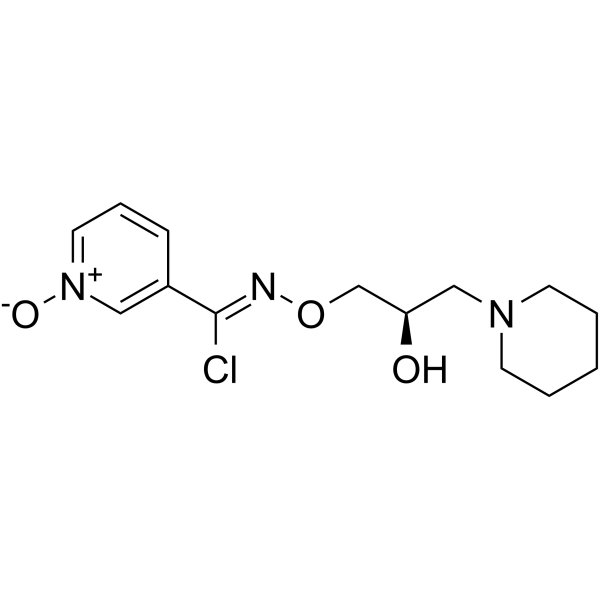
Arimoclomol (BRX-220 free base) is an orally active co-inducer of heat shock proteins (HSP). Arimoclomol protects motor neurons by enhancing Hsp expression, thus directly affecting protein aggregation and clearance of misfolded assemblies via the proteasome-ubiquitin system.Arimoclomol can be used for the study of Niemann–Pick disease type C. Arimoclomol can cross the blood-brain barrier and can be used in research on Niemann-Pick disease type C .
loading...
    loading...
7
7 Cited Publications
Cat. No.: HY-18705
CAS No.: 932986-18-0
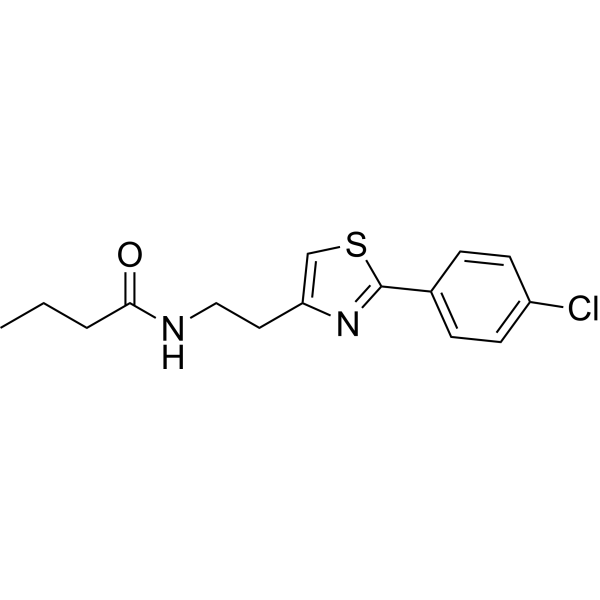
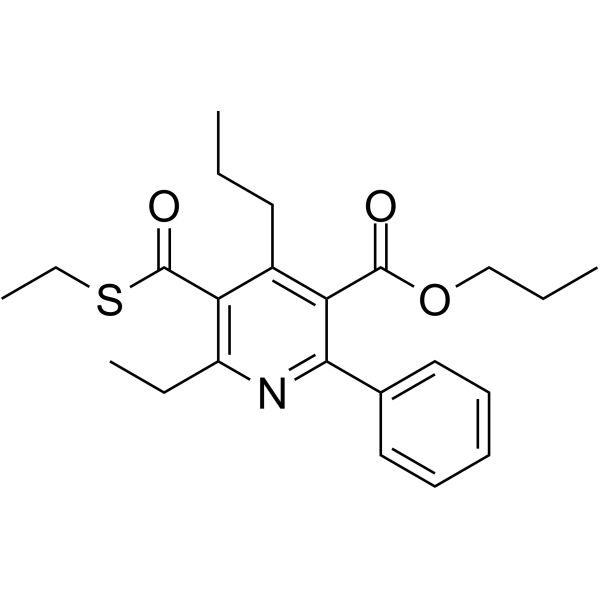
Azoramide is a potent, orally active small-molecule modulator of the unfolded protein response (UPR). Azoramide improves ER protein folding and elevates ER chaperone capacity, which together protects cells against ER stress. Azoramide alleviates PLA2G6 mutant-induced ER stress through modulating unfolded protein response, and enhances the CERB signaling to rescue mitochondrial function, thereby preventing apoptosis of DA neurons. Azoramide has antidiabetic activity .
loading...
    loading...
7
7 Cited Publications
Cat. No.: HY-128692
CAS No.: 67769-47-5
Purity:  99.67%
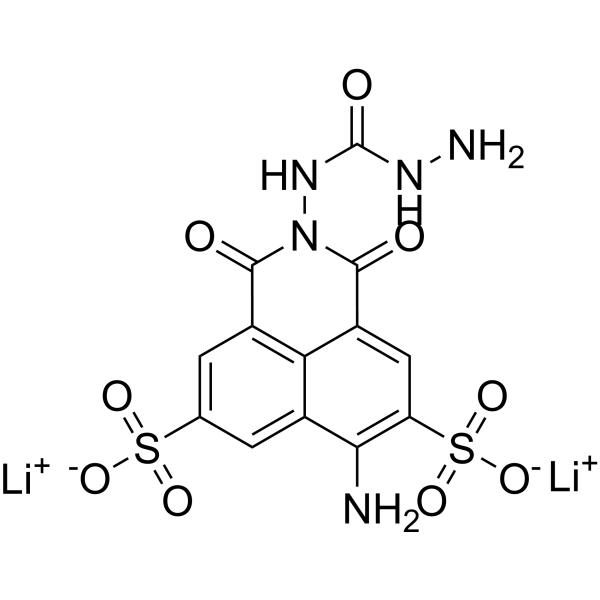
Luc Yellow CH dilithium is a high-intensity fluorescent probe containing free hydrazyl groups. Luc Yellow CH can react with fatty aldehydes at room temperature. Luc Yellow CH serves as a biological tracer to monitor neuronal branching, regeneration, gap junction detection and characterization, and selective ablation of cells after aldehyde fixation. Luc Yellow CH displays the maximum excitation/emission of 430 nm/540 nm, respectively .
loading...
    loading...
7
7 Cited Publications
Cat. No.: HY-18638
CAS No.: 30675-13-9
Synonyms: 4,5,6,7-Tetrachloroindan-1,3-dione
Target:  

Deubiquitinase

Research Areas:  

Neurological Disease

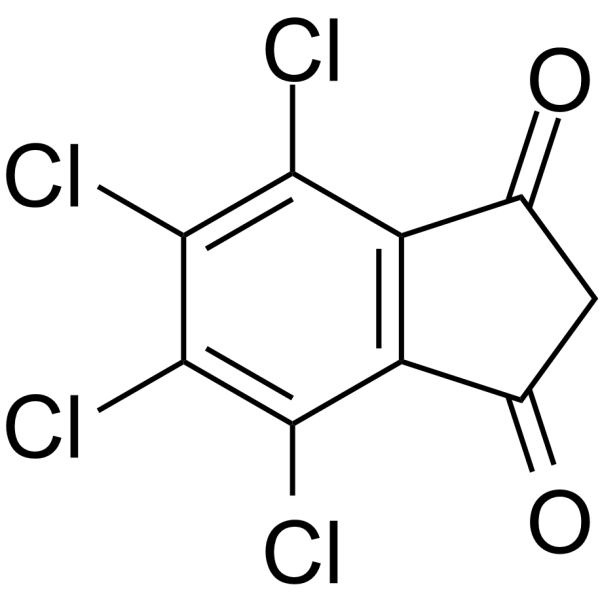
TCID (4,5,6,7-Tetrachloroindan-1,3-dione) is a potent and selective neuronal ubiquitin C-terminal hydrolase (UCH-L3) inhibitor with an IC50 of 0.6 μM . TCID diminishes glycine transporter GlyT2 ubiquitination in brainstem and spinal cord primary neurons .
loading...
    loading...
7
7 Cited Publications
Cat. No.: HY-100530
CAS No.: 151837-09-1
Purity:  99.53%
Target:  

PKA

Research Areas:  

Neurological Disease

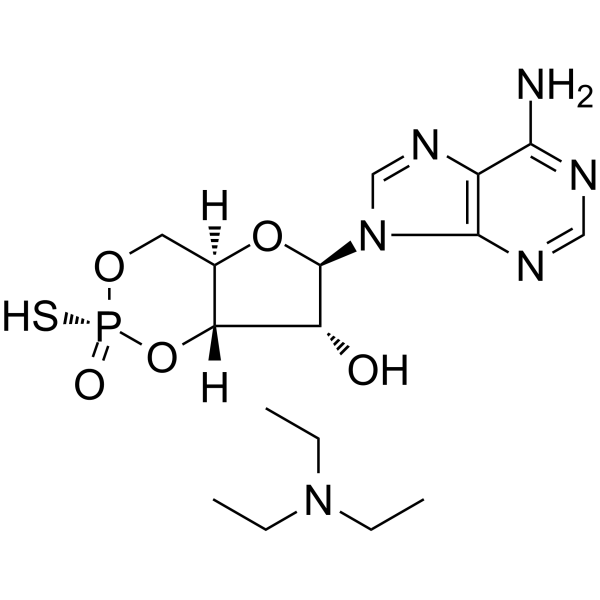
Rp-cAMPS triethylammonium salt, a cAMP analog, is a potent, competitive cAMP-induced activation of cAMP-dependent PKA I and II (Kis of 12.5 µM and 4.5 µM, respectively) antagonist. Rp-cAMPS triethylammonium salt is resistant to hydrolysis by phosphodiesterases .
loading...
    loading...
7
7 Cited Publications
Cat. No.: HY-100530D
CAS No.: 142439-94-9
Purity:  99.69%
Target:  

PKA

Research Areas:  

Neurological Disease

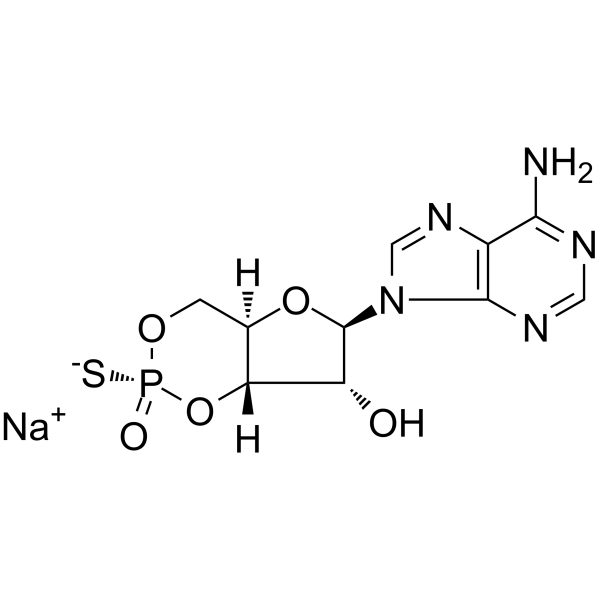
Rp-cAMPS sodium salt, a cAMP analog, is a potent, competitive cAMP-induced activation of cAMP-dependent PKA I and II (Kis of 12.5 µM and 4.5 µM, respectively) antagonist. Rp-cAMPS sodium salt is resistant to hydrolysis by phosphodiesterases .
loading...
    loading...
7
7 Cited Publications
Cat. No.: HY-N0815
CAS No.: 465-39-4
Synonyms: Bufogenin; Recibufogenin
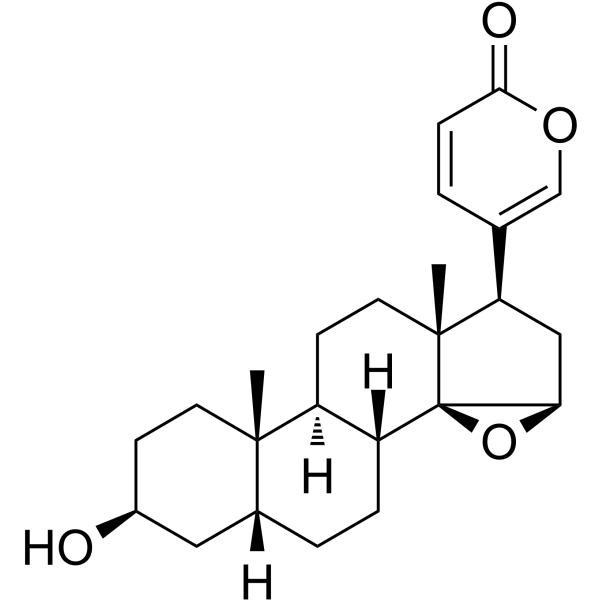
Resibufogenin is an orally active anticancer agent. Resibufogenin can be extracted from toad venom. Resibufogenin blocks signaling pathways such as PI3K/Akt, NF-κB, AP-1, activates GSK-3β, and regulates cyclin D1. Resibufogenin can activate central neurons. Resibufogenin has anti-inflammatory activity. Resibufogenin has anti-tumor effects on a variety of tumors such as multiple myeloma, renal cancer, colorectal cancer, pancreatic cancer, and glioma .
loading...
    loading...
6
6 Cited Publications
Cat. No.: HY-13409
CAS No.: 181632-25-7
Purity:  99.96%
Target:  

5-HT Receptor

SB 242084 is a selective, competitive and high-affinity (pKi=9.0) 5-HT2C receptor antagonist (crosses the blood-brain barrier). SB 242084 increases basal activity of dopaminergic neurons in the ventral tegmental area (VTA) of the midbrain and dopamine release in the vomeronasal nucleus. SB 242084 also increases mitochondrial gene expression and oxidative metabolism via 5-HT2A receptor. SB 242084 has good research potential in the negative symptoms of anxiety, depression and schizophrenia, as well as in acute organ damage .
loading...
    loading...
6
6 Cited Publications
Cat. No.: HY-13409A
CAS No.: 1049747-87-6
Purity:  98.12%
Target:  

5-HT Receptor

SB 242084 dihydrochloride is a selective, competitive and high-affinity (pKi=9.0) 5-HT2C receptor antagonist (crosses the blood-brain barrier). SB 242084 dihydrochloride increases basal activity of dopaminergic neurons in the ventral tegmental area (VTA) of the midbrain and dopamine release in the vomeronasal nucleus. SB 242084 dihydrochloride also increases mitochondrial gene expression and oxidative metabolism via 5-HT2A receptor. SB 242084 dihydrochloride has good research potential in the negative symptoms of anxiety, depression and schizophrenia, as well as in acute organ damage .
loading...
    loading...
6
6 Cited Publications
Cat. No.: HY-B0358
CAS No.: 52468-60-7
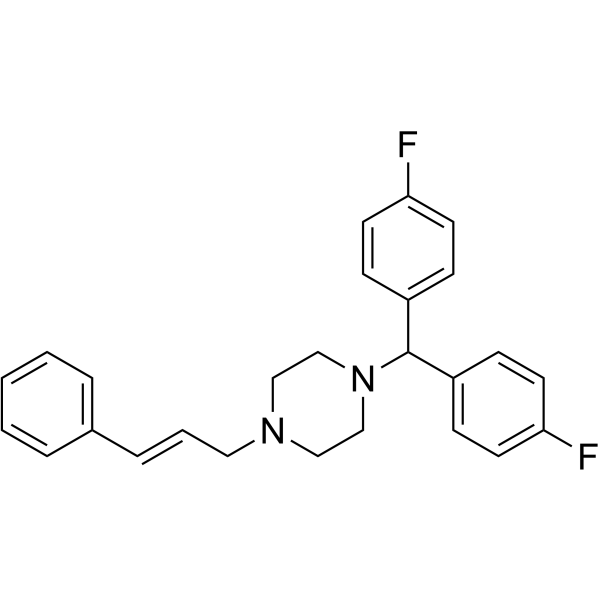
Flunarizine is a potent dual Na +/Ca 2+ channel (T-type) blocker. Flunarizine is a D2 dopamine receptor antagonist. Flunarizine shows anticonvulsive and antimigraine activity, and peripheral vasodilator effects .
loading...
    loading...
6
6 Cited Publications
Cat. No.: HY-B0358A
CAS No.: 30484-77-6
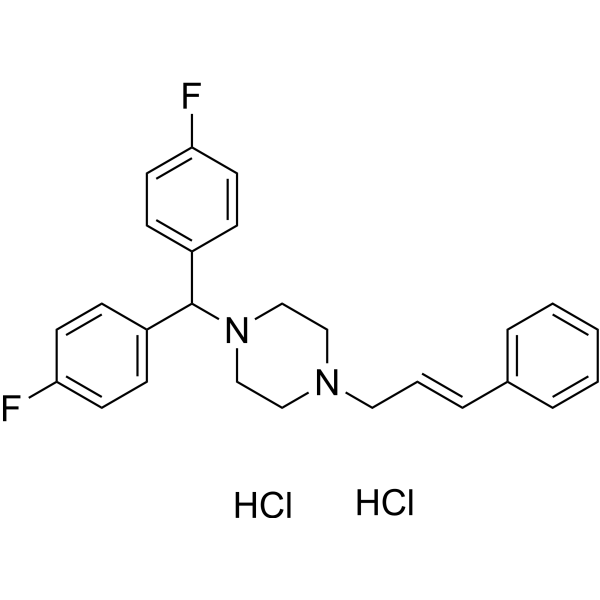
Flunarizine dihydrochloride is a potent dual Na +/Ca 2+ channel (T-type) blocker. Flunarizine dihydrochloride is a D2 dopamine receptor antagonist. Flunarizine dihydrochloride shows anticonvulsive and antimigraine activity, and peripheral vasodilator effects .
loading...
    loading...
6
6 Cited Publications
Cat. No.: HY-N0067
CAS No.: 56-12-2
Synonyms: 4-Aminobutyric acid
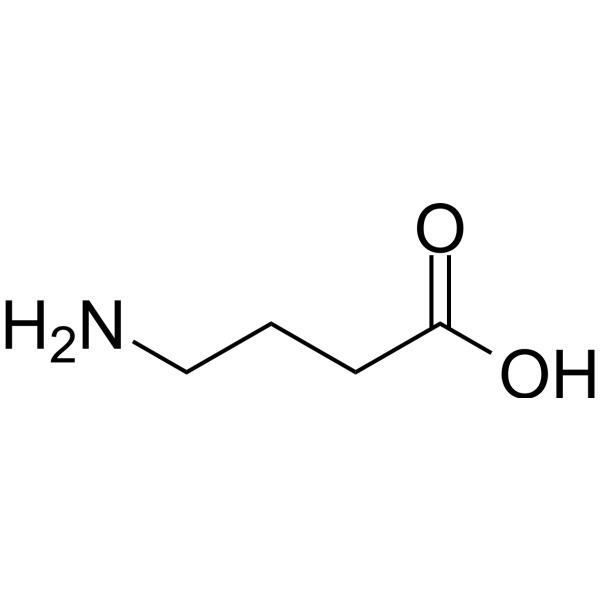
γ-Aminobutyric acid (4-Aminobutyric acid) is a major inhibitory neurotransmitter in the adult mammalian brain, binding to the ionotropic GABA receptors (GABAA receptors) and metabotropic receptors (GABAB receptors. γ-Aminobutyric acid shows calming effect by blocking specific signals of central nervous system .
loading...
    loading...
5
5 Cited Publications
Cat. No.: HY-121119
CAS No.: 212329-37-8
Purity:  99.97%
MRS 1523 is a potent and selective adenosine A3 receptor antagonist with Ki values of 18.9 nM and 113 nM for human and rat A3 receptors, respectively. In rat this corresponds to selectivities of 140- and 18-fold vs A1 and A2A receptors, respectively. MRS 1523 can exert antihyperalgesic effect through N-type Ca channel block and action potential inhibition in isolated rat dorsal root ganglion (DRG) neurons .
loading...
    loading...
5
5 Cited Publications
Cat. No.: HY-N0666
CAS No.: 56-84-8
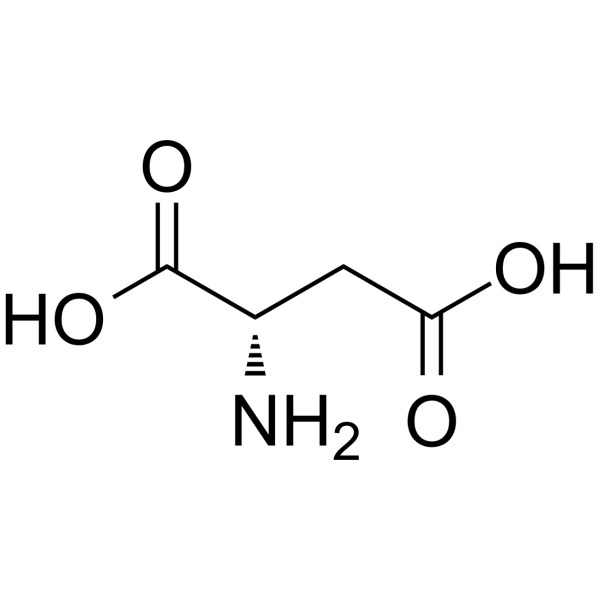
L-Aspartic acid is a NMDA receptor agonist and acidic amino acid. L-Aspartic acid has no independent analgesic activity. L-Aspartic acid can antagonize the analgesic effects of D-Aspartic acid and Morphine. L-Aspartic acid regulates polymorph transformation, crystal growth/aggregation and nucleation processes of calcium carbonate, and can serve as a biomineralization template. L-Aspartic acid promotes burst firing of central neurons. L-Aspartic acid can be used in studies related to cerebral ischemia and epilepsy .
loading...
    loading...
5
5 Cited Publications
Cat. No.: HY-13530
CAS No.: 1218777-13-9
Purity:  98.01%
Target:  

PI3K Apoptosis

Research Areas:  

Cancer

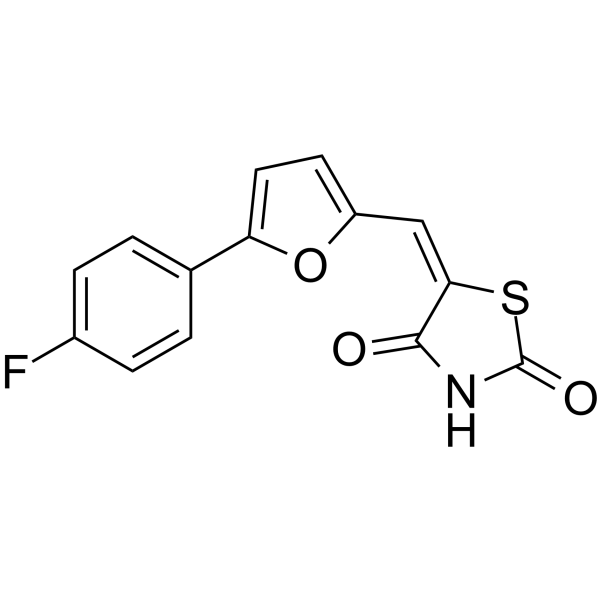
CAY10505 is a potent and selective PI3Kγ inhibitor with an IC50 of 30 nM in neurons.
loading...
    loading...
5
5 Cited Publications
Cat. No.: HY-N0666A
CAS No.: 1115-63-5
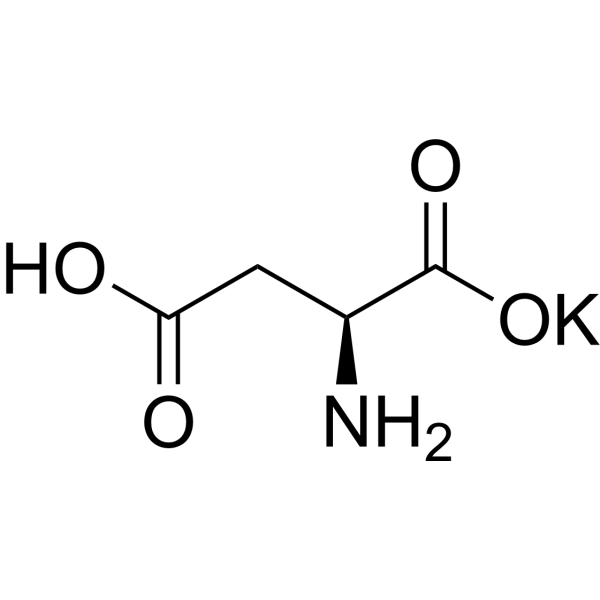
L-Aspartic acid potassium (potassium L-aspartate) is a NMDA receptor agonist and acidic amino acid. L-Aspartic acid potassium has no independent analgesic activity. L-Aspartic acid potassium can antagonize the analgesic effects of D-Aspartic acid and Morphine. L-Aspartic acid potassium regulates polymorph transformation, crystal growth/aggregation and nucleation processes of calcium carbonate, and can serve as a biomineralization template. L-Aspartic acid potassium promotes burst firing of central neurons. L-Aspartic acid potassium can be used in studies related to cerebral ischemia and epilepsy .
loading...
    loading...
5
5 Cited Publications
Cat. No.: HY-N0666B
CAS No.: 10389-09-0
Synonyms: Calcium L-aspartate
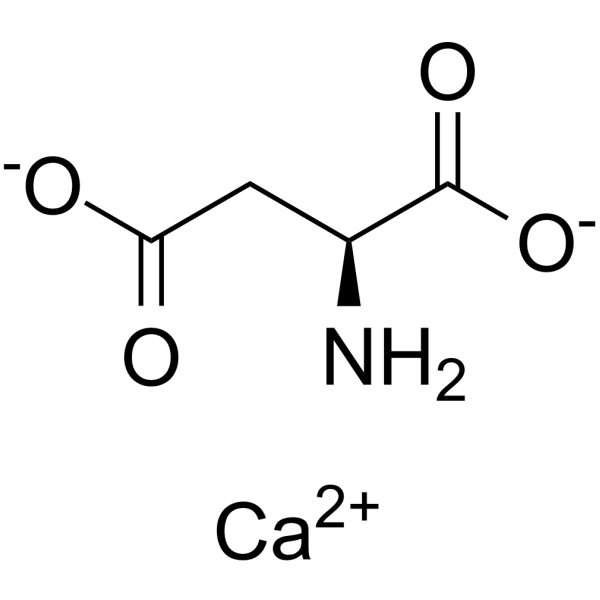
Aspartic acid calcium (calcium L-aspartate) is a NMDA receptor agonist and acidic amino acid. Aspartic acid calcium has no independent analgesic activity. Aspartic acid calcium can antagonize the analgesic effects of D-Aspartic acid and Morphine. Aspartic acid calcium regulates polymorph transformation, crystal growth/aggregation and nucleation processes of calcium carbonate, and can serve as a biomineralization template. Aspartic acid calcium promotes burst firing of central neurons. Aspartic acid calcium can be used in studies related to cerebral ischemia and epilepsy .
loading...
    loading...
5
5 Cited Publications
Cat. No.: HY-N0666C
CAS No.: 3792-50-5
Synonyms: Sodium L-aspartate
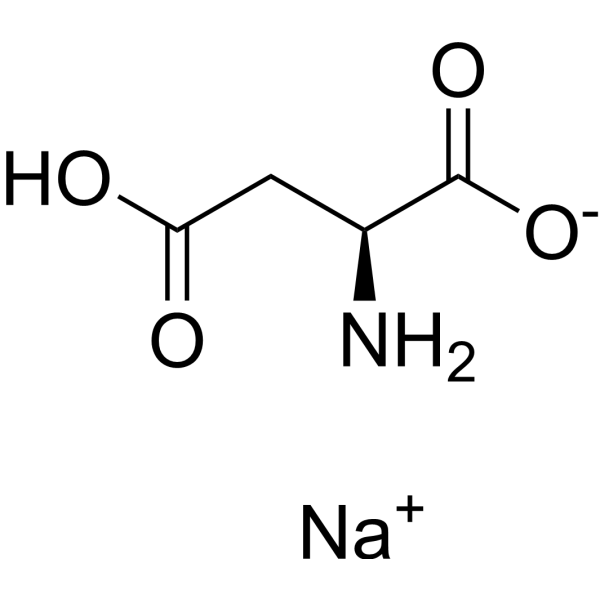
L-Aspartic acid sodium (Sodium L-aspartate) is a NMDA receptor agonist and acidic amino acid. L-Aspartic acid sodium has no independent analgesic activity. L-Aspartic acid sodium can antagonize the analgesic effects of D-Aspartic acid and Morphine. L-Aspartic acid sodium regulates polymorph transformation, crystal growth/aggregation and nucleation processes of calcium carbonate, and can serve as a biomineralization template. L-Aspartic acid sodium promotes burst firing of central neurons. L-Aspartic acid sodium can be used in studies related to cerebral ischemia and epilepsy .
loading...
    loading...
5
5 Cited Publications
Cat. No.: HY-N0666D
CAS No.: 5598-53-8
Synonyms: Disodium L-aspartate
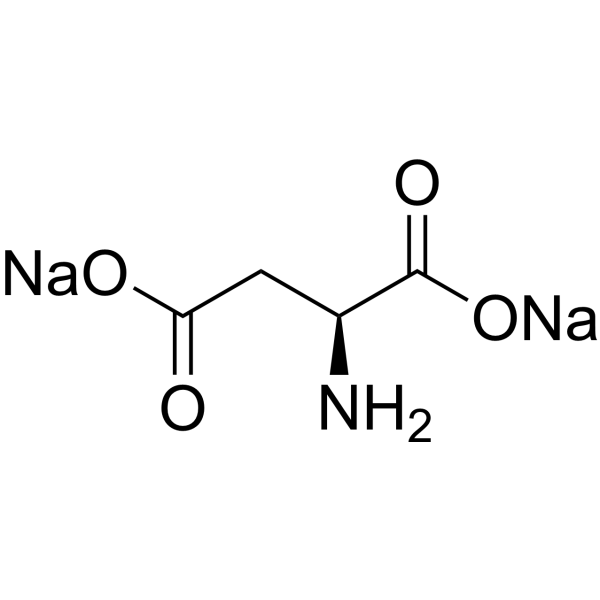
L-Aspartic acid disodium (disodium L-aspartate) is a NMDA receptor agonist and acidic amino acid. L-Aspartic acid disodium has no independent analgesic activity. L-Aspartic acid disodium can antagonize the analgesic effects of D-Aspartic acid and Morphine. L-Aspartic acid disodium regulates polymorph transformation, crystal growth/aggregation and nucleation processes of calcium carbonate, and can serve as a biomineralization template. L-Aspartic acid disodium promotes burst firing of central neurons. L-Aspartic acid disodium can be used in studies related to cerebral ischemia and epilepsy .
loading...
    loading...
5
5 Cited Publications
Cat. No.: HY-N2183
CAS No.: 18609-17-1
Synonyms: Quercetin 3-O-sophoroside
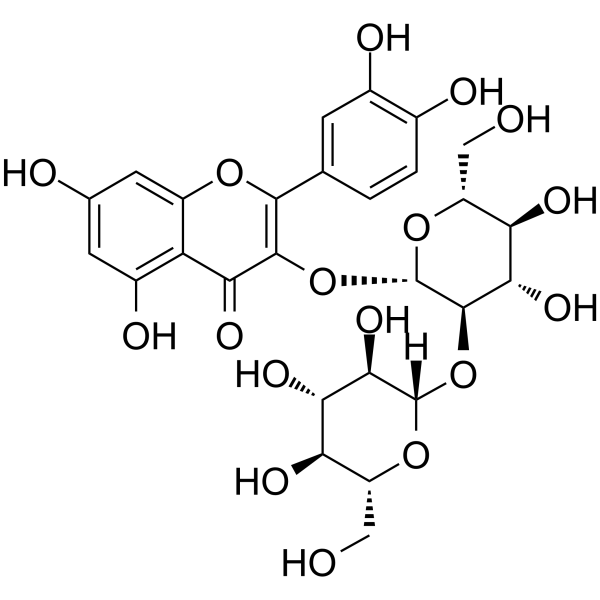
Baimaside (Quercetin 3-O-sophoroside) is a flavonoid cholinergic function modulator that binds to SARS-CoV-2-related targets. Baimaside regulates the expression of cholinergic system-related proteins and acetylcholine levels, improves scopolamine-induced learning and memory impairment, protects hippocampal neurons, inhibits pollen protein fluorescence, and protects pollen DNA. Its biosynthesis is regulated by multiple enzymes. Baimaside is completely absorbed in rats, undergoes phase Ⅱ metabolism and gut microbiota decomposition, and inhibits the invasion and proliferation of SARS-CoV-2 and its variants, making it suitable for research related to Alzheimer's disease and COVID-19 .
loading...
    loading...

