

547 Results for "

gastric-simulating medium

" in MedChemExpress (MCE) Product Catalog:
Products (547)

547 Results for "gastric-simulating medium" in MCE Product Catalog:

1
1 Cited Publications
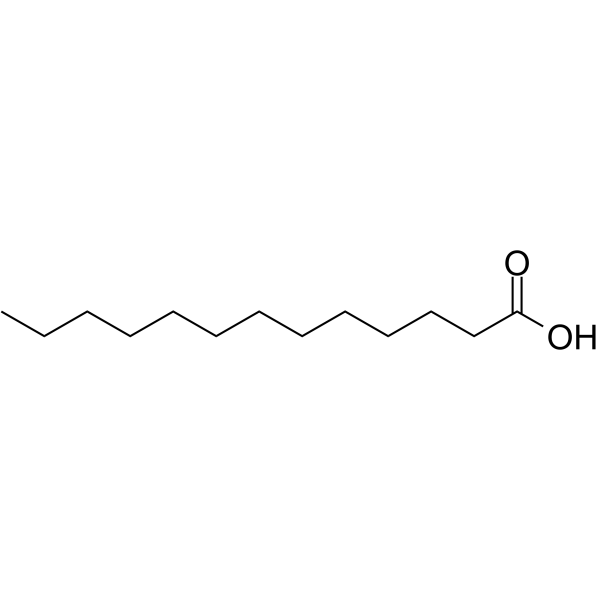
Cat. No.: HY-Y1718
CAS No.: 638-53-9
Synonyms: N-Tridecanoic acid
Tridecanoic acid (N-Tridecanoic acid) is a medium-chain saturated fatty acid and inhibitor with no antibacterial activity against enterohemorrhagic E. coli (EHEC). When used in combination with Ciprofloxacin (HY-B0356) or Ampicillin (HY-B0522), Tridecanoic acid suppresses persister formation in exponentially growing E. coli and EHEC, but exerts no inhibitory effect on persister formation induced by Kanamycin (HY-16566) or in stationary-phase cells. Tridecanoic acid inhibits biofilm formation in EHEC. It can be used in the research of bacterial infections .
loading...
    loading...
1
1 Cited Publications
Cat. No.: HY-148140
CAS No.: 9041-35-4
Research Areas:  

Others

Cross-linked dextran G 25 is a cross-linked dextran gel chromatography medium that possesses multiple separation activities, including molecular sieve effects, weak anion exchange, and aromatic adsorption. Cross-linked dextran G 25 weakly exchanges cations through immobilized terminal carboxyl groups and repels anions at low ionic strength. Cross-linked dextran G 25 is used for the fractionation of low molecular weight solutes, including peptides, amino acids, nucleotide sugar derivatives, and aromatic compounds .
loading...
    loading...
1
1 Cited Publications
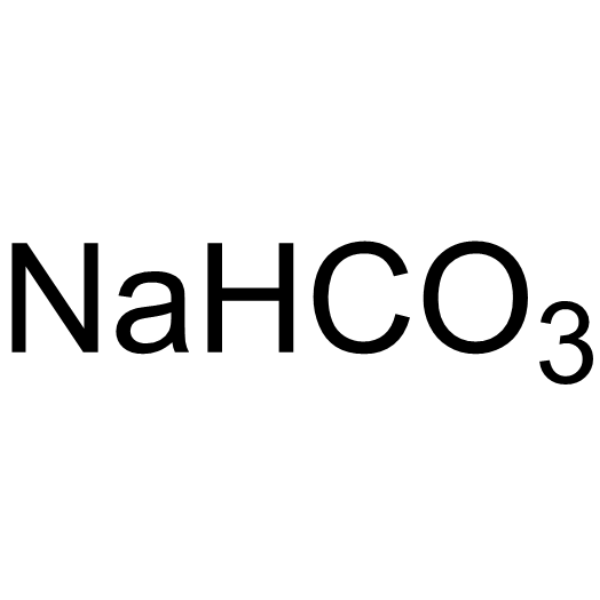
Cat. No.: HY-Y0756
CAS No.: 144-55-8
Synonyms: Sodium hydrogen carbonate
Target:  

Bacterial

Research Areas:  

Infection Cancer

Sodium bicarbonate (Sodium hydrogen carbonate; Soda bicarbonate) is an inorganic salt that is neutral to slightly alkaline and easily decomposes when exposed to moisture in the air. Sodium bicarbonate can maintain the pH of the culture medium, thereby affecting the expression of inducible nitric oxide synthase (iNOS) and nitric oxide (NO) production in macrophages and reversing the acidosis of the tumor microenvironment. Sodium bicarbonate is widely used in the fields of food, medicine, cosmetics, etc. Its main uses include buffers, flavoring agents, disinfectants, pharmaceuticals, and proton gradient regulators. Sodium bicarbonate is also commonly used as an antacid to inhibit gastrointestinal diseases, neutralize gastric acid, and reduce gastric discomfort .
loading...
    loading...
1
1 Cited Publications
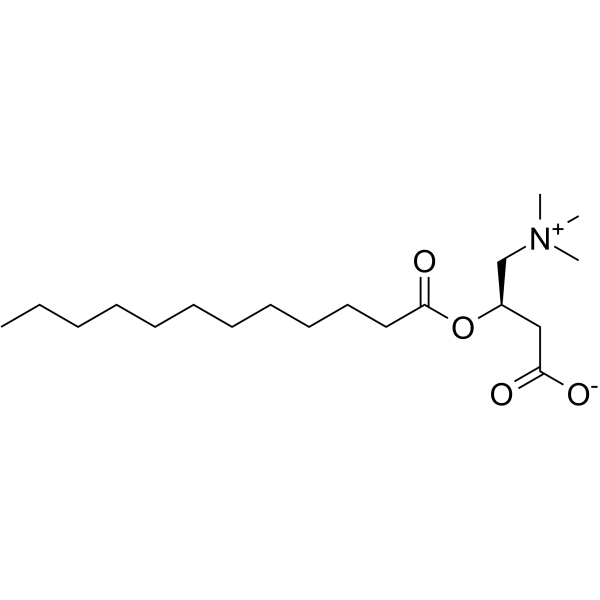
Cat. No.: HY-113166
CAS No.: 25518-54-1
Purity:  99.75%
Synonyms: (-)-Lauroylcarnitine
Dodecanoylcarnitine ((-)-Lauroylcarnitine) is a medium long-chain acylcarnitine, an intermediate product in key energy metabolic pathways of fatty acid β-oxidation and amino acids catabolism. The abnormal decrease in the Dodecanoylcarnitine levels indicats that mitochondrial fuel metabolism, including fatty acid oxidation is significantly disturbed. Changes in plasma concentrations of Dodecanoylcarnitine are not only associated with type II diabetes, but also with pre-diabetes status. Dodecanoylcarnitine is present in fatty acid oxidation disorders such as long-chain acyl CoA dehydrogenase deficiency, carnitine palmitoyltransferase I/II deficiency, and is also associated with celiac disease. Dodecanoylcarnitine deomonstrates high sensitivities and specificities in predicting asthma. Combined model of Decanoylcarnitine (HY-113069), Dodecanoylcarnitine, PC (16:0/0:0), and Asp Arg Pro can be used as a potential biomarker for the diagnosis of Yin-deficiency-heat syndrome .
loading...
    loading...
1
1 Cited Publications
Cat. No.: HY-W592871
CAS No.: 765-01-5
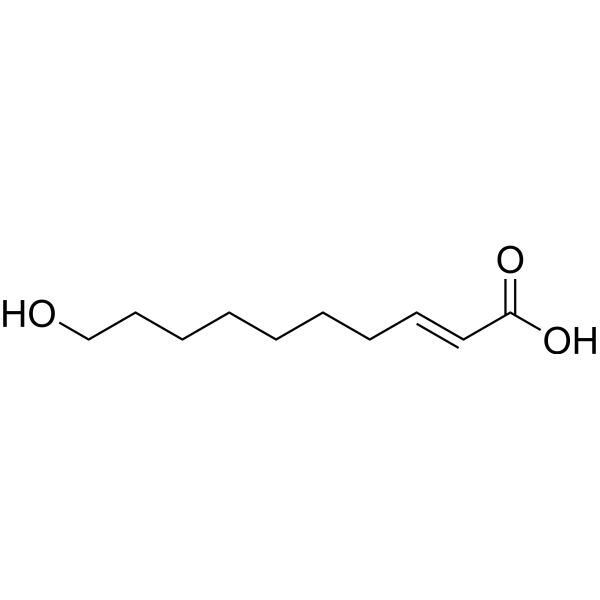
Synonyms: 10-HDA; Queen Bee Acid
10-Hydroxy-2-decenoic acid (10-HDA) is an orally active unsaturated medium-chain fatty acid with various physiological activities. 10-Hydroxy-2-decenoic acid induces ROS-mediated apoptosis in A549 cells. 10-Hydroxy-2-decenoic acid inhibits VEGF-induced angiogenesis in human venous endothelial cells. 10-Hydroxy-2-decenoic acid alleviates non-alcoholic fatty liver disease (NAFLD) by activating the AMPK-α signaling pathway. 10-Hydroxy-2-decenoic acid protects against bone loss by inhibiting NF-κB signaling downstream of FFAR4. 10-Hydroxy-2-decenoic acid is an antibiotic against many bacteria and fungi, such as Neurospora sitophila, molds and Staphylococcus aureus. 10-Hydroxy-2-decenoic acid has longevity-promoting effects in C. elegans. 10-Hydroxy-2-decenoic acid prevents osteoarthritis by targeting aspartyl β hydroxylase and inhibiting chondrocyte senescence .
loading...
    loading...
Cat. No.: HY-N15135
CAS No.: 9040-27-1
Arabinoxylan Medium viscosity is an orally active Dectin-1 splice variant modulator, glucose absorption inhibitor, and chyme viscosity enhancer. Arabinoxylan Medium viscosity inhibits particulate β-glucan-induced Dectin-1A activation and mildly suppresses Dectin-1B activation. In human dendritic cells stimulated with particulate β-glucan, Arabinoxylan Medium viscosity reduces the production of IL-10 and TNF-α, and increases the production of IL-4 and IL-23. Arabinoxylan Medium viscosity also supports antifungal immune responses without activating TLR2, TLR4 or TLR5, and does not induce cytokine production when used to stimulate human dendritic cells alone. Arabinoxylan Medium viscosity increases small intestinal chyme viscosity, gets degraded in the large intestine to produce short-chain fatty acids, reduces glucose absorption and insulin response, and improves glucose homeostasis. Arabinoxylan Medium viscosity supports microbial fermentation and the growth of beneficial microbiota in the gastrointestinal tract, prevents bile acid reabsorption, and delays starch digestion. Arabinoxylan Medium viscosity can be used in research related to type 2 diabetes, impaired glucose tolerance, and metabolic syndrome .
loading...
    loading...
Cat. No.: HY-B2144F
CAS No.: 9012-76-4
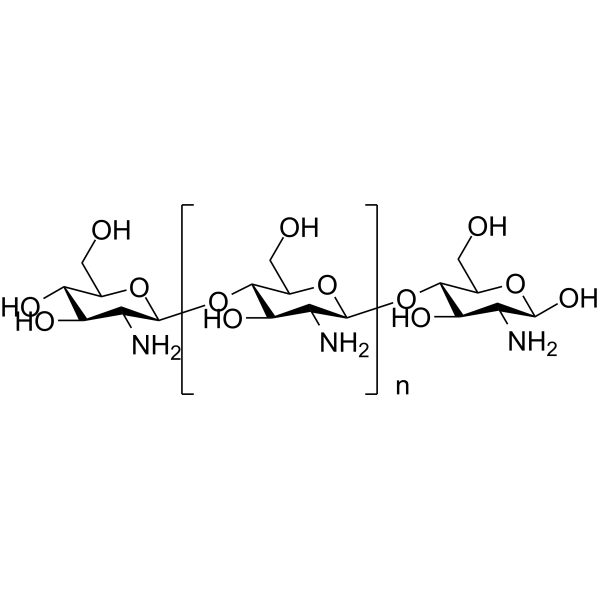
Synonyms: Deacetylated chitin (≥80% deacetylated, medium viscosity,200-400mPa.s); Poly(D-glucosamine) (≥80% deacetylated, medium viscosity,200-400mPa.s)
Chitosan (Deacetylated chitin; Poly(D-glucosamine)) (≥80% deacetylated, Medium viscosity,200-400mPa.s) is a polysaccharide obtained by deacetylating chitin, and exhibits antimicrobial activity against various bacteria and fungi .
loading...
    loading...
Cat. No.: HY-Y1365E
CAS No.: 9000-70-8
Porcine skin Gelatin, suitable for cell culture (medium gel strength) can be used to coat cells to improve cell attachment .
loading...
    loading...
Cat. No.: HY-141522
CAS No.: 9050-94-6
Cross-linked dextran G 100 is a gel filtration medium that can be used for protein purification (Sphere protein separation range: 4K-150K Da; Polysaccharide separation range: 1K-100K Da) .
loading...
    loading...
Cat. No.: HY-DY3004
Frozen Section Embedding Medium is a water-soluble mixture of polyethylene glycol and polyvinyl alcohol, widely used in immunohistochemistry experiments. Frozen Section Embedding Medium supports tissue during frozen sectioning, increasing tissue continuity and reducing wrinkling and fragmentation.
loading...
    loading...
Cat. No.: HY-157347A
Synonyms: YNB medium without Amino Acids
Yeast Nitrogen Base Medium without Amino Acids (YNB Medium without Amino Acids) is a growth medium that lacks amino acids. Yeast Nitrogen Base Medium without Amino Acids can be used for the cultivation of yeast .
loading...
    loading...
Cat. No.: HY-157365
Anaerobic Agar is a special medium for isolating anaerobic bacteria. The composition of 1 litre medium is 58.4 g anaerobic agar .
loading...
    loading...
Cat. No.: HY-148140B
CAS No.: 9041-35-4
Research Areas:  

Others

Cross-linked dextran G 25, medium is a cross-linked dextran gel chromatography medium (average particle size D50 = 120-140 μm) that possesses multiple separation activities, including molecular sieve effects, weak anion exchange, and aromatic adsorption. Cross-linked dextran G 25, medium weakly exchanges cations through immobilized terminal carboxyl groups and repels anions at low ionic strength. Cross-linked dextran G 25, medium is used for the fractionation of low molecular weight solutes, including peptides, amino acids, nucleotide sugar derivatives, and aromatic compounds .
loading...
    loading...
Cat. No.: HY-157347
Synonyms: YNB medium
Yeast Nitrogen Base Medium (YNB Medium) is a yeast-specific medium. Yeast Nitrogen Base Medium can be used for microbial culture. The composition of 100 mL of the medium is as follows: 6.7 g Yeast Nitrogen Base Medium and 5 g D-Glucose (HY-B0389) or other carbohydrates .
loading...
    loading...
Cat. No.: HY-134438
CAS No.: 103476-19-3
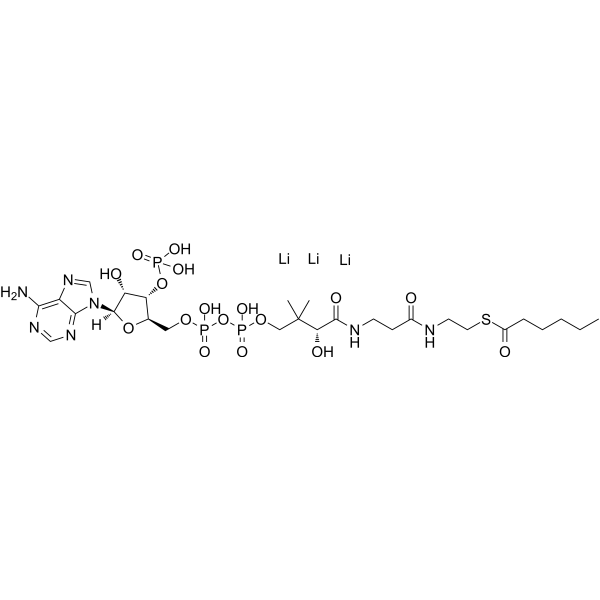
Hexanoyl coenzyme A trilithium is a hexanoyl-based medium-chain fatty acyl coenzyme A that is present in all organisms. Hexanoyl coenzyme A trilithium can be used as a precursor for cannabinoid biosynthesis and acts as a competitive inhibitor of medium-chain acyl coenzyme A dehydrogenase (MCAD) .
loading...
    loading...
Cat. No.: HY-156629
CAS No.: 1555822-28-0
Purity:  99.79%
Target:  

Drug Derivative

Research Areas:  

Others

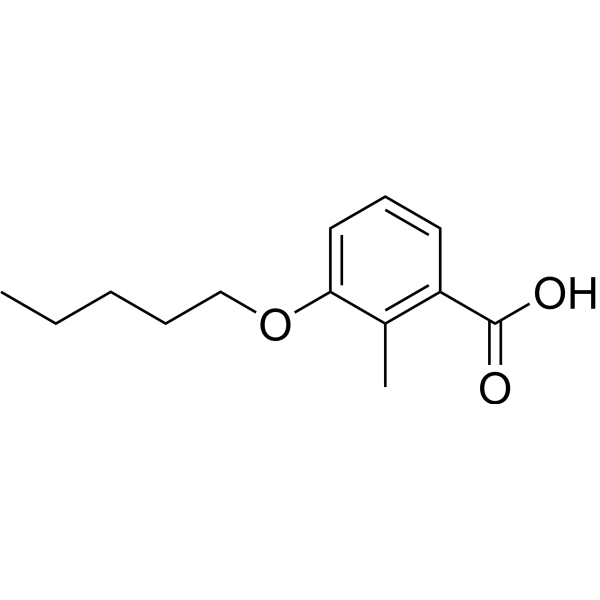
Orziloben is a medium chain fatty acid (MCFA) analogue .
loading...
    loading...
Cat. No.: HY-107925
CAS No.: 587-61-1
Research Areas:  

Others

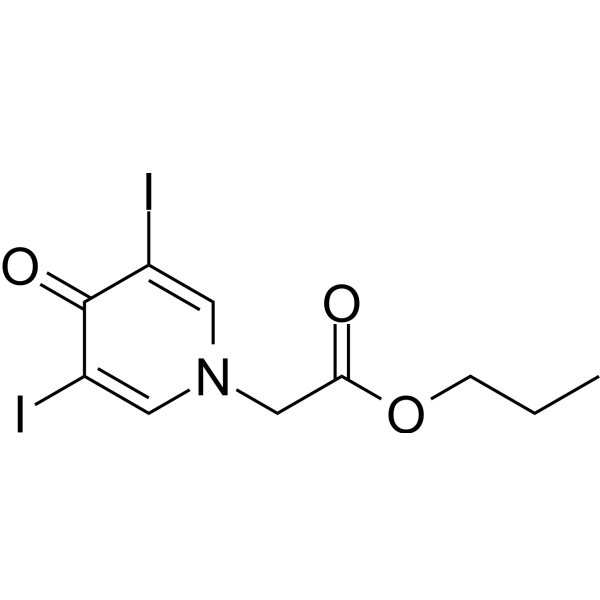
Propyliodone is a compound used as a contrast medium in bronchography .
loading...
    loading...
Cat. No.: HY-138560A
CAS No.: 9048-71-9
Cross-linked dextran G 50, medium is a gel filtration medium. Cross-linked dextran G 50, medium can be used in gel permeation chromatography for fractionation of the glycopeptide mixture (Sphere protein separation range: 1.5K-30K Da; Polysaccharide separation range: 500-10K Da). Cross-linked dextran G 50, medium are microspheres with an average particle size of D50 = 220-250 μm .
loading...
    loading...
Cat. No.: HY-179179
1/2 MS Medium has a similar composition to standard MS medium, including inorganic salts, sucrose, vitamins, etc. Unlike MS medium, 1/2 MS Medium contains a lower concentration of plant growth hormones (such as indoleacetic acid and adenosine), typically half the concentration of standard MS medium.
loading...
    loading...
Cat. No.: HY-157357
Fungi Agar Medium can be used in sterile growth tests. Fungi Agar Medium ingredients include peptone, glucose, yeast powder, potassium dihydrogen phosphate, magnesium sulfate, and agar.
loading...
    loading...

