98 Results for "

Endocrine disruption

" in MedChemExpress (MCE) Product Catalog:
Products (98)

98 Results for "Endocrine disruption" in MCE Product Catalog:

Cat. No.: HY-N7106R
CAS No.: 131-11-3
Synonyms: DMP (Standard)
Dimethyl phthalate (Standard) is the analytical standard of Dimethyl phthalate. This product is intended for research and analytical applications. Dimethyl phthalate, a known endocrine disruptor and one of the phthalate esters (PAEs), is a ubiquitous pollutant. Dimethyl phthalate is commonly used as a plasticizer to impart flexibility to rigid polyvinylchloride (PVC) resins .
loading...
    loading...
Cat. No.: HY-B1866S
CAS No.: 1219804-76-8
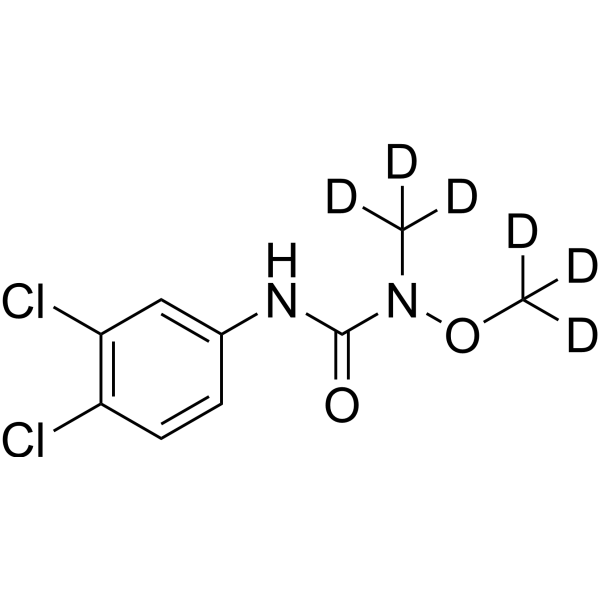
Linuron-d6 is the deuterium labeled Linuron (HY-B1866). Linuron is a phenylurea herbicide that is widely used to control the growth of grass and weeds in various agriculture crops and in orchards. Linuron is a photosystem II inhibitor. Linuron is also a competitive androgen receptor (AR) antagonist with a Ki of 100 μM. Linuron shows reproductive toxicity in animals that acts as an endocrine disruptor .
loading...
    loading...
Cat. No.: HY-W011215S
CAS No.: 1015854-55-3
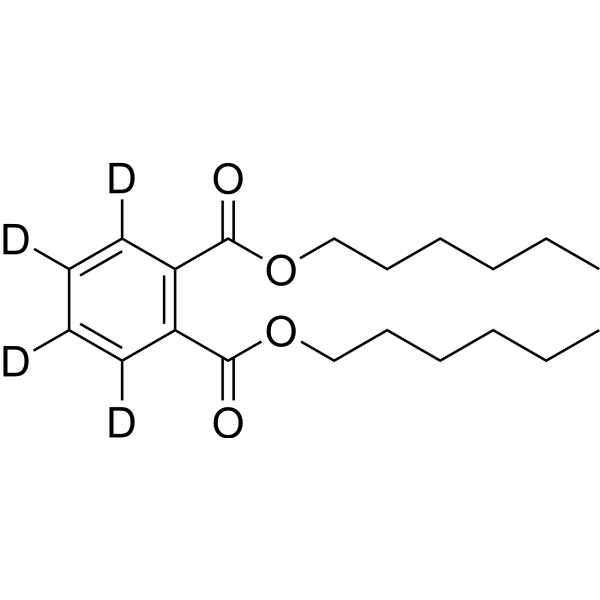
Dihexyl phthalate-3,4,5,6-d4 is the deuterated-labeled Dihexyl phthalate (HY-W011215). Dihexyl phthalate is an orally active phthalate ester (PAEs) widely used as a plasticizer, and it acts as an environmental endocrine disruptor. Dihexyl phthalate exhibits endocrine-disrupting and reproductive toxic properties, induces oxidative stress and inflammation, and ultimately causes apoptosis and damage to reproductive organs such as the testes. Dihexyl phthalate can be used in studies related to developmental toxicity, embryonic lethality, teratogenicity, and abnormal development of the male reproductive system .
loading...
    loading...
Cat. No.: HY-W585856
CAS No.: 13836-48-1
Target:  

Drug Intermediate

Research Areas:  

Others

Bisphenol A (3-chloro-2-hydroxypropyl) glycidyl ether is a chlorinated derivative that is released during heat treatment of food cans, bulk storage containers, and food containers. Bisphenol A (3-chloro-2-hydroxypropyl) glycidyl ether is an endocrine disruptor that affects reproductive organs and brain development.
loading...
    loading...
Cat. No.: HY-18260S3
CAS No.: 92739-58-7
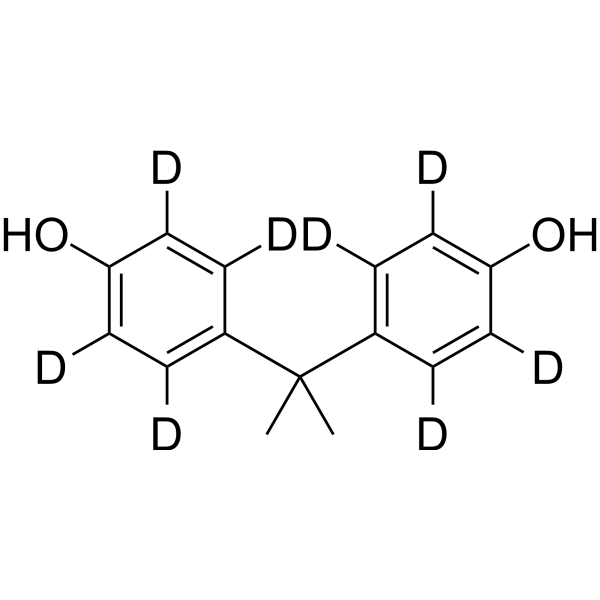
Bisphenol A-d8 is the deuterium labeled Bisphenol A . Bisphenol A is a phenolic, organic synthetic compound widely used in the production of polycarbonate plastics and epoxy resins. Bisphenol A is a reproductive, developmental, and systemic toxicant, often classified as an endocrine-disrupting compound (EDC). Bisphenol A is associated with many diseases, including cardiovascular diseases, respiratory diseases, diabetes, kidney diseases, obesity, and reproductivedisorders .
loading...
    loading...
Cat. No.: HY-18260S4
CAS No.: 102438-62-0
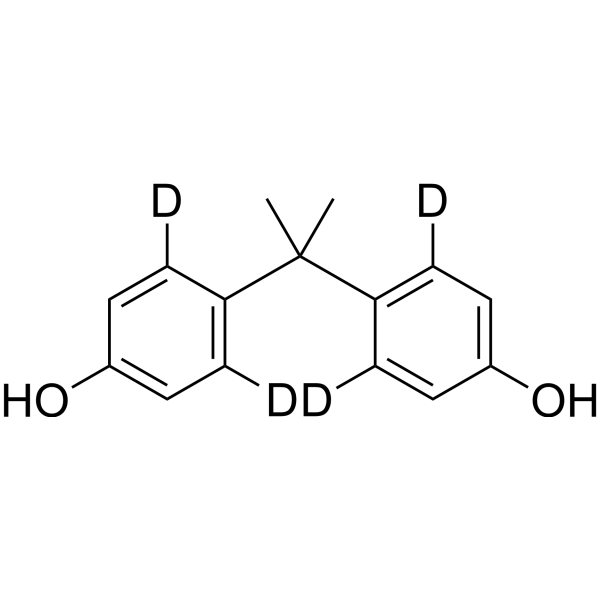
Bisphenol A-d4 is the deuterium labeled Bisphenol A . Bisphenol A is a phenolic, organic synthetic compound widely used in the production of polycarbonate plastics and epoxy resins. Bisphenol A is a reproductive, developmental, and systemic toxicant, often classified as an endocrine-disrupting compound (EDC). Bisphenol A is associated with many diseases, including cardiovascular diseases, respiratory diseases, diabetes, kidney diseases, obesity, and reproductivedisorders .
loading...
    loading...
Cat. No.: HY-B1866R
CAS No.: 330-55-2
Research Areas:  

Endocrinology

Linuron (Standard) is the analytical standard of Linuron. This product is intended for research and analytical applications. Linuron is a phenylurea herbicide that is widely used to control the growth of grass and weeds in various agriculture crops and in orchards. Linuron is a photosystem II inhibitor. Linuron is also a competitive androgen receptor (AR) antagonist with a Ki of 100 μM. Linuron shows reproductive toxicity in animals that acts as an endocrine disruptor .
loading...
    loading...
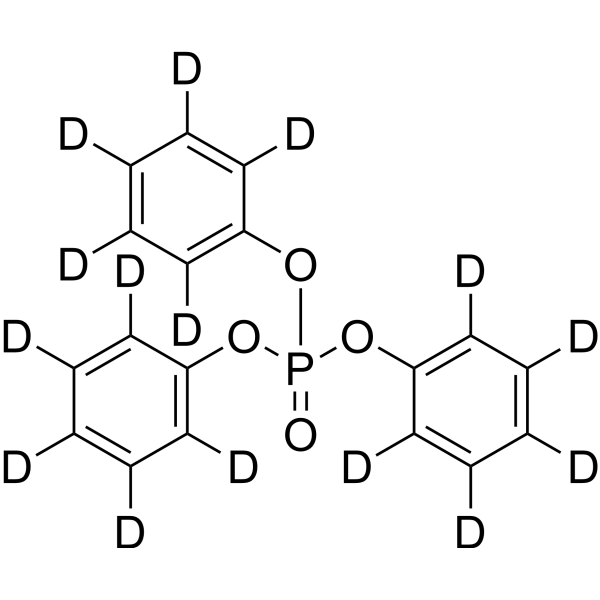
Cat. No.: HY-Y1322S
CAS No.: 1173020-30-8
Synonyms: Celluflex TPP-d15; DHPF 005-d15; Disflamol TP-d15; Disflamoll TP-d15; NSC 57868-d15; Phenyl phosphate ((PhO)3PO)-d15; Phoscon FR 903N-d15
Triphenyl phosphate-d15 is the deuterium labeled Triphenyl phosphate. Triphenyl phosphate is an orally active, blood-brain barrier-permeable aryl organophosphate flame retardant and endocrine disruptor. Triphenyl phosphate disrupts mitochondrial dynamic balance through oxidative stress, induces excessive mitophagy and apoptosis, and ultimately leads to myocardial fibrosis. In the brain, Triphenyl phosphate activates the NF-κB inflammatory pathway by disrupting the gut microbiota, alters tryptophan metabolism and elevates neurotoxins, thereby inducing anxiety- and depression-like behaviors. In the skeletal and reproductive systems, Triphenyl phosphate inhibits osteoblast differentiation and induces germ cell apoptosis by suppressing the MAPK/ERK pathway and activating the JNK signal, respectively. In adipose and placental tissues, Triphenyl phosphate promotes lipid accumulation by activating the PI3K/AKT-PPARγ axis, and disrupts placental metabolism via the MAOA/ROS/NF-κB cascade, impairing neurodevelopment of offspring.
loading...
    loading...
Cat. No.: HY-W585956
CAS No.: 1216457-76-9
Synonyms: 3,4,4′-Trichlorocarbanilide-13C6
Triclocarban- 13C6 is the 13C labeled isotope of Triclocarban (HY-B1805). Triclocarban (3,4,4′-Trichlorocarbanilide), a broad spectrum antibacterial compound, is widely used in a broad range of applications such as the production of soaps, skin creams, toothpastes and deodorants. Triclocarban is a potential endocrine-disrupting chemical with the capacity to modulate androgen and estrogen activities as well as other hormone-mediated biological processes .
loading...
    loading...
Cat. No.: HY-B1805R
CAS No.: 101-20-2
Synonyms: 3,4,4′-Trichlorocarbanilide (Standard)
Research Areas:  

Infection Endocrinology

Triclocarban (Standard) (3,4,4′-Trichlorocarbanilide (Standard)) is the analytical standard of Triclocarban (HY-B1805). This product is intended for research and analytical applications. Triclocarban, a broad spectrum antibacterial compound, is widely used in a broad range of applications such as the production of soaps, skin creams, toothpastes and deodorants. Triclocarban is a potential endocrine-disrupting chemical with the capacity to modulate androgen and estrogen activities as well as other hormone-mediated biological processes .
loading...
    loading...
Cat. No.: HY-B1970
CAS No.: 789-02-6
Synonyms: 2,4'-DDT
Research Areas:  

Endocrinology

o,p'-DDT (2,4'-DDT) is a chlorinated organic pesticide with estrogenic activity. o,p'-DDT is persistent in the environment, can accumulate in organisms and disrupt the endocrine system. o,p'-DDT is used in agriculture as a pesticide, especially for controlling insect pests. The use of o,p'-DDT has led to toxic effects in organisms, raising widespread concern about its environmental and health effects. o,p'-DDT has also led to research into its long-term effects in ecosystems .
loading...
    loading...
Cat. No.: HY-W014901S
CAS No.: 1410794-06-7
Synonyms: BPF-13C6; 4,4'-Dihydroxydiphenylmethane-13C6
Bisphenol F- 13C6 is the 13C labeled Bisphenol F (HY-W014901). Bisphenol F is an orally active endocrine disruptor. Bisphenol F promotes ROS generation, upregulates p-AKT/p-GSK3β, and induces Apoptosis. Bisphenol F interferes with glucose metabolism, affects neurodevelopment and reproductive function. Bisphenol F reduces social novelty preference in mouse offspring. Bisphenol F can be used in bone, blood, and fat-related studies. Bisphenol F is used as a substitute for Bisphenol A (HY-18260) .
loading...
    loading...
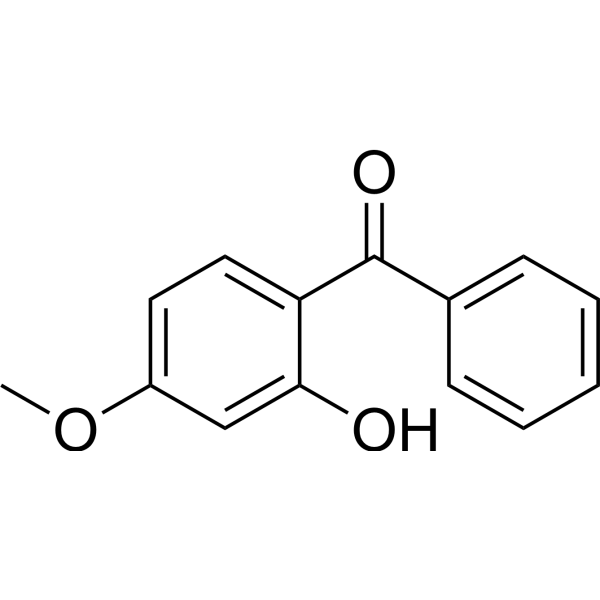
Cat. No.: HY-A0067R
CAS No.: 131-57-7
Synonyms: Benzophenone 3 (Standard)
Oxybenzone (Standard) is the analytical standard of Oxybenzone. This product is intended for research and analytical applications. Oxybenzone (Benzophenone 3) is a commonly used UV filter in sun tans and skin protectants. Oxybenzone act as endocrine disrupting chemicals (EDCs) and can pass through the placental and blood-brain barriers. Benzophenone-3 impairs autophagy, alters epigenetic status, and disrupts retinoid X receptor signaling in apoptotic neuronal cells .
loading...
    loading...
Cat. No.: HY-W585831
CAS No.: 72236-72-7
Synonyms: BDCPP
Research Areas:  

Others

Bis(1,3-dichloro-2-propyl) phosphate (BDCPP) is a metabolite of the flame retardant TDCPP (HY-108712) and has endocrine disrupting properties. Bis(1,3-dichloro-2-propyl) phosphate can be used in environmental monitoring, toxicology, and exposure assessment studies .
loading...
    loading...
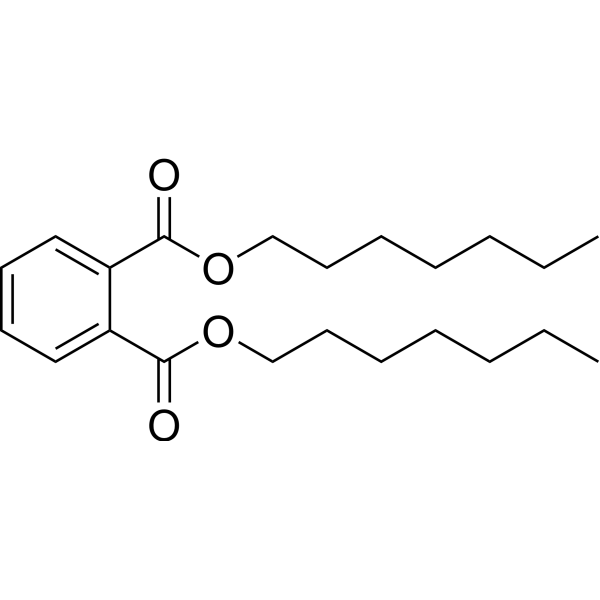
Cat. No.: HY-W011103
CAS No.: 3648-21-3
Diheptyl phthalate is a class of phthalates consisting of two heptyl (C7) chains attached to a phthalic acid backbone. This compound is commonly used as a plasticizer in various polymer materials such as PVC to increase flexibility and durability. It can also be used as a lubricant, solvent or additive in various industrial applications such as coatings, adhesives and sealants. However, Diheptyl phthalate has been identified as an environmental pollutant and health hazard due to its potential for endocrine disruption and toxicity.
loading...
    loading...
Cat. No.: HY-W041308R
CAS No.: 64359-81-5
Synonyms: Kathon 930 (Standard)
DCOIT (Standard) (Kathon 930 (Standard)) is the analytical standard of DCOIT (HY-W041308). This product is intended for research and analytical applications. DCOIT (Kathon 930) is an isothiazolinone biocide and environmental pollutant that directly binds to G protein α subunits, with KD values of 0.92 mM and 0.4 mM for Gαs and Gαi, respectively. Binding of DCOIT to Gαi enhances the interaction between Gαi and mitochondrial calcium uniporter (MCU), alters the subcellular distribution of intracellular Ca 2+, and activates PKC/MEK/ERK signaling. DCOIT upregulates CYP19a transcription and aromatase activity, thereby disrupting steroid hormone homeostasis. DCOIT is used in studies of reproductive endocrine disruption and environmental toxicology .
loading...
    loading...
Cat. No.: HY-W653896
CAS No.: 2469262-26-6
Alternariol-d2 is deuterium labeled Alternariol. Alternariol is an orally ingested mycotoxin produced by Alternaria, capable of inhibiting the activity of topoisomerase I and II (topoisomerase I, topoisomerase II). Alternariol has weak estrogenic (Estrogen Receptor/ERR) and androgen/antiandrogen (Androgen Receptor) effects. Alternariol can induce apoptosis, trigger cell cycle arrest, suppress innate immune responses, and exhibit anti-tumor activity. Alternariol has genotoxic, mutagenic, and endocrine-disrupting effects .
loading...
    loading...
Cat. No.: HY-W014901S1
CAS No.: 1410794-08-9
Synonyms: BPF-13C12; 4,4'-Dihydroxydiphenylmethane-13C12
Bisphenol F- 13C12 is the 13C labeled Bisphenol F (HY-W014901). Bisphenol F is an orally active endocrine disruptor. Bisphenol F promotes ROS generation, upregulates p-AKT/p-GSK3β, and induces Apoptosis. Bisphenol F interferes with glucose metabolism, affects neurodevelopment and reproductive function. Bisphenol F reduces social novelty preference in mouse offspring. Bisphenol F can be used in bone, blood, and fat-related studies. Bisphenol F is used as a substitute for Bisphenol A (HY-18260) .
loading...
    loading...
Cat. No.: HY-W653975
CAS No.: 2469735-90-6
Bisphenol B-d8 is the deuterium labeled Bisphenol B (HY-W013935). Bisphenol B is a very close structural analog of Bisphenol A (HY-18260), an endocrine disrupting chemical (EDC). Bisphenol B shows endocrine disruptive properties or other adverse effects on animal models .
loading...
    loading...
Cat. No.: HY-B1162R
CAS No.: 4065-45-6
Synonyms: Benzophenone-4 (Standard)
Sulisobenzone (Benzophenone-4) (Standard) is the analytical standard of Sulisobenzone (HY-B1162). This product is intended for research and analytical applications. Sulisobenzone is a benzophenone-type UV filter. Sulisobenzone can act as a endocrine disrupting compound. Sulisobenzone disrupts energy metabolism, nucleotide synthesis, oxidative stress response, and endocrine function. Sulisobenzone thyroid hormone biosynthesis and induces oxidative stress .
loading...
    loading...

