
74 Results for "

excessive activity

" in MedChemExpress (MCE) Product Catalog:
Products (74)

74 Results for "excessive activity" in MCE Product Catalog:

Cat. No.: HY-18938A
CAS No.: 1448428-05-4
Synonyms: GS-4997 hydrochloride
Target:  

Apoptosis MAP3K

Research Areas:  

Cancer

Selonsertib hydrochloride (GS-4997 hydrochloride) is an orally bioavailable enzyme inhibitor with potential anti-inflammatory, anti-tumor and anti-fibrotic activities. Selonsertib hydrochloride blocks ASK1 phosphorylation and activation by binding to the catalytic kinase domain. Selonsertib hydrochloride prevents the production of inflammatory cytokines and reduces the expression of genes associated with fibrosis. Selonsertib hydrochloride inhibits excessive apoptosis and limits cell proliferation .
loading...
    loading...
Cat. No.: HY-19625A
CAS No.: 296792-62-6
Research Areas:  

Cancer

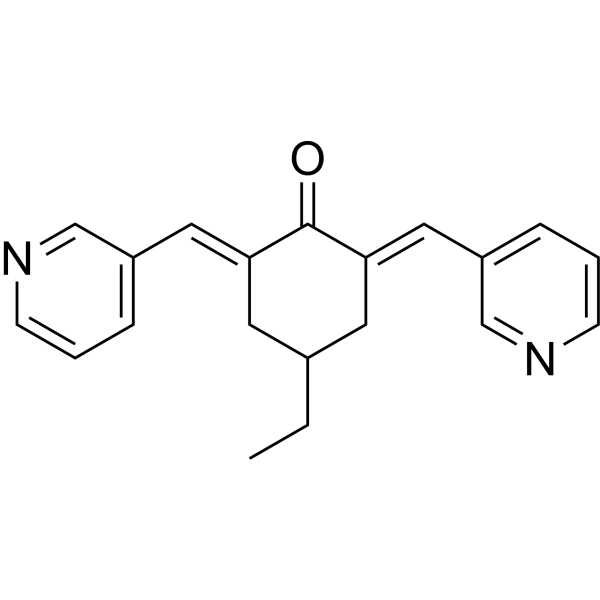
(E/Z)-MCB-613 is a pan-Steroid Receptor Coactivator (SRC) stimulator. (E/Z)-MCB-613 overstimulates SRC activity in cancer cells resulting in excessive generation of reactive oxygen species (ROS), leading to cell stress and death by a process called paraptosis. (E/Z)-MCB-613 is a cytotoxic molecule that plays an important role in cancer .
loading...
    loading...
Cat. No.: HY-N0712R
CAS No.: 104472-68-6
Typhaneoside (Standard) is the analytical standard of Typhaneoside. This product is intended for research and analytical applications. Typhaneoside, extracted from Typha angustifolia L., Typhaneoside can inhibit the excessive autophagy of hypoxia/reoxygenation cells and increase the phosphorylation of Akt and mTOR. Typhaneoside has certain effects on the cardiovascular system, including lowering blood lipid levels, promoting antiatherosclerosis activities, as well as improving immune and coagulation function .
loading...
    loading...
Cat. No.: HY-179525
CAS No.: 132993-79-4
Research Areas:  

Cancer

DL78 is an effective anti-mitotic agent. DL78 induces mitotic arrest, mitotic catastrophe and apoptosis in cancer cells by disrupting the interaction between Myc and α-tubulin. DL78 exhibits broad anti-cancer activity, especially against cancer cells with chromosomal instability and excessive expression of MYC. DL78 significantly reduces tumor burden in the OV81.2 xenograft model. DL78 can be used for the study of ovarian cancer .
loading...
    loading...
Cat. No.: HY-162797
PDE4-IN-18 (compound 1l) is a PDE4 inhibitor (IC50=1.55 μM) with anti-inflammatory activity. PDE4-IN-18 exerts anti-inflammatory effects by reducing excessive immune cell infiltration and intestinal membrane formation, as well as reducing the mRNA expression of pro-inflammatory cytokines (such as TNF-α and IL-6) in synovial tissue. PDE4-IN-18 can be used in the study of rheumatoid arthritis and psoriasis .
loading...
    loading...
Cat. No.: HY-159517
Target:  

Apoptosis PI3K Akt mTOR STAT

Research Areas:  

Cancer

PI3K/Akt/mTOR-IN-5 (compound D3) is a derivative of Pseudolaric Acid B (HY-N6939) with anti-tumor activity. PI3K/Akt/mTOR-IN-5 inhibits excessive proliferation of tumor cells through the PI3K/AKT/mTOR and STAT3/GPX4 pathways. PI3K/Akt/mTOR-IN-5 effectively inhibits EDU positivity, reduces colony formation, places HCT-116 cells in the S phase and G2/M phase, and induces apoptosis .
loading...
    loading...
Cat. No.: HY-B0380S2
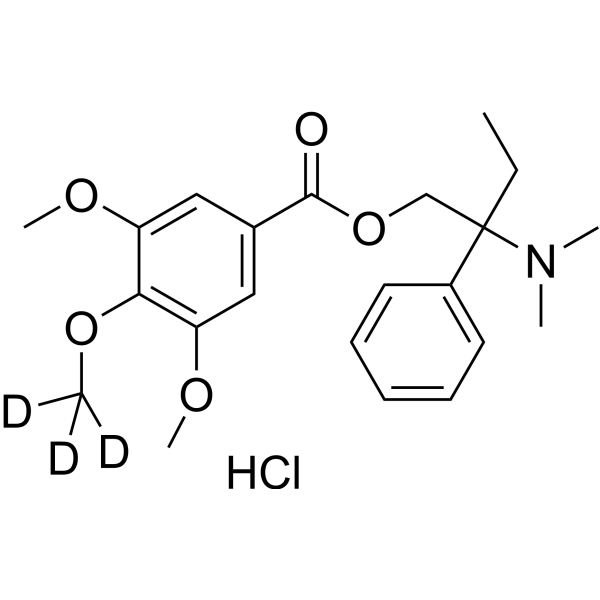
Trimebutine-d3 hydrochloride is deuterium labeled Trimebutine hydrochloride. Trimebutine hydrochloride is a multi-target inhibitor and opioid receptor agonist with antimuscarinic activity. Trimebutine hydrochloride inhibits L-type Ca 2+ channels and large-conductance calcium-activated potassium channels (BKCa channels), thereby inhibiting extracellular calcium influx and potassium ion efflux. Trimebutine hydrochloride also targets Toll-like receptors, inhibits Toll-like receptor 2/4/7/8/9 signals, and inhibits LPS-induced IRAK1 activation, as well as ERK1/2, JNK and NF-κB activation, thereby exerting anti-inflammatory effects. Trimebutine hydrochloride also induces tumor cell apoptosis by inhibiting the AKT/ERK pathway. Trimebutine hydrochloride also inhibits excessive contraction of smooth muscle and can be used in the study of gastrointestinal disorders such as irritable bowel syndrome (IBS) .
loading...
    loading...
Cat. No.: HY-B0380R
CAS No.: 39133-31-8
Trimebutine (Standard) is the analytical standard of Trimebutine (HY-B0380). This product is intended for research and analytical applications. Trimebutine is a multi-target inhibitor and opioid receptor agonist with antimuscarinic activity. Trimebutine inhibits L-type Ca 2+ channels and large-conductance calcium-activated potassium channels (BKCa channels), thereby inhibiting extracellular calcium influx and potassium ion efflux. Trimebutine also targets Toll-like receptors, inhibits Toll-like receptor 2/4/7/8/9 signals, and inhibits LPS-induced IRAK1 activation, as well as ERK1/2, JNK and NF-κB activation, thereby exerting anti-inflammatory effects. Trimebutine also induces tumor cell apoptosis by inhibiting the AKT/ERK pathway. Trimebutine also inhibits excessive contraction of smooth muscle and can be used in the study of gastrointestinal disorders such as irritable bowel syndrome (IBS) .
loading...
    loading...
Cat. No.: HY-173077
Target:  

PD-1/PD-L1 Bacterial

Research Areas:  

Infection Inflammation/Immunology

PD-L1/LpxC-IN-1 (Conpound 12b) is the inhibitor for PD-L1 and LpxC with IC50 of 5.2 μM and 0.081 μM. PD-L1/LpxC-IN-1 inhibits the biosynthesis of bacterial lipopolysaccharide, causes the lysis and death of bacterial cells. PD-L1/LpxC-IN-1 inhibits Gram-negative bacteria, MIC for K. pneumoniae ATCC 13883, E. coli ATCC 8739, S. typhimurium ATCC 14028 and P. aeruginosa ATCC 9027 is 0.25-0.5 μg/mL. PD-L1/LpxC-IN-1 downregulates the expression of inflammatory factors IL-2 and IFN-γ, upregulates the expression of CD4+ and CD8+ cells, thereby activating the immune system and inhibiting excessive inflammatory responses. PD-L1/LpxC-IN-1 exhibits antibacterial activity in K. pneumoniae ATCC 13883 infected mouse models .
loading...
    loading...
Cat. No.: HY-P4890A
Relaxin H3 (human) TFA is a relaxin peptide with anti-inflammatory, anti-apoptotic, anti-pyroptotic, anti-migratory, protective and anti-fibrotic activities. Relaxin H3 (human) TFA acts on RXFP1 to generate cAMP and reduce the levels of ATP and ROS. Relaxin H3 (human) TFA inhibits renal inflammatory pyroptosis (pyroptosis), NLRP3 inflammasome activation, caspase-1 activation, IL-1β/IL-18 secretion, collagen synthesis, TGF-β1 signaling pathway, Smad2 phosphorylation, myofibroblast differentiation, TIMP expression, and HRMEC migration. Relaxin H3 (human) TFA activates AMPK, upregulates MFN2 expression, improves mitochondrial quality control and membrane potential, inhibits apoptosis (apoptosis) and pyroptosis, restores retinal ultrastructure, and reverses excessive left ventricular collagen expression. Relaxin H3 (human) TFA can be used in studies related to kidney stones, nephrocalcinosis, diabetic cardiomyopathy, fibrotic cardiomyopathy, and diabetic retinopathy .
loading...
    loading...
Cat. No.: HY-101059R
CAS No.: 142720-24-9
FGIN 1-27 (Standard) is the analytical standard of FGIN 1-27 (HY-101059). This product is intended for research and analytical applications. FGIN-1-27 is a blood-brain barrier-penetrant TSPO ligand with a Ki value of 5 nM. FGIN 1-27 inhibits PKC-β, PKA/CREB, p38/ERK MAPK, MITF, tyrosinase, TRP-1, and TRP-2, thereby inhibiting melanogenesis and pigmentation. FGIN-1-27 alleviates X-ray radiation-induced astrocyte mitochondrial hyperfunction, reduces ROS and superoxide production, inhibits excessive activation of A1-type astrocytes, downregulates GFAP and C3 protein expression, and restores astrocyte proliferative capacity. FGIN-1-27 produces anticonvulsant effects in normal mice; in diazepam-withdrawn mice, the brain MDR pathway becomes subsensitive, and the anticonvulsant activity disappears. FGIN-1-27 attenuates pigmentation in zebrafish embryos and ameliorates UVB-induced skin pigmentation in guinea pigs. FGIN-1-27 directly stimulates testicular Leydig cells while upregulating luteinizing hormone levels, causing an acute increase in serum testosterone in male rats. FGIN 1-27 can be used for research related to hyperpigmentation, epilepsy, brain injury, and other diseases .
loading...
    loading...
Cat. No.: HY-KE7054

Xba I, ADCF is animal derived component free, and has good redundancy of enzyme activity, which can easily cope with excessive substrate or difficult template enzyme cutting.

loading...
    loading...
Cat. No.: HY-KE7053

EcoR I, ADCF is animal derived component free, and has good redundancy of enzyme activity, which can easily cope with excessive substrate or difficult template enzyme cutting. Isoschizomers: Fun II.

loading...
    loading...
Cat. No.: HY-N17406
CAS No.: 244303-77-3
Dankasterone A is a secondary metabolite. Dankasterone A can be derived from the Fungus Talaromyces purpurogenu. Dankasterone A upregulates HO-1 protein expression, induces Apoptosis, induces excessive ROS production. Dankasterone A has anti-cancer activity against prostate cancer .
loading...
    loading...
Cat. No.: HY-KE7052

BsmB I, ADCF is animal derived component free, and has good redundancy of enzyme activity, which can easily cope with excessive substrate or difficult template enzyme cutting. Isoschizomers: Esp3 I, BstGZ53 I, Esp16 I, Esp23 I.

loading...
    loading...
Cat. No.: HY-P12279
MAAAHR is a neuroprotective agent. MAAAHR is isolated and purified from C-phycocyanin of Spirulina platensis. MAAAHR induces antioxidant gene expression through activating the Nrf2 signaling pathway. MAAAHR inhibits excessive Autophagy by reducing the expression of proteins such as α-Syn and Parkin. MAAAHR inhibits Apoptosis. MAAAHR scavenges excessive ROS, enhances SOD, CAT, and GSH-Px activities, and reduces protein carbonyl content. MAAAHR inhibits Acetylcholinesterase. MAAAHR protects zebrafish against MPTP (HY-15608)-induced dopaminergic neuronal and neurovascular loss and alleviates motor impairment. MAAAHR can be used for research on Parkinson's disease .
loading...
    loading...
Cat. No.: HY-183144
CAS No.: 141575-50-0
Target:  

mAChR

Vedaclidine is an orally active muscarinic acetylcholine receptor (mAChR) modulator with mixed receptor activity, which activates muscarinic M2 and M4 receptors and blocks muscarinic M1, M3 and M5 receptors. Vedaclidine exerts its activity through interaction with spinal M4 muscarinic receptors, and does not induce hypothermia or excessive salivation. Vedaclidine can be used in research related to pain, neuropathic pain and inflammatory pain states .
loading...
    loading...
Cat. No.: HY-N19782
CAS No.: 851278-60-9
Striatisporolide A is an antibacterial agent. Striatisporolide A exhibits antibacterial activity against Escherichia coli in vitro. Striatisporolide A damages the cell wall and cell membrane of Escherichia coli, and induces changes in protein levels and morphology. Striatisporolide A reduces the level of apoptosis (apoptosis) in HUVECs, inhibits excessive production of ROS, and possesses pro-proliferative and mild cytoprotective effects. Striatisporolide A can be used in studies related to bacterial infections and degenerative diseases .
loading...
    loading...
Cat. No.: HY-14401B
CAS No.: 787584-62-7
Synonyms: CLTX-305 sodium; JTT-305 sodium; MK-5442 sodium
Research Areas:  

Metabolic Disease

Encaleret (CLTX-305) sodium is an orally active antagonist of the calcium-sensing receptor (CaSR), with an IC50 of 12 nM. Encaleret sodium exerts its effect by inhibiting the excessive activity of functional gain-of-function CaSR variants, and can restore blood calcium levels, promote the secretion of parathyroid hormone, improve magnesium and phosphorus metabolism, and increase urinary calcium excretion. Encaleret sodium can be used in the research of diseases such as osteoporosis and autosomal dominant hypocalcemia type 1 .
loading...
    loading...
Cat. No.: HY-184610
Selenium is an essential trace element for the human body, playing a vital role in various physiological activities and significantly impacting human health. Selenium deficiency can lead to a variety of diseases, while excessive amounts may be toxic. In recent years, selenium nanoparticles (SeNPs) have attracted increasing attention due to their excellent biocompatibility, low toxicity, and high antioxidant activity, making them suitable for a wide range of applications. Particularly in the fields of biomedicine, nutritional supplementation, food preservation, and environmental remediation, selenium nanoparticles hold immense application potential.
loading...
    loading...

