109 Results for "

starting material

" in MedChemExpress (MCE) Product Catalog:
Products (109)

109 Results for "starting material" in MCE Product Catalog:

Cat. No.: HY-W011547
CAS No.: 3162-96-7
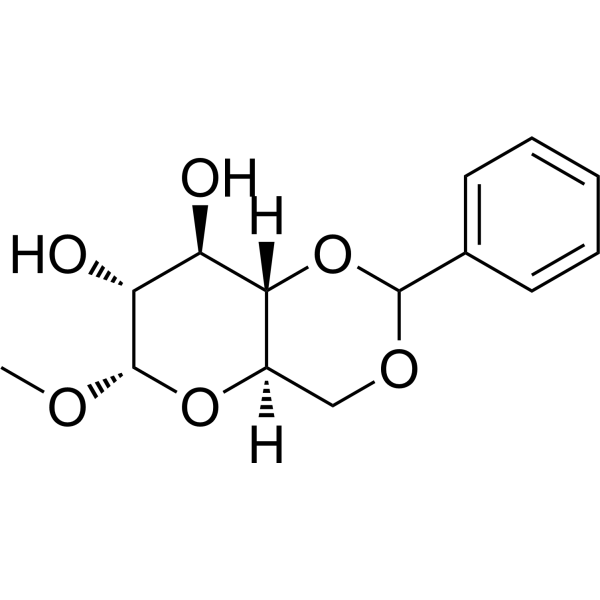
Methyl 4,6-O-Benzylidene-α-D-glucopyranoside serves as the starting material for the active intermediate Dibutylstannylene acetals. Using Dibutylstannylene acetals as the starting material, the regioselective synthesis of carbohydrate-based vinyl monomer compounds is successfully achieved .
loading...
    loading...
Cat. No.: HY-W002530A
CAS No.: 163061-73-2
Research Areas:  

Others

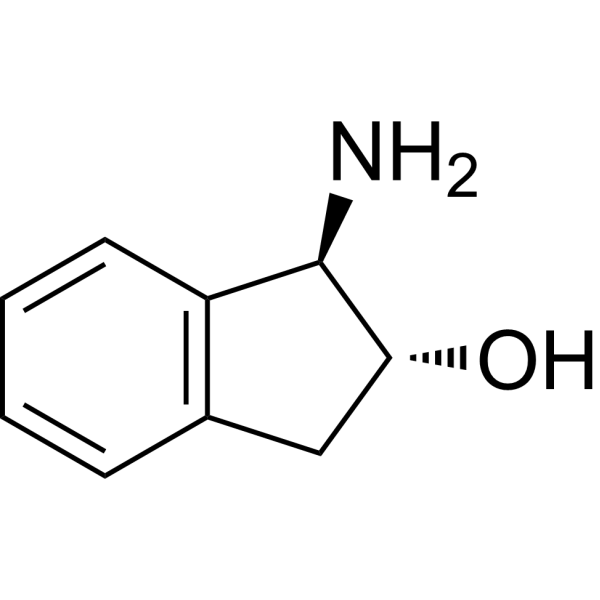
(1R,2R)-1-Aminoindan-2-ol is the isomer of (1S,2R)-1-Aminoindan-2-ol (HY-W002530), and can be used as a biological material or organic compound for life science related research. (1R,2R)-1-Aminoindan-2-ol can be used as a starting material to prepare an indene-based chiral auxiliary that is used in the aldol reaction. (1R,2R)-1-Aminoindan-2-ol can be used as a starting material in the synthesis of oxazoline-alcohol ligands .
loading...
    loading...
Cat. No.: HY-W145554
CAS No.: 14687-15-1
Synonyms: Methyl alpha-L-fucopyranoside
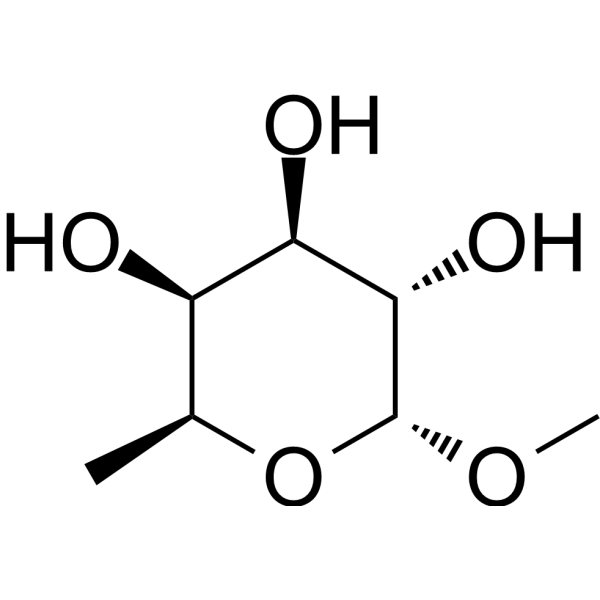
Methyl α-L-fucopyranoside (Methyl alpha-L-fucopyranoside) is a fucopyranoside derivative with weak phagostimulatory activity against Spodoptera litura larvae. Methyl α-L-fucopyranoside serves as a starting material for the synthesis of isomeric methyl α-L-fucopyranoside sulfates. Methyl α-L-fucopyranoside shows potential for use in pest control-related research .
loading...
    loading...
Cat. No.: HY-W015305
CAS No.: 106-32-1
Synonyms: Octanoic acid ethyl ester
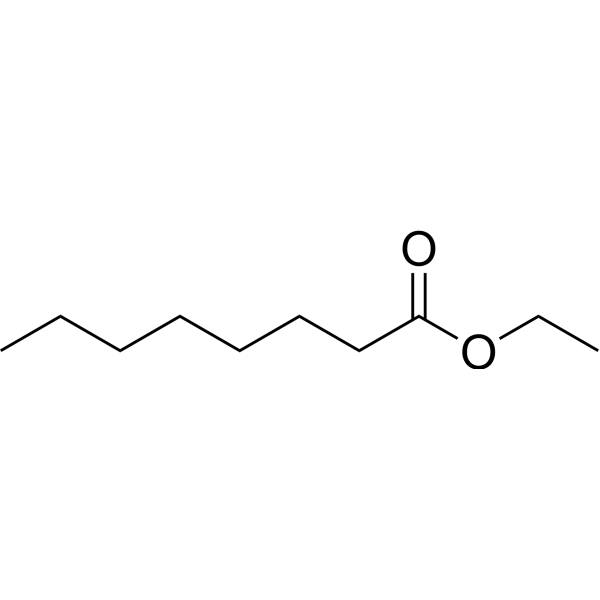
Ethyl octanoate is a class of esters consisting of the medium-chain fatty acid octanoic acid esterified with ethanol. The compound has a fruity smell and is commonly used as a flavoring in foods such as baked goods, candy and beverages. It can also be used as a fragrance ingredient in personal care products, and as a solvent or plasticizer in various industrial applications. In addition, Ethyl octanoate can be used as a starting material for the synthesis of other organic compounds.
loading...
    loading...
Cat. No.: HY-128747R
CAS No.: 56401-20-8
α-D-Glucose-1-phosphate disodium (Standard) is the analytical standard of α-D-Glucose-1-phosphate disodium (HY-128747). This product is intended for research and analytical applications. α-D-Glucose-1-phosphate disodium is used as a starting material for synthesis of glucuronic acid. α-D-Glucose-1-phosphate disodium can be used as a cytostatic compound essential for cardiopathic therapy, as an antibiotic, as an immunosuppressive agent, and as a circulatory system therapy element.
loading...
    loading...
Cat. No.: HY-69077
CAS No.: 875781-17-2
Target:  

Drug Intermediate

Research Areas:  

Others

5-Bromo-1H-pyrazolo[3,4-b]pyridine is a fused heterocyclic starting material that can be used to synthesize pyrazolo[3,4-b]pyridine-linked sulfonamide derivatives with antibacterial and antioxidant activities. 5-Bromo-1H-pyrazolo[3,4-b]pyridine is applicable to heterocyclic synthesis and research on the development of pyrazolo[3,4-b]pyridine derivatives .
loading...
    loading...
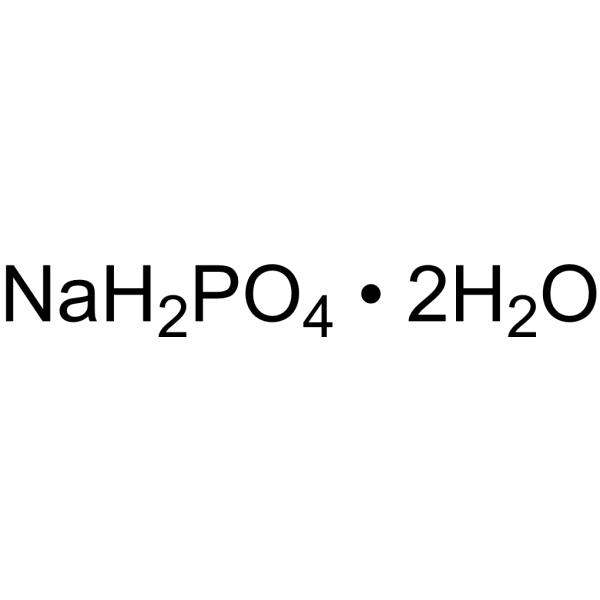
Cat. No.: HY-Y0332H
CAS No.: 13472-35-0
Synonyms: Sodium phosphate monobasic dihydrate, for molecular biology
Sodium dihydrogen phosphate dihydrate (Sodium phosphate monobasic dihydrate), for molecular biology is a phosphate compound and nucleating agent. At a content of 1.2%, Sodium dihydrogen phosphate dihydrate, for molecular biology eliminates the supercooling degree of sodium acetate trihydrate to 0°C while maintaining or slightly enhancing its latent heat storage capacity. Sodium dihydrogen phosphate dihydrate, for molecular biology can serve as a starting material for the synthesis of degradable sodium phosphate glasses, which are applied in craniomaxillofacial bone repair. Sodium dihydrogen phosphate dihydrate, for molecular biology is widely used in research on craniomaxillofacial bone repair and related fields .
loading...
    loading...
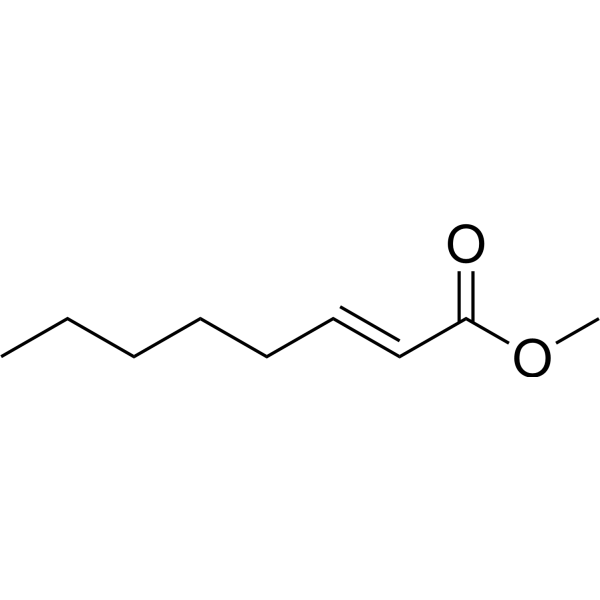
Cat. No.: HY-W039379
CAS No.: 7367-81-9
Synonyms: trans-2-Octenoic acid methyl ester
Methyl (E)-oct-2-enoate is commonly used as an ingredient in perfume, cologne, and food flavor in the perfume and fragrance industry. Its pleasant fragrance and low volatility make it a good choice for adding fruit to various products. A popular choice for incense, in addition to its application in the fragrance and fragrance industry, Methyl (E)-oct-2-enoate is also used as a raw material for the synthesis of other organic compounds, it can be oxidized to form methyl 3-oxobutyrate, Used in the production of pharmaceuticals and agrochemicals. Overall, Methyl (E)-oct-2-enoate is a versatile compound that is used in various industries for its pleasant aroma and reactivity, its fruity and floral notes in fragrances and essences Industry is highly sought after, and its ability to serve as a starting material for other compounds makes it useful in organic synthesis.
loading...
    loading...
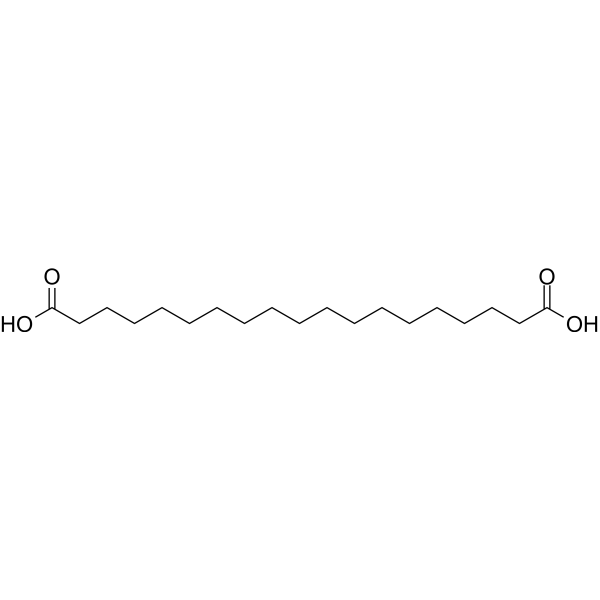
Cat. No.: HY-W034596
CAS No.: 6250-70-0
Synonyms: 1,17-Heptadecanedicarboxylic acid
Nonadecanedioic acid (1,17-Heptadecanedicarboxylic acid) is a long-chain alkanedioic acid and also serves as a starting material for the synthesis of phosphate ester fatty-chain alkanoic acids .
loading...
    loading...
Cat. No.: HY-Y1066
CAS No.: 628-89-7
Synonyms: Diethylene glycol monochlorohydrin
Target:  

Drug Intermediate

Research Areas:  

Others

2-(2-Chloroethoxy)ethanol (Diethylene glycol monochlorohydrin) is an unclassified residual solvent and known impurity, with an acceptance criterion of 0.10%.2-(2-Chloroethoxy)ethanol serves as a starting material in quetiapine synthesis .
loading...
    loading...
Cat. No.: HY-W014352
CAS No.: 49678-04-8
Target:  

Drug Derivative

Research Areas:  

Infection

trans-4-Bromocinnamaldehyde (Compound 6d) is an (E)-α,β-unsaturated aldehyde and cinnamaldehyde derivative. trans-4-Bromocinnamaldehyde serves as a starting material for the synthesis of α-aryl substituted phosphinomycin analogs. trans-4-Bromocinnamaldehyde can be used in the research of tuberculosis .
loading...
    loading...
Cat. No.: HY-W008393R
CAS No.: 32233-40-2
(-)-Corey lactone diol (Standard) is the analytical standard of (-)-Corey lactone diol (HY-W008393). This product is intended for research and analytical applications. (-)-Corey lactone diol is a starting material for the synthesis of Beraprost (HY-13569A). Beraprost is a potent vasodilator. (-)-Corey lactone diol can be used in the research of chronic arterial occlusion .
loading...
    loading...
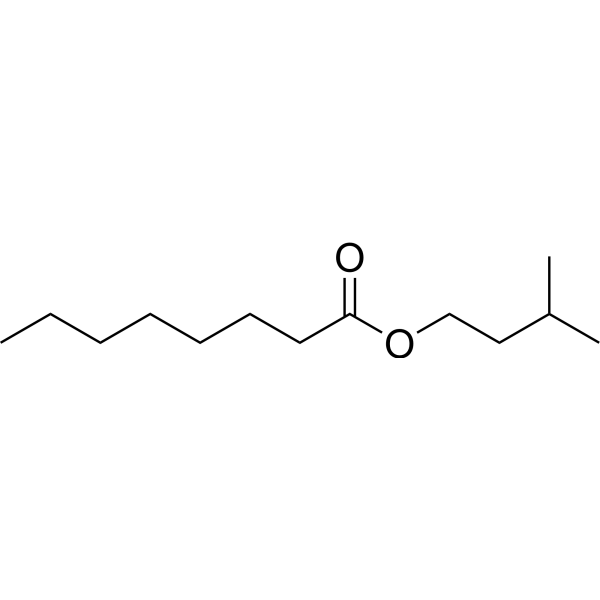
Cat. No.: HY-W014206
CAS No.: 2035-99-6
Isopentyl octanoate is a class of esters formed by the esterification of branched-chain isoamyl alcohol, also known as isoamyl alcohol, with octanoylate. The compound has a fruity smell and is commonly used as a flavoring in foods such as baked goods, candy and beverages. It can also be used as a fragrance ingredient in personal care products, and as a solvent or plasticizer in various industrial applications. In addition, Isopentyl octanoate can be used as a starting material for the synthesis of other organic compounds.
loading...
    loading...
Cat. No.: HY-34204
CAS No.: 6921-64-8
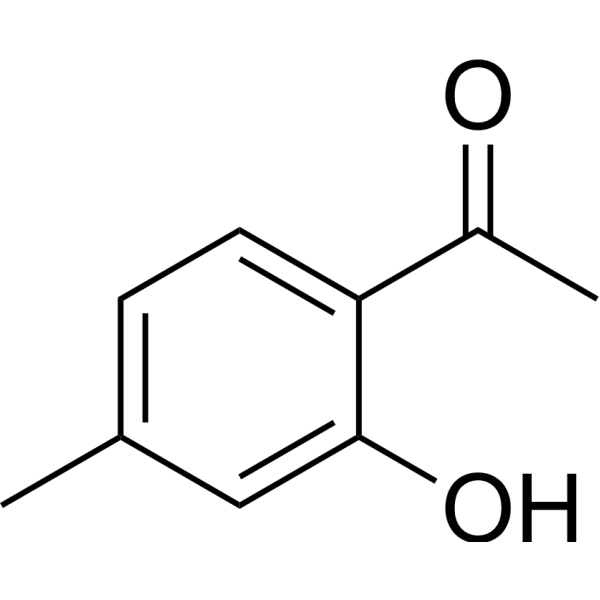
2'-Hydroxy-4'-methylacetophenone is an acetophenone (HY-Y0989) derivative and acaricide that can be isolated from the roots of Angelica koreana. 2'-Hydroxy-4'-methylacetophenone exhibits toxicity against mites. It serves as a starting material for the synthesis of flavonoid derivatives. 2'-Hydroxy-4'-methylacetophenone can be used in studies related to infestations of house dust mites and stored food mites .
loading...
    loading...
Cat. No.: HY-128753S6
CAS No.: 288846-88-8
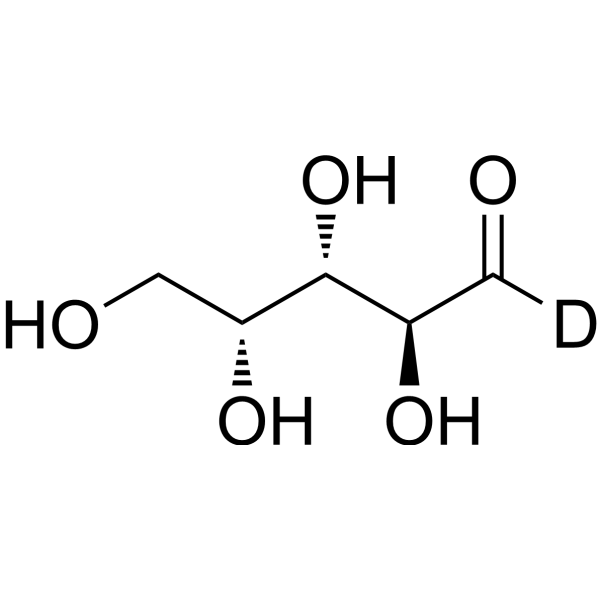
D-Lyxose-d is the deuterium labeled D-Lyxose. D-Lyxose is an endogenous metabolite. D-Lyxose is a rare pentose sugar with significant potential for drug synthesis. D-Lyxose can be used as a starting material for anti-tumor drugs such as alpha galactose ceramide immunostimulants. D-Lyxose can be used as a precursor for L-nucleoside analogs for the development of antiviral drugs. D-Lyxose can be used as a synthetic intermediate for other rare sugars such as L-ribose .
loading...
    loading...
Cat. No.: HY-172351B
CAS No.: 24991-53-5
PEG10000-bis-amine is a bisamine-terminated polyethylene glycol that serves as a key starting material for the preparation of cholesterol-conjugated polyethylene glycol derivatives. After radioiodination modification, PEG10000-bis-amine significantly prolongs plasma retention time and exhibits enhanced tumor accumulation in a subcutaneous melanoma mouse model. PEG10000-bis-amine has important application value in studies of tumor-targeted delivery and drug modification .
loading...
    loading...
Cat. No.: HY-W009713
CAS No.: 951-82-6
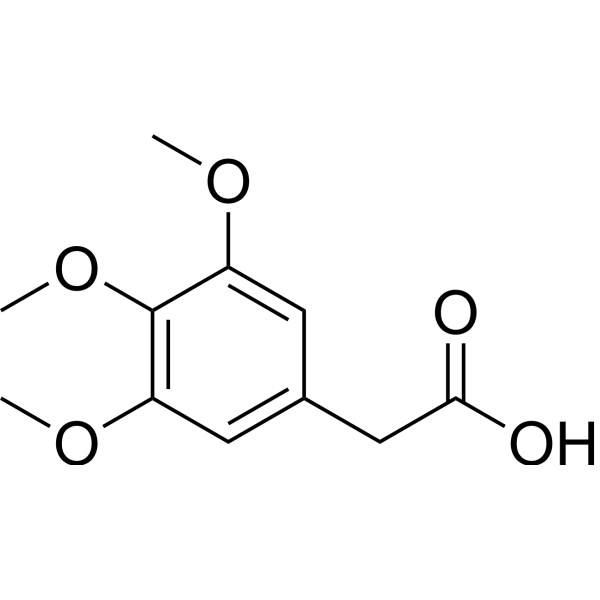
3,4,5-Trimethoxyphenylacetic acid is a trimethoxylated phenylacetic acid derivative and also a major metabolite of 3,4,5-trimethoxyphenylethylamine. 3,4,5-Trimethoxyphenylacetic acid is produced from the oxidation of 3,4,5-trimethoxyphenylacetaldehyde catalyzed by mouse CYP2C29, and it also serves as a starting material for the synthesis of intermediates of methoxylated phenylacetamides. 3,4,5‑Trimethoxyphenylacetic acid exhibits no significant cataleptic activity and does not prolong pentobarbital-induced sleep duration. 3,4,5-Trimethoxyphenylacetic acid is used in metabolism-related studies .
loading...
    loading...
Cat. No.: HY-W400427
CAS No.: 59-56-3
α-D-Glucose-1-phosphate is a derivative of D-glucose (HY-B0389). α-D-Glucose-1-phosphate serves as a starting material for glucuronic acid synthesis. Glucuronic acid acts as a Ca 2+ chelator and also functions as a biosynthetic substrate for the production of linear maltooligosaccharides or α,α-trehalose. α-D-Glucose-1-phosphate can be used as a cytostatic compound, Antibiotic, and immunosuppressant essential for heart disease management. α-D-Glucose-1-phosphate is applicable to the research of heart disease .
loading...
    loading...
Cat. No.: HY-133830
CAS No.: 245523-67-5
Synonyms: (3β,7α,24S)-Cholest-5-ene-3,7,24-triol
Target:  

Endogenous Metabolite

Research Areas:  

Others

7α,24(S)-Dihydroxycholesterol ((3β,7α,24S)-Cholest-5-ene-3,7,24-triol) serves as a ligand for liver X receptor (LXR), binding specifically to the ligand binding domains of both LXRα and LXRβ. This compound is synthetically produced from E-α,β-enone, utilizing Arsonium ylide and J-tert-butyldimethylsilyloxy-bisnor-5-cholenaldehyde as starting materials, followed by a series of transformations to yield 7α,24(S)-dihydroxycholesterol.
loading...
    loading...
Cat. No.: HY-W011596
CAS No.: 2011-66-7
Target:  

Drug Metabolite

Research Areas:  

Others

2-Amino-2'-chloro-5-nitrobenzophenone serves as a starting material for the synthesis of a psychoactive substance .
loading...
    loading...