612 Results for "

MDA

" in MedChemExpress (MCE) Product Catalog:
Products (612)

612 Results for "MDA" in MCE Product Catalog:

  • Targets Recommended:
Cat. No.: HY-W010713
CAS No.: 2669-65-0
Synonyms: Fimaporfin free base
Target:  

Photosensitizer

Research Areas:  

Cancer

Meso-tetraphenylchlorin (TPCS2a) is a photosensitizer with poor water solubility, which limits its use in the blood circulation. However, TPCS2a@NPs nanoparticles can be prepared based on polylactic-co-polyethylene glycol acid (PLGA) polymer core loaded with TPCS2. Such nanoparticles can be coated with mesenchymal stem cell-derived plasma membranes (mMSCs) to form mMSC-TPCS2a@NPs, which prolongs blood circulation time and improves tumor targeting ability. Compared with uncoated TPCS2a@NPs, mMSC-TPCS2a@NPs can reduce macrophage uptake by 54% to 70% under different conditions. Both nanoparticle forms are effectively accumulated in MCF7 and MDA-MB-231 breast cancer cells, while uptake in normal breast epithelial cells MCF10A is significantly lower .
loading...
    loading...
Cat. No.: HY-W661499
CAS No.: 37338-80-0
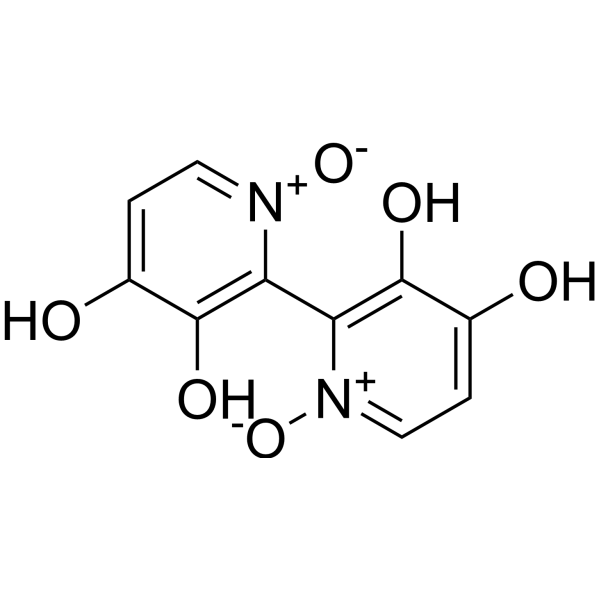
Orellanine, a nephrotoxic alkaloid found in Cortinarius orellanus, is an orally active and selective non-competitive inhibitor of alkaline phosphatase. Orellanine chelates iron, generates reactive oxygen species (ROS), induces DNA scission, forms ortho-semiquinone radicals, downregulates antioxidant defenses, and inhibits mitochondrial function. Orellanine induces caspase 8/9-mediated apoptosis. Orellanine inhibits synthesis of proteins, RNA, DNA, and mitochondrial protein synthesis, with metabolic activation required for cell-free protein synthesis inhibition. Orellanine can be used for the research of metastatic clear cell renal cell carcinoma, acute renal failure, chronic renal insufficiency, and kidney damage .
loading...
    loading...
Cat. No.: HY-123715
CAS No.: 1983924-20-4
Target:  

Apoptosis

Research Areas:  

Cancer

Anticancer agent 255 is a monocarbonylated curcumin-1,2,3-oxazole conjugate with significant anticancer activity. The IC50 values of Anticancer agent 255 in prostate cancer cells PC-3 and DU-145 are 8.8μM and 9.5μM respectively. The IC50 values of Anticancer agent 255 against breast cancer cells MCF-7, MDA-MB-231 and 4T1 are 6μM, 10μM and 6.4μM, showing good anti-cancer activity Effect. Anticancer agent 255 can induce mitochondria-mediated apoptosis in cancer cells and prevent cell cycle progression. Anticancer agent 255 down-regulated the cell proliferation marker PCNA and inhibited the activation of cell survival proteins. Anticancer agent 255 up-regulated the pro-apoptotic protein Bax and down-regulated the anti-apoptotic protein Bcl-2 .
loading...
    loading...
Cat. No.: HY-126675G
CAS No.: 2241300-51-4
AS2863619 GMP is AS2863619 (HY-126675) produced by using GMP guidelines. GMP small molecules works appropriately as an auxiliary reagent for cell therapy manufacture. AS2863619 is an orally active CDK8/19 inhibitor that also inhibits BMP2, MDA5 and RIG-I receptors. AS2863619 targets Stat5a-CDK8/19 to promote the differentiation of CD4 + T cells into regulatory T cells and induce FOXP3 expression, thereby restoring immune homeostasis and establishing transplant immune tolerance. AS2863619 also enhances the BMP2/SMAD signaling pathway to promote osteogenic differentiation and inhibit adipogenic differentiation. AS2863619 exerts osteoprotective effects by alleviating inflammation-induced impairment of osteogenic function and inducing neutrophil apoptosis (apoptosis). AS2863619 can be applied to research in related fields such as periodontitis-induced bone defects .
loading...
    loading...
Cat. No.: HY-179535
CAS No.: 1958081-87-2
Axl-IN-21 is an orally active and selective AXL inhibitor (Kd = 2.7 nM, IC50 = 4.0 nM). Axl-IN-21 displays kinase selectivity and retains strong activity against cancer-related mul-kinases (Mer with Kd = 1.4 nM, DDR1 with IC50 = 22.2 nM, HIPK4 with Kd = 11.0 nM and LOK with Kd =10 nM). Axl-IN-21 overcomes tumor microenvironment-driven resistance by blocking CAF-derived GAS6-induced AXL/STAT3/ABCG1 signaling, restoring chemosensitivity and inhibiting drug efflux in gastric cancer (GC). Axl-IN-21 suppresses TGF-β1-induced epithelial-mesenchymal transition (EMT), migration, and invasion in MDA-MB-231 cells. Axl-IN-21 exhibits no significant cytotoxicity in non-cancerous cells. Axl-IN-21 can be research for triple negative breast cancer and gastric cancer [1] [2] .
loading...
    loading...
Cat. No.: HY-B1953S
CAS No.: 1793071-39-2
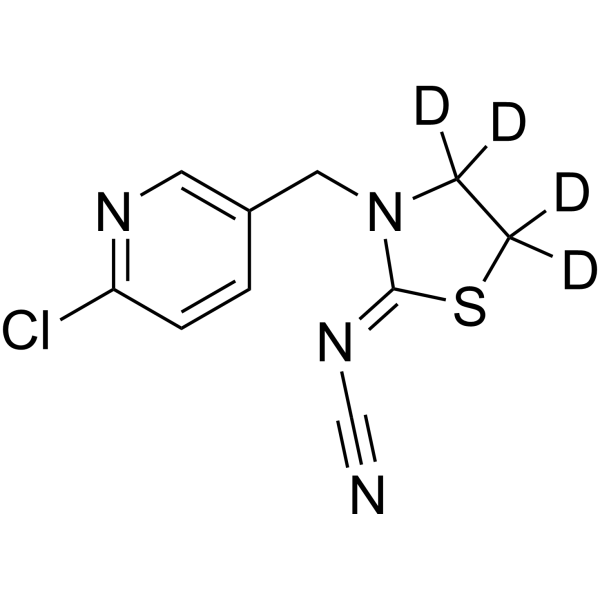
Thiacloprid-d4 is the deuterium labeled Thiacloprid. Thiacloprid is an orally active neurotoxic insecticide and also a nAChR agonist. Thiacloprid reduces the viability of healthy cells, depletes reduced glutathione, and increases MDA levels, thereby inducing cytotoxicity and oxidative stress damage. In practical applications, Thiacloprid has lower acute toxicity to honeybees than other compounds of the same class such as Imidacloprid (HY-B0838), but it still significantly impairs the learning and memory function, immune capacity and survival status of honeybees. Thiacloprid induces intestinal microbial dysbiosis and reduces survival rate in middle-aged honeybees, increases the risk of premature collapse in bumblebee colonies, and significantly decreases the final colony weight and reproductive output. Thiacloprid is used in broad-spectrum agricultural pest control, often alone or in combination with Deltamethrin (HY-B1971), and meets the pest management needs of various crops including potatoes, cabbages, various fruits and vegetables, and nuts .
loading...
    loading...
Cat. No.: HY-W231513
CAS No.: 321945-24-8
Research Areas:  

Cancer

MASTL/Aurora A-IN-1 (Compound MA4) is a dual inhibitor of MASTL and Aurora A kinases with IC50 values of 0.56 μM and 0.16 μM, respectively. MASTL/Aurora A-IN-1 has broad-spectrum anticancer activity and has potent anticancer activity against SR (leukemia), K-562 (leukemia), MDA-MB-435 (melanoma), MOLT-4 (leukemia), and SK-MEL-2 (melanoma) cell lines in NCI-60 cancer cell lines with GI50 values of 0.023, 0.032, 0.037, 0.044, and 0.051 μM, respectively. MASTL/Aurora A-IN-1 inhibits Aurora A and MASTL kinases, inducing cell cycle G2/M arrest, thereby inhibiting cancer cell proliferation. MASTL/Aurora A-IN-1 can be used in cancer research, especially for tumors with dysregulated mitosis .
loading...
    loading...
Cat. No.: HY-138185
CAS No.: 158792-24-6
Synonyms: SF 2738A
Target:  

Bacterial Apoptosis

Research Areas:  

Cancer

Collismycin A is a bacterial metabolite originally isolated from Streptomyces that has diverse biological activities, including antibacterial, antiproliferative, and neuroprotective properties. It is active against a variety of bacteria (MICs=6.25 and 100 μg/mL) and fungi (MICs=12.5-100 μg/mL). It inhibits proliferation of A549 lung, HCT116 colon, and HeLa cervical cancer cells (IC50s=0.3, 0.6, and 0.3 μM, respectively) and NIH373 fibroblasts (IC50=56.6 μM) but not MDA-MD-231 breast cancer cells (IC50=>100 μM). Collismycin A forms a complex with Fe(II) and Fe(III) at a 2:1 ratio, and the addition of iron ions inhibits the antiproliferative effect of collismycin A on HeLa cells, an effect that does not occur with the addition of zinc, manganese, copper, or magnesium ions.3 Collismycin A (1 μM) prevents apoptosis in the brain region of zebrafish larvae in a model of neuronal cell death induced by all-trans retinoic acid.
loading...
    loading...
Cat. No.: HY-161995
Research Areas:  

Cancer

FGFR1/VEGFR2-IN-2 (compound 6l) is a VEGFR2/FGFR1 dual inhibitor. The IC50 values for VEGFR2 and FGFR1 are 0.025 µM and 0.026 µM respectively, and for EGFR and PDGFR-β, the IC50 values are 0.106 µM and 0.077 µM. FGFR1/VEGFR2-IN-2 showes significant anti-cancer activity (GI=60.38%) on NCI-60 cell line, with an IC50 of 8.51 µM in T-47D cell line and anti-migration. FGFR1/VEGFR2-IN-2 acts to arrest cells in the G1 phase and promote apoptosis and necrosis; the IC50 for MCF-7 cell line exceeds 100 µM, and the IC50 for MDA-MB-231 is 69.17 µM, non-toxic to normal cells .
loading...
    loading...
Cat. No.: HY-163144
CAS No.: 3044084-97-8
Target:  

PROTACs Src

Research Areas:  

Cancer

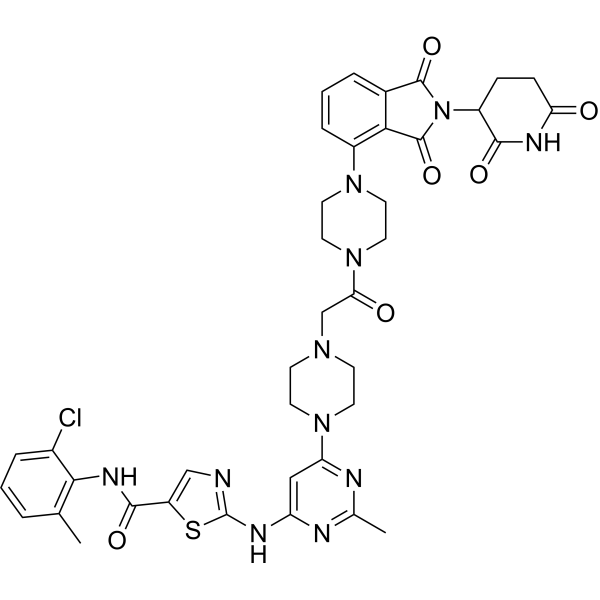
DAS-5-oCRBN is a PROTAC molecule with both c‑Src kinase inhibitory activity and target protein degradation activity, with an EC50 of 45 nM for c‑Src binding. DAS-5-oCRBN binds non-covalently to Cereblon and mediates target protein degradation via the ubiquitin-proteasome pathway. DAS-5-oCRBN can catalytically deplete intracellular c‑Src protein, while blocking both the kinase catalytic function of c‑Src and the non-catalytic protein interactions mediated by its SH2 and SH3 domains. DAS-5-oCRBN inhibits tumor cell proliferation and exerts significant anti-proliferative effects on both c‑Src kinase activity-dependent MDA-MB-231 cells and c‑Src protein level-dependent CAL51 cells. DAS-5-oCRBN can be used in cancer-related research such as studies on triple-negative breast cancer and chronic myeloid leukemia .
loading...
    loading...
Cat. No.: HY-172891
CAS No.: 2197029-81-3
Target:  

CDK HDAC Apoptosis

Research Areas:  

Cancer

CDK9/HDAC1/HDAC3-IN-1 is dual-functional inhibitor of CDK9 and HDAC. CDK9/HDAC1/HDAC3-IN-1 inhibits the protein activity of CDK9/HDAC/HDAC3 with IC50 s of 0.17  μM, 1.73  μM and 1.11 μM for CDK9, HDAC1, and HDAC3, respectively. CDK9/HDAC1/HDAC3-IN-1 inhibits cancer cells by inducing cell apoptosis and cell cycle arrest in the G2/M phase, as well as tumor growth in a murine TNBC MDA-MB-231 xenograft model. CDK9/HDAC1/HDAC3-IN-1 has a broad-spectrum anti-cancer activity, such as breast cancer, cervical cancer, and liver cancer .
loading...
    loading...
Cat. No.: HY-176220
CAS No.: 3060458-90-1
Research Areas:  

Cancer

GPX4-AUTAC is a GPX4-targeting autophagy-mediated degrader (AUTAC). GPX4-AUTAC consists of an inhibitor ML162-yne (HY-153748), a degradation tag FBnG (HY-W073762) and a glycol linker (HY-W021401). GPX4-AUTAC promotes the ubiquitination of GPX4 by E3 ligase TRAF6, and enhances the binding with GPX4 and p62, leading to the selective autophagy-dependent degradation of GPX4. GPX4-AUTAC significantly induces ferroptosis and shows a potent anti-cancer activity in breast cancer cells, breast cancer-derived organoids (PDOs) and MDA-MB-231 tumor xenograft mice model, with potent synergistic effects when combined with Sulfasalazine (SAS) (HY-14655) or chemotherapy drugs (Paclitaxel (HY-B0015) or Cisplatin (HY-17394)) .
loading...
    loading...
Cat. No.: HY-178448
EGFR-IN-178 is an orally active EGFR mutant inhibitor, exhibits highly selective inhibitory activity against mutants of the EGFR enzyme, including Del19 (IC50 = 3.4 nM), L858R/T790 M (IC50 = 2.9 nM), and Del19/T790 M (IC50 = 2.5 nM). EGFR-IN-178 has good activity against JAK2 (IC50 = 55.6 nM) and JAK3 (IC50 = 46.1 nM) kinases. EGFR-IN-178 can increase cellular lipid oxide MDA, meanwhile decrease GSH content, causing ferroptosis in cancer cells. EGFR-IN-178 promotes apoptosis by increasing cleaved caspase-3 expression. EGFR-IN-178 can inhibit the phosphorylation of EGFR protein and decrease the active form p-JAK2 for JAK2, induce an increase in intracellular ROS. EGFR-IN-178 can be used for the study of non-small cell lung cancer (NSCLC) .
loading...
    loading...
Cat. No.: HY-B1953R
CAS No.: 111988-49-9
Research Areas:  

Infection

Thiacloprid (Standard) is the analytical standard of Thiacloprid. This product is intended for research and analytical applications. Thiacloprid is an orally active neurotoxic insecticide and also a nAChR agonist. Thiacloprid reduces the viability of healthy cells, depletes reduced glutathione, and increases MDA levels, thereby inducing cytotoxicity and oxidative stress damage. In practical applications, Thiacloprid has lower acute toxicity to honeybees than other compounds of the same class such as Imidacloprid (HY-B0838), but it still significantly impairs the learning and memory function, immune capacity and survival status of honeybees. Thiacloprid induces intestinal microbial dysbiosis and reduces survival rate in middle-aged honeybees, increases the risk of premature collapse in bumblebee colonies, and significantly decreases the final colony weight and reproductive output. Thiacloprid is used in broad-spectrum agricultural pest control, often alone or in combination with Deltamethrin (HY-B1971), and meets the pest management needs of various crops including potatoes, cabbages, various fruits and vegetables, and nuts .
loading...
    loading...
Cat. No.: HY-N0278
CAS No.: 508-44-1
Synonyms: Pulsatilla camphor; Anemonine; trans-Anemonin
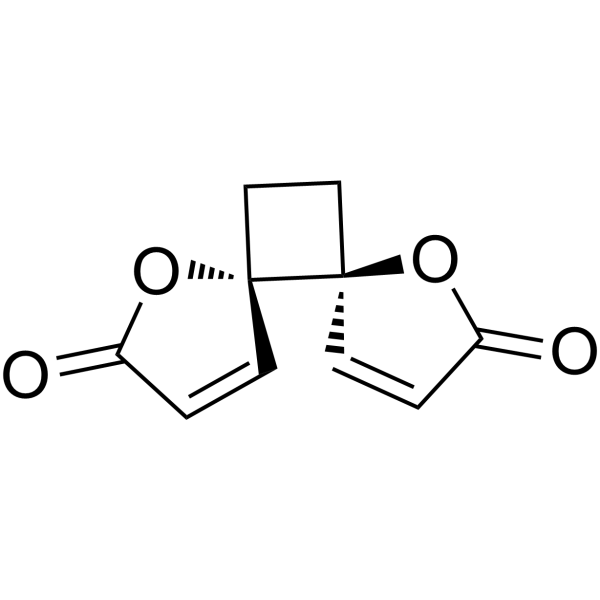
Anemonin (Pulsatilla camphor; Anemonine; trans-Anemonin) is a naturally occurring bislactone small molecule derived from Ranunculaceae with blood-brain barrier permeability, possessing a variety of activities including anti-inflammatory, antioxidant, neuroprotective, melanogenesis-inhibiting, and antiparasitic effects. Anemonin inhibits iNOS to reduce NO release; it inhibits PKC-θ protein expression and downregulates the pro-inflammatory factors TNF-α, IL-1β, and IL-6; it enhances the activities of the antioxidant enzymes SOD, CAT, and GSH-Px, and reduces MDA and ROS levels. Anemonin modulates the Bcl-2 / Bax / caspase-3 pathway to inhibit apoptosis; it downregulates melanogenesis-related molecules including MITF, TYR, TRP1, and TRP2, thereby inhibiting melanin synthesis in human melanocytes. Anemonin inhibits Leishmania and Schistosoma mansoni. Anemonin is used in research related to diseases such as hyperpigmentation, cerebral ischemia/reperfusion injury, inflammation, sepsis-induced acute lung injury, acute ulcerative colitis, leishmaniasis, and schistosomiasis .
loading...
    loading...
Cat. No.: HY-N15378
CAS No.: 132541-62-9
β-carotene-15,15ʹ-epoxide is a XIAP antagonist with apoptosis-inducing and antitumor activity, found in the leaves of Spondias mombin. In a DMBA (HY-W011845)-induced rat model of breast cancer, β-carotene-15,15ʹ-epoxide binds to the BIR3 domain of the anti-apoptotic protein XIAP, blocking its interaction with caspase-9 and thereby promoting tumor cell apoptosis. In addition, β-carotene-15,15ʹ-epoxide significantly downregulates the expression of BCL-2, COX-2, and TNF-α in tumor tissues, reduces MDA levels, increases catalase activity, and modulates serum levels of LDH, ALP, and ALT, demonstrating strong antioxidant, anti-inflammatory, and metabolic protective effects. β-carotene-15,15ʹ-epoxide may be used in research on inflammation-related conditions and cancers such as breast cancer .
loading...
    loading...
Cat. No.: HY-N2160
CAS No.: 77690-92-7
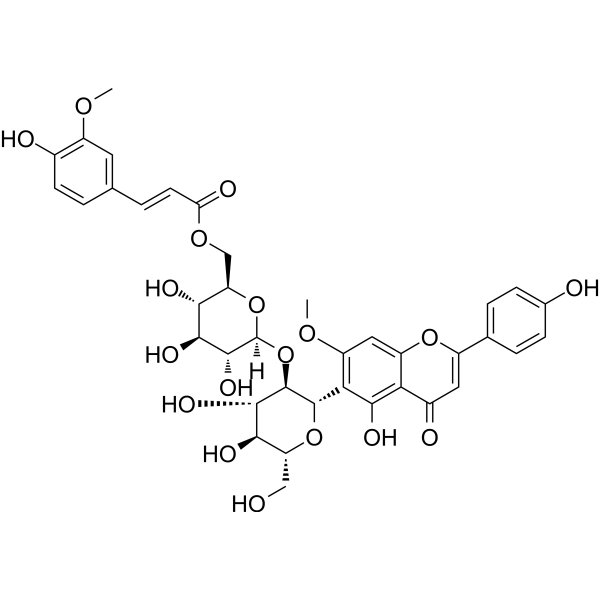
6'''-Feruloylspinosin is an orally active RORα activator that crosses the blood-brain barrier, with a Kd of 0.308 μM, and is found in natural sources. 6'''-Feruloylspinosin modulates AMPK and mTOR phosphorylation. 6'''-Feruloylspinosin promotes autophagy through the AMPK/mTOR signaling pathway, inhibits GSK3β phosphorylation at Tyr216, and activates the PGC-1α/Nrf2/HO-1 pathway. 6'''-Feruloylspinosin regulates neurotransmitter levels, enhances mRNA expression of GABAA α1, α5, and GABAB R1 receptor subunits, increases brain 5-HT and GABA, restores melatonin levels, and ameliorates anxiety-like behaviors. 6'''-Feruloylspinosin regulates oxidative stress homeostasis, inhibits mitochondrial dysfunction, decreases MDA while increasing GSH. 6'''-Feruloylspinosin can be used for research on Alzheimer's disease, acute myocardial infarction, heart failure with insomnia, and insomnia .
loading...
    loading...
Cat. No.: HY-125848
CAS No.: 62025-49-4
Purity:  99.95%
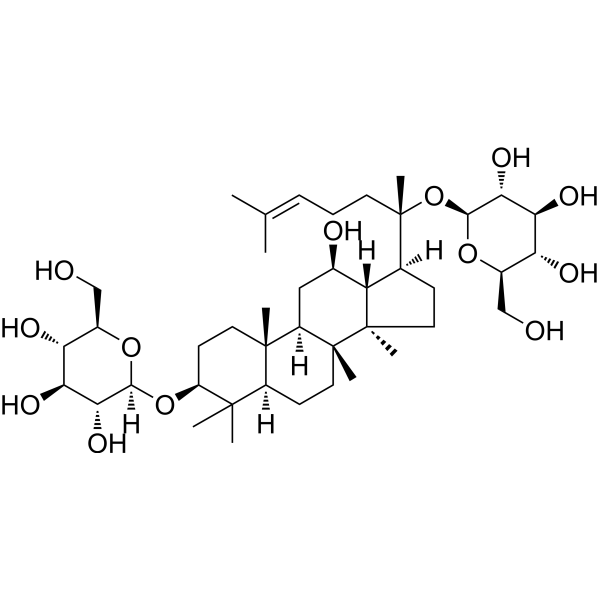
Ginsenoside F2 is an orally active bioactive compound that participates in the regulation of metabolism and inflammation. Ginsenoside F2 promotes the phosphorylation of AMPK and ACC, binds to PPARγ, inhibits the phosphorylation of MAPK, activates the PI3K/AKT/GSK-3β pathway, reduces GLRX expression, and regulates lipid metabolism. Ginsenoside F2 reduces ROS production and MDA levels, restores SOD activity in cells, and alleviates oxidative stress. Ginsenoside F2 induces cell apoptosis (Apoptosis) and increases the number of cleaved caspase-3-positive cells. Ginsenoside F2 reduces body weight gain, adipose tissue weight and serum lipid levels in obese mice, and activates the hepatic AMPK signaling pathway and the expression of antioxidant enzymes. Ginsenoside F2 alleviates atopic dermatitis in mice by inhibiting inflammation and reshaping the gut microbiota . Ginsenoside F2 is applicable to research related to insulin resistance, obesity, atopic dermatitis, liver cancer, glioblastoma and glioma .
loading...
    loading...
Cat. No.: HY-160229
Synonyms: R-1075 sodium
ssRNA40 sodium (R-1075 sodium) is a single-stranded RNA40 derived from HIV-1. ssRNA40 sodium activates the TLR7, TLR8, TLR2, RIG-I, MDA5, MyD88, Caspase-3, IRE1α, NLRP3 inflammasome and IRF7 signaling pathways. ssRNA40 sodium alters mRNA expression in neutrophils, induces pro-inflammatory cytokines, ROS, autophagy (autophagy), pyroptosis (pyroptosis), neuronal death, neurodegeneration, aggregate formation and NK cell activation. ssRNA40 sodium activates the expression of CD62L, CD11b, CD69, MX1, OAS1, ATG7, LC3B and XBP1 in immune cell and neuronal populations. ssRNA40 sodium causes cortical neuron loss and axonal damage in mice in a TLR7-dependent manner. ssRNA40 sodium can be used in research on HIV-1 infection, neurodegeneration, COVID-19 and HIV-associated neurological disorders .
loading...
    loading...
Cat. No.: HY-181015
α-D-Manp(3→1)-α-D-Manp(2→1)-α-D-Glu (Compound C) is an oligosaccharide. α-D-Manp(3→1)-α-D-Manp(2→1)-α-D-Glu activates the PI3K/AKT signaling pathway. α-D-Manp(3→1)-α-D-Manp(2→1)-α-D-Glu significantly inhibits Apoptosis by regulating the Bcl-2/BAX ratio. α-D-Manp(3→1)-α-D-Manp(2→1)-α-D-Glu shows cytoprotective activity by reducing ROS and LDH levels, decreasing MDA activity, and increasing CAT, SOD, and GSH activities. α-D-Manp(3→1)-α-D-Manp(2→1)-α-D-Glu shows neuroprotective effects and antioxidant capacity .
loading...
    loading...

