113 Results for "

Bacteriostatic

" in MedChemExpress (MCE) Product Catalog:
Products (113)

113 Results for "Bacteriostatic" in MCE Product Catalog:

Cat. No.: HY-123614
CAS No.: 147208-55-7
Target:  

Bacterial

Research Areas:  

Infection

PD 140248 hydrochloride is a quinolone broad-spectrum antibacterial agent with good in vitro bacteriostatic activity, especially having a significant inhibitory effect on Gram-positive bacteria .
loading...
    loading...
Cat. No.: HY-B1390BR
CAS No.: 82385-42-0
Research Areas:  

Inflammation/Immunology

Saccharin (sodium hydrate) (Standard) is the analytical standard of Saccharin (sodium hydrate). This product is intended for research and analytical applications. Saccharin sodium hydrate is an orally active, non-caloric artificial sweeteners (NAS). Saccharin sodium hydrate has bacteriostatic and microbiome-modulating properties .
loading...
    loading...
Cat. No.: HY-W002677R
CAS No.: 86393-33-1
Research Areas:  

Infection

Fluoroquinolonic acid (Standard) is the analytical standard of Fluoroquinolonic acid. This product is intended for research and analytical applications. Fluoroquinolonic acid is a bacteriostatic antibiotic. Fluoroquinolonic acid has broad-spectrum activity against Gram-positive and Gram-negative bacteria .
loading...
    loading...
Cat. No.: HY-Y0272R
CAS No.: 81-07-2
Saccharin (Standard) is the analytical standard of Saccharin. This product is intended for research and analytical applications. Saccharin is an orally active, non-caloric artificial sweeteners (NAS). Saccharin has bacteriostatic and microbiome-modulating properties .
loading...
    loading...
Cat. No.: HY-W777496
CAS No.: 1286479-01-3
Saccharin- 13C6 is the 13C-labeled Saccharin (HY-Y0272). Saccharin is an orally active, non-caloric artificial sweeteners (NAS). Saccharin has bacteriostatic and microbiome-modulating properties .
loading...
    loading...
Cat. No.: HY-N10087A
CAS No.: 133398-34-2
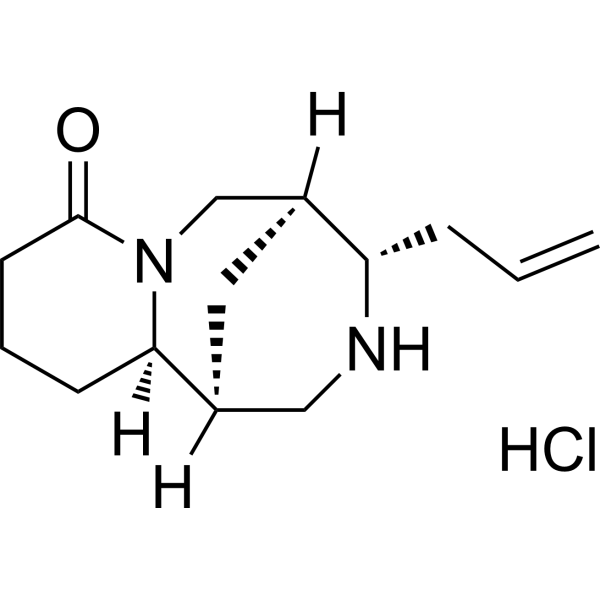
Angustifoline hydrochloride, an alkaloid, can be isolated from Lupinus angustifolius L. alkaloid extract. Angustifoline hydrochloride exhibits antimicrobial activity. Angustifoline hydrochloride could have bacteriostatic effects against S. aureus, B. subtilis, E. coli, P. aeruginosa and B. thuringiensis .
loading...
    loading...
Cat. No.: HY-W702303
Terizidone- 15N2,d6 is the deuterium and 15N-labeled Terizidone (HY-112324). Terizidone is an antibacterial agent, and shows bacteriostatic activity. Terizidone can be used in tuberculosis (TB) research .
loading...
    loading...
Cat. No.: HY-146503
CAS No.: 2807530-12-5
Target:  

Bacterial

Research Areas:  

Infection

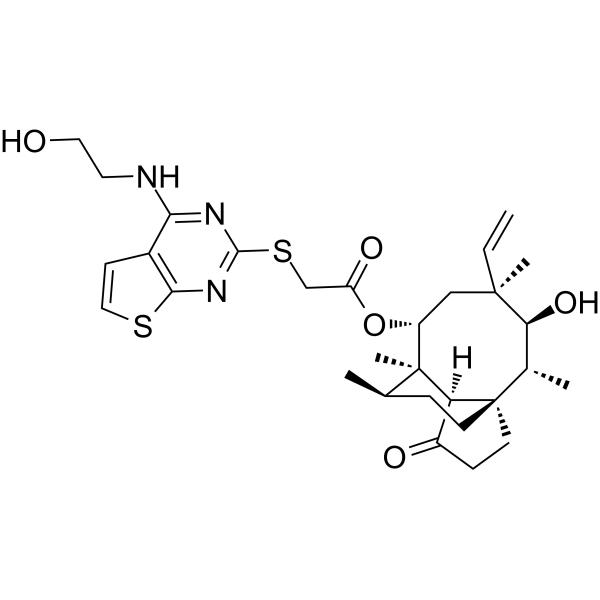
Antibacterial agent 86 (Compound A11) is the most active and displays bacteriostatic activities against methicillin-resistant S. aureus, with MIC values as low as 0.00191 μg/mL, which is 162 and 32 times lower than that of the marketed antibiotics tiamulin and retapamulin, respectively .
loading...
    loading...
Cat. No.: HY-174407
CAS No.: 585553-10-2
Target:  

Bacterial

Research Areas:  

Infection

Antibacterial agent 281 (Compound 95,186) can bacteriostatically inhibit the growth of GAS. Antibacterial agent 281 binds to the ligand binding pocket of SPs0871 and competes with the ligand. Antibacterial agent 281 shows concentration-dependent growth inhibition against S. pyogenes .
loading...
    loading...
Cat. No.: HY-B1064A
CAS No.: 64023-51-4
Synonyms: Clindamycin 2-phosphate hydrochloride; U-28508 hydrochloride
Research Areas:  

Infection Cancer

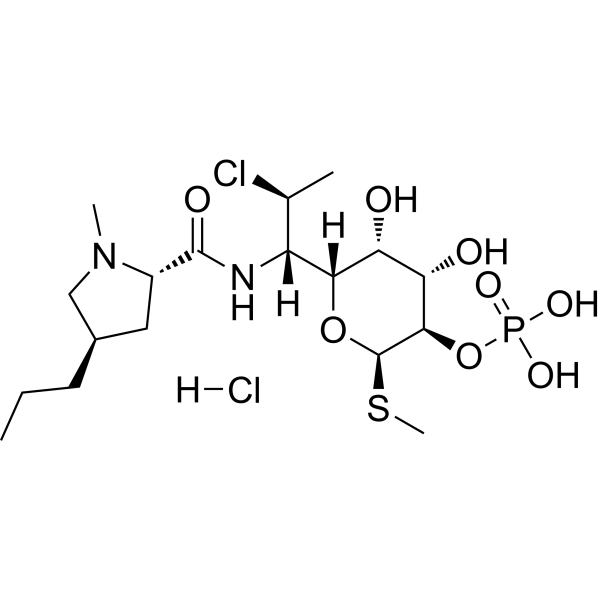
Clindamycin phosphate (Clindamycin 2-phosphate) hydrochloride is a broad-spectrum bacteriostatic lincosamide antibiotic. Clindamycin phosphate hydrochloride is the proagent of Clindamycin (HY-B1455) with no antimicrobial activity in vitro but can be rapidly converted in vivo to the active parent agent, Clindamycin, by phosphatase ester hydrolysis. Clindamycin phosphate hydrochloride can be used for researching acne and bacterial vaginosis .
loading...
    loading...
Cat. No.: HY-B1838A
CAS No.: 14089-43-1
Target:  

Fungal

Research Areas:  

Infection

Asulam (potassium salt) is a chitin synthase inhibitor against plant pathogenic fungi. Asulam (potassium salt) interferes with the biosynthesis of chitin in the fungal cell wall to destroy the integrity and normal growth and reproduction of fungal cells, thereby exerting bacteriostatic activity. Asulam (potassium salt) is promising for research of fungal diseases such as downy mildew and gray mold in spinach, tulips, daffodils and lilies .
loading...
    loading...
Cat. No.: HY-116974
CAS No.: 19934-71-5
Synonyms: ent-Thiophenicol; ent-Dextrosulphenidol
Target:  

Antibiotic

Research Areas:  

Others

ent-Thiamphenicol (ent-Dextrosulphenidol) is a enantiomer of Thiamphenicol (HY-B0479). Thiamphenicol, a methyl-sulfonyl derivative of Chloramphenicol, is a broad-spectrum antimicrobial antibiotic. Thiamphenicol acts by binding to the 50S ribosomal subunit, leading to inhibition of protein synthesis and bacteriostatic effect (against Gram-negative, Gram-positive aerobic and anaerobic bacteria) .
loading...
    loading...
Cat. No.: HY-173355
CAS No.: 3052630-27-7
Target:  

Bacterial

Research Areas:  

Infection

RCB18350 is an antituberculosis agent that belongs to the class of isoxazole derivatives. RCB18350 has bacteriostatic activity and inhibits the growth of Mycobacterium tuberculosis with an MIC of 1.25 μg/mL. RCB18350 is effective against multidrug-resistant Mycobacterium tuberculosis (MDR-TB) clinical isolates, slow-growing mycobacteria such as Mycobacterium bovis BCG and Mycobacterium avium .
loading...
    loading...
Cat. No.: HY-B1350AR
CAS No.: 751-94-0
Synonyms: Sodium fusidate (Standard); SQ-16360 (Standard)
Fusidic acid (sodium salt) (Standard) is the analytical standard of Fusidic acid (sodium salt). This product is intended for research and analytical applications. Fusidic acid sodium salt (Sodium fusidate), a bacteriostatic antibiotic produced from the Fusidium coccineum fungus, belongs to the class of steroids. Fusidic acid sodium salt has no corticosteroid effects. Fusidic acid sodium salt inhibits the growth of bacteria by preventing the release of translation elongation factor G (EF-G) from the ribosome .
loading...
    loading...
Cat. No.: HY-107931R
CAS No.: 57-57-8
Synonyms: β-propiolactone (Standard); 2-Oxetanone (Standard); Betaprone (Standard)
Research Areas:  

Infection

Propiolactone (Standard) is the analytical standard of Propiolactone. This product is intended for research and analytical applications. Propiolactone (β-propiolactone; 2-Oxetanone) is a viral chemical inactivator that causes the infectious inactivation of viruses. Propiolactone was co-incubated with SARS-CoV at a ratio of 1:1000 (v:v) and used as a bacteriostatic agent to formulate the BPL-inactivated influenza virus vaccine (Flu-BPL) .
loading...
    loading...
Cat. No.: HY-B0276A
CAS No.: 3684-73-9
Synonyms: 2-Ethylthioisonicotinamide hydrochloride
Target:  

Bacterial

Research Areas:  

Infection

Ethionamide hydrochloride (2-Ethylthioisonicotinamide hydrochloride) is an antituberculosis drug with mycobacterial activity. Ethionamide hydrochloride interferes with the bacterial cell wall synthesis process by inhibiting the synthesis of fatty acids in the bacterial cell wall. Ethionamide hydrochloride may have bacteriostatic or bactericidal effects, depending on the concentration of the drug at the site of infection and the susceptibility of the associated microorganisms. Ethionamide hydrochloride combines with NAD+ to form an adduct, thereby exerting its antibacterial effect .
loading...
    loading...
Cat. No.: HY-W748688
Synonyms: Acetylsulfamethoxazole-13C6
N4-Acetylsulfamethoxazole- 13C6 (Acetylsulfamethoxazole- 13C6) is the 13C-labeled N4-Acetylsulfamethoxazole (HY-W013266). N4-Acetylsulfamethoxazole (Acetylsulfamethoxazole) is a metabolite of?Sulfamethoxazole (HY-B0322). Sulfamethoxazole is a sulfonamide bacteriostatic antibiotic, used for bacterial infections .
loading...
    loading...
Cat. No.: HY-B1064R
CAS No.: 24729-96-2
Synonyms: Clindamycin 2-phosphate (Standard); U-28508 (Standard)
Research Areas:  

Infection

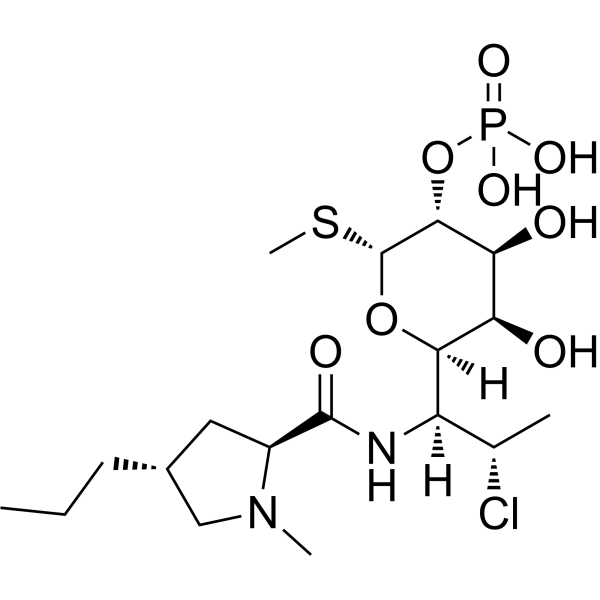
Clindamycin phosphate (Standard) is the analytical standard of Clindamycin phosphate. This product is intended for research and analytical applications. Clindamycin phosphate (Clindamycin 2-phosphate) is a broad-spectrum bacteriostatic lincosamide antibiotic. Clindamycin phosphate is the proagent of Clindamycin (HY-B1455) with no antimicrobial activity in vitro but can be rapidly converted in vivo to the active parent agent, Clindamycin, by phosphatase ester hydrolysis. Clindamycin phosphate can be used for researching acne and bacterial vaginosis .
loading...
    loading...
Cat. No.: HY-B0479S1
CAS No.: 1217723-41-5
Synonyms: Thiophenicol-d3-1; Dextrosulphenidol-d3-1
Research Areas:  

Infection

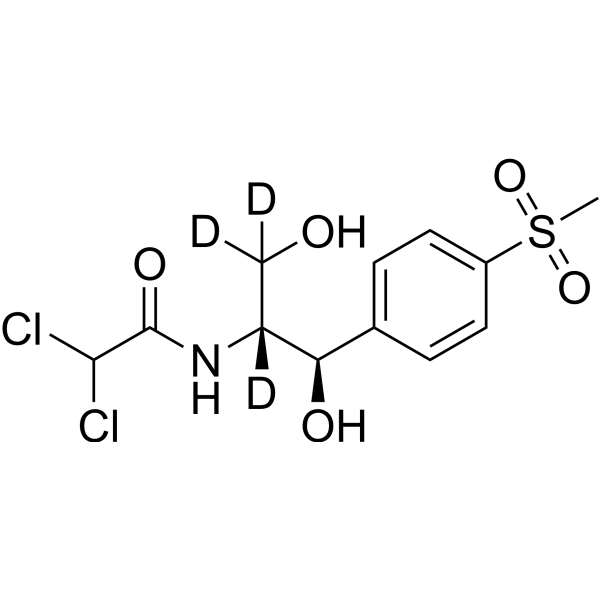
Thiamphenicol-d3-1 (Thiophenicol-d3-1; Dextrosulphenidol-d3-1) is the deuterium-labeled Thiamphenicol (HY-B0479) . Thiamphenicol (Thiophenicol), a methyl-sulfonyl derivative of Chloramphenicol, is a broad-spectrum antimicrobial antibiotic. Thiamphenicol acts by binding to the 50S ribosomal subunit, leading to inhibition of protein synthesis and bacteriostatic effect (against Gram-negative, Gram-positive aerobic and anaerobic bacteria) .
loading...
    loading...
Cat. No.: HY-B0688R
CAS No.: 80-08-0
Synonyms: 4,4′-Diaminodiphenyl sulfone (Standard); DDS (Standard)
Dapsone (Standard) is the analytical standard of Dapsone. This product is intended for research and analytical applications. Dapsone (4,4′-Diaminodiphenyl sulfone) is an orally active and blood-brain penetrant sulfonamide antibiotic with bacteriostatic, antimycobacterial and antiprotozoal activities . Dapsone exerts effective antileprosy activity and inhibits folate synthesis in cell extracts of M. leprae. Dapsone is used for dermatologic disorder research, including leprosy, dermatitis herpetiformis, acne vulgaris et al .
loading...
    loading...

