
124 Results for "

effector T-cell

" in MedChemExpress (MCE) Product Catalog:
Products (124)

124 Results for "effector T-cell" in MCE Product Catalog:

  • Categories Recommended:
    More
Cat. No.: HY-13644
CAS No.: 98629-43-7
Synonyms: 15-Deoxyspergualin
Target:  

Others

Research Areas:  

Others

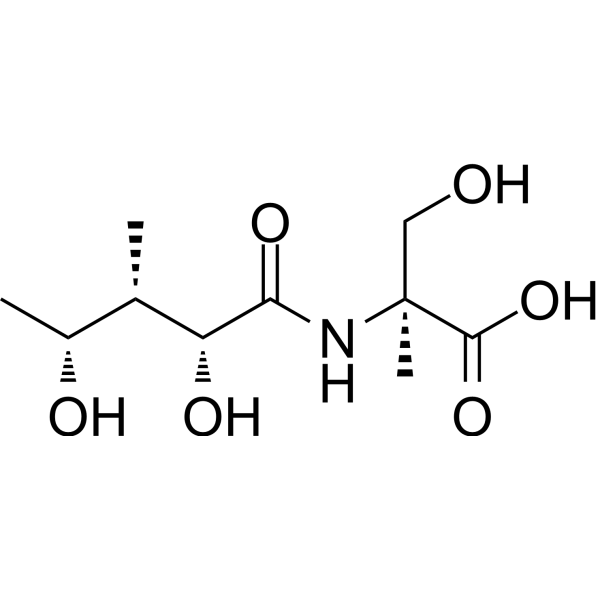
Gusperimus is a fully synthetic racemate that has a novel mechanism of action by binding to the intracellular heat shock protein hsp70 and interfering with intracellular signal transduction. This mechanism of action can enhance the effect of immunosuppressive therapy. Gusperimus can inhibit the differentiation of T cells into cytotoxic T cells, reduce the expression of IL-2 receptors on CD4 and CD8 cells, and inhibit IFN-γ-induced B cell maturation. In addition, when used with cyclosporine, tacrolimus or mycophenolate mofetil, Gusperimus can enhance the immunosuppressive effect and prevent allogeneic transplant rejection.
loading...
    loading...
Cat. No.: HY-P990031
CAS No.: 2649362-29-6
Synonyms: M-6223
Dargistotug (M-6223) is a fully human IgG1 monoclonal antibody targeting TIGIT (T cell immune receptor with Ig domain and ITIM). TIGIT is an inhibitory immune checkpoint that promotes NK cell depletion and reduces the secretion of cytokines by binding to CD155 and other antibodies. It can also directly or indirectly inhibit effector T cells and upregulate Tregs cells, thereby exerting immunosuppression. Function .
loading...
    loading...
Cat. No.: HY-W060417
CAS No.: 1019158-02-1
Target:  

Interleukin Related

Research Areas:  

Inflammation/Immunology Cancer

iST2-1 is an Stimulation-2 (ST2) inhibitor with an IC50 value of 46.65 μM, blocks interaction between ST2 and IL-33, inhibits downstream signaling. iST2-1 functions as an immunomodulator, reduces proliferation of CD4 + and CD8 + T cells, increases regulatory T cell populations, reduces IFN-γ +CD4 + T cell populations, increases Foxp3 +CD4 + regulatory T cell populations in the gastrointestinal tract. iST2-1 reduces plasma soluble ST2 and IFN-γ levels, reduces graft-versus-host disease scores, improves survival in graft-versus-host disease animal models, preserves graft-versus-tumor effect. iST2-1 can be used for the research of graft-versus-host disease .
loading...
    loading...
Cat. No.: HY-179288
Research Areas:  

Cancer

TPST2-IN-1 is a potent and selective TPST2 inhibitor with an IC50 of 946 nM and a Ka of 19.4 μM. TPST2-IN-1 increases the phosphorylation of Stat1 and upregulates the IFNγ-responsive gene CXCL10 by inhibiting TPST2 activity.TPST2-IN-1 exhibits anti-tumor activity and enhances T cell-mediated antitumor immunity characterized by increased infiltration of effector CD8 + T cells. TPST2-IN-1 can be used for the research of cancer, such as colon cancer .
loading...
    loading...
Cat. No.: HY-P991582

Research Areas:  

Cancer

BI-1607 is a humanized monoclonal antibody targeting FcγRIIB/CD32b. BI-1607 selectively blocks inhibitory FcγRIIB signaling, abrogates its inhibitory function, redirects tumor cell-bound antibodies to activating FcγRs, and its modified Fc region prevents the binding of its own Fc segment to FcγRs. BI-1607 reduces αPD-1 trogocytosis, enhances the effector functions of anti-tumor antibodies (including ADCP and ADCC, promotes intratumoral regulatory T cell (Treg) depletion, myeloid cell reprogramming, induction of interferon-γ (IFN-γ) and CXCL10, and increases the number of activated effector CD8 + T cells. BI-1607 can be used in research related to colorectal cancer, HER2-positive advanced solid tumors, HER2-positive locally advanced or metastatic breast cancer, and HER2-positive metastatic gastric cancer .
loading...
    loading...
Cat. No.: HY-177270
CAS No.: 2762488-97-9
Target:  

EGFR Drug Derivative

Research Areas:  

Cancer

CHNQD-01281, a derivative of Brefeldin A (HY-16592), is a EGFR modulator. CHNQD-01281 has strong antiproliferative activities against cancer cells (IC50: 0.079 and 0.081 μM for T24 and J82 cells, respectively). CHNQD-01281 regulates both EGFR/PI3K/AKT and EGFR/ERK pathways and mediates the chemotactic effect of chemokines on immune effector cells. CHNQD-01281 remarkably inhibits tumor growth in T24 xenograft mice model and prolongs the survival time in MB49 allogeneic mice model via inducing infiltration of cytotoxic T cells .
loading...
    loading...
Cat. No.: HY-172882
CAS No.: 2983840-43-1
Research Areas:  

Cancer

IKZF2-degrader 1 is a potent and selective molecular glue degrader that selectively degrades IKZF2, with DC50 values of 0.6 nM and 2.0 nM in HEK293T cells and Jurkat cells, respectively. IKZF2-degrader 1 exerts no degrading effect on CK1α, IKZF1 and GSPT1, and shows weak activity against IKZF3. IKZF2-degrader 1 can be used in studies related to IKZF2-dependent cancers .
loading...
    loading...
Cat. No.: HY-172107
CAS No.: 2901054-39-3
Research Areas:  

Inflammation/Immunology Cancer

HPK1-IN-56 (Compound A29) is a HPK1 inhibitor (IC50: 2.70 nM). HPK1-IN-56 inhibits downstream p-SLP76 (IC50: 8.1 nM in Jurkat T cells). HPK1-IN-56 induces the production of IL-2 in human PBMCs. HPK1-IN-56 has anticancer effect, enhances T-cell killing ability and the antitumor efficacy of anti-PD-1 antibody .
loading...
    loading...
Cat. No.: HY-N16431
CAS No.: 165133-85-7
NFAT-133 is an aromatic polyketide with immunosuppressive and antidiabetic activity. NFAT-133 activates the AMPK pathway, promoting glucose uptake in L6 muscle fibers, thereby resisting diabetes. NFAT-133 inhibits the transcriptional activity of activated T-cell nuclear factor (NFAT), thereby suppressing the expression of IL-2 and the proliferation of T cells, demonstrating an immunosuppressive effect. NFAT-133 does not exhibit antibacterial activity or cytotoxicity, but it can weaken the production of NO in RAW264.7 cells induced by Lipopolysaccharide (LPS) (HY-D1056) .
loading...
    loading...
Cat. No.: HY-119527
CAS No.: 134381-30-9
Conagenin is an immunomodulator. Conagenin shows antitumor effects by activation of T cells and increasing antitumor effector cells .
loading...
    loading...
Cat. No.: HY-168086
CAS No.: 2992690-04-5
LSD1-IN-35 (Compound Z-1) is a selective LSD1 Inhibitor (IC50: 108 nM). LSD1-IN-35 inhibits the demethylation on H3K4me1/2. LSD1-IN-35 is an immunomodulator. LSD1-IN-35 promotes response of gastric cancer cells to T-cell killing effect by decreasing PD-L1 expression and further attenuates the PD-1/PD-L1 interaction .
loading...
    loading...
Cat. No.: HY-169005
Target:  

E1/E2/E3 Enzyme

Research Areas:  

Inflammation/Immunology

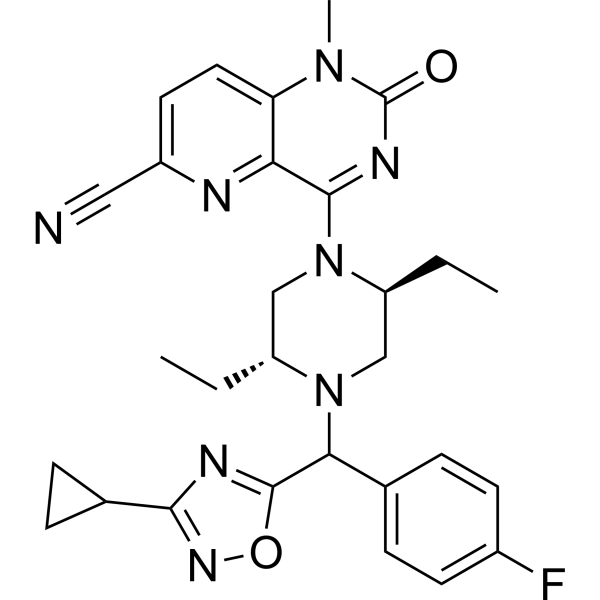
Cbl-b-IN-27 is a casitas B-lymphoma proto-oncogene-b (Cbl-b) inhibitor with an IC50 value of 7 nM. Cbl-b-IN-27 is promising for research of effector T cell function, T cell, natural killer (NK) cell and B cell activation regulation .
loading...
    loading...
Cat. No.: HY-P991403

Target:  

TNF Receptor

Research Areas:  

Cancer

BC011 is a human monoclonal antibody (mAb) targeting TNFRSF1B. BC011 promotes CD8+T cell proliferation and depletes Treg cells, thereby increasing the proportion of effector T cells in the tumor microenvironment. BC011 can be used in tumor Immunity research.
loading...
    loading...
Cat. No.: HY-125881
CAS No.: 1228580-11-7
Target:  

LPL Receptor

Research Areas:  

Inflammation/Immunology

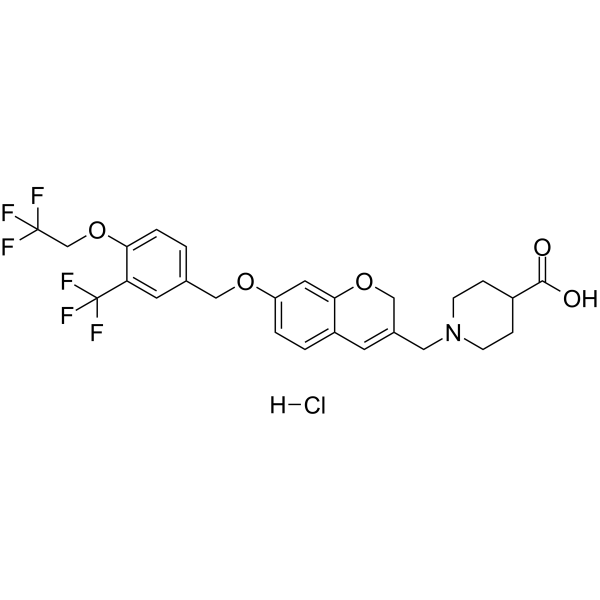
ASP1126 is a selective and orally active sphingosine-1-phosphate (S1P) agonist, with EC50 values of 7.12 nM, 517 nM for hS1P1 and hS1P3, respectively. ASP1126 decreases the number of peripheral lymphocytes, naive T cells, central memory T cells and effector memory T cells in the peripheral blood. ASP1126 has the potential to be applied in clinical transplantation with improved safety profile .
loading...
    loading...
Cat. No.: HY-W014118R
CAS No.: 101-86-0
α-Hexylcinnamaldehyde (Standard) is the analytical standard of α-Hexylcinnamaldehyde. This product is intended for research and analytical applications. α-Hexylcinnamaldehyde is an O-acetyltransferase (OAT) inhibitor. α-Hexylcinnamaldehyde inhibits OAT-mediated bioactivation of nitroarene mutagens, exerts antimutagenic activity through demutagenic and bioantimutagenic mechanisms, and interferes with ATP-binding cassette (ABC) transporter function to reduce substrate efflux. α-Hexylcinnamaldehyde alters membrane permeability, fluidizes phospholipid membranes, exerts antioxidant effects, and enhances the antiproliferative effect of Doxorubicin on human cancer cells. α-Hexylcinnamaldehyde can be used in the research of colorectal adenocarcinoma, T-cell leukemia, and multidrug-resistant cancers .
loading...
    loading...
Cat. No.: HY-N9602
CAS No.: 189689-31-4
6,7,4'-Trihydroxyflavanone is a compound with multiple pharmacological activities, including anti-rheumatic, anti-ischemic, anti-inflammatory, anti-osteoclastogenic and protective T-cells from METH-induced deactivation. 6,7,4'-Trihydroxyflavanone has shown potential protective effects in neurotoxicity studies and can be used to inhibit patients with neurodegenerative diseases caused by METH. 6,7,4'-Trihydroxyflavanone inhibits METH-induced neurotoxicity by upregulating the Nrf2/HO-1 and PI3K/Akt/mTOR signaling pathways. 6,7,4'-Trihydroxyflavanone can also induce Nrf2 nuclear translocation and HO-1 expression, further enhancing its protective effect on neuronal cells .
loading...
    loading...
Cat. No.: HY-156573
CAS No.: 2830643-06-4
Target:  

DGK

Research Areas:  

Cancer

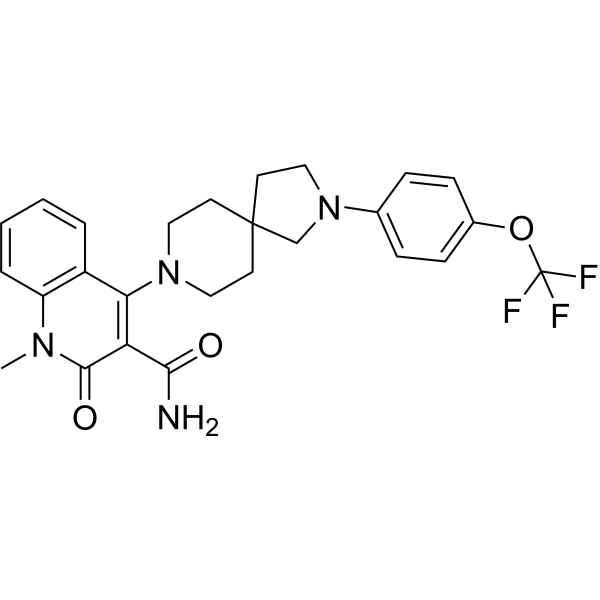
DGKα/ζ-IN-1 (Compound II) is a DGK target inhibitor. DGKα/ζ-IN-1 can enhance the function of T cells, and has a synergistic effect with PD-1, which has therapeutic effects IN both immune and tumor .
loading...
    loading...
Cat. No.: HY-174513
Target:  

mRNA

Research Areas:  

Inflammation/Immunology

Human TNFRSF8 mRNA encodes the human TNF receptor superfamily member 8 (TNFRSF8) protein, a member of the TNF receptor superfamily. TNFRSF8 is a positive regulator of apoptosis, and also has been shown to limit the proliferative potential of autoreactive CD8 effector T cells and protect the body against autoimmunity.
loading...
    loading...
Cat. No.: HY-169480
CAS No.: 3003022-09-8
Target:  

Liposome

Research Areas:  

Infection Cancer

Lipid C2 is an ionizable cationic lipid that has been used in the formation of lipid nanoparticles (LNP) for mRNA delivery in vivo. LNPs containing Lipid C2 and encapsulating an mRNA reporter selectively accumulate in the liver and spleen but not the heart, lungs, or kidneys in mice. LNP containing Lipid C2 and encapsulating mRNA encoding the Epstein-Barr virus (EBV) protein latent membrane protein 2 (LMP-2), in combination with an anti-programmed cell death protein 1 (PD-1) antibody, decrease tumor volume and reverse T cell exhaustion, as well as increase the percentage of CD3 +CD8 + central and CD3 +CD8 + effector memory T cells and decrease the percentage of CD3 + T cells expressing Pd-1, in the spleen in a CT26 murine EBV-infected colon cancer model .
loading...
    loading...
Cat. No.: HY-156570
CAS No.: 2648418-86-2
Target:  

DGK

Research Areas:  

Inflammation/Immunology Cancer

DGKα-IN-3 (example 25) is a DGKα inhibitor with the IC50 of 283 nM, extracted from patent WO2021105115. DGKα-IN-2 significantly enhances the anti-tumor effect of anti-PD-1 by increasing the proliferation and function of T cells. DGKα-IN-2 has the potential for cancer and immunology study.
loading...
    loading...

