77 Results for "

DNA labeling agent

" in MedChemExpress (MCE) Product Catalog:
Products (77)

77 Results for "DNA labeling agent" in MCE Product Catalog:

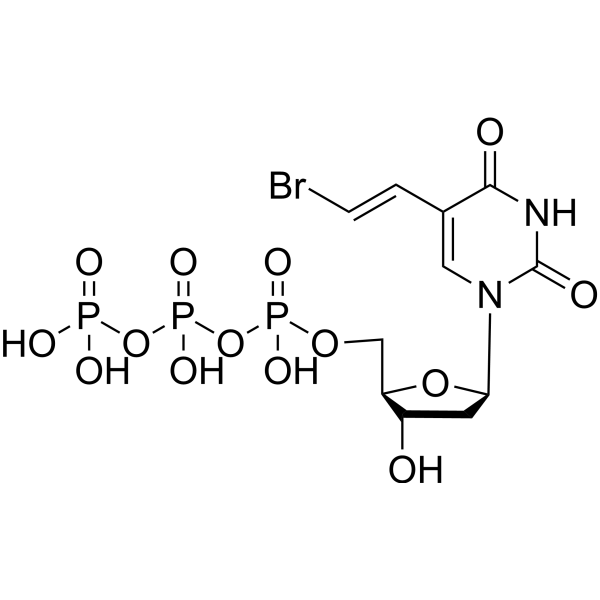
Cat. No.: HY-W747737
CAS No.: 77222-61-8
Synonyms: (E)-5-(2-Bromovinyl)-dUTP; BVdUTP
Target:  

VZV DNA/RNA Synthesis HSV

Research Areas:  

Infection

BVDU 5′-Triphosphate is an antivirus agent with 5′-Triphosphate label, targeting viral DNA polymerase. BVDU 5′-Triphosphate shows excellent selectivity against varicella-zoster virus (VZV) and herpes simplex virus type 1 (HSV-1), due to a specific phosphorylation by the virus-encoded thymidine kinase.
loading...
    loading...
Cat. No.: HY-W700621
CAS No.: 1189959-10-1
Synonyms: Tris(2-​carboxyethyl)​phosphine hydrochloride-d12
TCEP-d12 (hydrochloride) (Tris(2-?carboxyethyl)?phosphine hydrochloride-d12) is deuterium labeled TCEP (hydrochloride). TCEP hydrochloride (Tris(2-carboxyethyl)phosphine hydrochloride) is a non-thiol reducing agent that is more stable and produces a faster S-S reductive reaction than other chemical reductants. TCEP hydrochloride is a trialkylphosphine, selectively reduces protein disuldes without altering the properties or interacting with thiol-directed agents in the reaction mixture. TCEP hydrochloride is also a commonly used reducing agent in the DNA/AuNP chemistry .
loading...
    loading...
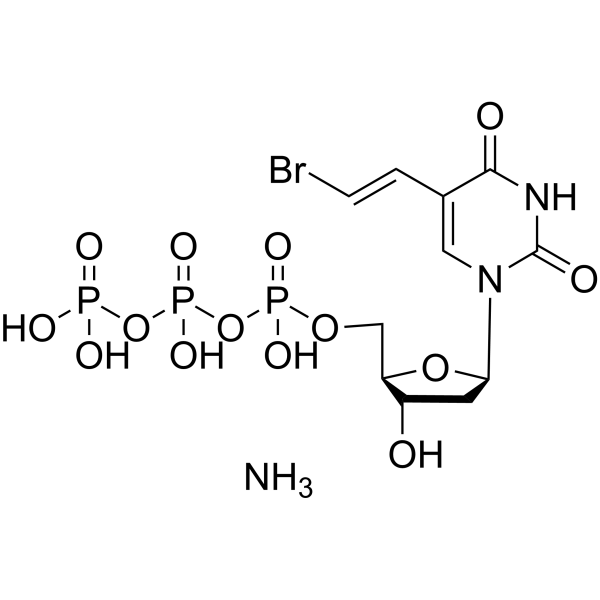
Cat. No.: HY-W747737A
Synonyms: (E)-5-(2-Bromovinyl)-dUTP ammonium; BVdUTP ammonium
Target:  

VZV DNA/RNA Synthesis HSV

Research Areas:  

Infection

BVDU 5′-Triphosphate ammonium is an antivirus agent with 5′-Triphosphate label, targeting viral DNA polymerase. BVDU 5′-Triphosphate ammonium shows excellent selectivity against varicella-zoster virus (VZV) and herpes simplex virus type 1 (HSV-1), due to a specific phosphorylation by the virus-encoded thymidine kinase.
loading...
    loading...
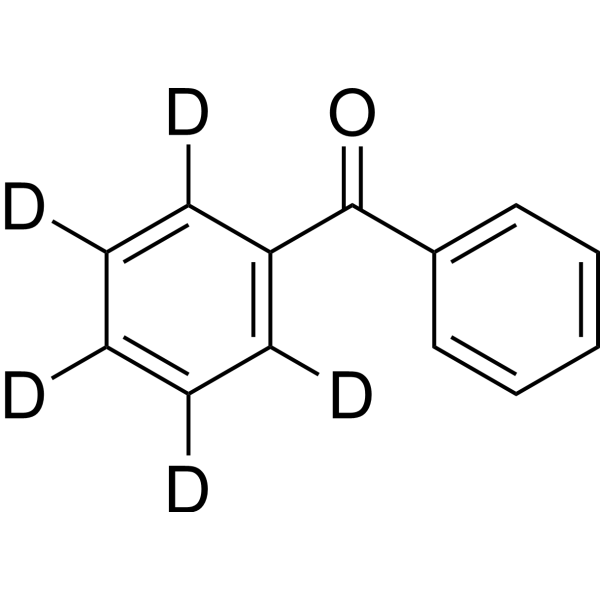
Cat. No.: HY-Y0546S1
CAS No.: 2694-78-2
Benzophenone-d5 is the deuterium labeled Benzophenone (HY-Y0546). Benzophenone is an endogenous metabolite. Benzophenone is a photosensitizer, that absorbs UV light, transfers its energy to DNA, and triggers DNA damage. Benzophenone can be used as the fragrance enhancer, ultraviolet curing agent, additive in plastics, or the flavor ingredient. Benzophenone can also be used in the manufacturing of insecticides, agricultural chemicals, hypnotics, antihistamines, and other pharmaceuticals. Benzophenone exhibits certain carcinogenicity in mouse/rat models under long term exposure. Benzophenone exhibits estrogenic activity .
loading...
    loading...
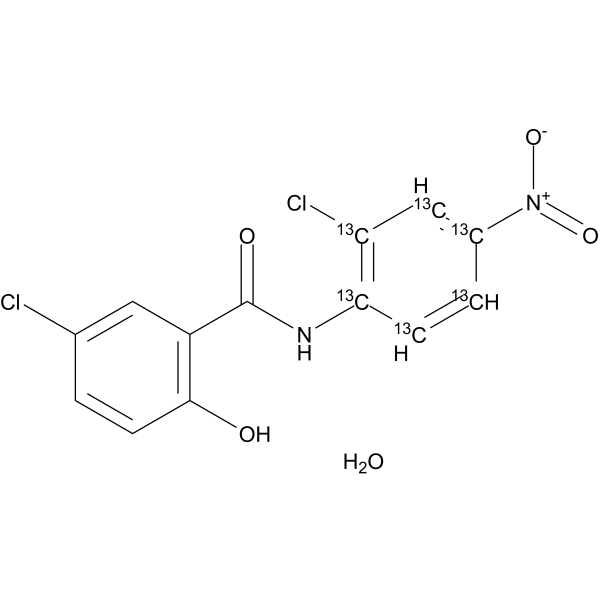
Cat. No.: HY-B0497BS
CAS No.: 1325559-12-3
Synonyms: BAY2353-13C6 monohydrate
Niclosamide- 13C6 (monohydrate) is the 13C labeled Niclosamide monohydrate . Niclosamide (BAY2353) monohydrate is an orally active antihelminthic agent used in parasitic infection research . Niclosamide monohydrate is a STAT3 inhibitor with an IC50 of 0.25 μM in HeLa cells . Niclosamide monohydrate has biological activities against cancer, and inhibits DNA replication in Vero E6 cells .
loading...
    loading...
Cat. No.: HY-B1085S
CAS No.: 2732985-25-8
Research Areas:  

Infection

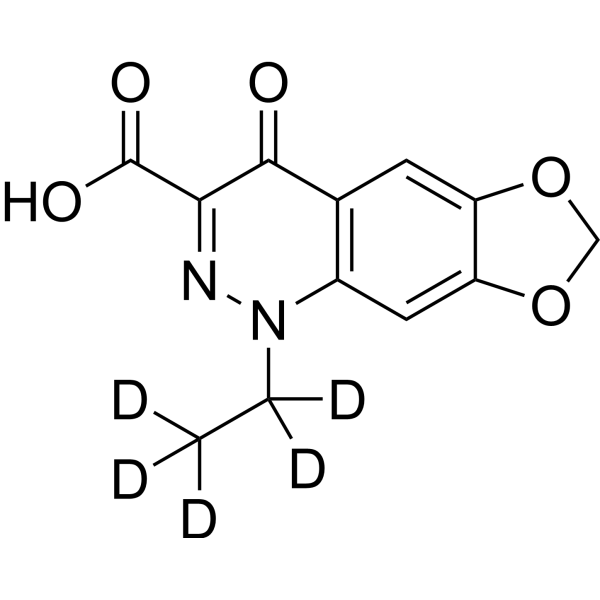
Cinoxacin-d5 is the deuterium-labeled Cinoxacin (HY-B1085) . Cinoxacin (Compound 64716), a synthetic antimicrobial related to the quinolone class of orally active antibacterial agent. Cinoxacin has antibacterial activity against many gram-negative aerobic bacteria and inhibits bacterial DNA synthesis. Cinoxacin can be used for the research of urinary tract infections and bacterial prostatitis .
loading...
    loading...
Cat. No.: HY-B1826S2
CAS No.: 1190021-70-5
Synonyms: GS-0393-d4; PMEA-d4
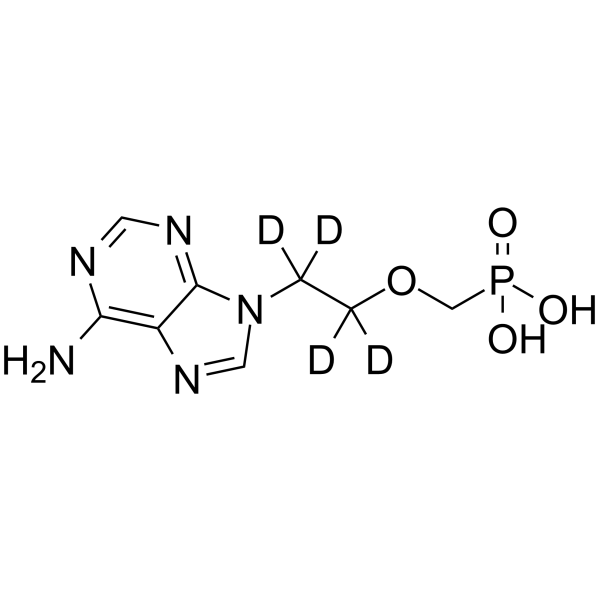
Adefovir-d4 is the deuterium labeled Adefovir. Adefovir (GS-0393) is an adenosine monophosphate analog antiviral agent that after intracellular conversion to Adefovir diphosphate inhibits HBV DNA polymerase. Adefovir has an IC50 of 0.7 μM against HBV in the HepG2.2.15 cell line. Adefovir has good antiviral activity against several viruses, including HBV and herpesviruses .
loading...
    loading...
Cat. No.: HY-16305S1
Synonyms: 1263W94-d6 TFA; BW1263W94-d6 TFA; GW257406X-d6 TFA
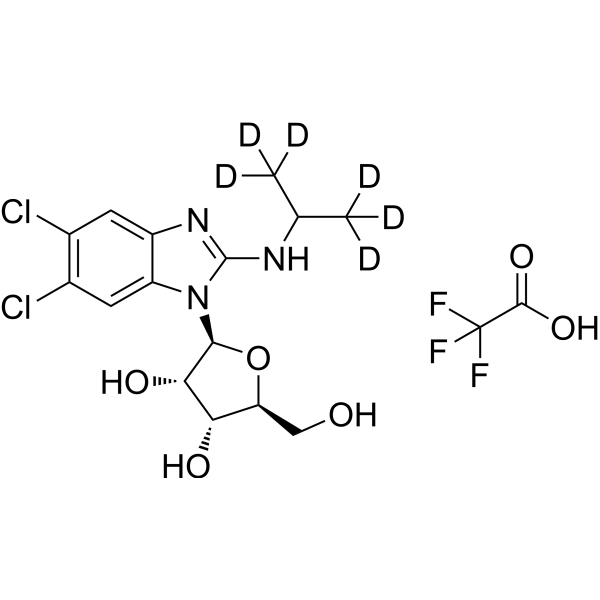
Maribavir-d6 TFA (1263W94-d6 TFA; BW1263W94-d6 TFA; GW257406X-d6 TFA) is a deuterium labeled Maribavir (HY-16305). Maribavir is an orally active antiviral agent for cytomegalovirus (CMV) through inhibition of protein kinase UL97 and the following CMV DNA replication .
loading...
    loading...
Cat. No.: HY-W717139
CAS No.: 2733722-92-2
N-Nitroso-N-methylurea-d5 is the deuterium labeled N-Nitroso-N-methylurea (HY-34758). N-Nitroso-N-methylurea (NMU;MNU;NMH) is a potent carcinogen, mutagen and teratogenand. N-Nitroso-N-methylurea is a direct-acting alkylating agent that interacts with DNA. N-Nitroso-N-methylurea targets multiple animal organs to cause various cancer and/or degenerative disease. N-Nitroso-N-methylurea is also a precursor in the synthesis of diazomethane .
loading...
    loading...
Cat. No.: HY-W713297
CAS No.: 2469734-82-3
Synonyms: ABOB hydrochloride-d8
Moroxydine hydrochloride-d8 (ABOB hydrochloride-d8) is the deuterium labeled Moroxydine (ABOB) hydrochloride (HY-B0420A). Moroxydine hydrochloride is a broad-spectrum agent with multi-antiviral activities against DNA and RNA viruses, including influenza virus, herpes simplex, varicella zoster, measles, mumps disease, hepatitis C virus, etc. Moroxydine hydrochloride exhibits excellent antiviral activity and shows low cytotoxicity to cells infected by dsRNA viruses (grass carp reovirus, GCRV) and large DNA viruses (giant salamander iridovirus, GSIV). Moroxydine hydrochloride blocks the GCRV-induced cytopathic effects and eliminates nucleocapsids in ctenopharyngodon idella kidney (CIK) cells to keep the normal morphological structure. Moroxydine hydrochloride significantly inhibits the apoptosis, the caspase 3 activity, Bax expression and down-regulates Bcl-2 levels [1][2][3].
loading...
    loading...
Cat. No.: HY-W777393
CAS No.: 1189992-05-9
Synonyms: 7-Hydroxycoumarin-13C6; Hydrangin-13C6; NSC 19790-13C6
Umbelliferone- 13C6 (7-Hydroxycoumarin- 13C6) is the 13C-labeled Umbelliferone (HY-N0573). Umbelliferone (7-Hydroxycoumarin), a natural orally active product of the coumarin family, is a fluorescing compound which can be used as a sunscreen agent. Umbelliferone induces cell cycle arrest, apoptosis and DNA fragmentation in HepG2 cells. Umbelliferone exhibits significant anticancer effects. Umbelliferone attenuates the alteration characteristics of allergic airway inflammation. Umbelliferone displays the neuroprotective effects and cross the blood-brain barrier. Umbelliferone exhibits anti-inflammatory and antioxidant effects in chronic alcohol-fed rats .
loading...
    loading...
Cat. No.: HY-W777675
CAS No.: 1246815-27-9
Synonyms: NSC 270912-13C4
2,5-Deoxyfructosazine- 13C4 (NSC 270912- 13C4) is the 13C-labeled 2,5-Deoxyfructosazine (HY-135078). 2,5-Deoxyfructosazine is a pyrazine derivative that can be found in cured tobacco and is used as a flavoring agent in the food and tobacco industry. Pyrazines, including 2,5-deoxyfructosazine, can be produced either by pyrolytic decomposition of natural compounds or by the reaction of sugars with alcoholic ammonia. 2,5-Deoxyfructosazine is also formed by the breakdown of D-glucosamine at neutral pH. Like glucosamine, 2,5-deoxyfructosazine has DNA strand breakage activity and strongly inhibits IL-2 production by Jurkat cells stimulated with phytohemagglutinin (IC50=~1.25 mM).
loading...
    loading...
Cat. No.: HY-B1398S
CAS No.: 1329792-51-9
Synonyms: 4-Aminoantipyrine-d3
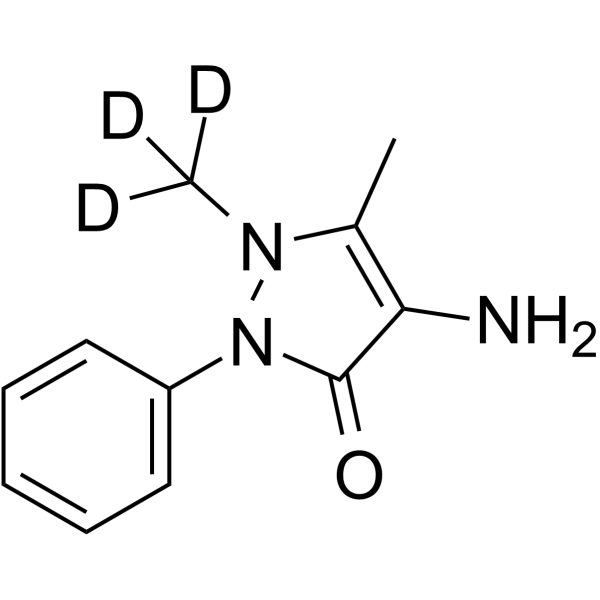
Ampyrone-d3 is the deuterium labeled Ampyrone (HY-B1398). Ampyrone (4-Aminophenazone; 4-Aminoantipyrine) is a reversible and low-damage optical clearing agent and non-selective COX inhibitor based on UV absorption properties. Ampyrone can improve the optical transmittance of mouse skin and other tissues. Ampyrone can induce tissue refractive index matching by enhancing UV absorption, reduce light scattering, and achieve tissue transparency in vivo. Ampyrone reduces the synthesis of prostaglandin PGE2, thereby exerting anti-inflammatory, analgesic and antipyretic effects. Ampyrone inhibits DNA damage, cell apoptosis and immune cell phagocytosis induced by Doxorubicin (HY-15142A) and Cisplatin (HY-17394), etc., and participates in the regulation of toxicity in tumor chemotherapy .
loading...
    loading...
Cat. No.: HY-119696S1
MTIC- 13C is the 13C-labeled MTIC (HY-119696). MTIC, the active metabolite of Temozolomide (TMZ), is a DNA alkylating agent. MTIC has antitumor activity
loading...
    loading...
Cat. No.: HY-17364S1
Synonyms: NSC 362856-15N; CCRG 81045-15N; TMZ-15N
Temozolomide- 15N (NSC 362856- 15N) is the 15N-labeled Temozolomide (HY-17364). Temozolomide (NSC 362856) is an oral active DNA alkylating agent that crosses the blood-brain barrier. Temozolomide is also a proautophagic and proapoptotic agent. Temozolomide is effective against tumor cells that are characterized by low levels of O6-alkylguanine DNA alkyltransferase (OGAT) and a functional mismatch repair system. Temozolomide has antitumor and antiangiogenic effects .
loading...
    loading...
Cat. No.: HY-119475S
Satranidazole-d3 is the deuterium labeled Satranidazole. Satranidazole is an orally active insecticide and antimicrobial agent with high electron affinity. Satranidazole forms reduced nitro intermediates, which interact with DNA, causing helix instability, strand breakage and release of thymidine derivatives. Satranidazole exhibits antitrichomonal activity against Trichomonas vaginalis and Trichomonas foetus, and antiamoebic activity in rodent models of hepatic amoebiasis and caecal amoebiasis. Satranidazole inhibits the replication of bacteriophage φX174 DNA. Satranidazole can be used in research related to caecal amoebiasis, trichomoniasis and anaerobic bacterial infections.
loading...
    loading...
Cat. No.: HY-D3405
CAS No.: 173357-16-9
BO-TAP-3 is an orange fluorescent carbocyanine monomer dye, and it is also a cell impermeable nucleic acid staining agent. When there is no nucleic acid present, BO-TAP-3 shows a non-fluorescent state. However, when it binds to double-stranded DNA, it exhibits multiple fluorescence enhancement effects. BO-TAP-3 can be used for cell nucleus and cytoplasm imaging, bacterial and sperm labeling, and can also be applied in nucleic acid detection and amplification research. It can also be used as a temperature sensor (Ex/Em = 564/600 nM).
loading...
    loading...

