8279 Results for "

PROTACs

" in MedChemExpress (MCE) Product Catalog:
Products (8279)

8279 Results for "PROTACs" in MCE Product Catalog:

Cat. No.: HY-163227
(1R,4R)-Thalidomide-2,5-diazabicyclo[2.2.1]heptane-(1R,4r)-cyclohexane-NH-Boc is a conjugate of E3 ligase ligand and linker, consisting of Thalidomide (HY-14658) and the corresponding Linker. (1R,4R)-Thalidomide-2,5-diazabicyclo[2.2.1]heptane-(1R,4r)-cyclohexane-NH-Boc can serve as a Cereblon ligand to recruit CRBN protein and serve as a key intermediate for the synthesis of complete PROTAC molecules.
loading...
    loading...
Cat. No.: HY-163705
Target:  

PROTACs FGFR

Research Areas:  

Cancer

BR-cpd7 is an orally active, selective PROTAC degrader targeting FGFR1 and FGFR2, with a DC50 of 2.2 nM against FGFR1. BR-cpd7 reduces FGFR signaling. BR-cpd7 induces cell cycle arrest and selectively blocks the proliferation of FGFR1/FGFR2-dependent tumor cells. BR-cpd7 exhibits significant antitumor efficacy in FGFR1-dependent lung cancer animal models, while achieving complete depletion of FGFR1. BR-cpd7 can be used for cancer-related research .
loading...
    loading...
Cat. No.: HY-165298
CAS No.: 2504949-52-2
Target:  

PROTACs FGFR ERK

Research Areas:  

Cancer

DGY-09-192 is a PROTAC FGFR1/2 degrader (FGFR1: DC50 = 4.35 nM; FGFR2: DC50 = 70 nM). DGY-09-192 preferentially degrades wild-type FGFR1/2 and multiple FGFR2 fusion proteins (including FGFR2-PHGDH and FGFR2-OPTN). DGY-09-192 suppresses downstream FGFR signaling (reducing phosphorylation of FRS2 Y196 and ERK1/2 T202/Y204) in vitro and vivo. DGY-09-192 can be used for the study of FGFR-driven cancers .
loading...
    loading...
Cat. No.: HY-168694
Research Areas:  

Cancer

E3 Ligase Ligand-linker Conjugate 147 is a conjugate of E3 ligase ligand and PROTAC Linker, which can be used to synthesize BRD9 Degrader-1 (HY-156401) (Compound 13-7) . E3 Ligase Ligand-linker Conjugate 147 is composed of the E3 ligase ligand BRD9 ligand-7 (HY-168695) and the PROTA linker 2-((1R,5S,6s)-3-Azabicyclo[3.1.0]hexan-6-yl)ethan-1-ol (HY-W763939).
loading...
    loading...
Cat. No.: HY-169358
CAS No.: 3120166-93-7
Research Areas:  

Cancer

L134 is a BRD4 PROTAC degrader with a DC50 of 7.36 nM. L134 induces BRD4 protein degradation without inhibiting BRD4 gene expression, and recruits the E3 ubiquitin ligase DCAF11 to mediate this process, which can be blocked by proteasome inhibitors (MG132 (HY-13259), PS341 (HY-10227)) and E1 ubiquitin ligase inhibitors (PYR41 (HY-13296), MLN4924 (HY-70062)). L134 inhibits cancer cell migration, promotes cancer cell apoptosis and exerts antiproliferative activity. L134 can be used in studies related to triple-negative breast cancer .
loading...
    loading...
Cat. No.: HY-170859
CAS No.: 3110370-06-1
Target:  

PROTACs Casein Kinase

Research Areas:  

Cancer

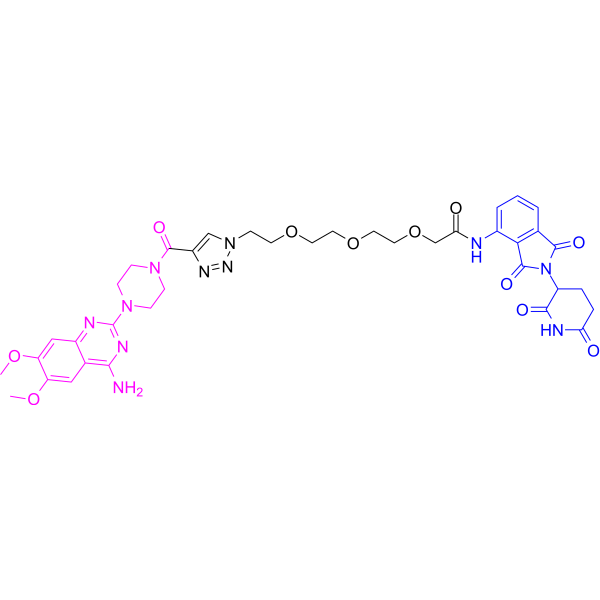
AH078 is a PROTAC-based CK1δ/ε degrader (DC50=0.55 μM, Dmax=70%) that lacks subtype selectivity between CK1δ and CK1ε. AH078 induces target protein degradation either by recruiting the CUL4-CRBN E3 ligase complex and proteasome, or via the VHL- and ubiquitin-dependent pathway. AH078 also exhibits selectivity for CK1α, and is widely applicable to research related to colon cancer, pancreatic cancer, breast cancer, ovarian cancer, chronic lymphocytic leukemia, acute myeloid leukemia, glioma, and metastatic breast adenocarcinoma .
loading...
    loading...
Cat. No.: HY-173250
Target:  

PROTACs Ras Apoptosis

Research Areas:  

Cancer

YN14-H is a potent mutant KRAS G12C PROTAC degrader. The DC50 values of YN14-H in NCI-H358 and MIA PaCa-2 cells are 28.9 nM and 18.1 nM, respectively, with corresponding IC50 values of 42 nM and 21 nM. YN14-H degrades KRAS G12C in a ubiquitin-proteasome system-dependent manner, thereby significantly inducing apoptosis and inhibiting cell migration. YN14-H can be used for targeting tumors with KRAS G12C mutations (such as non-small cell lung cancer, pancreatic cancer, etc.) .
loading...
    loading...
Cat. No.: HY-174867
CAS No.: 3091513-13-9
Target:  

PROTACs Ferroptosis

Research Areas:  

Cancer

AY-4 (Compound AY-4) is an efficient PROTAC degrader targeting FTH1 (Kd = 3.17 nM). AY-4 effectively upregulates the levels of ferrous (Fe 2+) and ferric (Fe 3+) ions in cells. AY-4 is a potential anticancer candidate compound that regulates iron homeostasis through ferritin degradation and enhances the efficacy of existing drugs. AY-4 can effectively reduce the level of FTH1 in breast cancer cells (Pink: FTH1 ligand AY-2 (HY-174871); Blue: E3 ligand Pomalidomide (HY-10984); Black: Linker, Pomalidomide-PEG3-acid (HY-174872)) .
loading...
    loading...
Cat. No.: HY-178510
Research Areas:  

Cancer

JQ1-S (GlcNAc) Cq is a sugar-modified BRD4 PROTAC degrader with a DC50 of 2.1 μM. JQ1-S (GlcNAc) Cq inhibits the formation of the ternary complex between CRBN and BRD4 (BD1/BD2). JQ1-S (GlcNAc) Cq serves as a substrate for O-GlcNAcase, which cleaves its O-GlcNAc domain to restore binding ability with CRBN, thereby forming a BRD4-containing ternary complex and triggering ubiquitination and proteasomal degradation of BRD4. JQ1-S (GlcNAc) Cq is applicable for cancer research .
loading...
    loading...
Cat. No.: HY-181035
Target:  

PROTACs CDK

Research Areas:  

Cancer

DN1679 is a potent, selective and orally active CRBN-dependent CDK12/13 PROTAC dual degrader. DN1679 shows DC50 of 8.8/9.8 nM (MDA-MB-231), 5.1/6.4 nM (MDA-MB-157) and 17.2/15.8 nM (MDA-MB-468) for CDK12/13. DN1679 can downregulate DNA damage response gene mRNA levels, such as ATM, ATR, BRCA1 and RAD51. DN1679 demonstrates a potent synergistic anti-tumor effect companied with Olaparib (HY-10162). DN1679 can be used for research of triple-negative breast cance .
loading...
    loading...
Cat. No.: HY-182331
CAS No.: 3059574-58-9
WCF-598 is a RXRγ (Kd: 234.2 nM) PROTAC degrader. WCF-598 induces RXRγ degradation via the ubiquitin-proteasome pathway and binds directly to RXRγ. WCF-598 indirectly induces AR-V7 degradation, impairs the stability of the RXRγ-AR-V7 complex, downregulates AR-V7 levels, and inhibits the transcription of downstream target genes of AR-V7. WCF-598 induces tumor cell apoptosis, inhibits cell proliferation, activates the p53 signaling pathway, and suppresses cell cycle progression. WCF-598 can be used for the research of prostate cancer .
loading...
    loading...
Cat. No.: HY-184508
Target:  

Ligands for E3 Ligase

Research Areas:  

Cancer

E3 ligase Ligand 81 is a VHL E3 ubiquitin ligase ligand and constitutes the VHL ligand moiety of R4VPL3-1 (HY-184506). R4VPL3-1 is a PROTAC-like bifunctional degrader linking RNF4 and VHL; it binds to and modifies GPX4, thereby inhibiting its anti-ferroptotic function. R4VPL3-1 induces iron-dependent lipid peroxidation and rapid ferroptosis-mediated cell death in cancer cells. E3 ligase Ligand 81 can be used in research related to targeted protein degradation and tumors such as melanoma .
loading...
    loading...
Cat. No.: HY-187502
Target:  

JAK PROTACs RIP kinase

Research Areas:  

Others

Jak1 RIMTAC-1 is a JAK1 RIMTAC degrader (a PROTAC-like agent) with a DC50 of 322.8 nM. Jak1 RIMTAC-1 forms a ternary complex with JAK1 and RIPK1, thereby recruiting the VHL E3 ligase complex to ubiquitinate JAK1 via the ubiquitin-proteasome system and mediate its subsequent proteasomal degradation. Jak1 RIMTAC-1 does not alter JAK1 mRNA levels (pink: Jak1 ligand-1 (HY-187503); blue: RIPK1-ligand-4 (HY-187391); black: Linker (HY-B0704)) .
loading...
    loading...
Cat. No.: HY-W275882
CAS No.: 13179-98-1
Research Areas:  

Endocrinology

1,6-Dimethoxyhexane is an aliphatic ether that serves as a PROTAC linker and fuel additive. 1,6-Dimethoxyhexane is an orally active testicular toxicant. It has no direct toxicity on its own, but exerts toxicity after oxidative metabolism by liver/testicular microsomes to produce 2-Methoxyacetic Acid (MAA). 1,6-Dimethoxyhexane induces apoptosis/necrosis of pachytene spermatocytes, downregulates the expression of HSP70.2, HSP60 and ERp60/PDI A3, and causes spermatogenic tubule degeneration, testicular/thymic atrophy, a sharp decline in epididymal sperm density, and other effects. 1,6-Dimethoxyhexane can be used in studies related to testicular toxicity .
loading...
    loading...
Cat. No.: HY-103600
CAS No.: 2101200-09-1
Purity:  98.18%
Synonyms: VH032-PEG1-N3; VHL Ligand-Linker Conjugates 9; E3 ligase Ligand-Linker Conjugates 3
Research Areas:  

Cancer

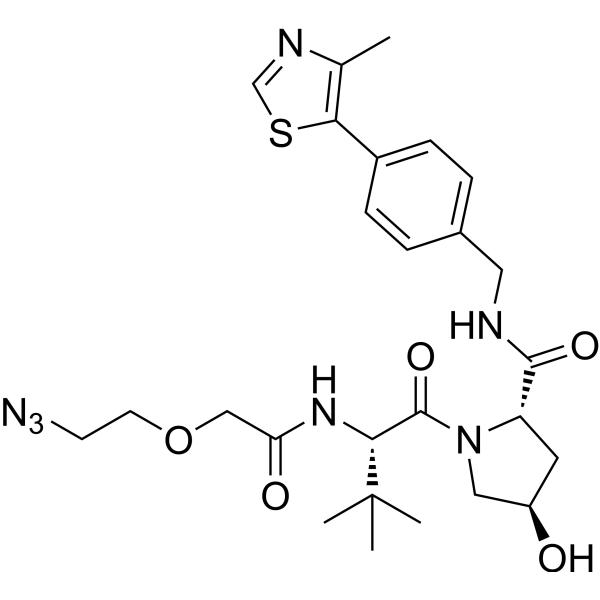
(S,R,S)-AHPC-PEG1-N3 (VH032-PEG1-N3) is a synthesized E3 ligase ligand-linker conjugate that incorporates the (S,R,S)-AHPC based VHL ligand and 1-unit PEG linker used in PROTAC technology. (S,R,S)-AHPC-PEG1-N3 is a click chemistry reagent, it contains an Azide group and can undergo copper-catalyzed azide-alkyne cycloaddition reaction (CuAAc) with molecules containing Alkyne groups. It can also undergo strain-promoted alkyne-azide cycloaddition (SPAAC) reactions with molecules containing DBCO or BCN groups.
loading...
    loading...
Cat. No.: HY-134850
CAS No.: 2267290-96-8
Purity:  99.94%
QC-01-175 is a Tau PROTAC degrader, with Kd values of 1.2 μM, 1.7 μM and 2.5 μM for wild-type, A152T mutant and P301L mutant tau-441 proteins, respectively. QC-01-175 binds to both Tau and CRBN, triggering ubiquitination and proteasomal degradation of Tau. QC-01-175 preferentially targets disease-associated Tau proteins in frontotemporal dementia. QC-01-175 inhibits MAO activity, with an IC50 of 8.56 μM. QC-01-175 suppresses the elevation of ROS levels. QC-01-175 can be used in studies related to frontotemporal dementia and amyotrophic lateral sclerosis .
loading...
    loading...
Cat. No.: HY-145815
CAS No.: 2669785-76-4
Target:  

PROTACs HDAC Apoptosis

Research Areas:  

Cancer

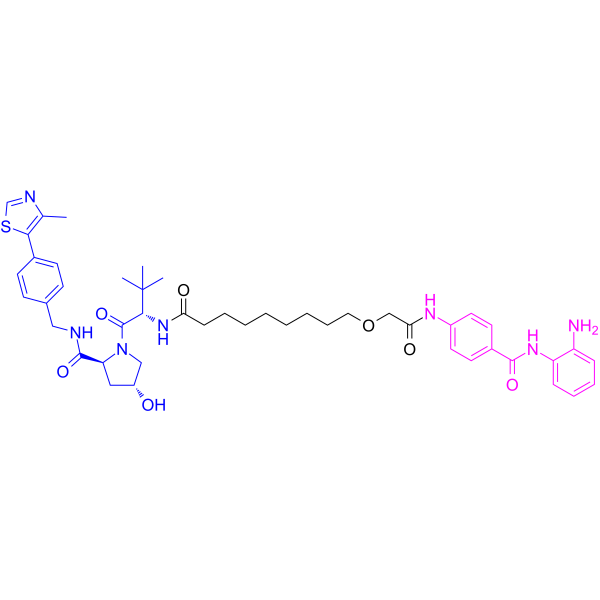
JPS014 is a PROTAC degrader targeting HDAC1, HDAC2 and HDAC3, with DC50 values of 0.91 μM, 4.19 μM and 0.64 μM, respectively. JPS014 recruits the VHL E3 ligase to mediate the ubiquitination and proteasomal degradation of HDAC1, HDAC2 and HDAC3. JPS014 acts as a submicromolar inhibitor of the HDAC1-CoREST, HDAC2-CoREST and HDAC3-SMRT complexes in vitro. JPS014 increases the level of H3K56ac, reduces the stability of LSD1 and SIN3A, and induces cell apoptosis (apoptosis). JPS014 can be used for the research of colon cancer .
loading...
    loading...
Cat. No.: HY-145815A
Purity:  98.40%
Target:  

PROTACs HDAC Apoptosis

Research Areas:  

Cancer

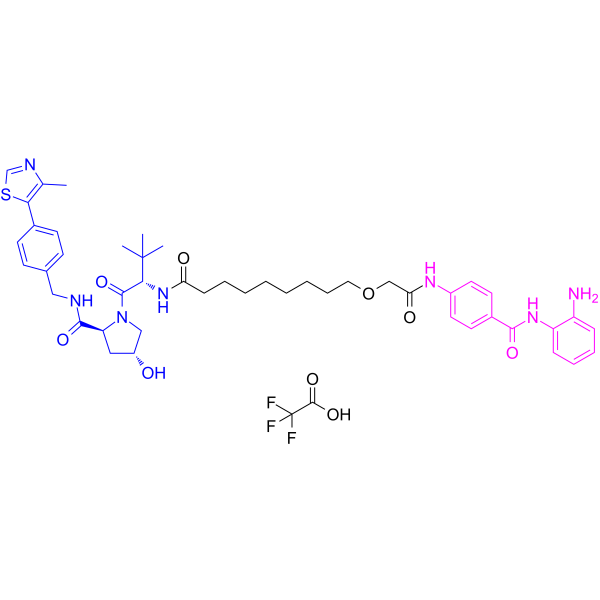
JPS014 TFA is a PROTAC degrader targeting HDAC1, HDAC2 and HDAC3, with DC50 values of 0.91 μM, 4.19 μM and 0.64 μM, respectively. JPS014 TFA recruits the VHL E3 ligase to mediate the ubiquitination and proteasomal degradation of HDAC1, HDAC2 and HDAC3. JPS014 TFA acts as a submicromolar inhibitor of the HDAC1-CoREST, HDAC2-CoREST and HDAC3-SMRT complexes in vitro. JPS014 TFA increases the level of H3K56ac, reduces the stability of LSD1 and SIN3A, and induces cell apoptosis (apoptosis). JPS014 TFA can be used for the research of colon cancer .
loading...
    loading...
Cat. No.: HY-147100
CAS No.: 2863635-02-1
Purity:  99.60%
Research Areas:  

Cancer

α1A-AR Degrader 9c is a potent, selective and reversible α1A-AR (Adrenergic receptor) PROTAC degrader, with a DC50 of 2.86 μM. α1A-AR Degrader 9c induces α1A-AR degradation can be attributed to proteasomal degradation. α1A-AR Degrader 9c inhibits the proliferation of PC-3 cells, with an IC50 of 6.12 μM. α1A-AR Degrader 9c shows antitumor activity, and can be used for prostate cancer research .
loading...
    loading...
Cat. No.: HY-148829
CAS No.: 2407449-49-2
MS40 is a WDR5 PROTAC degrader with a DC50 of 42 nM in MV4;11 MLL-rearranged acute myeloid leukemia (AML) cells. MS40 induces WDR5 degradation dependent on WDR5, CRBN and the proteasome, dissociates the MLL/KMT2A complex from chromatin, reduces H3K4me2 levels, degrades IKZF1/IKZF3, the novel substrates of CRBN, inhibits the transcription of WDR5/MLL and IKZF target genes, and suppresses cancer cell growth. MS40 can be used in the research of MLL-rearranged acute myeloid leukemia, breast cancer, Burkholderia infection and cystic fibrosis-associated bacterial infections .
loading...
    loading...