8391 Results for "

binding avidity

" in MedChemExpress (MCE) Product Catalog:
Products (8391)

8391 Results for "binding avidity" in MCE Product Catalog:

Cat. No.: HY-P86998
Synonyms: Dynamin like 120 kDa protein antibody; Dynamin like 120 kDa protein, mitochondrial antibody; Dynamin-like 120 kDa protein, form S1 antibody; FLJ12460 antibody; Juvenile kjer type optic atrophy antibody; KIAA0567 antibody; KJER type antibody; Large GTP binding protein antibody; largeG antibody; MGM1 antibody; Dynamin like 120 kDa protein antibody; Dynamin like 120 kDa protein, mitochondrial antibody; Dynamin-like 120 kDa protein, form S1 antibody; FLJ12460 antibody; Juvenile kjer type optic atrophy antibody; KIAA0567 antibody; KJER type antibody; Large GTP binding protein antibody; largeG antibody; MGM1 antibody; Mitochondrial dynamin like 120 kDa protein antibody; Mitochondrial dynamin like GTPase antibody; NPG antibody; NTG antibody; OAK antibody; OPA 1 antibody; opa1 antibody; OPA1 gene antibody; OPA1_HUMAN antibody; Optic atrophy 1 (autosomal dominant) antibody; OPTIC ATROPHY 1 antibody; Optic atrophy 1 gene protein antibody; Optic atrophy 1 homolog (human) antibody; Optic atrophy protein 1 antibody; Optic atrophy protein 1 homolog antibody;

Host:  

Rabbit

Application:  

WB, IHC-P, ICC/IF, FC, IP

Reactivity:  

Human, Mouse, Rat

loading...
    loading...
Cat. No.: HY-112288R
CAS No.: 432001-19-9
Synonyms: TTI-101 (Standard)
C188-9 (Standard) is the analytical standard of C188-9 (HY-112288). This product is intended for research and analytical applications. C188-9 (TTI-101) is a STAT3 inhibitor with a Kd value of 4.7 nM. C188-9 targets the SH2 domain of STAT3, blocks the processes of STAT3 ligand binding, receptor recruitment, homodimerization and phosphorylation, and regulates STAT3-mediated genes associated with tumorigenesis and radioresistance. C188-9 regulates STAT1-mediated genes related to radioresistance and reduces the activation level of STAT1. C188-9 downregulates the expression of DNMT1, enhances DAC-induced demethylation and re-expression of RASSF1A, and simultaneously potentiates the anti-tumor effect of DAC on pancreatic cancer cells. C188-9 inhibits both anchorage-dependent and anchorage-independent growth of cancer cells, induces Apoptosis, blocks the growth of tumor xenografts, and suppresses muscle atrophy. C188-9 maintains muscle mass, increases body weight and improves grip strength in tumor-bearing mice. C188-9 can be used in research related to head and neck squamous cell carcinoma, pancreatic cancer, sepsis-related skeletal muscle wasting, non-small cell lung cancer, acute myeloid leukemia and cancer cachexia .
loading...
    loading...
Cat. No.: HY-153939S
Purity:  99.57%
Synonyms: RG7388-d3-1
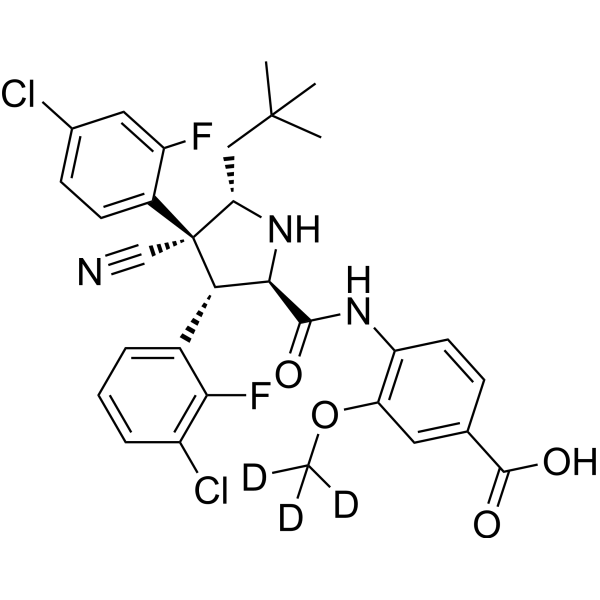
Idasanutlin-d3-1 (RG7388-d3-1) is the deuterated-labeled Idasanutlin (HY-15676). Idasanutlin (RG7388) is an orally bioavailable MDM2 inhibitor with an IC50 of 6 nM. Idasanutlin disrupts MDM2-p53 binding, stabilizes and activates p53, triggering cell cycle arrest, apoptosis, and reduced cancer cell viability. Idasanutlin reduces EGFR protein expression and phosphorylation, suppresses downstream SHP2, MEK1/2, ERK1/2, AKT, mTOR, p70(S6K1), and S6 signaling. Idasanutlin induces mitochondrial ROS production, drives p38 MAPK phosphorylation, upregulates NOXA, and mediates caspase-3-dependent apoptosis and gasdermin E-mediated pyroptosis. Idasanutlin can be used for the research of TP53-mutant non-small cell lung cancer, T-cell acute lymphoblastic leukemia, colorectal carcinoma, melanoma, diffuse large B-cell lymphoma, mantle cell lymphoma, non-Hodgkin lymphoma, severe fever with thrombocytopenia syndrome, neuroblastoma, acute lymphoblastic leukemia, relapsed or refractory acute myeloid leukemia, osteosarcoma, solid tumors, and hematological tumors .
loading...
    loading...
Cat. No.: HY-15676R
CAS No.: 1229705-06-9
Synonyms: RG7388 (Standard)
Idasanutlin (Standard) (RG7388 (Standard)) is the analytical standard of Idasanutlin (HY-15676). This product is intended for research and analytical applications. Idasanutlin (RG7388) is an orally bioavailable MDM2 inhibitor with an IC50 of 6 nM. Idasanutlin disrupts MDM2-p53 binding, stabilizes and activates p53, triggering cell cycle arrest, apoptosis, and reduced cancer cell viability. Idasanutlin reduces EGFR protein expression and phosphorylation, suppresses downstream SHP2, MEK1/2, ERK1/2, AKT, mTOR, p70(S6K1), and S6 signaling. Idasanutlin induces mitochondrial ROS production, drives p38 MAPK phosphorylation, upregulates NOXA, and mediates caspase-3-dependent apoptosis and gasdermin E-mediated pyroptosis. Idasanutlin can be used for the research of TP53-mutant non-small cell lung cancer, T-cell acute lymphoblastic leukemia, colorectal carcinoma, melanoma, diffuse large B-cell lymphoma, mantle cell lymphoma, non-Hodgkin lymphoma, severe fever with thrombocytopenia syndrome, neuroblastoma, acute lymphoblastic leukemia, relapsed or refractory acute myeloid leukemia, osteosarcoma, solid tumors, and hematological tumors .
loading...
    loading...
Cat. No.: HY-N0493R
CAS No.: 520-12-7
Pectolinarigenin (Standard) is the analytical standard of Pectolinarigenin. This product is intended for research and analytical applications. Pectolinarigenin is an orally active dual inhibitor of COX-2/5-LOX with anti-inflammatory, antioxidant, antitumor and neuroprotective activities. Pectolinarigenin exerts neuroprotective and anti-inflammatory effects on astrocyte inflammation via the NFκB and MAPK pathways. Pectolinarigenin inhibits LPS-induced phosphorylation of ERK1/2, N-FκB and p38MAPK, directly inhibits the enzymatic activity or binding of COX-2, 5-LOX and HIF-1α, and reduces the level of XIAP. Pectolinarigenin modifies Keap1 to promote nuclear accumulation of Nrf2, induces ARE-mediated antioxidant enzyme expression, and possesses direct free radical scavenging activity. Pectolinarigenin reduces the release of NO, proinflammatory mediators and leukotrienes, and increases the level of IL-10. Pectolinarigenin induces G2/M cell cycle arrest, apoptosis (Apoptosis) and autophagy (Autophagy) via the PI3K/AKT/mTOR signaling pathway. Pectolinarigenin reduces renal crystal deposition and inhibits melanin synthesis. Pectolinarigenin inhibits inflammation and alleviates allergy in mouse models of inflammation. Pectolinarigenin alleviates renal injury, inflammation and oxidative stress in mice by inhibiting HIF-1α activity. Pectolinarigenin can be used for the research of neurodegenerative diseases, inflammatory/allergic diseases, calcium oxalate nephrocalcinosis, gastric cancer, melasma, post-inflammatory diseases and chloasma.
loading...
    loading...
Cat. No.: HY-L940
5,818 compounds

Owing to the widespread transmission and frequent mutation of viral diseases, as well as the continuous emergence of new viruses and drug-resistant strains, antiviral drug development is facing increasingly stringent requirements. Antiviral compound libraries serve as important tools for drug screening, mechanism research and development, enabling the discovery and investigation of various antiviral drugs.

These compounds act through diverse antiviral mechanisms, targeting key steps in viral replication, assembly and invasion. They exert antiviral effects by inhibiting viral nucleic acid synthesis, blocking viral protein processing, and preventing viral binding to host cells. This library covers various types of antiviral compounds, including nucleosides, non-nucleosides, protease inhibitors and integrase inhibitors. It supports research on influenza virus, herpes virus, hepatitis virus, emerging respiratory viruses and other pathogens, and enables high-throughput screening of novel antiviral candidates to rapidly identify potential active compounds against diverse viruses. It also facilitates mechanistic studies to elucidate drug-target interactions and viral resistance mechanisms, and supports the screening of effective compounds against mutant strains for research on viral variation and drug resistance.

This antiviral library consists of 6,804 compounds with lead-like physicochemical properties. The core sources of the compounds include analogs of known antiviral molecues with a similarity score ≥ 0.6. MCE has collected more than 1450 antiviral molecules. As a small-molecule collection with both activity potential and structural modifiability, it provides strong support for antiviral drug research and development.

Cat. No.: HY-L949
1279 compounds

Spirocyclic compounds, with rigid 3D structures, high Fsp³ and strong conformational restriction, are highly privileged scaffolds in small-molecule drug screening. They overcome drawbacks of planar aromatic compounds such as poor solubility, high off-target risks and weak druggability. Their orthogonal bicyclic geometry fits well into protein pockets, improving target affinity, subtype selectivity, metabolic stability and membrane permeability, making them ideal for hit identification against kinases, GPCRs, PPIs and other targets.

Spirocyclic scaffolds have been widely applied in oncology, antivirals, hypertension and CNS diseases, leading to many approved drugs and clinical candidates. SAR studies show that spiro-atom chirality, ring size and heteroatom substitution dominate bioactivity and selectivity, with the scaffold mainly serving as a conformational anchor. Azaspirocycles, spirooxindoles and spirosteranes target GPCRs, kinases, MDM2-p53 and PPIs. Approved drugs including irbesartan, spironolactone and rolapitant confirm their druggability, while revumenib and SAR405838 show promise against undruggable targets.

The MCE Spirocyclic Druglike Library contains over 1,000 diverse, stereospecific molecules selected by Lipinski’s rules. It covers privileged cores such as azaspirocycles, oxaspirocycles and spirooxindoles. These molecules bear rich chiral centers and distinct 3D orientations, reducing non-specific binding and enhancing screening efficiency. Featuring novel scaffolds, the library offers a highly innovative starting point for drug discovery.

Cat. No.: HY-P80202
Synonyms: G22P1, XRCC6, X-ray repair cross-complementing protein 6, 5'-deoxyribose-5-phosphate lyase Ku70, 70 kDa subunit of Ku antigen, ATP-dependent DNA helicase 2 subunit 1, ATP-dependent DNA helicase II 70 kDa subunit, CTC box-binding factor 75 kDa subunit, DNA repair protein XRCC6, Lupus Ku autoantigen protein p70, Thyroid-lupus autoantigen, X-ray repair complementing defective repair in Chinese hamster cells 6, 5'-dRP lyase Ku70, CTC75, CTCBF, Ku70, TLAA

Host:  

Mouse

Application:  

WB, IHC-P

Reactivity:  

Human, Mouse

loading...
    loading...
Cat. No.: HY-P87177
Synonyms: CD124 antibody; IL 4R alpha antibody; IL-4 receptor subunit alpha antibody; IL-4-binding protein antibody; IL-4R subunit alpha antibody; IL-4R-alpha antibody; IL-4RA antibody; IL4-BP antibody; Il4r antibody; IL4R nirs variant 1 antibody; IL4RA antibody; IL4RA_HUMAN antibody; Interleukin 4 receptor alpha chain antibody; Interleukin 4 receptor antibody; sIL4Ralpha/prot antibody; Soluble IL-4 receptor subunit alpha antibody; Soluble IL-4R-alpha antibody

Host:  

Rabbit

Application:  

WB, ICC/IF, IP

Reactivity:  

Human, Mouse, Rat

loading...
    loading...
Cat. No.: HY-P81282AA
Synonyms: CLL associated antigen KW 6; DNA-binding protein Ikaros; hIk 1; hIk-1; Hs.54452; IK1; Ikaros (zinc finger protein); IKAROS; IKAROS family zinc finger 1 (Ikaros); Ikaros family zinc finger protein 1; Ikzf1; IKZF1_HUMAN; LYF1; Lymphoid transcription factor LyF-1; PRO0758; Zinc finger protein subfamily 1A 1 (Ikaros); zinc finger protein subfamily 1A 1; Zinc finger protein; subfamily 1A; member 1; ZNFN1A1.

Host:  

Rabbit

Application:  

IHC-P

Reactivity:  

Human

loading...
    loading...
Cat. No.: HY-118830S
Synonyms: DK-PGD2-d4; 15-Oxo-13,14-dihydro-PGD2-d4; 13,14-Dihydro-15-keto-PGD2-d4
13,14-Dihydro-15-keto prostaglandin D2-d4 (DK-PGD2-d4; 15-Oxo-13,14-dihydro-PGD2-d4; 13,14-Dihydro-15-keto-PGD2-d4) is the deuterated-labeled 13,14-Dihydro-15-keto prostaglandin D2 (HY-118830). 13,14-Dihydro-15-keto prostaglandin D2 (DK-PGD2; 15-Oxo-13,14-dihydro-PGD2; 13,14-Dihydro-15-keto-PGD2) is a metabolite of Prostaglandin D2 (HY-101988) and acts as a CRTH2 agonist. 13,14-Dihydro-15-keto-prostaglandin D2 exhibits binding activity to CRTH2, induces cellular calcium signaling flux, and mediates eosinophilia in vivo. 13,14-Dihydro-15-keto-prostaglandin D2 activates the CRTH2 receptor, triggering Gi-dependent intracellular calcium mobilization and promoting the migration and recruitment of leukocytes from bone marrow to peripheral blood in vivo. 13,14-Dihydro-15-keto prostaglandin D2 is used in research on inflammation-related diseases, such as bronchial asthma .
loading...
    loading...
Cat. No.: HY-118830S1
CAS No.: 2738376-77-5
Synonyms: DK-PGD2-d9; 15-Oxo-13,14-dihydro-PGD2-d9; 13,14-Dihydro-15-keto-PGD2-d9
13,14-Dihydro-15-keto prostaglandin D2-d9 (DK-PGD2-d9; 15-Oxo-13,14-dihydro-PGD2-d9; 13,14-Dihydro-15-keto-PGD2-d9) is the deuterated-labeled 13,14-Dihydro-15-keto prostaglandin D2 (HY-118830). 13,14-Dihydro-15-keto prostaglandin D2 (DK-PGD2; 15-Oxo-13,14-dihydro-PGD2; 13,14-Dihydro-15-keto-PGD2) is a metabolite of Prostaglandin D2 (HY-101988) and acts as a CRTH2 agonist. 13,14-Dihydro-15-keto-prostaglandin D2 exhibits binding activity to CRTH2, induces cellular calcium signaling flux, and mediates eosinophilia in vivo. 13,14-Dihydro-15-keto-prostaglandin D2 activates the CRTH2 receptor, triggering Gi-dependent intracellular calcium mobilization and promoting the migration and recruitment of leukocytes from bone marrow to peripheral blood in vivo. 13,14-Dihydro-15-keto prostaglandin D2 is used in research on inflammation-related diseases, such as bronchial asthma .
loading...
    loading...
Cat. No.: HY-P85484
Synonyms: Amine oxidase; flavin containing; domain 2; AOF2; BHC110; BRAF35 HDAC complex protein BHC110; BRAF35-HDAC complex protein BHC110; FAD binding protein BRAF35 HDAC complex, 110 kDa subunit; Flavin-containing amine oxidase domain-containing protein 2; KDM 1; KDM1; Kdm1a; KDM1A_HUMAN; LSD 1; LSD1; Lysine; K; specific demethylase 1; Lysine; K; specific demethylase 1A; Lysine specific histone demethylase 1; Lysine specific histone demethylase 1A; Lysine-specific histone demethylase 1A.

Host:  

Mouse

Application:  

WB, ICC/IF, IP

Reactivity:  

Human, Monkey

loading...
    loading...
Cat. No.: HY-P85621
Synonyms: Adapter protein GRID; GADS; GADS protein; GRAP-2; Grap2; GRAP2_HUMAN; GRB-2-like protein; GRB2-related adapter protein 2; GRB2-related adaptor protein 2; GRB2-related protein with insert domain; GRB2L; GRBLG; GRBX; Grf-40; Grf40 adapter protein; Grf40; GRID; Growth factor receptor-binding protein; Growth factor receptor-bound protein 2-related adaptor protein 2; GRPL; Hema; Hematopoietic cell-associated adapter protein GrpL; Hematopoietic cell-associated adaptor protein GRPL; Mona; p38; Protein GADS; SH3-SH2-SH3 adapter Mona; SH3-SH2-SH3 adaptor molecule.

Host:  

Mouse

Application:  

WB

Reactivity:  

Human

loading...
    loading...
Cat. No.: HY-P86968
Synonyms: AU023734 antibody; AW107953 antibody; AW546647 antibody; C130061D10Rik antibody; DKFZp686M08244 antibody; FLJ10106 antibody; FLJ13826 antibody; FLJ21597 antibody; FLJ21646 antibody; KIAA0916 antibody; AU023734 antibody; AW107953 antibody; AW546647 antibody; C130061D10Rik antibody; DKFZp686M08244 antibody; FLJ10106 antibody; FLJ13826 antibody; FLJ21597 antibody; FLJ21646 antibody; KIAA0916 antibody; MYC binding protein 2 antibody; PAM antibody; Pam, highwire, rpm 1 antibody; Pam/highwire/rpm-1 protein antibody; Phr1 antibody; Protein associated with Myc antibody; R75243 antibody;

Host:  

Rabbit

Application:  

WB, ICC/IF, IHC-P, FC

Reactivity:  

Human, Mouse, Rat

loading...
    loading...
Cat. No.: HY-P87058
Synonyms: Cell migration inducing gene 5 protein antibody; EN 7 antibody; OTTMUSP00000004488 antibody; p21 Rac3 antibody; p21-Rac3 antibody; Rac1B antibody; RAC3 antibody; RAC3_HUMAN antibody; RAS related C3 botulinum substrate 3 antibody; Ras related C3 botulinum toxin substrate 3 (rho family small GTP binding protein Rac3) antibody; Cell migration inducing gene 5 protein antibody; EN 7 antibody; OTTMUSP00000004488 antibody; p21 Rac3 antibody; p21-Rac3 antibody; Rac1B antibody

Host:  

Rabbit

Application:  

WB, ICC/IF, IF-Tissue, IHC-P

Reactivity:  

Human, Mouse, Rat

loading...
    loading...
Cat. No.: HY-P810476
Synonyms: MAD1L1, Mitotic Arrest Deficient 1 Like 1, TXBP181, MAD1, HsMAD1, TP53I9, PIG9, Mitotic Spindle Assembly Checkpoint Protein MAD1, Mitotic Arrest Deficient 1-Like Protein 1, Mitotic Checkpoint MAD1 Protein Homolog, MAD1 Mitotic Arrest Deficient Like 1, Tax-binding Protein 181, MAD1-Like Protein 1, MAD1 (Mitotic Arrest Deficient, Yeast, Homolog)-Like 1, Mitotic-Arrest Deficient 1, Yeast, Homolog-Like 1, MAD1 Mitotic Arrest Deficient-Like 1 (Yeast), Tumor Protein P53 Inducible Protein 9, HMAD1, MVA7

Host:  

Rabbit

Application:  

WB, FC, ICC/IF

Reactivity:  

Human, mouse, rat

loading...
    loading...
Cat. No.: HY-P811947
Synonyms: HSPA4L; Heat Shock Protein Family A (Hsp70) Member 4 Like; HSPH3; APG-1; Osp94; Heat-Shock Protein Family A Member 4-Like Protein; Heat Shock Protein Family H Member 3; Heat Shock 70-Related Protein APG-1; Heat Shock 70kDa Protein 4-Like; Heat Shock 70 KDa Protein 4L; Osmotic Stress Protein 94; HSPA4-Like Protein; APG1; Testis Tissue Sperm-binding Protein Li 64n; Heat Shock 70 KDa Protein 4-Like Protein; Heat Shock Protein (Hsp110 Family); OSP94

Host:  

Mouse

Application:  

WB

Reactivity:  

Human, M

loading...
    loading...
Cat. No.: HY-P811947A
Synonyms: HSPA4L; Heat Shock Protein Family A (Hsp70) Member 4 Like; HSPH3; APG-1; Osp94; Heat-Shock Protein Family A Member 4-Like Protein; Heat Shock Protein Family H Member 3; Heat Shock 70-Related Protein APG-1; Heat Shock 70kDa Protein 4-Like; Heat Shock 70 KDa Protein 4L; Osmotic Stress Protein 94; HSPA4-Like Protein; APG1; Testis Tissue Sperm-binding Protein Li 64n; Heat Shock 70 KDa Protein 4-Like Protein; Heat Shock Protein (Hsp110 Family); OSP94

Host:  

Mouse

Application:  

WB

Reactivity:  

Human, M

loading...
    loading...
Cat. No.: HY-P86817
Synonyms: Bifunctional coenzyme A synthase antibody; Bifunctional phosphopantetheine adenylyl transferase/dephospho CoA kinase antibody; CoA synthase antibody; COASY antibody; COASY_HUMAN antibody; Coenzyme A synthase antibody; Dephospho-CoA kinase antibody; Dephospho-CoA pyrophosphorylase antibody; Dephosphocoenzyme A kinase antibody; DPCK antibody; Bifunctional coenzyme A synthase antibody; Bifunctional phosphopantetheine adenylyl transferase/dephospho CoA kinase antibody; CoA synthase antibody; COASY antibody; COASY_HUMAN antibody; Coenzyme A synthase antibody; Dephospho-CoA kinase antibody; Dephospho-CoA pyrophosphorylase antibody; Dephosphocoenzyme A kinase antibody; DPCK antibody; DPCOAK antibody; NBP antibody; Nucleotide binding protein antibody; Pantetheine-phosphate adenylyltransferase antibody; Phosphopantetheine adenylyltransferase / dephosphocoenzyme A kinase antibody; pOV 2 antibody; POV-2 antibody; POV2 antibody; PPAT antibody; UKR1 antibody;

Host:  

Rabbit

Application:  

WB, ICC/IF, FC

Reactivity:  

Human

loading...
    loading...

