933 Results for "

marker

" in MedChemExpress (MCE) Product Catalog:
Products (933)

933 Results for "marker" in MCE Product Catalog:

Cat. No.: HY-P991736
Anti-IL11 Antibody (X203, Mouse IgG) is an antibody targeting IL-11. Anti-IL11 Antibody (X203, Mouse IgG) inhibits IL-11-mediated activation of the ERK-mTORC1 axis, inactivation of LKB1-AMPK, and pro-senescence pathways. Anti-IL11 Antibody (X203, Mouse IgG) alleviates age-related metabolic decline, improves muscle function, reduces tissue fibrosis, decreases the expression of senescence markers, and maintains telomere length and mtDNA copy number. Anti-IL11 Antibody (X203, Mouse IgG) restores browning of white adipose tissue, upregulates thermogenic and mitochondrial biogenesis gene programs, reduces lipid droplet size, and decreases immune cell infiltration in visceral white adipose tissue. Anti-IL11 Antibody (X203, Mouse IgG) extends the median lifespan of mice and reduces the incidence of age-related tumors. Anti-IL11 Antibody (X203, Mouse IgG) can be used in the research of age-related metabolic decline, sarcopenia and age-related cancers .
loading...
    loading...
Cat. No.: HY-P704684
Purity:  ≥ 90%, as determined by reducing SDS-PAGE.
Synonyms: IGHG1; Ig Gamma-1 Chain C Region NIE; Immunoglobulin Heavy Constant Gamma 1 (G1m marker); Ig Gamma-1 Chain C Region KOL; Constant Region Of Heavy Chain Of IgG1; Ig Gamma-1 Chain C Region EU; Immunoglobulin Heavy Constant Gamma 1; Ig Gamma-1 Chain C Region
Species:  
Human
Source:  
HEK293
loading...
    loading...
Cat. No.: HY-P86739
Synonyms: Centrosome marker; gamma 1 tubulin; gamma tubulin; gamma-tubulin; gamma 2 tubulin; gamma Tubulin 1; gamma Tubulin 2; gamma tubulin complex component 1; GCP 1; GCP-1; GCP1; MGC131994; TUBG; TUBG1; TUBG2; Tubulin gamma 1 chain; Tubulin gamma 2 chain; Xgam; TBG1_HUMAN; TBG2_HUMAN; Tubulin gamma-1 chain; gamma-1-tubulin; gamma-tubulin complex component 1.

Host:  

Mouse

Application:  

WB, IHC-P, IHC-F, IP, FC, IF-Tissue

Reactivity:  

Human, Mouse, Rat

loading...
    loading...
Cat. No.: HY-P86739A
Synonyms: Centrosome marker; gamma 1 tubulin; gamma tubulin; gamma-tubulin; gamma 2 tubulin; gamma Tubulin 1; gamma Tubulin 2; gamma tubulin complex component 1; GCP 1; GCP-1; GCP1; MGC131994; TUBG; TUBG1; TUBG2; Tubulin gamma 1 chain; Tubulin gamma 2 chain; Xgam; TBG1_HUMAN; TBG2_HUMAN; Tubulin gamma-1 chain; gamma-1-tubulin; gamma-tubulin complex component 1.

Host:  

Mouse

Application:  

WB, IHC-P, IHC-F, IF-Tissue, FC

Reactivity:  

Human, Mouse, Rat

loading...
    loading...
Cat. No.: HY-148369
CAS No.: 3094177-94-0
Purity:  99.68%
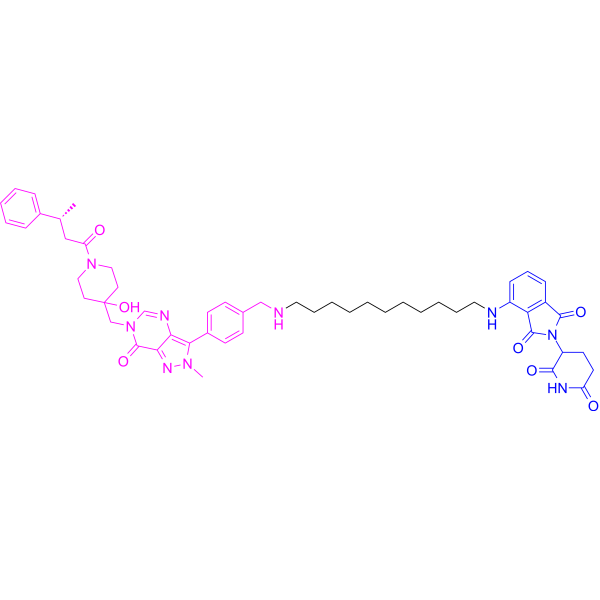
U7D-1 is a USP7 PROTAC degrader that induces selective proteasomal degradation of USP7. U7D-1 destabilizes and downregulates the expression of variant PRC1 complex subunits PCGF1, RING1A and PCGF6, and also slightly reduces the protein level of KDM2B. U7D-1 decreases cell viability, arrests neuroblastoma cells at the G0/G1 cell cycle phase, and downregulates the expression of target genes of PAX3::FOXO1 in FP-RMS cells. U7D-1 increases the level of cleaved PARP in FP-RMS cells, induces cell apoptosis, and upregulates the expression of muscle differentiation markers MYH1 and MYF5. U7D-1 inhibits the growth and proliferation of p53 wild-type and mutant cancer cells, and regulates the apoptosis pathway and E2F pathway. U7D-1 is applicable to studies on neuroblastoma, fusion-positive rhabdomyosarcoma, p53-mutant cancers and cancer-related research .
loading...
    loading...
Cat. No.: HY-N7653
CAS No.: 529-51-1
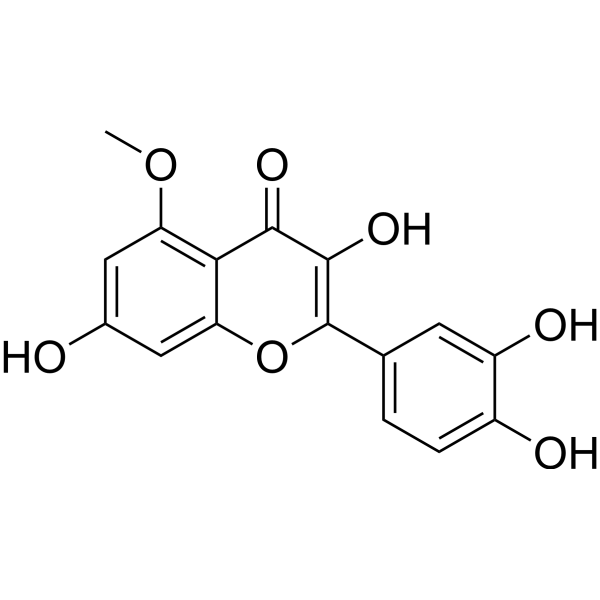
Azaleatin is an orally active inhibitor of hQC, NS2B-NS3 protease and E. coli β-glucuronidase, with IC50 values of 1.1 μM, 38.00 μg/mL and 0.57 μM, respectively. Azaleatin inhibits the activities of NF-κB, MyD88, JAK1, TLR4, STAT3, IL-1β, IL-6, COX-2, TNF-α and β-glucuronidase, blocks pro-inflammatory signaling pathways, reduces the levels of ROS, MDA and uric acid, elevates the levels of GPx, GSR, GST, SOD, CAT, HO-1 and GSH, scavenges free radicals and exerts reducing capacity. Azaleatin inhibits the expression of pro-apoptotic proteins Bax, Caspase-9 and Caspase-3, and upregulates the expression of anti-apoptotic protein Bcl-2. Azaleatin reduces the levels of cardiac injury markers, restores cardiac histological structure, inhibits Aβ aggregation, dengue protease activity, hepatic stellate cell proliferation and cancer cell growth, and also exhibits antibacterial activity. Azaleatin can be used in studies related to subchronic cardiotoxicity, Alzheimer's disease, dengue fever, hyperuricemia, liver fibrosis, gastric cancer and bacterial infections .
loading...
    loading...
Cat. No.: HY-P10414
Synonyms: KP1 (human)
Target:  

TGF-β Receptor

Research Areas:  

Infection Endocrinology

Klotho-derived peptide 1 (KP1 (human)) is a polypeptide with multiple activities including senescence inhibition and renal protection. Klotho-derived peptide 1 binds to TβR2 and ATAD3A, with a Kd value of 1.41 μM for binding to human TβR2 and a Kd value of 0.319 μM for binding to ATAD3A. By binding to TβR2, Klotho-derived peptide 1 blocks the TGF-β/Smad3 and downstream TGF-β signaling pathways, inhibits the expression of miR-223-3p, induces the expression of lncRNA-TUG1, restores endogenous Klotho at the post-transcriptional level, inhibits cellular senescence markers, fibroblast activation and renal tubular epithelial cell apoptosis, blocks cytochrome c release and caspase activation, maintains the integrity of mitochondrial ultrastructure, and restores mitochondrial protein levels. Klotho-derived peptide 1 enters renal tubular epithelial cells via endocytosis, protects against nephrotoxic and hypoxic injuries, and recapitulates the renal protective and anti-fibrotic effects of full-length Klotho. Klotho-derived peptide 1 can be used in research related to kidney diseases such as chronic kidney disease and SARS-CoV-2-associated acute kidney injury .
loading...
    loading...
Cat. No.: HY-P10414A
Synonyms: KP1 (human) hydrochloride
Target:  

TGF-β Receptor

Research Areas:  

Infection Endocrinology

Klotho-derived peptide 1 hydrochloride (KP1 (human) hydrochloride) is a polypeptide with multiple activities including senescence inhibition and renal protection. Klotho-derived peptide 1 hydrochloride binds to TβR2 and ATAD3A, with a Kd value of 1.41 μM for binding to human TβR2 and a Kd value of 0.319 μM for binding to ATAD3A. By binding to TβR2, Klotho-derived peptide 1 hydrochloride blocks the TGF-β/Smad3 and downstream TGF-β signaling pathways, inhibits the expression of miR-223-3p, induces the expression of lncRNA-TUG1, restores endogenous Klotho at the post-transcriptional level, inhibits cellular senescence markers, fibroblast activation and renal tubular epithelial cell apoptosis, blocks cytochrome c release and caspase activation, maintains the integrity of mitochondrial ultrastructure, and restores mitochondrial protein levels. Klotho-derived peptide 1 hydrochloride enters renal tubular epithelial cells via endocytosis, protects against nephrotoxic and hypoxic injuries, and recapitulates the renal protective and anti-fibrotic effects of full-length Klotho. Klotho-derived peptide 1 hydrochloride can be used in research related to kidney diseases such as chronic kidney disease and SARS-CoV-2-associated acute kidney injury .
loading...
    loading...
Cat. No.: HY-W002199
CAS No.: 647-42-7
Synonyms: 6:2 FTOH; 1H,1H,2H,2H-Perfluoro-1-octanol; 2-(Perfluorohexyl)ethanol
6:2 Fluorotelomer alcohol (6:2 FTOH) is an orally active, blood-brain barrier-permeable modulator of cyclin D1 and ETS1. 6:2 Fluorotelomer alcohol downregulates cyclin D1 expression, upregulates ETS1 via the TNF-α/ERK 1/2 pathway, impairs mitochondrial membrane potential and respiratory function, increases reactive oxygen species levels, disrupts calcium homeostasis and activates endoplasmic reticulum stress markers, and induces cell proliferation inhibition and endothelial-mesenchymal transition. Furthermore, 6:2 Fluorotelomer alcohol induces morphological abnormalities in zebrafish embryos and liver developmental damage, while disrupting the brain immune microenvironment in mice, causing systemic toxicity and delayed pup maturation in CD-1 mice. 6:2 Fluorotelomer alcohol also induces cortical neuron apoptosis, glial cell activation, synaptic abnormalities, colonic barrier damage, intestinal dysbiosis and autism spectrum disorder-like symptoms in mice. 6:2 Fluorotelomer alcohol shows no mutagenic, clastogenic, primary skin/eye irritation or skin sensitizing effects, exhibits no selective reproductive toxicity in CD-1 mice, and is classified as GHS Category 4 for acute oral toxicity. 6:2 Fluorotelomer alcohol can be used in studies of neurodevelopmental disorders and autism spectrum disorders .
loading...
    loading...
Cat. No.: HY-165613
CAS No.: 656831-18-4
Synonyms: Dipalmitoyl-S-glyceryl-cysteine; S-[2,3-Bis(palmitoyloxy)propyl]cysteine
Pam2Cys (Dipalmitoyl-S-glyceryl-cysteine; S-[2,3-Bis(palmitoyloxy)propyl]cysteine) is a TLR2 agonist and immunostimulant. Pam2Cys binds to TLR2 to activate dendritic cells and trigger the TLR2-dependent NF-κB signaling pathway. Pam2Cys also induces dendritic cell maturation by upregulating the expression of cell surface MHC II molecules. Pam2Cys activates innate immune signaling pathways, drives pro-inflammatory and antimicrobial responses, enhances the expression of macrophage activation markers, increases phagocytic activity, induces the release of IL-12 and pro-inflammatory cytokines, and polarizes macrophages into a pro-inflammatory, antimicrobial phenotype without interfering with IL-10-induced macrophage polarization. Pam2Cys also serves as the lipid moiety in synthetic lipopeptide vaccines and possesses self-adjuvant properties. Pam2Cys enhances the immunogenicity of conjugated peptide segments and induces cellular and humoral immune responses. However, it does not activate CD4 T cells in mouse splenocyte cultures when used alone. Pam2Cys activates pulmonary TLR2 signaling pathways, triggers innate immune responses, recruits neutrophils and macrophages, induces the secretion of various cytokines, alleviates symptoms and damages associated with influenza A virus infection in mice without impairing adaptive immunity. Pam2Cys can be used in studies related to tuberculosis and influenza A virus infection .
loading...
    loading...
Cat. No.: HY-P78883
Purity:  ≥ 95%, as determined by reducing SDS-PAGE.
Synonyms: EPCAM; HEA125; Prev. TACSTD1; CO-17A; Prev. MIC18; EGP314; Prev. M4S1; EGP34; Tumor-Associated Calcium Signal Transducer 1; CD326; TROP1; MOC31; KSA; 17-1A; GA733-2; Ly74; Ber-Ep4; MH99; Ep-CAM; Membrane Component, Chromosome 4, Surface marker (35kD Glycoprotein); MOC-31; Antigen Identified By Monoclonal Antibody AUA1; BerEp4; Human Epithelial Glycoprotein-2; EGP40; Epithelial Cell Surface Antigen; EGP-2; Epithelial Glycoprotein; KS1/4; KS 1/4 Antigen; MK-1; CD326 Antigen; ESA; HEGP314; Major Gastrointestinal Tumor-Associated Protein GA733-2; HNPCC8; Trophoblast Cell Surface Antigen 1; LYNCH8; Adenocarcinoma-Associated Antigen; DIAR5; Cell Surface Glycoprotein Trop-1; M1S2; Epithelial Glycoprotein 314; EGP; TACST-1; Epithelial Cell Adhesion Molecule; 323/A3
Species:  
Human
Source:  
HEK293
loading...
    loading...
Cat. No.: HY-P704581
Purity:  ≥ 95%, as determined by reducing SDS-PAGE.
Synonyms: EPCAM; HEA125; Prev. TACSTD1; CO-17A; Prev. MIC18; EGP314; Prev. M4S1; EGP34; Tumor-Associated Calcium Signal Transducer 1; CD326; TROP1; MOC31; KSA; 17-1A; GA733-2; Ly74; Ber-Ep4; MH99; Ep-CAM; Membrane Component, Chromosome 4, Surface marker (35kD Glycoprotein); MOC-31; Antigen Identified By Monoclonal Antibody AUA1; BerEp4; Human Epithelial Glycoprotein-2; EGP40; Epithelial Cell Surface Antigen; EGP-2; Epithelial Glycoprotein; KS1/4; KS 1/4 Antigen; MK-1; CD326 Antigen; ESA; HEGP314; Major Gastrointestinal Tumor-Associated Protein GA733-2; HNPCC8; Trophoblast Cell Surface Antigen 1; LYNCH8; Adenocarcinoma-Associated Antigen; DIAR5; Cell Surface Glycoprotein Trop-1; M1S2; Epithelial Glycoprotein 314; EGP; TACST-1; Epithelial Cell Adhesion Molecule; 323/A3
Species:  
Human
Source:  
HEK293
loading...
    loading...
Cat. No.: HY-P85939
Synonyms: COX 2; COX-2; COX2; Cyclooxygenase 2; Cyclooxygenase 2b; Cyclooxygenase; Cyclooxygenase-2; Cyclooxygenase2; fj02a10; Glucocorticoid-regulated inflammatory cyclooxygenase; Glucocorticoid-regulated inflammatory Prostaglandin G/H synthase; GRIPGHS; hCox 2; Macrophage activation-associated marker protein P71/73; OTTHUMP00000033524; PES-2; PGG/HS; PGH synthase 2; PGH2_HUMAN; PGHS 2; PGHS-2; PGHS2; PHS 2; PHS II; PHS2; Prostaglandin endoperoxide synthase 2; prostaglandin G/H synthase and cyclooxygenase; Prostaglandin endoperoxide synthase 2; Prostaglandin G/H synthase 2; Prostaglandin G/H synthase 2 precursor; Prostaglandin G/H synthase and cyclooxygenase; Prostaglandin G/H synthase; Prostaglandin H2 synthase 2; prostaglandin-endoperoxide synthase 2; prostaglandin G/H synthase and cyclooxygenase; Prostaglandin-endoperoxide synthase 2; PTGS2; ptgs2a; TIS10; TIS10 protein; unp1239; wu:fj02a10

Host:  

Mouse

Application:  

IHC-P, WB, ICC/IF, ELISA

Reactivity:  

Human

loading...
    loading...

