104 Results for "

brain cell proliferation

" in MedChemExpress (MCE) Product Catalog:
Products (104)

104 Results for "brain cell proliferation" in MCE Product Catalog:

Cat. No.: HY-145858
CAS No.: 2756846-09-8
Target:  

Ferroptosis

Research Areas:  

Cancer

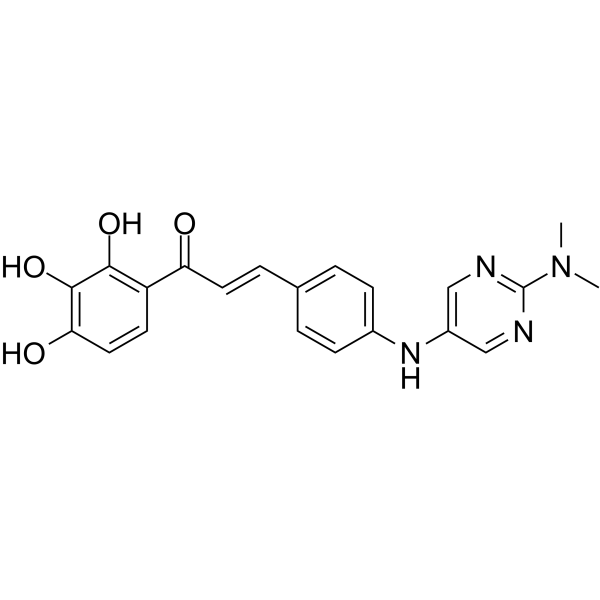
Chalcones A-N-5 is a trihydroxy chalcone derivative compound. Chalcones A-N-5 doesn’t show cytotoxicity at the concentration lower than 100 µM (with IC50 > 1 mM), but has a significant effect on promoting cell proliferation. Chalcones A-N-5 potentially promotes neuronal cell growth in the damaged brain tissue. Chalcones A-N-5 also inhibits ferroptosis induced by RSL or erastin and reduces the lipid peroxidation levels induced by Aβ1-42 protein aggregation. Chalcones A-N-5 is a promising molecular skeleton candidate for further development of lead compound for in vivo test to research AD .
loading...
    loading...
Cat. No.: HY-102091A
Purity:  ≥98.0%
Synonyms: (2R,4R)-4-Aminopyrrolidine-2,4-dicarboxylic acid hydrate
Target:  

mGluR

Research Areas:  

Neurological Disease

(2R,4R)-APDC hydrate ((2R,4R)-4-Aminopyrrolidine-2,4-dicarboxylic acid hydrate) is a group II metabotropic glutamate receptor (mGluR) agonist. (2R,4R)-APDC hydrate affects cell proliferation by inhibiting glutamate release, enhancing motor responses produced by D1 receptor activation, or reducing brain-derived neurotrophic factor (BDNF) levels. (2R,4R)-APDC hydrate can be used in the study of epilepsy and other neurological diseases .
loading...
    loading...
Cat. No.: HY-138185
CAS No.: 158792-24-6
Synonyms: SF 2738A
Target:  

Bacterial Apoptosis

Research Areas:  

Cancer

Collismycin A is a bacterial metabolite originally isolated from Streptomyces that has diverse biological activities, including antibacterial, antiproliferative, and neuroprotective properties. It is active against a variety of bacteria (MICs=6.25 and 100 μg/mL) and fungi (MICs=12.5-100 μg/mL). It inhibits proliferation of A549 lung, HCT116 colon, and HeLa cervical cancer cells (IC50s=0.3, 0.6, and 0.3 μM, respectively) and NIH373 fibroblasts (IC50=56.6 μM) but not MDA-MD-231 breast cancer cells (IC50=>100 μM). Collismycin A forms a complex with Fe(II) and Fe(III) at a 2:1 ratio, and the addition of iron ions inhibits the antiproliferative effect of collismycin A on HeLa cells, an effect that does not occur with the addition of zinc, manganese, copper, or magnesium ions.3 Collismycin A (1 μM) prevents apoptosis in the brain region of zebrafish larvae in a model of neuronal cell death induced by all-trans retinoic acid.
loading...
    loading...
Cat. No.: HY-175770
Research Areas:  

Cancer

mIDH1-IN-2 is a brain-penetrant isocitrate dehydrogenase 1 (IDH1) inhibitor. mIDH1-IN-2 shows subnanomolar potency against IDH1 R132H and R132C (IC50 = 80.0 and 58.0 nM) and minimal activity against wt-IDH1/2. mIDH1-IN-2 also inhibits PDK1 (IC50 = 0.61 μM) and reduces PDH phosphorylation dose-dependently. mIDH1-IN-2 can inhibit cells proliferation, induces S phase arrest and promotes apoptosis. mIDH1-IN-2 can be used for the research of cancer, such as glioma .
loading...
    loading...
Cat. No.: HY-182943
BTK-IN-49 is a selective, orally active and brain-penetrant BTK inhibitor with an IC50 of 0.14 nM. BTK-IN-49 binds to BTK and blocks B-cell receptor and Fcγ receptor signaling. BTK-IN-49 inhibits the proliferation of CNS-compartmentalized B-cells and FcγR-induced microglial proliferation in a BTK-dependent manner. BTK-IN-49 can be used for the study of multiple sclerosis .
loading...
    loading...
Cat. No.: HY-183336
CAS No.: 2770979-81-0
Research Areas:  

Cancer

MEDS700 is a blood-brain barrier permeable inhibitor of human dihydroorotate dehydrogenase (hDHODH) with an IC50 of 1.5 nM. MEDS700 induces apoptosis and differentiation, and inhibits proliferation of cancer cells. MEDS700 can be used in research on acute myeloid leukemia and other conditions .
loading...
    loading...
Cat. No.: HY-182358
CAS No.: 3116767-83-7
Target:  

Apoptosis

Research Areas:  

Cancer

TMLZ-G46 is an orally active ZNF207 inhibitor with blood-brain barrier penetration ability, with a Kd value of 68 nM. TMLZ-G46 inhibits cancer cell proliferation, stemness, migration and invasion, induces G0/G1 cell cycle arrest and apoptosis, and suppresses colony formation. TMLZ-G46 can be used in glioma research .
loading...
    loading...
Cat. No.: HY-160236B
Target:  

Drug Metabolite

Research Areas:  

Neurological Disease

3-(3-Sulfooxyphenyl) propanoic acid disodium is a metabolite of Echinacoside (HY-N0020). 3-(3-Sulfooxyphenyl) propanoic acid disodium promotes neural, psychological and brain health, enhances the proliferation, function and activity of brain cells, and facilitates extinction learning. 3-(3-Sulfooxyphenyl) propanoic acid disodiumis can be used in research related to anxiety disorders, post-traumatic stress disorder, extinction learning deficits, autism, as well as neurodegenerative diseases including Parkinson's disease and Alzheimer's disease .
loading...
    loading...
Cat. No.: HY-185289
CAS No.: 47308-67-8
Target:  

Adrenergic Receptor Akt

Research Areas:  

Cancer

Methoxyfenoterol is a β2-adrenergic receptor agonist. Methoxyfenoterol stimulates intracellular cAMP accumulation, inhibits tumor cell proliferation, induces G1 cell cycle arrest, upregulates cyclin-dependent kinase inhibitor p27, downregulates cyclin D1 and cyclin A, and inhibits Akt phosphorylation. Methoxyfenoterol crosses the blood-brain barrier and inhibits growth of astrocytoma xenografts. Methoxyfenoterol can be used for the research of astrocytoma, glioblastoma .
loading...
    loading...
Cat. No.: HY-B1180A
CAS No.: 94134-60-8
Synonyms: (-)-Eburnamonine phosphate; (-)-Vincamone phosphate
Target:  

Apoptosis p38 MAPK

Research Areas:  

Cancer

Vinburnine ((-)-Eburnamonine; (-)-Vincamone) phosphate is an orally active, blood-brain barrier permeable immunomodulator and apoptosis inducer. Vinburnine phosphate drives the secretion of IL-24 by activating the P38/MAPK/ATF3 signaling axis. Vinburnine phosphate induces reactive oxygen species production and DNA damage in cancer cells, thereby inhibiting cancer cell proliferation, activating the apoptotic cascade, and enhancing CD8+ T cell function to remodel the tumor immune microenvironment. Vinburnine phosphate can be used in the research of diseases such as melanoma .
loading...
    loading...
Cat. No.: HY-184290
CAS No.: 3062852-59-6
Research Areas:  

Neurological Disease Cancer

PRMT5-IN-56 is a PRMT5⋅MTA complex inhibitor with an IC50 of 0.2 nM, oral activity, and blood-brain barrier penetration. PRMT5-IN-56 inhibits PRMT5 methyltransferase activity in an MTA-cooperative manner, suppresses symmetrical dimethylarginine levels in MTAP-deficient cells. PRMT5-IN-56 suppresses proliferation of MTAP-deleted cancer cells with high selectivity over MTAP-wild type cells. PRMT5-IN-56 induces dose-dependent tumor growth inhibition in subcutaneous xenograft models, inhibits intracranial tumor progression, and prolongs survival in orthotopic brain xenograft models. PRMT5-IN-56 exhibits high intrinsic permeability, good oral bioavailability, and a high brain-to-plasma ratio. PRMT5-IN-56 can be used for the research of MTAP-deleted cancers and glioblastoma .
loading...
    loading...
Cat. No.: HY-12868A
CAS No.: 1820902-72-4
Synonyms: PQR309 hydrochloride
Target:  

PI3K mTOR Apoptosis

Research Areas:  

Cancer

Bimiralisib hydrochloride (PQR309 hydrochloride) is an orally active, blood-brain barrier-penetrant PI3K/mTOR inhibitor with in vitro antiproliferative activity and in vivo antitumor activity. Bimiralisib hydrochloride induces G1 cell cycle arrest, apoptosis and cell death in cancer cells, while inhibiting cancer cell proliferation, migration, invasion, colony formation and spheroid generation. Bimiralisib hydrochloride upregulates the expression of E2F4. The combination of Bimiralisib hydrochloride with venetoclax enhances therapeutic efficacy in acute myeloid leukemia models. Bimiralisib hydrochloride can be used in cancer-related research .
loading...
    loading...
Cat. No.: HY-183682
CAS No.: 3101563-22-5
Target:  

EGFR p38 MAPK ERK Akt

Research Areas:  

Cancer

AZ14289671 is an orally active, blood-brain barrier-penetrant tyrosine kinase (tyrosine kinase) inhibitor (TKI) that specifically targets non-small cell lung cancer (NSCLC) harboring EGFR exon 20 insertion mutations (EGFR Exon20Ins), while largely sparing wild-type EGFR to reduce off-target toxicities such as rash and diarrhea. AZ14289671 inhibits the downstream MAPK/ERK/AKT pathway, suppressing tumor cell proliferation, survival and migration. AZ14289671 can be used for NSCLC research .
loading...
    loading...
Cat. No.: HY-B0356G
CAS No.: 85721-33-1
Synonyms: Bay-09867 (GMP)
Ciprofloxacin GMP is Ciprofloxacin (HY-B0356) produced by using GMP guidelines. GMP small molecules works appropriately as an auxiliary reagent for cell therapy manufacture. Ciprofloxacin (Bay-09867) is an orally active, blood-brain barrier permeable fluoroquinolone antibacterial agent. Ciprofloxacin exerts bactericidal effects primarily by inhibiting topoisomerase II and IV. Ciprofloxacin inhibits the proliferation of human dental pulp stem cells and chondrocytes from young rats, and also activates the Akt signaling pathway and upregulates markers such as β-catenin and Nanog to maintain the morphological characteristics of stem cells. Ciprofloxacin induces significant neurotoxicity and tissue damage, including reducing serotonin and glutathione levels in the brain, inducing oxidative stress and depression-like behaviors, and causing articular cartilage damage. Ciprofloxacin can be applied to research related to infections of necrotic young permanent teeth and neurotoxicity .
loading...
    loading...
Cat. No.: HY-181627
CAS No.: 3094990-88-9
ETC-501 is a blood-brain barrier-permeable, orally active, and selective MNK1/MNK2 inhibitor, with an IC50 of 0.033 μM against MNK1 and 0.111 μM against MNK2. ETC-501 inhibits glioblastoma cell proliferation, impairs DNA damage repair function, delays cell cycle progression, and suppresses ribosome biogenesis. ETC-501 enhances Temozolomide (HY-17364)-induced cellular senescence, attenuates the senescence-associated secretory phenotype, and increases cellular sensitivity to Navitoclax (HY-10087). ETC-501 is applicable to research related to glioblastoma .
loading...
    loading...
Cat. No.: HY-138195
CAS No.: 1361198-79-9
Research Areas:  

Cancer

NEO212 is an orally active, blood-brain barrier permeable conjugate of Temozolomide (TMZ) (HY-17364) and Perillyl Alcohol (POH) (HY-N7000), with potent anticancer activity. NEO212 overcomes classical TMZ resistance and DNA alkylation by depleting MGMT. By inhibiting the FAK/Src signaling pathway, NEO212 reduces the production of MMP2 and MMP9, induces mesenchymal-epithelial transition, and inhibits the migration, invasion and tumor progression of glioma stem cells. NEO212 disrupts autophagy flux to enhance mitochondrial apoptosis; it induces differentiation of acute myeloid leukemia (AML) cells into macrophages and proliferation arrest .
loading...
    loading...
Cat. No.: HY-N21980
CAS No.: 65563-75-9
5α-Epoxyalantolactone is an orally active, blood-brain barrier-permeable ANXA2 inhibitor. 5α-Epoxyalantolactone binds to ANXA2, blocks the formation of ANXA2-S100A10 heterotetramers, inhibits the membrane trafficking of E-cadherin, and prevents metastasis of breast cancer cells as well as proliferation of breast cancer stem cells. 5α-Epoxyalantolactone improves cognitive and memory impairments by inhibiting the iNOS/COX-2/NF-κB pathway and reducing the activity of cerebral AChE. 5α-Epoxyalantolactone can be used in studies related to Alzheimer's disease and triple-negative breast cancer .
loading...
    loading...
Cat. No.: HY-184586
Target:  

SOS1 Ras p38 MAPK

Research Areas:  

Cancer

SOS1-IN-28 is an orally active, blood-brain barrier permeable SOS1 inhibitor with an IC50 value of 0.11 μM. SOS1-IN-28 disrupts the SOS1: KRAS protein-protein interaction, with an IC50 of 0.29 μM for the KRAS-RAF interaction. SOS1-IN-28 blocks GTP loading of KRAS, inhibits RAS-MAPK pathway activity, and reduces cancer cell proliferation. SOS1-IN-28 can be used for the research of KRAS G12C-mutant lung cancer .
loading...
    loading...
Cat. No.: HY-112005G
CAS No.: 4004-05-1
Synonyms: Dioleoylphosphatidylethanolamine (GMP); 1,2-Dioleoyl-sn-glycero-3-phosphoethanolamine (GMP)
DOPE GMP is DOPE (HY-112005) produced by using GMP guidelines. GMP small molecules works appropriately as an auxiliary reagent for cell therapy manufacture. DOPE (Dioleoylphosphatidylethanolamine; 1,2-Dioleoyl-sn-glycero-3-phosphoethanolamine) is an orally active inhibitor of ferroptosis with anti-inflammatory and intestinal barrier maintenance activities. DOPE regulates the expression of ACSL4, SLC7A11 and GPX4 to restore the redox system balance, thereby reducing the levels of lipid peroxides, iron ions and intestinal inflammatory factors (IL-1β and IL-6). DOPE promotes the migration and proliferation of intestinal epithelial cells and increases the level of tight junction proteins; it also destabilizes endosomal membranes, mediates the conjugation of RVG peptides with mesenchymal stem cell-derived exosomes to enhance brain targeting. DOPE can be applied to research related to neonatal necrotizing enterocolitis and Alzheimer's disease .
loading...
    loading...
Cat. No.: HY-L212
128 compounds

Neuropeptides are small proteins produced and released by neurons through the regulation of secretory pathways, expressed in neurons and have transmitter or co-transmitter functions, and are used as nerve substrates. Neuropeptides are by far the largest and most diverse signaling molecules in the brain and have been implicated in the development of diseases and drugs. Neuropeptides are involved in inflammatory and immune diseases and have an impact on epithelial, vascular, and connective tissue cells proliferation and tissue repair. Studies have shown that neuropeptides are particularly important when the nervous system is challenged, such as stress, injury, or substance abuse. Substance P is a neuropeptide that acts as a neurotransmitter and neuromodulator in the central nervous system and is currently in clinical research and has been shown to be involved in inflammatory processes and pain.

MCE can provide 128 neuropeptides that can be used for scientific research.

