
154 Results for "

cellular proliferation

" in MedChemExpress (MCE) Product Catalog:
Products (154)

154 Results for "cellular proliferation" in MCE Product Catalog:

Cat. No.: HY-P3720
CAS No.: 321914-26-5
Target:  

Inhibitory Antibodies

Research Areas:  

Cancer

YEQLRNSRA is a MycC Peptide. MycC Peptide is encoded by c-myc proto-oncogene, the c-myc oncogene has been implicated in malignant progression in a variety of human tumors. MycC Peptide regulates fundamental cellular processes like growth control, metabolism, proliferation, differentiation, and apoptosis .
loading...
    loading...
Cat. No.: HY-164513
CAS No.: 2540915-70-4
Research Areas:  

Cancer

NHTD is a KRAS-PDEδ inhibitor. NHTD targets the prenyl-binding pocket of PDEδ, altering the cellular localization of KRAS, thereby inhibiting the proliferation of KRAS-mutant cancer cells and inducing apoptosis. NHTD can be used for research on KRAS-driven non-small cell lung cancer (NSCLC) .
loading...
    loading...
Cat. No.: HY-169378
Target:  

PROTACs c-Myc

Research Areas:  

Cancer

CSI86 is a c-MYC PROTAC degrader. CSI86 inhibits the proliferation of various cancer cells and exhibits excellent cellular uptake capacity. CSI86 maintains stability for 72 h in cell culture medium. CSI86 can be used in studies related to breast cancer and prostate cancer .
loading...
    loading...
Cat. No.: HY-156334
Target:  

FAK

Research Areas:  

Cancer

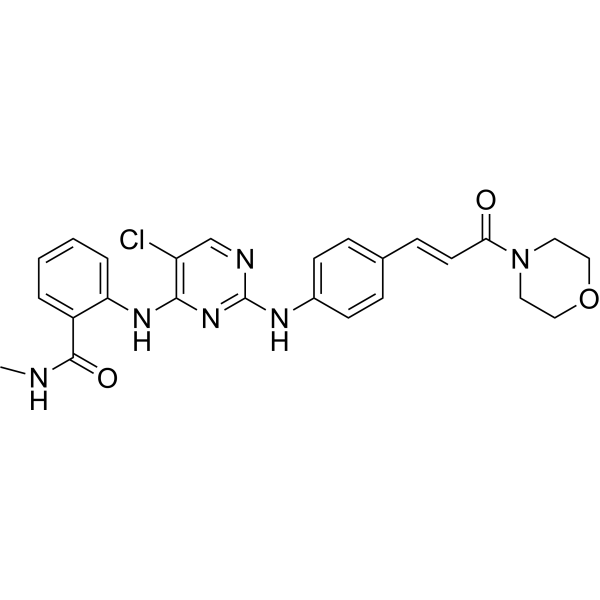
FAK-IN-12 (Compound 12S) is a FAK inhibitor (IC50 = 47 nM). FAK-IN-12 inhibits MGC-803, HCT-116 and KYSE30 cell proliferation (IC50: 0.24, 0.45, 0.44 μM). FAK-IN-12 induces apoptosis and cellular senescence .
loading...
    loading...
Cat. No.: HY-142032
CAS No.: 2407372-42-1
Target:  

LPL Receptor

Research Areas:  

Inflammation/Immunology

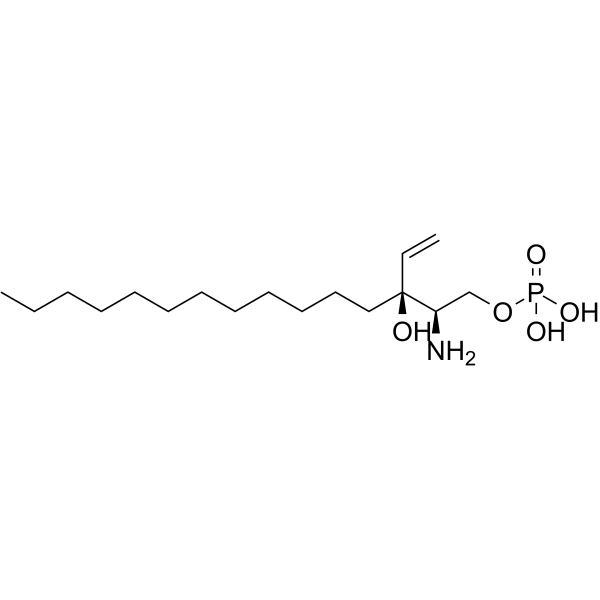
RBM10-8 is irreversible inhibitor of recombinant  human sphingosine-1-phosphate lyase (hS1PL) . Sphingosine-1-phosphate (S1P) is a sphingolipid (SL) that acts as a signaling molecule regulating diverse cellular processes such as cell proliferation and differentiation, angiogenesis, immune function, inflammation, and development .
loading...
    loading...
Cat. No.: HY-E70791
Target:  

Akt

Research Areas:  

Cancer

AKT is the oncogenic protein kinase that regulates essential cellular functions such as migration, proliferation, differentiation, apoptosis, and metabolism. Mammalian cells are characterized by the expression of three different Akt isoforms, Akt1, Akt2, and Akt3. Biotin-AKT2 Recombinant Human Active Protein Kinase is obtained by expressing AKT2 proteins and is biotinylated .
loading...
    loading...
Cat. No.: HY-E70837
Target:  

JNK

Research Areas:  

Cancer

JNK2 is a neuronal-specific isoform of JNK. JNK2 deficiency leads to reduced c-Jun degradation, thereby augmenting c-Jun levels and cellular proliferation. JNK2 Recombinant Human Active Protein Kinase is a recombinant JNK2 protein that can be used to study JNK2-related functions .
loading...
    loading...
Cat. No.: HY-13001S
CAS No.: 1300734-19-3
Synonyms: AC220-d8
Quizartinib (AC220)-d8 is deuterium labeled Quizartinib (HY-13001). Quizartinib is an orally active, potent and selective FLT3 inhibitor. Quizartinib inhibits kinase activity of mutant-FLT3, -PDGFRA and -KIT isoforms and inhibits autophosphorylation. Quizartinib inhibits cellular proliferation, induces apoptosis in cancer cells. Quizartinib can be used for the research of cancer .
loading...
    loading...
Cat. No.: HY-153421
CAS No.: 2242753-66-6
Research Areas:  

Cancer

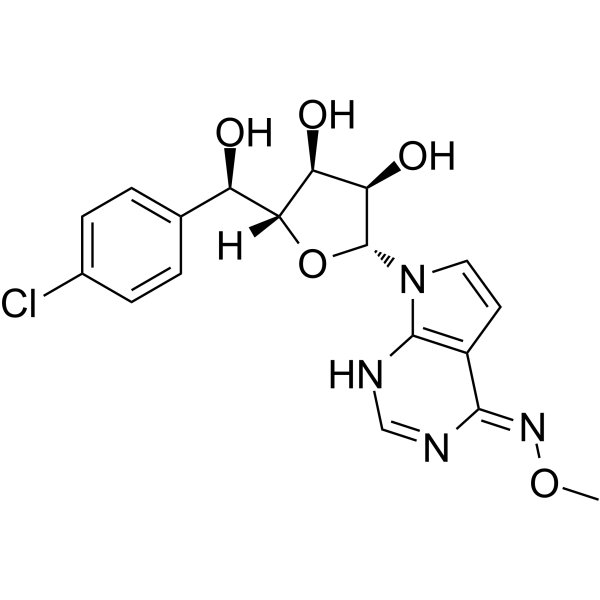
PRMT5-IN-28 (compound 36) is an inhibitor of protein arginine methyltransferase 5 (PRMT5) enzyme. Protein arginine methylation is a common post-translational modification involved in gene transcription, mRNA splicing, DNA repair, protein cellular localization, cell fate determination and signal transduction, etc. Abnormal PRMT5 can promote cancer cell proliferation, resist apoptosis, enhance invasion and metastasis, and affect immune escape .
loading...
    loading...
Cat. No.: HY-173310
CAS No.: 3051587-93-7
Target:  

CDK

Research Areas:  

Cancer

CDK2-IN-44 (Compound 46) is an inhibitor of cyclin-dependent kinase 2 (CDK2). CDK2-IN-44 can effectively inhibit the proliferation of cancer cells and exert its activity in inhibiting cancer cell growth by arresting the cell cycle, promoting Apoptosis, and inducing cellular senescence. CDK2-IN-44 holds promise for use in the research of ovarian cancer and breast cancer .
loading...
    loading...
Cat. No.: HY-P10105
CAS No.: 835655-37-3
Target:  

Akt Apoptosis

Research Areas:  

Cancer

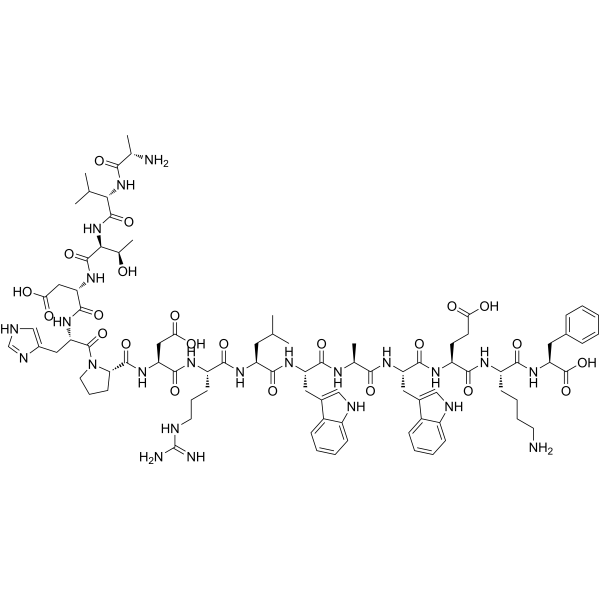
TCL1(10-24) is a encompassing the betaA strand of human TCL1. TCL1(10-24) is a Akt inhibitor. TCL1(10-24) interacts with the Akt PH domain prevented phosphoinositide binding and hence inhibits membrane translocation and activation of Akt. TCL1(10-24) inhibits cellular proliferation and anti-apoptosis. TCL1(10-24) has tumor growth in vivo .
loading...
    loading...
Cat. No.: HY-P991555

Target:  

TNF Receptor Apoptosis

Research Areas:  

Cancer

XmAb5485 is an Fc-engineered humanized anti-CD40 monoclonal antibody with high affinity to Fc-γ receptors. XmAb5485 induces potent antibody-dependent cell-mediated cytotoxicity (ADCC) and antibody-dependent cellular phagocytosis (ADCP) against tumor cells. XmAb5485 inhibits proliferation and induces apoptosis of tumor cells. XmAb5485 shows highly cytotoxic against lymphoma, leukemia and multiple myeloma cell lines as well as primary cancer cells .
loading...
    loading...
Cat. No.: HY-13314A
CAS No.: 1000599-06-3
Synonyms: XL-647 tosylate; EXEL-7647 tosylate; KD-019tosylate
Target:  

EGFR VEGFR Src

Research Areas:  

Cancer

Tesevatinib (XL-647) tosylate is an orally available, blood-brain barrier-penetrant inhibitor of the epidermal growth factor receptor (EGFR). Tesevatinib tosylate significantly reduces cellular viability, with IC50 values of 11 nM and 102 nM in GBM12 and GBM6, respectively. Tesevatinib tosylate also inhibits HER2 (IC50=16.1 nM), VEGFR2 (IC50=1.5 nM), and Src (IC50=10.3 nM). Tesevatinib tosylate can inhibit tumor proliferation and exhibits antitumor activity .
loading...
    loading...
Cat. No.: HY-14687
CAS No.: 1207454-56-5
Synonyms: (rac)-BMN-673; (rac)-LT-673
Target:  

PARP

Research Areas:  

Cancer

(rac)-Talazoparib ((rac)-BMN-673) (Compound 47) is the orally active inhibitor for PARP1/2 with Ki of 1.2 nM and 0.87 nM. (rac)-Talazoparib inhibits cellular PARylation with an EC50 of 2.51 nM. (rac)-Talazoparib causes the accumulation of DNA damage, inhibits proliferation of BRCA1/2-mutated MX-1 cell and Capan-1 cell with IC50 of 0.3 nM and 5 nM. (rac)-Talazoparib exhibits antitumor efficacy in mouse models .
loading...
    loading...
Cat. No.: HY-162642
Target:  

Bcl-2 Family

Research Areas:  

Cancer

Bfl-1-IN-3 (Compound 56) is a selective, competitive inhibitor for Bfl-1 on BID binding site with Ki of 105 nM. Bfl-1-IN-3 inhibits the proliferation of cell pfeiffer and MV4-11, with IC50 of 6.92 μM and 12.6 μM. Bfl-1-IN-3 induces apoptosis in pfeiffer cells. Bfl-1-IN-3 overcomes Venetoclax (HY-15531) resistance at the cellular level, and shows synergistically enhanced anti-tumor activity with Venetoclax .
loading...
    loading...
Cat. No.: HY-W339834
CAS No.: 325465-92-7
Research Areas:  

Others

1-Stearoyl-sn-glycerol 3-phosphate sodium is a bioactive phospholipid that plays a crucial role in modulating cellular processes such as motility, proliferation, invasion, survival, and growth factor production, primarily through its interaction with G protein-coupled receptors (GPCRs). Typically found at low concentrations in plasma (~100nM), this compound is synthesized during the formation of membrane phospholipids and is derived from various cell types, including activated platelets, epithelial cells, leukocytes, neuronal cells, and tumor cells. Its unique structure includes stearic acid at the sn-1 position alongside a hydroxyl group at the sn-2 position.
loading...
    loading...
Cat. No.: HY-13314R
CAS No.: 781613-23-8
Synonyms: XL-647 (Standard); EXEL-7647 (Standard); KD-019 (Standard)
Research Areas:  

Cancer

Tesevatinib (Standard) is the analytical standard of Tesevatinib. This product is intended for research and analytical applications. Tesevatinib (XL-647) is an orally available, blood-brain barrier-penetrant inhibitor of the epidermal growth factor receptor (EGFR). Tesevatinib significantly reduces cellular viability, with IC50 values of 11 nM and 102 nM in GBM12 and GBM6, respectively. Tesevatinib also inhibits HER2 (IC50=16.1 nM), VEGFR2 (IC50=1.5 nM), and Src (IC50=10.3 nM). Tesevatinib can inhibit tumor proliferation and exhibits antitumor activity .
loading...
    loading...
Cat. No.: HY-P75726
Purity:  ≥ 90%, as determined by reducing SDS-PAGE.
Synonyms: PA2G4; Cell Cycle Protein P38-2G4 Homolog; proliferation-Associated 2G4; ErbB-3 Receptor Binding Protein; EBP1; ErbB3-Binding Protein 1; proliferation-Associated Protein 2G4; HG4-1; ITAF45; ErbB3-Binding Protein Ebp1; IRES-Specific cellular Transacting Fa
Species:  
Human
Source:  
E. coli
loading...
    loading...
Cat. No.: HY-113041F
CAS No.: 174545-23-4
Synonyms: PGA2-biotin; Medullin-biotin
Research Areas:  

Others

Prostaglandin A2-biotin (PGA2-biotin) is a biotin-labeled Prostaglandin A2 (HY-113041). Prostaglandin A2-biotin retains the activity of inhibiting cellular proliferation. Prostaglandin A2-biotin is an effective tool for studying the interaction between Prostaglandin A2 and cellular proteins and exploring the mechanism of its inhibition of cellular proliferation .
loading...
    loading...
Cat. No.: HY-182269
CAS No.: 2475078-38-5
Research Areas:  

Cancer

Cathepsin-IN-5 is a cathepsin inhibitor with IC50 values of 6.2 μM and 81 nM for cathepsin L and cathepsin S. Cathepsin-IN-5 inhibits cancer cells proliferation, induces apoptosis, reduces growth of hepatocellular tumors in mouse models, and modulates expression of genes linked to cell death, cell proliferation, and cellular processes. Cathepsin-IN-5 can be used for the research of hepatocellular carcinoma .
loading...
    loading...

