

1018 Results for "

Recombinant

" in MedChemExpress (MCE) Product Catalog:
Products (1018)

1018 Results for "Recombinant" in MCE Product Catalog:

Cat. No.: HY-183831
CAS No.: 3034312-19-8
Research Areas:  

Cancer

GPS167 is a CLK kinase inhibitor that potently and selectively inhibits recombinant human CLK1, CLK2 and CLK4. By inhibiting CLK-mediated phosphorylation of SRSF10, GPS167 upregulates the protein-binding ability of CLK1 and CLK4 with SRSF10, downregulates oncogenic BCLAF1-L and upregulates tumor-suppressive BCLAF1-S, regulates alternative splicing of genes such as MDM2 and MDM4, stabilizes p53 protein and induces DNA damage, ultimately triggering tumor cell apoptosis. GPS167 can block the epithelial-mesenchymal transition process of tumors, activate intracellular double-stranded RNA-mediated antiviral immune responses, and produce synergistic cytotoxicity when combined with microtubule-targeting drugs. GPS167 can be used in research related to various cancers including colorectal cancer .
loading...
    loading...
Cat. No.: HY-P12080
CAS No.: 176365-43-8
pUR4 is a recombinant peptide that acts as a fibronectin (FN) inhibitor. pUR4 binds to the N-terminal type I modules of fibronectin, inhibiting the polymerization of soluble fibronectin and its deposition into the extracellular matrix (ECM). pUR4 reduces β1 integrin activation by depleting ECM fibronectin and disrupting FN-β1 integrin coupling. pUR4 attenuates TNF-α-induced endothelial hyperpermeability, maintains endothelial monolayer integrity, and reduces TNF-α-induced cell morphological changes. pUR4 decreases neutrophil adhesion to cardiac endothelial cells, T cell interstitial migration, immune cell infiltration, collagen deposition, and fibroblast activation. pUR4 can be used in research on pathological vascular leakage, heart failure, inflammation, chronic kidney disease, liver fibrosis, and intestinal fibrosis .
loading...
    loading...
Cat. No.: HY-KE8014

Protein Deglycosylation Kit (for N-linked & Complex O-linked Glycans) includes the enzymes and reagents reuired for the removal of all N-linked and some complex O-linked glycans. The enzyme reagent in this kit is a mixture of five glycosidases, namely PNGase F, O-Glycosidase, α2-3,6,8,9 Neuraminidase, β1-4 Galactosidase, and β-N-Acetylhexosaminidase. All enzymes in this kit are recombinant enzymes expressed in Escherichia coli BL21 and subsequently purified. The molecular weights of these enzymes are as follows: PNGase F is 36 kDa, O-Glycosidase is 14 kDa,α2-3,6,8,9 Neuraminidase is 66 kDa, β1-4 Galactosidase is 94 kDa, and β-N-Acetylhexosaminidase is 55 kDa.

loading...
    loading...
Cat. No.: HY-111527
CAS No.: 896203-18-2
Purity:  99.92%
Target:  

Calcium Channel

Research Areas:  

Neurological Disease

PPZ2 is a diacylglycerol (DAG)-activated TRPC3/TRPC6/TRPC7 channel activator with activity in promoting neuronal development and survival. PPZ2 activates recombinant TRPC3/TRPC6/TRPC7 channels in a dose-dependent manner without affecting other TRPC channels. PPZ2 elicits cation currents and calcium ion (Ca(2+)) influx in cultured central neurons. PPZ2 is able to induce BDNF-like neurite outgrowth and neuroprotection, an effect that disappears after TRPC3/TRPC6/TRPC7 knockdown or inhibition. PPZ2 also increases the activation of the calcium-dependent transcription factor cAMP response element binding protein. The effects of PPZ2 suggest that calcium signaling mediated by activation of DAG-activated TRPC channels plays an important role in its neurotrophic effects .
loading...
    loading...
Cat. No.: HY-121501
CAS No.: 121024-51-9
Target:  

Endogenous Metabolite

Research Areas:  

Others

Tyrostatin is a peptide inhibitor isolated from Kitasatospora sp. 55. It has a Ki value of 6 nM against serine carboxyl protease (PSCP) from Pseudomonas sp. 101, a Ki value of 2.1 nM against carboxyl protease (XSCP) from Xanthomonas sp. T-22, and a Ki value of 2.6 nM against carboxyl protease (PCP) from Pseudomonas sp. 101. Tyrostatin forms a reversible covalent hemiacetal bond with Ser287 at the active site of PSCP, where Tyr at the P1 position and Leu at the P2 position occupy the S1-S4 subsites of the enzyme. Tyrostatin inhibits the activity of XSCP, specifically blocks the autocatalytic maturation process of PCP precursor under acidic conditions, and also inhibits the protease activity of mature and recombinant PCP in a dose-dependent manner. Tyrostatin does not inhibit KSCP or alcohol-resistant protease J-4, and can serve as a tool for identifying the catalytic residues of PCP .
loading...
    loading...
Cat. No.: HY-P1348
CAS No.: 1197810-60-8
Synonyms: [Gly8,36,Glu22]-GLP-1 (7-37)
Research Areas:  

Metabolic Disease

GLP-1 moiety from Dulaglutide ([Gly8,36,Glu22]-GLP-1 (7-37)) is a 31-amino acid fragment derived from Dulaglutide (HY-P0120). GLP-1 moiety from Dulaglutide is a DPP-4-modified GLP-1 analog carrying the [Gly8,36,Glu22] sequence mutation, which acts as a GLP-1 receptor agonist. GLP-1 moiety from Dulaglutide covalently links to the human IgG4 Fc fragment and constitutes a part of the dulaglutide recombinant fusion protein. GLP-1 moiety from Dulaglutide exhibits glucose-dependent insulinotropic activity. GLP-1 moiety from Dulaglutide can be used in research related to type 2 diabetes .
loading...
    loading...
Cat. No.: HY-P99911
CAS No.: 1635395-27-5
Synonyms: MEDI-6383
Efizonerimod alfa (MEDI-6383) is a recombinant human OX40L IgG4P Fc fusion protein that assembles into a hexameric structure and exerts potent agonist activity upon binding to OX40. The activity of Efizonerimod alfa is enhanced by Fcγ receptor-mediated aggregation. Efizonerimod alfa binds to OX40 on the surface of activated T cells, induces NF-κB promoter activity in OX40-expressing T cells, and triggers the production of Th1-type cytokines, T cell proliferation, and resistance to regulatory T cell (Treg)-mediated suppression. Efizonerimod alfa enhances the cytolytic activity of tumor-reactive T cells and slows tumor growth in immunodeficient mice. Efizonerimod alfa induces the proliferation of CD4, CD8, and B cells in the peripheral blood of healthy non-human primates. Efizonerimod alfa can be used in the research of advanced solid malignancies and melanoma .
loading...
    loading...
Cat. No.: HY-P991510

Target:  

TNF Receptor

Research Areas:  

Cancer

CDX-1140 is a fully human IgG monoclonal antibody and CD40 agonist, with a Kd value of 0.01 nM against human targets. The epitope of CDX-1140 locates at CD40 CRD1 and avoids the CD40L binding site. It activates DCs and B cells, drives NF-κB reporter gene activation, exhibits agonist activity independent of FcR cross-linking, and shows a synergistic effect with recombinant CD40L . CDX-1140 does not induce systemic cytokine release, exerts direct and immune-mediated anti-tumor activity in tumor xenografts, and has favorable safety profiles. When used as a local vaccine adjuvant in combination with 6MHP+mBRAF+poly-ICLC, CDX-1140 increases the number of DC-LAMP + DCs and induces Th1 CD4 + responses in high-risk melanoma. CDX-1140 can be used in studies related to B-cell lymphoma, bladder cancer and high-risk melanoma .
loading...
    loading...
Cat. No.: HY-111527R
CAS No.: 896203-18-2
Research Areas:  

Neurological Disease

PPZ2 (Standard) is the analytical standard of PPZ2 (HY-111527). This product is intended for research and analytical applications. PPZ2 is a diacylglycerol (DAG)-activated TRPC3/TRPC6/TRPC7 channel activator with activity in promoting neuronal development and survival. PPZ2 activates recombinant TRPC3/TRPC6/TRPC7 channels in a dose-dependent manner without affecting other TRPC channels. PPZ2 elicits cation currents and calcium ion (Ca(2+)) influx in cultured central neurons. PPZ2 is able to induce BDNF-like neurite outgrowth and neuroprotection, an effect that disappears after TRPC3/TRPC6/TRPC7 knocKdown or inhibition. PPZ2 also increases the activation of the calcium-dependent transcription factor cAMP response element binding protein. The effects of PPZ2 suggest that calcium signaling mediated by activation of DAG-activated TRPC channels plays an important role in its neurotrophic effects .
loading...
    loading...
Cat. No.: HY-183765
Target:  

PARP Pyruvate Kinase

Research Areas:  

Cancer

PARP1/PKM2-IN-1 is a dual PARP1/PKM2 inhibitor, with an IC50 of 39.5 nM against PARP1, and IC50 values of 261 nM (recombinant PKM2) and 50 nM (dimeric PKM2) against PKM2. PARP1/PKM2-IN-1 reduces the dimerization of PKM2 and decreases its nuclear accumulation level. PARP1/PKM2-IN-1 also selectively downregulates PKM2 mRNA and impairs poly (ADP-ribose)-mediated nuclear retention of PKM2. PARP1/PKM2-IN-1 exhibits antiproliferative activity and inhibits the formation of 3D cancer spheroids. PARP1/PKM2-IN-1 can be used in research related to mammary adenocarcinoma, triple-negative breast cancer, BRCA1-mutant triple-negative breast cancer, and prostate adenocarcinoma .
loading...
    loading...
Cat. No.: HY-139090
CAS No.: 136587-07-0
Synonyms: 28-O-Acetyl-3-Oxobetulin; 3-oxo-28-O-Acetylbetulin
Research Areas:  

Cancer

3-Oxobetulin acetate (28-O-Acetyl-3-Oxobetulin; 3-oxo-28-O-Acetylbetulin) is a derivative of betulin (HY-N0083), a cholesterol biosynthesis inhibitor. 3-Oxobetulin acetate inhibits the growth of P388 murine lymphocytic leukemia cells (EC50=0.12 μg/mL) and human MCF-7 breast cancer, SF-268 CNS cancer, H460 lung cancer, and KM20L2 colon cancer cells (GI50s=8, 10.6, 5.2, and 12.7 μg/mL), but not BxPC-3 pancreatic cancer cells or DU145 prostate cancer cells (GI50s=>10 μg/mL for both). 3-Oxobetulin acetate inhibits the replication of X4-tropic recombinant HIV (NL4.3-Ren) in MT-2 lymphoblastoid cells (IC50=13.4 μM). 3-Oxobetulin acetate is also effective against Listeria donovani amastigotes.
loading...
    loading...
Cat. No.: HY-P5415
CAS No.: 127134-13-8
Target:  

HIV

Research Areas:  

Others

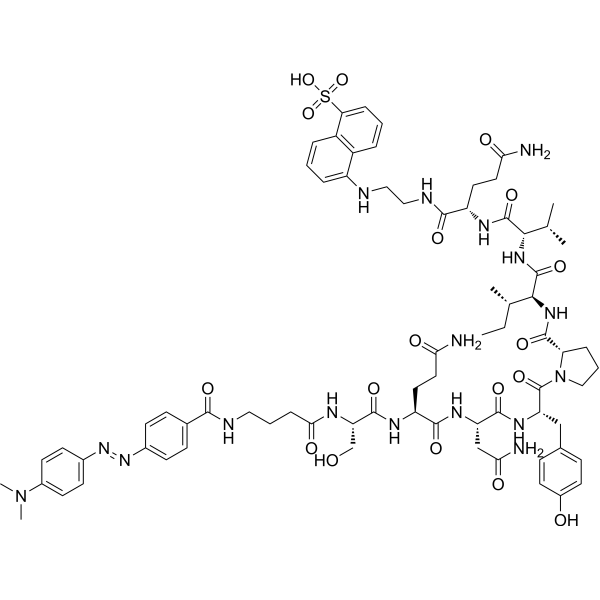
DABCYL-GABA-Ser-Gln-Asn-Tyr-Pro-Ile-Val-Gln-EDANS is a biological active peptide. (DABCYL-GABA-Ser-Gln-Asn-Tyr-Pro-Ile-Val-Gln-EDANS is also called HIV protease substrate I in some literature. It is widely used for the continuous assay for HIV protease activity. The 11-Kd protease (PR) encoded by the human immunodeficiency virus 1 (HIV-1) is essential for the correct processing of viral polyproteins and the maturation of infectious virus, and is therefore a target for the design of selective acquired immunodeficiency syndrome (AIDS) therapeutics. The FRET-based fluorogenic substrate is derived from a natural processing site for HIV-1 PR. Incubation of recombinant HIV-1 PR with the fluorogenic substrate resulted in specific cleavage at the Tyr-Pro bond and a time-dependent increase in fluorescence intensity that is linearly related to the extent of substrate hydrolysis. The fluorescence quantum yields of the HIV-1 PR substrate in the FRET assay increased by 40.0- and 34.4-fold, respectively, per mole of substrate cleaved. Because of its simplicity and precision in the determination of reaction rates required for kinetic analysis, this substrate offers many advantages over the commonly used HPLC or electrophoresis-based assays for peptide substrate hydrolysis by retroviral PRs. Abs/Em = 340nm/490nm.)
loading...
    loading...
Cat. No.: HY-L038
2,574 compounds

Stem cells, which are found in all multi-cellular organisms, can divide and differentiate into diverse special cell types and can self-renew to produce more stem cells. To be useful in therapy, stem cells must be converted into desired cell types as necessary which is called induced differentiation or directed differentiation. Understanding and using signaling pathways for differentiation is an important method in successful regenerative medicine. Small molecules or growth factors induce the conversion of stem cells into appropriate progenitor cells, which will later give rise to the desired cell type. There is a variety of signal molecules and molecular families that may affect the establishment of germ layers in vivo, such as fibroblast growth factors (FGFs); the wnt family or superfamily of transforming growth factors β (TGFβ) and bone morphogenetic proteins (BMP). Unfortunately, for now, a high cost of recombinant factors is likely to limit their use on a larger scale in medicine. The more promising technique focuses on the use of small molecules. These small molecules can be used for either activating or deactivating specific signaling pathways. They enhance reprogramming efficiency by creating cells that are compatible with the desired type of tissue. It is a cheaper and non-immunogenic method.

MCE Differentiation Inducing Compound Library contains a unique collection of 2,574 compounds that act on signaling pathways for differentiation. These compounds are potential stimulators for induced differentiation. This library is a useful tool for researching directed differentiation and regenerative medicine.

Cat. No.: HY-112624K
CAS No.: 9004-54-0
Synonyms: Dextran 5; Dextran D5; Dextran T5(MW 4500-5500)
Dextran T5 (MW 5,000) is a sulfated polysaccharide anti-apoptotic and autophagic agent. Dextran T5 (MW 5,000) has sulfated groups and interacts with cell membranes by mimicking endogenous glycosaminoglycans, inhibiting the mitochondrial apoptotic pathway and delaying DNA fragmentation to exert anti-apoptotic activity. Dextran T5 (MW 5,000) also promotes the conversion of LC3-I to LC3-II and the formation of autophagosomes to activate the autophagic pathway. Dextran T5 (MW 5,000) can prolong the survival cycle of CHO cells and increase the production of recombinant erythropoietin (EPO). The Dextran series of compounds are also natural polysaccharide drug carriers that can be connected to drugs through covalent bonding methods such as ester bonds, amide bonds or click chemistry, or self-assembled to form carriers such as nanoparticles and hydrogels. Dextran is biodegradable and biocompatible, and can achieve targeted delivery and controlled release of drugs. Dextran derivatives can prolong drug half-life, increase local concentration and reduce immune clearance activity. The Dextran series of compounds are also natural polysaccharide drug carriers that can be connected to drugs through covalent bonding methods such as ester bonds, amide bonds or click chemistry, or self-assembled to form carriers such as nanoparticles and hydrogels. Dextran is biodegradable and biocompatible, and can achieve targeted delivery and controlled release of drugs. Dextran derivatives can prolong the half-life of drugs, increase local concentrations, and reduce the activity of immune clearance .
loading...
    loading...
Cat. No.: HY-P990171

Target:  

PD-1/PD-L1

Research Areas:  

Cancer

Anti-Mouse PD-L1/B7-H1 (LALA-PG) Antibody (10F.9G2) is a recombinant chimeric version of the original 10F.9G2 antibody (HY-P99145). The variable domain sequences are identical to the original 10F.9G2 but the constant region sequences have been switched from rat IgG2b to mouse IgG2a. Anti-Mouse PD-L1/B7-H1 (LALA-PG) Antibody (10F.9G2) contains a LALA-PG mutation in the Fc fragment rendering it unable to bind to endogenous Fcγ receptors. Anti-Mouse PD-L1/B7-H1 (LALA-PG) Antibody (10F.9G2) blocks PD-1 signaling. Anti-Mouse PD-L1/B7-H1 (LALA-PG) Antibody (10F.9G2) can be used for the research of cancer.
loading...
    loading...
Cat. No.: HY-P990172

Target:  

PD-1/PD-L1

Research Areas:  

Cancer

Anti-Mouse PD-L1/B7-H1 (D265A) Antibody (10F.9G2) is a recombinant chimeric version of the original 10F.9G2 antibody (HY-P99145). The variable domain sequences are identical to the original 10F.9G2 but the constant region sequences have been switched from rat IgG2b to mouse IgG1. Anti-Mouse PD-L1/B7-H1 (D265A) Antibody (10F.9G2) contains a D265A mutation in the Fc fragment rendering it unable to bind to endogenous Fcγ receptors. Anti-Mouse PD-L1/B7-H1 (D265A) Antibody (10F.9G2) blocks PD-1 signaling. Anti-Mouse PD-L1/B7-H1 (D265A) Antibody (10F.9G2) can be used for the research of cancer.
loading...
    loading...
Cat. No.: HY-P99145A

Target:  

PD-1/PD-L1

Research Areas:  

Cancer

Anti-Mouse PD-L1/B7-H1 Antibody (10F.9G2-Mouse IgG1) is a recombinant chimeric version of the original 10F.9G2 antibody (HY-P99145). The variable domain sequences are identical to the original 10F.9G2 but the constant region sequences have been switched from rat IgG2b to mouse IgG1. Anti-Mouse PD-L1/B7-H1 Antibody (10F.9G2-Mouse IgG1) contains no Fc mutations just as the original rat IgG2b antibody does not. Anti-Mouse PD-L1/B7-H1 Antibody (10F.9G2-Mouse IgG1) blocks PD-1 signaling. Anti-Mouse PD-L1/B7-H1 Antibody (10F.9G2-Mouse IgG1) can be used for the research of cancer.
loading...
    loading...
Cat. No.: HY-W097625R
CAS No.: 26964-24-9
6-Methoxyflavone (Standard) is the analytical standard of 6-Methoxyflavone (HY-W097625). This product is intended for research and analytical applications. 6-Methoxyflavone is an orally active methoxyflavone. 6-Methoxyflavone suppresses neuroinflammation in microglia through the inhibition of TLR4/MyD88/p38 MAPK/NF-κB dependent pathways and the activation of HO-1/NQO-1 signaling. 6-Methoxyflavone induces S-phase arrest through the CCNA2/CDK2/p21CIP1 signaling pathway and activates the PERK/EIF2a/ATF4/CHOP pathway in HeLa cells. 6-Methoxyflavone acts as a Flumazenil (HY-B0009)-insensitive positive allosteric modulator at human recombinant α1β2γ2L and α2β2γ2L GABAα receptors. 6-Methoxyflavone inhibits NFAT Translocation into the nucleus and suppresses T cell activation. 6-Methoxyflavone partially restores chronic ethanol-induced behavioral deficits in mice. 6-Methoxyflavone antagonizes chronic constriction injury and diabetes associated neuropathic nociception expression. 6-Methoxyflavone can be used for the study of cancer, inflammation and neurological diseases .
loading...
    loading...

