1088 Results for "

Staphylococcus

" in MedChemExpress (MCE) Product Catalog:
Products (1088)

1088 Results for "Staphylococcus" in MCE Product Catalog:

Cat. No.: HY-108988
CAS No.: 1622253-00-2
Albicidin is a peptide antibiotic with phytotoxic activity. Albicidin potently inhibits bacterial and plant DNA gyrase at nanomolar concentrations, blocks DNA replication, and exhibits excellent antibacterial efficacy against multidrug-resistant bacteria. Albicidin possesses bactericidal activity against Gram-positive and Gram-negative microorganisms, and acts as a virulence factor for the systemic plant infection by Xanthomonas albilineans. Albicidin can be used in studies related to bacterial infections and sugarcane leaf blight .
loading...
    loading...
Cat. No.: HY-129724A
CAS No.: 2828433-34-5
Synonyms: ACTH-(11-13) acetate; Lys-Pro-Val acetate; H-Lys-Pro-Val-OH acetate
α-MSH (11-13) (ACTH-(11-13)) acetate is a C-terminal tripeptide of α-MSH that can cross the blood-brain barrier. α-MSH (11-13) acetate exhibits antipyretic, anti-inflammatory, and antibacterial activities. α-MSH (11-13) acetate also exerts neuroprotective effects after traumatic brain injury by inhibiting excessive activation of microglia and reducing neuronal apoptosis. α-MSH (11-13) acetate can be used in research related to traumatic brain injury, fever, and bacterial infections .
loading...
    loading...
Cat. No.: HY-132989
CAS No.: 1638156-31-6
Purity:  ≥95.0%
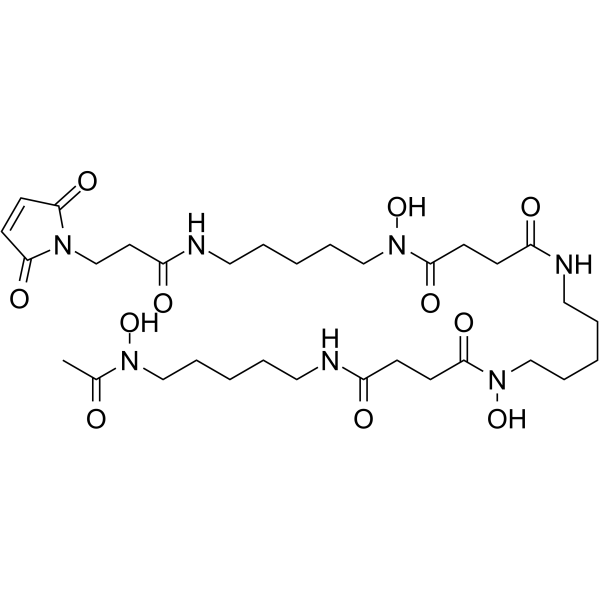
Mal-Deferoxamine is a maleimide-functionalized trihydroxamate siderophore derivative that can be isolated from Streptomyces pilosus. Mal-Deferoxamine possesses highly specific Fe (III) chelating ability, and the stability of complexes formed between it and non-Fe (III) metal ions is significantly lower. Mal-Deferoxamine exhibits growth inhibitory effects against Gram-positive bacteria, but shows no obvious inhibitory activity against Gram-negative bacteria (MIC>50 μM). Mal-Deferoxamine is mainly suitable for scientific research in hematology and related fields .
loading...
    loading...
Cat. No.: HY-183712
Research Areas:  

Infection

Antibacterial agent 345 is a Ciprofloxacin (HY-B0356)-lipophilic derivative and is an antibacterial agent. Antibacterial agent 345 inhibits DNA gyrase and inhibits bacterial DNA replication and transcription. Antibacterial agent 345 inhibits bacterial biofilm formation. Antibacterial agent 345 can be used for the research of bacterial infections, such as Pseudomonas aeruginosa infection .
loading...
    loading...
Cat. No.: HY-184587
Antibacterial agent 356 is an orally active antibacterial agent. Antibacterial agent 356 binds to the Mrr1 transcription factor, inhibits the expression of the MDR1 efflux pump gene, reduces the efflux of Rhodamine 123, and increases the accumulation of intracellular substrates in drug-resistant Candida albicans cells. Antibacterial agent 356 induces mitochondrial membrane potential reduction and ROS accumulation in Candida albicans, inhibits the yeast-hypha transition process, and suppresses its biofilm formation. Antibacterial agent 356 reverses efflux pump-mediated drug resistance in azole-resistant Candida albicans with overexpressed Mdr1. Antibacterial agent 356 improves the survival rate of Galleria mellonella larvae infected with azole-resistant Candida albicans*CA632, and reduces the renal fungal load and renal tissue damage in infected BALB/c mice. Antibacterial agent 356 can be used for the research of Candida albicans infection .
loading...
    loading...
Cat. No.: HY-N1341
CAS No.: 54835-70-0
Research Areas:  

Infection

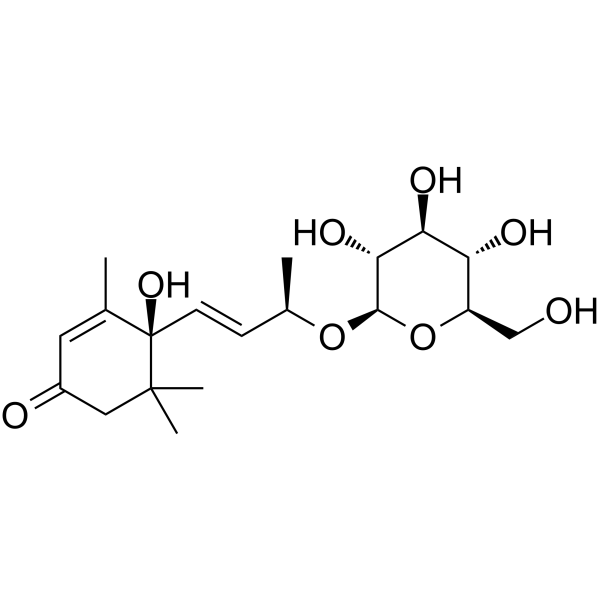
Roseoside is an inhibitor of DNA gyrase and HAV 3C protease, and also inhibits HCV NS5A/B replicase in human systems with an IC50 of 20 μM. Roseoside binds to the active site of enzymes and stabilizes the interaction by forming hydrogen bonds with key amino acid residues. Roseoside inhibits the growth of Gram-positive bacteria, Gram-negative bacteria, and Candida albicans, and interferes with HCV RNA replication in vitro by inhibiting HCV NS5A/B replicase (IC50=20 μM). Roseoside shows no cytotoxicity and serves as a research tool for studies related to bacterial infections, candidiasis, HAV and HCV .
loading...
    loading...
Cat. No.: HY-N17436
CAS No.: 138870-92-5
Demethoxyhexahydrocurcumin is a Curcumin (HY-N0005) biotransformation metabolite and diarylheptanoid with antioxidant and antimicrobial activities. Demethoxyhexahydrocurcumin scavenges free radicals, inhibits cancer cell viability, and suppresses microbial growth. Demethoxyhexahydrocurcumin can be used for the research of colorectal cancer .
loading...
    loading...
Cat. No.: HY-N21846
CAS No.: 82516-67-4
U-62162 is an Antibiotic. U-62162 is found in Streptomyces verdensis. U-62162 inhibits the growth of Gram-positive bacteria. U-62162 exhibits no in vivo protective effect in animals with experimental S. aureus infection .
loading...
    loading...
Cat. No.: HY-P0307B
CAS No.: 393511-85-8
Research Areas:  

Neurological Disease

Penetratin-Cys is a cell-penetrating peptide derived from Antennapedia Peptide (HY-P0307) via C-terminal cysteine modification. Penetratin-Cys acts as a cytotoxin and reduces the viability of differentiated neuronal cells. Penetratin-Cys localizes to the perinuclear region and binds to the Golgi apparatus. Penetratin-Cys can be used in research related to neurological disorders .
loading...
    loading...
Cat. No.: HY-P10159
CAS No.: 1809102-71-3
Target:  

Antibiotic Bacterial

Research Areas:  

Infection

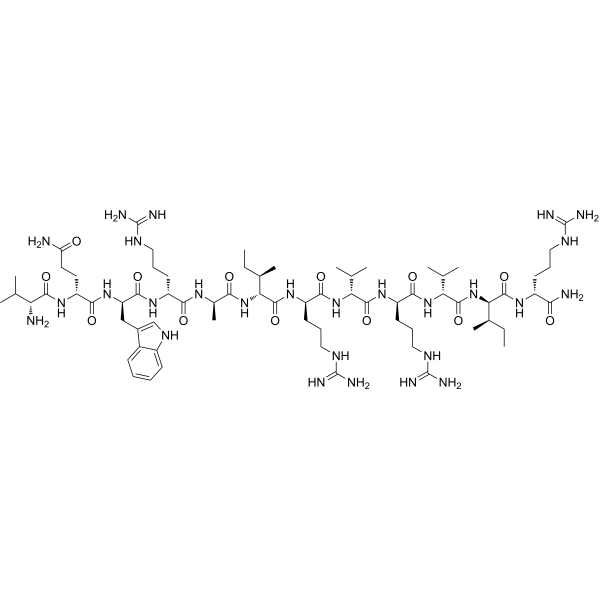
DJK-5 is an antimicrobial peptide that targets and degrades guanosine pentaphosphate and tetraphosphate (pppGpp and ppGpp). DJK-5 kills bacteria within dentinal tubules, dental plaque and preformed oral biofilms, delays biofilm recovery, reduces the abundance of extracellular polysaccharides and the structural integrity of biofilm matrices, and inhibits the formation and biomass accumulation of dental plaque biofilms. DJK-5 permeabilizes bacterial membranes, induces bacterial morphological changes, inhibits bacterial growth, and exerts a synergistic effect on bacterial biofilms when used in combination with traditional antibiotics and Colistin (HY-113678). DJK-5 exhibits protease resistance and broad-spectrum antibiofilm activity, though its activity decreases in fetal bovine serum. DJK-5 can be used in studies of pulpitis, mixed biofilm infections, skin abscesses, dental caries, infections associated with failed root canal therapy, and Pseudomonas aeruginosa biofilm-related respiratory tract infections .
loading...
    loading...
Cat. No.: HY-W353842
CAS No.: 32426-11-2
Research Areas:  

Infection

Octyl decyldimethyl ammonium chloride, a quaternary ammonium salt, is an antibacterial agent. Octyl decyldimethyl ammonium chloride disrupts cell membranes, leading to cytotoxicity. Octyl decyldimethyl ammonium chloride has risk of skin irritation and increases pro-inflammatory IL-1α secretion .
loading...
    loading...
Cat. No.: HY-N22017
CAS No.: 2341324-20-5
(4,5-Dichloro-1H-pyrrol-2-yl)(3-hexyl-2,4-dihydroxyphenyl) methanone is an antibacterial agent discovered from Streptomyces armeniacus. (4,5-Dichloro-1H-pyrrol-2-yl)(3-hexyl-2,4-dihydroxyphenyl) methanone inhibits the growth of Gram-positive bacteria and shows no activity against the tested Gram-negative bacteria. (4,5-Dichloro-1H-pyrrol-2-yl)(3-hexyl-2,4-dihydroxyphenyl) methanone is a biosynthetic intermediate of Armeniaspirol A-C (HY-N15548) (HY-N15550) (HY-N15551). (4,5-Dichloro-1H-pyrrol-2-yl)(3-hexyl-2,4-dihydroxyphenyl) methanone can be used in studies related to infections caused by Gram-positive bacteria such as Staphylococcus aureus, Enterococcus faecalis, and Bacillus subtilis .
loading...
    loading...
Cat. No.: HY-P11242
Cm-CATH2 is an antimicrobial peptide discovered from Chelonia mydas. Cm-CATH2 has a potent, broad-spectrum and rapid bactericidal ability by rapidly destroying the integrity of bacterial cell membranes. It shows strong activity against Gram-positive bacteria (such as VREF, Staphylococcus aureus), Gram-negative bacteria (such as Escherichia coli, Klebsiella pneumoniae), and fungi (such as Candida albicans) with MICs ranges from 1.17 to 18.75 μg/mL. Cm-CATH2 is also effective against various aquatic pathogenic bacteria. Cm-CATH2 not only inhibits biofilm formation but can also remove the formed biofilms. Cm-CATH2 has immunomodulatory functions and chemotactic effects on immune cells, and can inhibit the production of pro-inflammatory cytokines by macrophages stimulated by LPS (HY-D1056). Cm-CATH2 prevents the activation of NF-κB by inhibiting the degradation of IκBα, and also inhibits the phosphorylation of MAPK signaling pathways (p38, JNK, ERK). Cm-CATH2 demonstrates strong anti-infective ability in mouse peritonitis models and pneumonia models .
loading...
    loading...
Cat. No.: HY-187932
CAS No.: 77360-52-2
Research Areas:  

Infection

Ceftiolene is a cephalosporin that inhibits Gram-negative bacteria. Ceftiolene binds to PBP. Ceftiolene induces bacterial lysis, autolytic activity, filamentation, and porin regulation. Ceftiolene can be used in research on bacterial infections and Pseudomonas aeruginosa infections .
loading...
    loading...
Cat. No.: HY-N10184
CAS No.: 540770-33-0
Synonyms: FKI-0550
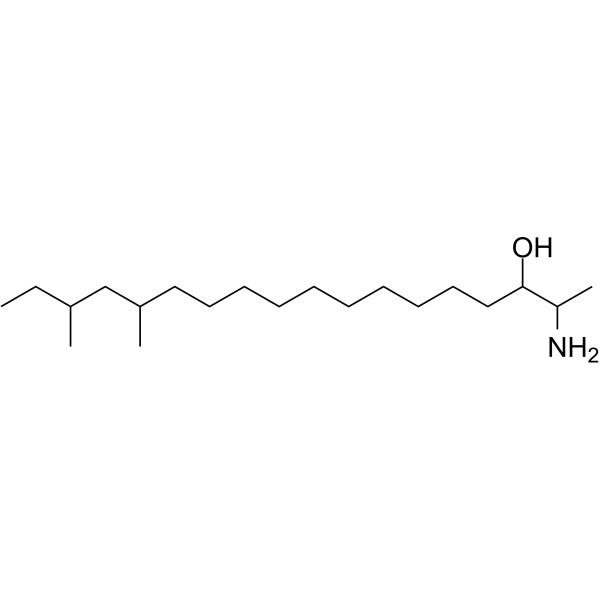
Paecilaminol is an amino alcohol and NADH-fumarate reductase inhibitor (IC50 = 5.1 μM against Ascaris suum) that also inhibits both helminth and mammalian mitochondrial complexes I and III, exhibiting antifungal, antibacterial, nematocidal, insecticidal, and cancer cell growth-inhibitory activities. Paecilaminol can be used in research on helminth infections .
loading...
    loading...
Cat. No.: HY-N10343
CAS No.: 19237-18-4
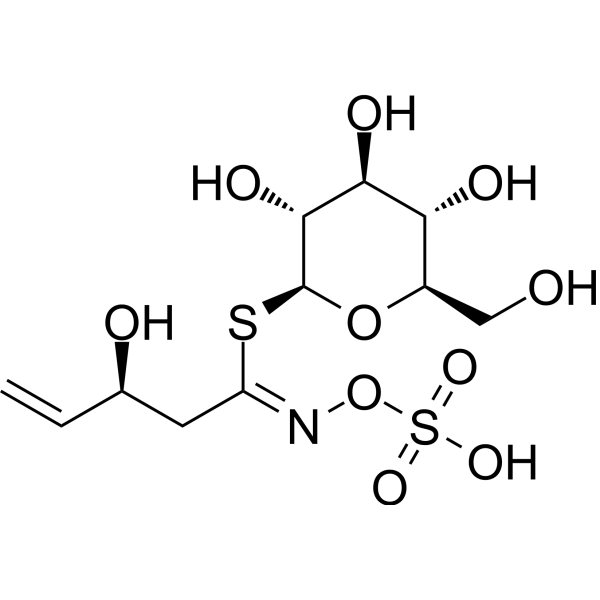
epi-Progoitrin is a naturally occurring glucosinolate. epi-Progoitrin exhibits no biological activity, showing no effects on H3N2 influenza virus, various pathogenic bacteria, or respiratory burst in mouse macrophages .
loading...
    loading...
Cat. No.: HY-N13274
CAS No.: 3625-52-3
Synonyms: Lacceroic acid
Dotriacontanoic acid (Lacceroic acid) is a fatty acid found in Limnophila polystachya Benth. Dotriacontanoic acid exhibits anti-bacterial activity against multiple gram-negative bacteria .
loading...
    loading...
Cat. No.: HY-N19212
CAS No.: 3040055-59-9
Target:  

Bacterial

Glenthmycin A is a macrocyclic type II spiroketal polyketide antibacterial agent. Glenthmycin A inhibits the growth of Gram-positive pathogens. Glenthmycin A is applicable to the research of bacterial infections .
loading...
    loading...
Cat. No.: HY-N20633
CAS No.: 1378990-15-8
Pimprinol A is a hydroxylated pimprinine derivative isolated from the terrestrial actinomycete Streptomyces sp. Lv3-13. Pimprinol A is a natural bacterial alkaloid .
loading...
    loading...
Cat. No.: HY-N20699
CAS No.: 3131756-59-4
Geministatin C is a depside analog derived from Geministatin A (HY-N20700) that exhibits mammalian cytotoxicity against cancer cells and fibroblasts. Geministatin C shows no significant antibacterial activity against Gram-positive bacteria and no antifungal activity against yeast .
loading...
    loading...

