
1223 Results for "

stem

" in MedChemExpress (MCE) Product Catalog:
Products (1223)

1223 Results for "stem" in MCE Product Catalog:

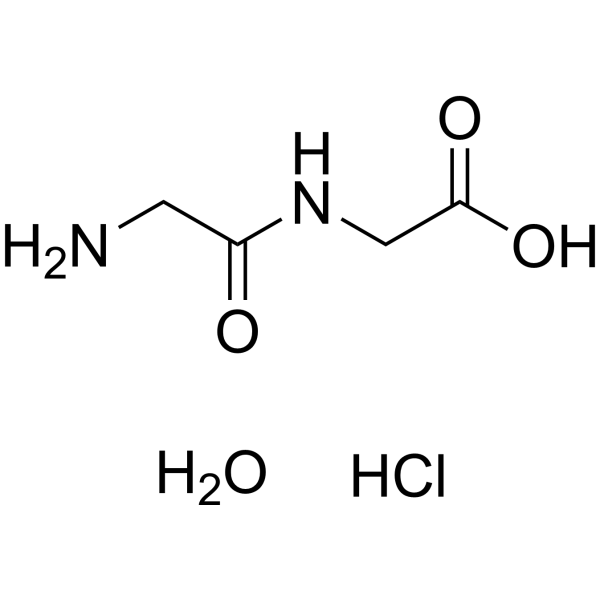
Cat. No.: HY-W040074
CAS No.: 23273-91-8
Synonyms: Diglycine hydrochloride hydrate; Gly-Gly (HCl H2O)
Glycylglycine hydrochloride hydrate is a non-selective Glycylglycine hydrochloride hydrate dipeptidase substrate and iNOS inhibitor. Glycylglycine hydrochloride hydrate can cross the cell membrane by passive diffusion and is hydrolyzed to glycine in the cell, participating in energy metabolism and antioxidant processes. Glycylglycine hydrochloride hydrate promotes spermatogonial stem cells (SSCs) proliferation, inhibits astrocyte overactivation and reduces nitric oxide (NO) release, while upregulating the expression of neurotrophic factors (such as PDGFA, FGF2, CNTF) to support nerve myelin repair. Glycylglycine hydrochloride hydrate can be used to study male reproductive biology (such as SSCs proliferation regulation) and neurodegenerative diseases (such as neuroprotective mechanisms in multiple sclerosis) .
loading...
    loading...
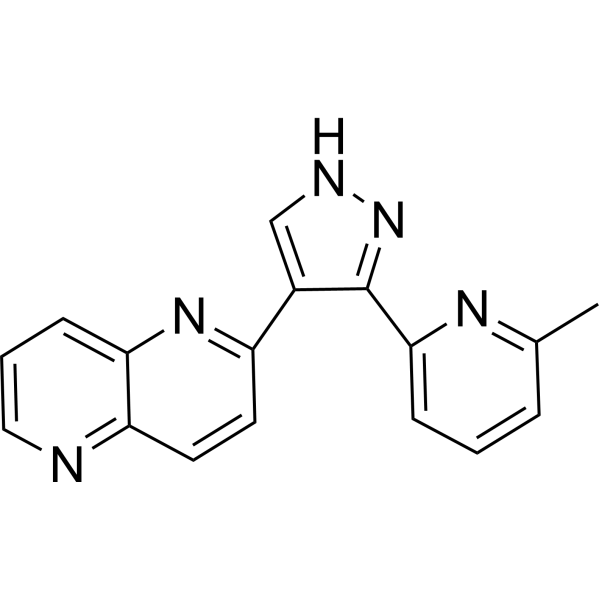
Cat. No.: HY-13012G
CAS No.: 446859-33-2
Synonyms: E-616452 (GMP); SJN 2511 (GMP)
RepSox (E-616452) (GMP) is a RepSox (HY-13012) produced by using GMP guidelines. GMP small molecules works appropriately as an auxiliary reagent for cell therapy manufacture. RepSox is a potent and selective TGF-β-RI/ALK5 inhibitor .
loading...
    loading...
Cat. No.: HY-13328A
CAS No.: 1422006-47-0
Synonyms: INK-128 phosphate; MLN0128 phosphate; TAK-228 phosphate
Sapanisertib (INK-128; MLN0128; TAK-228) phosphate is an orally active dual mTORC1/mTORC2 inhibitor. Sapanisertib phosphate directly and simultaneously inhibits mTORC1/2 activity through competitive binding with ATP, thereby comprehensively blocking downstream processes such as protein and lipid synthesis and cytoskeletal reorganization, consequently suppressing tumor cell proliferation and promoting apoptosis. Sapanisertib phosphate is applicable to research on melanoma, ovarian cancer, pulmonary fibrosis, and hematological malignancies .
loading...
    loading...
Cat. No.: HY-13328R
CAS No.: 1224844-38-5
Synonyms: INK-128 (Standard); MLN0128 (Standard); TAK-228 (Standard)
Sapanisertib (INK-128; MLN0128; TAK-228) Standard is the analytical standard of Sapanisertib (HY-13328). This product is intended for research and analytical applications. Sapanisertib (INK-128; MLN0128; TAK-228) is an orally active dual mTORC1/mTORC2 inhibitor. Sapanisertib directly and simultaneously inhibits mTORC1/2 activity through competitive binding with ATP, thereby comprehensively blocking downstream processes such as protein and lipid synthesis and cytoskeletal reorganization, consequently suppressing tumor cell proliferation and promoting apoptosis. Sapanisertib is applicable to research on melanoma, ovarian cancer, pulmonary fibrosis, and hematological malignancies .
loading...
    loading...
Cat. No.: HY-148130
CAS No.: 2591587-57-2
Purity:  91.12%
Synonyms: RG6091; RO7248824
Target:  

E1/E2/E3 Enzyme

Research Areas:  

Others

Rugonersen (RG6091; RO7248824) is a locked-nucleic acid (LNA)- modified antisense oligonucleotides (ASOs), and results in reduction of ubiquitin-protein ligase E3A (UBE3A) silencing. Angelman syndrome (AS) is a severe neurodevelopmental disorder caused by the loss of neuronal E3 ligase UBE3A, Rugonersen has been used for AS reasearch .
loading...
    loading...
Cat. No.: HY-148130A
CAS No.: 2591588-58-6
Purity:  91.12%
Synonyms: RG6091 sodium; RO7248824 sodium
Target:  

E1/E2/E3 Enzyme

Research Areas:  

Others

Rugonersen sodium is a locked-nucleic acid (LNA)- modified antisense oligonucleotides (ASOs), and results in reduction of ubiquitin-protein ligase E3A (UBE3A) silencing. Angelman syndrome (AS) sodium is a severe neurodevelopmental disorder caused by the loss of neuronal E3 ligase UBE3A, Rugonersen has been used for AS reasearch .
loading...
    loading...
Cat. No.: HY-161781
CAS No.: 3034605-72-3
HVH-2930 is a HSP90 C-terminal domain inhibitor with high oral bioavailability. HVH-2930 downregulates HSP90 client proteins, inhibits the HER2 signaling pathway, induces apoptosis, and suppresses the proliferation of breast cancer cells. HVH-2930 inhibits the proliferation of tumors sensitive or resistant to Trastuzumab (HY-P9907). HVH-2930 is applicable to relevant research on breast cancer .
loading...
    loading...
Cat. No.: HY-183423
CAS No.: 2271348-04-8
Target:  

CDK STAT Bcl-2 Family CCR

Research Areas:  

Cancer

MK256 is an orally active, selective CDK8 inhibitor and CDK19/cyclin C inhibitor with IC50 values of 2.5 nM and 3.3 nM, respectively. MK256 downregulates phosphorylated STAT1 (S727), STAT5 (S726), MCL-1 mRNA and CCL2 mRNA. MK256 exhibits anti-tumor activity in acute myeloid leukemia. MK256 can be used for the research of acute myeloid leukemia .
loading...
    loading...
Cat. No.: HY-138813R
Synonyms: SU-12662 hydrochloride (Standard)
Research Areas:  

Cancer

Glycochenodeoxycholic acid sodium salt (Standard) is the analytical standard of Glycochenodeoxycholic acid sodium salt. This product is intended for research and analytical applications. Glycochenodeoxycholic acid sodium salt (Sodium glycochenodeoxycholate) is a relatively toxic bile salt generated in the liver from chenodeoxycholic acid and glycine. Glycochenodeoxycholic acid sodium salt inhibits Autophagosome formation and impairs lysosomal function by inhibiting lysosomal proteolysis and increasing lysosomal pH in human normal liver cells, leading to the Apoptosis of human hepatocyte cells. Glycochenodeoxycholic acid sodium salt induces stemness and chemoresistance via activating STAT3 signaling pathway in hepatocellular carcinoma cells (HCC). Glycochenodeoxycholic acid sodium salt is promising for research in the field of cholestasis desease, hepatocellular carcinoma and primary sclerosing cholangitis (PSC) .
loading...
    loading...
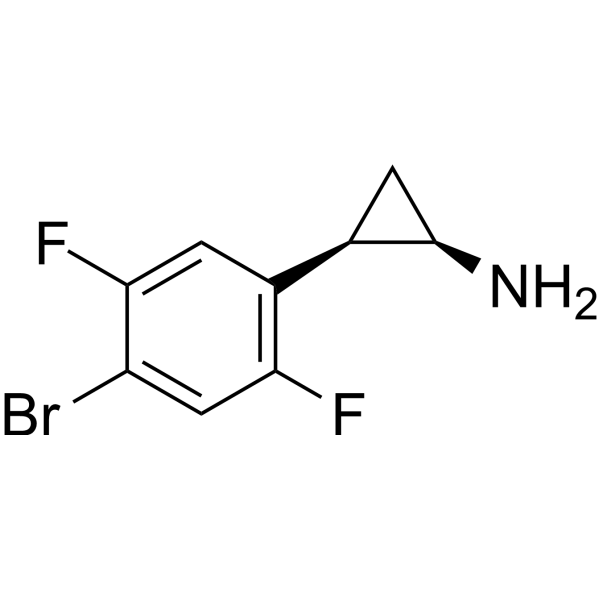
Cat. No.: HY-151190
CAS No.: 2821068-03-3
Synonyms: S1024
Target:  

Histone Demethylase

Research Areas:  

Cancer

cis-4-Br-2,5-F2-PCPA (S1024) is a selective inhibitor of lysine-specific demethylase 1 (LSD1), with a Ki value of 94 nM instead of 8.4 μM for LSD2. There is aberrant expression of LSD1 in cancer stem cells, cis-4-Br-2,5-F2-PCPA inhibits LSD1 cell proliferation and by increasing the level of dimethylated histone H3 at K4 (H3K4) in CCRF-CEM cells .
loading...
    loading...
Cat. No.: HY-165606
CAS No.: 178250-23-2
Target:  

Oct3/4 c-Myc Apoptosis

Research Areas:  

Cancer

SB-T-1214 (SBT) is a taxane. SB-T-1214 efficiently inhibits expression of stem cell-related genes (Oct4, Sox2, and c-Myc) and induces apoptosis of colon cancer spheroids with drug resistant tumorigenic CD133 +/CD44 + cells. SB-T-1214 strongly represses tumor growth in Pgp+ DLD-1 human colon tumor xenografts mice model. SB-T-1214 can be used for antitumor research, especially against tumors with drug resistance, such as colon, pancreatic and renal cancers .
loading...
    loading...
Cat. No.: HY-178050
Research Areas:  

Infection

SDH-IN-30 (Compound 7m) is a Succinate dehydrogenase (SDH) inhibitor with an IC50 of 0.34 μM. SDH-IN-30 has potent antifungal activities against Rhizoctonia solani and Sclerotinia sclerotiorum with EC50 s of 0.004 and 0.028 μg/mL. SDH-IN-30 also has remarkable protective and curative efficacies against R. solani and significantly inhibits S. sclerotiorum growth on oilseed rape leaves by damaging the fungal cell structure. SDH-IN-30 can be used for fungal infections like rice sheath blight (RSB) and sclerotinia stem rot (SSR) research .
loading...
    loading...
Cat. No.: HY-180652
CAS No.: 3041025-10-6
Synonyms: c-Kit-IN-13
Target:  

c-Kit

Research Areas:  

Inflammation/Immunology Cancer

BLU-808 (c-Kit-IN-13) is an orally active and selective c-kit kinase inhibitor. BLU-808 inhibits autophosphorylation of wild-type c-kit with an IC50 of 0.3 nM. BLU-808 inhibits Exon 11 KIT with an IC50 of 0.9 nM. BLU-808 targets WT KIT to prevent stem cell factor-induced KIT autophosphorylation and activation of downstream intracellular signaling cascades. BLU-808 is used in research related to mast cell-mediated diseases (such as chronic urticaria, asthma, and gastrointestinal stromal tumors) .
loading...
    loading...
Cat. No.: HY-N2334AR
CAS No.: 16564-43-5
Synonyms: Chenodeoxycholylglycine sodium salt (Standard); Sodium glycochenodeoxycholate (Standard)
Glycochenodeoxycholic acid sodium salt (Standard) is the analytical standard of Glycochenodeoxycholic acid sodium salt. This product is intended for research and analytical applications. Glycochenodeoxycholic acid sodium salt (Sodium glycochenodeoxycholate) is a relatively toxic bile salt generated in the liver from chenodeoxycholic acid and glycine. Glycochenodeoxycholic acid sodium salt inhibits Autophagosome formation and impairs lysosomal function by inhibiting lysosomal proteolysis and increasing lysosomal pH in human normal liver cells, leading to the Apoptosis of human hepatocyte cells. Glycochenodeoxycholic acid sodium salt induces stemness and chemoresistance via activating STAT3 signaling pathway in hepatocellular carcinoma cells (HCC). Glycochenodeoxycholic acid sodium salt is promising for research in the field of cholestasis desease, hepatocellular carcinoma and primary sclerosing cholangitis (PSC) .
loading...
    loading...
Cat. No.: HY-N2334R
CAS No.: 640-79-9
Synonyms: Chenodeoxycholylglycine (Standard)
Glycochenodeoxycholic acid (Standard) is the analytical standard of Glycochenodeoxycholic acid. This product is intended for research and analytical applications. Glycochenodeoxycholic acid (Chenodeoxycholylglycine) is a relatively toxic bile salt generated in the liver from chenodeoxycholic acid and glycine. Glycochenodeoxycholic acid inhibits Autophagosome formation and impairs lysosomal function by inhibiting lysosomal proteolysis and increasing lysosomal pH in human normal liver cells, leading to the Apoptosis of human hepatocyte cells. Glycochenodeoxycholic acid induces stemness and chemoresistance via activating STAT3 signaling pathway in hepatocellular carcinoma cells (HCC). Glycochenodeoxycholic acid is promising for research in the field of cholestasis desease, hepatocellular carcinoma and primary sclerosing cholangitis (PSC)[1][2][3][4].
loading...
    loading...
Cat. No.: HY-P3483A
Maxadilan TFA is a specific irreversible PAC1 receptor agonist and a potent vasodilator peptide present in the salivary glands of sand flies. Maxadilan TFA exhibits anti-apoptotic activity in hADSCs. Maxadilan TFA inhibits pro-inflammatory cytokines (TNF-α) and enhances anti-inflammatory mediators (IL-10). Maxadilan TFA can activate leukocytes and inhibit vascular permeability through PAC1 receptors. Maxadilan TFA promotes neural differentiation of human adipose-derived stem cells. Maxadilan TFA can be used to study endotoxin shock, atherosclerosis, and neurodegenerative diseases [1] [2] [3] [4] [5].
loading...
    loading...
Cat. No.: HY-P990851

Target:  

c-Kit

Research Areas:  

Inflammation/Immunology Cancer

Anti-c-Kit/CD117 Antibody (SR-1) is a kind of mouse IgG2a κ chimeric antibody inhibitor, targeting to human c-Kit/CD117. Anti-c-Kit/CD117 Antibody (SR-1) binds to the extracellular domain of human c-Kit (also known as CD117) and blocks stem cell factor (SCF) binding to CD117. Anti-c-Kit/CD117 Antibody (SR-1) can be used for the researches of cancer and immunology, such as gastrointestinal stromal tumor (GIST) and xenograft .
loading...
    loading...
Cat. No.: HY-W653962
CAS No.: 2726926-25-4
Triclosan- 13C6 is 13C labeled Triclosan. Triclosan is a broad-spectrum antibacterial agent that inhibits bacterial fatty acid synthesis at the enoyl-acyl carrier protein reductase (FabI) step. Triclosan inhibits E. coli enoyl-acyl carrier protein reductase (FabI) and FabI containing a glycine-to-valine substitution at position 93 (FabIG93V) with IC50s of 2 μM and 10 μM, respectively. Triclosan causes apoptotic effect in cultured rat neural stem cells (NSC). Triclosan exacerbates colitis and colitis-associated colorectal tumorigenesis in animal models .
loading...
    loading...
Cat. No.: HY-K6022

MCE ECM Gentle Dissociation Solution is a gentle ECM-degrading enzyme mixture derived from marine bacteria and Bacillus species, specifically formulated for efficient and low-damage digestion of in-vitro cell systems. It selectively degrades extracellular matrix components while minimizing disruption to the cell membrane and intercellular junctions, thereby significantly reducing mechanical stress during dissociation. This product is compatible with a wide range of cell types, including stem cell colonies, primary cells, neural cells, and organoids, and is particularly well suited for gentle yet effective dissociation of brain organoids and other complex 3D structures.

loading...
    loading...
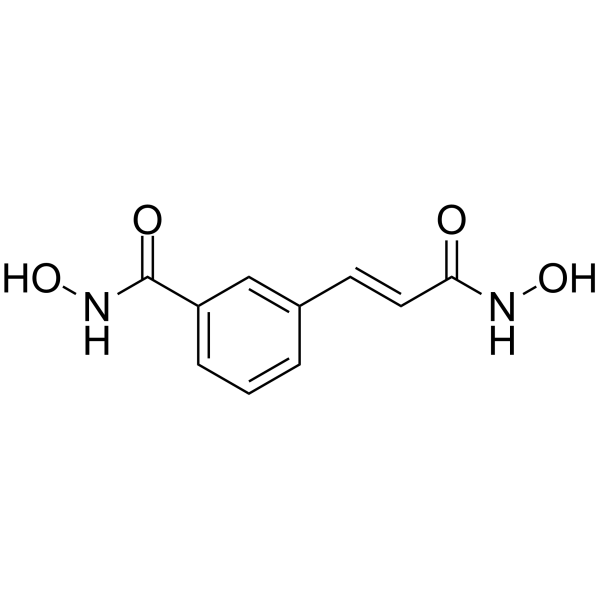
Cat. No.: HY-W014004
CAS No.: 174664-65-4
Synonyms: CBHA
Target:  

HDAC Apoptosis

Research Areas:  

Others Cancer

m-Carboxycinnamic acid bishydroxamide (CBHA) is a histone deacetylase inhibitor. m-Carboxycinnamic acid bishydroxamide modulates histone acetylation sites, alters DNA methylation and epigenetic status, increases global histone acetylation, alleviates transcription repression, and facilitates chromatin remodelling. m-Carboxycinnamic acid bishydroxamide can be used for the research of cloned embryo development and epigenetic regulation .
loading...
    loading...

