
1084 Results for "

Staphylococcus

" in MedChemExpress (MCE) Product Catalog:
Products (1084)

1084 Results for "Staphylococcus" in MCE Product Catalog:

Cat. No.: HY-126731
CAS No.: 69245-38-1
Rudolfomycin is an anthracycline Antibiotic, composed of the aglycone ε-pyrromycinone and three glycosyl sugar units. Rudolfomycin inhibits the growth of mammalian tumors and exhibits antibacterial activity against Gram-positive bacteria. Rudolfomycin can be used in the research of leukemia and Gram-positive bacterial infections .
loading...
    loading...
Cat. No.: HY-126929
CAS No.: 81534-36-3
Synonyms: TXN-B
Trioxacarcin B (TXN-B) is a potent cytotoxic agent and DNA-targeted inhibitor. Trioxacarcin B disrupts DNA function and induces apoptosis in cancer cells. Trioxacarcin B not only effectively inhibits the growth of various Gram-positive and Gram-negative bacteria as well as Plasmodium falciparum, but also blocks the colony formation of cancer stem cells, significantly reduces tumor volume and prolongs survival in preclinical in vivo models. The activity of Trioxacarcin B is highly dependent on its intact spiro-epoxide structure; it loses efficacy once this moiety undergoes hydrolysis, and Trioxacarcin B shows no activity against fungi, microalgae and small RNA viruses. Trioxacarcin B can be used for research on bacterial infections, malaria, and various cancers including colon cancer and melanoma .
loading...
    loading...
Cat. No.: HY-144012H
CAS No.: 474922-84-4
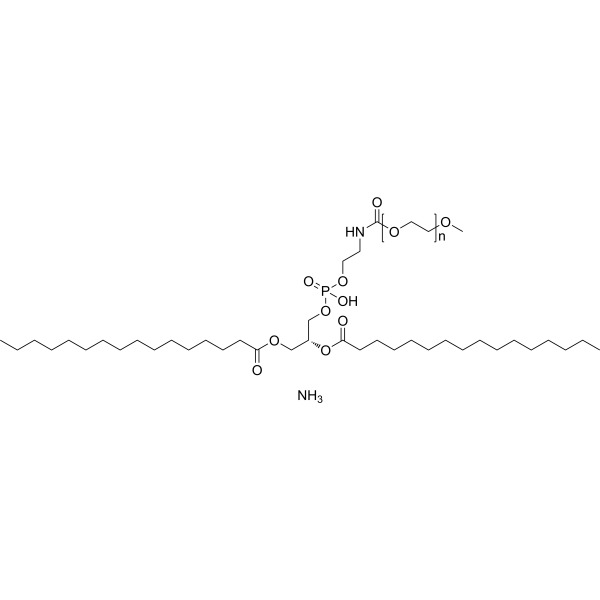
Synonyms: 16:0 PEG5000 PE; 1,2-Dipalmitoyl-sn-glycero-3-phosphoethanolamine-N-[methoxy(polyethylene glycol)-5000] ammonium
Target:  

Liposome

Research Areas:  

Others

DPPE-PEG5000 (16:0 PEG5000 PE) is a polymer-lipid conjugate and LipoParticle stabilizer with a PEG chain of 5,000 g/mol molecular weight attached to its polar head, and it can be internalized by biological membranes. DPPE-PEG5000 enables LipoParticle to maintain colloidal stability after 20-fold dilution in PBS or cell culture medium, and prevents aggregate formation during lyophilization and rehydration. DPPE-PEG5000 helps enhance the non-cytotoxic property of LipoParticle formulations against human osteoblasts. DPPE-PEG5000 serves as a PEG lipid functional end group for synthesizing liposomes (LPs), is used in the design of conjugated polymer nanoparticles, and applies to research related to bone and joint infections .
loading...
    loading...
Cat. No.: HY-148775
Purity:  ≥95.0%
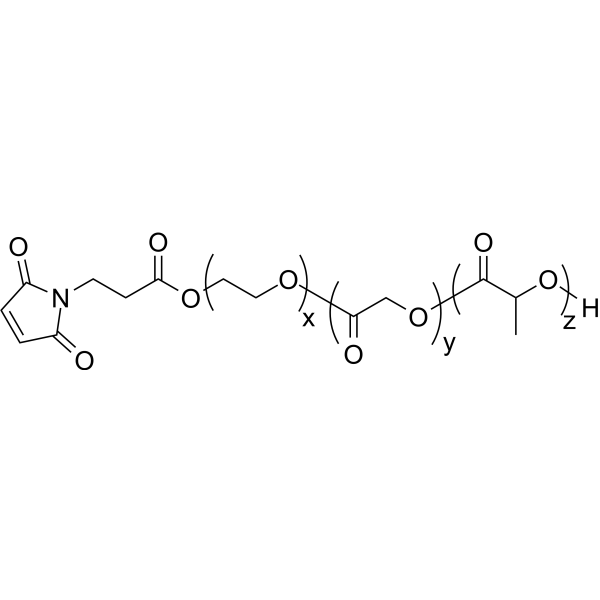
PLGA-PEG-MAL (60kDa-3.4kDa, LA:GA ratio 75:25) is a biodegradable amphipathic polymeric nanocarrier of poly (lactic-co-glycolic acid)-block-poly (ethylene glycol) (PLGA-PEG-Mal) that allows covalent modification of functional molecules. PLGA-PEG-MAL (60kDa-3.4kDa, LA:GA ratio 75:25) modified with Angiopep-2 can cross the blood-brain barrier and exhibits targeting selectivity for glioblastoma cells. PLGA-PEG-MAL (60kDa-3.4kDa, LA:GA ratio 75:25) can capture tumor-derived protein antigens, and exerts immunomodulatory effects when conjugated with anti-OX40 antibody; when used in combination with A2-CL/Dbait nanoparticles and radiotherapy, it prolongs survival time and reduces tumor volume in glioblastoma mouse models. PLGA-PEG-MAL (60kDa-3.4kDa, LA:GA ratio 75:25) can be used for studies related to bacterial wound infections and glioblastoma .
loading...
    loading...
Cat. No.: HY-165460
CAS No.: 414858-51-8
AM-112 is a β-lactamase (β-lactamase) inhibitor and antibacterial agent, with IC50 values ranging from 0.0002 μg/mL to 0.67 μg/mL against class A, C, and D β-lactamase. By inhibiting PBP2, the penicillin-binding protein of E. coli, and protecting Ceftazidime (HY-B0593) from enzymatic hydrolysis, AM-112 significantly enhances the antibacterial efficacy of Ceftazidime against Gram-negative bacteria, enterococci, and staphylococci. AM-112 exhibits favorable pharmacokinetic properties and acid-base stability. AM-112 can be used for the research of bacterial infections .
loading...
    loading...
Cat. No.: HY-165465
CAS No.: 887774-94-9
Target:  

Bacterial

Research Areas:  

Infection

Apo6619 is an iron chelator with antibacterial activity that inhibits a variety of common bacteria associated with hospital-acquired infections. Apo6619 inhibits the growth of relevant bacterial strains in cation-adjusted Mueller-Hinton broth and RPMI 1640 tissue culture medium. Apo6619 can be used in antibacterial research on hospital-acquired infection-related bacteria based on the iron chelation mechanism .
loading...
    loading...
Cat. No.: HY-181674
Research Areas:  

Infection

ZHO-197 is a dual bacterial peptide deformylase and methionine aminopeptidase inhibitor with antibacterial activity. ZHO-197 exhibits an Escherichia coli peptide deformylase IC50 of 0.021 μM and a human peptide deformylase IC50 of 3.289 μM. ZHO-197 displays broad-spectrum antibacterial activity against gram-positive and gram-negative bacterial strains. ZHO-197 can be used for the research of bacterial infection .
loading...
    loading...
Cat. No.: HY-N21935
CAS No.: 49863-48-1
Verdamicin is an aminoglycoside antibiotic isolated from Micromonospora grisea, exhibiting broad-spectrum antibacterial activity against Gram-negative and Gram-positive bacteria. Verdamicin inhibits bacterial protein synthesis by binding to the 30S ribosomal subunit. Verdamicin exerts bactericidal effects against Gram-negative and Gram-positive isolates. Verdamicin can be used for research on bacterial infections .
loading...
    loading...
Cat. No.: HY-30234B
CAS No.: 17162-20-8
Clemizole sulfate is an orally active, blood-brain barrier permeable TRPC5 inhibitor, with an IC50 value of 1.05-1.34 μM against mouse TRPC5. Clemizole sulfate blocks TRPC1:TRPC5, TRPC3, TRPC4, TRPC6, TRPC7, hERG, hKCNQ1/hKCNE1 and hKv1.5 channels, and activates TRPA1; it modulates 5HT-2B and HTR2A receptors; it inhibits HCV RNA replication, CrtN enzymatic activity, oxidative stress, neuroinflammation, cell apoptosis and bacterial virulence; it maintains blood-brain barrier (BBB) integrity; it enhances DNA repair capacity; it improves cell viability; and it alters cardiac electrophysiological properties. Clemizole sulfate can be used in the research of Dravet syndrome, hepatitis C virus infection, Staphylococcus aureus skin infection, Cisplatin (HY-17394)-induced nephrotoxicity, STXBP1-related diseases, traumatic brain injury and xeroderma pigmentosum type C .
loading...
    loading...
Cat. No.: HY-30234S
CAS No.: 1251554-64-9
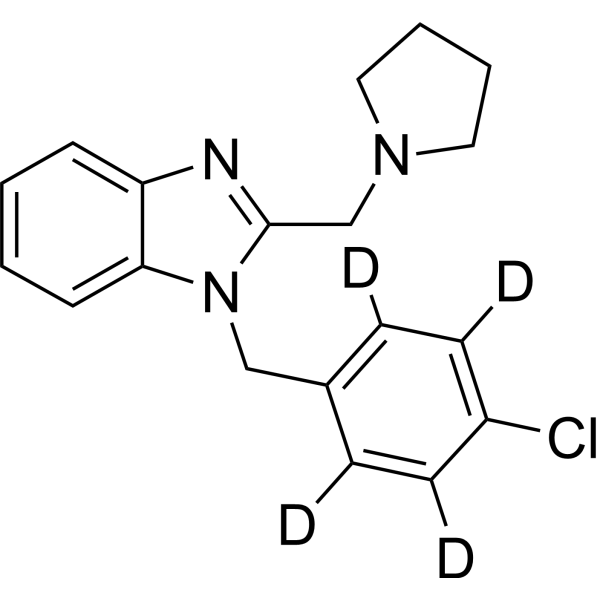
Clemizole-d4 is the deuterated-labeled Clemizole (HY-30234). Clemizole is an orally active, blood-brain barrier permeable TRPC5 inhibitor, with an IC50 value of 1.05-1.34 μM against mouse TRPC5. Clemizole blocks TRPC1:TRPC5, TRPC3, TRPC4, TRPC6, TRPC7, hERG, hKCNQ1/hKCNE1 and hKv1.5 channels, and activates TRPA1; it modulates 5HT-2B and HTR2A receptors; it inhibits HCV RNA replication, CrtN enzymatic activity, oxidative stress, neuroinflammation, cell apoptosis and bacterial virulence; it maintains blood-brain barrier (BBB) integrity; it enhances DNA repair capacity; it improves cell viability; and it alters cardiac electrophysiological properties. Clemizole can be used in the research of Dravet syndrome, hepatitis C virus infection, Staphylococcus aureus skin infection, Cisplatin (HY-17394)-induced nephrotoxicity, STXBP1-related diseases, traumatic brain injury and xeroderma pigmentosum type C .
loading...
    loading...
Cat. No.: HY-121362
CAS No.: 537-09-7
Purity:  99.71%
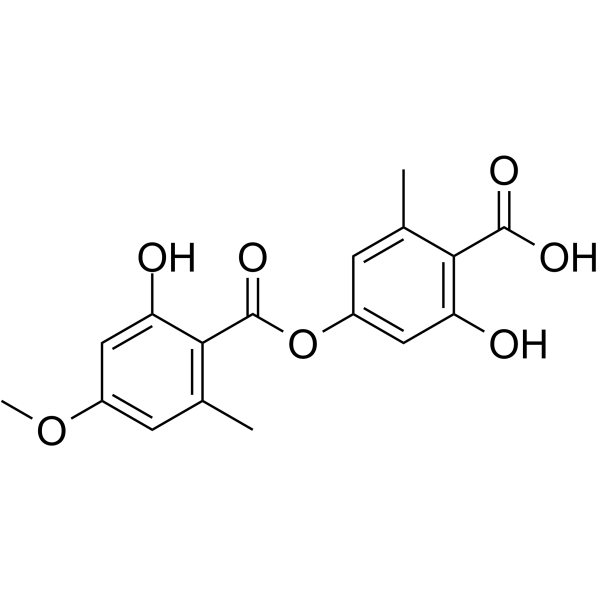
Evernic Acid is an orally active thioredoxin reductase 1 (TrxR1) inhibitor and antiproliferative agent. Evernic Acid inhibits the proliferation and migration of human breast cancer cells. Evernic Acid blocks the NF-κB pathway by inhibiting p65 nuclear translocation and IκBα phosphorylation, thereby suppressing downstream inflammatory mediators. Evernic Acid acts as an antioxidant, anti-inflammatory agent and neuroprotective agent, protects neurons from cell death, mitochondrial dysfunction and oxidative stress damage, reduces astrocyte activation, and ameliorates dopaminergic neuron loss and neuroinflammation. Evernic Acid inhibits enoyl reductases FabI and FabZ of Plasmodium falciparum. Evernic Acid downregulates the expression of lasB and rhlA genes in Pseudomonas aeruginosa, inhibits quorum sensing and biofilm formation, and exerts antibacterial activity against Gram-positive bacteria, Gram-negative bacteria and fungi. Evernic Acid is applicable to research related to breast cancer, Parkinson's disease, bacterial infections and fungal infections .
loading...
    loading...
Cat. No.: HY-126387
CAS No.: 11015-37-5
Purity:  ≥99.0%
Moenomycin complex is a class of antibacterial agents and PBP inhibitors, with Kd values ranging from 94 nM to 1690 nM against various bacterial PBPs. Moenomycin complex inhibits bacterial growth by blocking the transglycosylase activity of class A penicillin-binding proteins (PBPs). Moenomycin complex is used in the research of bacterial infections .
loading...
    loading...
Cat. No.: HY-135751
CAS No.: 488-04-0
Research Areas:  

Infection Cancer

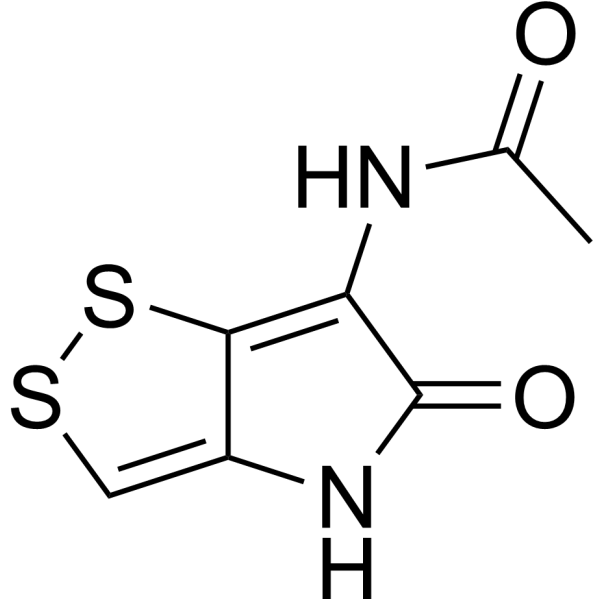
Holomycin is an antibiotic with dithiolopyrrolone structure. Holomycin can inhibit bacterial RNA synthesis. Holomycin has antitumor activity. Holomycin can be used for the research of bacterial infection .
loading...
    loading...
Cat. No.: HY-187837
CAS No.: 1426216-93-4
Synonyms: OPS-2071
Abimufloxacin (OPS-2071) is a broad-spectrum quinolone antibacterial agent. Abimufloxacin inhibits the supercoiling activity of DNA gyrase, the decatenation activity of topoisomerase IV, the activation and proliferation of T cells, macrophage activity, as well as the production of TNF-α and IFN-γ. Abimufloxacin exhibits activity against enteropathogenic Gram-positive bacteria, Gram-negative bacteria, quinolone-resistant bacteria, and Crohn's disease-associated bacteria (including Clostridioides difficile and Campylobacter jejuni). Abimufloxacin alleviates colonic inflammation in a mouse model of T cell-mediated colitis. Abimufloxacin can be used in research related to diseases such as intestinal infections and Crohn's disease .
loading...
    loading...
Cat. No.: HY-189124
Target:  

Bacterial Topoisomerase

Research Areas:  

Infection

Antibacterial agent 372 is a potent antibacterial agent. Antibacterial agent 372 is a DNA gyrase inhibitor that binds to the ATP-binding pocket of the GyrB subunit, downregulates gyrB gene expression, and impedes DNA replication and supercoiling. Antibacterial agent 372 exhibits broad-spectrum antibacterial activity against Gram-positive and Gram-negative bacteria. Antibacterial agent 372 can be used for research on microbial infections .
loading...
    loading...
Cat. No.: HY-206972
CAS No.: 26063-00-3
Research Areas:  

Metabolic Disease

Poly (3-hydroxybutyrate) is a bacterially derived (R)-3-hydroxybutyrate homopolymer and a degradable biomaterial. Poly (3-hydroxybutyrate) degrades in vivo via lipases and esterases, breaking down into 3-Hydroxybutyric acid (HY-113378). Poly (3-hydroxybutyrate) can be compounded with 15% Hydroxyapatite (HA) (HY-D0835A) or 7.5-10% nanobioglass for use as a bone scaffold .
loading...
    loading...
Cat. No.: HY-D3430
PTPA-QM is a low-cytotoxicity protein probe that can be used for live-cell imaging and tissue section staining (Lys. Ex/Em = 385/615 nm). PTPA-QM can intercalate into the β-sheet layered structure of β-amyloid fibrils, form intermolecular interactions with amino acid residues, restrict intramolecular rotation and trigger fluorescence activation for imaging purposes. PTPA-QM is applicable to Alzheimer's disease-related research. Maximum excitation/emission wavelength: 448/605 nm .
loading...
    loading...
Cat. No.: HY-W015786
CAS No.: 622-62-8
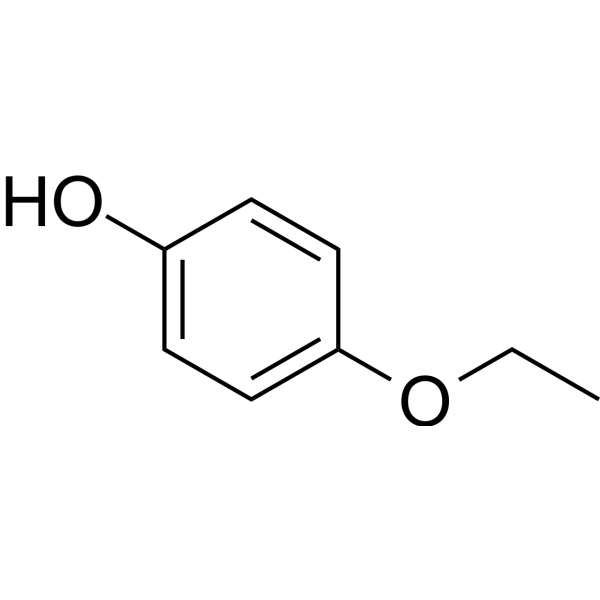
4-Ethoxyphenol is a phenolic compound. 4-Ethoxyphenol serves as a reliable standard for product identification by GC-MS and HPLC, and exhibits antilarval activity against Balanus amphitrite larval settlement. 4-Ethoxyphenol is used for the study of larval settlement .
loading...
    loading...
Cat. No.: HY-W015786R
CAS No.: 622-62-8
4-Ethoxyphenol (Standard) is the analytical standard of 4-Ethoxyphenol (HY-W015786). This product is intended for research and analytical applications. 4-Ethoxyphenol is a phenolic compound. 4-Ethoxyphenol serves as a reliable standard for product identification by GC-MS and HPLC, and exhibits antilarval activity against Balanus amphitrite larval settlement. 4-Ethoxyphenol is used for the study of larval settlement .
loading...
    loading...
Cat. No.: HY-W019922
CAS No.: 7783-40-6
Magnesium fluoride is a biochemical reagent. Magnesium fluoride nanoparticles act as an antibacterial and antibiofilm agent with activity against pathogenic bacteria. Magnesium fluoride can be used for the research of bacteria-related infections .
loading...
    loading...

