1088 Results for "

Staphylococcus

" in MedChemExpress (MCE) Product Catalog:
Products (1088)

1088 Results for "Staphylococcus" in MCE Product Catalog:

Cat. No.: HY-D3430
PTPA-QM is a low-cytotoxicity protein probe that can be used for live-cell imaging and tissue section staining (Lys. Ex/Em = 385/615 nm). PTPA-QM can intercalate into the β-sheet layered structure of β-amyloid fibrils, form intermolecular interactions with amino acid residues, restrict intramolecular rotation and trigger fluorescence activation for imaging purposes. PTPA-QM is applicable to Alzheimer's disease-related research. Maximum excitation/emission wavelength: 448/605 nm .
loading...
    loading...
Cat. No.: HY-W015786
CAS No.: 622-62-8
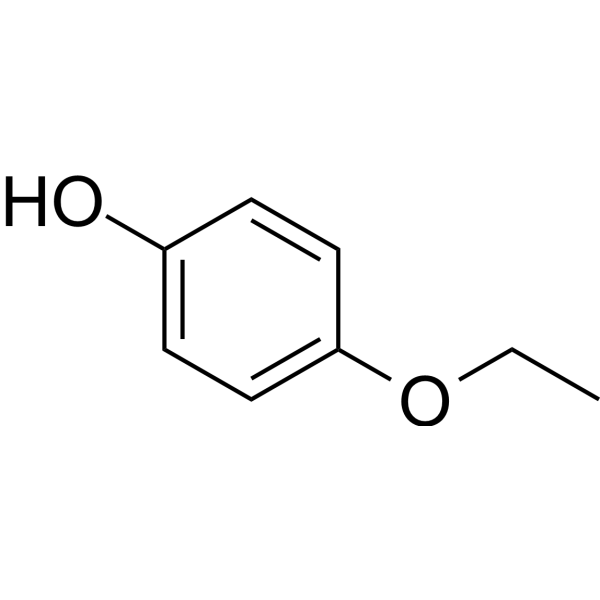
4-Ethoxyphenol is a phenolic compound. 4-Ethoxyphenol serves as a reliable standard for product identification by GC-MS and HPLC, and exhibits antilarval activity against Balanus amphitrite larval settlement. 4-Ethoxyphenol is used for the study of larval settlement .
loading...
    loading...
Cat. No.: HY-W015786R
CAS No.: 622-62-8
4-Ethoxyphenol (Standard) is the analytical standard of 4-Ethoxyphenol (HY-W015786). This product is intended for research and analytical applications. 4-Ethoxyphenol is a phenolic compound. 4-Ethoxyphenol serves as a reliable standard for product identification by GC-MS and HPLC, and exhibits antilarval activity against Balanus amphitrite larval settlement. 4-Ethoxyphenol is used for the study of larval settlement .
loading...
    loading...
Cat. No.: HY-W019922
CAS No.: 7783-40-6
Magnesium fluoride is a biochemical reagent. Magnesium fluoride nanoparticles act as an antibacterial and antibiofilm agent with activity against pathogenic bacteria. Magnesium fluoride can be used for the research of bacteria-related infections .
loading...
    loading...
Cat. No.: HY-W039953
CAS No.: 98924-81-3
Synonyms: N-azidoacetylglucosamine-tetraacylated
Research Areas:  

Infection

Ac4GlcNAz (N-azidoacetylglucosamine-tetraacylated) is an azido-containing fully acetylated N-acetylglucosamine analog, a metabolic glycan marker, and also an inducer of S-glycosylation. Ac4GlcNAz can be taken up by bacteria, processed via endogenous carbohydrate biosynthesis pathways, and integrated into glycans by replacing natural monosaccharides. Under alkali promotion, Ac4GlcNAz undergoes β-elimination to form α,β-unsaturated aldehydes, which then bind to cysteine residues via Michael addition. Ac4GlcNAz can be integrated into glycoproteins. Ac4GlcNAz is applicable to research related to Helicobacter pylori infection .
loading...
    loading...
Cat. No.: HY-108964
CAS No.: 99-49-0
Purity:  99.70%
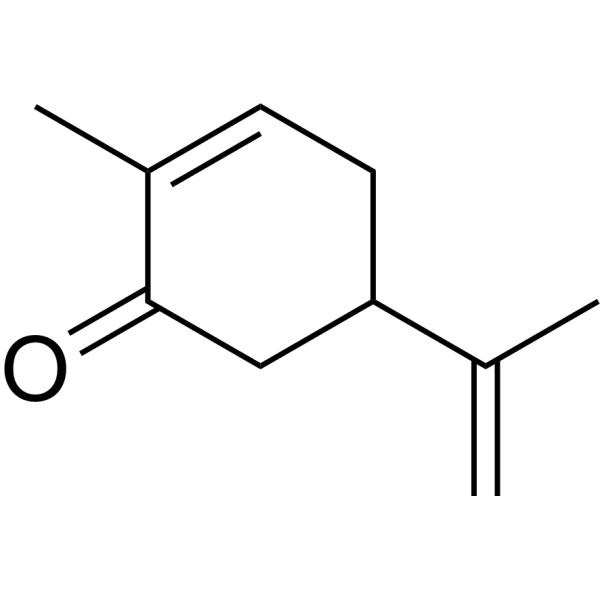
Carvone is a ketone monoterpene found in the essential oils from plants of the genus Mentha. Carvone has such effects as anticancer, antimicrobial, antioxidant, anti-inflammatory, antispasmodic, antinociceptive, anticonvulsant .
loading...
    loading...
Cat. No.: HY-123779
CAS No.: 193282-45-0
Target:  

Bacterial Fungal

Research Areas:  

Infection

RWJ-49815 is a histidine kinase inhibitor. RWJ-49815 inhibits the autokinase activity of purified GST-Sln1 and the autophosphorylation of KinA in vitro. RWJ-49815 acts as a fungal growth inhibitor . RWJ-49815 serves as a bactericide against Gram-positive pathogenic bacteria. RWJ-49815 is applicable to research related to fungal infections and Gram-positive bacterial infections .
loading...
    loading...
Cat. No.: HY-187512
Target:  

Bacterial Fungal

Research Areas:  

Infection Inflammation/Immunology

DprE1-IN-16 is a DprE1 inhibitor against Mycobacterium tuberculosis, with an IC50 value of 11.74 μM. DprE1-IN-16 binds within the catalytic site of DprE1, forming hydrogen bonds, π-cation interactions, π-sulfur interactions and hydrophobic contacts with Lys134, Gly117, Tyr415, Lys418, Cys387 and Val365. DprE1-IN-16 can be used in the research of bacterial and fungal infections as well as tuberculosis .
loading...
    loading...
Cat. No.: HY-W110755
CAS No.: 26062-79-3
Research Areas:  

Infection

Poly diallyldimethylammonium chloride is a cationic polymer with quaternary ammonium side groups, which exhibits excellent flocculation performance and thermal stability. Poly diallyldimethylammonium chloride also possesses microbicidal activity. Poly diallyldimethylammonium chloride can be used in studies on bacterial and fungal infections, as well as in research related to water treatment, textile printing and dyeing, papermaking chemical industry and other fields, with a wide range of applications .
loading...
    loading...
Cat. No.: HY-184887
CAS No.: 111133-90-5
Target:  

Drug Derivative

Research Areas:  

Cancer

Chrysoeriol 7-O-neohesperidoside is a flavonoid glycoside with cytotoxicity against cancer cells. Chrysoeriol 7-O-neohesperidoside can be used in cancer-related research such as cervical cancer and liver cancer .
loading...
    loading...
Cat. No.: HY-B1309
CAS No.: 621-42-1
Synonyms: AMAP
Metacetamol (AMAP) is an analog of Acetaminophen (HY-66005). Metacetamol induces dose-dependent necrosis in primary hepatocytes via glutathione depletion, mitochondrial damage, and formation of mitochondrial protein adducts. Metacetamol derivatives act as anticancer and antibacterial agents. Metacetamol can be used in studies related to breast cancer, bacterial infections, and fungal infections (candidiasis) .
loading...
    loading...
Cat. No.: HY-N19235
CAS No.: 74134-77-3
Actionpolymorphol D is a pyrazine alkaloid with weak anti-tuberculosis activity against Mycobacterium bovis, with a MIC of 100 μg/mL .
loading...
    loading...
Cat. No.: HY-W010383
CAS No.: 622-93-5
Target:  

Drug Derivative

Research Areas:  

Neurological Disease

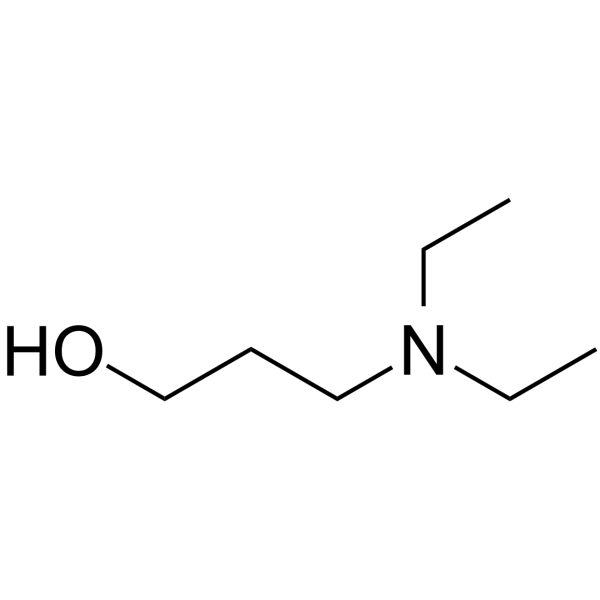
3-Diethylamino-1-propanol is an anticonvulsant agent. 3-Diethylamino-1-propanol can be used for research on convulsions .
loading...
    loading...
Cat. No.: HY-W099729
CAS No.: 70445-33-9
Target:  

Bacterial

Research Areas:  

Infection Inflammation/Immunology

Ethylhexylglycerin is an antibacterial agent. Ethylhexylglycerin can induce allergic contact dermatitis. Ethylhexylglycerin inhibits the growth of various bacteria, disrupts the integrity of bacterial cell membranes, and causes proton leakage, reduced ATP levels, morphological abnormalities, and DNA aggregation. Ethylhexylglycerin serves as a skin conditioning agent, deodorant active ingredient, and preservative synergist. Ethylhexylglycerin is applicable to research related to contact dermatitis and bacterial infections .
loading...
    loading...
Cat. No.: HY-182295
CAS No.: 82451-20-5
Negundoside is an iridoid glycoside compound. Negundoside exhibits hepatoprotective effects, reduces ROS, lipid peroxidation and intracellular calcium ion levels, and prevents the decrease of mitochondrial membrane potential (MMP) and apoptosis (apoptosis). Negundoside has neuroprotective effects, improves behavioral deficits, alleviates oxidative damage, and ameliorates cerebral infarction. Negundoside also possesses antibacterial and antiparasitic activities .
loading...
    loading...
Cat. No.: HY-N11071
CAS No.: 3627-51-8
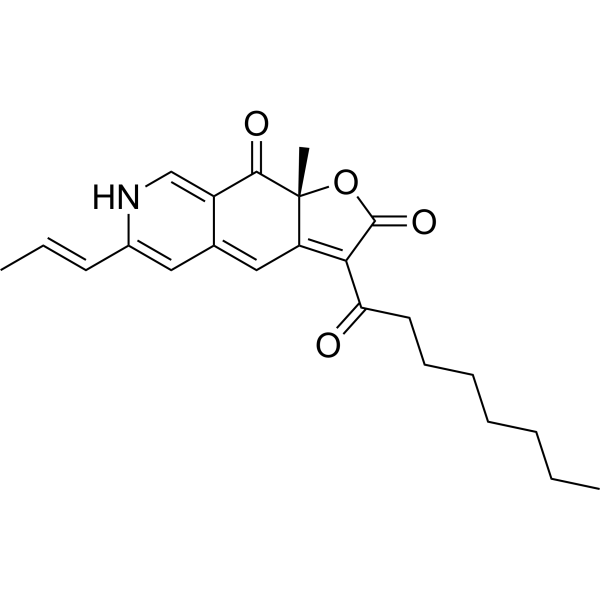
Monascorubramine is a metabolite derived from Monascus with antibacterial, cytotoxic and antimitotic activities. Monascorubramine interferes with mitotic spindle tubulin, triggers metaphase mitotic arrest, induces abnormal c‑mitosis division, and exerts antimitotic effects. Monascorubramine exhibits antibacterial activity and inhibits both Gram-positive and Gram-negative bacteria. Monascorubramine can be used in studies related to bacterial infections .
loading...
    loading...
Cat. No.: HY-W592871R
CAS No.: 765-01-5
Synonyms: 10-HDA (Standard); Queen Bee Acid (Standard)
10-Hydroxy-2-decenoic acid (Standard) is an analytical standard for 10-Hydroxy-2-decenoic acid (HY-W592871). This product is intended for research and analytical applications.10-Hydroxy-2-decenoic acid (10-HDA) is an orally active unsaturated medium-chain fatty acid with various physiological activities. 10-Hydroxy-2-decenoic acid induces ROS-mediated apoptosis in A549 cells. 10-Hydroxy-2-decenoic acid inhibits VEGF-induced angiogenesis in human venous endothelial cells. 10-Hydroxy-2-decenoic acid alleviates non-alcoholic fatty liver disease (NAFLD) by activating the AMPK-α signaling pathway. 10-Hydroxy-2-decenoic acid protects against bone loss by inhibiting NF-κB signaling downstream of FFAR4. 10-Hydroxy-2-decenoic acid is an antibiotic against many bacteria and fungi, such as Neurospora sitophila, molds and Staphylococcus aureus. 10-Hydroxy-2-decenoic acid has longevity-promoting effects in C. elegans. 10-Hydroxy-2-decenoic acid prevents osteoarthritis by targeting aspartyl β hydroxylase and inhibiting chondrocyte senescence .
loading...
    loading...
Cat. No.: HY-119555
CAS No.: 24632-47-1
Target:  

Bacterial

Research Areas:  

Infection

Nifurpipone is an orally active broad-spectrum antimicrobial agent. Nifurpipone acts against Gram-positive and Gram-negative bacteria, and reduces bacterial loads in systemic, intramuscular and urinary tract infections in mouse models. Nifurpipone can be used in studies related to bacterial infections .
loading...
    loading...
Cat. No.: HY-182622
CAS No.: 59711-96-5
Target:  

Antibiotic Bacterial

Research Areas:  

Infection

Etimicin is a fourth-generation semisynthetic aminoglycoside antibiotic. Etimicin exhibits broad spectrum of activity against gram-positive, gram-negative, and aminoglycoside-resistant bacterial strains, with lower ototoxicity and nephrotoxicity. Etimicin exerts rapid, concentration-dependent bactericidal activity against bacteria. Etimicin can be used for the research of bacterial infections .
loading...
    loading...
Cat. No.: HY-102072
CAS No.: 1445801-61-5
Research Areas:  

Infection

GKL003 is a bacterial transcription inhibitor that targets the RNAP-σ interaction interface, with a Ki of 5.79 nM. GKL003 specifically binds to the RNAP β' clamp helix region at the σ A factor binding site, blocks the formation of RNAP holoenzyme, and inhibits the formation of bacterial transcription initiation complexes. GKL003 inhibits the growth of both Gram-positive and Gram-negative bacterial cells, and also exhibits activity against drug-resistant strains .
loading...
    loading...

