1100 Results for "

PROTAC research

" in MedChemExpress (MCE) Product Catalog:
Products (1100)

1100 Results for "PROTAC research" in MCE Product Catalog:

Cat. No.: HY-168201
CAS No.: 3105406-14-9
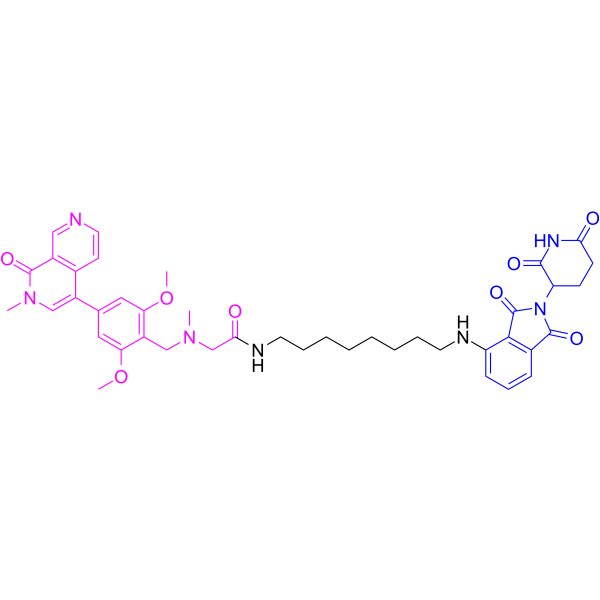
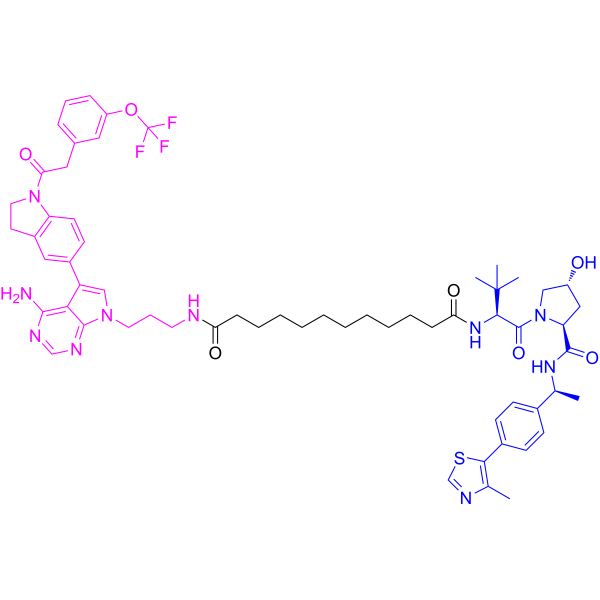
MJP6412 is a p300 and CBP PROTAC degrader that potently degrades p300 and CBP in 22Rv1 cells with DC50 values of 1.6 nM and 1.2 nM, respectively. MJP6412 downregulates the expression of AR-FL, AR-V7 and c-MYC, as well as androgen receptor target genes (KLK3, FKBP5, TMPRSS2). MJP6412 completely abolishes p300/CBP-dependent histone acetylation (H3K27Ac and H2BNTAC) and induces G1 cell cycle arrest. MJP6412 inhibits cancer cell proliferation and tumor growth. MJP6412 can be used in prostate cancer-related research .
loading...
    loading...
Cat. No.: HY-168282
CAS No.: 3047066-15-6
Research Areas:  

Cancer

DD205-291 is a selective, orally active HPK1 PROTAC degrader with a DC50 of 8.8 nM. By inducing complete degradation of HPK1 protein, DD205-291 simultaneously blocks both its kinase-dependent functions and non-kinase scaffold functions. DD205-291 inhibits the phosphorylation of SLP-76 with an EC50 of 22.98 nM. DD205-291 induces the production of IL-2 and IFN-γ with EC50 values of 34.68 nM and 32.6 nM, respectively. Combined with anti-PD1 in mouse models, DD205-291 exerts tumor-suppressive effects with favorable safety profiles. DD205-291 can be used in colon cancer-related research .
loading...
    loading...
Cat. No.: HY-171334
CAS No.: 2957895-04-2
(Rac)-P1D-34 is a Pin1 PROTAC degrader that recruits cereblon, with a DC50 of 177 nM. (Rac)-P1D-34 induces Pin1 degradation via proteasome- and ubiquitin-like modification-dependent pathways. (Rac)-P1D-34 upregulates ROS and DNA damage, downregulates the UPR pathway, and inhibits leukemia cell proliferation; it also sensitizes drug-resistant acute myeloid leukemia cells to Venetoclax (ABT-199) (HY-15531) by downregulating Mcl-1 levels. (Rac)-P1D-34 can be used in the research of acute myeloid leukemia .
loading...
    loading...
Cat. No.: HY-172113
Target:  

PROTACs YAP c-Myc Apoptosis

Research Areas:  

Cancer

H122 is a PROTAC degrader for TEAD that degrades TEAD1 with a DC50 of 3 nM. H122 exhibits good affinity to TEAD2, TEAD3, and TEAD4 with Ki values of 2.0, 3.6 and 1.6 nM, respectively. H122 relies on binding to TEAD1 and CRBN, functional E3 ligase activity, and a functional proteasome for degradation.H122 induces degradation of TEAD3 and forms a ternary complex with TEAD4 and CRBN/DDB1 to mediate degradation.H122 downregulates expression of Myc target genes. H122 exhibits antitumor efficacy in MSTO-211H mouse xenograft models.H122 can be used for the research of malignant mesothelioma .
loading...
    loading...
Cat. No.: HY-176128
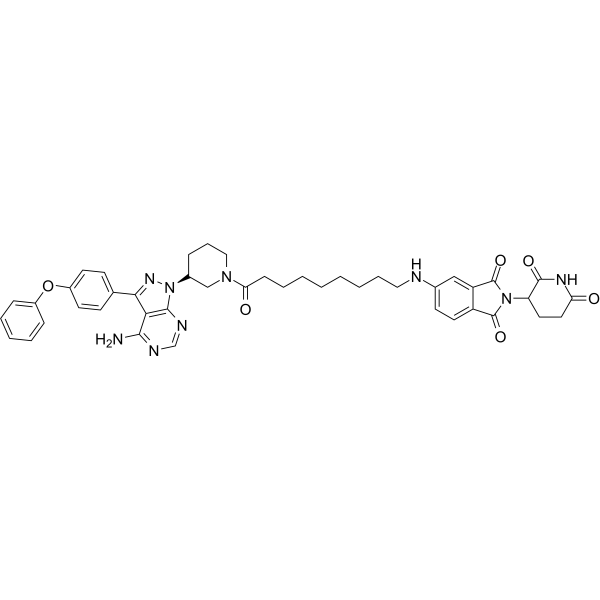
BWA-6047 is an oral active PROTAC degrader targeting AR/AR-V7 and GSPT1 with DC50 values of 3.7, 3.0 and 1.2 nM in 22Rv1 cells. BWA-6047 suppresses the expression of AR downstream target genes and and transcriptional activity. BWA-6047 inhibits cancer cells proliferation, causes G1 phase cell cycle arrest and induces apoptosis. BWA-6047 increases cleaved-PARP-1 and cleaved-caspase-3 levels. BWA-6047 reduces growth of LNCaP xenograft tumors in mice models without obvious toxicity. BWA-6047 can be used for the research of prostate cancer .
loading...
    loading...
Cat. No.: HY-180965
CAS No.: 3057939-64-4
Pro-PEG3-BA is an EML4-ALK/EGFR PROTAC degrader, degrading EML4 ALK and EGFR mutant (L858R/T790M) with DC50 values of 0.42 and 13.50 μM, respectively. Pro-PEG3-BA hinders proliferation and induces cell cycle arrest and apoptosis of NSCLC cells in vitro. Pro-PEG3-BA shows safety profile and decreases EML4-ALK protein via rewiring the ubiquitin- proteasome system in vivo. Pro-PEG3-BA can be used for non-small cell lung cancer research .
loading...
    loading...
Cat. No.: HY-180970
CAS No.: 2162120-55-8
Research Areas:  

Cancer

TD-004 is a potent ALK PROTAC degrader. TD-004 exhibits anti-ALK inhibitory activity with an IC50 of 0.11 µM and selectively inhibits the proliferation of SU-DHL-1 and H3122 cells (ALK-positive cancer cells) with IC50s of 0.058 µM and 0.28 µM, respectively. TD-004 induces degradation of ALK fusion proteins (NPM-ALK and EML4-ALK) via recruitment of the VHL E3 ligase and the proteasome pathway. TD-004 demonstrates significant tumor growth inhibition with a favorable safety profile in vivo. TD-004 can be used for the research of anaplastic large cell lymphoma and non-small cell lung cancer .
loading...
    loading...
Cat. No.: HY-183073
Research Areas:  

Cancer

TZ1104 is a PROTAC-based CDK7 degrader, with a DC50 of 0.88 nM. TZ1104 forms a ternary complex with VHL E3 ligase and CDK7 to trigger proteasome-dependent CDK7 degradation, destabilizing the CDK7-cyclin H-MAT1 complex. TZ1104 suppresses phosphorylation of RNA polymerase II CTD Ser5, CDK1 Thr161, and CDK2 Thr160. TZ1104 activates the p53-p21 axis and suppresses oncogenic Myc signaling. TZ1104 induces cell cycle arrest, apoptosis, and differentiation of acute leukemia cells. TZ1104 can be used for the research of acute leukemia .

loading...
    loading...
Cat. No.: HY-183618
Research Areas:  

Cancer

DW-229 is a PROTAC degrader derived from Deferiprone (HY-B0568), targeting Fe(II)/α‑ketoglutarate‑dependent histone lysine demethylases (KDMs). DW-229 degrades KDM2A, KDM3A, KDM5B, KDM4A‑C, KDM5C, KDM6B in breast cancer cells. DW-229 shows IC50 < 0.5 μM against MCF‑7 cells and IC50 of 8.87 μM against MDA‑MB‑231 cells, with high cancer cell selectivity. DW-229 can be used for the research of breast cancer, liver cancer, prostate cancer, lung cancer .
loading...
    loading...
Cat. No.: HY-184556
Research Areas:  

Cancer

dCBP-30 is an orally active, selective and dual-acting CBP/p300 PROTAC degrader with DC50 values of 0.05 nM (CBP) and 0.04 nM (p300), respectively. dCBP-30 reduces the acetylation levels of histone substrates H3K27, H3K18, H2BK5 and H2BK20, downregulates multiple myeloma-specific dependency programs, and induces multiple myeloma cell apoptosis. dCBP-30 triggers tumor regression and prolongs survival in multiple myeloma xenograft mouse models, and exhibits synergistic antiproliferative activity with dexamethasone. dCBP-30 can be used for the research of multiple myeloma .
loading...
    loading...
Cat. No.: HY-185206
CAS No.: 2756388-01-7
Target:  

PROTACs Itk NF-κB

Research Areas:  

Cancer

BSJ-05-037 is an ITK PROTAC degrader that effectively targets and degrades ITK in T-cell lymphoma cell lines. BSJ-05-037 blocks the activation of the NF-κB/GATA-3 signaling pathway, inhibits PLCγ1 phosphorylation, and reduces the proliferative capacity of T-cell lymphoma cells. BSJ-05-037 enhances the sensitivity of T-cell lymphoma cells to chemotherapy. In mouse models of T-cell lymphoma, BSJ-05-037 induces ITK degradation, reduces GATA-3 expression, decreases tumor volume, and reverses chemotherapy resistance. BSJ-05-037 is applicable to research related to T-cell lymphoma .
loading...
    loading...
Cat. No.: HY-136250
CAS No.: 2349356-09-6
Purity:  99.76%
Target:  

PROTACs CDK

Research Areas:  

Cancer

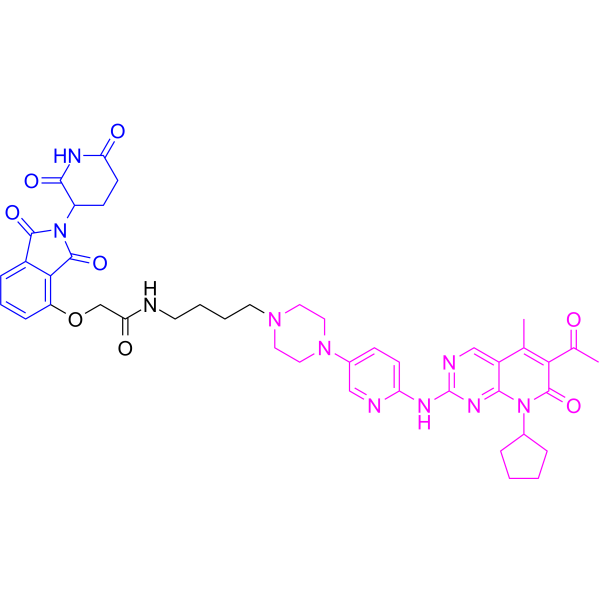
BSJ-03-204 is a PROTAC-based CDK degrader derived from Palbociclib (HY-50767). BSJ-03-204 targets bovine CDK4/CCND1 and CDK6/CCND1 complexes with IC50 values of 26.9 nM and 10.4 nM, respectively. BSJ-03-204 also triggers ubiquitination and degradation of RB1, reduces pRb levels, thereby inducing G1 cell cycle arrest and exerting antiproliferative effects, as well as inducing time-dependent KLHL8 accumulation. BSJ-03-204 can be used in research related to pancreatic ductal adenocarcinoma, breast cancer, lung cancer, mantle cell lymphoma, and cloned bovine placental hyperplasia .
loading...
    loading...
Cat. No.: HY-136250A
Purity:  99.87%
Target:  

PROTACs CDK

Research Areas:  

Cancer

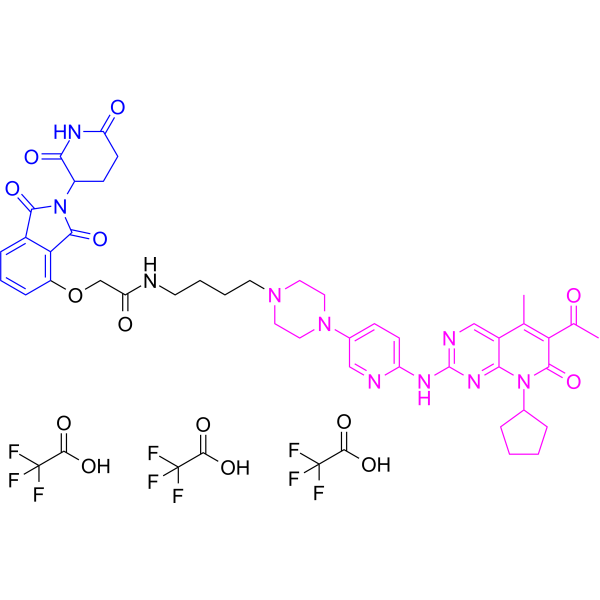
BSJ-03-204 triTFA is a PROTAC-based CDK degrader derived from Palbociclib (HY-50767). BSJ-03-204 triTFA targets bovine CDK4/CCND1 and CDK6/CCND1 complexes with IC50 values of 26.9 nM and 10.4 nM, respectively. BSJ-03-204 triTFA also triggers ubiquitination and degradation of RB1, reduces pRb levels, thereby inducing G1 cell cycle arrest and exerting antiproliferative effects, as well as inducing time-dependent KLHL8 accumulation. BSJ-03-204 triTFA can be used in research related to pancreatic ductal adenocarcinoma, breast cancer, lung cancer, mantle cell lymphoma, and cloned bovine placental hyperplasia .
loading...
    loading...
Cat. No.: HY-148739
CAS No.: 2170679-42-0
Research Areas:  

Cancer

dBRD 9-A is a selective BRD9 PROTAC degrader. dBRD 9-A induces near complete BRD9 degradation dependent on E3 ubiquitin ligase CRBN and BRD9 bromodomain engagement, and drives loss of BRD9 chromatin binding genome-wide. dBRD 9-A downregulates oncogenic SS18-SSX-driven transcriptional programs, super enhancer-associated gene expression, and SS18-SSX1 super enhancer binding, and depletes GBAF complex members GLTSCR1/1L from SS18-SSX complexes. dBRD 9-A induces cell cycle arrest and increases apoptosis in synovial sarcoma cells. dBRD 9-A can be used for the research of synovial sarcoma .
loading...
    loading...
Cat. No.: HY-152263
CAS No.: 2821803-61-4
Purity:  98.18%
Research Areas:  

Cancer

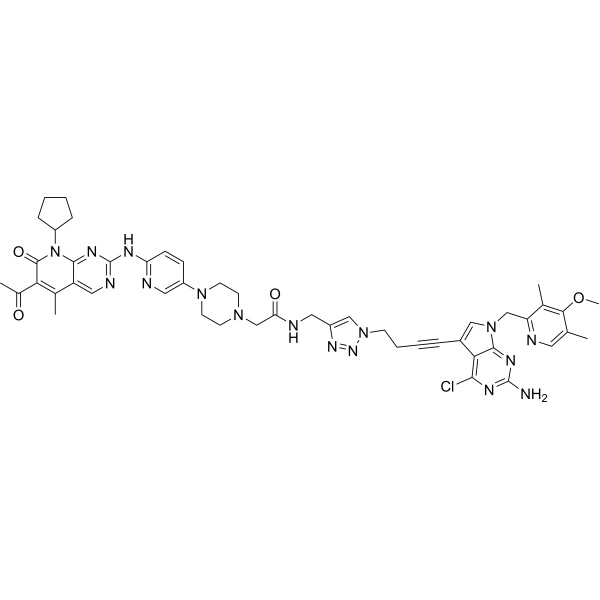
HEMTAC CDK4/6 degrader 1 is a PROTAC connected by ligands for HSP90 and CDK4/6 with a Kd value of 35.7 μM. HEMTAC CDK4/6 degrader 1 induces CDK4/6 degradation in B16F10 melanoma cells. HEMTAC CDK4/6 degrader 1 arrests cell cycle at G0/G1 phase and induces apoptosis. HEMTAC CDK4/6 degrader 1 can be used in research of cancer . HEMTAC CDK4/6 degrader 1 is a click chemistry reagent, it contains an Alkyne group and can undergo copper-catalyzed azide-alkyne cycloaddition (CuAAc) with molecules containing Azide groups.
loading...
    loading...
Cat. No.: HY-153598
CAS No.: 2782022-40-4
Research Areas:  

Inflammation/Immunology Cancer

LD4172 is a selective RIPK1 PROTAC degrader with a Ki of 4.8 nM. LD4172 induces RIPK1 protein degradation via ternary complex formation with RIPK1 and VHL E3 ligase, driving ubiquitination and proteasomal breakdown. LD4172 abrogates TNF-induced classical NF-κB signaling in TRAF2-deficient cells, impairing IκBα phosphorylation and degradation, and reducing IL-8 production. LD4172 induces apoptosis and immunogenic cell death in tumor cells, enhances tumor-infiltrating lymphocyte responses, and sensitizes tumors to anti-PD1 therapy. LD4172 acts as a chemical probe for investigating RIPK1 scaffolding functions. LD4172 can be used for the research of melanoma, colon cancer .
loading...
    loading...
Cat. No.: HY-153803
CAS No.: 2864408-92-2
Purity:  98.99%
GBD-9 is a degrader based on the E3 ubiquitin ligase CRBN that targets BTK and the G1 to S phase transition protein GSPT1. GBD-9 has both PROTAC and molecular glue properties by inducing ubiquitination and proteasomal degradation of target proteins. GBD-9 can efficiently degrade wild-type and mutant BTK (such as C481S mutation) and GSPT1. GBD-9 significantly inhibits tumor cell proliferation by inducing G1 phase arrest in cancer cells, downregulating anti-apoptotic proteins (BCL-2, MCL-1) and activating Caspase-3 to induce apoptosis. GBD-9 is mainly used in the research of hematological tumors such as diffuse large B-cell lymphoma (DLBCL) and acute myeloid leukemia (AML) .
loading...
    loading...
Cat. No.: HY-161250
Research Areas:  

Cancer

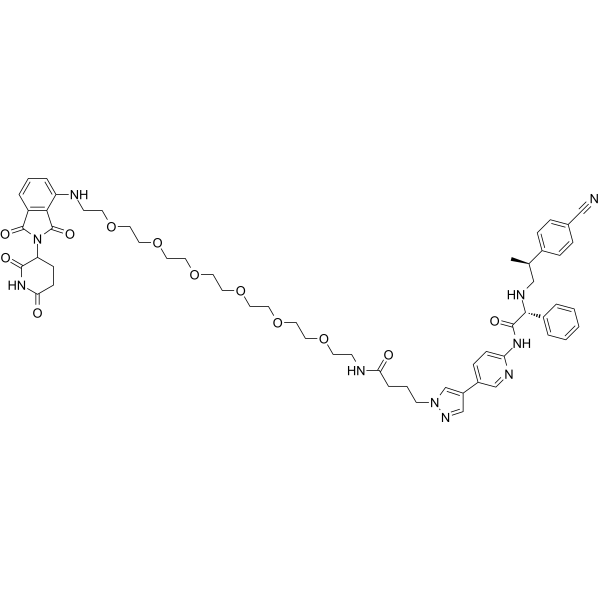
Pomalidomide-NH-PEG6-amide-C2-CPI-1612 is a CBP/EP300 PROTAC degrader with a DC50 value of 1.3 μM. Pomalidomide-NH-PEG6-amide-C2-CPI-1612 mediates the formation of a ternary complex between CRBN and the core of CBP, with an EC50 of 1.2 μM. Pomalidomide-NH-PEG6-amide-C2-CPI-1612 inhibits cancer cell growth and exhibits cell line-specific degradation activity. Pomalidomide-NH-PEG6-amide-C2-CPI-1612 can be used in research related to multiple myeloma and leukemia .
loading...
    loading...
Cat. No.: HY-161393
Research Areas:  

Cancer

RB-CO-PEG5-C2-CO-VH032 is a VHL-recruiting TRIM24 PROTAC degrader composed of an RB-derived short peptide SPRT, a PEG5-C2 linker, and the VHL ligand VH032. RB-CO-PEG5-C2-CO-VH032 recognizes proteins containing the FXXXV motif and recruits VHL to induce degradation of proteins such as TRIM24, thereby upregulating DUSP2, inhibiting ERK/mTOR signaling, and suppressing prostate cancer cell proliferation. RB-CO-PEG5-C2-CO-VH032 can be used for TRIM24 degradation and prostate cancer-related research .
loading...
    loading...
Cat. No.: HY-161804
Target:  

PROTACs Dengue Virus

Research Areas:  

Infection

GNF-2-deg is a PROTAC degrader targeting the dengue virus envelope protein (DENV E protein), with a DC50 of 0.83 μM in Huh7.5 cells. GNF-2-deg induces CRBN- and proteasome-dependent proteolysis of intracellular E protein. GNF-2-deg inhibits E protein-mediated membrane fusion and blocks viral particle production. GNF-2-deg reduces viral yield in infected cells and retains activity against E protein βOG pocket mutant virus-like particles (VLP). GNF-2-deg can be used in the research of dengue virus infection, Zika virus infection, Japanese encephalitis, West Nile virus infection and yellow fever .
loading...
    loading...

