
1154 Results for "

Neuronal

" in MedChemExpress (MCE) Product Catalog:
Products (1154)

1154 Results for "Neuronal" in MCE Product Catalog:

Cat. No.: HY-181545A
CAS No.: 3124168-27-7
Target:  

NO Synthase IFNAR

Research Areas:  

Cancer

nNOS-IN-2 trihydrochloride is a blood-brain barrier-permeable nitric oxide synthase (nNOS) inhibitor. nNOS-IN-2 trihydrochloride exhibits Ki values of 1.7 nM and 2.3 nM against human and rat nNOS, respectively, and shows high selectivity for human eNOS and iNOS. nNOS-IN-2 trihydrochloride also effectively reduces PD-L1 expression in human melanoma cells under both basal conditions and IFN-γ exposure. nNOS-IN-2 trihydrochloride can be used for the study of melanoma and related signaling pathways .
loading...
    loading...
Cat. No.: HY-181662
CAS No.: 883012-32-6
Target:  

MAP3K

Research Areas:  

Neurological Disease

DLK-IN-2 is a selective inhibitor of DLK and neuroprotective agent. DLK-IN-2 shows no significant inhibition against CYPs 3A4, 2D6 and 2C9. DLK-IN-2 inhibits acute axonal palmitoylation of DLK, blocks DLK-dependent pro-degenerative axon-to-soma retrograde signaling and suppresses c-Jun phosphorylation. DLK-IN-2 can be used for the mechanistic study of neurodegenerative diseases .
loading...
    loading...
Cat. No.: HY-183805
Target:  

5-HT Receptor FAAH

Research Areas:  

Neurological Disease

5-HT6R/FAAH modulator 2 is a dual 5-HT6R antagonist and FAAH inhibitor with human 5-HT6R pKi 7.24, human FAAH pIC50 5.47, and blood-brain barrier penetration.5-HT6R/FAAH modulator 2 modulates serotonergic signaling, blocks 5-HT6R function, inhibits endocannabinoid degradation via FAAH catalytic activity suppression.5-HT6R/FAAH modulator 2 exhibits neuroprotective effects against mitochondrial dysfunction, amyloid-β, and glutamate-induced toxicity, reverses memory deficits.5-HT6R/FAAH modulator 2 shows reduced cytotoxicity relative to oxygen-containing lead compounds.5-HT6R/FAAH modulator 2 can be used for the research of Alzheimer's disease .
loading...
    loading...
Cat. No.: HY-187085
CAS No.: 13544-52-0
Kaempferidinidin chloride is a chymotrypsin-like site inhibitor of the Proteasome. Kaempferidinidin chloride can be used in the research of neurodegenerative diseases .
loading...
    loading...
Cat. No.: HY-59201
CAS No.: 848591-89-9
A-582941 is a selective, orally active, blood-brain barrier-permeable α7 nAChR agonist, with Ki values of 10.8 nM and 17 nM in rat brain and human frontal cortex, respectively. A-582941 exhibits agonistic activity at 5-HT3 receptors, with a Ki of 150 nM. A-582941 triggers phosphorylation of ERK1/2 and CREB, inhibits GSK-3β via Ser-9 phosphorylation, increases acetylcholine release, induces the expression of Arc and c-Fos, activates brain regions associated with working memory and attention, and reduces cell death caused by nerve growth factor (NGF) deprivation. A-582941 is applicable for the research of Alzheimer's disease and schizophrenia .
loading...
    loading...
Cat. No.: HY-181897
CAS No.: 1903786-86-6
mHTT ligand-1 is an mHTT ligand. As a Ligand for Target Protein for PROTAC, mHTT ligand-1 can be used to develop and design PROTAC-based mHTT degraders, such as PROTAC mHTT Degrader-1 (HY-181879). mHTT ligand-1 is applicable to research related to Huntington's disease .
loading...
    loading...
Cat. No.: HY-183324
Research Areas:  

Neurological Disease

AMPA receptor modulator-12 is an orally acrive AMPA receptor positive allosteric modulator. AMPA receptor modulator-12 also exhibits moderate binding affinity for the human dopamine transporter with a Kd of 1.57 μM. AMPA receptor modulator-12 enhances AMPA receptor-mediated ion currents, delays channel deactivation. AMPA receptor modulator-12 prolongs sleep latency, reduces sleep duration, extends forced swimming time, improves rotarod endurance, and alleviates acute sleep deprivation-related behavioral deficits. AMPA receptor modulator-12 does not increase spontaneous locomotion. AMPA receptor modulator-12 can be used for the research of narcolepsy and fatigue-related conditions .
loading...
    loading...
Cat. No.: HY-187802
Target:  

ATP Synthase

Research Areas:  

Neurological Disease

ATPase-IN-9 is an ATP synthase inhibitor. ATPase-IN-9 binds to the F1 binding site of ATP synthase and inhibits its ATP hydrolytic activity. ATPase-IN-9 reduces intracellular ATP levels. ATPase-IN-9 can be used in research related to neurodegenerative diseases .
loading...
    loading...
Cat. No.: HY-19046
CAS No.: 103353-87-3
Synonyms: SC 48274 hydrochloride; BTG 1501 hydrochloride
Research Areas:  

Neurological Disease

AGN‑2979 hydrochloride (SC 48274 hydrochloride; BTG 1501 hydrochloride) is an orally active and selective tryptophan hydroxylase inhibitor with antidepressant-like and anxiolytic-like activities. AGN‑2979 hydrochloride inhibits stress-induced activation of tryptophan hydroxylase, thereby limiting the biosynthesis of 5-hydroxytryptamine in the brain. AGN-2979 hydrochloride possesses non-sedative anxiolytic and cognitive-enhancing properties. AGN-2979 hydrochloride is applicable to research related to depression and generalized anxiety disorder .
loading...
    loading...
Cat. No.: HY-19046A
CAS No.: 53873-21-5
Synonyms: SC 48274; BTG 1501
Research Areas:  

Neurological Disease

AGN‑2979 (SC 48274; BTG 1501) is an orally active and selective tryptophan hydroxylase inhibitor with antidepressant-like and anxiolytic-like activities. AGN‑2979 inhibits stress-induced activation of tryptophan hydroxylase, thereby limiting the biosynthesis of 5-hydroxytryptamine in the brain. AGN-2979 possesses non-sedative anxiolytic and cognitive-enhancing properties. AGN-2979 is applicable to research related to depression and generalized anxiety disorder .
loading...
    loading...
Cat. No.: HY-P0242
CAS No.: 86933-75-7
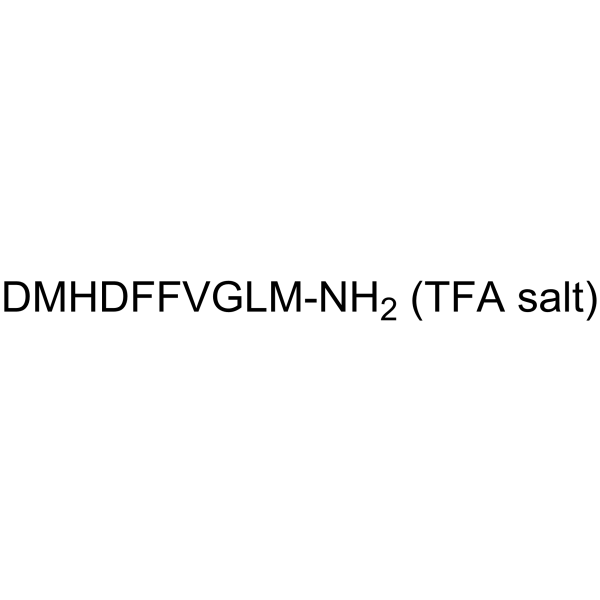
Neurokinin B is a tachykinin family peptide that preferentially binds to and activates NK3R over other tachykinin receptors. Neurokinin B preferentially binds to the substance P receptor (SP-N receptor) and mediates acetylcholine release from cholinergic neurons. Neurokinin B regulates the pulsatile release of Kisspeptin and GnRH, stimulates or inhibits the secretion of luteinizing hormone (HY-P2293), regulates reproductive function via metabolic signals, and drives the onset of puberty. Neurokinin B exerts vasoactive effects and induces contraction of isolated guinea pig ileum. Neurokinin B can be used in studies related to hypogonadotropic hypogonadism .
loading...
    loading...
Cat. No.: HY-P0242A
CAS No.: 101536-55-4
Neurokinin B TFA is a tachykinin family peptide that preferentially binds to and activates NK3R over other tachykinin receptors. Neurokinin B TFA preferentially binds to the substance P receptor (SP-N receptor) and mediates acetylcholine release from cholinergic neurons. Neurokinin B TFA regulates the pulsatile release of Kisspeptin and GnRH, stimulates or inhibits the secretion of luteinizing hormone (HY-P2293), regulates reproductive function via metabolic signals, and drives the onset of puberty. Neurokinin B TFA exerts vasoactive effects and induces contraction of isolated guinea pig ileum. Neurokinin B TFA can be used in studies related to hypogonadotropic hypogonadism .
loading...
    loading...
Cat. No.: HY-101349
CAS No.: 156337-32-5
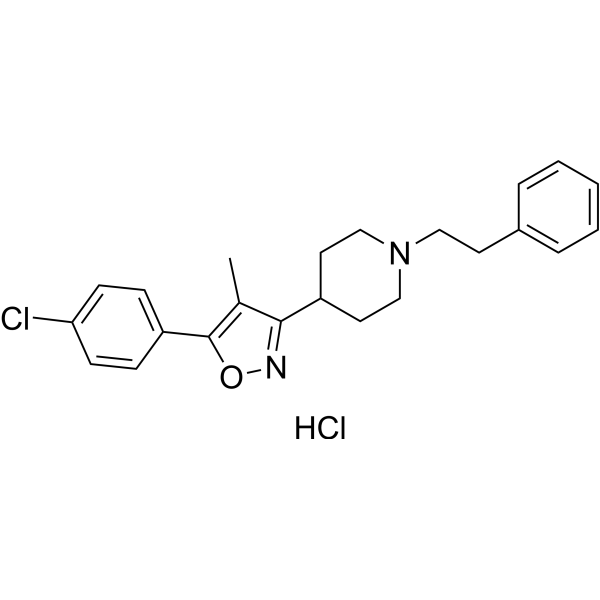
L 741742 is a highly selective and brain-penetrant D4 dopamine receptor antagonist, with Ki values of 3.5 nM, 770 nM and >1700 nM for human D4, D3 and D2 receptors, respectively. L 741742 suppresses PDGFRβ, ERK1/2, and mTOR signaling pathways, and impairs autophagic flux while disrupting lysosomal function.L 741742 induces G0/G1 cell-cycle arrest and apoptosis, promotes neuronal differentiation of normal human neural stem cells, selectively inhibits growth and clonogenic potential of glioblastoma neural stem cells and primary glioblastoma tumor cells, exerts synergistic effects with Temozolomide (TMZ) (HY-17364) against glioblastoma neural stem cells in vitro, and inhibits glioblastoma neural stem cell xenograft growth in immunocompromised mice. L 741742 can be used for the research of schizophrenia and glioblastoma .
loading...
    loading...
Cat. No.: HY-101349A
CAS No.: 874882-93-6
L 741742 hydrochloride is a highly selective and brain-penetrant D4 dopamine receptor antagonist, with Ki values of 3.5 nM, 770 nM and >1700 nM for human D4, D3 and D2 receptors, respectively. L 741742 hydrochloride suppresses PDGFRβ, ERK1/2, and mTOR signaling pathways, and impairs autophagic flux while disrupting lysosomal function.L 741742 hydrochloride induces G0/G1 cell-cycle arrest and apoptosis, promotes neuronal differentiation of normal human neural stem cells, selectively inhibits growth and clonogenic potential of glioblastoma neural stem cells and primary glioblastoma tumor cells, exerts synergistic effects with Temozolomide (TMZ) (HY-17364) against glioblastoma neural stem cells in vitro, and inhibits glioblastoma neural stem cell xenograft growth in immunocompromised mice. L 741742 hydrochloride can be used for the research of schizophrenia and glioblastoma .
loading...
    loading...
Cat. No.: HY-119684
CAS No.: 1639809-46-3
Purity:  97.20%
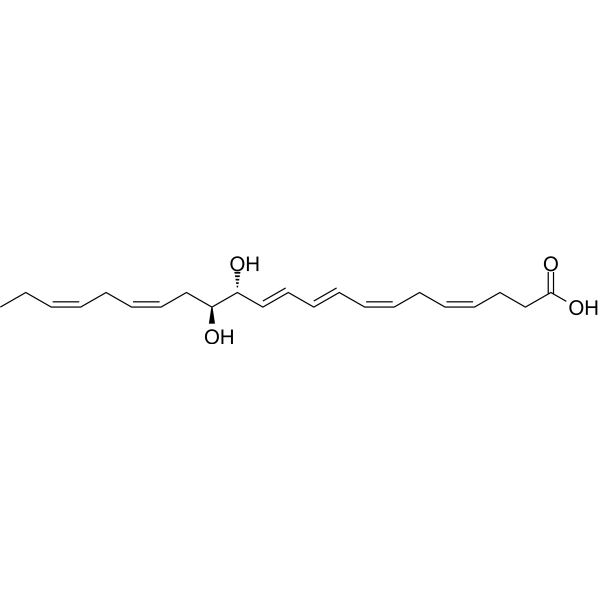
Maresin 2 is an anti-inflammatory and pro-resolving mediator. Maresin 2 drives intestinal epithelial cell migration by activating the focal cell-matrix adhesion signaling pathway in primary human intestinal epithelial cells, thereby promoting mucosal wound repair. Maresin 2 alleviates nociceptive and anxiety-like behaviors in rats with type 1 diabetes by inhibiting IL-1β in the spinal cord and prefrontal cortex. Maresin 2 attenuates allergic airway inflammation in mice by inhibiting the activation of the NLRP3 inflammasome, Th2-type immune responses, and oxidative stress. Maresin 2 inhibits inflammatory and neuropathic trigeminal neuralgia and reduces neuronal activation in the trigeminal ganglion. Maresin 2 promotes inflammation resolution and mucosal repair after DSS-induced colitis or biopsy-induced colonic mucosal injury .
loading...
    loading...
Cat. No.: HY-148611
CAS No.: 1135037-53-4
Target:  

iGluR

Research Areas:  

Neurological Disease

NSC339614 potassium is a selective GluN1/GluN2C and GluN1/GluN2D receptor enhancer with the activity of enhancing neuronal responses to specific NMDA receptors. NSC339614 potassium can selectively enhance the signaling of GluN1/GluN2C and GluN1/GluN2D receptors without affecting other NMDA receptors. The mechanism of action of NSC339614 potassium does not compete with agonists of L-glutamate or glycine, nor does it depend on membrane potential. The activity of NSC339614 potassium depends on the specific structure of the agonist ligand binding domain, showing its potential as a novel pharmacological agent for studying the function of NMDA receptor subtypes and providing new lead compounds for a variety of neurological diseases .
loading...
    loading...
Cat. No.: HY-149489
CAS No.: 742104-91-2
Target:  

PKC

Research Areas:  

Neurological Disease

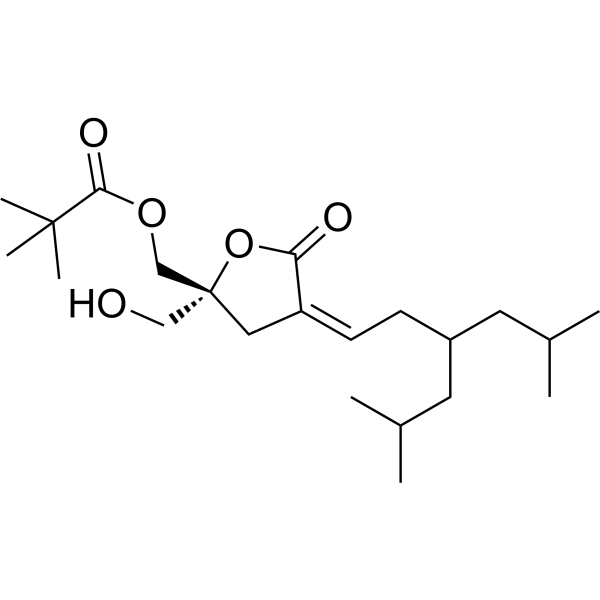
JH-131e-153, a diacylglycerol (DAG)-lactone, is a small molecule activator of Munc13-1, targeting the C1 domain. The activation sequence of JH-131e-153 on Munc13-1 is WT>I590≈R592A≈W588A. The C1 domain of Munc13-1 and protein kinase C (PKC) are homologous in sequence and structure. The activation sequence of JH-131e-153 on Munc13-1 and PKC was PKCα>Munc13-1>PKCε. JH-131e-153 regulates neuronal processes through Munc13-1 and can be further used in the study of neurodegenerative diseases .
loading...
    loading...
Cat. No.: HY-153169R
CAS No.: 2754428-18-5
6PPD-Q (Standard) is the analytical standard of 6PPD-Q (HY-153169). This product is intended for research and analytical applications. 6PPD-Q (6PPD-Quinone) is an environmental pollutant that can be detected in human urine and is widely present in the environment. 6PPD-Q targets and binds to CNR2, CNR1, AA2AR, LCAT, and TRPA1, with CNR2 exhibiting the highest binding affinity, potentially acting as a CNR2 receptor agonist to activate cannabinoid receptors. 6PPD-Q induces intestinal inflammation and barrier damage by disrupting mitochondrial function, reducing neuronal glycolysis metabolites and TCA cycle intermediates, and exacerbating α-synuclein (α-syn) aggregation. 6PPD-Q is applicable in research on environmental toxicology, neurodegenerative diseases, and inflammation-related disorders .
loading...
    loading...
Cat. No.: HY-182707
CAS No.: 2055045-42-4
JWX-A0108 is a selective human α7 nAChR positive allosteric modulator with an EC50 of 4.35 μM. JWX-A0108 potentiates α7 nAChR currents only in the presence of acetylcholine, with no direct activating effect or alteration of desensitization. JWX-A0108 enhances hippocampal GABAergic synaptic transmission by increasing spontaneous inhibitory postsynaptic currents. JWX-A0108 reduces the brain expression levels of IL-1β, TNF-α, and IL-6 by blocking the NF-κB signaling pathway, and reduces microglial activation by downregulating Iba1. JWX-A0108 effectively improves cognitive deficits, neuroinflammation, and hippocampal neuronal damage in mouse models of schizophrenia and Alzheimer's disease. JWX-A0108 can be used for research related to schizophrenia and Alzheimer's disease .
loading...
    loading...
Cat. No.: HY-184761
Keap1-Nrf2-IN-30 is an orally active, blood-brain barrier-permeable Keap1-Nrf2 protein-protein interaction inhibitor with a Keap1 Kd value of 157 nM. Keap1-Nrf2-IN-30 selectively inhibits the Keap1-Nrf2 protein-protein interaction, promotes Nrf2 nuclear translocation, suppresses induced ferroptosis, reduces the expression of and p-Tau, and upregulates the expression of GPX4 and SLC7A11. Keap1-Nrf2-IN-30 upregulates the expression of HO-1 and NQO1, alleviates neuronal damage, and improves cognitive and spatial memory deficits. Keap1-Nrf2-IN-30 can be used in the research of Alzheimer's disease .
loading...
    loading...

