1197 Results for "

Zanthoxylum armatum DC.

" in MedChemExpress (MCE) Product Catalog:
Products (1197)

1197 Results for "Zanthoxylum armatum DC." in MCE Product Catalog:

Cat. No.: HY-P72967
Purity:  ≥ 95%, as determined by reducing SDS-PAGE.
Synonyms: CLEC6A; Dendritic Cell-Associated C-Type Lectin 2; Prev. CLECSF10; DC-Associated C-Type Lectin 2; Dectin-2; C-Type Lectin Domain Family 6, Member A; C-Type Lectin Domain Family 6 Member A; Dectin 2; HDECTIN-2; DECTIN2; C-Type (Calcium Dependent, Carbohydr
Species:  
Mouse
Source:  
HEK293
loading...
    loading...
Cat. No.: HY-P74201
Purity:  ≥ 90%, as determined by reducing SDS-PAGE.
Synonyms: CLEC6A; Dendritic Cell-Associated C-Type Lectin 2; Prev. CLECSF10; DC-Associated C-Type Lectin 2; Dectin-2; C-Type Lectin Domain Family 6, Member A; C-Type Lectin Domain Family 6 Member A; Dectin 2; HDECTIN-2; DECTIN2; C-Type (Calcium Dependent, Carbohydr
Species:  
Human
Source:  
HEK293
loading...
    loading...
Cat. No.: HY-147858A
Purity:  99.19%
Target:  

PROTACs EGFR Apoptosis

Research Areas:  

Inflammation/Immunology Cancer

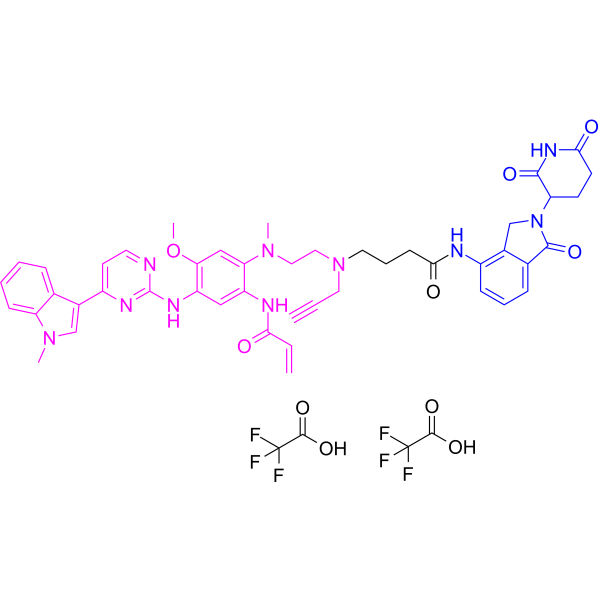
PROTAC EGFR degrader 7 (compound 13b) diTFA is a potent and selective CRBN-recruiting PROTAC EGFR L858R/T790M degrader, with a DC50 of 13.2 nM. PROTAC EGFR degrader 7 diTFA inhibits NCI–H1975 cells proliferation, with an IC50 of 46.82 nM. PROTAC EGFR degrader 7 diTFA significantly induces apoptosis and G2/M phase arrest in NCI–H1975 cell. PROTAC EGFR degrader 7 diTFA shows antitumor activity, and can be used for non-small cell lung cancer (NSCLC) research . PROTAC EGFR degrader 7 diTFA is a click chemistry reagent, it contains an Alkyne group and can undergo copper-catalyzed azide-alkyne cycloaddition (CuAAc) with molecules containing Azide groups.
loading...
    loading...
Cat. No.: HY-148381
CAS No.: 2378056-80-3
Research Areas:  

Cancer

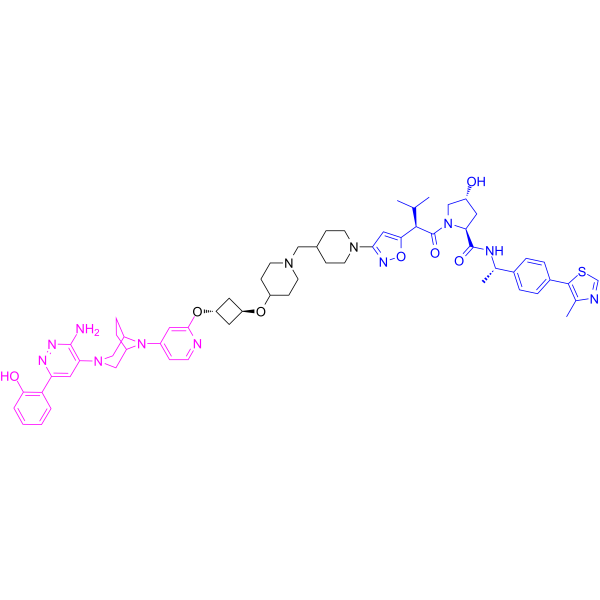
A947 is a VHL-based SMARCA2 PROTAC degrader with a DC50 of 39 pM and a Kd of 93 nM for human SMARCA2. A947 recruits SMARCA2 to the VHL E3 ubiquitin ligase for ubiquitination modification, mediates its degradation via the proteasome, and exerts selective degradation effects on SMARCA4 and PBRM1. A947 induces G1 cell cycle arrest, inhibits transcription, and exerts growth inhibitory effects in SMARCA4 G12C-mutant cancer cells. A947 acts synergistically with MCL1 inhibitors to induce apoptosis in SMARCA4 G12C-mutant cancer cells. A947 can be used in studies related to SMARCA4 G12C-mutant non-small cell lung cancer and non-small cell lung cancer .
loading...
    loading...
Cat. No.: HY-153356
CAS No.: 2803881-11-8
Purity:  99.91%
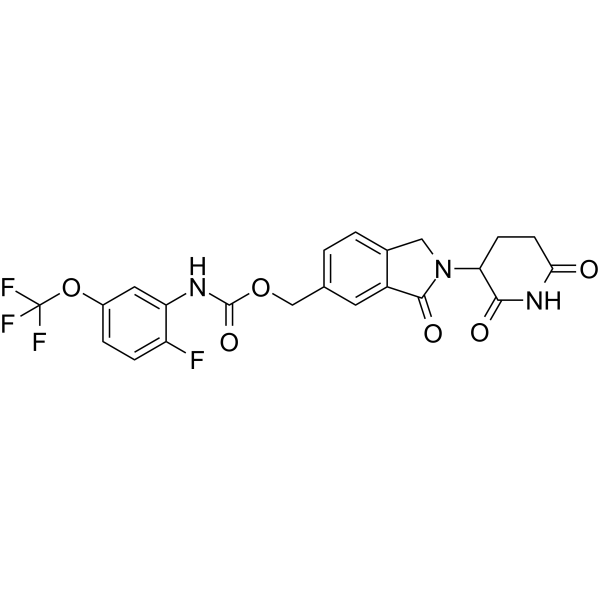
MRT-2359 is an orally active and selective GSPT1 molecular glue degrader, with a DC50 of 5 nM. MRT-2359 induces CRBN/GSPT1 ternary complex formation to drive CRBN- and degron-dependent proteasomal GSPT1 degradation, with selectivity for wild-type GSPT1 over the GSPT1G575N mutant. MRT-2359 disrupts protein translation, induces ribosome stalling, downregulates MYC family proteins and their transcriptional output, reduces proliferation, and induces apoptosis in cancer cells. MRT-2359 can be used for the research of non-small cell lung cancer (NSCLC), small cell lung cancer (SCLC), neuroendocrine lung cancer, high grade neuroendocrine cancers, diffuse large B-cell lymphoma, prostate cancer, and MYC-driven solid tumors .
loading...
    loading...
Cat. No.: HY-155666
CAS No.: 2952994-34-0
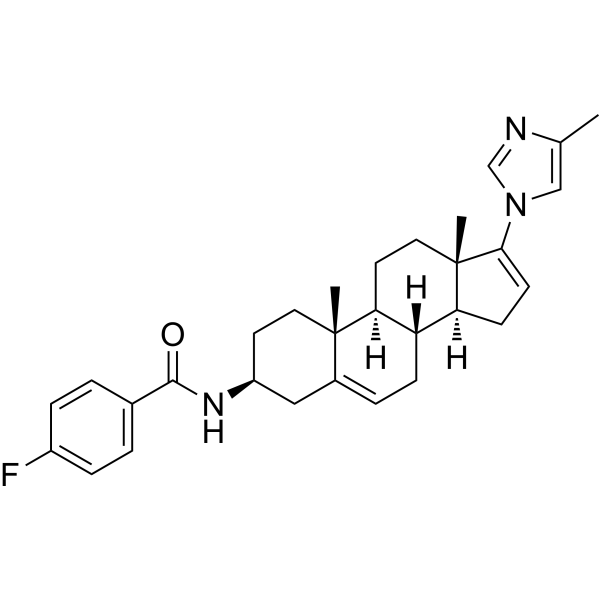
YXG‑158 is an orally active, anticancer bifunctional steroid analog with both androgen receptor (AR) degradation activity (DC50 = 1.28 μM) and CYP17A1 inhibitory activity (IC50 = 100 nM). YXG-158 reduces AR protein and mRNA expression via proteasome-dependent degradation, degrades AR-V7, and inhibits CYP17A1 enzymatic activity to block androgen biosynthesis. YXG-158 inhibits the activities of ERα and ERβ, as well as cancer cell proliferation. YXG-158 decreases the weight of androgen-sensitive organs in castrated rats treated with testosterone propionate, downregulates AR protein, reduces PSA levels, and suppresses tumor growth in Enzalutamide (HY-70002)-sensitive and -resistant xenograft models. YXG-158 can be used in prostate cancer-related research .
loading...
    loading...
Cat. No.: HY-158101R
CAS No.: 2446928-30-7
Synonyms: CC-94676 (Standard)
Research Areas:  

Cancer

BMS-986365 (Standard) is the analytical standard of BMS-986365 (HY-158101). This product is intended for research and analytical applications. BMS-986365 (CC-94676) is an orally active and selective targeted androgen receptor (AR) PROTAC degrader (DC50 of 10-40 nM). BMS-986365 is capable of inducing cereblon (CRBN) E3 ligase-dependent ubiquitination and degradation of the androgen receptor (AR), as well as various AR mutants. BMS-986365 shows no degradation of the close AR family members estrogen receptor (ER), progesterone receptor (PR), and glucocorticoid receptor (GR). BMS-986365 shows significant in vivo potency, degrading AR, inhibiting AR signaling, and restricting tumor growth in animal models of advanced prostate cancer. BMS-986365 can be used for the study of metastatic castration-resistant prostate cancer (mCRPC) .
loading...
    loading...
Cat. No.: HY-158429
CAS No.: 2836297-26-6
Research Areas:  

Cancer

PROTAC CYP1B1 degrader-2 is a CYP1B1 PROTAC degrader with a DC50 of approximately 0.1 nM. PROTAC CYP1B1 degrader-2 induces ubiquitination and proteasomal degradation of CYP1B1, and forms a ternary complex with VHL ubiquitin ligase and CYP1B1. PROTAC CYP1B1 degrader-2 inhibits P-gp. PROTAC CYP1B1 degrader-2 inhibits FAK/SRC. PROTAC CYP1B1 degrader-2 exhibits anticancer activity against paclitaxel (HY-B0015)-resistant non-small cell lung cancer. PROTAC CYP1B1 degrader-2 can be used in studies related to non-small cell lung cancer .
loading...
    loading...
Cat. No.: HY-169363
Research Areas:  

Cancer

PD-L1 degrader-2 (Compound B3) is an orally active AUTAC degrader, that degrades PD-L1 through autophagy-lysosome pathway with a DC50 of 0.5 μM. PD-L1 degrader-2 exhibits inhibitory activity against PD-1/PD-L1 interaction with an IC50 of 22.8 nM. PD-L1 degrader-2 upregulates the expressions of Atg9b, Lamp1 and Mitf, and activates the autophagy lysosome system. PD-L1 degrader- exhibits antitumor efficacy in CT26 mouse model . (Pink: autophagy-lysosome activator (HY-159894); Black: linker (HY-W015088); Blue: PD-L1 ligand (HY-169365))
loading...
    loading...
Cat. No.: HY-173523
CAS No.: 3054009-82-1
Target:  

PROTACs CDK c-Myc

Research Areas:  

Cancer

KI-CDK9d-32 is a selective CDK9 PROTAC degrader (IC50 = 3 nM; DC50 = 0.89 nM). KI-CDK9d-32 induces CDK9 degradation via the ubiquitin-proteasome pathway to abrogates CDK9 enzymatic and scaffolding functions, downregulates MYC expression and MYC-dependent signaling, represses TNF-alpha signaling pathways activity and pre-rRNA levels. KI-CDK9d-32 disrupts nucleolar homeostasis, blocks cell cycle progression and cellular translation by reducing 4EBP1 phosphorylation, and elicits cancer cell cytotoxicity in a CRBN-dependent manner, while high ABCB1 activity attenuates the efficacy. KI-CDK9d-32 can be used for the research of acute lymphoblastic leukemia, rhabdomyosarcoma, pancreatic adenocarcinoma .
loading...
    loading...
Cat. No.: HY-175849
Research Areas:  

Cancer

ALK degrader 1 is a potent, hydrophobic tag (HyT)-based degrader that induces ubiquitin-proteasome system (UPS)-dependent EML4-ALK degradation (DC50 = 0.13 μM). ALK degrader 1 demonstrates potent ALK degradation and antiproliferative effects in ALK-dependent cell lines, while showing minimal cytotoxicity in ALK fusion-negative cells. ALK degrader 1 triggers cell cycle arrest at the G0/G1 phase and stimulates apoptosis. ALK degrader 1 not only facilitates efficient degradation of the ALK protein but also disrupts key downstream effectors, including the STAT3 signaling axis. ALK degrader 1 mediates robust EML4-ALK degradation in vivo. ALK degrader 1 can be used for ALK-related diseases research .
loading...
    loading...
Cat. No.: HY-176451
Target:  

HyT CDK Apoptosis

Research Areas:  

Cancer

CDK9 degrader-1 is a HyT-type CDK9 degrader that selectively induces protein degradation by recruiting ATG101 (with a DC50 of 0.4073 μM in HCT116 cells). CDK9 degrader-1 recruits ATG101 to initiate the autophagy-lysosome pathway, forming LC3-containing autophagosomes that fuse with lysosomes to degrade CDK9. CDK9 degrader-1 mediates the degradation of Cyclin T1 via the same autophagy-lysosome pathway. CDK9 degrader-1 induces downstream phenotypic effects associated with CDK9 degradation. CDK9 degrader-1 can be used in the research of colorectal cancer (Blue: hydrophobic group; Pnk: CDK9 ligand (HY-50940); Black: linker (HY-N0420)) .
loading...
    loading...
Cat. No.: HY-178122
THNAN69 is a PROTAC degrader targeting LIMK2, which efficiently degrades ectopically expressed EGFP-LIMK2 in live HuCCT1 cells with a DC50 of 1 nM. THNAN69 induces isoform-specific ubiquitin-mediated degradation of LIMK2 by recruiting the CRBN E3 ligase, forming a stable ternary complex with LIMK2 and CRBN; this degradation process depends on the activity of cullin-RING ligase. THNAN69 does not reduce phosphorylated cofilin levels, as LIMK1 can compensate for the loss of LIMK2; it also stimulates compensatory activation of the Rho signaling pathway including PAK1/2 and ROCK1/2. THNAN69 serves as a selective chemical probe for dissecting the LIMK2 isoform-dependent biological mechanisms. THNAN69 can be used in the research of cholangiocellular carcinoma and acute lymphoblastic leukemia .
loading...
    loading...
Cat. No.: HY-179715
PROTAC JAK1/2 degrader-1 is an orally active JAK1/JAK2 PROTAC degrader, with DC50 values of 1.4 μM and 0.92 μM against JAK1 and JAK2, respectively. PROTAC JAK1/2 degrader-1 triggers degradation via a CRBN- and proteasome-dependent pathway. PROTAC JAK1/2 degrader-1 inhibits the secretion of tumor necrosis factor-α (TNF-α) and interleukin-6 (IL-6). PROTAC JAK1/2 degrader-1 alleviates inflammatory responses and colon injury by inhibiting the JAK/STAT3 signaling pathway. PROTAC JAK1/2 degrader-1 can be used for the research of inflammatory bowel disease .
loading...
    loading...
Cat. No.: HY-180976
Target:  

PROTACs α-synuclein

Research Areas:  

Neurological Disease

Arg-PEG1-Tαsyn is an α-syn PROTAC degrader with a DC50 of 0.28 μM in U251 cells. Arg-PEG1-Tαsyn employs the amino acid arginine (Arg) as the E3 ligase UBR1 ligand and a benzothiazole-aniline variant as the warhead for α-syn. Arg-PEG1-Tαsyn significantly reduces α-syn aggregates and improves the dopaminergic neuronal impairment and the locomotion with safety profile in vivo.Arg-PEG1-Tαsyn shows the high degradation effect in mammalian cells for both wild-type α-syn and the α-syn (A53T) mutant. Arg-PEG1-Tαsyn can be used for Parkinson’s disease research .
loading...
    loading...
Cat. No.: HY-184335
CAS No.: 3097564-20-7
Research Areas:  

Cancer

PROTAC BET Degrader-18 is a PROTAC targeting BET, with a DC50 of 0.676 nM in HEK293-BRD4-HiBiT-KI cells. PROTAC BET Degrader-18 mainly targets and degrades BRD4 (EC50 = 59.91 nM), and exhibits weak degradation activity against BRD2. PROTAC BET Degrader-18 inhibits the expression of downstream oncoprotein c-Myc, thereby inducing cell cycle arrest and apoptosis, while suppressing oncoprotein expression. PROTAC BET Degrader-18 shows antiproliferative activity against acute myeloid leukemia cells and triple-negative breast cancer cells. PROTAC BET Degrader-18 demonstrates antitumor efficacy in xenograft mouse models. PROTAC BET Degrader-18 can be used for the research of acute myeloid leukemia and triple-negative breast cancer .
loading...
    loading...
Cat. No.: HY-184915
CAS No.: 3065495-08-8
APH003 is an orally active IRAK4 PROTAC degrader with a DC50 of 0.74 nM in human peripheral blood mononuclear cells (hPBMCs). APH003 recruits IRAK4 to CRBN to form a ternary complex, mediates the ubiquitination and degradation of IRAK4 via the ubiquitin-proteasome pathway, and inhibits the kinase activity of IRAK4. APH003 inhibits LPS- or IL-1β/LPS-induced phosphorylation of ERK, JNK and NF-κB. APH003 inhibits the secretion of TNF-α, IL-6, IL-8 and IL-13 by stimulated hPBMCs. APH003 exhibits anti-inflammatory activity in rat TNBS-induced intestinal inflammation models and mouse IL-33-induced skin inflammation models. APH003 can be used in research related to inflammatory bowel disease and skin inflammation .
loading...
    loading...
Cat. No.: HY-189146
Research Areas:  

Cancer

HDTAC EGFR Degrader-1 is an EGFR HDTAC (hypoxia-activated targeted protein degradation chimera) degrader with a DC50 of 1.76 μM. HDTAC EGFR Degrader-1 consists of a linker, a tumor hypoxia-activated group (HAG, a group that generates ROS under tumor hypoxic conditions), and an EGFR ligand. HDTAC EGFR Degrader-1 drives EGFR degradation through the proteasomal pathway. HDTAC EGFR Degrader-1 downregulates Caspase-3 under hypoxic conditions. HDTAC EGFR Degrader-1 can be used in research on non-small cell lung cancer harboring EGFR mutations (EGFR ligand: FAAH-IN-2 (HY-79511); HAG: Thalidomide-O-COOH (HY-103597); linker: NH2-PEG3 (HY-W007545)) .
loading...
    loading...
Cat. No.: HY-189213
Research Areas:  

Cancer

YZ-17 is a PROTAC degrader targeting PRMT5, with DC50 = 2.2 μM (HCC1806 cells). YZ-17 recruits CRBN E3 ligase and induces PRMT5 degradation through the ubiquitin-proteasome system, inhibiting PRMT5-mediated symmetric dimethylarginine modification. YZ-17 co-degrades the PRMT5 adaptor protein MEP50 via a CRBN-dependent mechanism. YZ-17 induces G1 phase cell cycle arrest and inhibits colony formation in cancer cells. YZ-17 exhibits antiproliferative activity in various cancer cells. YZ-17 shows antitumor efficacy in a triple-negative breast cancer xenograft mouse model. YZ-17 can be used for research on triple-negative breast cancer .
loading...
    loading...
Cat. No.: HY-189226
Research Areas:  

Cancer

PROTAC BRD9 Degrader-12 is a BRD9 PROTAC degrader, with DC50 values of 57 pM and 62 pM against BRD9 and IKZF1, respectively. PROTAC BRD9 Degrader-12 promotes CRL-CRBN-dependent ubiquitination and proteasome-mediated BRD9 degradation by simultaneously binding to BRD9 and CRBN, and concurrently recruits IKZF1 as a neosubstrate via CRBN to induce its degradation. PROTAC BRD9 Degrader-12 selectively degrades BRD9 and IKZF1. The synergistic degradation of BRD9/IKZF1 downregulates MYC-related signaling, induces apoptosis and S-phase cell cycle arrest, and thereby inhibits the proliferation of hematological malignant cells. PROTAC BRD9 Degrader-12 is used for research related to hematological malignancies .
loading...
    loading...

