1197 Results for "

Zanthoxylum armatum DC.

" in MedChemExpress (MCE) Product Catalog:
Products (1197)

1197 Results for "Zanthoxylum armatum DC." in MCE Product Catalog:

Cat. No.: HY-144657
CAS No.: 2913176-81-3
Target:  

PROTACs SOS1 Drug Isomer Ras

Research Areas:  

Cancer

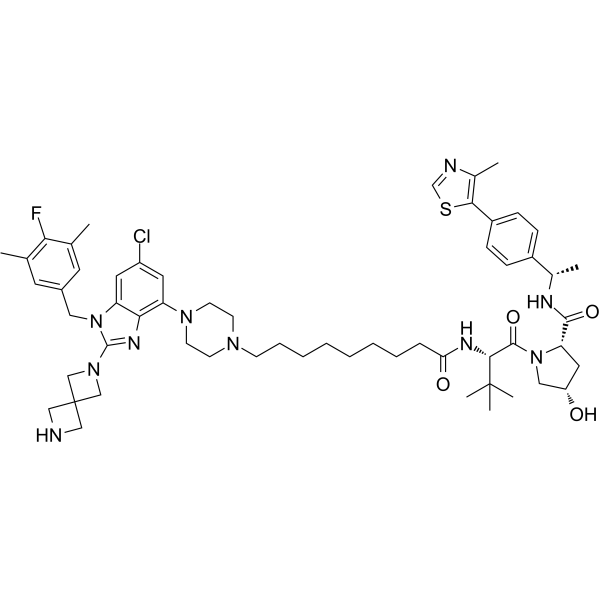
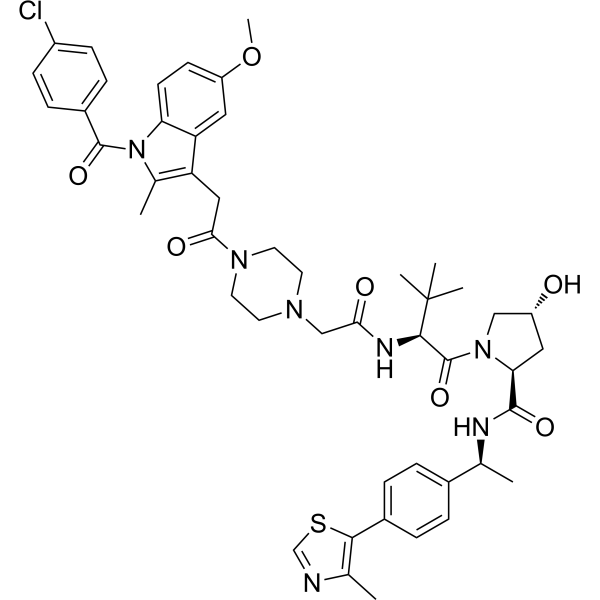
(4S)-PROTAC SOS1 degrader-1 is a stereoisomer of PROTAC SOS1 degrader-1 (HY-145737). PROTAC SOS1 degrader-1 (Compound 9d) is a degrader of SOS1 PROTAC, with a DC50 of 98.4 nM and a Kd value of 44 nM. PROTAC SOS1 degrader-1 induces the formation of a ternary complex with SOS1 and the VCB E3 ubiquitin ligase complex, thereby promoting the ubiquitination and proteasomal degradation of SOS1. PROTAC SOS1 degrader-1 reduces KRAS-GTP levels, inhibits the phosphorylation of ERK in the RAS-RAF-MEK-ERK pathway, and suppresses the proliferation of cancer cells carrying KRAS mutations. PROTAC SOS1 degrader-1 inhibits tumor growth in mouse xenograft models. PROTAC SOS1 degrader-1 can be used for the research of KRAS-driven cancers .
loading...
    loading...
Cat. No.: HY-144657A
Purity:  98.09%
Target:  

PROTACs SOS1 Drug Isomer Ras

Research Areas:  

Cancer

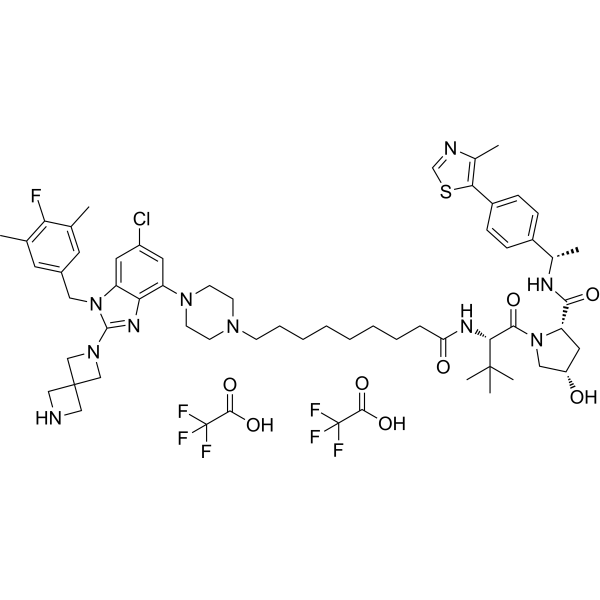
(4S)-PROTAC SOS1 degrader-1 diTFA is a stereoisomer of PROTAC SOS1 degrader-1 (HY-145737). PROTAC SOS1 degrader-1 (Compound 9d) is a degrader of SOS1 PROTAC, with a DC50 of 98.4 nM and a Kd value of 44 nM. PROTAC SOS1 degrader-1 induces the formation of a ternary complex with SOS1 and the VCB E3 ubiquitin ligase complex, thereby promoting the ubiquitination and proteasomal degradation of SOS1. PROTAC SOS1 degrader-1 reduces KRAS-GTP levels, inhibits the phosphorylation of ERK in the RAS-RAF-MEK-ERK pathway, and suppresses the proliferation of cancer cells carrying KRAS mutations. PROTAC SOS1 degrader-1 inhibits tumor growth in mouse xenograft models. PROTAC SOS1 degrader-1 can be used for the research of KRAS-driven cancers .
loading...
    loading...
Cat. No.: HY-151886
CAS No.: 2759420-43-2
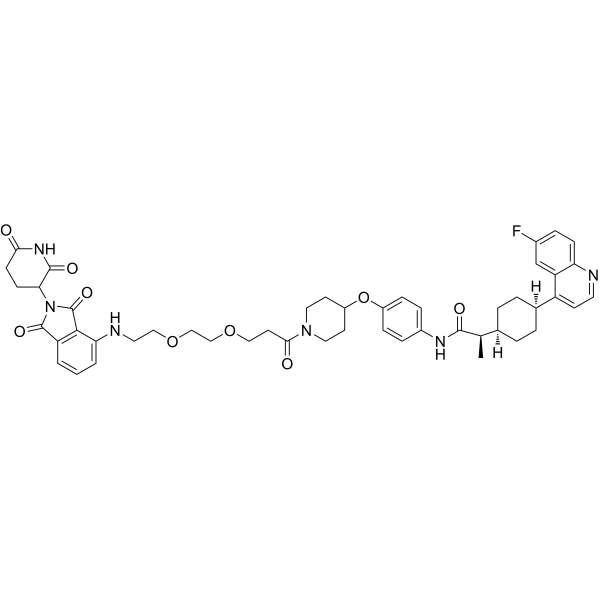
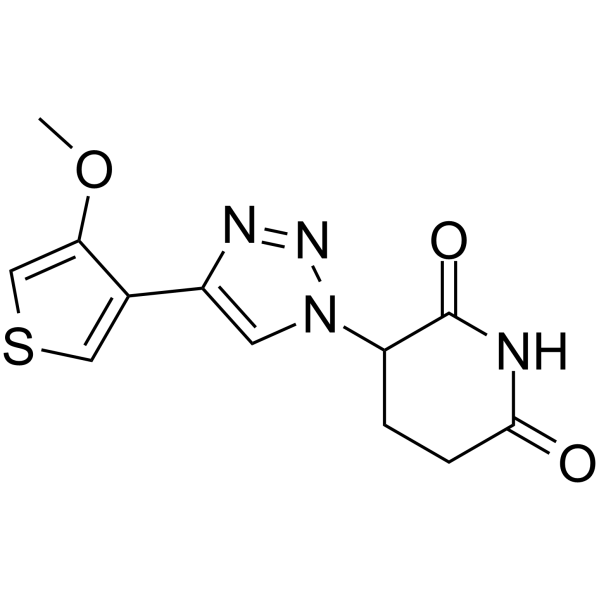
NU223612 is a cereblon (CRBN)-recruiting IDO1 PROTAC degrader, with a DC50 value of 0.329-0.5438 μM against human IDO1, and it is capable of penetrating the blood-brain barrier. NU223612 directly binds to IDO1, mediates the degradation of both wild-type and catalytically inactive mutant IDO1 proteins, and does not degrade TDO2. NU223612 inhibits IDO1-mediated enzymatic activity. NU223612 directly binds to CRBN and promotes the formation of a cooperative ternary complex with IDO1. NU223612 induces ubiquitin-dependent proteasomal degradation of the IDO1 protein. NU223612 suppresses IDO1-mediated non-enzymatic phosphorylation of NF-κB p65 and the DNA-binding activity of downstream transcription factors. NU223612 can be used in studies of glioblastoma (malignant glioma) .
loading...
    loading...
Cat. No.: HY-157804
CAS No.: 3029579-46-9
Research Areas:  

Infection

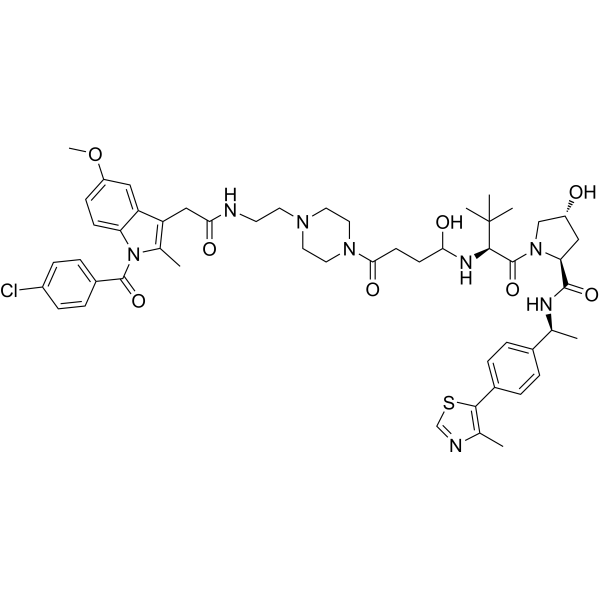
PROTAC SARS-CoV-2 Mpro degrader-1 is a SARS-CoV-2 M pro PROTAC degrader with a DC50 of 18.1 μM. PROTAC SARS-CoV-2 Mpro degrader-1 recruits the Von-Hippel Lindau (VHL) E3 ligase to mediate ubiquitination and proteasomal degradation of SARS-CoV-2 M pro, without inhibiting the catalytic activity of M pro. PROTAC SARS-CoV-2 Mpro degrader-1 exhibits broad-spectrum antiviral activity against coronaviruses (SARS-CoV-2, HCoV-OC43, HCoV-229E). PROTAC SARS-CoV-2 Mpro degrader-1 can be used in studies related to SARS-CoV-2 infection, HCoV-OC43 infection, and HCoV-229E infection .
loading...
    loading...
Cat. No.: HY-157805
CAS No.: 3057294-32-0
Research Areas:  

Infection

PROTAC SARS-CoV-2 Mpro degrader-2 is a SARS-CoV-2 M pro PROTAC degrader with a DC50 of 1.34 μM. PROTAC SARS-CoV-2 Mpro degrader-2 recruits the VHL E3 ligase to mediate ubiquitination and proteasomal degradation of SARS-CoV-2 M pro, without inhibiting the catalytic activity of M pro. PROTAC SARS-CoV-2 Mpro degrader-2 exhibits anti-SARS-CoV-2 activity in infected cells, as well as broad-spectrum antiviral activity against coronaviruses including HCoV-OC43 and HCoV-229E. PROTAC SARS-CoV-2 Mpro degrader-2 can be used in studies related to SARS-CoV-2 infection, HCoV-OC43 infection, and HCoV-229E infection .
loading...
    loading...
Cat. No.: HY-159494
PROTAC sEH degrader-1 is a PROTAC degrader targeting soluble epoxide hydrolase (sEH) with a DC50 of 0.5 nM, and it also possesses sEH inhibitory activity. PROTAC sEH degrader-1 has an IC50 of 3.8 nM against human sEH and an IC50 of 210 nM against mouse sEH. PROTAC sEH degrader-1 relies on the ubiquitin-proteasome system to achieve target protein degradation, and it selectively degrades cytoplasmic sEH. PROTAC sEH degrader-1 rapidly reduces endoplasmic reticulum stress in cells, downregulates the phosphorylation levels of IRE1α, PERK and eIF2α, enhances cell viability, and alleviates Thapsigargin (HY-13433)-induced apoptosis. PROTAC sEH degrader-1 effectively degrades sEH in mouse liver and brown adipose tissue. PROTAC sEH degrader-1 can be used in studies related to metabolic disorders and inflammation .
loading...
    loading...
Cat. No.: HY-159728
PROTAC PRMT3 degrader 1 is a selective PRMT3 PROTAC degrader with a DC50 of 2.566 μM. PROTAC PRMT3 degrader 1 forms a ternary complex with MDM2 E3 ubiquitin ligase to induce proteasomal and neddylation-dependent degradation of PRMT3. PROTAC PRMT3 degrader 1 activates intrinsic apoptosis, endoplasmic reticulum stress signaling pathways. PROTAC PRMT3 degrader 1 downregulates E2F, MYC, oxidative phosphorylation pathways. PROTAC PRMT3 degrader 1 reduces cellular asymmetric dimethylarginine (ADMA) levels. PROTAC PRMT3 degrader 1 inhibits acute leukemia cell growth. PROTAC PRMT3 degrader 1 acts with glycolysis inhibitor 2-DG to reduce ATP production, induce intrinsic apoptosis, drive synergistic antiproliferative effects. PROTAC PRMT3 degrader 1 can be used for the research of acute leukemia .
loading...
    loading...
Cat. No.: HY-163609
Target:  

PROTACs 17β-HSD

Research Areas:  

Cancer

PROTAC AKR1C3 degrader-1 is a PROTAC degrader targeting AKR1C3, with a DC50 of 52 nM. PROTAC AKR1C3 degrader-1 induces proteasome-dependent degradation of AKR1C3 and inhibits the enzymatic activities of AKR1C3, AKR1C1 and AKR1C2. PROTAC AKR1C3 degrader-1 degrades ARv7 by disrupting the stable AKR1C3/ARv7 complex. PROTAC AKR1C3 degrader-1 reduces the viability of prostate cancer cells expressing AKR1C3 and sensitizes Enzalutamide (HY-70002)-resistant prostate cancer cells. PROTAC AKR1C3 degrader-1 can be used in the research of prostate cancer .
loading...
    loading...
Cat. No.: HY-168554
STING Degrader-3 is a PROTAC-like STING degrader with a DC50 of 2.58 μM in THP-1 cells. STING Degrader-3 degrades STING protein via the lysosomal pathway. STING Degrader-3 functions as a non-degradative inhibitor in macrophages. STING Degrader-3 reduces the phosphorylation levels of TBK1 and IRF3, and downregulates the expression of IFN-β, CXCL10, IL-6, TNFα, IL-1β, ISG15 and ISG56. STING Degrader-3 exhibits renoprotective properties in a cisplatin-induced acute kidney injury model. STING Degrader-3 can be used in studies related to acute kidney injury. ((Pink: STING ligand (HY-168676); Blue: CRBN ligand (HY-126457); Black: linker (HY-W123015); CRBN ligand + linker: (HY-168677)) .
loading...
    loading...
Cat. No.: HY-173333
CAS No.: 3081688-77-6
Research Areas:  

Cancer

PROTAC SMARCA2/4 degrader-38 is a SMARCA2/4 degrader (SMARCA2: DC50 = 3.0 nM; SMARCA4: 4.0 nM). PROTAC SMARCA2/4 degrader-38 binds to SMARCA2 and SMARCA4 bromodomains to induce degradation via the ubiquitin-proteasome system. PROTAC SMARCA2/4 degrader-38 induces G0/G1 phase cell cycle arrest and cell apoptosis in hematological cancer cells, blocks oncogenic activity of MYC and other disease-related genes in acute myeloid leukemia cells and inhibits proliferation of hematological cancer cell lines. PROTAC SMARCA2/4 degrader-38 can be used for the research of acute myeloid leukemia, diffuse large B-cell lymphoma, breast cancer, ovarian cancer, colorectal cancer, liver cancer, lung cancer .
loading...
    loading...
Cat. No.: HY-180485
Target:  

PROTACs Wee1 CDK

Research Areas:  

Cancer

PROTAC D16-M1P2 is an orally active CRBN-mediated selective PKMYT1 PROTAC degrader, with a DC50 of 0.7 nM in CCNE1-amplified HCC1569 breast cancer cells. PROTAC D16-M1P2 induces PKMYT1 degradation via the ubiquitin-proteasome system, directly inhibits PKMYT1 kinase activity, suppresses Thr14 phosphorylation of CDK1, and depends on functional CRBN and ubiquitination-like modification processes. PROTAC D16-M1P2 can be used for the research of CCNE1-amplified breast cancer, FBXW7-mutated cholangiocarcinoma, and PPP2R1A-deficient cancers .
loading...
    loading...
Cat. No.: HY-181758
CAS No.: 3109024-12-3
PROTAC CBP/p300/BRD4 Degrader-1 is a dual-target PROTAC degrader with DC50 values of 8.8 pM (BRD4), 6.55 nM (CBP), and 1.05 nM (p300). PROTAC CBP/p300/BRD4 Degrader-1 induces CRBN- and proteasome-dependent degradation of BRD4 and CBP/p300, downregulates c-Myc and acetyl-H3K27, induces apoptosis. PROTAC CBP/p300/BRD4 Degrader-1 acts as an antiproliferative and antitumor agent, induces tumor growth inhibition in xenograft models. PROTAC CBP/p300/BRD4 Degrader-1 can be used for the research of prostate cancer and colorectal cancer .
loading...
    loading...
Cat. No.: HY-184943
Pan-PDK degrader-1 is a pan-PDK class PROTAC degrader that degrades PDK2, PDK3 and PDK4 with DC50 values of 9.2 nM, 9.9 nM and 11.5 nM, respectively. Pan-PDK degrader-1 recruits the mitochondrial protease HsClpP and induces selective pan-PDK degradation via HsClpP-mediated proteolysis. Pan-PDK degrader-1 reprograms mitochondrial metabolism toward oxidative phosphorylation, promoting ROS accumulation, mitochondrial permeability transition pore opening, endogenous mitochondrial apoptosis, calreticulin exposure and HMGB1 release. Pan-PDK degrader-1 upregulates cleaved Caspase-9, Caspase-3 and PARP. Pan-PDK degrader-1 inhibits primary and distal tumor growth via selective degradation of PDK in tumor tissues. Pan-PDK degrader-1 can be used for the research of breast cancer .
loading...
    loading...
Cat. No.: HY-145319
CAS No.: 2367619-87-0
Purity:  99.75%
FPFT-2216 is an orally active Molecular glue degrader targeting IKZF1, IKZF3, CK-1α, and PDE6D, with a DC50 of 8 nM against PDE6D. FPFT-2216 mediates ubiquitin-proteasome degradation via the CRL4 CRBN E3 ubiquitin ligase complex and interacts with the non-isoprenoid-binding region of PDE6D. FPFT-2216 activates the p53 signaling pathway, inhibits the CBM complex/NF-κB pathway, upregulates IL-2, suppresses IL-1β and IL-6, and induces tumor cell Apoptosis. FPFT-2216 exhibits anticancer activity against multiple myeloma and lymphoma. FPFT-2216 can be used in research related to multiple myeloma, lymphoma, acute lymphoblastic leukemia, acute myeloid leukemia, pancreatic ductal adenocarcinoma, non-small cell lung cancer, and gastric adenocarcinoma .
loading...
    loading...
Cat. No.: HY-153357
CAS No.: 2416130-57-7
Purity:  98.16%
Target:  

PROTACs Btk c-Myc NF-κB

Research Areas:  

Inflammation/Immunology Cancer

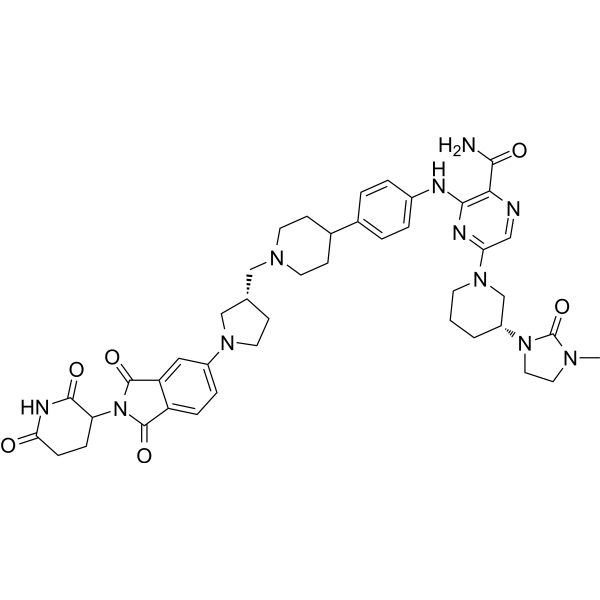
NRX-0492 is an orally active BTK PROTAC degrader, with a binding IC50 of 1.2 nM for both wild-type BTK and BTK T474I, and 2.7 nM for BTK C481S, and exhibits cellular DC50 values of 0.1 nM and 0.2 nM against wild-type BTK and BTK C481S, respectively. NRX-0492 catalyzes the ubiquitination and proteasomal degradation of wild-type and drug-resistant mutant BTK by recruiting the CRBN E3 ubiquitin ligase complex. NRX-0492 inhibits the BCR signaling pathway and its downstream NF-κB/MYC transcriptional program, achieves rapid and sustained degradation in primary CLL cells, and exhibits extremely low cytotoxicity. NRX-0492 degrades BTK, inhibits tumor cell proliferation and activation, and significantly suppresses tumor growth in xenograft models. NRX-0492 can be used in research related to chronic lymphocytic leukemia and diffuse large B-cell lymphoma .
loading...
    loading...
Cat. No.: HY-159147
CAS No.: 2570251-69-1
Research Areas:  

Cancer

SIAIS039 is an orally active c-ros oncogene 1 (ROS1)-specific PROTAC with DC50s of 154.46 nM, 126.47 nM, 143.69 nM for HCC78 cells, Ba/F3 expressing the CD74-ROS1 fusion and Ba/F3 expressing the SDC4-ROS1 fusion, respectively. SIAIS039 suppresses cell proliferation, induces cell cycle arrest and apoptosis, and inhibits clonogenicity against ROS1-positive cells. SIAIS039 demonstrates anti-tumour effects against ROS1-driven tumor growth vivo. SIAIS039 is composed of the ALK inhibitor Brigatinib (HY-12857), a linker EM-12 (HY-138793), and a VHL ligand E3 ubiquitin ligase 1-Butyne (Red: Brigatinib; Blue: VHL ligand; Black: linker) .
loading...
    loading...
Cat. No.: HY-159607
CAS No.: 2755761-78-3
Target:  

PROTACs SWI/SNF Complex

Research Areas:  

Cancer

PRT3789 is a selective SMARCA2 PROTAC degrader (DC50 in HeLa cell: 0.72 nM for SMARCA2, 14 nM for SMARCA4). PRT3789 forms a stable ternary complex with Von Hippel-Lindau (VHL) E3 ligase, induces polyubiquitination at SMARCA2-specific lysine residues, and drives proteasome-dependent SMARCA2 degradation. PRT3789 disrupts SWI/SNF chromatin remodeling complex integrity, induces dissociation of specific subunits, suppresses oncogenic gene expression, reduces chromatin accessibility, and upregulates antigen processing/presentation-related gene expression. PRT3789 induces synthetic lethality, inhibits proliferation and colony formation, and drives tumor growth inhibition and regression in SMARCA4-deficient contexts. PRT3789 can be used for the research of SMARCA4-mutated solid tumors, non-small cell lung cancer, endometrial cancer, colorectal cancer, bladder cancer, esophageal cancer, ovarian cancer, and gastric cancer .
loading...
    loading...
Cat. No.: HY-181193
Research Areas:  

Infection

PROTAC SARS-CoV-2 Mpro degrader-7 is a SARS-CoV-2 main protease (Mpro) PROTAC degrader with a DC50 of 0.985 μM. PROTAC SARS-CoV-2 Mpro degrader-7 promotes K48-linked polyubiquitination of SARS-CoV-2 Mpro, leading to proteasome-dependent degradation via the ubiquitin-proteasome system.PROTAC SARS-CoV-2 Mpro degrader-7 forms a ternary complex with SARS-CoV-2 Mpro and CRBN E3 ubiquitin ligase to enable viral protease ubiquitination.PROTAC SARS-CoV-2 Mpro degrader-7 exhibits a high selectivity index, and induces dose-dependent degradation of SARS-CoV-2 Mpro in stable cells expressing the viral protease.PROTAC SARS-CoV-2 Mpro degrader-7 can be used for the research of COVID-19 .
loading...
    loading...
Cat. No.: HY-N10922
CAS No.: 878800-84-1
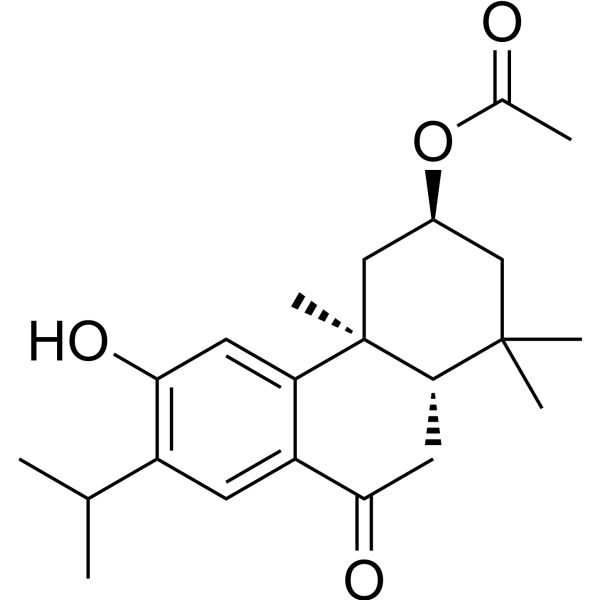
(3S,4aS,10aS)-3-(Acetyloxy)-2,3,4,4a,10,10a-hexahydro-6-hydroxy-1,1,4a-trimethyl-7-(1-methylethyl)-9(1H)-phenanthrenone (compound 3), a Palmitate, can be isolated from the root tissue of Salvia miltiorrhiza. (3S,4aS,10aS)-3-(Acetyloxy)-2,3,4,4a,10,10a-hexahydro-6-hydroxy-1,1,4a-trimethyl-7-(1-methylethyl)-9(1H)-phenanthrenone (compound 3) shows anti-cancer activity against human cancer cell lines with DC50s of 25.5 μg/mL (HeLa), 37.5 μg/mL (HepG2), 30.2 μg/mL (OVCAR-3), respectively .
loading...
    loading...
Cat. No.: HY-P991510

Target:  

TNF Receptor

Research Areas:  

Cancer

CDX-1140 is a fully human IgG monoclonal antibody and CD40 agonist, with a Kd value of 0.01 nM against human targets. The epitope of CDX-1140 locates at CD40 CRD1 and avoids the CD40L binding site. It activates DCs and B cells, drives NF-κB reporter gene activation, exhibits agonist activity independent of FcR cross-linking, and shows a synergistic effect with recombinant CD40L . CDX-1140 does not induce systemic cytokine release, exerts direct and immune-mediated anti-tumor activity in tumor xenografts, and has favorable safety profiles. When used as a local vaccine adjuvant in combination with 6MHP+mBRAF+poly-ICLC, CDX-1140 increases the number of DC-LAMP + DCs and induces Th1 CD4 + responses in high-risk melanoma. CDX-1140 can be used in studies related to B-cell lymphoma, bladder cancer and high-risk melanoma .
loading...
    loading...

