142 Results for "

DNA intercalating

" in MedChemExpress (MCE) Product Catalog:
Products (142)

142 Results for "DNA intercalating" in MCE Product Catalog:

Cat. No.: HY-165400
CAS No.: 143413-84-7
TODi-1 (TOTO) is a double-stranded DNA binder and Fluorescence enhancer (with a lambda max of 513 nm for dsDNA-TOTO). TODi-1 forms stable bis-intercalation complexes with double-stranded DNA. TODi-1 shows almost no fluorescence in free solution, but its fluorescence intensity increases significantly upon binding to double-stranded DNA .
loading...
    loading...
Cat. No.: HY-13551AR
CAS No.: 54301-15-4
Synonyms: m-AMSA hydrochloride (Standard); acridinyl anisidide hydrochloride (Standard)
Research Areas:  

Cancer

Amsacrine (hydrochloride) (Standard) is the analytical standard of Amsacrine (hydrochloride). This product is intended for research and analytical applications. Amsacrine hydrochloride (m-AMSA hydrochloride; acridinyl anisidide hydrochloride) is an inhibitor of topoisomerase II, and acts as an antineoplastic agent which can intercalates into the DNA of tumor cells.
loading...
    loading...
Cat. No.: HY-183480
CAS No.: 80841-47-0
Synonyms: CI-921; NSC 343499
Target:  

Topoisomerase

Research Areas:  

Cancer

Asulacrine (CI-921) is an orally active DNA intercalating topoisomerase II inhibitor. Asulacrine binds to DNA via intercalation, with its acridine chromophore intercalated between base pairs and substituents located in the major/minor grooves, which stabilizes DNA against acid denaturation. Asulacrine acts as a cell cycle inhibitor, disruptor, and arrest inducer, slowing cell progression in late S/G2 phase, causing G2 phase arrest and inducing unbalanced growth. Asulacrine inhibits cell growth, clonogenicity, and colony formation, and leads to histological destruction of tumor cells. Compared to cells in exponential growth phase, Asulacrine exhibits lower toxicity to quiescent cells; its activity depends on cationic properties, and it has better water solubility and metabolic stability. Asulacrine can be used in research related to leukemia, lung cancer, colon cancer, breast cancer, melanoma, adriamycin-resistant mammary adenocarcinoma, and mouse solid tumors .
loading...
    loading...
Cat. No.: HY-105904
CAS No.: 54824-20-3
Research Areas:  

Cancer

Pinafide is an orally active anticancer agent. Pinafide binds to double-stranded DNA via intercalation, stabilizes the DNA-topoisomerase II complex, induces photo-induced DNA damage and ROS production, causes lysosomal and mitochondrial dysfunction, impairs DNA and RNA synthesis, and blocks cell growth. Pinafide binds to human serum albumin in vitro, undergoes biotransformation via reduction and acetylation in rats, and can cross the placental barrier of pregnant rats. Pinafide can be used in cancer-related research such as hepatocellular carcinoma .
loading...
    loading...
Cat. No.: HY-13552
CAS No.: 80841-48-1
Synonyms: CI-921 isethionate; NSC 343499 isethionate
Asulacrine isethionate (CI-921 isethionate) is a derivative of Amsacrine (HY-13551), a Topoisomerase II inhibitor and an anticancer agent. Asulacrine isethionate binds to DNA via intercalation, forming stable complexes with long residence times at DNA sites. Asulacrine isethionate mediates DNA breakage and DNA-protein cross-linking. Asulacrine isethionate exhibits anticancer activity against leukemia or lung cancer. Asulacrine isethionate can be used in research related to breast cancer, lung cancer, mouse solid tumors and leukemia .
loading...
    loading...
Cat. No.: HY-179616
CAS No.: 3105449-36-0
AT-9 is an anthraquinone-triazene derivative. AT-9 exhibits strong DNA intercalation ability. AT-9 can also interact with Topo IIA. AT-9 exhibits anticancer activity against non-small cell lung cancer and cervical cancer .
loading...
    loading...
Cat. No.: HY-174454
Target:  

P-glycoprotein

Research Areas:  

Infection

Antitrypanosomal agent 24 is a benzothiazole amidoxime with strong and selective antitrypanosomal activity (IC50 = 0.92 μM). Antitrypanosomal agent 24 is a substrate of the P-glycoprotein efflux pump. Antitrypanosomal agent 24 has high membrane permeability and good metabolic stability. Antitrypanosomal agent 24 binds to DNA/RNA by intercalation .
loading...
    loading...
Cat. No.: HY-15794G
CAS No.: 108852-90-0
Synonyms: Methoxymorpholinyl doxorubicin (GMP); FCE 23762 (GMP); PNU 152243 (GMP)
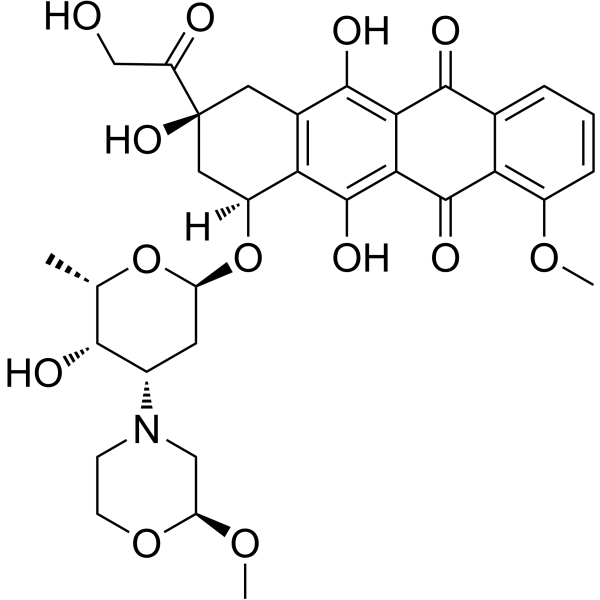
Nemorubicin (Methoxymorpholinyl doxorubicin) GMP is a GMP-class Nemorubicin (HY-15794). Nemorubicin is a Doxorubicin derivative with potent antitumor activity. Nemorubicin is highly cytotoxic to a variety of tumor cell lines presenting a multidrug-resistant phenotype. Nemorubicin not only intercalate into the duplex DNA, but also result in significant ligands for G-quadruplex DNA segments, stabilizing their structure. Nemorubicin requirs an intact nucleotide excision repair (NER) system to exert its activity .
loading...
    loading...
Cat. No.: HY-U00265
CAS No.: 20073-24-9
Synonyms: 3-Carbethoxypsoralen; 3-Ethoxycarbonylpsoralen
Target:  

Bacterial

Research Areas:  

Infection

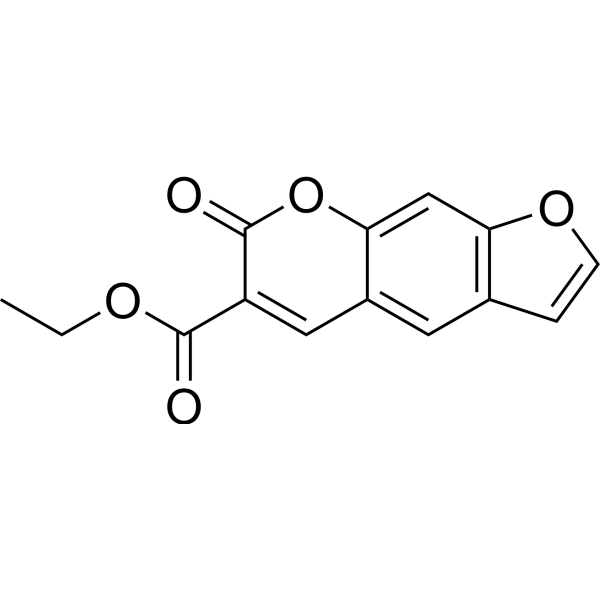
3-CPs is a monofunctional furanocoumarin and a photoprotective agent targeting Staphylococcus aureus DNA, possessesing anti-UVB lethal activity. 3-CPs competitively intercalates into DNA, forming exclusively 4',5'-furan-side mono-adducts upon UVB irradiation, and irreversibly inhibits the formation of cyclobutane pyrimidine dimers. 3-CPs prevents UVB-induced DNA damage by preferentially binding to strong (AT)n sites within the DNA, without inducing lethal interstrand DNA cross-links; the limited number of mono-adducts it induces can be efficiently repaired by bacteria. 3-CPs holds potential for use in the development of photoprotective formulations for skin diseases, as well as in studies investigating bacterial DNA photodamage repair mechanisms and the optimization of photochemotherapy safety .
loading...
    loading...
Cat. No.: HY-151165R
CAS No.: 2810894-92-7
Research Areas:  

Infection

Quinizarin (Standard) is the analytical standard of Quinizarin. This product is intended for research and analytical applications. Quinizarin (1,4-Dihydroxyanthraquinone), a part of the anticancer agents such as Doxorubicin, Daunorubicin, and Adriamycin, interacts with DNA by intercalating mode (Kd=86.1 μM). Quinizarin is used as a fungicide and pesticide chemical and has shown the ability to inhibit tumor cell growth .
loading...
    loading...
Cat. No.: HY-D0226R
CAS No.: 81-64-1
Synonyms: 1,4-Dihydroxyanthraquinone (Standard)
Quinizarin (Standard) is the analytical standard of Quinizarin. This product is intended for research and analytical applications. Quinizarin (1,4-Dihydroxyanthraquinone), a part of the anticancer agents such as Doxorubicin, Daunorubicin, and Adriamycin, interacts with DNA by intercalating mode (Kd=86.1 μM). Quinizarin is used as a fungicide and pesticide chemical and has shown the ability to inhibit tumor cell growth .
loading...
    loading...
Cat. No.: HY-182027
CAS No.: 3031427-16-1
Antibacterial agent 330 is an antibacterial agent. Antibacterial agent 330 triggers ROS accumulation, forms DNA supramolecular complex by intercalation to block DNA replication and inhibits LDH to
disturb metabolism, and further prompts bacterial cell rupture to induce the leakage of intracellular content, ultimately causing bacterial death. Antibacterial agent 330 displays antibacterial activity and promotes wound healing in both G. Mellonella larval and murine wound infection models. Antibacterial agent 330 can be used for the research of bacterial infections .
loading...
    loading...
Cat. No.: HY-169433
Naph-Se-TMZ is a PROTAC-like HDAC1 degrader. Naph-Se-TMZ induces ROS-dependent reduction in HDAC1 protein expression and total HDAC activity, and decreases cell viability in a dose-dependent manner. Naph-Se-TMZ exhibits activity in both TMZ-sensitive and TMZ-resistant glioma cells, and its cytotoxicity is reversed by the ROS scavenger N-acetylcysteine (HY-B0215). Naph-Se-TMZ can be used in studies related to glioblastoma .
Naph-Se-TMZ consists of a target protein ligand (red segment): Temozolomide (HY-17364), a DNA intercalator (blue segment): Nitro-Naphthalimide-C2-acylamide (HY-169437), and a molecular linker (black segment). Meanwhile, the activity control for the target protein ligand is Temozolomide-amino hydrochloride (HY-169439), and the DNA intercalator+linker is NNISC-2 (HY-169438).
loading...
    loading...
Cat. No.: HY-W414334
CAS No.: 17070-45-0
Research Areas:  

Cancer

ICR-191 dihydrochloride enhances Cisplatin (HY-17394)- DNA binding and sensitizes cells to cisplatin. ICR-191 dihydrochloride induces a significant increase in the expression of phosphorylated H2AX (γH2AX), particularly in DNA-replicating cells. ICR-191 dihydrochloride can be used for the study of leukemia .
loading...
    loading...
Cat. No.: HY-146189
CAS No.: 2413901-61-6
Target:  

Topoisomerase Apoptosis

Research Areas:  

Cancer

Topoisomerase II inhibitor 9 (Compound 19b) is a Topo II inhibitor with an IC50 of 0.97 μM. Topoisomerase II inhibitor 9 is also a classical DNA-intercalator with an IC50 of 43.51 μM. Topoisomerase II inhibitor 9 arrests the cell cycle at the G2/M phase and induces apoptosis in Hep G‐2 cells .
loading...
    loading...
Cat. No.: HY-170557
Research Areas:  

Cancer

Topoisomerase IIα-IN-10 (Compound 13r) is an inhibitor of Topoisomerase IIα. It binds to the active site of DNA when complexed with Topoisomerase IIα, and this binding is stabilized through interactions with DNA base pairs and amino acid residues. Topoisomerase IIα-IN-10 can induce Apoptosis by intercalating DNA and inhibiting Topoisomerase IIα, thereby disrupting the mitochondrial membrane potential and inhibiting the growth of HCT116 cell lines, with an IC50 of 4.37 μM against HCT116 cells. Topoisomerase IIα-IN-10 can be used for research in the field of cancer treatment .
loading...
    loading...
Cat. No.: HY-D3404
CAS No.: 169454-13-1
BODi-1 is a fluorescent modulator targeting dsDNA, which binds to dsDNA via a bis-intercalation mechanism (Ex=465 nm, Em=490 nm). BODi-1 exhibits a fluorescence enhancement effect upon binding to nucleic acids, but its fluorescence intensity, anisotropy and average lifetime decrease at higher dye/DNA ratios. When BODi-1 binds to DNA in liposome complexes, it also shows red-shifted emission spectra, along with reduced quantum yield and average lifetime. BODi-1 does not induce significant DNA conformational changes when the dye/DNA ratio is below 0.01. BODi-1 can be used as a fluorescent probe for the characterization of liposome complexes and FRET studies at this ratio .
loading...
    loading...
Cat. No.: HY-W048492
CAS No.: 172163-62-1
Synonyms: 7-Deaza-7-Iodo-2'-deoxyguanosine
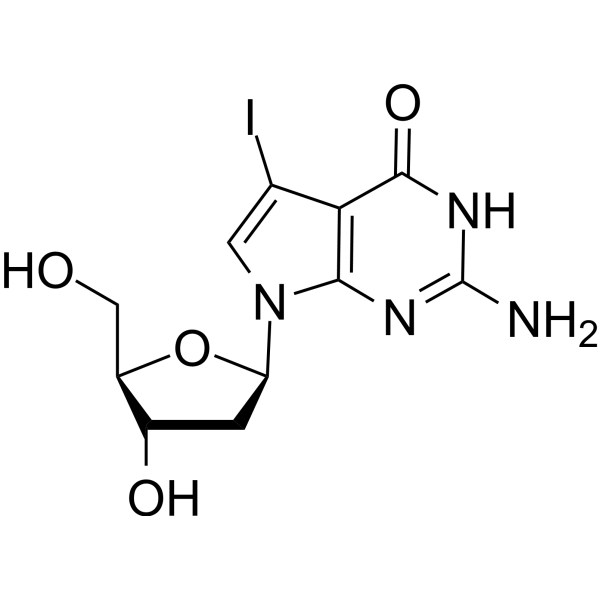
7-Iodo-7-deaza-2'-deoxyguanosine (7-Deaza-7-Iodo-2'-deoxyguanosine) is a modified deoxyguanosine nucleoside. 7-Iodo-7-deaza-2'-deoxyguanosine is used in DNA synthesis and sequencing reactions .
loading...
    loading...
Cat. No.: HY-B1099A
CAS No.: 23255-93-8
Hycanthone mesylate is an apurinic/apyrimidinic endonuclease 1 (APE1) inhibitor, DNA intercalator and Antischistosomal agent, with an IC50 of 80 nM against APE1. Hycanthone mesylate irreversibly inhibits thymidine incorporation into DNA in adult sensitive *Schistosoma mansoni*, while exerts weak inhibitory effects on uridine and leucine incorporation. Hycanthone mesylate reduces influenza virus-induced interferon production. Hycanthone mesylate exhibits mutagenic effects in various organisms, shows teratogenicity in mice and rabbits, and induces neoplastic liver lesions in partially hepatectomized mice. Hycanthone mesylate can be used in research related to schistosomiasis and cancer .
loading...
    loading...
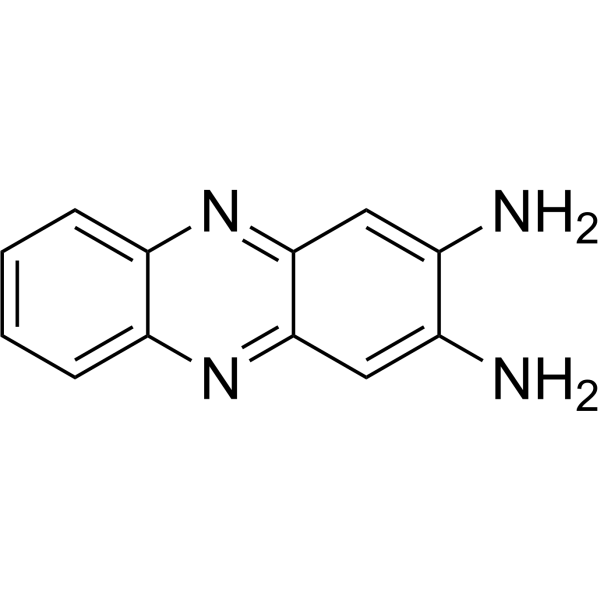
Cat. No.: HY-W020086
CAS No.: 655-86-7
Synonyms: 2,3-Phenazinediamine; NNC39-0028
2,3-Diaminophenazine (2,3-Phenazinediamine) is an orally active amino derivative of phenazine. 2,3-Diaminophenazine can intercalate into DNA. 2,3-Diaminophenazine triggers photochemical reactions. 2,3-Diaminophenazine inhibits vascular hypertrophy and tissue AGE deposition in diabetic rats. 2,3-Diaminophenazine can be used for luminescence and diabetes research .
loading...
    loading...

