142 Results for "

DNA intercalating

" in MedChemExpress (MCE) Product Catalog:
Products (142)

142 Results for "DNA intercalating" in MCE Product Catalog:

Cat. No.: HY-B1099B
CAS No.: 64265-18-5
Hycanthone ethansulfonate is an apurinic/apyrimidinic endonuclease 1 (APE1) inhibitor, DNA intercalator and Antischistosomal agent, with an IC50 of 80 nM against APE1. Hycanthone ethansulfonate irreversibly inhibits thymidine incorporation into DNA in adult sensitive *Schistosoma mansoni*, while exerts weak inhibitory effects on uridine and leucine incorporation. Hycanthone ethansulfonate reduces influenza virus-induced interferon production. Hycanthone ethansulfonate exhibits mutagenic effects in various organisms, shows teratogenicity in mice and rabbits, and induces neoplastic liver lesions in partially hepatectomized mice. Hycanthone ethansulfonate can be used in research related to schistosomiasis and cancer .
loading...
    loading...
Cat. No.: HY-D3195
CAS No.: 2028316-19-8
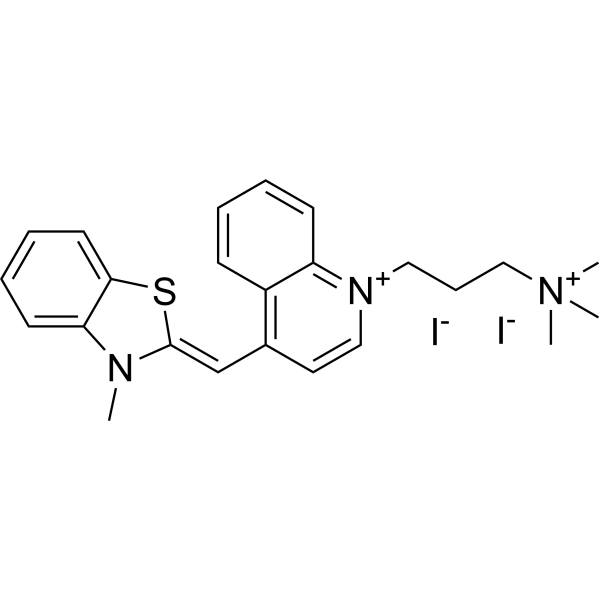
CDr15 is a deep-red fluorescent probe (Ex=733 nm) that can selectively intercalate into and label bacterial extracellular DNA (eDNA). CDr15 exhibits extremely high specificity for biofilm imaging and cannot effectively bind to mammalian nuclear DNA. CDr15 enables real-time visualization of the microcolony structure and developmental process of three-dimensional *Pseudomonas aeruginosa* biofilms, and accurately localizes biofilm-forming regions of microorganisms in a mouse corneal infection model. With low background interference signals, CDr15 serves as an ideal diagnostic tool for research fields including bacterial biofilms and corneal infections .
loading...
    loading...
Cat. No.: HY-DY2020
Target:  

Fluorescent Dye

Research Areas:  

Others

Neutral Red Staining Solution (for Live Cells) is a vital stain used for vital staining of peripheral blood cells, and it can also be used for staining other living cells or tissues. Neutral Red Staining Solution (for Live Cells) accumulates in cytoplasmic vacuoles, lysosomes of living cells, as well as plant/fungal vacuoles. It binds to anionic sites, suberin, lignin, cell walls, DNA and phenolic substances, and can intercalate into DNA. Neutral Red Staining Solution (for Live Cells) stains the cytoplasm of specific phytoplankton and estuarine zooplankton, while dead cells are not stained, enabling viability determination of such organisms .
loading...
    loading...
Cat. No.: HY-D0215
CAS No.: 477-73-6
Synonyms: Safranine T
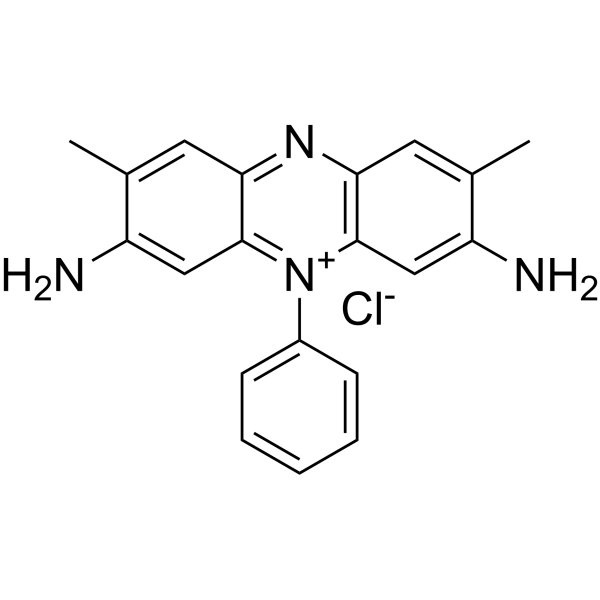
Safranin (Safranin T) is an important and classical phenazinium dye. Safranin has been extensively used in the academic field as a spectroscopic probe and indicator. Safranin possesses a planar structure and cationic charge. Safranin can readily intercalate into biological macromolecules, including DNA and proteins. Safranin has antibacterial effects against gram-positive bacteria (S. aureus). Safranin can be used as a redox indicator in the determination of metal ion concentration .
loading...
    loading...
Cat. No.: HY-187163
CAS No.: 78831-35-3
Target:  

DNA/RNA Synthesis

Research Areas:  

Cancer

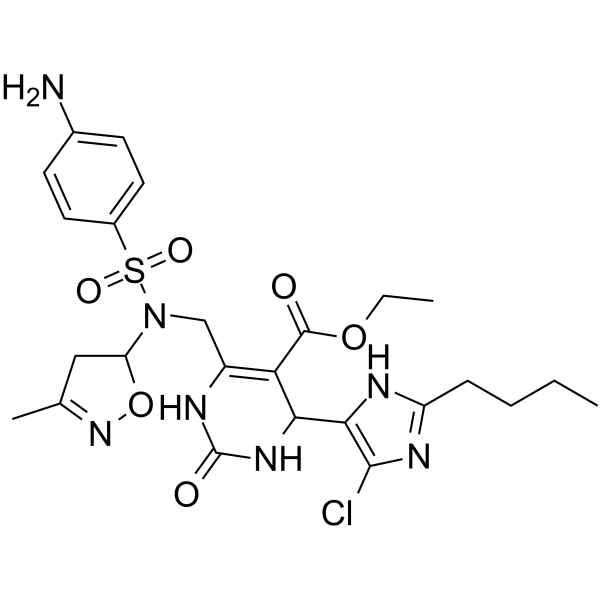
Anticancer agent 355 is a highly selective and potent anticancer agent, with IC50 values of 64.66 μM and 13.35 μM against HeLa and MDA-MB-231 cancer cells, respectively. Anticancer agent 355 induces plasmid DNA degradation via intercalation or minor groove binding, and disrupts the tertiary structure of BSA by interfering with the interactions of amino acid side chains. Anticancer agent 355 can be used in the research of cervical cancer and breast cancer .
loading...
    loading...
Cat. No.: HY-144255
Research Areas:  

Infection

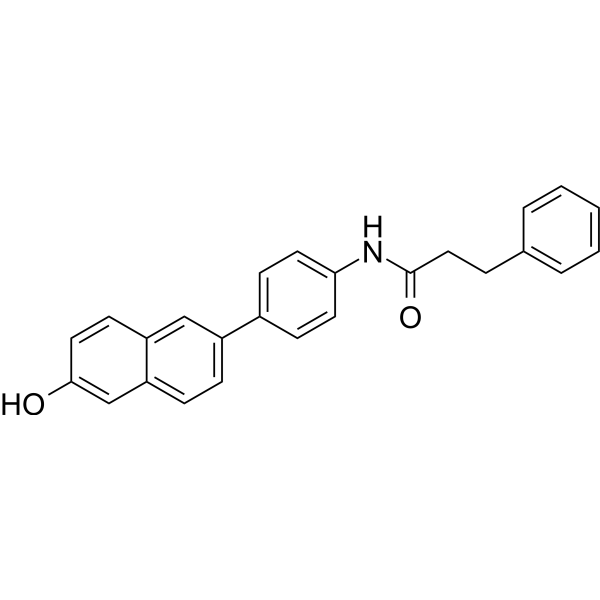
Antibacterial agent 70 is an antibacterial agent that interacts with DNA, with a MIC value of 0.5 μg/mL against K. pneumonia and A. baumanii. Antibacterial agent 70 exhibits rapid bactericidal activity, low cytotoxicity to mammalian cells, and low tendency to induce drug resistance. Antibacterial agent 70 intercalates into DNA, disrupts bacterial membrane integrity, increases intracellular ROS production, reduces GSH activity, regulates membrane depolarization, enhances outer membrane permeability, and induces inner membrane damage. Antibacterial agent 70 can be used in studies related to multidrug-resistant bacterial infections and infections caused by drug-resistant Gram-negative pathogens .
loading...
    loading...
Cat. No.: HY-B1099R
CAS No.: 3105-97-3
Hycanthone (Standard) is the analytical standard of Hycanthone (HY-B1099). This product is intended for research and analytical applications. Hycanthone is an apurinic/apyrimidinic endonuclease 1 (APE1) inhibitor, DNA intercalator and Antischistosomal agent, with an IC50 of 80 nM against APE1. Hycanthone irreversibly inhibits thymidine incorporation into DNA in adult sensitive *Schistosoma mansoni*, while exerts weak inhibitory effects on uridine and leucine incorporation. Hycanthone reduces influenza virus-induced interferon production. Hycanthone exhibits mutagenic effects in various organisms, shows teratogenicity in mice and rabbits, and induces neoplastic liver lesions in partially hepatectomized mice. Hycanthone can be used in research related to schistosomiasis and cancer .
loading...
    loading...
Cat. No.: HY-12404R
CAS No.: 908-54-3
Synonyms: Diminazene diaceturate (Standard)
Diminazene (aceturate) (Standard) is the analytical standard of Diminazene (aceturate). This product is intended for research and analytical applications. Diminazene aceturate (Diminazene diaceturate) is an anti-trypanosome agent for livestock. The main biochemical mechanism of the trypanocidal actions of Diminazene aceturate is by binding to trypanosomal kinetoplast DNA (kDNA) in a non-intercalative manner through specific interaction with sites rich in adenine-thymine base pairs. Diminazene aceturate is also an angiotensin-converting enzyme 2 (ACE2) activator and has strong and potent anti-inflammatory properties .
loading...
    loading...
Cat. No.: HY-180151
Antibacterial agent 306 (Compound 8c), a lactate dehydrogenase inhibitor, is a highly effective antibacterial agent, especially effective against Gram-positive bacteria. Antibacterial agent 306 exhibits MIC against Staphylococcus aureus of as low as 1 μg/mL. Antibacterial agent 306 can not only damage membrane integrity and block the replication of DNA by intercalation, but also make reactive oxygen species (ROS) burst. Antibacterial agent 306 can be used for research on anti-multi-drug resistant bacteria .
loading...
    loading...
Cat. No.: HY-184514
Research Areas:  

Cancer

TPA (bi (Tos))-γ-Glu (PEG23)-Glu-Val-Cit-PAB-PNU-159682 is a cleavable linker-payload conjugate, in which the payload is PNU-159682 (HY-16700) and the linker is TPA (bi (SH))-γ-Glu (PEG23)-Glu-Val-Cit-PAB (HY-184515). TPA (bi (Tos))-γ-Glu (PEG23)-Glu-Val-Cit-PAB-PNU-159682 is used to generate L1CAM-targeted antibody-drug conjugates (ADCs). TPA (bi (Tos))-γ-Glu (PEG23)-Glu-Val-Cit-PAB-PNU-159682 can be used in the research of metastatic triple-negative basal breast cancer and lung adenocarcinoma .
loading...
    loading...
Cat. No.: HY-184284
CAS No.: 2798832-23-0
Antibacterial agent 351 is a broad-spectrum antibacterial agent. Antibacterial agent 351 binds to the allosteric site of PBP2a, induces conformational changes, and reduces the level of PBP2a in MRSA. Antibacterial agent 351 acts as a DNA intercalator to interfere with bacterial DNA function. Antibacterial agent 351 disrupts bacterial redox homeostasis via excessive production of ROS and RNS, depletes intracellular GSH, induces lipid peroxidation, and triggers bacterial cell death. Antibacterial agent 351 enhances the activity of Metronidazole (HY-B0318) against anaerobic bacteria and extends the antibacterial spectrum of Metronidazole to aerobic bacteria. Antibacterial agent 351 can be used in the research of bacterial infections (including MRSA infections) .
loading...
    loading...
Cat. No.: HY-151453
CAS No.: 2860554-26-1
Target:  

Topoisomerase Apoptosis

Research Areas:  

Cancer

Topoisomerase IIα-IN-4 (F2) is a non-intercalative ATP-competitive human DNA topoisomerase II inhibitor with an IC50 value of 3.8 and 10.1 μM for TopoIIα and TopoIIβ, respectively. Topoisomerase IIα-IN-4 shows potent potency in apoptosis induction and cell cycle arrest in HepG2 cells. Topoisomerase IIα-IN-4 exhibits strong antitumor activities against human cancer cell lines, it can be used for the research of cancer .
loading...
    loading...
Cat. No.: HY-N8470
CAS No.: 54526-94-2
Synonyms: NSC 204855; U 40615
Target:  

Bacterial

Research Areas:  

Infection

Steffimycin B is an anthracycline bacterial metabolite originally isolated from Streptomyces. It binds to DNA, preferentially intercalating at sites containing cytosine and guanine.2 Steffimycin B is cytotoxic to MCF-7, KB, NCI-H187, and Vero cells (IC50s=3.5, 6.75, 3.28, and 10.5 μM, respectively). It is active against M. tuberculosis (MIC=5.2 nM), B. cereus (MIC=1.56 μg/mL), and P. falciparum (IC50=2.19 μM).
loading...
    loading...
Cat. No.: HY-D0162R
CAS No.: 2437-29-8
Synonyms: MCCK1 (Standard)
Malachite green hemioxalate (Standard) is the analytical standard of Malachite green hemioxalate (HY-D0162). This product is intended for research and analytical applications. Malachite green hemioxalate is a triphenylmethane dye which can be used to detect the release of phosphate in enzymatic reactions. Malachite green hemioxalate has antimicrobial activity, which is attributed to inhibition of intracellular enzymes, intercalation into DNA, and/or interaction with cellular membranes. Malachite green hemioxalate is also a potent and selective inhibitor of IKBKE, and inhibits its downstream targets such as IκBα, p65 and IRF3. Malachite green hemioxalate exhibits antitumor activity in vitro and in vivo.
loading...
    loading...
Cat. No.: HY-13551C
CAS No.: 80277-14-1
Synonyms: m-AMSA isethionate; Acridinyl anisidide isethionate
Amsacrine isethionate (m-AMSA isethionate) is a Topoisomerase II inhibitor. Amsacrine isethionate intercalates into DNA. Amsacrine isethionate induces Ca 2+-mediated inactivation of ERK, and also downregulates AKT, promoting MCL1 downregulation mediated by GSK3β via reducing the phosphorylation level of GSK3β. Amsacrine isethionate induces Apoptosis by activating Caspase-9 and Caspase-3. Amsacrine isethionate blocks HERG potassium channels in the open/inactivated state. Amsacrine isethionate induces chromosomal aberrations and sister chromatid exchanges, and inhibits the synthesis of RNA and DNA. Amsacrine isethionate exhibits anti-leukemic activity. Amsacrine isethionate causes cardiac repolarization disorders, QT interval prolongation, ventricular arrhythmias, and increases the risk of sudden cardiac death. Amsacrine isethionate can be used in research related to acute myeloid leukemia, lymphoma and progressive malignancies .
loading...
    loading...
Cat. No.: HY-13551D
CAS No.: 80277-11-8
Synonyms: m-AMSA lactate; Acridinyl anisidide lactate
Amsacrine lactate (m-AMSA lactate) is a Topoisomerase II inhibitor. Amsacrine lactate intercalates into DNA. Amsacrine lactate induces Ca 2+-mediated inactivation of ERK, and also downregulates AKT, promoting MCL1 downregulation mediated by GSK3β via reducing the phosphorylation level of GSK3β. Amsacrine lactate induces Apoptosis by activating Caspase-9 and Caspase-3. Amsacrine lactate blocks HERG potassium channels in the open/inactivated state. Amsacrine lactate induces chromosomal aberrations and sister chromatid exchanges, and inhibits the synthesis of RNA and DNA. Amsacrine lactate exhibits anti-leukemic activity. Amsacrine lactate causes cardiac repolarization disorders, QT interval prolongation, ventricular arrhythmias, and increases the risk of sudden cardiac death. Amsacrine lactate can be used in research related to acute myeloid leukemia, lymphoma and progressive malignancies .
loading...
    loading...
Cat. No.: HY-D0917
CAS No.: 157199-59-2
NIR-Red Dead Cell-1 Dye is a DNA-binding fluorescent dye for non-living cells (Ex/Em=515 nm/531 nm). NIR-Red Dead Cell-1 Dye can intercalate into base pairs of double-stranded DNA and produce stronger fluorescence. NIR-Red Dead Cell-1 Dye is suitable for necrotic cells or late apoptotic cells with damaged cell membranes, showing green fluorescence under fluorescence microscopy or flow cytometry. NIR-Red Dead Cell-1 Dye can be used to distinguish live cells from dead cells and distinguish cell membrane integrity. NIR-Red Dead Cell-1 Dye can be attached to the surface of Feraheme (FH) nanoparticles (NPs) to obtain fluorescent dye-functionalized NPs for drug delivery studies .
loading...
    loading...
Cat. No.: HY-162819
Target:  

Apoptosis

Research Areas:  

Cancer

Apoptosis inducer 26 (compound [AgCl(dap2SH)(PPh3)2]) is an autophagy inducer based on mononuclear Ag(I) ligands, with antibacterial and anticancer activities against a variety of bacterial strains and cancer cell lines. Apoptosis inducer 26 can effectively inhibit the growth of both Gram(+) and Gram(-) bacteria by causing the accumulation of Ag(I) ions in the bacterial periplasm. Apoptosis inducer 26 can intercalate between base pairs of CT DNA and induce apoptosis in A549 cells. Apoptosis inducer 26 also has the ability to scavenge free radicals, which can protect against oxidative stress .
loading...
    loading...
Cat. No.: HY-D0920
CAS No.: 166196-17-4
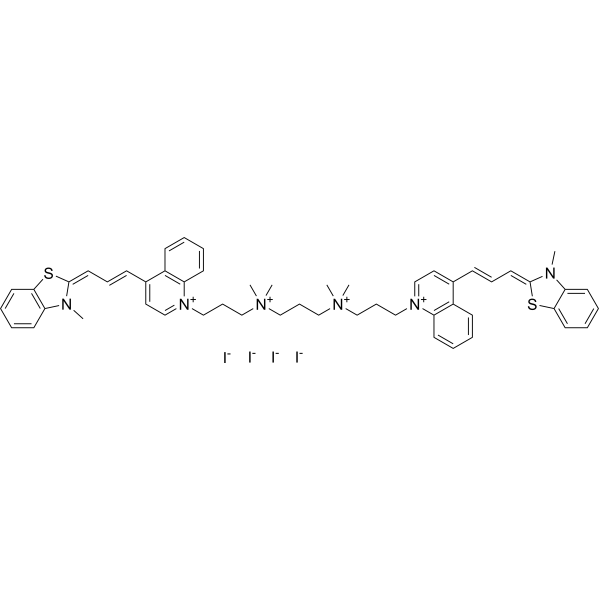
TOTO-3 is a cyanine nucleic acid intercalating fluorescent probe that binds to both RNA and DNA (Ex=642 nm, Em=660 nm). TOTO-3 cannot enter intact cells, but can penetrate cells with permeabilized plasma membranes, staining cytoplasmic RNA and nucleoli to distinguish intact cells from damaged ones. TOTO-3 is taken up by macrophages in an ultrasound-independent manner. TOTO-3 accumulates in tumor cells via ultrasound-mediated enhancement of plasma membrane permeability. TOTO-3 supports optical imaging for real-time assessment of plasma membrane integrity, nucleic acid detection, and monitoring of ultrasound-mediated intracellular delivery processes. TOTO-3 is applicable to studies related to rectal cancer .
loading...
    loading...
Cat. No.: HY-W004588
CAS No.: 72914-19-3
Research Areas:  

Others Cancer

tBu2bpy is a bidentate nitrogen ligand that coordinates with Pt (II) and Pt (IV) to form functional complexes. The tBu2bpy Pt (II) bis-crown ether complex selectively recognizes Mg 2+ and Zn 2+; both ions significantly enhance the fluorescence of the complex and cause a blue shift of the absorption peak. Its six-coordinate Pt (IV) complex [Pt (X)2Me2 ( tBu2bpy)] inhibits the proliferation of tumor cells. tBu2bpy Pt (IV) complexes bind to DNA through multiple interactions including partial intercalation, groove binding, and electrostatic interaction, and can competitively displace ethidium bromide and covalently bind to purine nucleotides. tBu2bpy can be used in relevant research in fields such as organic synthesis .
loading...
    loading...

