133 Results for "

postsynaptic

" in MedChemExpress (MCE) Product Catalog:
Products (133)

133 Results for "postsynaptic" in MCE Product Catalog:

Cat. No.: HY-183101
CAS No.: 2163787-60-6
Target:  

iGluR NADPH Oxidase

Research Areas:  

Neurological Disease

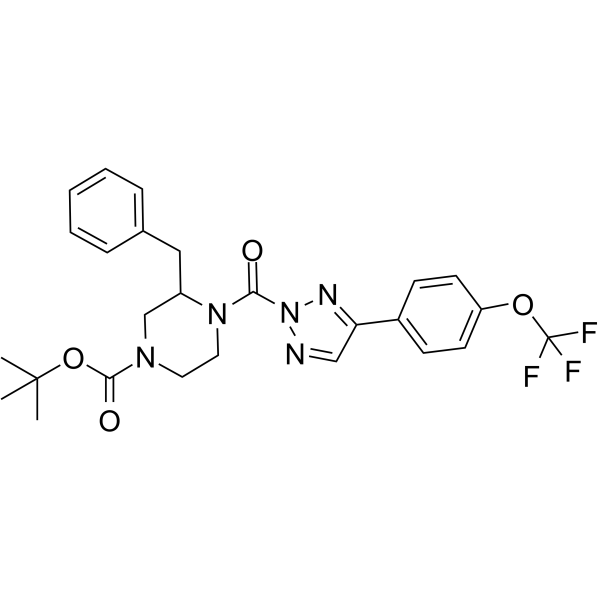
AMPAR modulator-12 is a blood-brain barrier-permeable AMPAR positive allosteric modulator. AMPAR modulator-12 reduces NOX-1 expression, enhances AMPAR-mediated currents, promotes excitatory postsynaptic transmission and restores AMPAR function. AMPAR modulator-12 enhances excitatory and inhibitory synaptic transmission, reduces burst firing in the lateral habenula after withdrawal, and produces rapid and sustained antidepressant-like effects. AMPAR modulator-12 is applicable for the research of depression .
loading...
    loading...
Cat. No.: HY-19733S1
Synonyms: ITI-007-d4
Lumateperone-d4 tosylate (ITI-007-d4 tosylate) is the deuterium labeled Lumateperone tosylate (HY-19733). Lumateperone (ITI-007) tosylate is a 5-HT2A receptor antagonist (Ki = 0.54 nM), a partial agonist of presynaptic D2 receptors and an antagonist of postsynaptic D2 receptors (Ki = 32 nM), and a dopamine D1 receptor modulator. Lumateperone tosylate has anticancer activity and can also be used in studies of psychiatric disorders such as schizophrenia .
loading...
    loading...
Cat. No.: HY-P0234A
CAS No.: 64088-62-6
Target:  

Neurotensin Receptor

Research Areas:  

Neurological Disease

(D-Tyr11)-Neurotensin is an agonist of neurotensin receptor (Neurotensin Receptor) and an inhibitor of glutamatergic neurotransmission. Activation of NTR1 in the VTA by (D-Tyr11)-Neurotensin enhances glutamatergic inputs to non-dopaminergic neurons, mediating reward and dopamine efflux; meanwhile, activation of NTR2 reduces glutamatergic excitatory postsynaptic currents (EPSC) in dopaminergic neurons. (D-Tyr11)-Neurotensin can be used in studies related to schizophrenia .
loading...
    loading...
Cat. No.: HY-L186
54 compounds

Neurotransmitters are chemical messengers that allows a neuron's electrical signal to pass to a postsynaptic neuron or effect target. Neurotransmitters include amino acids, monoamines, and peptides, while other neurotransmitters are composed of metabolites such as nitric oxide and carbon monoxide. The function of neurotransmitters is closely related to the disease of life, helping to regulate the body's heartbeat, blood pressure, breathing, sleep, aging and muscle activity. Therefore, research based on neurotransmitters can help to increase human understanding of diseases.

MCE collects and organizes 54 neurotransmitters and is a tool library for drug screening and mechanism research.

Cat. No.: HY-109009AR
CAS No.: 1294001-37-8
Synonyms: (S)-UCB-0942 (Standard)
Research Areas:  

Neurological Disease

(S)-Padsevonil (Standard) is the analytical standard of (S)-Padsevonil (HY-109009A). This product is intended for research and analytical applications. (S)-Padsevonil is the S-enantiomer of Padsevonil (HY-109009).Padsevonil (UCB0942) is a potent antiepileptic agent that selectively acts on presynaptic and postsynaptic targets. Padsevonil binds to synaptic vesicular protein 2 (SV2) with high affinity. Padsevonil is also a positive allosteric modulator and partial agonist of GABAAR, with high potency against α1 and α5 receptors. Padsevonil has antiepileptic effects in a variety of rodent models .
loading...
    loading...
Cat. No.: HY-119980A
CAS No.: 3093-66-1
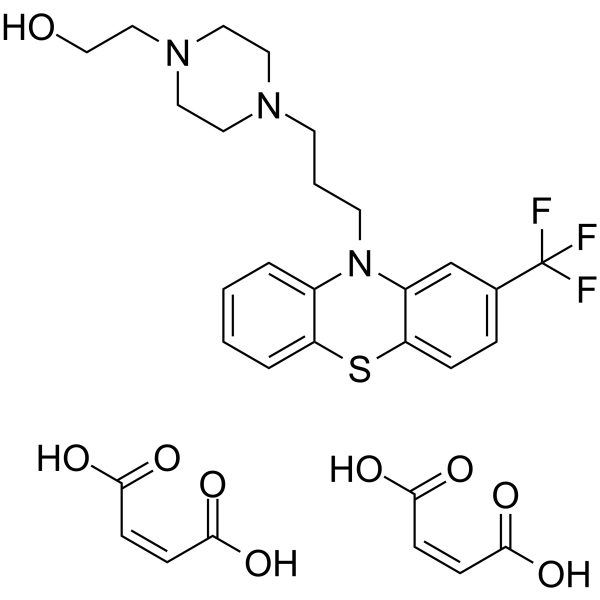
Fluphenazine dimaleate is a potent, orally active phenothiazine-based dopamine receptor antagonist. Fluphenazine dimaleate blocks neuronal voltage-gated sodium channels. Fluphenazine dimaleate acts primarily through antagonism of postsynaptic dopamine-2 receptors in mesolimbic, nigrostriatal, and tuberoinfundibular neural pathways. Fluphenazine dimaleate can antagonize Methylphenidate-induced stereotyped gnawing and inhibit climbing behaviour in mice. Fluphenazine dimaleate can be used for researching psychosis and painful peripheral neuropathy associated with diabetes and has potential to inhibit SARS-CoV-2 .
loading...
    loading...
Cat. No.: HY-119980BS
Fluphenazine-d6 (hydrochloride) is deuterium labeled Fluphenazine (hydrochloride). Fluphenazine hydrochloride is a potent, orally active phenothiazine-based dopamine receptor antagonist. Fluphenazine hydrochloride blocks neuronal voltage-gated sodium channels. Fluphenazine hydrochloride acts primarily through antagonism of postsynaptic dopamine-2 receptors in mesolimbic, nigrostriatal, and tuberoinfundibular neural pathways. Fluphenazine hydrochloride can antagonize Methylphenidate-induced stereotyped gnawing and inhibit climbing behaviour in mice. Fluphenazine hydrochloride can be used for researching psychosis and painful peripheral neuropathy associated with diabetes and has potential to inhibit SARS-CoV-2 .
loading...
    loading...
Cat. No.: HY-119980S
CAS No.: 1323633-98-2
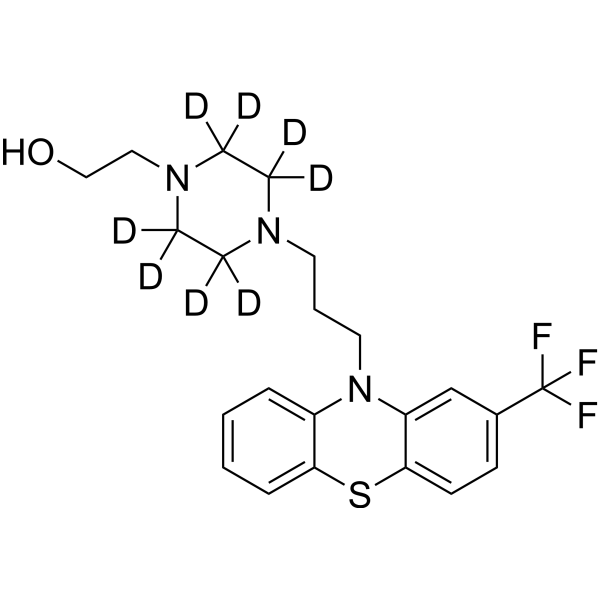
Fluphenazine-d8 is the deuterium labeled Fluphenazine. Fluphenazine is a potent, orally active phenothiazine-based dopamine receptor antagonist. Fluphenazine blocks neuronal voltage-gated sodium channels. Fluphenazine acts primarily through antagonism of postsynaptic dopamine-2 receptors in mesolimbic, nigrostriatal, and tuberoinfundibular neural pathways. Fluphenazine can antagonize Methylphenidate-induced stereotyped gnawing and inhibit climbing behaviour in mice. Fluphenazine can be used for researching psychosis and painful peripheral neuropathy associated with diabetes and has potential to inhibit SARS-CoV-2 .
loading...
    loading...
Cat. No.: HY-156104
CAS No.: 2481744-33-4
Target:  

PROTACs CaMK

Research Areas:  

Neurological Disease

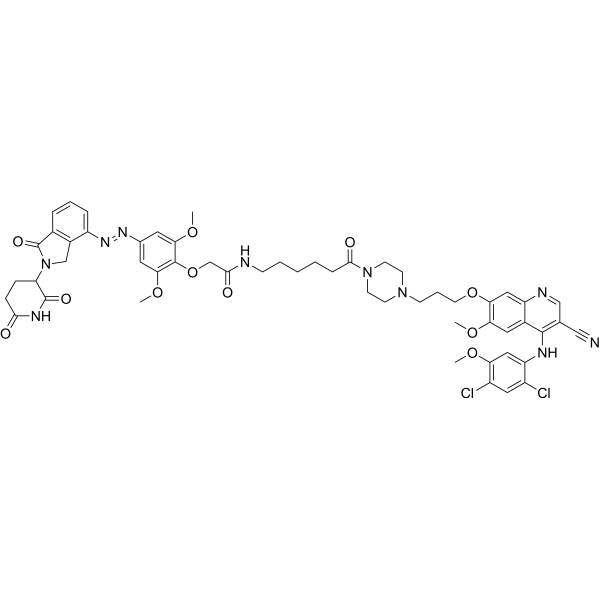
CaMKIIα-PHOTAC is a photochemically targeted chimera (PHOTAC) targeting Ca2+/calmodulin-dependent protein kinase II α (CaMKIIα). Molecules such as PHOTAC can catalyze the ubiquitination and degradation of target proteins through the endogenous proteasome under specific wavelengths of light. CaMKIIα-PHOTAC reduces synaptic function under light conditions, and it attenuates the intensity of evoked field excitatory postsynaptic potentials in the mouse hippocampus in response to physiological stimuli. CaMKIIα-PHOTAC plays a critical role in maintaining long-term potentiation and memory capacity in subcellular dendritic domains .
loading...
    loading...
Cat. No.: HY-A0081R
CAS No.: 146-56-5
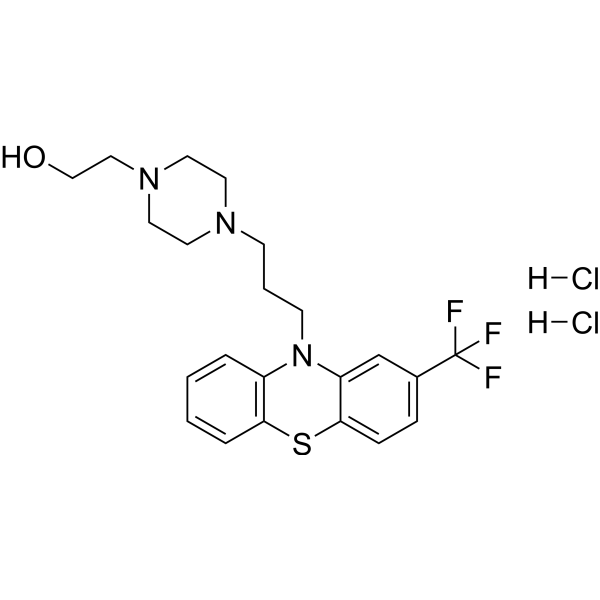
Fluphenazine (dihydrochloride) (Standard) is the analytical standard of Fluphenazine (dihydrochloride). This product is intended for research and analytical applications. Fluphenazine dihydrochloride is a potent, orally active phenothiazine-based dopamine receptor antagonist. Fluphenazine dihydrochloride blocks neuronal voltage-gated sodium channels. Fluphenazine dihydrochloride acts primarily through antagonism of postsynaptic dopamine-2 receptors in mesolimbic, nigrostriatal, and tuberoinfundibular neural pathways. Fluphenazine dihydrochloride can antagonize Methylphenidate-induced stereotyped gnawing and inhibit climbing behaviour in mice. Fluphenazine dihydrochloride can be used for researching psychosis and painful peripheral neuropathy associated with diabetes and has potential to inhibit SARS-CoV-2 .
loading...
    loading...
Cat. No.: HY-W753806
CAS No.: 70918-01-3
Synonyms: UK 33274 hydrochloride
Target:  

Akt

Research Areas:  

Cardiovascular Disease

Doxazosin hydrochloride (UK 33274 hydrochloride) is a compound used to inhibit hypertension and prostate hyperplasia, with activity that inhibits postsynaptic α1-adrenoceptors on vascular smooth muscle. Doxazosin hydrochloride can cause vasodilation, thereby reducing peripheral vascular resistance. Doxazosin hydrochloride was found to inhibit the proliferation and migration of hepatic stellate cells in a mouse liver fibrosis model. Doxazosin hydrochloride regulates fibrosis, autophagy, and apoptosis of hepatic stellate cells by activating the PI3K/Akt/mTOR signaling pathway. Doxazosin hydrochloride also blocks autophagic flux and induces apoptosis of hepatic stellate cells .
loading...
    loading...
Cat. No.: HY-Y0282
CAS No.: 7647-15-6
Synonyms: NSC 77384; Sanibrom 40
Research Areas:  

Neurological Disease

Sodium bromide (NSC 77384; Sanibrom 40) is a GABA-ergic system modulator that crosses the blood-brain barrier, and it effectively reduces and blocks epileptiform discharges. Sodium bromide exerts significant anticonvulsant effects by enhancing GABA-ergic inhibitory functions, such as increasing the amplitude of inhibitory postsynaptic currents and paired-pulse inhibition. Sodium bromide specifically enhances stimulation-induced extracellular alkalosis without affecting baseline pH or subsequent acidosis processes. Sodium bromide exhibits species-specific pharmacokinetic characteristics, competes with chloride ions for renal tubular reabsorption sites, and serves as a marker for extracellular fluid volume. Sodium bromide can be used in the research of epilepsy and related neurological diseases .
loading...
    loading...
Cat. No.: HY-B0661C
CAS No.: 80223-99-0
Synonyms: YM12617 hydrochloride; LY253351 hydrochloride
Tamsolusin hydrochloride (YM12617 hydrochloride; LY253351 hydrochloride) is an isomer of Tamsulosin (HY-B0661). Tamsolusin hydrochloride is a sulfonamide phenethylamine derivative and a competitive antagonist of selective post-synaptic α1-adrenoceptors. Tamsolusin hydrochloride inhibits CYP3A4 activity in a non-competitive, enantiomer-specific manner, with an IC50 and Ki of 6.75 μM. Tamsolusin hydrochloride produces dose-dependent hypotension, preferentially antagonizing α1-adrenoceptor-mediated pressor responses, and inhibits α2-adrenoceptor-mediated pressor responses at high doses. Tamsolusin hydrochloride can be used in research related to various diseases such as metabolism .
loading...
    loading...
Cat. No.: HY-P71010
Purity:  ≥ 80%, as determined by reducing SDS-PAGE.
Synonyms: DLG4; postsynaptic Density Protein 95; Discs Large MAGUK Scaffold Protein 4; Tax Interaction Protein 15; SAP-90; Discs Large Homolog 4; PSD95; Discs, Large Homolog 4 (Drosophila), Isoform CRA_d; SAP90; Discs, Large Homolog 4 (Drosophila); Synapse-Associat
Species:  
Rat
Source:  
E. coli
loading...
    loading...
Cat. No.: HY-P703114
Purity:  ≥ 95%, as determined by reducing SDS-PAGE.
Synonyms: DLG4; postsynaptic Density Protein 95; Discs Large MAGUK Scaffold Protein 4; Tax Interaction Protein 15; SAP-90; Discs Large Homolog 4; PSD95; Discs, Large Homolog 4 (Drosophila), Isoform CRA_d; SAP90; Discs, Large Homolog 4 (Drosophila); Synapse-Associat
Species:  
Human
Source:  
E. coli
loading...
    loading...
Cat. No.: HY-117771A
CAS No.: 2098969-71-0
Purity:  98.42%
Target:  

DAGL

DO34 analog is a structural analog of DO34 (HY-117771). DO34 is a selective DAGL inhibitor, with an IC50 of 6 nM for DAGLα conversion of SAG to 2-AG. DO34 blocks de novo 2-AG synthesis, and suppresses tonic CB1 receptor activation. DO34 blocks depolarization-induced suppression of excitation and inhibition in the cerebellum and hippocampus. DO34 regulates feeding behavior and locomotor activity in mice. DO34 abolishes AM251-mediated enhancement of parallel fiber-evoked excitatory postsynaptic currents in cerebellar slices from MAGL global knockout mice. DO34 can be used for the research of energy balance disorder and neuroinflammation .
loading...
    loading...
Cat. No.: HY-181635
CAS No.: 146-36-1
Azapetine is an antagonist of α1-adrenoceptor, with an IC50 of 0.205 μM at rat α1-adrenoceptor and an IC50 of 1.3 μM at rat α2-adrenoceptor, and exhibits higher selectivity for α1-adrenoceptor than for α2-adrenoceptor. Azapetine functionally blocks postsynaptic α1-adrenoceptors, and at higher concentrations, it blocks presynaptic α2-adrenoceptors, central α-adrenoceptors, and H2 histamine receptors. Azapetine is used in related research on hypotension .
loading...
    loading...
Cat. No.: HY-181635A
CAS No.: 130-83-6
Azapetine phosphate is an antagonist of α1-adrenoceptor, with an IC50 of 0.205 μM at rat α1-adrenoceptor and an IC50 of 1.3 μM at rat α2-adrenoceptor, and exhibits higher selectivity for α1-adrenoceptor than for α2-adrenoceptor. Azapetine phosphate functionally blocks postsynaptic α1-adrenoceptors, and at higher concentrations, it blocks presynaptic α2-adrenoceptors, central α-adrenoceptors, and H2 histamine receptors. Azapetine phosphate is used in related research on hypotension .
loading...
    loading...
Cat. No.: HY-B0661D
CAS No.: 94666-07-6
Synonyms: YM12617 free base; (Rac)-LY253351 free base
(Rac)-Tamsulosin (YM12617 (free base); (Rac)-LY253351 (free base)) is an isomer of Tamsulosin (HY-B0661). (Rac)-Tamsulosin is a sulfonamide phenethylamine derivative and a competitive antagonist of selective post-synaptic α1-adrenoceptors. (Rac)-Tamsulosin inhibits CYP3A4 activity in a non-competitive, enantiomer-specific manner, with an IC50 and Ki of 6.75 μM. (Rac)-Tamsulosin produces dose-dependent hypotension, preferentially antagonizing α1-adrenoceptor-mediated pressor responses, and inhibits α2-adrenoceptor-mediated pressor responses at high doses. (Rac)-Tamsulosin can be used in research related to various diseases such as metabolism .
loading...
    loading...
Cat. No.: HY-W745352
CAS No.: 65-15-6
Azapetine hydrochloride is an antagonist of α1-adrenoceptor, with an IC50 of 0.205 μM at rat α1-adrenoceptor and an IC50 of 1.3 μM at rat α2-adrenoceptor, and exhibits higher selectivity for α1-adrenoceptor than for α2-adrenoceptor. Azapetine hydrochloride functionally blocks postsynaptic α1-adrenoceptors, and at higher concentrations, it blocks presynaptic α2-adrenoceptors, central α-adrenoceptors, and H2 histamine receptors. Azapetine hydrochloride is used in related research on hypotension .
loading...
    loading...

