140 Results for "

renal function

" in MedChemExpress (MCE) Product Catalog:
Products (140)

140 Results for "renal function" in MCE Product Catalog:

Cat. No.: HY-184000
Research Areas:  

Endocrinology

SIRT5-IN-10 is a competitive SIRT5 inhibitor. SIRT5-IN-10 improves renal function and reduces histopathological damage in septic acute kidney injury (AKI) mice. SIRT5-IN-10 can be used for the research of sepsis-associated AKI .
loading...
    loading...
Cat. No.: HY-187273S
[U- 15N]-Cys-C is the 15N-labeled Cys-C. Cystatin C (Cys-C) is a highly sensitive biomarker of renal function that is unaffected by factors such as age; it is also associated with the pathological progression of oncological, cardiovascular, and neurological diseases. This isotope can be used in NMR studies of disease mechanisms and in mass spectrometry analysis.
loading...
    loading...
Cat. No.: HY-Y0271S3
CAS No.: 78405-35-3
Synonyms: Carbonyl diamide-13C,15N
Urea- 13C, 15N is the 13C- and 15N-labeled Urea (HY-Y0271). Urea is a powerful protein denaturant via both direct and indirect mechanisms. A potent emollient and keratolytic agent. Used as a diuretic agent. Blood urea nitrogen (BUN) has been utilized to evaluate renal function. Widely used in fertilizers as a source of nitrogen and is an important raw material for the chemical industry .
loading...
    loading...
Cat. No.: HY-183543
CAS No.: 3051509-32-8
Target:  

URAT1 GLUT

Research Areas:  

Metabolic Disease Endocrinology

URAT1/GLUT9-IN-2 is a selective, orally active URAT1/GLUT9 inhibitor, with an IC50 of 2.81 μM against URAT1 and an IC50 of 12.53 μM against GLUT9. URAT1/GLUT9-IN-2 reduces serum uric acid levels and protects renal function. URAT1/GLUT9-IN-2 can be used in research related to hyperuricemia and hyperuricemic nephropathy .
loading...
    loading...
Cat. No.: HY-184797
Zp17 is a PROTAC degrader that targets the STING protein for degradation by recruiting cereblon, with a DC50 of 956 nM in THP-1 cells. Zp17 induces proteasome-dependent STING protein degradation and inhibits the activity of the STING signaling pathway. Zp17 alleviates renal function injury in a mouse model of acute kidney injury induced by Cisplatin (HY-17394). Zp17 exhibits STING-degrading activity in human monocytes and STING-inhibiting activity in mouse macrophage reporter cells. Zp17 can be used for research on inflammation and acute kidney injury .
loading...
    loading...
Cat. No.: HY-L051
1,255 compounds

Ferroptosis is a novel type of cell death program that is distinct from apoptosis, necroptosis and autophagy. It is dependent on iron and reactive oxygen species (ROS) and is characterized by lipid peroxidation. As a novel type of cell death, ferroptosis has distinct properties and recognizing functions involved in physical conditions or various diseases including cancers, neurodegenerative diseases, acute renal failure, etc.

MCE carefully collected a unique collection of 1,255 ferroptosis signaling pathway related compounds with ferroptosis-inducing or -inhibitory activity. MCE Ferroptosis Compound Library is a useful tool to study ferroptosis mechanism as well as related diseases.

Cat. No.: HY-114740R
CAS No.: 6051-87-2
Synonyms: 5,6-Benzoflavone (Standard); beta-NF (Standard)
β-Naphthoflavone (Standard) is the analytical standard of β-Naphthoflavone. This product is intended for research and analytical applications. β-Naphthoflavone is an exogenous aryl hydrocarbon receptor (AHR) ligand. β-Naphthoflavone can activate AHR to participate in various biological processes, including cell growth, differentiation, apoptosis, and metabolism. β-Naphthoflavone has antioxidant activity and can exert its antioxidant function by regulating the activity of antioxidant enzymes. β-Naphthoflavone is also a non-carcinogenic CYP1A inducer and can be used to study aristolochic acid (AAI) induced renal injury .
loading...
    loading...
Cat. No.: HY-N6075
CAS No.: 449733-84-0
Synonyms: Nuezhenide
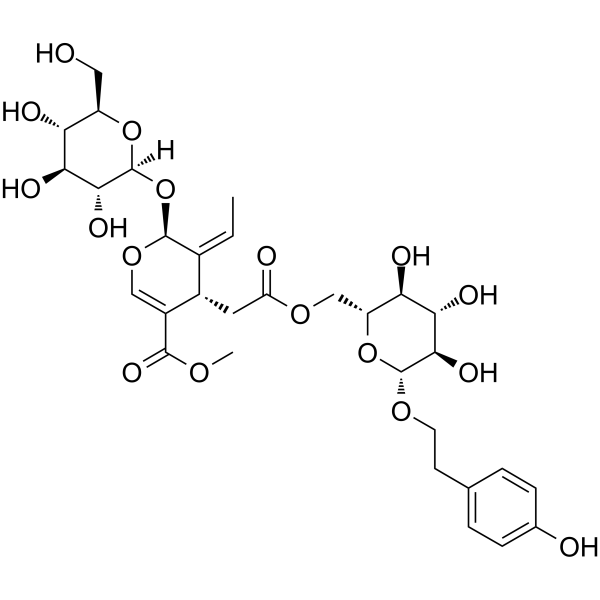
Specneuzhenide (Nuezhenide) is an orally active phenol glycoside isolated from Ligustrum sinense. Specneuzhenide exhibits anti-inflammatory, antioxidant, antifibrotic, antitumor, hypoglycemic, as well as cartilage- and kidney-protective activities. Specneuzhenide inhibits fibrosis by activating the AMPK pathway (Kd = 62 µM), alleviates inflammation and oxidative stress by regulating multiple signaling pathways (NF-κB, Wnt/β-catenin and HO-1/Nrf-2), and upregulates podocyte proteins to comprehensively protect renal function. Specneuzhenide can be used in research related to cancer, rheumatoid arthritis, pulmonary fibrosis, diabetic nephropathy and osteoarthritis .
loading...
    loading...
Cat. No.: HY-107665
CAS No.: 62645-28-7
Ro 106-9920 is an orally active NF-κB inhibitor. Ro 106-9920 prevents ubiquitination of IκBα, blocks nuclear translocation of NF-κB, and inhibits NF-κB activation. Ro 106-9920 suppresses TNF-α-induced tissue factor expression and procoagulant activity, enhances TNF-α-mediated cytotoxicity against cancer cells, and eliminates the formation of neutrophil extracellular traps. Ro 106-9920 inhibits NLRP3 inflammasome activation, reduces inflammatory cytokine secretion, decreases myeloperoxidase activity, attenuates renal cell apoptosis, and improves renal function. Ro 106-9920 blocks ANG II (Angiotensin II human) (HY-13948)-induced nuclear localization of p65, internalization of AT1A receptor, colocalization of β-arrestin-2, and expression of COX-2, and alters the formation of β-arrestin endosomes. Ro 106-9920 can be used in research related to non-small cell lung cancer, acute kidney injury, diabetes mellitus, and osteoporosis .
loading...
    loading...
Cat. No.: HY-189143
Target:  

Xanthine Oxidase

Research Areas:  

Metabolic Disease

Xanthine oxidase-IN-24 is an orally active mixed-type inhibitor of xanthine oxidase, with an IC50 of 0.051 μM and a Ki of 0.162 μM. Xanthine oxidase-IN-24 interacts with both free xanthine oxidase and the xanthine-xanthine oxidase complex, and reduces uric acid production in vivo. In a rat model of hyperuricemia induced by Potassium oxonate (HY-17511), Xanthine oxidase-IN-24 dose-dependently lowers serum uric acid levels, improves renal function-related biochemical parameters such as creatinine and urea nitrogen, and alleviates histopathological damage to liver and kidney tissues. Xanthine oxidase-IN-24 can be used in the research of hyperuricemia .
loading...
    loading...
Cat. No.: HY-B1204S2
Synonyms: Ergamine-13C5, 15N3
Histamine- 13C5, 15N3 (Ergamine- 13C5, 15N3) is the 13C and 15N labeled isotope of Histamine (HY-B1204). Histamine is the agonist for histamine receptor and a vasodilator. Histamine is an organic nitrogen compound that participates in local immune responses, regulates intestinal physiological functions, and acts as a neurotransmitter. Histamine affects p38 MAPK/Akt signaling pathway, exhibits antitumor, antioxidant and anti-inflammatory activities. Histamine can be used in the research of acute myeloid leukemia, malignant melanoma, and renal cell carcinoma .
loading...
    loading...
Cat. No.: HY-D0885BR
CAS No.: 922-32-7
Synonyms: Disodium creatine phosphate (Standard)
Phosphocreatine (disodium) (Standard) is the analytical standard of Phosphocreatine (disodium). This product is intended for research and analytical applications. Phosphocreatine (disodium) is an organic compound found in vertebrate skeletal muscles. Phosphocreatine (disodium) enhances antioxidant activity, and activates the TAK1 pathway to protect the heart. Phosphocreatine (disodium) normalizing mitochondrial function and reducing oxidative stress via Akt mediated Nrf2/HO-1 pathway. Phosphocreatine (disodium) provides renal protection by suppressing Apoptosis and ROS (Reactive Oxygen Species) generation through ERK mediated mediated Nrf-2/HO-1 pathway. .
loading...
    loading...
Cat. No.: HY-Y0282
CAS No.: 7647-15-6
Synonyms: NSC 77384; Sanibrom 40
Research Areas:  

Neurological Disease

Sodium bromide (NSC 77384; Sanibrom 40) is a GABA-ergic system modulator that crosses the blood-brain barrier, and it effectively reduces and blocks epileptiform discharges. Sodium bromide exerts significant anticonvulsant effects by enhancing GABA-ergic inhibitory functions, such as increasing the amplitude of inhibitory postsynaptic currents and paired-pulse inhibition. Sodium bromide specifically enhances stimulation-induced extracellular alkalosis without affecting baseline pH or subsequent acidosis processes. Sodium bromide exhibits species-specific pharmacokinetic characteristics, competes with chloride ions for renal tubular reabsorption sites, and serves as a marker for extracellular fluid volume. Sodium bromide can be used in the research of epilepsy and related neurological diseases .
loading...
    loading...
Cat. No.: HY-114557R
CAS No.: 1041-01-6
Synonyms: 3,5-Diiodo-L-thyronine (Standard)
NSC 90469 (Standard) is the analytical standard of NSC 90469. This product is intended for research and analytical applications. NSC 90469 (3,5-Diiodo-L-thyronine) is an orally active thyroid hormone derivative. NSC 90469 inhibits JNK phosphorylation and NF-κB acetylation, blocks SIRT1 protein expression, induces elevated PGC-1α levels, and stimulates COX activity. NSC 90469 enhances UCP1-mediated thermogenesis, increases hepatic Dio1 activity, inhibits TSH levels and hypothalamic-pituitary-thyroid axis function, enhances lipid metabolism, and regulates energy metabolism via the mitochondrial pathway. NSC 90469 prevents blood glucose reduction, reduces urinary albumin excretion, inhibits renal matrix expansion, decreases TGF-β1 expression, and reduces renal fibronectin and type Ⅳ collagen deposition. NSC 90469 also increases energy expenditure and prevents diet-induced overweight. NSC 90469 can be used in studies related to diabetic nephropathy, hypothyroidism, non-alcoholic fatty liver disease, and diet-induced obesity .
loading...
    loading...
Cat. No.: HY-169059
Target:  

Ferroptosis

Research Areas:  

Inflammation/Immunology

Ferroptosis-IN-12 (Cpd-A1) is a ferroptosis inhibitor. Ferroptosis-IN-12 exhibits effective ferroptosis inhibition in Erastin (HY-15763)-treated mouse tubular epithelial cells (mTECs) and improves kidney function, alleviates renal tubular damage, and reduces inflammation in a dose-dependent manner in acute kidney injury (AKI) mouse models induced by ischemia/reperfusion (I/R) or cecal ligation and puncture (CLP). Ferroptosis-IN-12 demonstrates good plasma stability and high distribution in kidney tissues in pharmacokinetic studies in mice. Ferroptosis-IN-12 holds promise for research in the field of acute kidney injury (AKI) .
loading...
    loading...
Cat. No.: HY-108534
CAS No.: 485842-97-5
Synonyms: AW 464
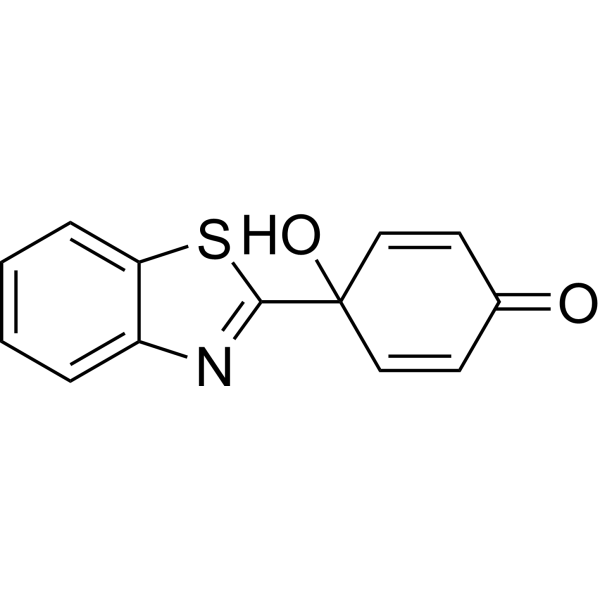
PMX464 (AW 464) is a thiol-reactive quinol compound and an inhibitor of the thioredoxin-thioredoxin reductase (Trx/TrxR) system, with an IC50 value of 6.5 μM against TrxR. PMX464 acts by irreversibly inhibiting the thioredoxin (Trx-1) system, blocking HIF-1α transcriptional activation and the NF-κB inflammatory pathway, inducing apoptosis, attenuating platelet function and inhibiting thrombosis, and specifically disrupting the trypanothione antioxidant metabolic network in parasites. PMX464 is used in research concerning malignant tumors (colorectal cancer, breast cancer, renal cancer, and leukemia), pulmonary inflammation, African sleeping sickness, and antithrombotic applications .
loading...
    loading...
Cat. No.: HY-109136R
CAS No.: 1402936-61-1
Synonyms: BAY 1101042 (Standard)
Runcaciguat (Standard) is the analytical standard of Runcaciguat (HY-109136). This product is intended for research and analytical applications. Runcaciguat (BAY 1101042) is a selective, orally active, allosteric activator of soluble guanylate cyclase (sGC) that specifically targets its oxidized and heme-free form. Runcaciguat binds to sGC in a histidine-dependent manner and restores cyclic guanosine monophosphate (cGMP) production under oxidative stress, independent of nitric oxide (NO) or heme. Runcaciguat exhibits renoprotective and cardioprotective activities, such as reduced proteinuria and improved renal function. Runcaciguat is primarily being studied in chronic Kidney disease (CKd) associated with hypertension, diabetes, and metabolic disorders, as well as potential cardiovascular indications such as heart failure with preserved ejection fraction (HFpEF) .
loading...
    loading...
Cat. No.: HY-119649R
CAS No.: 158062-67-0
Synonyms: IKI220 (Standard)
Flonicamid (Standard) (IKI220 (Standard)) is the analytical standard of Flonicamid (HY-119649). This product is intended for research and analytical applications. Flonicamid (IKI220) is an antifeedant Insecticide active against Hemiptera, Thysanoptera, and piercing-sucking pests including aphids of all species, developmental stages and morphs. Flonicamid inhibits the inward rectifier potassium channel NlKir1, blocking stylet penetration, salivation, sap feeding, honeydew secretion, and fluid secretion by isolated Malpighian tubules. Flonicamid reduces renal excretory function in female Culex pipiens pallens. Flonicamid rapidly disrupts insect feeding behavior without neurotoxic poisoning symptoms, induces irreversible starvation, and increases the mortality of nymph progeny of adult aphids exposed to this agent .
loading...
    loading...
Cat. No.: HY-160475
CAS No.: 1804942-56-0
AD-9308 is an orally active, highly selective aldehyde dehydrogenase 2 (ALDH2) activator. AD-9308 alleviates oxidative stress, improves mitochondrial function, restores cell viability, reduces renal tubular injury, fibrosis and inflammatory responses, reverses ventricular remodeling, restores the activities of Dicer and superoxide dismutase, inhibits the IL-6 signaling pathway, reduces the accumulation of 4-HNE-protein adducts, and improves glucose homeostasis. AD-9308 can be used in studies related to acrolein-induced kidney injury, diabetes, cardiomyopathy, heart failure, diet-induced obesity, fatty liver, insulin resistance and glucose intolerance .
loading...
    loading...
Cat. No.: HY-W008385AS
Synonyms: L-Homoarginine-d4 dihydrochloride
H-HoArg-OH-d4 dihydrochloride (L-Homoarginine-d4 dihydrochloride) is the d4-labeled H-HoArg-OH dihydrochloride. H-HoArg-OH dihydrochloride (L-Homoarginine dihydrochloride) is an orally active endogenous non-protein amino acid. H-HoArg-OH dihydrochloride acts as a weak alternative substrate for NOS and interferes with NO production, selectively inhibits tissue-nonspecific alkaline phosphatase (TNAP), and suppresses the uptake of arginine by y +-type transporters (system y +). H-HoArg-OH dihydrochloride increases tissue hArg concentrations in vivo, regulates amino acid homeostasis, and improves renal function and pathological features of diabetic nephropathy. H-HoArg-OH dihydrochloride can be used in studies related to diabetes and cardiomyopathy .
loading...
    loading...