118 Results for "

vibrational modes

" in MedChemExpress (MCE) Product Catalog:
Products (118)

118 Results for "vibrational modes" in MCE Product Catalog:

Cat. No.: HY-W399025
CAS No.: 1110883-26-5
Research Areas:  

Neurological Disease

ID110460001 is a full agonist of μ-opioid receptor and an agonist of δ-opioid receptor. ID110460001 exhibits high intrinsic efficacy for G protein pathway activation of μ-opioid receptor, and this property is not affected by the reduction in receptor quantity. ID110460001 acts only as a very weak partial agonist in the β-arrestin-2 pathway of both receptors, and binds to μ-opioid receptor via a specific mode. The efficacy of ID110460001 in the G protein pathway of δ-opioid receptor is sensitive to changes in receptor quantity. ID110460001 can be used in pain-related research .
loading...
    loading...
Cat. No.: HY-180889
CAS No.: 2257497-15-5
PROTAC BRD3 degrader-1 (compound D072) is a potent and selective PROTAC BRD3 degrader. PROTAC BRD3 degrader-1 selectively degrades BRD3 in mice, leading to the downregulation of H3K18ac without affecting BRD2 or BRD4. PROTAC BRD3 degrader-1 reduces intraocular inflammation in the experimental autoimmune uveitis (EAU) mouse mode and inhibits proinflammatory microglia in both uveitis retina and LPS (HY-D1056) treated mouse microglia cell line BV2. PROTAC BRD3 degrader-1 can be used for uveitis research .
loading...
    loading...
Cat. No.: HY-181519
ALR2/α-GLY-IN-1 is a potent dual-target inhibitor that targets aldose reductase ALR2 and α-glucosidase (IC50 values are 0.72 μM and 0.82 μM, respectively; Ki values are 1.67 μM and 1.37 μM, respectively). ALR2/α-GLY-IN-1 also acts as a DNA binder, which stably interacts with calf thymus double-stranded DNA through non-covalent interactions such as groove-binding mode and water-bridged hydrogen bonds. ALR2/α-GLY-IN-1 can be used in studies related to diabetes and its complications .
loading...
    loading...
Cat. No.: HY-184657
Target:  

Molecular Glues CDK

Research Areas:  

Cancer

CDK2 degrader 10 is an orally active, cereblon-based molecular glue degrader targeting CDK2, with a DC50 of 120 nM. CDK2 degrader 10 forms a ternary complex with cereblon and CDK2 via a non-canonical recruitment mode, thereby driving CDK2 degradation through the ubiquitin-proteasome system. CDK2 degrader 10 inhibits retinoblastoma protein phosphorylation, induces G1/S cell cycle arrest, and suppresses CDK2-dependent cell proliferation. CDK2 degrader 10 can be used in studies related to CDK2-dependent cancers .
loading...
    loading...
Cat. No.: HY-107659R
CAS No.: 837424-39-2
YM-244769 hydrochloride (Standard) is the analytical standard of YM-244769 (hydrochloride) (HY-107659). This product is intended for research and analytical applications. YM-244769 hydrochloride is a potent, selective and orally active Na+/Ca2+ exchanger (NCX) inhibitor. YM-244769 hydrochloride preferentially inhibits NCX3 and suppresses the unidirectional outward NCX current (Ca2+ entry mode), with IC50s of 18 nM and 50 nM, respectively. YM-244769 hydrochloride efficiently protects against hypoxia/reoxygenation-induced SH-SY5Y neuronal cell damage. YM-244769 hydrochloride can also increase urine volume and urinary excretion of electrolytes in mice .
loading...
    loading...
Cat. No.: HY-153021
CAS No.: 326879-46-3
Purity:  ≥98.0%
Target:  

Parasite

Research Areas:  

Infection

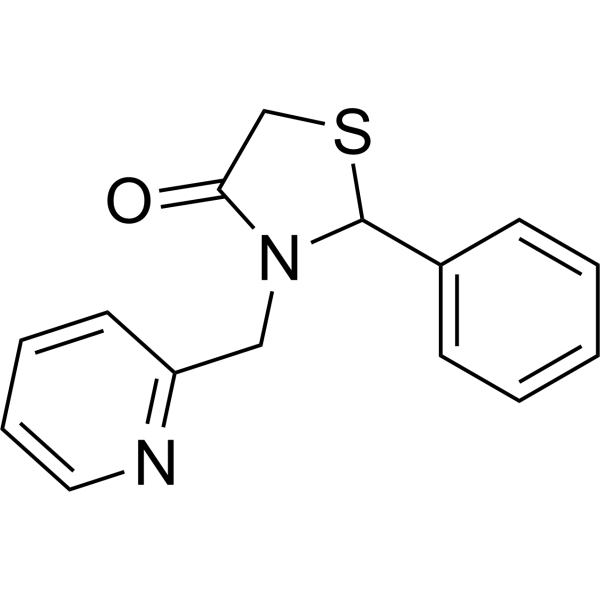
NMT-IN-1 is a Trypanosoma brucei N-myristoyltransferase (TbNMT) inhibitor, with an IC50 of 31 μM against TbNMT and an IC50 of 66 μM against hNMT. As a thiazolidinone hit compound identified via virtual screening, NMT-IN-1 exerts enzymatic inhibitory effects by binding to the active site of TbNMT. NMT-IN-1 adopts a binding mode distinct from that of pyrazole sulfonamide inhibitors and can inhibit the myristoyl transfer reaction catalyzed by TbNMT. NMT-IN-1 is mainly used in the research of anti-parasitic lead compounds for human African trypanosomiasis (African sleeping sickness). It provides a structural basis for the subsequent optimization of TbNMT inhibitors with high activity, high selectivity and blood-brain barrier permeability .
loading...
    loading...
Cat. No.: HY-175176
CAS No.: 3038691-85-6
HDAC1/6-IN-3 is a potent HDAC inhibitor. HDAC1/6-IN-3 shows excellent inhibitory activities against HDAC1 (IC50 = 1.1 nM) and HDAC6 (IC50 = 2.7 nM). HDAC1/6-IN-3 significantly arrests HepG2 cells at the G0/G1 phase and induces apoptosis and pyroptosis. HDAC1/6-IN-3 exhibits significant antitumor activity in the HepG2 xenograft mode. HDAC1/6-IN-3 can be used for the study of cancers such as liver cancer, lung cancer, colon cancer and breast cancer .
loading...
    loading...
Cat. No.: HY-P990610

Target:  

Akt mTOR PI3K

Research Areas:  

Cancer

KHK-2898 is a monoclonal antibody targeting CD98, which binds to the extracellular domain of CD98 on the tumor cell membrane in a non-covalent antigen-specific mode. KHK-2898 can disrupt the heterodimeric complex formed by CD98 with LAT1 and xCT light chains, reduce the amino acid uptake capacity of tumor cells, block the PI3K/AKT/mTOR proliferative signaling cascade, and mediate antibody-dependent cytotoxicity. KHK-2898 can be used for cancer-related research. The isotype control of KHK-2898 can be found in Human IgG1 kappa, Isotype Control (HY-P99001) .
loading...
    loading...
Cat. No.: HY-118243
CAS No.: 1089681-42-4
Target:  

Amyloid-β

Research Areas:  

Others

KMS88009 is a potent small molecule that directly interferes with the formation of amyloid-β oligomers, thereby preserving cognitive behavior when used preventively and reversing cognitive behavior decline when used therapeutically. Oral administration of KMS88009 around the onset of Alzheimer's disease symptoms significantly reduced the assembly of amyloid-β oligomers and improved cognitive behavior in the APP/PS1 double transgenic mouse model. This unique dual mode of action suggests that KMS88009 may be a powerful therapeutic candidate for the treatment of Alzheimer's disease. In an evaluation, the physicochemical properties, pharmacokinetics and toxicity of this anti-amyloidogenic small molecule KMS88009 were studied, as well as post-mortem analysis of APP/PS1 TG mice after behavioral testing.
loading...
    loading...
Cat. No.: HY-135752
CAS No.: 99827-19-7
Target:  

Bacterial

Research Areas:  

Infection

Carbendazim mixture with flusilazole is a fungicide used to control sooty mold caused by Botrytis narcissicola. The disease is the most common foliar disease of daffodils (Narcissus cultivars) in the UK and causes significant losses in bulb and flower production. Carbendazim mixture with flusilazole was found to be effective in reducing lesion size and significantly reducing symptoms of secondary sooty mold after spraying when used in combination with several other fungicides. In field trials in Cambridgeshire and Lincolnshire, a spraying program using this fungicide mixture was effective in controlling sooty mold. In addition, alternating four to six sprays using two or three fungicides with different modes of action not only reduced disease damage but also increased bulb production. The study discusses the selection of appropriate fungicides and control methods that may reduce the number of spraying applications.
loading...
    loading...
Cat. No.: HY-176288
eIF4E/eIF4G PPI-IN-1 is an eIF4E/eIF4G interaction inhibitor with a KD of 20.2 μM for eIF4E protein. eIF4E/eIF4G PPI-IN-1 plays an antitumor role in multiple modes of action including regulating the activity of eIF4E by inhibiting the Ras/MAPK/eIF4E signaling pathway, apoptosis and cell migration. eIF4E/eIF4G PPI-IN-1 suppresses the growth of HepG2 xenografts in nude mice and was relatively nontoxic to mice .
loading...
    loading...
Cat. No.: HY-187173
Target:  

Carbonic Anhydrase

Research Areas:  

Cancer

CAXII-IN-4 is a human carbonic anhydrase XII (hCA XII) inhibitor with Ki values of 4.9, 3079, 62.5 and 58.4 nM against hCA XII, hCA I, hCA II and hCA IX, respectively, showing high selectivity toward tumor-associated hCA XII. CAXII-IN-4 binds to the active site of hCA XII via a classic sulfamide binding mode, coordinates with Zn 2+, forms a hydrogen bond with Ser133, and stabilizes the enzyme complex to reduce structural deviation. CAXII-IN-4 possesses both lipophilicity and polarity, and is predicted to have superior membrane permeability and oral absorbability. CAXII-IN-4 can be used in studies related to tumor-associated carbonic anhydrase inhibition .
loading...
    loading...
Cat. No.: HY-189471
Research Areas:  

Cancer

VEGFR2/C-RAF kinase-IN-1 is a type II dual kinase inhibitor targeting VEGFR2 and C-RAF, with IC50 values of 12.22 nM and 38.04 nM, respectively. VEGFR2/C-RAF kinase-IN-1 binds VEGFR2 and CRAF in a Type-II mode and inhibits the downstream Raf-MEK-ERK signaling cascade. VEGFR2/C-RAF kinase-IN-1 induces cell cycle arrest, apoptosis, and intracellular ROS accumulation in H1299 cells, while partially inhibiting P-gp efflux function. VEGFR2/C-RAF kinase-IN-1 can be used for cancer research, such as non-small cell lung cancer and liver cancer .
loading...
    loading...
Cat. No.: HY-L906
646 compounds

On May 15, 2024, "Dimerization and antidepressant recognition at noradrenaline transporter" was published online by Nature. The research findings were an effort from Shanghai Institute of Materia Medica, Chinese Academy of Sciences. This study unraveled the important neural system target - the noradrenaline transporter (NET), obtaining the binding modes of human NET homodimers with the natural substrate norepinephrine (NE) and six selective antidepressants. It laid an important theoretical foundation for understanding the physiological regulation mechanisms of NET and other monoamine transporters.

The Norepinephrine Transporter (NET) Compound Library is obtained by computer-aided virtual screening based on the HY-L901 compound library . The specific screening process includes molecular docking screening, key pharmacophore screening, and CNS-MPO screening, which can be used for new drug discovery targeting the noradrenaline transporter.

Cat. No.: HY-L152
5,077 compounds

19F-NMR has proved to be a detection mode in fragment-based drug discovery (FBDD) for studies of protein structure and interactions. 19F shows high sensitivity for NMR detection, and the exquisite sensitivity of 19F chemical shifts and linewidths to ligand binding all make it a valuable approach in FBDD.F (Fluorine) -Fragments can be used for 19F-NMR detection after binding to target proteins, and can be used as an effective 19F-NMR tool for FBDD.

MCE designs a unique collection of 5,077 F-fragments, all of which obey a heuristic rule called the “Rule of Three (RO3)”, in which molecular weight ≤300 Da, the number of hydrogen bond donors (H-donors) ≤3, the number of hydrogen bond acceptors (H-acceptors) is ≤3 and cLogP is ≤3. This F-fragments library is an important source of lead-like drugs.

Cat. No.: HY-189635
Research Areas:  

Infection

NS3-IN-2 is a dual-target inhibitor targeting both NS2B‑NS3pro and NS3hel of West Nile virus (WNV). NS3-IN-2 inhibits the enzymatic activity of NS2B‑NS3pro toward polypeptide substrates in a non-competitive manner; for NS3hel, the compound exhibits a non-competitive inhibition mode with respect to ATP and competitive inhibition with respect to the dsDNA substrate. In biochemical assays, NS3-IN-2 has an IC50 = 4.4 μM against NS2B‑NS3pro and an IC50 = 24.0 μM against NS3hel helicase activity. NS3-IN-2 reduces WNV viral replication and exhibits cytotoxicity in hepatoma cells. NS3-IN-2 can be used for research on West Nile virus infection .
loading...
    loading...
Cat. No.: HY-D2465
Target:  

Fluorescent Dye

Research Areas:  

Infection

CY5-Dextran (MW60-80k) is a fluorescent probe formed by covalent conjugation of the cyanine dye Cy5 to dextran. It is a pH-insensitive fluid-phase endocytosis tracer (the pH of endosomal lumen is precisely quantified by the fluorescence ratio of FITC/Cy5). CY5-Dextran (MW60-80k) is internalized by cells via a clathrin-independent fluid-phase pinocytosis pathway, and is sequentially evidenced by early endosomes, late endosomes are transported to lysosomes. CY5-D I cannot pass through the limited pore size formed by uncoating of human rhinovirus type 2 (HRV2), but can be released into the neutral cytoplasm upon adenovirus-mediated endosomal rupture, thus distinguishing between the two viral modes of "pore-forming escape" and "lysis escape". CY5-Dextran (MW60) -80k) has an excitation wavelength of 635 nm, and it can also be used for time-lapse imaging of endocytosis dynamics of stromal cells in tissues such as rat salivary glands under in vivo two-photon microscopy .
loading...
    loading...
Cat. No.: HY-D3440
Target:  

Fluorescent Dye

Research Areas:  

Others

CDPP-2PF6 is a dicationic aggregation-induced emission (AIE) fluorescent probe used for imaging of cell membranes, migrasomes, and PIP2 lipid vesicles, as well as for long-term imaging of cell membranes and migrasomes. CDPP-2PF6 relies on electrostatic and hydrophobic interactions to achieve dual-mode membrane anchoring, with the PF6 - counterion enhancing lipophilicity and generating fluorescence through restriction of intramolecular motion (RIM). When CDPP-2PF6 accumulates in phosphoinositide-rich membrane regions, RIM suppresses non-radiative decay pathways. Due to the electrostatic interaction between the positively charged core of CDPP-2PF6 and the high negative charge density of PIP2, CDPP-2PF6 exhibits a strong preferential affinity for phosphatidylinositol 4,5-bisphosphate (PIP2). The fluorescence localization of CDPP-2PF6 depends on intact lipid microdomain structures and enables real-time tracking of membrane remodeling processes (Ex/Em = 450/760 nm) .
loading...
    loading...

