
128 Results for "

blockade

" in MedChemExpress (MCE) Product Catalog:
Products (128)

128 Results for "blockade" in MCE Product Catalog:

Cat. No.: HY-131691
CAS No.: 76991-05-4
Target:  

iGluR Calcium Channel

Research Areas:  

Neurological Disease

NMDAR blocker 1 is an NMDA receptor channel blocker with an IC50 of 5.0 μM. NMDAR blocker 1 exhibits fast on-off blockade kinetics and strong voltage dependence, and does not compete with glutamate or glycine. NMDAR blocker 1 prevents glutamate/NMDA-induced intracellular Ca 2+ overload, modulates the glutamate-nitric oxide-cGMP pathway. NMDAR blocker 1 prevents in vitro excitotoxic neurodegeneration of cultured cerebellar and hippocampal neurons. NMDAR blocker 1 attenuates excitotoxic insult in an mouse model of hyperammonemia-induced excitotoxicity. NMDAR blocker 1 can be used for the research of neurodegenerative diseases .
loading...
    loading...
Cat. No.: HY-184574
Target:  

HDAC Apoptosis

Research Areas:  

Cancer

HDAC-IN-104 is a potent and selective class I Histone deacetylases (HDAC) inhibitor with an IC50 of 25 nM. HDAC-IN-104 exerts potent antiproliferative and antitumor effects by inhibiting glycolysis and OXPHOS via blockade of the PI3K/AKT signaling pathway, and these effects are synergistically enhanced when combined with the FMS-like tyrosine kinase 3 (FLT3) inhibitor Quizartinib (AC220) (HY-13001). HDAC-IN-104 induces significant early and late apoptosis. HDAC-IN-104 can be used for acute myeloid leukemia (AML) research .
loading...
    loading...
Cat. No.: HY-119800
CAS No.: 86487-64-1
Research Areas:  

Neurological Disease

Setoperone is an orally active and potent 5-HT₂ receptor antagonist and a moderate dopamine D₂ receptor blocker. Setoperone dissociates from the receptors relatively quickly, but it is easily "captured" by serotonin receptors in the body, resulting in persistent receptor inhibition even after elution. Setoperone can be used to study the negative symptoms of type II schizophrenia and associated mood disorders .
loading...
    loading...
Cat. No.: HY-183845
CAS No.: 2639366-75-7
Research Areas:  

Cancer

HTL0039732 is an orally active antagonist of the prostaglandin EP4 receptor (Prostaglandin E2 Receptor EP4). HTL0039732 reverses PGE2-induced differentiation toward M2-like macrophages. HTL0039732 exhibits efficacy in syngeneic tumor models and acts synergistically with PD-1/PD-L1 pathway blockers. HTL0039732 can be used for the research of advanced solid tumors .
loading...
    loading...
Cat. No.: HY-180891
Multitarget AD-IN-4 (compound IIIj) is a multitarget-directed ligand (MTDL), with the ability to simultaneously inhibit ChE enzymes (EeAChE IC50 = 0.157 μM, eqBuChE IC50 = 0.147 μM, hAChE IC50 = 1.551 μM, hBuChE IC50 = 2.152 μM), exhibit antioxidant activity, provide neuroprotection, and inhibit calcium channels (Ca 2+ channel blockade: IC50 = 30.59 μM). Multitarget AD-IN-4 reverses Scopolamine (HY-N0296)-induced amnesia in a mouse model. Multitarget AD-IN-4 can be used for Alzheimer’s disease (AD) research .
loading...
    loading...
Cat. No.: HY-N6636R
CAS No.: 4630-07-3
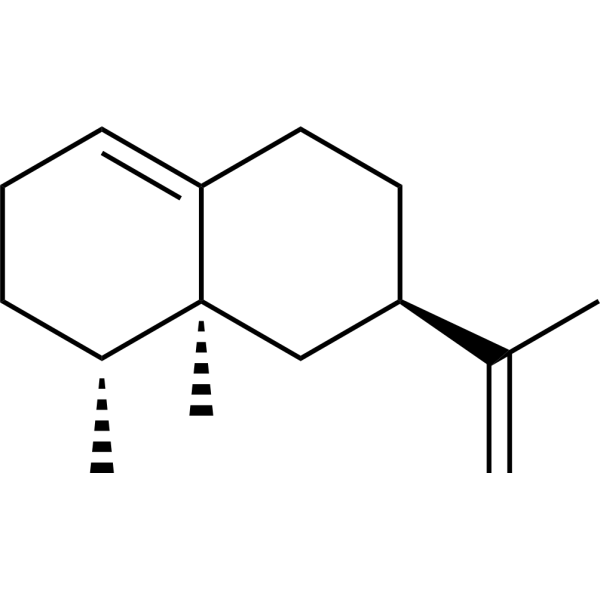
Valencene (Standard) is the analytical standard of Valencene. This product is intended for research and analytical applications. Valencene is a sesquiterpene that can be isolated from Cyperus rotundus. Valencene possesses antiallergic, antimelanogenesis, anti-infammatory, and antioxidant activitivies. Valencene inhibits the exaggerated expression of Th2 chemokines and proinflammatory chemokines through blockade of the NF-κB pathway. Valencene inhibits the production and expression of proinflammatory cytokines IL-1β and IL-6 in LPS-stimulated RAW 264.7 cells. Valencene can reduce atopic dermatitis symptoms and recover decreased expression of filaggrin in DNCB-sensitized mouse model .
loading...
    loading...
Cat. No.: HY-122664
CAS No.: 2031152-10-8
Purity:  99.29%
Target:  

BRK Apoptosis STAT ERK Akt

Research Areas:  

Cancer

XMU-MP-2 is a selective BRK/PTK6 inhibitor with an IC50 of 5.4 nM. XMU-MP-2 inhibits the proliferation of BRK-positive breast cancer cells and induces apoptosis. XMU-MP-2 is applicable to breast cancer-related research .
loading...
    loading...
Cat. No.: HY-178016
CAS No.: 3097193-89-7
Target:  

Histamine Receptor

Research Areas:  

Neurological Disease

H3R antagonist 8 is a selective nonimidazole histamine H3 receptor antagonist (IC50 = 0.35 μM). H3R antagonist 8 exhibits hERG channel blockade activity (IC50 = 0.67 μM). H3R antagonist 8 inhibits seizures by antagonizing H3 receptor. H3R antagonist 8 reduces tonic hind limb extension (THLE) in mice in the maximal electroshock seizure (MES) model (ED50 = 20.21 mg/kg) and and shortens pentylenetetrazol (PTZ)-induced total movement distance in AB strain zebrafish larvae. H3R antagonist 8 can be used for the study of epilepsy .
loading...
    loading...
Cat. No.: HY-180548
MRC37 is a high-affinity TRIM21 ligand with a Kd of 0.4 µM. MRC37 targets the IgG Fc-binding pocket in the PRYSPRY domain of TRIM21, mimics the "HHNY" epitope, and inhibits substrate-induced aggregation and activation of TRIM21 via competitive blockade of antibody binding. MRC37 effectively blocks TRIM21-mediated antiviral immunity (such as adenovirus neutralization) and Trim-Away targeted protein degradation without cytotoxicity. MRC37 antagonizes TRIMTAC activity, and its multiple modification sites do not affect target binding, making it suitable as a degrader warhead for research on viral immunity and neurodegenerative diseases such as tauopathies .
loading...
    loading...
Cat. No.: HY-13654
CAS No.: 878204-96-7
Target:  

Smo Hedgehog

Research Areas:  

Cancer

IPI-269609 is an orally effective Smoothed (SMO) inhibitor that targets the Hedgehog (Hh) signaling pathway. IPI-269609 specifically reduces the ALDH-bright (high aldehyde dehydrogenase activity) cell subset, which is considered the "cancer stem cells" in pancreatic cancer. IPI-269609 significantly inhibits the migration and colony formation of pancreatic cancer cells. IPI-269609 effectively inhibits pancreatic cancer metastasis in a mouse model. IPI-269609 can be used for pancreatic cancer research .
loading...
    loading...
Cat. No.: HY-P2265A
CAS No.: 2896737-31-6
Target:  

SOS1 Ras

Research Areas:  

Cancer

SAH-SOS1A TFA is a peptide-based SOS1/KRAS protein interaction inhibitor. SAH-SOS1A TFA binds to wild-type and mutant KRAS (G12D, G12V, G12C, G12S, and Q61H) with nanomolar affinity (EC50=106-175 nM). SAH-SOS1A TFA directly and independently blocks nucleotide association. SAH-SOS1A TFA impairs KRAS-driven cancer cell viability and exerts its effects by on-mechanism blockade of the ERK-MAPK phosphosignaling cascade downstream of KRAS .
loading...
    loading...
Cat. No.: HY-175188
CAS No.: 2404652-82-8
Synonyms: BPN-0027490
Target:  

Myosin

Research Areas:  

Neurological Disease

MT-110 (BPN-0027490) is a non-muscle myosin NMIIB-selective inhibitor with high brain penetration and favorable safety profile. MT-110 specifically disrupts NMIIB-dependent actin dynamics in dendritic spines, while it exerts no significant adverse effects on cardiac myosin II and cardiac functions (such as cardiac output and heart rate) at tested concentrations. A single administration of MT-110 produces long-lasting (sustained for several weeks) blockade of methamphetamine motivation associated with environmental cues. MT-110 exhibits extremely high specificity, with no interference with cocaine motivation, hippocampus-dependent memory, fear memory, or locomotor and anxiety-like behaviors. MT-110 serves as a valuable tool compound for investigating the mechanisms of methamphetamine use disorder .
loading...
    loading...
Cat. No.: HY-182372
CAS No.: 1638153-78-2
Target:  

Epoxide Hydrolase

Research Areas:  

Neurological Disease

SH-11037 is a potent inhibitor of soluble epoxide hydrolase (sEH) and docks to the substrate binding cleft in the sEH hydrolase domain. SH-11037 dose-dependently suppresses angiogenesis in the choroidal sprouting assay ex vivo and inhibited ocular developmental angiogenesis in zebrafish larvae. SH-11037 reduces choroidal neovascularisation lesion volume in the laser-induced CNV mouse model. SH-11037 synergises with anti-VEGF treatments in vitro and in vivo. SH-11037 induces G2/M phase blockade and retains retinal endothelial cell viability at active concentrations without overt toxicity. SH-11037 can be used for the research of retinal neovascularization and ocular neovascularization .
loading...
    loading...
Cat. No.: HY-188081
CAS No.: 3112733-78-2
Research Areas:  

Cancer

YH-36400 is an orally bioavailable inhibitor of HIF-1α and HIF-2α. YH-36400 disrupts the dimerization of HIF-1α and HIF-1β and triggers proteasomal degradation, thereby inhibiting the transcriptional activities of HIF-1 and HIF-2. YH-36400 reduces the expression of PD-L1 and CD73, reprograms the tumor immune microenvironment, inhibits angiogenesis, and can be used in combination with immune checkpoint blockade therapy. YH-36400 is applicable to research related to breast cancer, lung cancer, melanoma, pancreatic cancer, colorectal cancer, prostate cancer, and head and neck squamous cell carcinoma .
loading...
    loading...
Cat. No.: HY-B0653AS
Synonyms: (S)-(–)-Bupivacaie-d9hydrochloride
Levobupivacaine-d9 ((S)-(–)-Bupivacaie-d9) hydrochloride is deuterium labeled Levobupivacaine hydrochloride (HY-B0653A). Levobupivacaine hydrochloride ((S)-(-)-Bupivacaine monohydrochloride) is a long-acting amide local agent that can suppress or relieve pain. Levobupivacaine hydrochloride exerts agent that can suppress or relieve pain. and analgesic effects through reversible blockade of neuronal sodium channel. Levobupivacaine hydrochloride can inhibit impulse transmission and conduction in cardiovascular and other tissues, possessing certain cardiac and CNS toxicity. Levobupivacaine hydrochloride is metabolized by hepatic cytochrome P450 (CYP450) enzymes in vivo. Levobupivacaine hydrochloride can also induce ferroptosis by miR-489-3p/SLC7A11 signaling in gastric cancer .
loading...
    loading...
Cat. No.: HY-P991740

Research Areas:  

Cancer

IBI-363 is a PD-1/IL-2 bispecific antibody with functions of blocking the PD-1/PD-L1 pathway and activating the IL-2 pathway. The IL-2 arm of IBI-363 retains affinity for IL-2Rα but attenuates binding ability to IL-2Rβ and IL-2Rγ to reduce toxicity. The PD-1 binding arm of IBI-363 enables PD-1 blockade and selective delivery of IL-2. IBI-363 can be used in cancer research, such as non-small cell lung cancer .
loading...
    loading...
Cat. No.: HY-12502B
CAS No.: 111011-53-1
Synonyms: NZ-105 hydrochloride; (±)-Efonidipine hydrochloride
Research Areas:  

Cardiovascular Disease Cancer

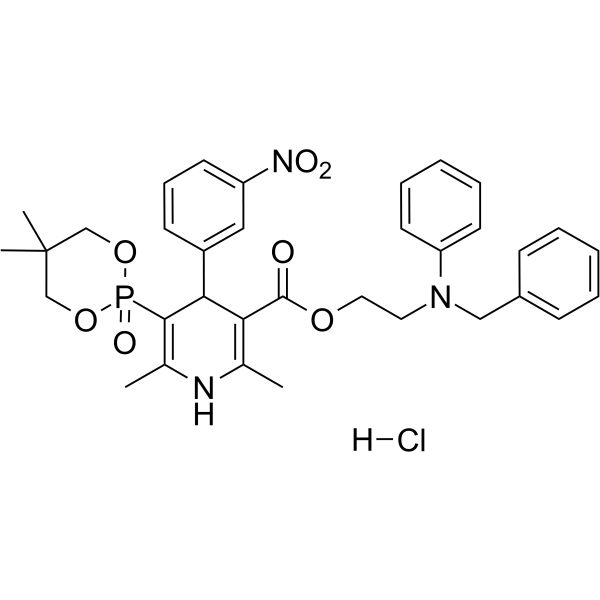
Efonidipine (NZ-105) hydrochloride is an orally active dual L-type and T-type calcium channel blocker (CCB) with IC50 values of 1.8 and 350 nM, respectively. Efonidipine hydrochloride inhibits SARS-CoV-2 main protease. Efonidipine hydrochloride modulates adrenal steroidogenesis by increasing the expression of steroidogenic acute regulatory protein (StAR), dbcAMP-or angiotensin II-induced StAR mRNA expression and DHEA-S production, while suppressing the biosynthesis of aldosterone and cortisol. Efonidipine hydrochloride reduces plasma aldosterone levels in vivo. Efonidipine hydrochloride improves cardiac function in heart failure models by inhibiting T-type calcium channels (via both tonic and use-dependent blockade), independently of blood pressure reduction. Efonidipine hydrochloride can be used for research in hypertension, heart failure, and disorders involving dysregulated steroid hormone synthesis .
loading...
    loading...
Cat. No.: HY-169232
Target:  

PROTACs PD-1/PD-L1

Research Areas:  

Cancer

PCC16 chloride is a dual PROTAC degrader targeting DHHC3 and PD-L1, with a DC50 of 0.103 μM for PD-L1 degradation. PCC16 chloride induces DHHC3 degradation via the ubiquitin-proteasome pathway by recruiting the CRBN E3 ubiquitin ligase (E3 ubiquitin ligase). By targeting DHHC3-which is essential for PD-L1 palmitoylation and membrane stability-PCC16 chloride reduces PD-L1 levels, decreases PD-L1 membrane retention time, and impairs its immunosuppressive function. PCC16 chloride enhances anti-tumor immunity by disrupting PD-L1-mediated immunosuppression. PCC16 chloride can be used in the research of immune checkpoint blockade-resistant cancers .
loading...
    loading...
Cat. No.: HY-P992353

Target:  

LILRB

Research Areas:  

Cancer

ES009 is a high-affinity LILRB2 antagonist, with IC50 values of 14.07 nM and 18.61 nM for inhibiting hLILRB2-huANGPTL3 and hLILRB2-huANGPTL4, respectively. ES009 specifically blocks the interactions between LILRB2 and MHC class I as well as non-MHC ligands, thereby effectively inhibiting receptor activation. ES009 can reprogram anti-inflammatory myeloid cells and induce their conversion to a pro-inflammatory phenotype, and also reverse the T cell suppression mediated by macrophages. When combined with anti-PD-1 blockade therapy, ES009 synergistically enhances T cell activation. ES009 can be used in research related to advanced solid tumors and ovarian cancer .
loading...
    loading...
Cat. No.: HY-P99916
CAS No.: 2449199-61-3
Synonyms: AMG-427

Target:  

FLT3 CD3 TNF Receptor

Research Areas:  

Inflammation/Immunology Cancer

Emirodatamab (AMG-427) is a bispecific T-cell engager (BiTE). Emirodatamab simultaneously binds FLT3 on the surface of acute myeloid leukemia (AML) cells and CD3 on the surface of T cells, thereby precisely recruiting immune effector cells to tumor sites. Emirodatamab potently induces T cell activation, secretion of proinflammatory cytokines (such as IFNγ, TNFα), and specific cytotoxicity, effectively lysing FLT3-positive tumor cells and inhibiting their growth. Emirodatamab not only significantly prolongs survival in mouse xenograft models and eliminates diseased cells in primates, but also exhibits a synergistic enhancement effect when combined with PD-1 blockade therapy. Emirodatamab is used in studies of acute myeloid leukemia, especially relapsed or refractory cases .
loading...
    loading...

