1362 Results for "

primary hypercholesterolemia

" in MedChemExpress (MCE) Product Catalog:
Products (1362)

1362 Results for "primary hypercholesterolemia" in MCE Product Catalog:

Cat. No.: HY-W043748
CAS No.: 38862-24-7
Synonyms: N-Succinimidyl acrylate
Research Areas:  

Others

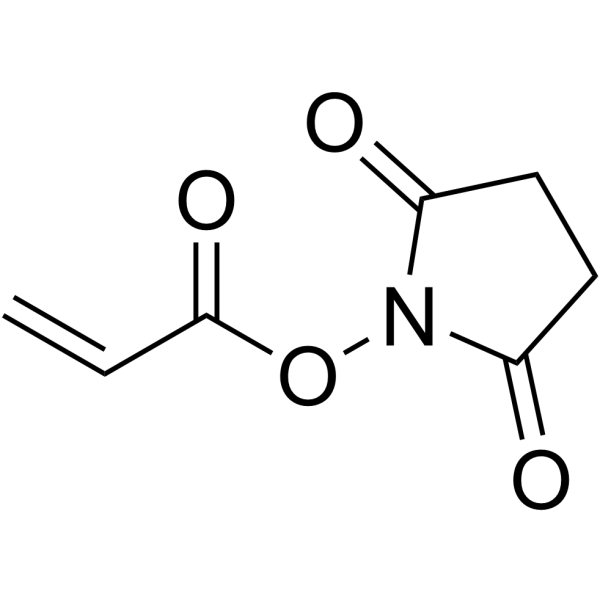
2,5-Dioxopyrrolidin-1-yl acrylate (N-Succinimidyl acrylate) is a lysine residue modifier and coupling monomer. 2,5-Dioxopyrrolidin-1-yl acrylate covalently modifies the primary amines of lysine residues on monoclonal anti-horseradish peroxidase IgG antibodies, neutralizes positive charges and replaces them with low-affinity acrylate groups. 2,5-Dioxopyrrolidin-1-yl acrylate inhibits the formation of rapid hard coronas on citrate-coated gold nanoparticles, induces antibody unfolding and loss of antigen-binding function, but does not affect the antigen-binding function of antibodies in free solution. 2,5-Dioxopyrrolidin-1-yl acrylate reacts with the ε-amino groups on lysine residues of L-asparaginase, introduces vinyl groups and generates N-hydroxysuccinimide. 2,5-Dioxopyrrolidin-1-yl acrylate regulates the activity of L-asparaginase .
loading...
    loading...
Cat. No.: HY-L021
5,121 compounds

Natural products are small molecules produced naturally by any organism including primary and secondary metabolites. Natural sources may lead to basic research on potential bioactive components for commercial development as lead compounds in drug discovery.

Nature has been a source of medicinal agents for thousands of years, and an impressive number of modern drugs have been isolated from natural sources, many based on their use in traditional medicine. With the development of new molecular targets, there is an increasing demand for novel molecular diversity for screening. Natural products will play a crucial role in meeting this demand through the continued investigation of world’s bio-diversity, much of which remains unexplored.

MCE provides a unique collection of 5,121 natural compounds that contain Saccharides and Glycosides, Phenylpropanoids, Quinones, Flavonoids, Terpenoids and Glycosides, Steroids, Alkaloid, Phenols, Acids and Aldehydes. Natural Product Library is a useful tool for drug discovery that can be used for high throughput screening (HTS) and high content screening (HCS).

Cat. No.: HY-119684S
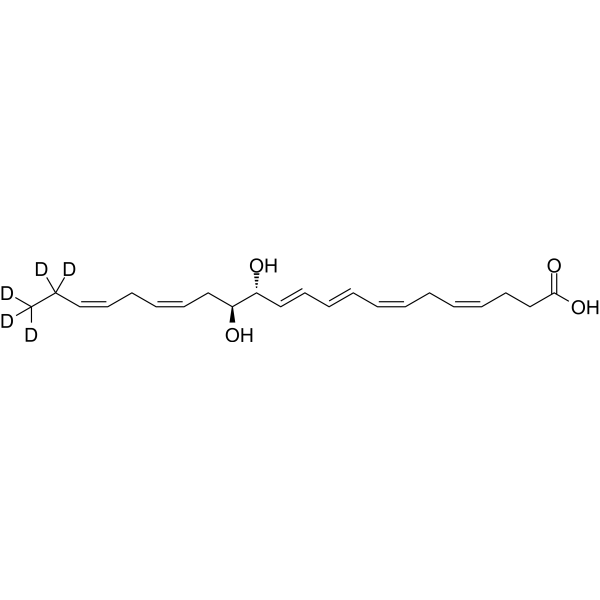
Maresin 2-d5 is the d5-labeled Maresin 2 (HY-119684). Maresin 2 is an anti-inflammatory and pro-resolving mediator. Maresin 2 drives intestinal epithelial cell migration by activating the focal cell-matrix adhesion signaling pathway in primary human intestinal epithelial cells, thereby promoting mucosal wound repair. Maresin 2 alleviates nociceptive and anxiety-like behaviors in rats with type 1 diabetes by inhibiting IL-1β in the spinal cord and prefrontal cortex. Maresin 2 attenuates allergic airway inflammation in mice by inhibiting the activation of the NLRP3 inflammasome, Th2-type immune responses, and oxidative stress. Maresin 2 inhibits inflammatory and neuropathic trigeminal neuralgia and reduces neuronal activation in the trigeminal ganglion. Maresin 2 promotes inflammation resolution and mucosal repair after DSS-induced colitis or biopsy-induced colonic mucosal injury .
loading...
    loading...
Cat. No.: HY-138089
CAS No.: 122370-91-6
17β-Hydroxy exemestane (17-H-EXE) is the primary active metabolite of Exemestane (HY-13632). 17β-Hydroxy exemestane is an aromatase inhibitor (IC50 = 69 nM) and an androgen receptor (AR) agonist (IC50 = 39.6 nM) that is selective for AR over estrogen receptor α (ERα; IC50 = 21.2 μM). 17β-Hydroxy exemestane stimulates growth of AR- and ERα-positive MCF-7 (EC50= 2.7 μM) and T47D breast cancer cells (EC50s = 0.43 and 1500 nM for AR- and ER-mediated growth, respectively) and inhibits proliferation of testosterone-treated aromatase-overexpressing MCF-7 cells. 17β-Hydroxy exemestane inhibits increases in serum cholesterol and LDL levels and prevents decreases in bone mineral density in the lumbar vertebrae and femur, as well as femoral bending strength and compressive strength of the fifth lumbar vertebrae in ovariectomized rats .
loading...
    loading...
Cat. No.: HY-153357
CAS No.: 2416130-57-7
Purity:  98.16%
Target:  

PROTACs Btk c-Myc NF-κB

Research Areas:  

Inflammation/Immunology Cancer

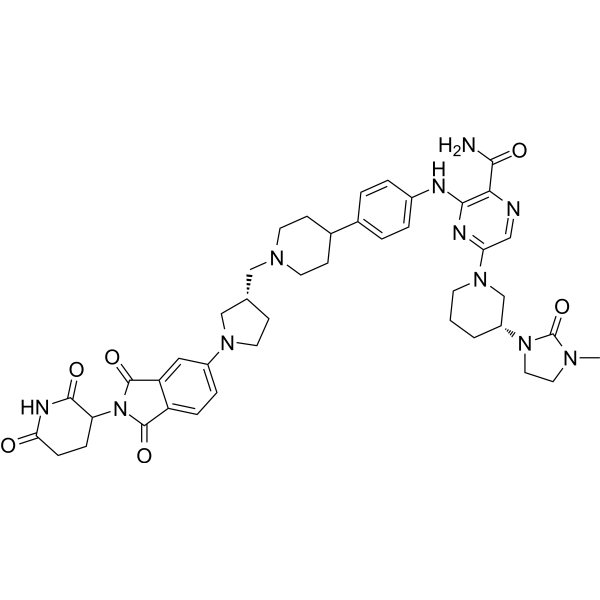
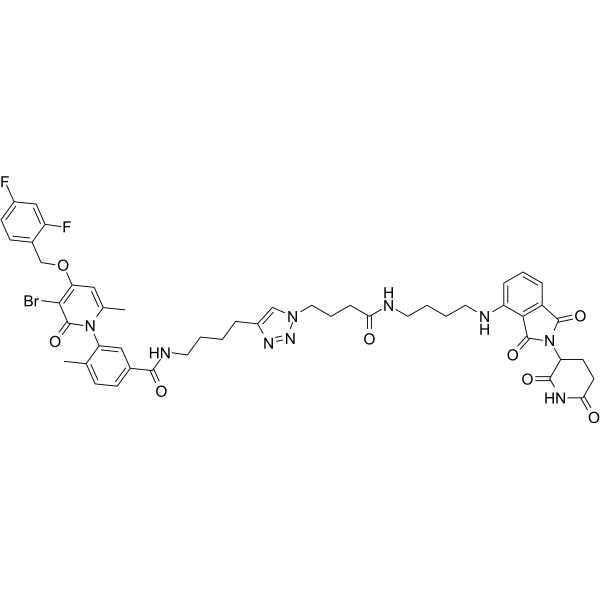
NRX-0492 is an orally active BTK PROTAC degrader, with a binding IC50 of 1.2 nM for both wild-type BTK and BTK T474I, and 2.7 nM for BTK C481S, and exhibits cellular DC50 values of 0.1 nM and 0.2 nM against wild-type BTK and BTK C481S, respectively. NRX-0492 catalyzes the ubiquitination and proteasomal degradation of wild-type and drug-resistant mutant BTK by recruiting the CRBN E3 ubiquitin ligase complex. NRX-0492 inhibits the BCR signaling pathway and its downstream NF-κB/MYC transcriptional program, achieves rapid and sustained degradation in primary CLL cells, and exhibits extremely low cytotoxicity. NRX-0492 degrades BTK, inhibits tumor cell proliferation and activation, and significantly suppresses tumor growth in xenograft models. NRX-0492 can be used in research related to chronic lymphocytic leukemia and diffuse large B-cell lymphoma .
loading...
    loading...
Cat. No.: HY-16265A
CAS No.: 2514957-81-2
Research Areas:  

Cancer

JI-101 hydrochloride is an orally active angiogenesis inhibitor and anticancer agent with 55% oral bioavailability in Sprague Dawley rats, high permeability, and no P-gp substrate activity .JI-101 hydrochloride modulates angiogenesis signaling pathways in tumor vessel beds, downregulates EphB4, targets EphB4, VEGFR-2, and PDGFR-β, and inhibits multiple stages of tumor angiogenesis .JI-101 hydrochloride exerts activity against cancer cells and xenografts, exhibits mild to moderate inhibition of CYP3A4, and shows stability in pre-clinical and human liver microsomes .JI-101 hydrochloride undergoes rapid oral absorption in Sprague Dawley rats, has extensive tissue distribution with preferred lung uptake, and is excreted via bile with mono- and di-hydroxy metabolites, with feces as the primary elimination route .JI-101 hydrochloride can be used for the research of ovarian cancer and solid tumors .
loading...
    loading...
Cat. No.: HY-164288
CAS No.: 2287331-29-5
Synonyms: TDI-006570
TDI-6570 (TDI-006570) is a blood-brain barrier-permeable, orally active cGAS inhibitor with an IC50 of 1.64 μM. TDI-6570 exhibits high gastrointestinal absorption and a long brain half-life in mice, and shows no toxicity to primary neurons. By inhibiting the cGAS-STING-IFN signaling pathway, TDI-6570 reduces STING levels and the activation of TBK1, blocks double-stranded DNA-induced cGAS activation and downstream interferon-stimulated gene expression, thereby reducing tau protein spread and improving synaptic loss. TDI-6570 reverses memory deficits, increases the amplitude of long-term potentiation, enhances the MEF2C transcriptional network, restores PSD-95 and vGAT punctate structures, and significantly improves cognitive resilience. TDI-6570 can be applied to the research of Alzheimer's disease, Parkinson's disease, systemic lupus erythematosus, as well as various central nervous system and autoimmune diseases .
loading...
    loading...
Cat. No.: HY-182671
CAS No.: 2409965-28-0
Target:  

PI3K Btk Apoptosis

Research Areas:  

Cancer

SRX3305 is an BTK/PI3K/BRD4 inhibitor with IC50s of 6.5 nM, 15 nM, and 4 nM toward BTK, PI3Kɑ and PI3Kδ, respectively. SRX3305 attenuates chronic lymphocytic leukemia (CLL) and mantle cell lymphoma (MCL) cell proliferation and promotes apoptosis in a dose-dependent fashion. SRX3305 yields potent anti-tumor effects but spares healthy bystander cells. SRX3305 inhibits the activation-induced proliferation of primary CLL cells in vitro and effectively blocks microenvironment-mediated survival signals. SRX3305 blocks CLL cell migration toward CXCL-12 and CXCL-13. SRX3305 maintains its anti-tumor effects in Ibrutinib (HY-10997)-resistant CLL cells. SRX3305 can be used for research in CLL, diffuse large B-cell lymphoma (DLBCL) and MCL .
loading...
    loading...
Cat. No.: HY-184086
CAS No.: 139953-73-4
Research Areas:  

Cancer

Cyclazosin is an α1D-adrenergic receptor antagonist and a partial agonist of CXCR4/ACKR3. The pKi values of Cyclazosin for cloned human α1D, α1B and α1A adrenergic receptors are 9.28, 9.23 and 8.18, respectively. Cyclazosin induces β-arrestin recruitment in CXCR4 and ACKR3 with EC50 values of 16 μM and 10 μM, respectively, stimulates ERK1/2 phosphorylation, and induces receptor internalization. Cyclazosin potently inhibits CXCL12-induced chemotaxis of primary human aortic vascular smooth muscle cells. Cyclazosin alters MDMA-induced thermoregulatory responses in mice, converting monophasic hyperthermia to a biphasic pattern without affecting resting core body temperature. Cyclazosin can be used for diseases related to tumor metastasis, MDMA-induced hyperthermia and vasoconstriction .
loading...
    loading...
Cat. No.: HY-W720629
CAS No.: 21420-37-1
Cyanamide- 15N2 is the 15N-labeled Cyanamide (HY-Y0070). Cyanamide is a cell division and plant growth inhibitor, as well as an allelochemical derived from Vicia villosa. Cyanamide inhibits root growth and biomass accumulation in a dose-dependent manner by disrupting the formation of mitotic spindles and phragmoplast complexes, reducing the number of mitotic cells and blocking the cell cycle. The effects of Cyanamide are partially reversible after removal from low-concentration environments. Cyanamide is also a specific inhibitor of aldehyde dehydrogenase (ALDH). Although Cyanamide has no direct effect on tumor growth, it can significantly enhance the anti-tumor efficacy of Cyclophosphamide (HY-17420) at non-toxic doses by inhibiting the inactivation of Cyclophosphamide. Cyanamide enables Cyclophosphamide to exert equivalent therapeutic effects at lower doses, effectively inhibiting the growth of primary and metastatic tumors and prolonging the lifespan of tumor-bearing mice. Cyanamide is commonly used in studies related to ha-1 hepatoma and rls lymphosarcoma .
loading...
    loading...
Cat. No.: HY-L221
626 compounds

Cosmetics are complex mixtures formulated through the rational blending and processing of various natural, synthetic, or extracted raw materials. The ingredients used in cosmetics are diverse in type and functionality. Based on their properties and applications, cosmetic ingredients can generally be classified into two main categories: base materials and auxiliary ingredients. The former constitutes the primary component of cosmetics, accounting for a significant proportion in formulations and serving as the key functional substances. Auxiliary ingredients, on the other hand, play roles in shaping the product, ensuring stability, or imparting color, fragrance, and other specific characteristics.Establishing a systematic ingredient database is of great significance for cosmetic research and development. By analyzing the physicochemical properties (such as oil-water partition coefficients and molecular weight distribution), biological activity mechanisms (such as antioxidant pathways and cellular signaling regulation), and compatibility of ingredients, the database can provide precise guidance for formulation design. This approach helps shorten the development cycle of cosmetic/skincare products and reduces trial-and-error costs.

MCE offers 626 types of cosmetic ingredient compounds, including antioxidants, humectants, emulsifiers, film-forming agents, and more.

Cat. No.: HY-L200
2,818 compounds

Natural products are small molecular compounds that occur in nature and come from any organism, including primary and secondary metabolites. Natural products have potential biological activity and can be used as lead compounds for drug discovery. Nature has been a source of medicines for thousands of years, and a large number of drugs have been isolated from nature, many based on their use in traditional medicine. With the development of compound targets, there is an increasing need to screen for compound diversity. Through ongoing research into natural biodiversity, much of which remains to be exploited, natural products will play a key role in meeting this demand. The Lipinski rule of 5 is used to describe the drug-like properties of a molecule, molecules that adhere to the rule of 5 have higher drug potential. Based on MCE natural product library, MCE selects the molecules that obey the rule of 5, which makes the efficiency of drug screening higher.

MCE designs a unique collection of 2,818 RO5 drug-like natural products, which is an important tool for drug discovery.

Cat. No.: HY-L262
4,412 compounds

Natural products are small-molecule compounds produced in nature, derived from animals, plants, and microorganisms, including both primary and secondary metabolites. With their structural diversity and favorable biological activities, natural products have long been an important source for drug discovery. Traditional natural product research has often focused on isolating single active components, whereas metabolomics emphasizes a holistic approach—comprehensively detecting all metabolites in a sample and systematically capturing both known and unknown constituents. Consequently, mass spectrometry‑based metabolomics databases have become a key technological support for screening known components and identifying unknown compounds from natural sources.

MCE Mass Spectrometry Natural Product Library contains 4,412 natural products, covering multiple structural classes, including sugars and glycosides, phenylpropanoids, quinones, flavonoids, terpenoids, etc. All compounds have undergone rigorous quality control by LC/MS and other analytical methods, and can serve as high‑purity reference standards for metabolite identification.

Cat. No.: HY-P85556
Synonyms: 70 kDa mitochondrial autoantigen of primary biliary cirrhosis; anti DLAT; Dihydrolipoamide acetyltransferase component of pyruvate dehydrogenase complex; Dihydrolipoamide; Dihydrolipoamide S Acetyltransferase; Dihydrolipoamide S-acetyltransferase; E2 component of pyruvate dehydrogenase complex; Dihydrolipoamide S-Acetyltransferase; Dihydrolipoyllysine-residue acetyltransferase component of pyruvate dehydrogenase complex; dihydrolipoyllysine-residue acetyltransferase component of pyruvate dehydrogenase complex mitochondrial; DLAT; DLAT; DLTA; E2; E2 component of pyruvate dehydrogenase complex; M2 antigen complex 70 kDa subunit; M2 Antigen Complex 70kD Subunit; mitochondrial; ODP2_HUMAN; PBC; PDC E2; PDC-E2; PDCE2; Pyruvate dehydrogenase complex component E2; Pyruvate dehydrogenase complex E2 subunit; S acetyltransferase component of pyruvate dehydrogenase complex.

Host:  

Mouse

Application:  

WB, ICC/IF, IP

Reactivity:  

Human, Mouse

loading...
    loading...
Cat. No.: HY-130086
CAS No.: 1314378-11-4
Purity:  99.29%
Target:  

ADC Linkers

Research Areas:  

Cancer

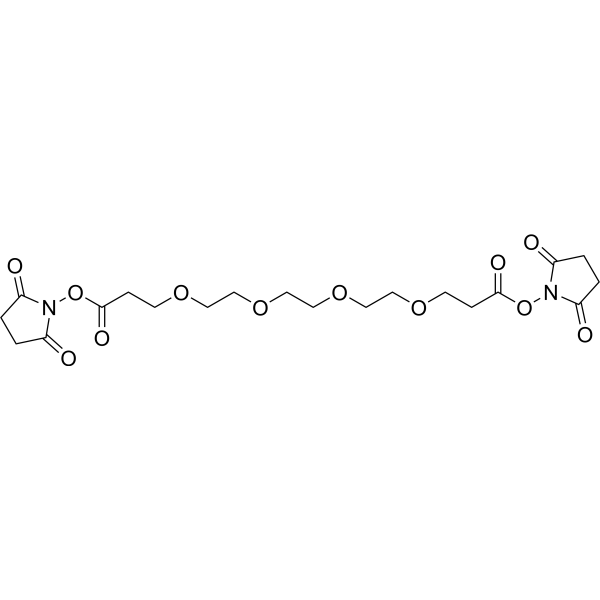
Bis-PEG4-NHS ester is a crosslinking reagent and amine-reactive modulator .Bis-PEG4-NHS ester reacts with primary amine groups on liposome surfaces via amide bond formation to covalently attach dibenzylcyclooctyne groups, with a hydrophilic PEG4 spacer reducing steric hindrance for subsequent click chemistry .Bis-PEG4-NHS ester enables site-specific antibody coupling to liposome surfaces via copper-free strain-promoted alkyne-azide cycloaddition click chemistry without disrupting liposome structure in minimal organic solvent volumes .Bis-PEG4-NHS ester undergoes hydrolysis during annealing to form -COOH groups that interact with PbI and FAI to enhance perovskite structural integrity, passivate defects, and modulate nucleation kinetics to regulate crystal growth .Bis-PEG4-NHS ester enhances device efficiency and long-term stability when used as an antisolvent additive for p-i-n perovskite solar cells .
loading...
    loading...
Cat. No.: HY-153932
CAS No.: 2550399-06-7
Research Areas:  

Infection Cancer

NR-7h is a selective p38α/p38β MAPK PROTAC degrader with multiple activities including anti-leishmanial, anti-malarial, and anti-Mayaro virus properties. NR-7h induces specific degradation of p38α/p38β isoforms and p38-MAPK via the ubiquitin-proteasome system. NR-7h reduces the load of Leishmania donovani, modulates the cytokine profile toward a pro-inflammatory phenotype, and enhances the oxidative burst of macrophages. NR-7h inhibits the growth of Plasmodium falciparum in human red blood cells and merozoite invasion. NR-7h reduces the replication of Mayaro virus and the expression of E1 protein in primary human dermal fibroblasts. NR-7h can be used in studies related to parasitic infections, viral infections, and breast cancer .
loading...
    loading...
Cat. No.: HY-L021P
6,400 compounds

Natural products are small molecules produced naturally by any organism including primary and secondary metabolites. Natural sources may lead to basic research on potential bioactive components for commercial development as lead compounds in drug discovery.

Nature has been a source of medicinal agents for thousands of years, and an impressive number of modern drugs have been isolated from natural sources, many based on their use in traditional medicine. With the development of new molecular targets, there is an increasing demand for novel molecular diversity for screening. Natural products will play a crucial role in meeting this demand through the continued investigation of world’s bio-diversity, much of which remains unexplored.

MCE provides a unique collection of 6,400 natural compounds that contains Saccharides and Glycosides, Phenylpropanoids, Quinones, Flavonoids, Terpenoids and Glycosides, Steroids, Alkaloid, Phenols, Acids and Aldehydes. Natural Product Library Plus, with more powerful screening capability, further complements Natural Product Library (HY-L021) by adding some compounds with low solubility or solution stability (Part B) to this library. All those supplementary are supplied in powder form.

Cat. No.: HY-L170
258 compounds

An emerging drug design method is based on the secondary binding site effect, where small molecule drugs are designed to bind to secondary binding sites on target biomolecules rather than primary orthomorphic sites. Successful potential drugs (known as allosteric modulators) will be able to bind to allosteric sites and remotely alter (or modify) the conformation of the main orthosteric binding sites of biological targets. Allosteric modulators (AMs) are ligands of proteins that act through binding sites different from natural (orthosteric) ligand sites. AMs are relatively small, more lipophilic, and more rigid compounds. The binding efficacy of AMs with their targets is often slightly lower. AMs are divided into positive AMs (PAMs) and negative AMs (NAMs). AMs are ideal drug targets because they can fine-tune receptor activity while preserving the spatial and temporal signal transduction characteristics of endogenous ligands, resulting in fewer targeted side effects, improved subtype selectivity, and better promotion of biased signal transduction than normal ligands.

MCE designs a unique collection of 258 small allosteric modulators. It is a good tool to be used for research on metabolize, cancer and other diseases.

Cat. No.: HY-L251
93 compounds

Ionizable lipids are a class of specialized, functional lipid molecules with pH-sensitive charge characteristics. They are primarily divided into two major categories: ionizable cationic lipids and ionizable anionic lipids, though the term typically specifies ionizable cationic lipids within the biomedical field. Structurally, these lipids consist of an ionizable hydrophilic headgroup, a biodegradable linker, and hydrophobic tails. Their primary application is serving as the key delivery vehicle in lipid nanoparticles (LNPs) to encapsulate negatively charged nucleic acid macromolecules, such as mRNA vaccines, siRNA therapeutics, and CRISPR gene-editing components. In a physiological, neutral environment, they remain electrically neutral to minimize systemic toxicity and prolong circulation time. Upon entering the acidic microenvironment of cellular endosomes, however, they undergo protonation to become positively charged, thereby inducing membrane fusion and enabling the highly efficient intracellular release of the nucleic acid cargo. Consequently, they serve as the technological cornerstone for bringing nucleic acid therapies into clinical application.

To accelerate the translational process of cutting-edge nucleic acid drugs, MCE has meticulously constructed an ionizable lipid compound library containing 93 high-performance molecules, aiming to provide researchers and pharmaceutical professionals with a high-throughput, multi-dimensional lipid screening platform.

Cat. No.: HY-108659
CAS No.: 202982-98-7
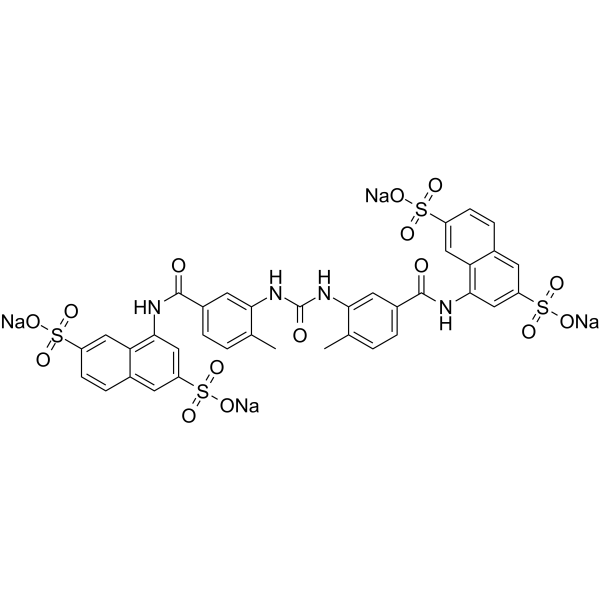
NF340 is a P2Y11 receptor inhibitor with a pIC50 of 7.3-7.7 against human P2Y11 receptor, and it exhibits high selectivity over other P2Y family receptors. NF340 binds to the ATP-binding amino acid residues of the P2Y11 receptor to inhibit its activity, block nociceptive activity, and reduce spinal dorsal horn P2Y11 receptor upregulation induced by spinal nerve injury. NF340 attenuates the NFκB signaling pathway activated by IL-1β by decreasing IκBα phosphorylation, nuclear p65 accumulation, and NFκB promoter activity. NF340 inhibits IL-1β-induced pro-inflammatory cytokine expression, reduces intracellular ROS and 4-HNE levels, and suppresses IL-1β-induced matrix metalloproteinase expression in primary fibroblast-like synoviocytes. NF340 inhibits ATP-induced elevation of intracellular Ca 2+ concentration and cell migration in human hepatocellular carcinoma cells. NF340 can be used in the research of neuropathic pain, myocardial ischemia/reperfusion injury, inflammatory pain, rheumatoid arthritis, and hepatocellular carcinoma .
loading...
    loading...

