143 Results for "

DMSO

" in MedChemExpress (MCE) Product Catalog:
Products (143)

143 Results for "DMSO" in MCE Product Catalog:

Cat. No.: HY-DY1061
CAS No.: 158757-84-7
BODIPY 558/568 C12 (solution) is a BODIPY dye. BODIPY dye is a small molecule dye with strong ultraviolet absorption ability, its fluorescence peak is relatively sharp, and the quantum yield is high. They are relatively insensitive to the polarity and pH of the environment and are relatively stable under different physiological conditions. Due to its structural asymmetry, BODIPY derives a variety of structural products. BODIPY lipid droplet dyes can well pass through the cell membrane into the cell, and localize the neutral lipids in the cell to specifically stain the lipid droplets, which can be used for labeling of live cells and fixed cells . Maximum excitation/emission wavelength: 558/568 nm .
Solvent and concentration: DMSO: 2 mM
loading...
    loading...
Cat. No.: HY-DY1073
CAS No.: 1392820-50-6
MitoPerOx (solution) is a mitochondrial-targeted, lipid peroxidation-indicating fluorescent probe with BODIPY581/591 fluorophores. The triphenylphosphine cation (TPP+) of MitoPerOx can be selectively enriched in mitochondria (depending on membrane potential) and can be used to detect lipid peroxidation in the inner mitochondrial membrane. Under the action of lipid peroxides, the BODIPY581/591 fluorophores of MitoPerOx shift their emission wavelength from 590 nm (reduced state) to 520 nm (oxidized state) , and ratiometric detection can be performed at an excitation wavelength of 488 nm. MitoPerOx can specifically monitor the peroxidation of mitochondrial phospholipids (especially cardiolipin) and is used in the study of oxidative stress-related diseases (such as aging, neurodegenerative diseases, and mitochondrial dysfunction) .
Solvent and concentration: DMSO: 2 mM
loading...
    loading...
Cat. No.: HY-DY1089
CAS No.: 797785-10-5
Di-4-ANEPPDHQ (solution) is a polarity-sensitive membrane probe with a doubly positive charge that can be used to visualize membrane microdomains in living Arabidopsis cells. Di-4-ANEPPDHQ produces a fluorescence spectrum shift by changing the polarity of the lipid environment after embedding into the cell membrane, thereby quantifying the degree of lipid accumulation. The excitation wavelength of Di-4-ANEPPDHQ is 488 nm, and the emission wavelengths are 560 nm and 650 nm in the liquid ordered and disordered phases, respectively. Di-4-ANEPPDHQ is often used for fluorescence imaging studies of membrane microstructure, lipid order, and membrane tension response in living cells[1][2][3].
Solvent and concentration: DMSO: 5 mM
loading...
    loading...
Cat. No.: HY-DY1090
CAS No.: 216434-81-0
BODIPY 493/503 methyl bromide (solution) is a BODIPY dye. BODIPY dye is a small molecule dye with strong ultraviolet absorption ability, its fluorescence peak is relatively sharp, and the quantum yield is high. They are relatively insensitive to the polarity and pH of the environment and are relatively stable under different physiological conditions. Due to its structural asymmetry, BODIPY derives a variety of structural products. BODIPY lipid droplet dyes can well pass through the cell membrane into the cell, and localize the neutral lipids in the cell to specifically stain the lipid droplets, which can be used for labeling of live cells and fixed cells . Maximum excitation/emission wavelength: 493/503 nm .
Solvent and concentration: DMSO: 5 mM
loading...
    loading...
Cat. No.: HY-174322
Target:  

SHP2 ERK Fluorescent Dye

Research Areas:  

Cancer

SHP2-IN-38 is a novel green-fluorescent SHP2 inhibitor with IC50 values of 2.89 μM (SHP2), 8.73 μM (SHP1), 11.08 μM (PTP1B), 33.07 μM (TCPTP). SHP2-IN-38 blocks the SHP2-mediated ERK signaling pathway and inhibits MV4-11 cells proliferation in vitro with IC50 of 7.90 μM. SHP2-IN-38 has an excitation wavelength of 360 nm, with a maximum emission wavelength of 550 nm in DMSO and 540 nm in DMF. SHP2-IN-38 shows green fluorescence imaging in HeLa cells and zebrafish.
loading...
    loading...
Cat. No.: HY-D3104
CAS No.: 2767443-23-0
Target:  

Fluorescent Dye

Research Areas:  

Others

ERNT is a fluorescent probe for monitoring endoplasmic reticulum (ER) polarity and detecting endoplasmic reticulum stress (ERS) during the progression of dynamic liver injury. ERNT functions based on a donor-π-acceptor (D-π-A) structure with an intramolecular charge transfer (ICT) effect. ERNT has multiple excitation/emission pairs: for in vitro cell imaging, the green channel has Ex/Em = 488/500-550 nm, and the red channel has Ex/Em = 488/570-620 nm; for in vivo liver imaging, Ex/Em = 520/620 nm; for solvent optical tests, Ex = 470 nm, with the maximum emission peak at 548 nm in low-polarity toluene and 668 nm in high-polarity DMSO. ERNT can evaluate the efficacy of hepatoprotective interventions by detecting changes in ER polarity, and also exhibits excellent photostability and low cytotoxicity .
loading...
    loading...
Cat. No.: HY-DY1088
CAS No.: 75350-46-8
Synonyms: N-(5-Fluoresceinyl)maleimide (solution)
Fluorescein-5-maleimide (solution) (N-(5-Fluoresceinyl)maleimide (solution)) is a fluorescent dye. Fluorescein-5-maleimide can be used to detect the redox state of thiols in eukaryotic cells. Fluorescein-5-maleimide can label peptides and is used to detect negatively charged nanoparticles. Fluorescein-5-maleimide can also label actin to explore its interaction with cardiac myosin-binding protein C (cMyBP-C), which helps in developing small molecule modulators for heart failure. Fluorescein-5-maleimide can screen mutant proteins that contain cysteine residues. The excitation wavelength of Fluorescein-5-maleimide is 494 nm, and the emission wavelength is 519 nm .

Solvent and concentration: DMSO: 10 mM
loading...
    loading...
Cat. No.: HY-DY1097
CAS No.: 107091-89-4
Thiazole Orange (solution) is an asymmetric anthocyanin dye that can be coupled with oligonucleotides (ONs) to prepare fluorescent hybridization probes. Thiazole Orange has been widely used in biomolecular detection and staining of DNA/ RNA in gels and can be used for reticulocyte analysis. Thiazole orange generates a significant fluorescence enhancement and high quantum yield when it binds with nucleic acids, especially RNA. Thiazole orange can permeate living cell membranes. Thiazole orange can use UV light for detection, but can also be detected with blue light. The excitation and emission of Thiazole orange are λex = 510 nm (488 nm and 470 nm also show strong excitation) and λem = 527 nm, respectively .
Solvent and concentration: DMSO: 10 mM
The 1 mL volume is defined as the base specification. All larger sizes correspond to incremental volumes of this base.
loading...
    loading...
Cat. No.: HY-131498
CAS No.: 140430-53-1
Purity:  99.67%
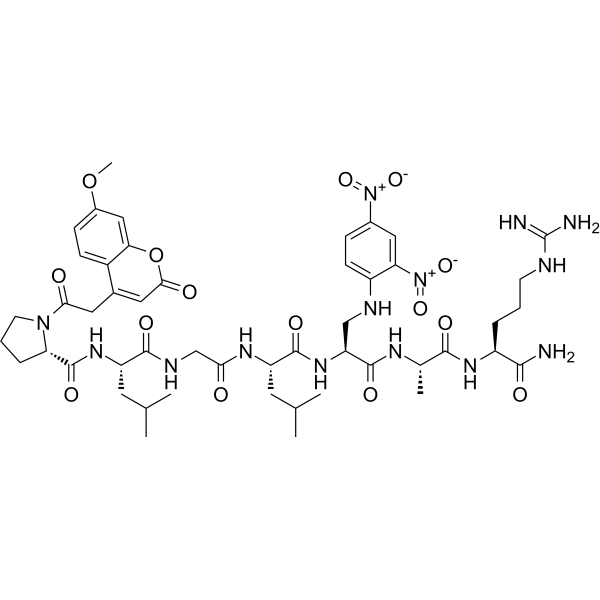
Synonyms: Mca-Pro-Leu-Gly-Leu-Dpa-Ala-Arg-NH2
Target:  

Fluorescent Dye MMP

Research Areas:  

Cancer

MOCAc-PLGL (Dpa) AR (Mca-Pro-Leu-Gly-Leu-Dpa-Ala-Arg-NH2) is a synthetic fluorescent substrate mainly used for in vitro enzymatic activity assays of MMP-7 (detection at 393 nm after excitation at 328 nm). MOCAc-PLGL (Dpa) AR is specifically cleaved and hydrolyzed by MMP-7 at the Gly-Leu peptide bond, allowing enzymatic activity to be monitored via fluorometry or HPLC (DMSO is usually added to ensure sufficient dissolution when determining kinetic parameters). MOCAc-PLGL (Dpa) AR is used to accurately evaluate the catalytic activity and pH dependence of recombinant mature human MMP-7 in vitro. MOCAc-PLGL (Dpa) AR is suitable for research on the mechanisms of tumor metastasis and invasion, particularly in fields such as prostate cancer, colon cancer, lung cancer and breast cancer .\n
loading...
    loading...
Cat. No.: HY-DY1007
CAS No.: 3326-32-7
Target:  

Fluorescent Dye

Research Areas:  

Inflammation/Immunology

FITC (Fluorescein Isothiocyanate) (solution) , is one of the green fluorescein derivatives widely used in biology. FITC has the characteristics of high absorptivity and excellent fluorescence quantum yield. The isothiocyanate group of FITC can be combined with amino, sulfhydryl, imidazole, tyrosyl, carbonyl and other groups on the protein, so as to achieve protein labeling including antibodies and lectins. In addition to its use as a protein marker, FITC can also be used as a fluorescent protein tracer to rapidly identify pathogens by labeling antibodies, or for microsequencing of proteins and peptides (HPLC). The maximum excitation wavelength of FITC is 494 nm. Once excited, it fluoresces yellow-green at a maximum emission wavelength of 520 nm. In addition, FITC is also a hapten that can induce contact hypersensitivity (CHS) and induce an atopic dermatitis model .
Solvent and concentration: DMSO: 20 mM
The 1 mL volume is defined as the base specification. All larger sizes correspond to incremental volumes of this base.
loading...
    loading...
Cat. No.: HY-DY1114
CAS No.: 53213-81-3
DiOC5(3) (solution) is a mitochondrial Fluorescent dye that alters membrane potential, and it also acts as an inhibitor of NADH-ubiquinone reductase (respiratory complex I). DiOC5(3) (solution) increases the NADH/NAD ratio and induces excessive production of ROS. DiOC5(3) (solution) induces Apoptosis. DiOC5(3) accumulates in the mitochondria of leukemia stem-like cells via organic anion-transporting polypeptides, specifically labels these cells, and inhibits their proliferation. DiOC5(3) (solution) enhances the cellular uptake of Hoechst 33342 (HY-15559), reduces Hoechst 33342-associated cytotoxicity, and improves the resolution of DNA content analysis by flow cytometry. DiOC5(3) (solution) shows no detectable fluorescence signal when excited in the 400-500 nm ultraviolet light range. DiOC5(3) (solution) is applicable to leukemia-related research .
Solvent and concentration: DMSO: 10 mM
loading...
    loading...
Cat. No.: HY-L0095V
270,000 compounds
OTAVAchemicals Screening Collection contains about 270,000 re-supply compounds for prompt delivery. All compounds have undergone quality control to confirm their chemical structures.
Cat. No.: HY-W327027
CAS No.: 314742-00-2
Target:  

Fluorescent Dye

Research Areas:  

Others

7-(2,4-Dinitrophenoxy)-4-methyl-2H-chromen-2-one (Compound 1) is a fluorescent probe for the detection of hydrogen sulfide (H2S). 7-(2,4-Dinitrophenoxy)-4-methyl-2H-chromen-2-one has a low detection limit (4×10 -6 mol/L), good selectivity and high sensitivity. 7-(2,4-Dinitrophenoxy)-4-methyl-2H-chromen-2-one shows almost no cytotoxicity at concentrations of 150 µg/mL. 7-(2,4-Dinitrophenoxy)-4-methyl-2H-chromen-2-one has the excitation peak of 331 nm, and the emission peak about 385 nm in DMSO solvent. Upon the addition of increasing amounts of HS -, the fluorescence intensity increases obviously at about 392 nm .
loading...
    loading...
Cat. No.: HY-L0096V
1,400,000 compounds
Vitas-M Screening Compounds Library (stock) contains about 1,400,000 chemical substances. They are synthetic small molecule organic compounds for biological screening and lead optimization. Select any number of items as a "cherry pick".
Cat. No.: HY-D3094
CAS No.: 2687198-42-9
Target:  

Fluorescent Dye

Research Areas:  

Others

TPE-SQ5 is a ratiometric Fluorescent probe for hypochlorite (ClO -) detection with a limit of detection of 5.6 nM. TPE-SQ5 exhibits high selectivity and high sensitivity towards ClO -. TPE-SQ5 can be oxidized by ClO - to form an epoxide, which quenches its deep red fluorescence; subsequently, the epoxide decomposes into a hemicyanine and a sulfonic acid-substituted oxindole, producing blue-green fluorescence to achieve a ratiometric response. TPE-SQ5 can form nanoparticles with Pluronic F-127 via the nanoprecipitation method, and these nanoparticles possess cell permeability. TPE-SQ5 has unique Ex/Em spectra in different solvents and nanoparticle forms, with emission peaks at 643 nm (380 nm excitation, 95% H2O/THF), 631 nm (564 nm excitation, DMSO), 652 nm (536 nm excitation, THF) and 630 nm (524 nm excitation, nanoparticles); the Ex/Em settings used for cell imaging are 488/550-650 nm (red channel) and 405/450-550 nm (green channel) .
loading...
    loading...
Cat. No.: HY-P1363S1
β-Amyloid (1-42), human, Ala( 13C3, 15N) TFA is the 13C and 15N-labeled β-Amyloid (1-42), human (HY-P1363A). β-Amyloid (1-42) (Amyloid β-peptide (1-42)), human, a 42-amino acid peptide that has not been treated with HFIP, is a brain-penetrant amyloid protein fragment, which can be used in research on Alzheimer's disease and Down’s syndrome. β-Amyloid (1-42), human remaining as a monomer exhibits antioxidant and neuroprotective effects. β-Amyloid (1-42), human, after being monomericized by HFIP and dissolved in DMSO to form the stock solution, on the one hand, can form soluble oligomers (AβOs) when incubated at 4 °C, which have synaptic toxicity and neurotoxicity; on the other hand, it can be incubated at 37 °C to form insoluble fibrils, with lower neurotoxicity, and participating in the oxidative damage process. Aβ42 oligomers bind to various neuronal surface receptors (such as PrPc, mGluR5, NMDA receptors, etc.), triggering oxidative stress, calcium homeostasis imbalance, and synaptic toxicity via activating downstream signaling pathways, leading to neuronal dysfunction and death .
loading...
    loading...
Cat. No.: HY-L901P
80,000 compounds
A Lead-like, diverse library is the foundation for achieving biological activity diversity. The MCE Lead-like Diverse Library Plus is a further supplement to the 50K Lead-like Compound Library (HY-L901), consisting of over 80,000 lead-like compounds, with an additional 30,000 structurally novel lead-like molecules. These compounds occupy a broader "chemical space", making it a powerful tool for new drug discovery.
Cat. No.: HY-L0103V
680,000 compounds
UORSY Screening Compounds Library contains about 680,000 compounds. The library has extensively developed a polymerization synthesis method that provides a highly diverse chemical structure. More than 85% of the compounds in the library have drug-like physicochemical properties, and more than 35% of the compounds have lead-like properties.
Cat. No.: HY-L906
646 compounds

On May 15, 2024, "Dimerization and antidepressant recognition at noradrenaline transporter" was published online by Nature. The research findings were an effort from Shanghai Institute of Materia Medica, Chinese Academy of Sciences. This study unraveled the important neural system target - the noradrenaline transporter (NET), obtaining the binding modes of human NET homodimers with the natural substrate norepinephrine (NE) and six selective antidepressants. It laid an important theoretical foundation for understanding the physiological regulation mechanisms of NET and other monoamine transporters.

The Norepinephrine Transporter (NET) Compound Library is obtained by computer-aided virtual screening based on the HY-L901 compound library . The specific screening process includes molecular docking screening, key pharmacophore screening, and CNS-MPO screening, which can be used for new drug discovery targeting the noradrenaline transporter.

Cat. No.: HY-L902
4,999 compounds

MCE 5K Scaffold Library consists of 5,000 lead-like compounds. Each compound represents one unique scaffold. All compounds are compatible with Lipinski’s rule (Rule of 5) with multiple characteristics such as calculated good solubility (-3.2 < logP < 5), oral bioavailability (RotB <= 10), drug transportability (PSA < 120). Compounds contained within the library have been screened to remove any inappropriate chemical structures, avoiding “false hits”. The sufficient diverse of compound structure makes this library a powerful tool for drug screening.

