
197 Results for "

features

" in MedChemExpress (MCE) Product Catalog:
Products (197)

197 Results for "features" in MCE Product Catalog:

Cat. No.: HY-P990579

Target:  

HCV

Research Areas:  

Inflammation/Immunology

Anti-CLDN6 Antibody (DS-9606A antibody) is a humanized antibody expressed in CHO cells, targeting CLDN6. Anti-CLDN6 Antibody features an IgG1 type heavy chain and a huκ type light chain, with a predicted molecular weight (MW) of 145.84 kDa. The isotype control for Anti-CLDN6 Antibody can refer to Human IgG1 kappa, Isotype Control (HY-P99001).
loading...
    loading...
Cat. No.: HY-W009411
CAS No.: 33008-06-9
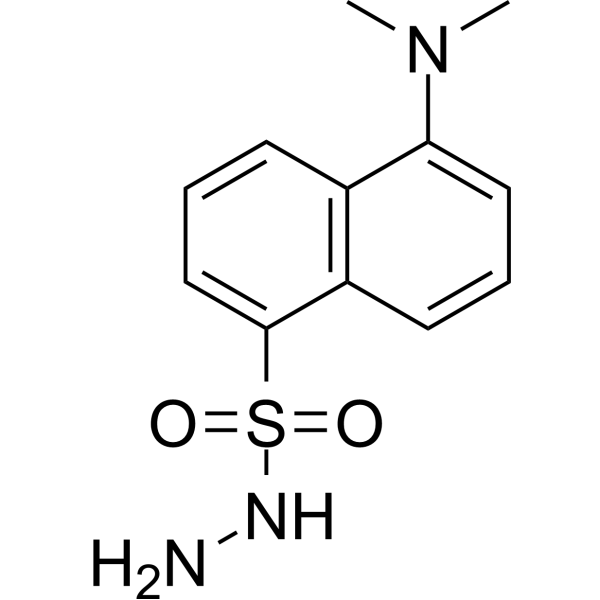
Dansyl hydrazine is a carbohydrate-specific fluorescent dye (Ex/Em = 340 nm/525 nm). Dansyl hydrazine undergoes a condensation reaction with aldehyde groups generated by periodate oxidation on carbohydrate-containing structures to form fluorescent hydrazone compounds. Dansyl hydrazine selectively stains polysaccharides in formalin-fixed, paraffin-embedded human post-mortem brain tissues, revealing detailed structural features. Dansyl hydrazine is applicable to research related to Alzheimer's disease, Lafora disease, and polyglucosan body disease .
loading...
    loading...
Cat. No.: HY-K0608

MCE Masson Staining Kit can simultaneously stain various tissue components, such as cell nuclei, collagen fibers, and muscle fibers. It features low toxicity, environmental friendliness, simple operation, and stable performance. The staining results show clear coloration and high contrast. The stained sections can be stored for long periods with minimal fading, facilitating long-term preservation and image analysis. This kit is widely used in studies of connective tissue, muscle tissue, and collagen fibers, and is suitable for histological observation and related pathological analyses.

loading...
    loading...
Cat. No.: HY-151745
CAS No.: 1993176-74-1
Target:  

ADC Linkers

Research Areas:  

Others

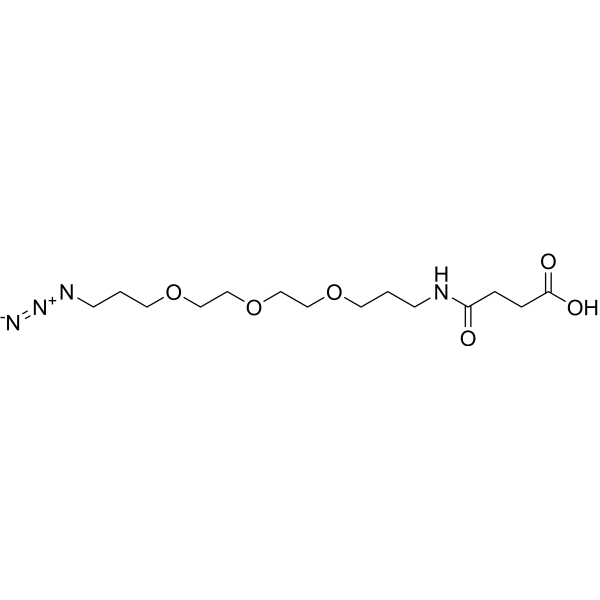
N3-TOTA-Suc is a click chemistry reagent containing an azide group. Click chemistry is a powerful chemical reaction with excellent bioorthogonality features: biocompatible, rapid and highly specific in biological environments . N3-TOTA-Suc is a click chemistry reagent, it contains an Azide group and can undergo copper-catalyzed azide-alkyne cycloaddition reaction (CuAAc) with molecules containing Alkyne groups. It can also undergo strain-promoted alkyne-azide cycloaddition (SPAAC) reactions with molecules containing DBCO or BCN groups.
loading...
    loading...
Cat. No.: HY-183100
Target:  

PROTACs IKK Apoptosis

Research Areas:  

Cancer

UNC8461 is a PROTAC and is negative control CRBN-recruiting PROTAC analog of UNC8209 (HY-183098). UNC8461 features a methyl group substitution on its CRBN ligand to disrupt CRBN binding. UNC8461 fails to reduce TBK1, AAK1, GAK, and AURKA protein levels in renal cancer cells. UNC8461 does not suppress 3-D soft agar colony formation in renal cancer cells, and exerts modest, partial inhibition on colony formation in some renal cancer cells .
loading...
    loading...
Cat. No.: HY-E70121
CAS No.: 9080-33-5
Succinyl-CoA synthetase is a mitochondrial matrix enzyme and catalyst. Succinyl-CoA synthetase supports TCA, ketone and heme metabolism and is activated by mitochondrial phosphate. Succinyl-CoA synthetase distributes broadly across mammalian tissues with distinct substrate-related biochemical features. Succinyl-CoA synthetase gains structural stability after phosphorylation and relies on SUCLG1-encoded subunit for activity. Succinyl-CoA synthetase malfunction links to metabolic and neurological disorders. Succinyl-CoA synthetase serves as a research tool for mitochondrial hepatoencephalomyopathy .
loading...
    loading...
Cat. No.: HY-NP0196
Synonyms: Mouse IgG
Mouse Immunoglobulin G (Mouse IgG) is the most abundant glycoprotein in mouse serum, which bridges innate and adaptive immune responses. A conserved asparagine-297 residue on each heavy chain contains an N-linked glycosylation site. Mouse Immunoglobulin G shares many glycosylation features with human IgG, but contains N-Glycolylneuraminic acid (HY-128965) instead of N-acetylneuraminic acid (HY-I0400). Mouse Immunoglobulin G is widely used as a negative isotype control, immunoassay coating protein and research standard in the life sciences .
loading...
    loading...
Cat. No.: HY-P11858
Research Areas:  

Cancer

DP1 peptide is a high-affinity ROR1-binding peptide with a Kd value of 74.9 nM. When labeled with 68Ga, DP1 peptide serves as a PET imaging agent, which features rapid tumor uptake, favorable target-to-nontarget ratios in various tumor models, and renal clearance, enabling non-invasive quantitative visualization of ROR1 expression. DP1 peptide can be used in research related to melanoma, hepatocellular carcinoma, colorectal cancer, and non-small cell lung cancer .
loading...
    loading...
Cat. No.: HY-P990469
Synonyms: TA136

Target:  

Inhibitory Antibodies

Research Areas:  

Inflammation/Immunology

The Anti-MPL/TPOR/CD110 Antibody (TA136) is a CHO-expressed humanized antibody that targets MPL/TPOR/CD110. The Anti-MPL/TPOR/CD110 Antibody (TA136) features a huIgG1 heavy chain and a huλ light chain, with a predicted molecular weight (MW) of 150 kDa. The isotype control for the Anti-MPL/TPOR/CD110 Antibody (TA136) can be referenced as Human IgG1 kappa, Isotype Control (HY-P99001).
loading...
    loading...
Cat. No.: HY-W394551
CAS No.: 1442447-48-4
Research Areas:  

Others

Methyl 3,4-dibromo-2,5-dioxo-2,5-dihydro-1H-pyrrole-1-carboxylate is a small pyrrolidone molecule which features two bromine atoms and a methyl ester. The unsaturated dibromo motif is a covalent ligand for thiol groups, and may be used to label cysteine residues in proteins. The presence of two leaving groups on this molecule allows this linker to bind two thiols at a time. The methyl ester can be saponified to link this molecule to amines to form larger structures.
loading...
    loading...
Cat. No.: HY-K0609

MCE Modified Masson Staining Kit employs Celestine Blue hematoxylin for light nuclear staining, offering shorter differentiation time compared to conventional methods. It features low toxicity, environmental friendliness, simple operation, and stable performance. The staining results show clear coloration and high contrast. The stained sections can be stored for long periods with minimal fading, facilitating long-term preservation and image analysis. This kit is widely used in studies of connective tissue, muscle tissue, and collagen fibers, and is suitable for histological observation and related pathological analyses.

loading...
    loading...
Cat. No.: HY-137822
CAS No.: 10357-27-4
Purity:  99.68%
Synonyms: 4-Nitrophenyl a-D-mannopyranoside
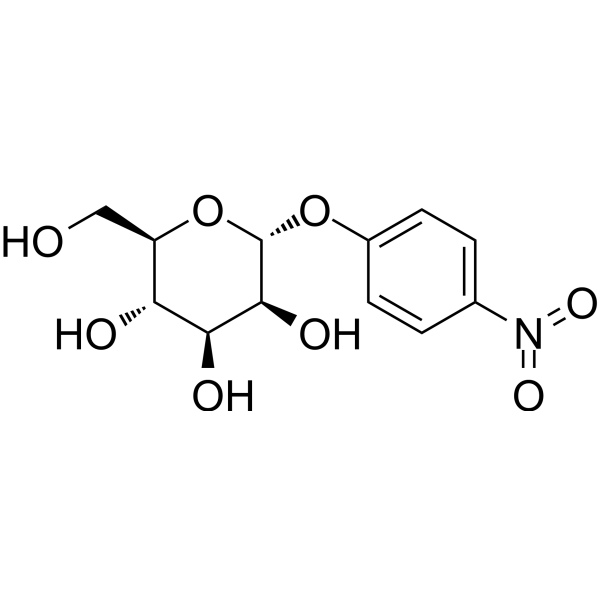
p-Nitrophenyl α-D-mannopyranoside (4-Nitrophenyl α-D-mannopyranoside) is a chromogenic glycosidic ligand. p-Nitrophenyl α-D-mannopyranoside features a sugar moiety (α-D-mannopyranose) with the mannose-characteristic axial hydroxyl group at the C2 position and a ligand portion (p-nitrophenol) that provides ultraviolet-visible light absorption properties. p-Nitrophenyl α-D-mannopyranoside can be used to determine glycosidase activity and characterize the sugar recognition properties of lectins (such as Concanavalin A (HY-P2149)) .
loading...
    loading...
Cat. No.: HY-151749
CAS No.: 1994300-35-4
Target:  

ADC Linkers

Research Areas:  

Others

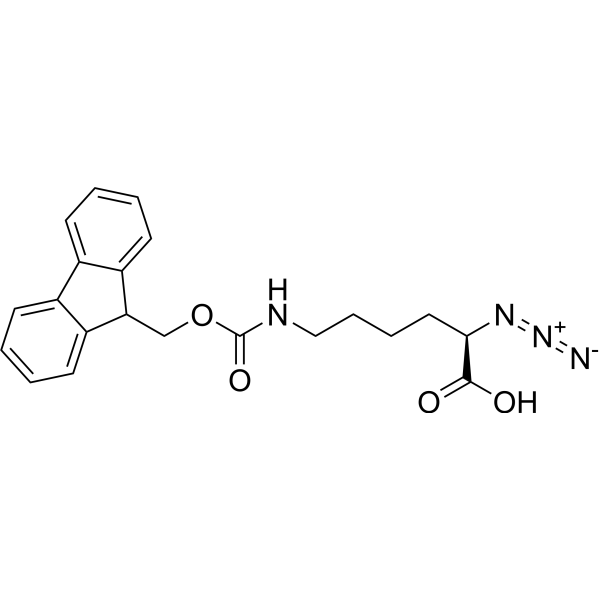
N3-D-Lys(Fmoc)-OH is a click chemistry reagent containing an azide group. Click chemistry is a powerful chemical reaction with excellent bioorthogonality features: biocompatible, rapid and highly specific in biological environments . N3-D-Lys(Fmoc)-OH is a click chemistry reagent, it contains an Azide group and can undergo copper-catalyzed azide-alkyne cycloaddition reaction (CuAAc) with molecules containing Alkyne groups. It can also undergo strain-promoted alkyne-azide cycloaddition (SPAAC) reactions with molecules containing DBCO or BCN groups.
loading...
    loading...
Cat. No.: HY-179526
Target:  

Apoptosis PARP

Research Areas:  

Cancer

Sino-C is a Sinomenine (HY-15122) derivative with anticancer activity. Sino-C broadly disrupts cholesterol homeostasis by upregulating key genes such as SREBF2 and HMGCS1, leading to intracellular cholesterol accumulation and lipid droplet formation. Sino-C-induced metabolic dysregulation further triggers lipid peroxidation and endoplasmic reticulum (ER) stress, initiating a unique form of hybrid cell death including apoptotic (cleaved PARP) and necrotic-like features. Sino-C thus serves as a useful compound for research in colorectal cancer, lung cancer and breast cancer .
loading...
    loading...
Cat. No.: HY-P2459
CAS No.: 163158-19-8
Target:  

Inhibitory Antibodies

Research Areas:  

Inflammation/Immunology

MOG (35-55), human is a synthetic encephalitogenic peptide fragment (residues 35-55) of human myelin oligodendrocyte glycoprotein, and also serves as a myelin oligodendrocyte glycoprotein peptide epitope. MOG (35-55), human induces mild central nervous system inflammation in mice, but does not trigger demyelinating lesions, only causing mild clinical neurological symptoms. MOG (35-55) induces experimental autoimmune encephalomyelitis mouse models that recapitulate the features of optic neuritis, multiple sclerosis, myelin oligodendrocyte glycoprotein antibody-associated diseases, and neuromyelitis optica spectrum disorders .
loading...
    loading...
Cat. No.: HY-P990342

Target:  

Inhibitory Antibodies

Research Areas:  

Inflammation/Immunology

The Anti-B7-H6/NCR3LG1 Antibody is a CHO-expressed human antibody that targets B7-H6/NCR3LG1. The Anti-B7-H6/NCR3LG1 Antibody features a huIgG1 type heavy chain and a huκ type light chain, with a predicted molecular weight (MW) of 150 kDa.
loading...
    loading...
Cat. No.: HY-P990425
Target:  

Adenylate Cyclase

Research Areas:  

Inflammation/Immunology

Anti-GPR73/PROKR1 Antibody is a CHO-expressed human antibody that targets GPR73/PROKR1. Anti-GPR73/PROKR1 Antibody features a huIgG4SP heavy chain and a huκ light chain, with an expected molecular weight (MW) of 150 kDa. The isotype control for Anti-GPR73/PROKR1 Antibody can be referenced as Human IgG1 kappa, Isotype Control (HY-P99001).
loading...
    loading...
Cat. No.: HY-P991055
CAS No.: 2649379-96-2
Synonyms: RG-6234; RO-7425781

Target:  

CD3

Research Areas:  

Inflammation/Immunology

Forimtamig (RG-6324) is a GPRC5DxCD3 T-cell-engaging bispecific antibody. Forimtamig has a 2 + 1 format, comprising two high-affinity GPRC5D binding moieties and one CD3 binder. Forimtamig further features a P329G LALA mutated Fc domain that inhibits Fcγ receptor and C1q binding, yet retains binding to the neonatal Fc receptor. The isotype control for Forimtamig can refer to Human IgG1 kappa, Isotype Control (HY-P99001) .
loading...
    loading...
Cat. No.: HY-W008385
CAS No.: 156-86-5
Synonyms: L-Homoarginine
H-HomoArg-OH (L-Homoarginine) is an orally active endogenous non-protein amino acid. H-HomoArg-OH acts as a weak alternative substrate for NOS and interferes with NO production, selectively inhibits tissue-nonspecific alkaline phosphatase (TNAP), and suppresses the uptake of arginine by y +-type transporters (system y +). H-HomoArg-OH increases tissue hArg concentrations in vivo, regulates amino acid homeostasis, and improves renal function and pathological features of diabetic nephropathy. H-HomoArg-OH can be used in studies related to diabetes and cardiomyopathy .
loading...
    loading...
Cat. No.: HY-W012340
CAS No.: 1483-01-8
Synonyms: L-Homoarginine hydrochloride
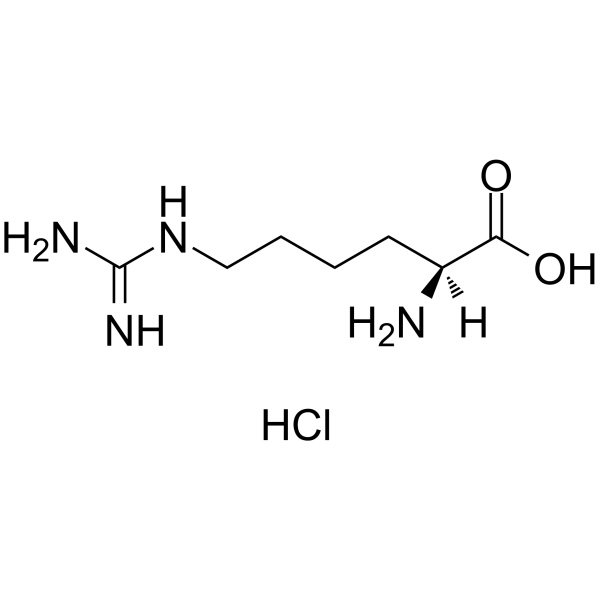
H-HomoArg-OH hydrochloride (L-Homoarginine hydrochloride) is an orally active endogenous non-protein amino acid. H-HomoArg-OH hydrochloride acts as a weak alternative substrate for NOS and interferes with NO production, selectively inhibits tissue-nonspecific alkaline phosphatase (TNAP), and suppresses the uptake of arginine by y +-type transporters (system y +). H-HomoArg-OH hydrochloride increases tissue hArg concentrations in vivo, regulates amino acid homeostasis, and improves renal function and pathological features of diabetic nephropathy. H-HomoArg-OH hydrochloride can be used in studies related to diabetes and cardiomyopathy .
loading...
    loading...

