1510 Results for "

Neuroprotective.

" in MedChemExpress (MCE) Product Catalog:
Products (1510)

1510 Results for "Neuroprotective." in MCE Product Catalog:

Cat. No.: HY-119820
CAS No.: 135354-02-8
Synonyms: SR57746A free base
Xaliproden (SR57746) free base is an orally active, highly selective 5-HT1A receptor agonist. Xaliproden free base activates pertussis toxin-sensitive G protein-coupled signaling cascades, as well as the PKC, ERK1/ERK2, Akt and p21 Ras/MEK-1 pathways. Xaliproden free base also downregulates the JNK/p66/c-Jun signaling pathway, induces phosphorylation of the shc adaptor protein, regulates extracellular dopamine and 5-HT levels, and induces [ 35S]GTPγS labeling in rat brain structures rich in 5-HT1A receptors. Xaliproden free base exerts neurotrophic, neuroprotective, renoprotective, anti-inflammatory, anti-apoptotic, anti-fibrotic and analgesic effects. Xaliproden free base also enhances NGF-induced neurite outgrowth, promotes motor neuron survival, attenuates renal tubular injury and inhibits chemotherapy-induced mechanical allodynia, without activating or altering NGF-induced TrkA receptor activation. Xaliproden free base can be used in the research of motor neuron disease, diabetic nephropathy, chemotherapy-induced peripheral neuropathy, amyotrophic lateral sclerosis, Alzheimer's disease, acute tonic nociceptive pain, inflammatory pain, depression and anxiety .
loading...
    loading...
Cat. No.: HY-181926
COX-2/HDAC6-IN-1 (Compound 11e) is a dual COX-2 and HDAC6 inhibitor, with an IC50 of 0.12 μM against HDAC6 and an IC50 of 0.66 μM against COX-2. COX-2/HDAC6-IN-1 enhances the acetylation level of α-tubulin, regulates epigenetic gene expression, and inhibits the expression of pro-inflammatory mediators (COX-2, IL-1β, IL-6 and TNF-α). COX-2/HDAC6-IN-1 promotes Amyloid-β clearance and reduces excessive phosphorylation of Tau protein. COX-2/HDAC6-IN-1 maintains neuronal morphology by stabilizing MAP2, protects synaptic integrity by regulating synapsin, and restores the expression of memory-related genes. COX-2/HDAC6-IN-1 possesses neuroprotective activity and improves learning and memory abilities in Scopolamine (HY-N0296)-induced Alzheimer's disease mouse models. COX-2/HDAC6-IN-1 is applicable to research related to Alzheimer's disease .
loading...
    loading...
Cat. No.: HY-30004R
CAS No.: 22059-21-8
1-Aminocyclopropane-1-carboxylic acid (Standard) is the analytical standard of 1-Aminocyclopropane-1-carboxylic acid. This product is intended for research and analytical applications. 1-Aminocyclopropane-1-carboxylic acid is an endogenous metabolite. In the presence of low concentrations (1 μM) of glutamate, 1-Aminocyclopropane-1-carboxylic acid acts as a small molecule agonist of NMDA receptors with an EC50 of 0.7-0.9 μM. At high concentrations (10 μM) of glutamate, 1-Aminocyclopropane-1-carboxylic acid acts as a competitive antagonist of NMDA receptors with an EC50 of 81.6 nM. 1-Aminocyclopropane-1-carboxylic acid exerts neuroprotective activity by moderately activating NMDA receptors to prevent neuronal cell death in ischemic animal models. Additionally, 1-Aminocyclopropane-1-carboxylic acid is an antagonist of NMDA receptors, inducing blood pressure reduction and antioxidant effects in stroke-prone hypertensive rats. 1-Aminocyclopropane-1-carboxylic acid enhances object recognition memory and cognitive flexibility dependent on the prefrontal cortex, but does not affect impulsivity nor exhibit an antipsychotic-like profile. 1-Aminocyclopropane-1-carboxylic acid shows promise for research in the field of neurotoxicity. .
loading...
    loading...
Cat. No.: HY-N11709
CAS No.: 220114-28-3
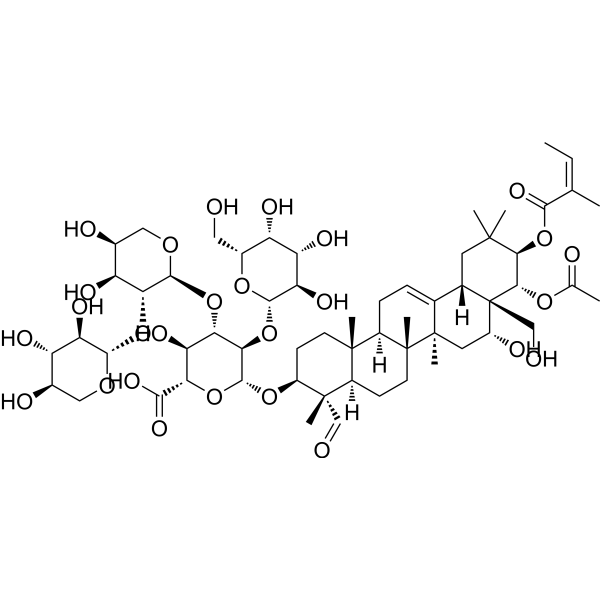
Theasaponin E1 is an orally effective tea saponin. Theasaponin E1 inhibits the proliferation of cancer cells by activating apoptosis. Theasaponin E1 inhibits angiogenesis in ovarian cancer cells and HUVECs by reducing the expression of VEGF. Theasaponin E1 upregulates the phosphorylation level of ATM protein and the expression level of PTEN protein in cancer cells, decreases the phosphorylation levels of Akt, mTOR, p70S6K and 4E-BP1 proteins, downregulates the expression of HIF-1α and NF-κB, and reduces the protein expression of Notch ligands Dll4 and Jagged1. Theasaponin E1 exerts neuroprotective effects by inhibiting the activity of acetylcholinesterase, activating α-secretase and neprilysin, reducing the concentration of Aβ, and inhibiting the activities of β-secretase and γ-secretase. Theasaponin E1 exhibits toxic effects on cancer cells and quinone reductase-inducing activity, and inhibits tumor growth in vivo. Theasaponin E1 induces ferroptosis in Pomacea canaliculata by synergistically disrupting cholesterol homeostasis and sphingolipid metabolism. Theasaponin E1 possesses anti-biofilm activity against Candida albicans. Theasaponin E1 can be used in the research of ovarian cancer, obesity, Alzheimer's disease and fungal infections .
loading...
    loading...
Cat. No.: HY-P0221S
Synonyms: Pituitary Adenylate Cyclase Activating Polypeptide 38-13C5,15N TFA
PACAP (1-38), human, ovine, rat- 13C5, 15N (Pituitary Adenylate Cyclase Activating Polypeptide 38- 13C5, 15N) TFA is the 13C, 15N-labeled PACAP (1-38), human, ovine, rat (TFA) (HY-P0221A). PACAP (1-38), human, ovine, rat TFA is a PAC1 receptor agonist. PACAP (1-38), human, ovine, rat TFA binds to PACAP type I receptor, PACAP type II receptor VIP1, and PACAP type II receptor VIP2 with IC50s of 4 nM, 2 nM, and 1 nM, respectively. PACAP (1-38), human, ovine, rat TFA increases the α-secretase activity. PACAP (1-38), human, ovine, rat TFA elevates cytosolic Ca 2+, increases proliferation and increases phosphorylation of extracellular regulates kinase (ERK) and the epidermal growth factor receptor (EGFR). PACAP (1-38), human, ovine, rat TFA demonstrates potent, efficacious, and sustained stimulatory effects on sympathetic neuronal NPY and catecholamine production. PACAP (1-38), human, ovine, rat TFA can be used for neurotrophic and neuroprotective research .
loading...
    loading...
Cat. No.: HY-P1363S1
β-Amyloid (1-42), human, Ala( 13C3, 15N) TFA is the 13C and 15N-labeled β-Amyloid (1-42), human (HY-P1363A). β-Amyloid (1-42) (Amyloid β-peptide (1-42)), human, a 42-amino acid peptide that has not been treated with HFIP, is a brain-penetrant amyloid protein fragment, which can be used in research on Alzheimer's disease and Down’s syndrome. β-Amyloid (1-42), human remaining as a monomer exhibits antioxidant and neuroprotective effects. β-Amyloid (1-42), human, after being monomericized by HFIP and dissolved in DMSO to form the stock solution, on the one hand, can form soluble oligomers (AβOs) when incubated at 4 °C, which have synaptic toxicity and neurotoxicity; on the other hand, it can be incubated at 37 °C to form insoluble fibrils, with lower neurotoxicity, and participating in the oxidative damage process. Aβ42 oligomers bind to various neuronal surface receptors (such as PrPc, mGluR5, NMDA receptors, etc.), triggering oxidative stress, calcium homeostasis imbalance, and synaptic toxicity via activating downstream signaling pathways, leading to neuronal dysfunction and death .
loading...
    loading...
Cat. No.: HY-14604R
CAS No.: 90494-79-4
Synonyms: SR57746A (Standard); SR57746 hydrochloride (Standard)
Xaliproden (hydrochloride) (Standard) is the analytical standard of Xaliproden (hydrochloride). This product is intended for research and analytical applications. Xaliproden (SR57746) hydrochloride (SR57746A) is an orally active, highly selective 5-HT1A receptor agonist. Xaliproden hydrochloride activates pertussis toxin-sensitive G protein-coupled signaling cascades, as well as the PKC, ERK1/ERK2, Akt and p21 Ras/MEK-1 pathways. Xaliproden hydrochloride also downregulates the JNK/p66/c-Jun signaling pathway, induces phosphorylation of the shc adaptor protein, regulates extracellular dopamine and 5-HT levels, and induces [ 35S]GTPγS labeling in rat brain structures rich in 5-HT1A receptors. Xaliproden hydrochloride exerts neurotrophic, neuroprotective, renoprotective, anti-inflammatory, anti-apoptotic, anti-fibrotic and analgesic effects. Xaliproden hydrochloride also enhances NGF-induced neurite outgrowth, promotes motor neuron survival, attenuates renal tubular injury and inhibits chemotherapy-induced mechanical allodynia, without activating or altering NGF-induced TrkA receptor activation. Xaliproden hydrochloride can be used in the research of motor neuron disease, diabetic nephropathy, chemotherapy-induced peripheral neuropathy, amyotrophic lateral sclerosis, Alzheimer's disease, acute tonic nociceptive pain, inflammatory pain, depression and anxiety .
loading...
    loading...
Cat. No.: HY-B2167R
CAS No.: 6217-54-5
Synonyms: DHA (Standard); Cervonic acid (Standard)
Docosahexaenoic acid (Standard) is the analytical standard of Docosahexaenoic acid. This product is intended for research and analytical applications. Docosahexaenoic Acid (DHA) is an omega-3 fatty acid abundantly present brain and retina. It can be obtained directly from fish oil and maternal milk. In Vitro: Docosahexaenoic acid (DHA) is essential for the growth and functional development of the brain in infants. DHA is also required for maintenance of normal brain function in adults. The inclusion of plentiful DHA in the diet improves learning ability and memory . DHA is an essential requirement in every step of brain development like neural cell proliferation, migration, differentiation, synaptogenesis. The multiple double bonds and unique structure allow DHA to impart special membrane characteristics for effective cell signaling. Many development disorders like dyslexia, autism spectrum disorder, attention deficit hyperactivity disorder, schizophrenia etc. are causally related to decreased level of DHA . DHA is a potent RXR ligand inducing robust RXR activation already at low micro molar concentrations. The EC50 for RXRα activation by DHA is about 5-10 μM fatty acid . In Vivo: Docosahexaenoic acid administration over 10 weeks significantly reduces the number of reference memory errors, without affecting the number of working memory errors, and significantly increases the docosahexaenoic acid content and the docosahexaenoic acid/arachidonic acid ratio in both the hippocampus and the cerebral cortex . DHA treatment exerts neuroprotective actions on an experimental mouse model of PD. There is a decrease tendency in brain lipid oxidation of MPTP mice but it does not significantly .
loading...
    loading...
Cat. No.: HY-N0353R
CAS No.: 13657-68-6
Synonyms: (+)-Curdione (Standard)
Curdione (Standard) is the analytical standard of Curdione. This product is intended for research and analytical applications. Curdione ((+)-Curdione) is an orally active sesquiterpenoid. Curdione inhibits platelet aggregation. Curdione induces ferroptosis in colorectal cancer via m6A methylation mediated by METTL14 and YTHDF2. Curdione inhibits ferroptosis in Isoproterenol (HY-B0468)-induced myocardial infarction by regulating the Keap1/Trx1/GPX4 signaling pathway, suppressing oxidative stress (ROS) and apoptosis. Curdione ameliorates Doxorubicin (HY-15142)-induced cardiotoxicity by inhibiting oxidative stress (ROS) and activating the Nrf2/HO-1 pathway. Curdione ameliorates sepsis-induced lung injury by inhibiting platelet-mediated neutrophil extracellular trap formation. Curdione ameliorates Bleomycin (HY-17565A)-induced pulmonary fibrosis by inhibiting TGF-β-induced fibroblast-to-myofibroblast differentiation. Curdione exhibits neuroprotective effects against focal cerebral ischemia-reperfusion injury in rats. Curdione exerts antiproliferative effects against human uterine leiomyosarcoma by targeting IDO1. Curdione protects vascular endothelial cells and atherosclerosis by regulating DNMT1-mediated ERBB4 promoter methylation. Curdione inhibits inducible prostaglandin E2 production (IC50 = 1.1 μM) and cyclooxygenase 2 expression .
loading...
    loading...
Cat. No.: HY-N2259R
CAS No.: 19431-84-6
Synonyms: (+)-Curcumenol (Standard)
Curcumenol (Standard) ((+)-Curcumenol (Standard)) is the analytical standard of Curcumenol (HY-N2259). This product is intended for research and analytical applications. Curcumenol ((+)-Curcumenol) is a natural compound with oral efficacy, exhibiting an IC50 of 12.6 μM and a Ki of 10.8 μM against human CYP3A4. Curcumenol inhibits TNFα-induced phosphorylation/degradation of IκBα, phosphorylation/nuclear translocation of NF-κB p65, as well as the upregulation of MMP3, MMP9, MMP13, TRAF3, IL1RL1, TNFα and IL-1β. Curcumenol suppresses LPS-induced phosphorylation of Akt and p38 MAPK, as well as the production of pro-inflammatory mediators/proteins, and downregulates the SLC7A11/NF-κB/TGF-β pathway. Curcumenol binds to and inhibits the activation of Fyn and Lyn, blocks the function of downstream FcεRI signaling components, and reduces the release of allergic mediators/cytokines. Curcumenol upregulates the expression of KDM6B, and promotes chondrocyte proliferation and cartilage repair. Curcumenol induces ferroptosis and apoptosis, regulates the EMT process, and inhibits tumor growth and metastasis of triple-negative breast cancer. Curcumenol possesses anti-inflammatory, neuroprotective, antioxidant, antitumor, antiviral and hepatoprotective activities. Curcumenol can be used in research related to intervertebral disc degeneration, cancer, inflammation, central nervous system neurodegenerative diseases, allergic reactions and knee osteoarthritis .
loading...
    loading...

