165 Results for "

NOR

" in MedChemExpress (MCE) Product Catalog:
Products (165)

165 Results for "NOR" in MCE Product Catalog:

Cat. No.: HY-147196
CAS No.: 2384184-42-1
Target:  

FKBP PROTACs

Research Areas:  

Cancer

KB03-SLF is a bifunctional PROTAC, formed by conjugating the cysteine-targeting KB03 exploratory fragment with SLF (HY-114872), an FKBP12 ligand that does not support the degradation of FKBP12 NLS. KB03-SLF fails to degrade nuclear-localized FKBP12 NLS in cells, nor can it mediate the interaction between DCAF16 and FKBP12 NLS in a manner similar to KB02-SLF (HY-129610) .
loading...
    loading...
Cat. No.: HY-155642
CAS No.: 335394-78-0
Purity:  99.34%
Target:  

Urea Transporter

Research Areas:  

Metabolic Disease

PU-48 is a blood-brain barrier-permeable urea transporter (UT) inhibitor with an IC50 of 0.32 μM against rat UT-A. By functionally inhibiting urea transporters (including UT-A subtypes) in the renal inner medullary collecting ducts, PU-48 induces urea-selective diuresis. PU-48 does not alter blood levels of sodium, potassium or chloride ions, nor does it affect the excretion of non-urea solutes. PU-48 shows no significant toxicity in cell or animal models and can be used in edema-related research .
loading...
    loading...
Cat. No.: HY-182569
CAS No.: 132340-44-4
Target:  

VEGFR

FR 111142 is an angiogenesis inhibitor (IC50 = 18.4 μM) and has anti-inflammatory activity (IC50 = 20.6 μM). FR 111142 inhibits capillary-like tube formation as well as nitric oxide production in LPS (HY-D1056)-activated murine macrophages. FR 111142 enhances catabolism of low-density lipoprotein (LDL). FR 111142 does not induce significant cytotoxicity in human endothelial progenitor cells, nor affect cell viability of murine macrophages. FR 111142 can be used for the research of cancer, inflammatory diseases .
loading...
    loading...
Cat. No.: HY-E71166
Research Areas:  

Others

1,5-Anhydro-D-fructose reductase (1,5-Anhydro-D-mannitol-forming) (EC 1.1.1.292) belongs to the GFO/IDH/MocA protein family. It can also reduce 1,5-Anhydro-D-fructose-2,3-diketooses and 2-keto aldoses (called ketones), such as D-glucose ketone (D-arabino-hexose-2-ketoose) and 6-deoxy-D-glucose ketone. It cannot reduce common aldoses and ketoses, nor can it reduce non-glucose aldehydes and ketones.
loading...
    loading...
Cat. No.: HY-W014134
CAS No.: 74938-88-8
Synonyms: p-Amidinophenylmethylsulfonylfluoride hydrochloride
Target:  

Ser/Thr Protease

Research Areas:  

Inflammation/Immunology

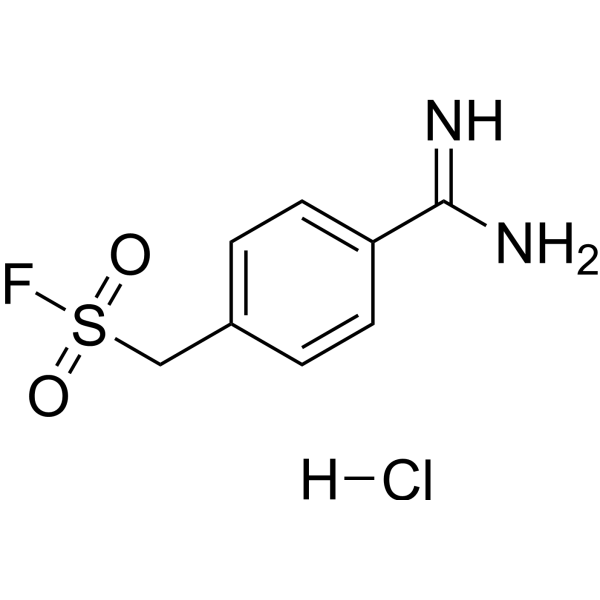
p-APMSF (p-Amidinophenylmethylsulfonylfluoride) hydrochloride is a serine protease and trypsin inhibitor with the characteristic of rapid onset of action. p-APMSF hydrochloride reduces the enzymatic hydrolysis of recombinant human G-CSF in rat pulmonary mucosa. Combined intratracheal treatment with p-APMSF hydrochloride and Laureth-9 significantly enhances its absorption efficiency in rat lungs. Following intranasal administration, p-APMSF hydrochloride does not increase the concentration of recombinant human G-CSF in rat plasma, nor does it alter the effect of G-CSF on inducing an increase in total white blood cell count .
loading...
    loading...
Cat. No.: HY-118760
CAS No.: 137031-56-2
Research Areas:  

Cardiovascular Disease

Litebamine is a phenanthrene alkaloid with antiplatelet activity. Litebamine potently targets arachidonic acid- and collagen-induced platelet aggregation, but shows no activity against thrombin-induced aggregation. Litebamine inhibits arachidonic acid- and collagen-induced ATP release and thromboxane B2 production in rabbit platelets, without altering cyclic AMP levels or phosphoinositide breakdown in rabbit platelets. Litebamine has no effect on platelet-activating factor- or U46619 (HY-108566)-induced aggregation, nor does it affect [ 3H] inositol monophosphate production in rabbit platelets induced by collagen, platelet-activating factor or thrombin .
loading...
    loading...
Cat. No.: HY-E70568
Target:  

Ser/Thr Protease

Research Areas:  

Others

Protease (O-glycan Cleaving) is recombinantly expressed from E.coli and contains a His tag. Protease (O-glycan Cleaving) is an O-glycan-dependent protease that digests proteins carrying mucin-type O-glycans, including sialylated substrates, glycosylated Ser and Thr residues at the N terminus. Protease (O-glycan Cleaving) digests a variety of O-glycan structures, including sialylated glycosylated core 1 and core 2 structures and Tn antigen. Protease (O-glycan Cleaving) does not digest terminally modified serine or threonine residues, nor does it digest N-glycosylation sites on glycoproteins.
loading...
    loading...
Cat. No.: HY-N7041
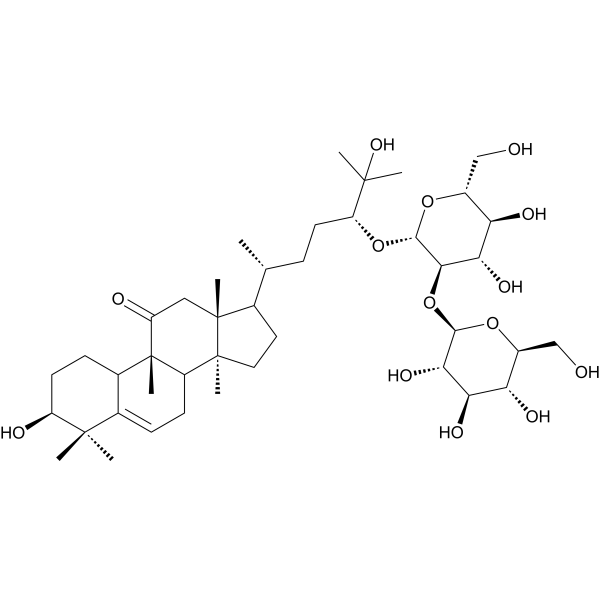
11-Oxomogroside IIa (11-oxomogroside II A1) is a cucurbitane glycoside extracted from the fruits of Siraitia grosVenorii. 11-Oxomogroside IIa has inhibitory effects against the Epstein-Barr virus early antigen (EBV-EA) activation induced by 12-O-tetradecanoylphorbol-13-acetate (TPA), shows weak inhibitory effects on activation of (+/-)-(E)-methyl-2-[(E)-hydroxyimino]-5-nitro-6-methoxy-3-hexemide (NOR 1), a nitric oxide (NO) donor .
loading...
    loading...
Cat. No.: HY-N11009
CAS No.: 942612-74-0
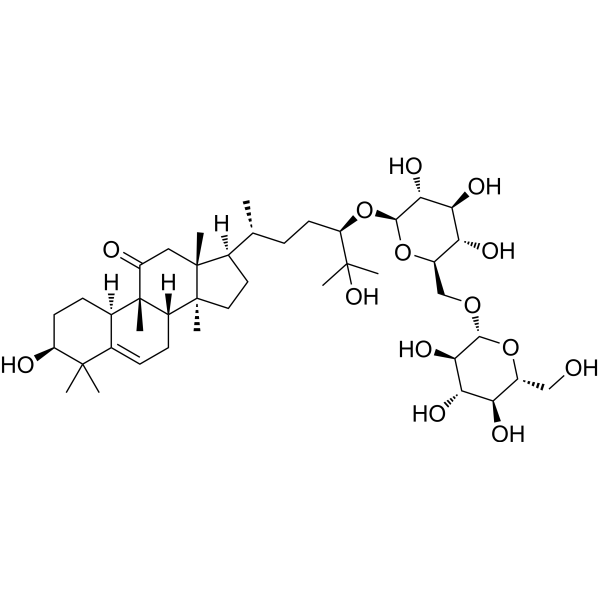
11-Oxomogroside II A1 (compound 7) is an oxidized cucurbitin. It can be isolated from the ethanol extract of Rohanberry fruit. 11-Oxomogroside II A1 inhibits the activation of Epstein-Barr virus (EBV) early antigen (EBV-EA) induced by 12-O-tetradecanoylphorbol-13-acetate (TPA). 11-Oxomogroside II A1 also weakly inhibits the activation of (±)-(E)-methyl-2-[(E)-hydroxyimino]-5-nitro-6-methoxy-3-hexemide (NOR 1), a nitric oxide (NO) donor .
loading...
    loading...
Cat. No.: HY-W010697
CAS No.: 604-33-1
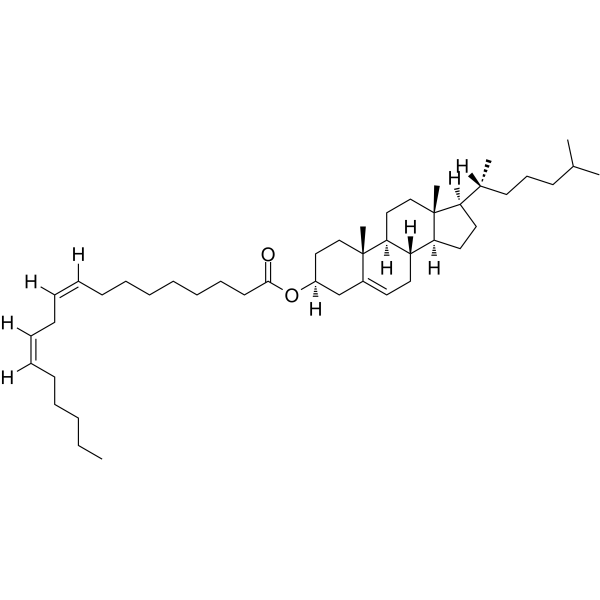
Cholesteryl linoleate is a cholesteryl ester with antibacterial activity that is present in low-density lipoprotein (LDL) particles, human nasal fluid, and respiratory epithelial secretions. Cholesteryl linoleate is oxidized by 12/15-lipoxygenase in macrophages and participates in selective uptake and efflux via LDL receptor-related protein. Cholesteryl linoleate does not induce endothelial adhesion molecule expression, nor does it induce monocyte binding to endothelial cells. Cholesteryl linoleate liposomal formulations inhibit the growth of multiple bacteria at physiological nasal fluid concentrations and act synergistically with antimicrobial peptides. Cholesteryl linoleate is useful for research related to atherosclerosis and bacterial infections .
loading...
    loading...
Cat. No.: HY-W024604
CAS No.: 22748-16-9
Synonyms: 4,4-Dimethylcyclopent-2-enone
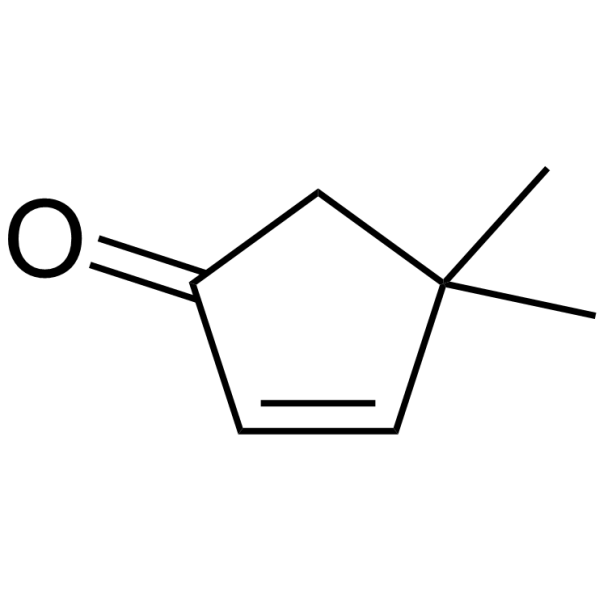
4,4-Dimethyl-2-cyclopenten-1-one (4,4-Dimethylcyclopent-2-enone) is a β-unsubstituted cyclic α,β-unsaturated ketone and anticancer agent. 4,4-Dimethyl-2-cyclopenten-1-one does not activate Caspase 3, 8 or 9, nor does it induce internucleosomal DNA fragmentation. 4,4-Dimethyl-2-cyclopenten-1-one exhibits anticancer activity against oral squamous cell carcinoma and promyelocytic leukemia .
loading...
    loading...
Cat. No.: HY-123035
CAS No.: 877773-32-5
Purity:  99.44%
Target:  

HSP Akt EGFR

Research Areas:  

Endocrinology

Gamendazole, an indazole carboxylic acid (ICA), is an orally active, selective HSP90AB1 (HSP90BETA) and EEF1A1 (eEF1A) inhibitor. Gamendazole binds to the C-terminal nucleotide binding pocket of HSP90 and cause downregulation of clients AKT1 and ERBB2, but stabilizes the HSP90 heterocomplex. Gamendazole specifically inhibits the actin bundling function of EEF1A1, but does not bind to the nucleotide docking pocket nor inhibits the ribosome charging or protein translation functions of EEF1A1. Gamendazole, an antispermatogenic compound with antifertility effects, has the potential for reversible non-hormonal male contraceptive agent research .
loading...
    loading...
Cat. No.: HY-179014
OGG1 activator-1 (Compound 30) is a selective 8-oxoguanine DNA glycosylase-1 (OGG1) activator with an AC50 value of 0.58 μM. OGG1 activator-1 does not activate nor inhibit the key downstream repair enzyme APE1, and shows > 150-fold selectivity for the activation effect on OGG1. OGG1 activator-1 exhibits extremely high metabolic stability and almost no cytotoxicity. OGG1 activator-1 can be used for the study of oxidative stress-related diseases (such as neurodegenerative diseases, fibrotic diseases, cancer, inflammation, etc.) .
loading...
    loading...
Cat. No.: HY-134454
CAS No.: 108708-25-4
Purity:  98.03%
Research Areas:  

Infection

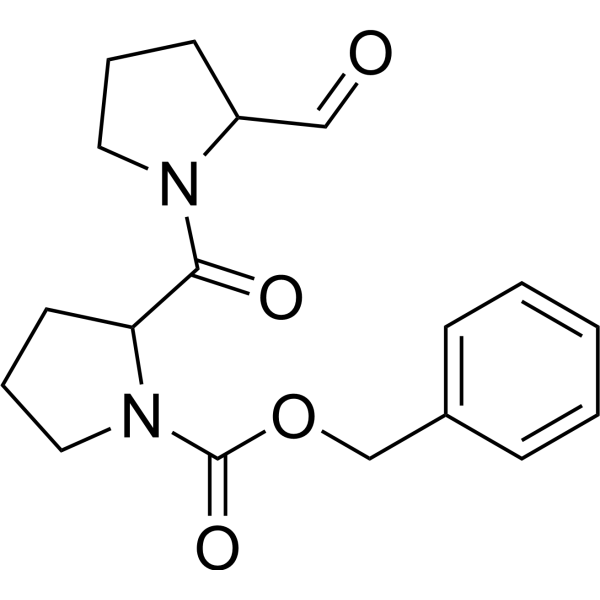
Z-Pro-Pro-CHO is a potent inhibitor of prolyl oligopeptidase (POP), with extremely high affinity for human prolyl oligopeptidase (HsPOP) (IC50=0.012 μM), and it also effectively inhibits the activity of Schistosoma mansoni prolyl oligopeptidase (SmPOP) (IC50=0.16 μM). Z-Pro-Pro-CHO does not block the phosphorylation of ERK or the production of TNF-α or IFN-γ in immune cells from presensitized mice, nor does it induce harmful phenotypes in cultured Schistosoma mansoni schistosomula. Z-Pro-Pro-CHO only partially inhibits epithelial cell wound healing at extremely high concentrations. Z-Pro-Pro-CHO finds wide application in studies related to schistosomiasis .
loading...
    loading...
Cat. No.: HY-N21609
CAS No.: 60462-09-1
Cassialoin is an orally active anthrone-C-glucoside natural product with antitumor activity, which is found in the heartwood of Cassia garrettiana. Cassialoin is metabolized to the active substance Chrysophanol‑9‑anthrone. Cassialoin does not directly inhibit the activities of VEGFR‑2 and MMP‑9 in vitro, nor does it directly inhibit vascular lumen formation and cell migration in vitro. Cassialoin increases the number of IFN-γ-positive CD8 + T cells and natural killer cells in the small intestine or spleen, and enhances IFN-γ production by splenocytes induced by Concanavalin A (HY-P2149). Cassialoin inhibits tumor growth and peritoneal invasion in colon cancer xenograft models. Cassialoin can be used for research on colon cancer .
loading...
    loading...
Cat. No.: HY-W010697S
Cholesteryl linoleate-d11 is the d11-labeled Cholesteryl linoleate (HY-W010697). Cholesteryl linoleate is a cholesteryl ester with antibacterial activity that is present in low-density lipoprotein (LDL) particles, human nasal fluid, and respiratory epithelial secretions. Cholesteryl linoleate is oxidized by 12/15-lipoxygenase in macrophages and participates in selective uptake and efflux via LDL receptor-related protein. Cholesteryl linoleate does not induce endothelial adhesion molecule expression, nor does it induce monocyte binding to endothelial cells. Cholesteryl linoleate liposomal formulations inhibit the growth of multiple bacteria at physiological nasal fluid concentrations and act synergistically with antimicrobial peptides. Cholesteryl linoleate is useful for research related to atherosclerosis and bacterial infections .
loading...
    loading...
Cat. No.: HY-147099
Purity:  97.8%
Target:  

PROTACs FKBP

Research Areas:  

Cancer

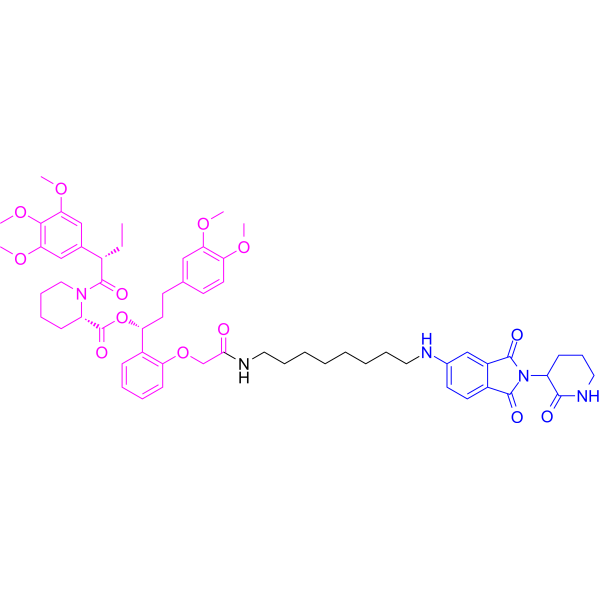
dTAG-47-NEG is an inactive bifunctional negative control PROTAC and also the diastereomer of dTAGV-1 (HY-145514D). dTAG-47-NEG does not reduce the level of BCL11A-FKBP12 F36V, nor does it induce the degradation of BCL11A-FKBP12 F36V, proteins tagged with FKBP12 F36V, wild-type FKBP12, FKBP12 F36V-KRAS G12V or FKBP12 F36V-EWS/FLI. dTAG-47-NEG exerts no antiproliferative effect in cancer cells .
loading...
    loading...
Cat. No.: HY-189252
Target:  

JAK STAT

Research Areas:  

Cancer

JAK2 activator 1 is an orally active and selective JAK2 activator derived from Proanthocyanidin A1 (HY-N2344) (EC50 = 64 nM). JAK2 activator 1 directly binds to JAK2, triggers conformational changes, and achieves allosteric activation of the JAK2/STAT3 signaling pathway. JAK2 activator 1 promotes hematopoietic recovery in chemotherapy-induced myelosuppression by protecting hematopoietic stem cells from Carboplatin (HY-17393)-induced damage. JAK2 activator 1 does not promote the proliferation of A549, HepG2, or CaCo2 tumor cells, nor does it attenuate the antitumor effect of Carboplatin. JAK2 activator 1 can be used in research related to cancer chemotherapy-induced myelosuppression .
loading...
    loading...
Cat. No.: HY-115822
CAS No.: 81839-27-2
Purity:  ≥99.0%
α-Fluoromethylhistidine dihydrochloride is an orally active histidine decarboxylase inhibitor. α-Fluoromethylhistidine dihydrochloride depletes histamine in enterochromaffin-like (ECL) cells, reduces the number and volume density of secretory vesicles in ECL cells, and does not affect histamine storage in mast cells. α-Fluoromethylhistidine dihydrochloride abolishes Omeprazole (HY-B0113)-induced vacuolization of ECL cells and decreases gastrin-induced histamine efflux from ECL cells. α-Fluoromethylhistidine dihydrochloride does not alter the granular characteristics of ECL cells, omeprazole-induced hypertrophy of ECL cells, gastrin-induced pancreastatin-like immunoreactivity efflux, nor does it affect gastric acid secretion induced by histamine or vagal stimulation. α-Fluoromethylhistidine dihydrochloride inhibits basal and gastrin-stimulated gastric acid secretion, reduces acid output induced by gastrin+IBMX (HY-12318), but does not directly affect acid generation in isolated parietal cells .
loading...
    loading...
Cat. No.: HY-148611
CAS No.: 1135037-53-4
Target:  

iGluR

Research Areas:  

Neurological Disease

NSC339614 potassium is a selective GluN1/GluN2C and GluN1/GluN2D receptor enhancer with the activity of enhancing neuronal responses to specific NMDA receptors. NSC339614 potassium can selectively enhance the signaling of GluN1/GluN2C and GluN1/GluN2D receptors without affecting other NMDA receptors. The mechanism of action of NSC339614 potassium does not compete with agonists of L-glutamate or glycine, nor does it depend on membrane potential. The activity of NSC339614 potassium depends on the specific structure of the agonist ligand binding domain, showing its potential as a novel pharmacological agent for studying the function of NMDA receptor subtypes and providing new lead compounds for a variety of neurological diseases .
loading...
    loading...

