2097 Results for "

multiple

" in MedChemExpress (MCE) Product Catalog:
Products (2097)

2097 Results for "multiple" in MCE Product Catalog:

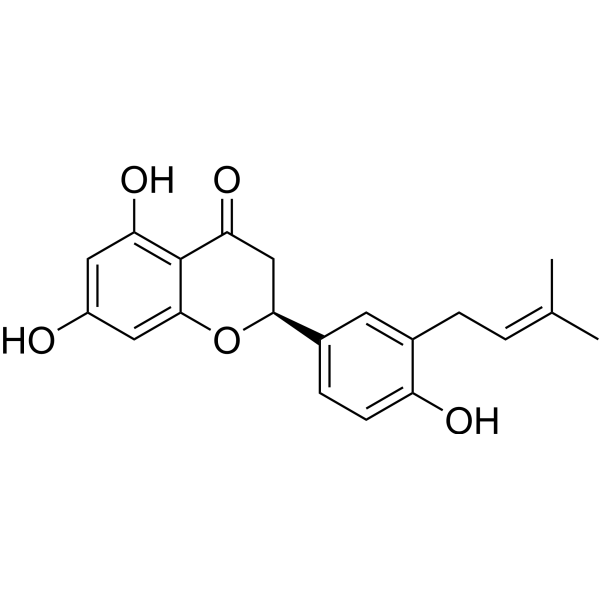
Cat. No.: HY-N10133
CAS No.: 119240-82-3
Synonyms: 3′-Prenylnaringenin
Licoflavanone (3′-Prenylnaringenin) is a flavanone with antioxidant, anti-inflammatory and anticancer activities. Licoflavanone can be isolated from the leaf extract of Glycyrrhiza glabra. Licoflavanone downregulates the mTOR/PI3K/AKT signaling pathway to inhibit the proliferation, migration and invasion of cancer cells, while activates Bax, Bad and multiple caspase enzymes to induce apoptosis. Its anti-inflammatory effect is manifested by reducing the nuclear translocation of NF-κB, decreasing the phosphorylation levels of p38, JNK and ERK1/2, thereby inhibiting the expression of nitric oxide, proinflammatory cytokines, COX-2 and iNOS. Licoflavanone is used in studies on nasopharyngeal carcinoma and related mechanisms .
loading...
    loading...
Cat. No.: HY-P10887
CAS No.: 2988012-71-9
Synonyms: AV-001
Pegevongitide (AV-001) is a Tie2 agonist. Pegevongitide resists the increased endothelial cell permeability induced by SARS-CoV-2 infection. Pegevongitide activates the angiogenin (angiogenin)/Tie2 signaling pathway. Pegevongitide reduces perivascular space dilation and upregulates perivascular Aquaporin-4 expression. Pegevongitide decreases the expression of TNF-α, PAI-1, CXCL9 and P-selectin, improves white matter integrity, enhances cognitive function and exerts neuroprotective effects. Pegevongitide improves white matter integrity in middle-aged rats with vascular dementia induced by multiple microinfarctions . Pegevongitide can be used in related research on diseases such as COVID-19 and vascular dementia .
loading...
    loading...
Cat. No.: HY-P11905
CAS No.: 874909-17-8
Research Areas:  

Others

FcIII peptide is a 13-amino-acid peptide that competitively binds the hinge region of IgG Fc fragment with high affinity. FcIII peptide has an inhibition constant Ki of 25 nM when competing with Protein A for binding sites. FcIII peptide displays high selectivity toward human IgG subtypes yet weak binding affinity for murine IgG1. FcIII peptide anchors IgG Fc through hydrophobic interactions formed by tryptophan and valine residues, alongside multiple hydrogen bonds and salt bridges. FcIII peptide alters the local microenvironment of conjugated fluorescein after binding IgG Fc, which triggers enhanced fluorescent signals. FcIII peptide can be applied to researches related to monoclonal antibody production. .
loading...
    loading...
Cat. No.: HY-P992356

Target:  

Topoisomerase

Research Areas:  

Cancer

GENA-104A16 is a humanized monoclonal antibody targeting CNTN4, with multiple functions including immunostimulation, cytotoxicity and immunoregulation. By binding to CNTN4, GENA-104A16 blocks its interaction with APP, thereby restoring T cell function, inducing tumor cell death and regulating tumor-infiltrating immune cell populations. GENA-104A16 also exerts topoisomerase I inhibitory activity via the payload Exatecan (HY-13631). GENA-104A16 can be used in research related to colon cancer liver metastasis and other CNTN4-expressing solid tumors .
loading...
    loading...
Cat. No.: HY-P992382
IC 100 is a humanized IgG4κ monoclonal antibody targeting apoptosis-associated speck-like protein (ASC) with blood-brain barrier permeability. IC 100 specifically inhibits ASC after being endocytosed via its Fc segment, blocks ASC polymerization and inflammasome activation, suppresses IL-1β release, forms complexes with ASC and TRIM21, and evades TRIM21-mediated proteasomal degradation. IC 100 alleviates symptoms associated with autoimmune encephalomyelitis, reduces immune cell infiltration and microglial activation in the mouse EAE model. IC 100 is suitable for research on neuroinflammatory and inflammasome-related diseases such as multiple sclerosis. Isotype comparison: HY-P99003 .
loading...
    loading...
Cat. No.: HY-W587784
CAS No.: 542-40-5
Norbixin is an orally active natural product with multiple activities such as retinal protection and oxidative stress regulation. Norbixin scavenges ROS, chelates metal ions, regulates plasmid and genomic DNA breakage, inhibits H2O2-induced mutagenesis, activates PPAR-α, modulates lipid levels, restores or regulates antioxidant enzyme activity, and alters NO levels. Norbixin prevents A2E accumulation and protects photoreceptor cells and retinal pigment epithelial cells. Norbixin is a derivative of Bixin (HY-N6884). Norbixin can be used in research related to diseases such as macular degeneration and diabetes, and also serves as a natural textile dye .
loading...
    loading...
Cat. No.: HY-L225
260 compounds

Drug development is both expensive and time-consuming, with approximately one-third of drug discontinuations caused by severe adverse drug reactions (ADRs). Among these, drug-induced cardiotoxicity (DICT) is one of the primary reasons for late-stage clinical drug failures and market withdrawals. To date, cardiotoxicity has been observed in multiple drug classes, such as anticancer drugs, antipsychotics, antidepressants, antibiotics, and neurodegenerative disease medications. To reduce cardiac ADRs, it is crucial to determine the clinical relevance of DICT to treatment, elucidate the underlying molecular mechanisms, identify reliable biomarkers, and develop new diagnostic and therapeutic approaches.

MCE offers 260 cardiotoxicity compounds, including some FDA-approved drugs as well as inhibitors/blockers of the hERG potassium channel.

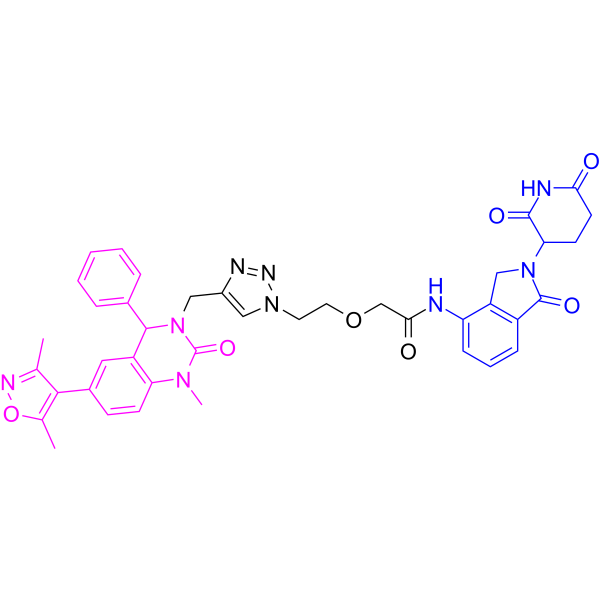
Cat. No.: HY-133136
CAS No.: 2185795-53-1
Research Areas:  

Cancer

PROTAC BRD4 Degrader-2 is a PROTAC connected by ligands for Cereblon and BRD4 with an IC50 of 14.2 nM against BRD4 BD1 .
loading...
    loading...
Cat. No.: HY-186219
Research Areas:  

Cancer

PIN1 ligand-3 (Compound I-1) is a PIN1 ligand. PIN1 ligand-3 serves as a Ligand for Target Protein for PROTAC for the synthesis of PIN1 PROTAC degraders, such as PROTAC PIN1 degrader-2 (HY-186218). PIN1 ligand-3 is applicable in cancer research .
loading...
    loading...
Cat. No.: HY-W319584
CAS No.: 55275-64-4
Target:  

Drug Derivative

Research Areas:  

Cancer

AMP-404 is an Imexon (HY-15385)-derived antitumor agent with dual functions as a cytotoxin and growth inhibitor. AMP-404 exerts significant cytotoxic effects against various sensitive, drug-resistant and primary human tumor cells, including myeloma, breast cancer, melanoma, ovarian cancer and sarcoma cells. AMP-404 effectively inhibits the growth of rat PIE 2-3 sarcoma in vivo and exhibits remarkable in vivo efficacy .
loading...
    loading...
Cat. No.: HY-103019BR
CAS No.: 1610408-96-2
Synonyms: (R)-Enitociclib (Standard); (-)-BAY-1251152 (Standard); (-)-VIP152 (Standard)
(-)-Enitociclib (Standard) is the analytical standard of (-)-Enitociclib (HY-103019B). This product is intended for research and analytical applications. (-)-Enitociclib ((R)-Enitociclib) is an enantiomer of Enitociclib (HY-103019E) with an optical rotation of (-). Enitociclib is a selective CDK9 inhibitor and apoptosis inducer. Enitociclib inhibits CDK9 activity and reduces the phosphorylation of Ser2 in the carboxyl-terminal domain (CTD) of RNA polymerase Pol II, thereby downregulating the transcription of key oncogenes such as MYC and MCL1. Enitociclib has anti-proliferative activity targeting MYC+ lymphoma and multiple myeloma (MM) cells, and has synergistic effects with Bortezomib (HY-10227) and Lenalidomide (HY-A0003), and can be used in the research of hematological malignancies .
loading...
    loading...
Cat. No.: HY-108385
CAS No.: 1448049-50-0
Ochratoxin A-D4 (Phe-​OTA-D4) is the deuterium labeled Ochratoxin A. Ochratoxin A is an orally active food-borne mycotoxin that can cross the blood-brain barrier. Ochratoxin A is a secondary metabolite of fungi belonging to the genera Aspergillus and Penicillium, and is classified as a Group 2B carcinogen. Ochratoxin A exerts its effects through multiple pathways, including inducing oxidative stress, inhibiting mitochondrial respiration, causing oxidative DNA damage, disrupting the PPAR-γ-CD36 axis, inducing immunosuppression, generating ROS, mediating mitochondria-dependent apoptosis, inhibiting glutamate uptake, triggering demyelination and neuroinflammation, inducing DNA hypomethylation, and inhibiting cell proliferation. Ochratoxin A can induce nephrotoxicity, hepatotoxicity, immunotoxicity, and neurotoxicity, and also exhibits mutagenicity, teratogenicity, and carcinogenicity.
loading...
    loading...
Cat. No.: HY-109082
CAS No.: 1703788-21-9
Purity:  99.58%
Synonyms: SKI-O-703
Target:  

Syk

Research Areas:  

Inflammation/Immunology

Cevidoplenib (SKI-O-703) is an orally available inhibitor of spleen tyrosine kinase (Syk), with potential anti-inflammatory and immunomodulating activities. Cevidoplenib is also the mesylate form of SKI-O-592. Cevidoplenib and SKI-O-592 inhibits BCR-mediated survival, proliferation, and differentiation of B cells. And SKI-O-592 potently inhibits multiple kinases with IC50s of 6.2 nM (Syk), 1.859 μM (Jak2), 5.807 μM (Jak3), 0.412 μM (RET), 0.687 μM (KOR), 1.783 μM (FLT3), 16.96 μM (FGFR1), 5.662 μM (FGFR3), and 0.709 μM (Pyk2), respectively .
loading...
    loading...
Cat. No.: HY-110174R
CAS No.: 1504588-00-4
Research Areas:  

Neurological Disease

NAB2 (Standard) is the analytical standard of NAB2 (HY-110174). This product is intended for research and analytical applications. NAB2 is a neuroprotectant that targets the small GTPase Rab1a. NAB2 selectively binds to the GDP-bound form of Rab1a and protects multiple cell types from α-synuclein toxicity by increasing Rab1a expression. Rab1a regulates ER-to-Golgi trafficKing and mediates endosomal trafficKing events of the E3 ubiquitin ligase Rsp5/Nedd4. NAB2 stimulates ubiquitination of related proteins in a Nedd4-dependent manner and rescues α-synuclein-associated trafficKing defects associated with early-onset ParKinson's disease .
loading...
    loading...
Cat. No.: HY-111772A
CAS No.: 2229860-99-3
Purity:  99.44%
Synonyms: (R)-VX-445
Target:  

Drug Isomer CFTR

Research Areas:  

Inflammation/Immunology

(R)-Elexacaftor ((R)-VX-445) is the enantiomer of Elexacaftor (HY-111772). Elexacaftor is an orally active CFTR modulator that targets nucleotide-binding domain 1. Elexacaftor stabilizes misfolded F508del-CFTR protein, enhances its trafficking to the plasma membrane, and significantly improves metabolic stability, thermal stability and ion conductivity. Elexacaftor not only restores chloride transport function in nasal epithelial cells and rescues multiple CFTR mutation subtypes, but also exerts multiplicative synergistic effects with Ivacaftor (HY-13017), and is often used in a triple combination therapy with Tezacaftor (HY-15448). Elexacaftor is widely used in basic and clinical translational research on cystic fibrosis .
loading...
    loading...
Cat. No.: HY-115364A
CAS No.: 83601-81-4
Synonyms: SKF 29044 hydrochloride
Research Areas:  

Infection Cancer

Parbendazole hydrochloride (SKF‑29044 hydrochloride) is an orally active benzimidazole carbamate compound with multiple biological activities. Parbendazole hydrochloride binds to free tubulin and inhibits microtubule polymerization; it also activates the JNK/c‑Jun signaling axis and upregulates the expression of the downstream axonal repulsion factor Sema3A. Parbendazole hydrochloride upregulates KAL-1 mRNA expression, reduces nerve growth factor levels, and promotes the terminal differentiation of normal human epidermal keratinocytes. Parbendazole hydrochloride induces apoptosis in differentiated acute myeloid leukemia monocytes and exerts antileukemic activity in a mouse xenograft model of acute myeloid leukemia. Parbendazole hydrochloride exhibits broad-spectrum anthelmintic activity against various animal nematodes. Parbendazole hydrochloride is used in research related to acute myeloid leukemia and parasitic infections .
loading...
    loading...
Cat. No.: HY-122542
CAS No.: 71142-71-7
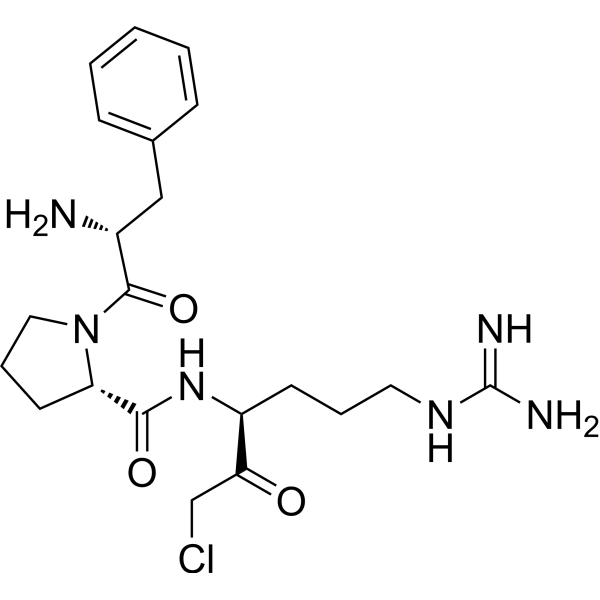
PPACK is a potent, peptidic inhibitor targeting thrombin and granzyme GZMK. PPACK specifically blocks the activities of thrombin and GZMK, thereby inhibiting thrombin-mediated PAR-1 cleavage, as well as downstream inflammatory and procoagulant signaling pathways. Through stabilizing IκB proteins, blocking NF-κB activation and reducing systemic levels of proinflammatory/procoagulant biomarkers, PPACK exerts multiple effects including anti-inflammatory, antithrombotic, barrier repair, and inhibition of atherosclerotic plaque progression. PPACK binds to platelets without interference from kininogen, effectively limiting acute thrombus growth and reducing eosinophil infiltration and goblet cell hyperplasia in asthma models. PPACK is an important tool molecule for investigating the mechanisms of atherosclerosis, asthma and related thromboinflammatory diseases .
loading...
    loading...
Cat. No.: HY-122940
CAS No.: 644-06-4
Purity:  99.95%
Synonyms: Ageratochromene
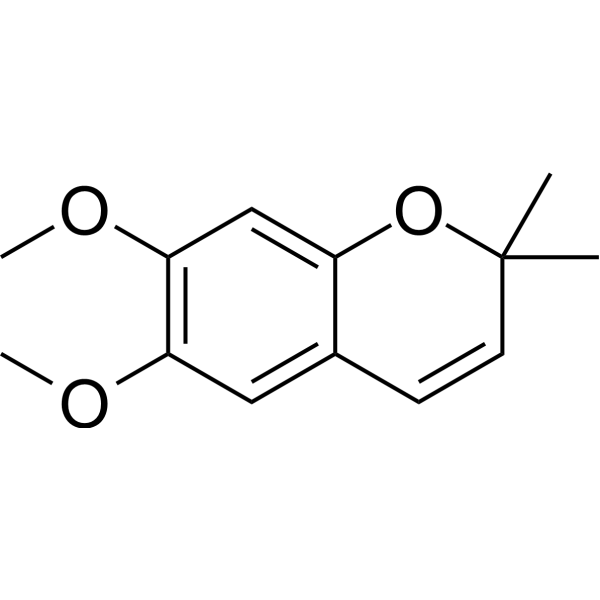
Precocene II (Ageratochromene) is a plant larva hormone antagonists that inhibits the biosynthesis of juvenile hormone. Precocene II inhibits corpora allata function and downregulates juvenile hormone levels, while exerting multiple effects including inducing precocious metamorphosis, forming macropterous morphs, inhibiting ovarian growth, producing cytotoxicity, disrupting insect development, and causing sterility and kidney damage. Precocene II blocks normal nymphal development, causes renal tubular damage and increases blood urea nitrogen levels, and also blocks juvenile hormone biosynthesis in vitro. Precocene II undergoes oxidative metabolism catalyzed by NADPH-dependent monooxygenase to generate a variety of metabolites. Precocene II can be applied in studies related to insect growth regulation and nephrotoxicity .
loading...
    loading...
Cat. No.: HY-12455
CAS No.: 118292-34-5
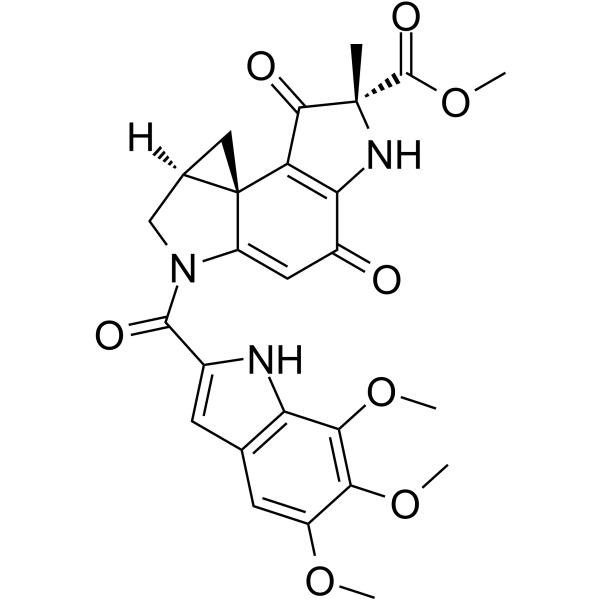
Duocarmycin A is an antitumor antibiotic and DNA alkylating agent with broad-spectrum antibacterial activity, which can serve as a payload for synthesizing antibody-drug conjugates (ADCs). Duocarmycin A selectively binds to the AT-rich minor groove of DNA, forms covalent adducts by alkylating the adenine N3 residue, thereby disrupting DNA structure and inhibiting its replication and transcription. Duocarmycin A induces apoptosis, sub-G1 phase accumulation and chromatin condensation, reduces the levels of pro-caspase-3/9, and induces p53-independent p21 expression. Duocarmycin A is widely used in the research of various malignancies, including leukemia, sarcoma, glioblastoma, as well as multiple solid tumor models such as lung cancer, breast cancer, and colorectal cancer .
loading...
    loading...
Cat. No.: HY-124595
CAS No.: 1254363-89-7
MPT0B098 is a microtubule inhibitor with a Ki of 0.8 μM and an IC50 of 0.8 μM. MPT0B098 inhibits tubulin polymerization, blocks HuR nuclear-cytoplasmic translocation to decrease HIF-1α mRNA stability, suppresses HIF-1α, TGF-β/Smad, JAK2/STAT3 and FAK/actin cytoskeleton signaling pathways, upregulates SOCS3 to reinforce the inhibition of JAK2/STAT3 cascade, and induces apoptosis. MPT0B098 can be used for research on multiple malignancies including head and neck squamous cell carcinoma and human non-small cell lung cancer .
loading...
    loading...

