2126 Results for "

Cell level

" in MedChemExpress (MCE) Product Catalog:
Products (2126)

2126 Results for "Cell level" in MCE Product Catalog:

Cat. No.: HY-145737
CAS No.: 2913185-35-8
Target:  

PROTACs SOS1 Ras PERK

Research Areas:  

Cancer

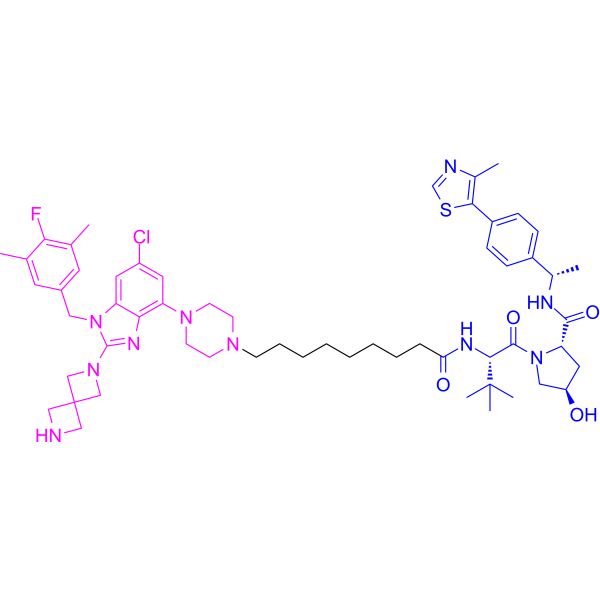
PROTAC SOS1 degrader-1 is a degrader of SOS1 PROTAC, with a DC50 of 98.4 nM and a Kd value of 44 nM. PROTAC SOS1 degrader-1 induces the formation of a ternary complex with SOS1 and the VCB E3 ubiquitin ligase complex, thereby promoting the ubiquitination and proteasomal degradation of SOS1. PROTAC SOS1 degrader-1 reduces KRAS-GTP levels, inhibits the phosphorylation of ERK in the RAS-RAF-MEK-ERK pathway, and suppresses the proliferation of cancer cells carrying KRAS mutations. PROTAC SOS1 degrader-1 inhibits tumor growth in mouse xenograft models. PROTAC SOS1 degrader-1 can be used for the research of KRAS-driven cancers .
loading...
    loading...
Cat. No.: HY-145815
CAS No.: 2669785-76-4
Target:  

PROTACs HDAC Apoptosis

Research Areas:  

Cancer

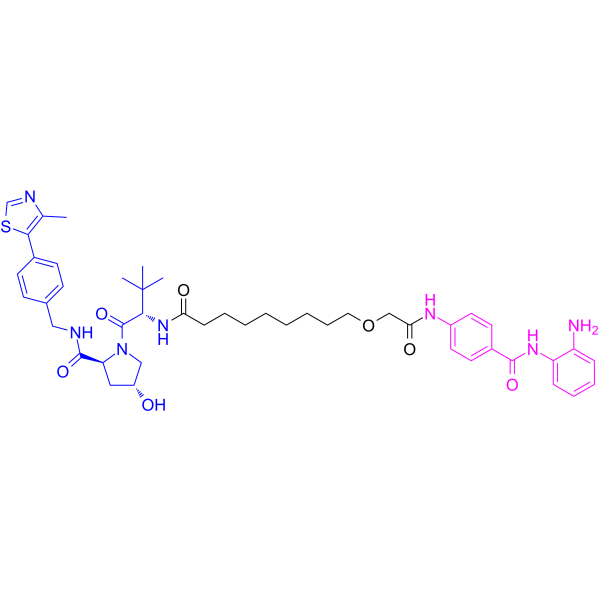
JPS014 is a PROTAC degrader targeting HDAC1, HDAC2 and HDAC3, with DC50 values of 0.91 μM, 4.19 μM and 0.64 μM, respectively. JPS014 recruits the VHL E3 ligase to mediate the ubiquitination and proteasomal degradation of HDAC1, HDAC2 and HDAC3. JPS014 acts as a submicromolar inhibitor of the HDAC1-CoREST, HDAC2-CoREST and HDAC3-SMRT complexes in vitro. JPS014 increases the level of H3K56ac, reduces the stability of LSD1 and SIN3A, and induces cell apoptosis (apoptosis). JPS014 can be used for the research of colon cancer .
loading...
    loading...
Cat. No.: HY-145815A
Purity:  98.40%
Target:  

PROTACs HDAC Apoptosis

Research Areas:  

Cancer

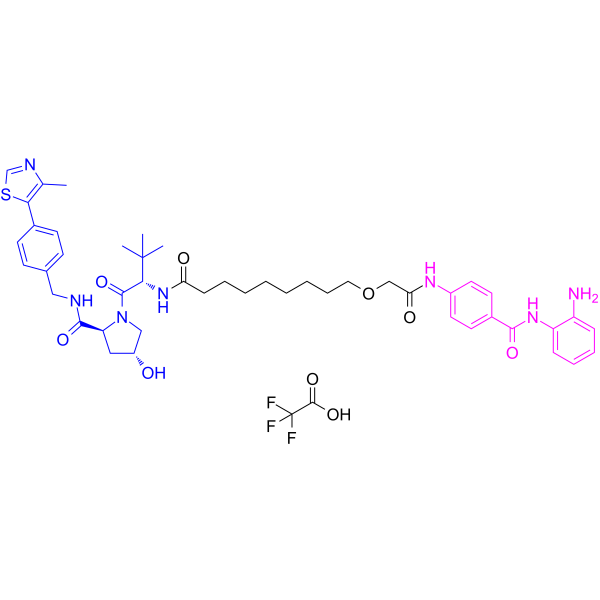
JPS014 TFA is a PROTAC degrader targeting HDAC1, HDAC2 and HDAC3, with DC50 values of 0.91 μM, 4.19 μM and 0.64 μM, respectively. JPS014 TFA recruits the VHL E3 ligase to mediate the ubiquitination and proteasomal degradation of HDAC1, HDAC2 and HDAC3. JPS014 TFA acts as a submicromolar inhibitor of the HDAC1-CoREST, HDAC2-CoREST and HDAC3-SMRT complexes in vitro. JPS014 TFA increases the level of H3K56ac, reduces the stability of LSD1 and SIN3A, and induces cell apoptosis (apoptosis). JPS014 TFA can be used for the research of colon cancer .
loading...
    loading...
Cat. No.: HY-149465
CAS No.: 2298391-60-1
Research Areas:  

Neurological Disease Cancer

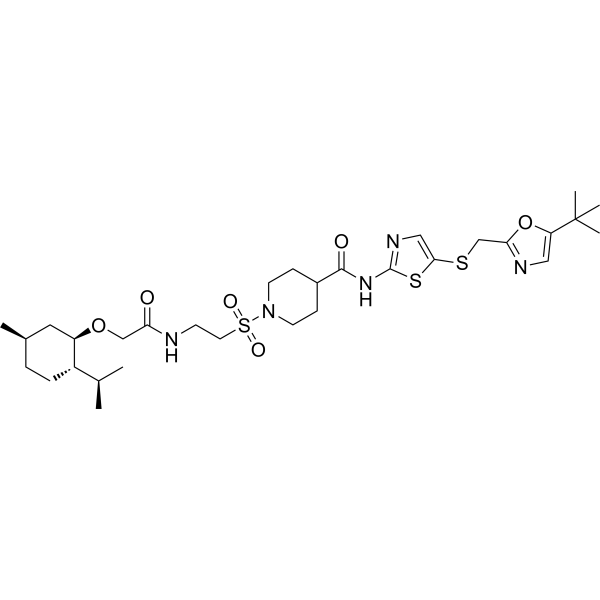
STF-1623 is a highly potent, selective, cell-impermeable non-covalent ENPP1 inhibitor, with IC50 values of 0.6 nM and 800 nM against human ENPP1 and ENPP3, respectively. STF-1623 inhibits the hydrolysis of extracellular cGAMP by ENPP1, elevates intratumoral cGAMP levels, and indirectly enhances local cGAS-STING signaling and anti-tumor immunity in tumors. STF-1623 exhibits target-dependent retention in ENPP1-highly expressing tumors, while it undergoes rapid clearance in systemic circulation, and can penetrate into the CSF and brain parenchyma. STF-1623 can be used in studies related to breast cancer, pancreatic cancer, colorectal cancer, glioblastoma, and tumor immunology .
loading...
    loading...
Cat. No.: HY-156084
CAS No.: 2809353-52-2
Research Areas:  

Cancer

LL-K9-3 is a selective CDK9-cyclin T1 HyT degrader, with DC50 values of 0.662 μM and 0.589 μM for CDK9 and Cyclin T1, respectively. LL-K9-3 lacks an E3 ligand moiety and induces polyubiquitination and proteasome-mediated synchronous degradation of CDK9 and cyclin T1 via a hydrophobic tag-mediated mechanism. LL-K9-3 downregulates the protein levels of androgen receptor (AR) and c-Myc, and exhibits antiproliferative and pro-apoptotic (apoptosis) activity in prostate cancer cells. LL-K9-3 can be used in studies related to prostate cancer .
loading...
    loading...
Cat. No.: HY-158252S
CAS No.: 1253297-72-1
Synonyms: NO050328-d5 hydrochloride; NO328-d5 hydrochloride; TGB-d5 hydrochloride
Tiagabine-d5 (hydrochloride) is deuterium labeled Tiagabine (hydrochloride). Tiagabine hydrochloride (NO050328; NO328; TGB) is an orally active, highly selective, and reversible GAT-1 inhibitor and anticonvulsant that crosses the blood-brain barrier. By blocking the reuptake of GABA in neurons and glial cells, tiagabine increases extracellular GABA levels to enhance inhibitory signal transduction, thereby exerting multiple activities such as anticonvulsant, neuroprotective, and antioxidant effects. Tiagabine hydrochloride exhibits linear pharmacokinetic properties. Although it is metabolized by CYP3A and has a high protein binding rate, it carries a low risk of cognitive impairment. Tiagabine hydrochloride is widely used in research on related diseases including epilepsy (including refractory partial seizures), alcohol withdrawal symptoms, and Huntington's disease .
loading...
    loading...
Cat. No.: HY-161177
Research Areas:  

Infection

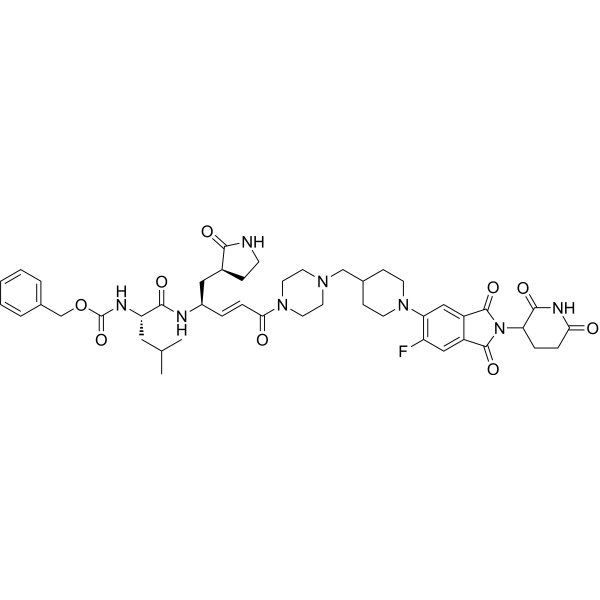
PROTAC KRAS G12D degrader 2 is a peptidomimetic PROTAC specifically targeting the dimeric SARS-CoV-2 3CL Pro protein. PROTAC KRAS G12D degrader 2 inhibits SARS-CoV-2 3CLPro with an IC50 of 21.2 μM. PROTAC KRAS G12D degrader 2 specifically binds to the active site of SARS-CoV-2 3CL Pro. PROTAC KRAS G12D degrader 2 reduces protein levels of SARS-CoV-2 3CL Pro without affecting cell viability. PROTAC KRAS G12D degrader 2 can be used for the study of viral infections in Coronavirus genera .
loading...
    loading...
Cat. No.: HY-164641
CAS No.: 2459994-71-7
Target:  

Orphan GPCR

Research Areas:  

Neurological Disease

GPR34 agonist 1 is a G-protein coupled receptor 34 agonist that enhances fibrillar Aβ uptake in mouse primary microglia with an EC50 of 5 nM .GPR34 agonist 1 selectively activates Gi/o-coupled GPR34, reduces intracellular cyclic adenosine monophosphate levels, and requires functional TREM2 signaling .GPR34 agonist 1 induces microglial Aβ fibril phagocytosis and chemotaxis, enhances microglial uptake and clearance of amyloid β fibrils, and increases microglial Aβ fibril uptake in vivo and in human induced pluripotent stem cell-derived microglia .GPR34 agonist 1 can be used for the research of Alzheimer disease .
loading...
    loading...
Cat. No.: HY-165186
CAS No.: 104261-69-0
Synonyms: NE-58051
Target:  

MMP

Research Areas:  

Cancer

Homorisedronate (NE-58051) is a MMP inhibitor with high bone mineral affinity but low bone antiresorptive activity in vivo. Homorisedronate inhibits the proteolytic activity of MMP-2, MMP-9, and MMP-12 through zinc chelation and phosphonate groups, with IC50 values of 40 μM, 160 μM, and 80 μM for human MMP-2, mouse MMP-9, and rabbit MMP-12, respectively. Homorisedronate inhibits breast cancer and melanoma cell proliferation without inducing MRONJ-like lesions, altering osteoclast activity, or changing serum TRAcP-5b levels. Homorisedronate is suitable for research related to breast cancer and melanoma .
loading...
    loading...
Cat. No.: HY-169921
Target:  

c-Myc Apoptosis

Research Areas:  

Cancer

c-Myc inhibitor 15 (Compound A5) is a selective c-Myc inhibitor that exerts anticancer effects by disrupting the interaction between c-Myc and Max, leading to the degradation of c-Myc protein and the induction of apoptosis. Its IC50 values are 4.08 μM and 7.86 μM in A549 and NCI-H1299 lung cancer cell lines, respectively, demonstrating strong cytotoxic activity. In a syngeneic tumor model, c-Myc inhibitor 15 exhibited outstanding antitumor efficacy, achieving a tumor growth inhibition rate of 76.4% and significantly reducing c-Myc protein expression levels. c-Myc inhibitor 15 holds promise for research related to c-Myc-driven lung cancers .
loading...
    loading...
Cat. No.: HY-170966
Target:  

HDAC

Research Areas:  

Cancer

HDAC1-IN-9 (13c) is a HDAC1 inhibitor. HDAC1-IN-9 inhibits HDAC1 enzyme with an IC50 of 1.07 µM. HDAC1-IN-9 exhibits the highest anti-proliferative effect against HT-29 (human colon adenocarcinoma), with anIC50 of 1.78 μM. HDAC1-IN-9 induces substantial Apoptosis in HCT-116 (human colon cancer) cells. HDAC1-IN-9 possesses antiangiogenic property. HDAC1-IN-9 reduces the expression levels of VEGFR-2 and phosphorylated VEGFR-2 (pVEGFR-2) by approximately 80 % .
loading...
    loading...
Cat. No.: HY-175700
CAS No.: 2260557-09-1
Target:  

Topoisomerase Apoptosis

Research Areas:  

Cancer

YCJ-02 is a selective Topoisomerase I (Top I) inhibitor. YCJ-02 can inhibit cell proliferation and induce apoptosis and G2/M phase arrest. YCJ-02 can induce DNA damage and increaseγ-H2AX levels. YCJ-02 can promote Top I deqradation via a ubiquitin/26S proteasome pathway. YCJ-02 increases the expressions of pro-apoptotic proteins Bad, Bax, and cleaved caspase-3. YCJ-02 shows broad-spectrum antitumor activity. YCJ-02 can be used for the research of cancer, such as intrahepatic cholangiocarcinoma (ICC) .
loading...
    loading...
Cat. No.: HY-179293
Target:  

SARS-CoV Virus Protease

Research Areas:  

Infection

SARS-CoV-2 PLpro-IN-3 (Compound 15) is a covalent inhibitor of the SARS-CoV-2 papain-like protease (PLpro), with an IC50 of 25 nM. SARS-CoV-2 PLpro-IN-3 has similar inhibitory activity against SARS-CoV PLpro (IC50 = 59 nM), but shows no inhibitory effect on human ubiquitin-specific protease 7 (USP7). The EC50 of SARS-CoV-2 PLpro-IN-3 in inhibiting SARS-CoV-2 replication in cells is 96 nM, significantly reducing the viral titer and viral RNA levels. SARS-CoV-2 PLpro-IN-3 can be used for studying SARS-CoV-2 drug resistance mutations .
loading...
    loading...
Cat. No.: HY-179557
CAS No.: 2463893-46-9
iMQT_020 is a selective allosteric SLC1A5_var inhibitor. iMQT_020 disrupts the trimeric assembly of SLC1A5_var, causing metabolic crisis in cancer cells and selectively suppressing their growth. iMQT_020 reduces glutamine anaplerosis and oxidative phosphorylation, resulting in a broad disruption of cancer metabolism. iMQT_020 reduces GSH levels and increases cellular ROS and mitochondrial ROS. iMQT_020 induces apoptosis and ferroptosis. iMQT_020 can epigenetically upregulate PD-L1 expression. iMQT_020 can be used for the study of pancreatic cancer, lung cancer, and colon cancer .
loading...
    loading...
Cat. No.: HY-180277
Target:  

PROTACs CDK Apoptosis

Research Areas:  

Cancer

PROTAC CDK6 Degrader 1 (compound 48a) is a potent and selective PROTAC CDK6 degrader with a DC50 of 0.037 μM. PROTAC CDK6 Degrader 1 exhibits selectivity over CDK4 (DC50 > 10 μM). PROTAC CDK6 Degrader 1 induces G0/G1 cell-cycle arrest and apoptosis through inhibition of CDK6 downstream signaling. PROTAC CDK6 Degrader 1 reduces tumor burden and CDK6 levels in a MOLM-14 xenograft mouse model. PROTAC CDK6 Degrader 1 can be used for CDK6-driven cancers research, such as acute myeloid leukemia (AML) .
loading...
    loading...
Cat. No.: HY-182285
CAS No.: 3122097-27-9
Research Areas:  

Cancer

5-HT7 modulator-1 is a selective 5-HT7 receptor antagonist with a Ki of 92 nM. 5-HT7 modulator-1 blocks 5-HT7 receptor signaling to reduce FOXM1, phosphorylated FOXM1, cyclin B1, and cdc25B levels. 5-HT7 modulator-1 acts as an antiproliferative, clonogenic inhibitor, and cell cycle inhibitor that induces G2/M arrest, reduces G0/G1 population. 5-HT7 modulator-1 can be used for the research of triple-negative breast cancer .
loading...
    loading...
Cat. No.: HY-182285A
Target:  

5-HT Receptor FOXM1

Research Areas:  

Cancer

5-HT7 modulator-1 hydrochloride is a selective 5-HT7 receptor antagonist with a Ki of 92 nM. 5-HT7 modulator-1 hydrochloride blocks 5-HT7 receptor signaling to reduce FOXM1, phosphorylated FOXM1, cyclin B1, and cdc25B levels. 5-HT7 modulator-1 hydrochloride acts as an antiproliferative, clonogenic inhibitor, and cell cycle inhibitor that induces G2/M arrest, reduces G0/G1 population. 5-HT7 modulator-1 hydrochloride can be used for the research of triple-negative breast cancer .
loading...
    loading...
Cat. No.: HY-183330
Topo I/II-IN-3 is a dual inhibitor of topoisomerase I/II (topoisomerase I/II), with an IC50 of 8.99 μM against Topo I and an IC50 of 26.92 μM against Topo II. Topo I/II-IN-3 induces DNA damage, elevates intracellular ROS levels, activates the mitochondrial apoptosis pathway, and exerts cytotoxicity against cancer cells. Topo I/II-IN-3 upregulates the expression of γ-H2AX, p53, activated caspase-9, Bax and activated caspase-3, while downregulating the expression of Bcl-2. Topo I/II-IN-3 can be used in research related to breast cancer, liver cancer and gastric cancer .
loading...
    loading...
Cat. No.: HY-183448
CAS No.: 117666-86-1
ETMTC is an orally active anti-inflammatory and antioxidant agent. ETMTC inhibits IKK-mediated phosphorylation and degradation of IkBα, blocks nuclear translocation and activation of NF-κB, and reduces the expression of ICAM-1, VCAM-1, E-selectin, Th2 cytokines and eosinophil chemokines. ETMTC abrogates neutrophil adhesion to endothelial monolayers and inhibits TNF-α-induced ROS production. ETMTC activates Nrf2, and enhances the activities of mitochondrial complex I and IV. ETMTC reduces lipid peroxidation levels, oxidative DNA damage, cytochrome c and caspase 9 activity, and decreases goblet cell metaplasia and subepithelial fibrosis. ETMTC can be used for the research of inflammatory diseases and asthma .
loading...
    loading...
Cat. No.: HY-183871
CAS No.: 1253197-38-4
WMS-1410 is a selective GluN2B-containing NMDA receptor inhibitor with an IC50 of 18.4 nM. WMS-1410 regulates intracellular calcium levels and protects cells from Apoptosis. WMS-1410 inhibits glutamate-induced excitotoxicity. WMS-1410 reverses NMDA/glycine-induced reduction in glucose-stimulated insulin secretion without altering physiological insulin secretion or baseline redox status, but fails to counteract insulin content loss induced by glucolipotoxicity. WMS-1410 exhibits analgesic activity against advanced neuropathic pain. WMS-1410 can be used in studies related to stroke, brain injury, Alzheimer's disease, Parkinson's disease, type 2 diabetes, and neuropathic pain .
loading...
    loading...

