Search Result
Results for "
(±)-Tryptophan (Standard)
" in MedChemExpress (MCE) Product Catalog:
| Cat. No. |
상품명 |
Target |
연구분야 |
Chemical Structure |
-
- HY-104026R
-
-
-
- HY-N0623R
-
|
Tryptophan (Standard); Tryptophane (Standard)
|
Others
Reference Standards
|
Metabolic Disease
|
|
L-Tryptophan (standard) is the analytical standard of L-Tryptophan. L-Tryptophan (Tryptophan) is an orally active and essential amino acid that is the precursor of serotonin, melatonin, and vitamin B3. L-Tryptophan can promote an increase in stemness and osteogenic ability of BMSCs in vitro and in vivo. L-Tryptophan inhibits cell proliferation and induced cell cycle arrest with high levels .
|
-
-
- HY-100806R
-
-
-
- HY-100807R
-
-
-
- HY-W011417R
-
|
|
Endogenous Metabolite
Reference Standards
mGluR
Apoptosis
|
Others
|
|
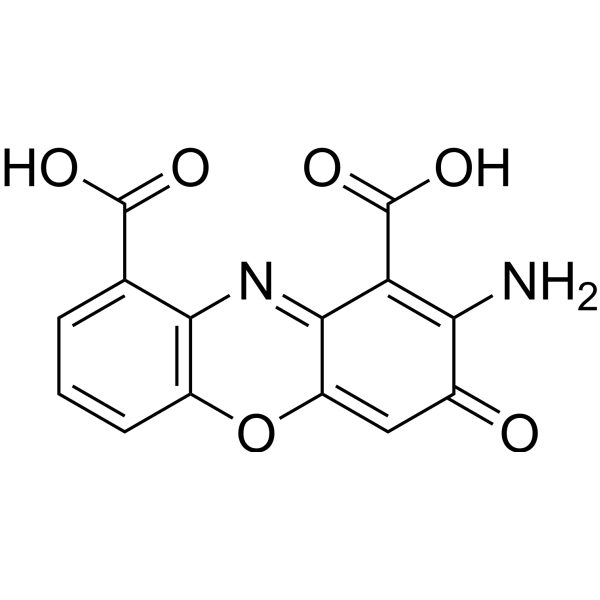
Cinnabarinic acid (Standard) is the analytical standard of Cinnabarinic acid. This product is intended for research and analytical applications. Cinnabarinic acid is a specific orthosteric agonist of mGlu4 by interacting with residues of the glutamate binding pocket of mGlu4, has no activity at other mGlu receptors. Cinnabarinic acid is an endogenous metabolite of the kynurenine pathway of tryptophan. Cinnabarinic acid induces cell apoptosis .
|
-
-
- HY-W028393R
-
-
-
- HY-W001171R
-
|
|
Reference Standards
Endogenous Metabolite
|
Others
|
|
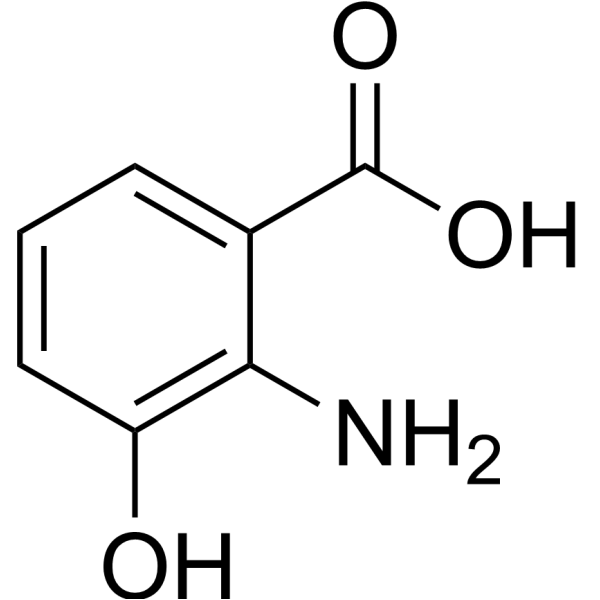
3-Hydroxyanthranilic acid (Standard) is the analytical standard of 3-Hydroxyanthranilic acid. This product is intended for research and analytical applications. 3-Hydroxyanthranilic acid is a tryptophan metabolite in the kynurenine pathway.
|
-
-
- HY-113099R
-
|
Indole-3-lactic acid (Standard)
|
Reference Standards
Endogenous Metabolite
|
Inflammation/Immunology
|
|
Indolelactic acid (Standard) is the analytical standard of Indolelactic acid. This product is intended for research and analytical applications. Indolelactic acid (Indole-3-lactic acid) is a tryptophan (Trp) catabolite in Azotobacter vinelandii cultures. Indolelactic acid has anti-inflammation and potential anti-viral activity[1][3][4].
|
-
-
- HY-77839R
-
|
11-Deoxycortisol (Standard); cortexolone (Standard); Reichstein's substance S (Standard)
|
Reference Standards
Glucocorticoid Receptor
Endogenous Metabolite
|
Inflammation/Immunology
Endocrinology
|
|
Cortodoxone (Standard) is the analytical standard of Cortodoxone. This product is intended for research and analytical applications. Cortodoxone (11-Deoxycortisol; cortexolone) is a glucocorticoid steroid hormone and also is a glucocorticoid antagonist. Cortodoxone increases tryptophan oxygenase (TO) activity and induces the secretion of corticosterone. Cortodoxone regulates T cell proliferation and activation .
|
-
-
- HY-113294R
-
|
3-Hydroxy-DL-kynurenine (Standard)
|
Reference Standards
Endogenous Metabolite
Apoptosis
|
Neurological Disease
|
|
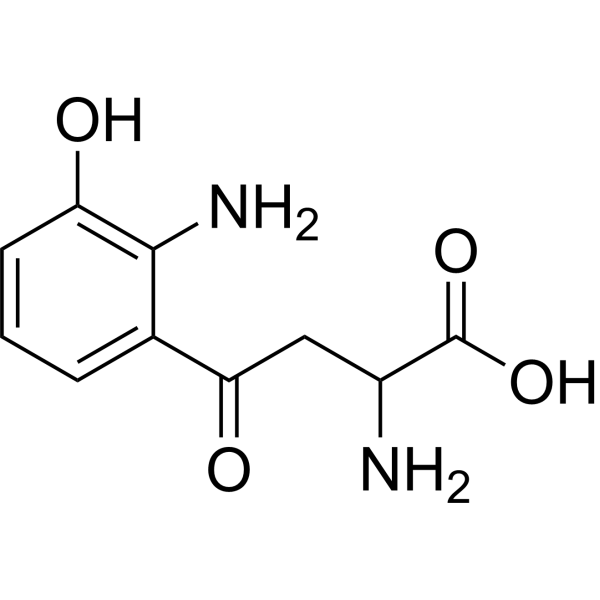
3-Hydroxykynurenine (Standard) is the analytical standard of 3-Hydroxykynurenine. This product is intended for research and analytical applications. 3-Hydroxykynurenine, a metabolite of tryptophan, is a potential endogenous neurotoxin whose increased levels have been described in several neurodegenerative disorders. 3-Hydroxykynurenine induces neuronal apoptosis .
|
-
-
- HY-B0843AR
-
|
(R)-Metalaxyl (Standard)
|
DNA/RNA Synthesis
Fungal
|
Infection
Inflammation/Immunology
|
|
Metalaxyl-M ((R)-Metalaxyl) (Standard) is the analytical standard of Metalaxyl-M (HY-B0843A). This product is intended for research and analytical applications. Metalaxyl-M ((R)-Metalaxyl) is an orally active and selective inhibitor of fungal RNA polymerase, which exerts fungicidal activity by selectively interfering with the synthesis of fungal ribosomal RNA. Metalaxyl-M can also be used to induce inflammation in hepatocytes and regulate tryptophan metabolism. Metalaxyl-M can be used in ecotoxicology studies .
|
-
-
- HY-40161R
-
|
|
Reference Standards
Endogenous Metabolite
|
Metabolic Disease
|
|
Indole-3-carboxylic acid (Standard) is the analytical standard of Indole-3-carboxylic acid. This product is intended for research and analytical applications. Indole-3-carboxylic acid is a normal urinary indolic tryptophan metabolite and has been found elevated in patients with liver diseases .
|
-
-
- HY-W015273AR
-
|
|
Reference Standards
Endogenous Metabolite
Ferroptosis
|
Metabolic Disease
Cancer
|
|
trans-3-Indoleacrylic acid (Standard) is the analytical standard of trans-3-Indoleacrylic acid. This product is intended for research and analytical applications. Trans-3-Indoleacrylic acid is a tryptophan metabolite, which promotes tumor development through inhibition of RSL3 (HY-100218A) induced ferroptosis via AHR-ALDH1A3-FSP1-CoQ10 axis, and facilitates colorectal carcinogenesis[1]
|
-
-
- HY-W008820R
-
|
|
Reference Standards
Endogenous Metabolite
|
Metabolic Disease
|
|
Glutaric acid (Standard) is the analytical standard of Glutaric acid. This product is intended for research and analytical applications. Glutaric acid, C5 dicarboxylic acid, is an intermediate during the catabolic pathways of lysine and tryptophan. Glutaric acid affects pericyte contractility and migration. Glutaric acid is an indicator of glutaric aciduria type I .
In Vitro: Glutaric acid (GA) at concentrations of 1 and 2 mM is able to reduce TRAP measurement by up to 28% in a dose-dependent manner (β=0.77; P<0.001). Furthermore, a significantly inverse correlation is also verified between chemiluminescence and TRAP (β=0.81; P<0.001). Glutaric acid does not alter the activities of Cat and SOD, but strongly inhibits (up to 46%) the activity of GPx even at the lower concentration used (0.5 mM). It is observed that the metabolite inhibits this activity in a dose-dependent manner at concentrations as low as 0.05 mM .
|
-
-
- HY-N0122R
-
-
-
- HY-W011978R
-
-
-
- HY-W014502R
-
|
|
Reference Standards
Aryl Hydrocarbon Receptor
Endogenous Metabolite
|
Cancer
|
|
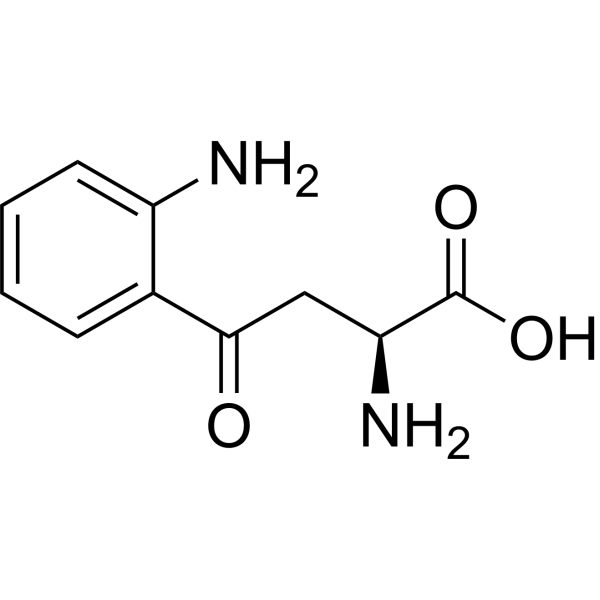
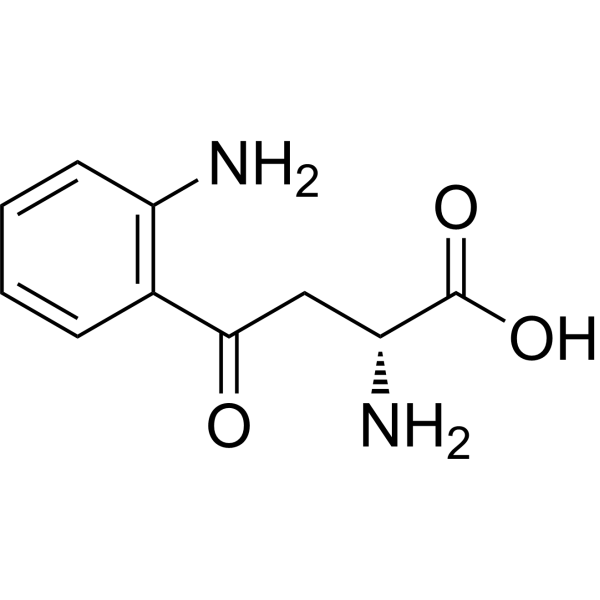
D-Kynurenine (Standard) is the analytical standard of D-Kynurenine. This product is intended for research and analytical applications. D-kynurenine, a metabolite of D-tryptophan, can serve as the bioprecursor of kynurenic acid (KYNA) and 3-hydroxykynurenine. D-Kynurenine is an agonist for G protein-coupled receptor, GPR109B. D-Kynurenine is a substrate in a fluorometric assay of D-amino acid oxidase. D-kynurenine promotes epithelial-to-mesenchymal transition via activating aryl hydrocarbon receptor (AHR) .
|
-
-
- HY-20897AR
-
-
-
- HY-W012479R
-
|
D-Tryptophan (Standard)
|
Reference Standards
Endogenous Metabolite
|
Metabolic Disease
|
|
H-D-Trp-OH (Standard) is the analytical standard of H-D-Trp-OH. This product is intended for research and analytical applications. H-D-Trp-OH is a D-stereoisomer of tryptophan and occasionally found in naturally produced peptides such as the marine venom peptide.
|
-
-
- HY-16724R
-
|
1-Methyl-D-Tryptophan (Standard); NLG-8189 (Standard)
|
Indoleamine 2,3-Dioxygenase (IDO)
Reference Standards
|
Cancer
|
|
Indoximod (Standard) is the analytical standard of Indoximod. This product is intended for research and analytical applications. Indoximod (1-Methyl-D-tryptophan) is an orally active indoleamine 2,3-dioxygenase (IDO) pathway inhibitor. Indoximod acts as a Trp mimetic in regulating mTOR. Indoximod is an immunometabolic adjuvant used for the research of cancer .
|
-
-
- HY-W012480R
-
-
-
- HY-W011982R
-
-
-
- HY-14743R
-
|
SCV 07 (Standard); Gamma-D-glutamyl-L-Tryptophan (Standard)
|
Bacterial
STAT
Reference Standards
|
Infection
Inflammation/Immunology
Cancer
|
|
Golotimod (Standard) is the analytical standard of Golotimod. This product is intended for research and analytical applications. Golotimod (SCV-07), an immunomodulating peptide with antimicrobial activity, significantly increases the efficacy of antituberculosis therapy, stimulates thymic and splenic cell proliferation, and improves macrophage function. Golotimod (SCV-07) inhibits STAT3 signaling and modulates the duration and severity of oral mucositis in animal models that received radiation or a combination of radiation and Cisplatin. Golotimod (SCV-07) is also a potential therapeutic for recurrent genital herpes simplex virus type 2 (HSV-2) .
|
-
-
- HY-13055BR
-
-
-
- HY-B1368R
-
|
4-Chloro-DL-phenylalanine (Standard); PCPA (Standard); CP-10188 (Standard)
|
Tryptophan Hydroxylase
Reference Standards
|
Neurological Disease
Cancer
|
|
Fenclonine (Standard) is the analytical standard of Fenclonine. This product is intended for research and analytical applications. Fenclonine is a selective and irreversible tryptophan hydroxylase inhibitor, which is a rate-limiting enzyme in the biosynthesis of serotonin. Fenclonine can be used in carcinoid syndrome research .
|
-
-
- HY-107512R
-
-
-
- HY-W014504R
-
|
|
Reference Standards
Endogenous Metabolite
|
Metabolic Disease
|
|
DL-Kynurenine (Standard) is the analytical standard of DL-Kynurenine. This product is intended for research and analytical applications. DL-Kynurenine is a key metabolite in the tryptophan metabolic pathway and can cross the blood-brain barrier. DL-Kynurenine has a bidirectional regulatory effect on neural excitability. DL-Kynurenine can enhance the convulsive and lethal effects caused by strychnine. DL-Kynurenine is the precursor of Kynurenic acid (HY-100806), which is an antagonist at the glycine site of NMDA receptors and can counteract excitatory toxins. DL-Kynurenine can be used for research on neurotoxicity.
|
-
-
- HY-12390R
-
|
Lopramine (Standard)
|
5-HT Receptor
Adrenergic Receptor
Reference Standards
|
Neurological Disease
|
|
Lofepramine (Standard) is the analytical standard of Lofepramine. This product is intended for research and analytical applications. Lofepramine (Lopramine) is a modified tricyclic and orally active antidepressant. Lofepramine inhibits the uptake of Noradrenaline (NA) (HY-13715) and 5-hydroxytryptamine (5-HT) with IC50s of 2.7 μM and 11 μM, respectively. Lofepramine exerts its antidepressant activity by promoting noradrenergic neurotransmission. Lofepramine also enhances serotonergic neurotransmission by inhibiting neuronal uptake of 5-HT and tryptophan pyrrolase. Lofepramine exhibits significant anxiolytic properties. .
|
-
-
- HY-W001160R
-
|
|
Reference Standards
Endogenous Metabolite
nAChR
Calcium Channel
|
Neurological Disease
Endocrinology
Cancer
|
|
5-Hydroxyindole (Standard) is the analytical standard of 5-Hydroxyindole (HY-W001160). This product is intended for research and analytical applications. 5-Hydroxyindole is an orally active hydroxylated indole and tryptophan metabolite. 5-Hydroxyindole activates α7 nicotinic acetylcholine receptors and acts on intestinal L-type calcium channels. 5-Hydroxyindole slows down the desensitization of 5-HT3 receptor-mediated ion currents in cells. 5-Hydroxyindole causes convulsions and loss of consciousness. 5-Hydroxyindole is used in the study of neuroblastoma, schizophrenia, and diseases related to intestinal motility disorders .
|
-
-
- HY-D0233R
-
|
|
Reference Standards
Fluorescent Dye
|
Others
|
|
Leucocrystal violet (Standard) is the analytical standard of Leucocrystal violet (HY-D0233). This product is intended for research and analytical applications. Leucocrystal violet is a cationic triarylmethane dye. Leucocrystal violet generates a colored purple product in the presence of hydrogen peroxide and horseradish peroxidase, or when oxidized by periodate under the catalysis of horseradish peroxidase. Leucocrystal violet serves as a chromogenic reagent for the determination of submicrogram-level hydrogen peroxide, with no interference from tryptophan, persulfate or chromate. Leucocrystal violet reacts with blood to produce a purple/violet color in the presence of hydrogen peroxide; it forms a very weak fluorophore when acting with whole blood in an unbuffered solution, with a maximum absorption wavelength of 630 nm and a maximum fluorescence emission wavelength of 665 nm upon excitation at 630 nm. Leucocrystal violet is widely used for staining blood residues on porous and non-porous materials.
|
-
-
- HY-Z8704R
-
|
|
Reference Standards
|
|
|
(2S)-2-Amino-3-(3-hydroxy-2-oxoindolin-3-yl)propanoic acid (Tryptophan Impurity) (Standard) is the analytical standard of (2S)-2-Amino-3-(3-hydroxy-2-oxoindolin-3-yl)propanoic acid (Tryptophan Impurity). This product is intended for research and analytical applications.
|
-
-
- HY-108681R
-
|
|
Collagen
Reference Standards
|
Neurological Disease
Inflammation/Immunology
Cancer
|
|
680C91 (Standard) is the analytical standard of 680C91 (HY-108681). This product is intended for research and analytical applications. 680C91 is an orally active, selective tryptophan 2,3-dioxygenase (TDO) inhibitor with a Ki of 51 nM. TDO is the key enzyme of tryptophan catabolism. 680C91 can be used for the research of cancer immunotherapy and Alzheimer’s Disease .
|
-
-
- HY-59208R
-
|
Kynurine (Standard)
|
Endogenous Metabolite
Reference Standards
|
Neurological Disease
Cancer
|
|
4-Quinolinol (Standard) is the analytical standard of 4-Quinolinol. This product is intended for research and analytical applications. 4-Quinolone (Kynurine) is a quinoline derivative. Kynurine pathway modulates tryptophan metabolism and involves in neuroprotective effect. Kynurine promotes tumor cell survival and motility by suppressing antitumor immune .
|
-
-
- HY-136591R
-
|
|
Drug Metabolite
Reference Standards
|
Neurological Disease
Cancer
|
|
Demoxepam (Standard) is the analytical standard of Demoxepam. This product is intended for research and analytical applications. Demoxepam is a major metabolite of Chlordiazepoxide. Demoxepam exhibits cytotoxicity activity against cancer cell lines. Demoxepam has anticonvulsant and anxiolytic effects. Demoxepam has an inhibitory effect on in vitro [ 3H]tryptophan binding to rat hepatic nuclei .
|
-
-
- HY-101456R
-
|
4-Chloro-DL-phenylalanine methyl ester hydrochloride (Standard)
|
Tryptophan Hydroxylase
Reference Standards
5-HT Receptor
|
Neurological Disease
|
|
PCPA methyl ester (hydrochloride) (Standard) is the analytical standard of PCPA methyl ester (hydrochloride) (HY-101456). This product is intended for research and analytical applications. PCPA methyl ester hydrochloride (4-Chloro-DL-phenylalanine methyl ester hydrochloride), a reversible tryptophan hydroxylase inhibitor, is a serotonin (5-HT) synthesis inhibitor. PCPA methyl ester hydrochloride crosses the blood brain barrier and reduces 5-HT central availability .
|
-
-
- HY-W011910R
-
|
|
Endogenous Metabolite
Reference Standards
Aryl Hydrocarbon Receptor
Cytochrome P450
UGT
Interleukin Related
|
Endocrinology
|
|
Potassium 1H-indol-3-yl sulfate (Standard) is the analytical standard of Potassium 1H-indol-3-yl sulfate (HY-W011910). This product is intended for research and analytical applications. Potassium 1H-indol-3-yl sulfate is a metabolite of tryptophan, produced by intestinal microorganisms and combined with sulfate in the liver before entering the circulatory system. Potassium 1H-indol-3-yl sulfate is a potent endogenous agonist of the aryl hydrocarbon receptor (AhR) and a urinary toxin. Potassium 1H-indol-3-yl sulfate can be used for research on kidney diseases.
|
-
-
- HY-D0233R
-
|
|
Fluorescent Dyes
|
|
Leucocrystal violet (Standard) is the analytical standard of Leucocrystal violet (HY-D0233). This product is intended for research and analytical applications. Leucocrystal violet is a cationic triarylmethane dye. Leucocrystal violet generates a colored purple product in the presence of hydrogen peroxide and horseradish peroxidase, or when oxidized by periodate under the catalysis of horseradish peroxidase. Leucocrystal violet serves as a chromogenic reagent for the determination of submicrogram-level hydrogen peroxide, with no interference from tryptophan, persulfate or chromate. Leucocrystal violet reacts with blood to produce a purple/violet color in the presence of hydrogen peroxide; it forms a very weak fluorophore when acting with whole blood in an unbuffered solution, with a maximum absorption wavelength of 630 nm and a maximum fluorescence emission wavelength of 665 nm upon excitation at 630 nm. Leucocrystal violet is widely used for staining blood residues on porous and non-porous materials.
|
| Cat. No. |
상품명 |
Target |
Research Area |
-
- HY-20897AR
-
-
- HY-14743R
-
|
SCV 07 (Standard); Gamma-D-glutamyl-L-Tryptophan (Standard)
|
Bacterial
STAT
Reference Standards
|
Infection
Inflammation/Immunology
Cancer
|
|
Golotimod (Standard) is the analytical standard of Golotimod. This product is intended for research and analytical applications. Golotimod (SCV-07), an immunomodulating peptide with antimicrobial activity, significantly increases the efficacy of antituberculosis therapy, stimulates thymic and splenic cell proliferation, and improves macrophage function. Golotimod (SCV-07) inhibits STAT3 signaling and modulates the duration and severity of oral mucositis in animal models that received radiation or a combination of radiation and Cisplatin. Golotimod (SCV-07) is also a potential therapeutic for recurrent genital herpes simplex virus type 2 (HSV-2) .
|
| Cat. No. |
상품명 |
Category |
Target |
Chemical Structure |
-
- HY-104026R
-
-
-
- HY-N0623R
-
-
-
- HY-100806R
-
-
-
- HY-100807R
-
-
-
- HY-W028393R
-
-
-
- HY-W001171R
-
-
-
- HY-113099R
-
-
-
- HY-77839R
-
-
-
- HY-113294R
-
-
-
- HY-40161R
-
-
-
- HY-W015273AR
-
-
-
- HY-W008820R
-
|
|
Structural Classification
Microorganisms
Ketones, Aldehydes, Acids
Disease markers
Endocrine diseases
Nervous System Disorder
Endogenous metabolite
Source Classification
|
Reference Standards
Endogenous Metabolite
|
|
Glutaric acid (Standard) is the analytical standard of Glutaric acid. This product is intended for research and analytical applications. Glutaric acid, C5 dicarboxylic acid, is an intermediate during the catabolic pathways of lysine and tryptophan. Glutaric acid affects pericyte contractility and migration. Glutaric acid is an indicator of glutaric aciduria type I .
In Vitro: Glutaric acid (GA) at concentrations of 1 and 2 mM is able to reduce TRAP measurement by up to 28% in a dose-dependent manner (β=0.77; P<0.001). Furthermore, a significantly inverse correlation is also verified between chemiluminescence and TRAP (β=0.81; P<0.001). Glutaric acid does not alter the activities of Cat and SOD, but strongly inhibits (up to 46%) the activity of GPx even at the lower concentration used (0.5 mM). It is observed that the metabolite inhibits this activity in a dose-dependent manner at concentrations as low as 0.05 mM .
|
-
-
- HY-N0122R
-
-
-
- HY-W011978R
-
-
-
- HY-W014502R
-
|
|
Ketones, Aldehydes, Acids
Endogenous metabolite
|
Reference Standards
Aryl Hydrocarbon Receptor
Endogenous Metabolite
|
|
D-Kynurenine (Standard) is the analytical standard of D-Kynurenine. This product is intended for research and analytical applications. D-kynurenine, a metabolite of D-tryptophan, can serve as the bioprecursor of kynurenic acid (KYNA) and 3-hydroxykynurenine. D-Kynurenine is an agonist for G protein-coupled receptor, GPR109B. D-Kynurenine is a substrate in a fluorometric assay of D-amino acid oxidase. D-kynurenine promotes epithelial-to-mesenchymal transition via activating aryl hydrocarbon receptor (AHR) .
|
-
-
- HY-20897AR
-
-
-
- HY-W012479R
-
-
-
- HY-W012480R
-
-
-
- HY-W011982R
-
-
-
- HY-107512R
-
-
-
- HY-W014504R
-
-
-
- HY-W001160R
-
-
-
- HY-59208R
-
-
-
- HY-W011910R
-
-
Your information is safe with us. * Required Fields.
Inquiry Information
- 상품명:
- Cat. No.:
- 수량:
- MCE Japan Authorized Agent:

