Search Result
Results for "
β-D-Glucose
" in MedChemExpress (MCE) Product Catalog:
3
Biochemical Assay Reagents
4
Isotope-Labeled Compounds
| Cat. No. |
상품명 |
Target |
연구분야 |
Chemical Structure |
-
- HY-N0527
-
|
Penta-O-galloyl-β-D-Glucose; 1,2,3,4,6-Pentagalloyl Glucose
|
JAK
Keap1-Nrf2
Apoptosis
β-catenin
Reactive Oxygen Species (ROS)
E1/E2/E3 Enzyme
|
Neurological Disease
Inflammation/Immunology
Cancer
|
|
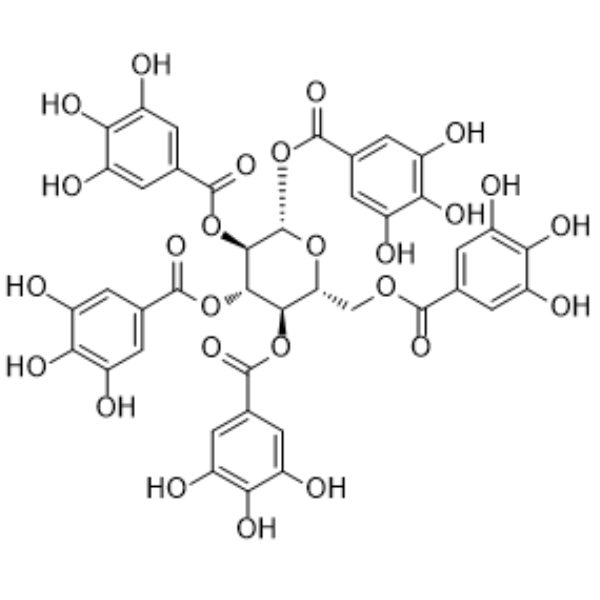
Pentagalloylglucose (Penta-O-galloyl-β-D-glucose) is an orally active gallic tannin compound and an inducer of apoptosis and autophagy. Pentagalloglucose induces cell apoptosis and autophagy through the GSK3β/β-catenin pathway. Pentagalloylglucose inhibits UBE2T-mediated p53 ubiquitination, upregulates p53, downregulates RRM1/RRM2 in pancreatic cancer organoids. Pentagalloglucose has antioxidant, anti mutagenic, anti-inflammatory, anticonvulsant, cardioprotective, anti allergic, cholesterol lowering, and anti-tumor activities .
|
-
-
- HY-121965
-
|
|
Biochemical Assay Reagents
Endogenous Metabolite
|
Others
|
|
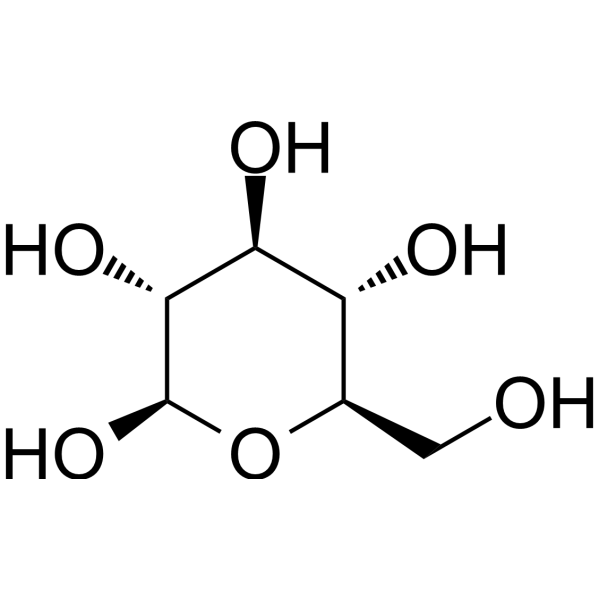
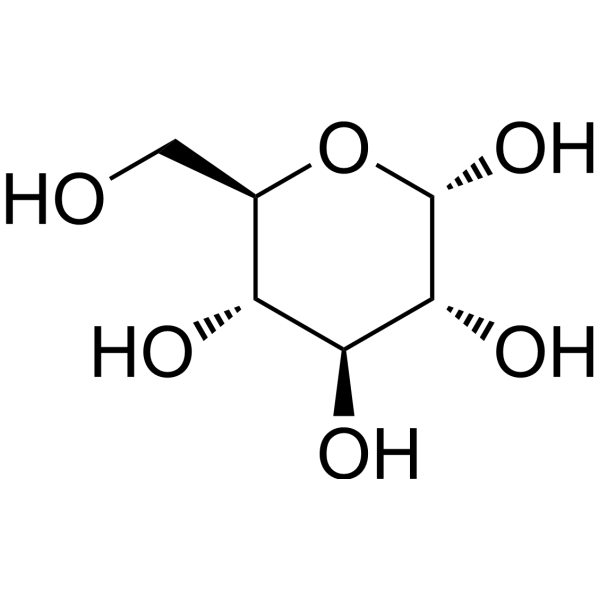
β-D-Glucose, also known as glucose, is a monosaccharide, the most important carbohydrate in biological systems, the main energy source of cells, and plays a key role in various metabolic processes. β-D-Glucose has unique chemical properties that make it an abundant component in plant and animal tissues and is readily metabolized by organisms to produce cellular energy. It is commonly used to improve hypoglycemia and dehydration, and as a sweetener and preservative in food and beverage production.
|
-
-
- HY-133708
-
|
Glucogallin; 1-O-Galloyl-β-D-Glucose
|
Aldose Reductase
Reactive Oxygen Species (ROS)
NF-κB
PDGFR
SOD
|
Neurological Disease
Metabolic Disease
|
|
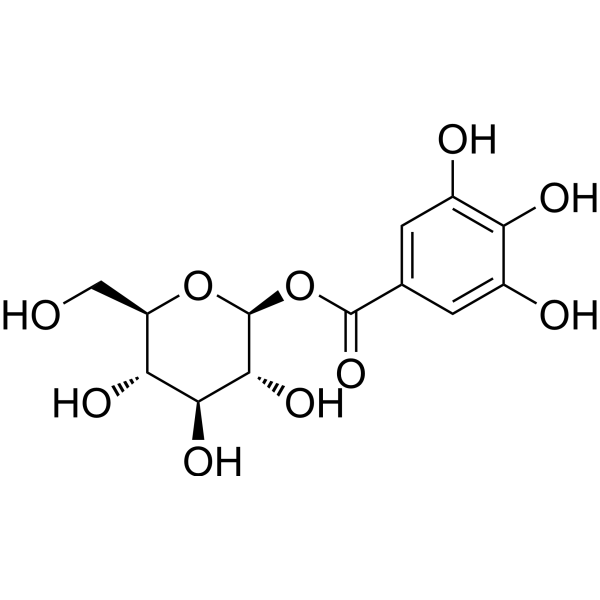
β-Glucogallin is an orally active and selective aldose reductase (AKR1B1) inhibitor with an IC50 value of 58 μM when using Glyceraldehyde (HY-128748) as AKR1B1 substrate. β-Glucogallin reduces ROS, PDGF, RAGE, and NF-κB. β-Glucogallin increases SOD. β-Glucogallin has antioxidant and hepatoprotective effects. β-Glucogallin can be used in retinal research .
|
-
-
- HY-N6006
-
|
1,3,6-Tri-O-galloyl-β-D-Glucose
|
Others
|
Others
|
|
1,3,6-Tri-O-galloyl-beta-D-glucose is a non-covalent inhibitor of tyrosinase (TYR), which can block the rate-limiting step of melanin synthesis and inhibit melanin deposition. 1,3,6-Tri-O-galloyl-beta-D-glucose has antioxidant and anti-inflammatory activities and can be used as a natural active ingredient to develop anti-freckle and whitening skin care products .
|
-
-
- HY-164367
-
-
-
- HY-22306
-
|
Penta-O-acetyl-β-D-glucopyranose
|
Others
|
Metabolic Disease
|
|
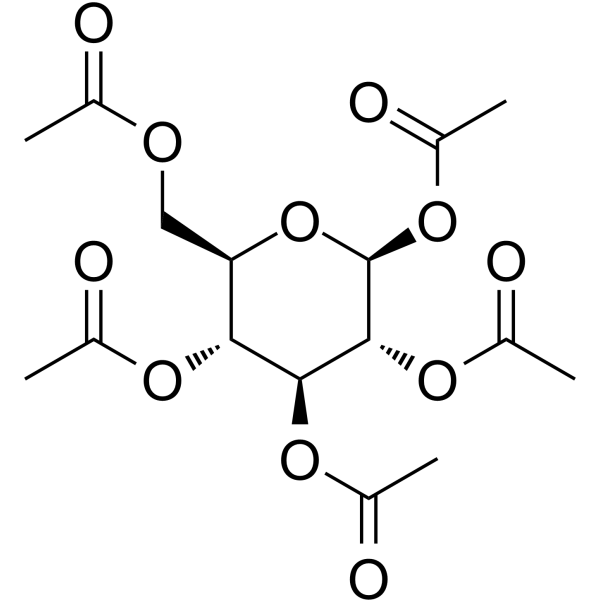
β-D-Glucose Pentaacetate (Penta-O-acetyl-β-D-glucopyranose) is a glucose derivative, which is mainly used to explore the mechanism of insulin secretion .
|
-
-
- HY-W050145
-
|
1,6-Anhydro-β-D-glucopyranose; 1,6-Anhydro-β-D-Glucose
|
Endogenous Metabolite
|
Metabolic Disease
|
|
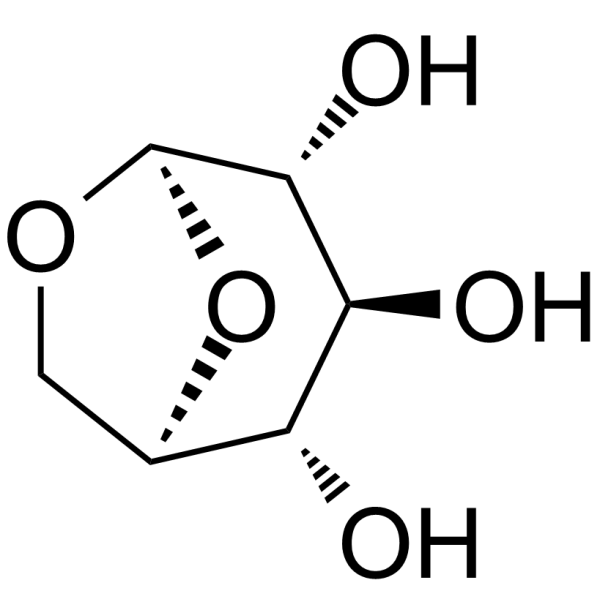
Levoglucosan (1,6-Anhydro-β-D-glucopyranose) is an anhydrosugar produced through glucan pyrolysis and is widely found in nature .
|
-
-
- HY-N1968
-
|
Quercetin-3-O-beta-D-Glucose-7-O-beta-D-gentiobioside
|
Parasite
|
Infection
|
|
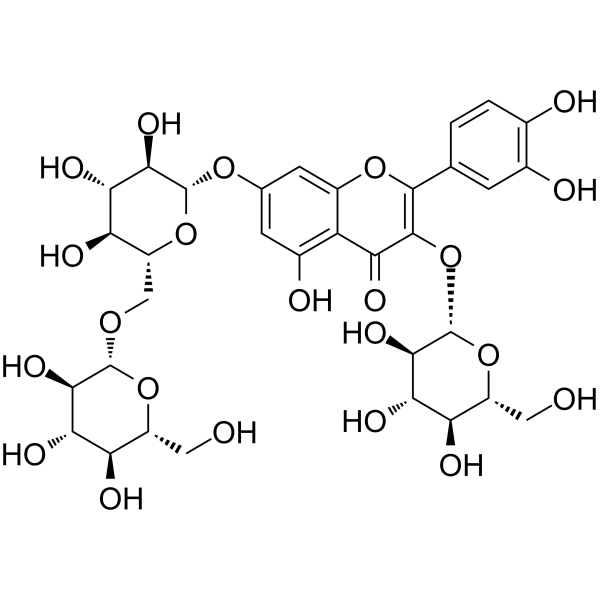
Quercetin-3-O-β-D-glucose-7-O-β-D-gentiobiosiden (Quercetin-3-O-beta-D-glucose-7-O-beta-D-gentiobioside) is a flavonoid compound. In Cylas formicarius, Quercetin-3-O-β-D-glucose-7-O-β-D-gentiobioside can bind to chemosensory proteins such as CforCSP5 (Ki: 1.429 μM) and CforOBP3 (Ki: 3.697 μM), potentially participating in the recognition process of insect host plant volatiles. Quercetin-3-O-β-D-glucose-7-O-β-D-gentiobiosiden is also an inhibitor of Sb28GST (IC50: 0.13 mM) and can be used in the research of anti-schistosome agents .
|
-
-
- HY-128417
-
-
-
- HY-W050145S
-
-
-
- HY-W719041
-
|
|
HIV
Reverse Transcriptase
|
Infection
|
|
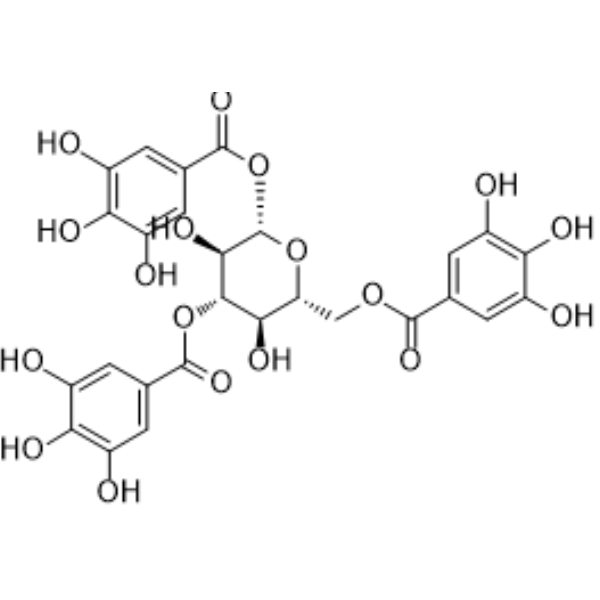
1,6-Di-O-galloyl-β-D-glucose is a compound found in the fruit of Phyllanthus emblica. 1,6-Di-O-galloyl-β-D-glucose has HIV-1 reverse transcriptase (RT) inhibitory activity with an IC50 value of 270 μM. The inhibitory mechanism of 1,6-Di-O-galloyl-β-D-glucose is competitive inhibition of the template primer and non-competitive inhibition of the substrate (dTTP). 1,6-Di-O-galloyl-β-D-glucose can be used in anti-HIV research .
|
-
-
- HY-137261
-
-
-
- HY-P3186
-
|
|
Endogenous Metabolite
|
Metabolic Disease
|
|
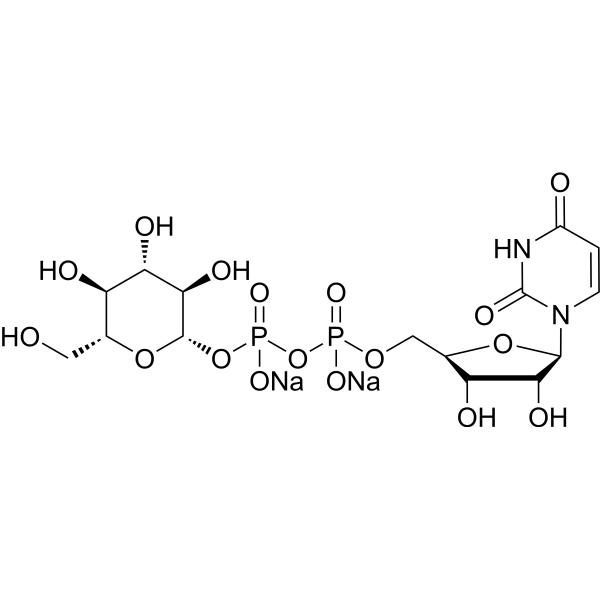
Glucose dehydrogenase, recombinant Microorganisms is a FDA-dependent oxidoreductase. Glucose dehydrogenase (GDH) catalyzes the oxidation of β-D-glucose to β-D-glucono-1,5-lactone with simultaneous reduction of the cofactor NADP + to NADPH or, to a lesser extent, NAD + to NADH. Glucose dehydrogenase (GDH) accepts both NAD + and NADP + as cofactors and can be used for the regeneration of NADH and NADPH .
|
-
-
- HY-140012
-
|
|
PROTAC Linkers
|
Cancer
|
|
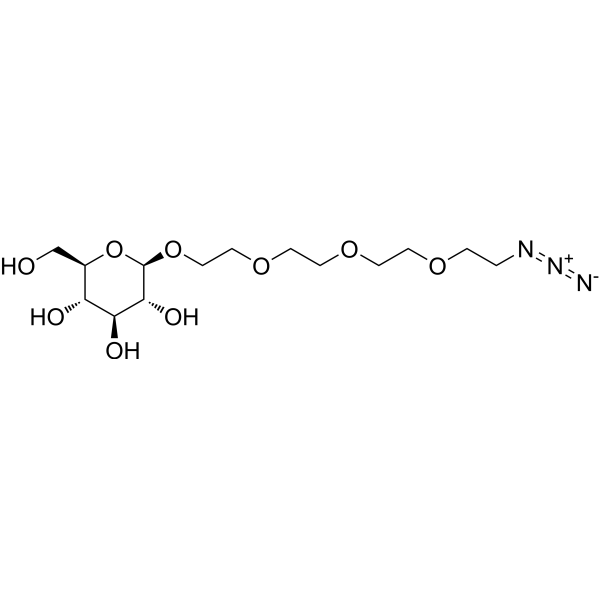
Azido-PEG4-beta-D-glucose is a PEG-based PROTAC linker that can be used in the synthesis of PROTACs . Azido-PEG4-beta-D-glucose is a click chemistry reagent, it contains an Azide group and can undergo copper-catalyzed azide-alkyne cycloaddition reaction (CuAAc) with molecules containing Alkyne groups. It can also undergo strain-promoted alkyne-azide cycloaddition (SPAAC) reactions with molecules containing DBCO or BCN groups.
|
-
-
- HY-P2741
-
|
E.C. 2.4.1.8
|
Endogenous Metabolite
|
Metabolic Disease
|
|
Maltose phosphorylase is a dimerase which catalyzes the transformation of maltose and inorganic phosphate into β-D-glucose-1-phosphate and glucose. Maltose phosphorylases have been classified in family 65 of the glycoside hydrolases .
|
-
-
- HY-115419
-
|
|
Liposome
|
Others
|
|
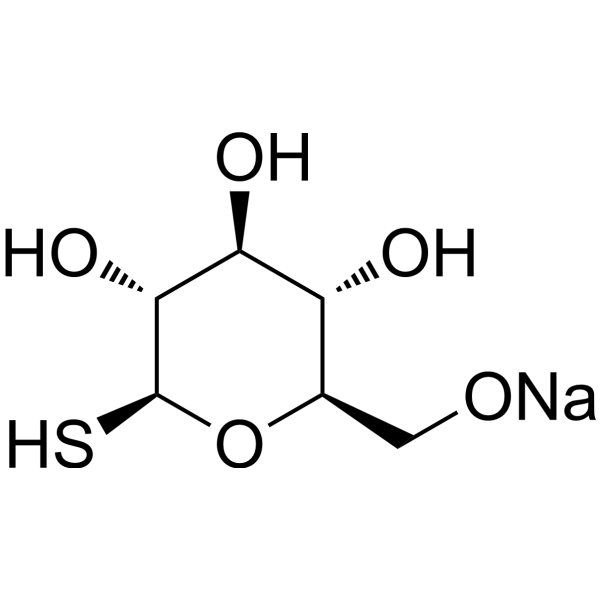
1-Thio-β-D-glucose sodium is the sodium salt form of 1-Thio-β-D-glucose. 1-Thio-β-D-glucose forms hydrophilic self-assembled monolayer with metal, stablizes the lipid bilayer and protects the proteins from denaturation .
|
-
-
- HY-W039865
-
|
|
Biochemical Assay Reagents
|
Cancer
|
|
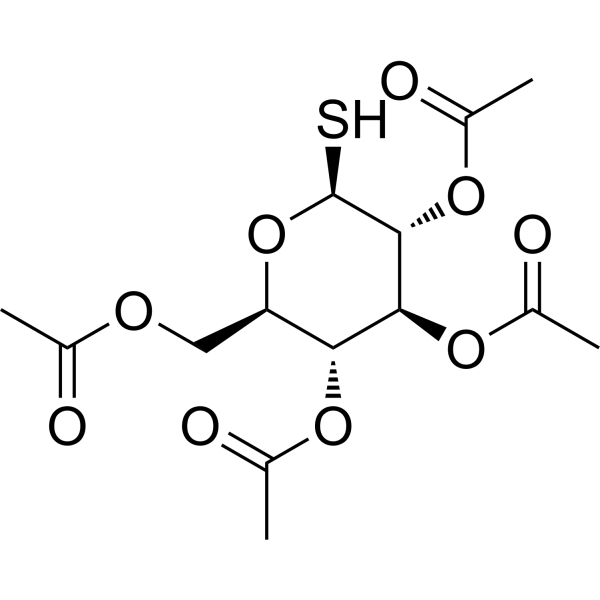
1-Thio-beta-D-glucose tetraacetate exhibits cytotoxicity in cells HeLa and human ocular lens epithelium CECH with IC50s of >250 and >200 μM. 1-Thio-beta-D-glucose tetraacetate reveals moderate anticancer property .
|
-
-
- HY-N11285
-
|
|
Others
|
Cardiovascular Disease
|
|
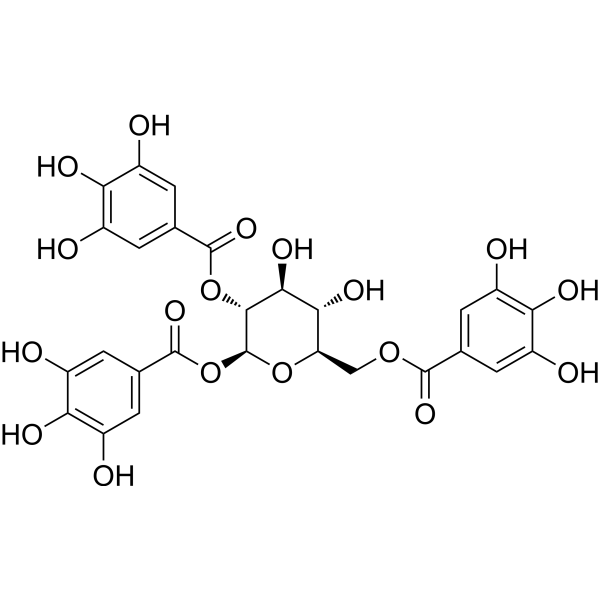
1,2,6-Tri-O-galloyl-β-D-glucose is a polygalloylglucose found in the roots and rhizomes of Sanguisorba officinalis .
|
-
-
- HY-128417R
-
|
|
Reference Standards
Endogenous Metabolite
|
Metabolic Disease
|
|
alpha-D-glucose (Standard) is the analytical standard of alpha-D-glucose. This product is intended for research and analytical applications. \alpha-D-glucose is a monosaccharide that has a more significant insulin stimulating effect than beta-D-glucose[1][2].
|
-
-
- HY-22306S
-
|
|
Isotope-Labeled Compounds
|
Others
|
|
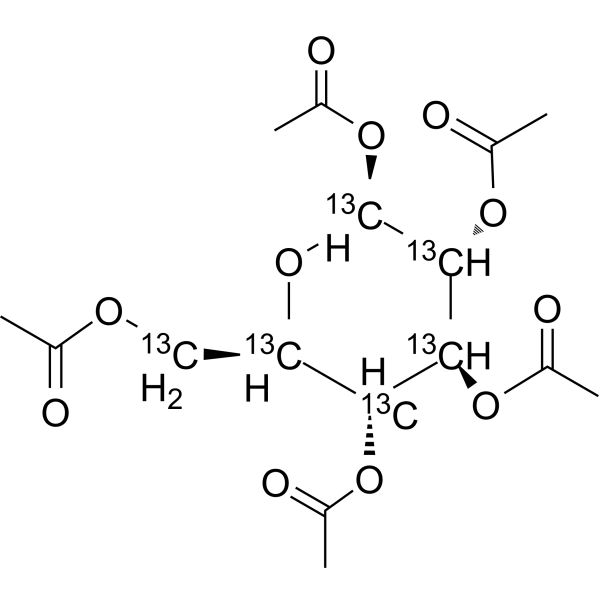
β-D-Glucose pentaacetate- 13C6 is the 13C labeled β-D-Glucose pentaacetate[1]. β-D-Glucose Pentaacetate (Penta-O-acetyl-β-D-glucopyranose) is used in biochemical reaction.
|
-
-
- HY-141131
-
|
|
PROTAC Linkers
|
Cancer
|
|
Propargyl-PEG2-beta-D-glucose is a PEG-based PROTAC linker that can be used in the synthesis of PROTACs .
|
-
-
- HY-N15572
-
|
|
SOD
|
Inflammation/Immunology
|
|
1,2,4,6-Tetra-O-galloyl-β-D-glucose is an antioxidant found in Eucalyptus globulus. 1,2,4,6-Tetra-O-galloyl-β-D-glucose has significant superoxide dismutase (SOD)-like antioxidant activity (EC50: 1.55 μM). 1,2,4,6-Tetra-O-galloyl-β-D-glucose can inhibit tyrosinase (IC50: 0.59 mM) and hyaluronidase (IC50: 0.68 mM). 1,2,4,6-Tetra-O-galloyl-β-D-glucose can be used in food antioxidants, cosmetics anti-melanogenesis and anti-allergy/anti-inflammatory research .
|
-
-
- HY-N9525
-
|
|
Others
|
Others
|
|
Limocitrin 3-β-D-glucose is a flavonoid glycoside .
|
-
-
- HY-N0527R
-
|
Penta-O-galloyl-β-D-Glucose (Standard); 1,2,3,4,6-Pentagalloyl Glucose (Standard)
|
Reference Standards
JAK
Keap1-Nrf2
Apoptosis
β-catenin
Reactive Oxygen Species (ROS)
|
Neurological Disease
Inflammation/Immunology
Cancer
|
|
Pentagalloylglucose (Standard) is the analytical standard of Pentagalloylglucose. This product is intended for research and analytical applications. Pentagalloylglucose (Penta-O-galloyl-β-D-glucose) is an orally active gallic tannin compound and an inducer of apoptosis and autophagy. Pentagalloglucose induces cell apoptosis and autophagy through the GSK3β/β-catenin pathway. Pentagalloylglucose inhibits UBE2T-mediated p53 ubiquitination, upregulates p53, downregulates RRM1/RRM2 in pancreatic cancer organoids. Pentagalloglucose has antioxidant, anti mutagenic, anti-inflammatory, anticonvulsant, cardioprotective, anti allergic, cholesterol lowering, and anti-tumor activities .
|
-
-
- HY-W050145R
-
|
1,6-Anhydro-β-D-glucopyranose (Standard); 1,6-Anhydro-β-D-Glucose (Standard)
|
Reference Standards
Endogenous Metabolite
|
Metabolic Disease
|
|
Levoglucosan (Standard) is the analytical standard of Levoglucosan. This product is intended for research and analytical applications. Levoglucosan (1,6-Anhydro-β-D-glucopyranose) is an anhydrosugar produced through glucan pyrolysis and is widely found in nature .
|
-
-
- HY-W748418
-
|
|
Isotope-Labeled Compounds
Liposome
|
Others
|
|
1-Thio-β-D-glucose Sodium Salt Dihydrate- 13C6 is the 13C-labeled 1-Thio-β-D-glucose sodium (HY-115419). 1-Thio-β-D-glucose sodium is the sodium salt form of 1-Thio-β-D-glucose. 1-Thio-β-D-glucose forms hydrophilic self-assembled monolayer with metal, stablizes the lipid bilayer and protects the proteins from denaturation .
|
-
-
- HY-N6006R
-
|
1,3,6-Tri-O-galloyl-β-D-Glucose (Standard)
|
Reference Standards
Others
|
Others
|
|
1,3,6-Tri-O-galloyl-beta-D-glucose (Standard) is the analytical standard of 1,3,6-Tri-O-galloyl-beta-D-glucose. This product is intended for research and analytical applications. 1,3,6-Tri-O-galloyl-beta-D-glucose (1,3,6-Tri-O-galloyl-β-D-glucose) is a phenolic compound in Black Walnut Kernels .
|
-
-
- HY-141132
-
|
|
PROTAC Linkers
|
Cancer
|
|
Propargyl-PEG4-beta-D-glucose is a PEG-based PROTAC linker that can be used in the synthesis of PROTACs .
|
-
-
- HY-141133
-
|
|
PROTAC Linkers
|
Cancer
|
|
Propargyl-PEG4-tetra-Ac-beta-D-glucose is a PEG-based PROTAC linker that can be used in the synthesis of PROTACs .
|
-
-
- HY-W411439
-
|
|
GLUT
|
Metabolic Disease
|
|
1-O-p-Coumaroyl-β-D-glucose can promote glucose uptake in HuH7 cells, and be be extracted from Luffa cylindrica (L.) Roem (sponge gourds) .
|
-
-
- HY-141127
-
|
|
PROTAC Linkers
|
Cancer
|
|
Azido-PEG4-tetra-Ac-beta-D-glucose is a PEG-based PROTAC linker that can be used in the synthesis of PROTACs . Azido-PEG4-tetra-Ac-beta-D-glucose is a click chemistry reagent, it contains an Azide group and can undergo copper-catalyzed azide-alkyne cycloaddition reaction (CuAAc) with molecules containing Alkyne groups. It can also undergo strain-promoted alkyne-azide cycloaddition (SPAAC) reactions with molecules containing DBCO or BCN groups.
|
-
-
- HY-N8214
-
|
|
Others
|
Cardiovascular Disease
|
|
Isorhamnetin 3-O-β-D-glucose-7-O-β-D-gentiobioside is a bioactive constituent that can be found in the seeds of Lepidium apetalum Willd. Isorhamnetin 3-O-β-D-glucose-7-O-β-D-gentiobioside exhibits significant triglyceride (TG)-lowering effects in HepG2 cells .
|
-
-
- HY-W416179
-
|
Acetobromolaminaribiose
|
Biochemical Assay Reagents
|
Others
|
|
2,3,4,6-Tetra-O-acetyl-β-D-glucose (Acetobromolaminaribiose) is a class of biochemical reagents used in glycobiology research. Glycobiology studies the structure, synthesis, biology, and evolution of sugars. It involves carbohydrate chemistry, enzymology of glycan formation and degradation, protein-glycan recognition, and the role of glycans in biological systems. This field is closely related to basic research, biomedicine, and biotechnology .
|
-
-
- HY-177884
-
|
|
Drug Derivative
|
Cancer
|
|
Triptolide-6-β-D-glucose (Compound 5) is a glucose-conjugated derivative of Triptolide (HY-32735). Triptolide-6-β-D-glucose has no effective anti-tumor activity and is mainly used for studying the structural-activity relationship (SAR) of derivatives .
|
-
-
- HY-177903
-
|
|
Drug Derivative
GLUT
DNA/RNA Synthesis
|
Cancer
|
|
Triptolide-6-succinate-β-D-glucose (Compound 2) is a glucose-conjugated derivative of Triptolide (HY-32735). Triptolide-6-succinate-β-D-glucose is a tumor-selective prodrug targeting glucose transporters ( GLUT). Triptolide-6-succinate-β-D-glucose can induce the degradation of the RPB subunit of RNA polymerase II. Triptolide-6-succinate-β-D-glucose inhibits the proliferation of HEK293T cells with an IC50 value of 268 nM. Triptolide-6-succinate-β-D-glucose can be used for the research of cancer, such as prostatic cancer .
|
-
-
- HY-177885
-
|
|
Drug Derivative
|
Cancer
|
|
Triptolide-6-methoxy-β-D-glucose (Compound 6) is a glucose-conjugated derivative of Triptolide (HY-32735). Triptolide-6-methoxy-β-D-glucose has no effective anti-tumor activity and is mainly used for studying the structural-activity relationship (SAR) of derivatives .
|
-
-
- HY-W050145S2
-
|
1,6-Anhydro-β-D-glucopyranose-13C6; 1,6-Anhydro-β-D-Glucose-13C6
|
Endogenous Metabolite
|
Metabolic Disease
|
|
Levoglucosan- 13C6 is the 13C labeled Levoglucosan . Levoglucosan (1,6-Anhydro-β-D-glucopyranose) is an anhydrosugar produced through glucan pyrolysis and is widely found in nature .
|
-
-
- HY-P2820A
-
|
|
Biochemical Assay Reagents
|
Metabolic Disease
|
|
β-Phosphoglucomutase, Lactococcus sp. (EC 5.4.2.6), belongs to the isomerase family and catalyzes the conversion of β-D-glucose-1-phosphate to β-D-glucose-6-phosphate. β-Phosphoglucomutase is involved in the metabolism of starch and sucrose.
|
-
-
- HY-P2820B
-
|
|
Biochemical Assay Reagents
|
Metabolic Disease
|
|
β-Phosphoglucomutase, E. coli (EC 5.4.2.6), belongs to the isomerase family and catalyzes the conversion of β-D-glucose-1-phosphate to β-D-glucose-6-phosphate. β-Phosphoglucomutase is involved in the metabolism of starch and sucrose.
|
-
-
- HY-N18023
-
|
|
Others
|
Others
|
|
Kaempferol-3-O-β-D-Glucose-7-O-β-D-Gentianoside is a kaempferol glycoside found in the seeds of Lepidium apetalum Willd. Kaempferol-3-O-β-D-Glucose-7-O-β-D-Gentianoside shows no obvious inhibitory effect on Sodium oleate (HY-N1446B)-induced triglyceride overloading in liver cells .
|
-
-
- HY-P2741A
-
-
-
- HY-P2820D
-
|
|
Biochemical Assay Reagents
|
Others
|
|
β-Phosphoglucomutase (EC 5.4.2.6) requires Mg2+ and phosphorylation of an aspartate residue at the active site. The enzyme is able to autophosphorylate itself with its substrate β-D-glucose 1-phosphate.
|
-
-
- HY-P2857B
-
|
|
Endogenous Metabolite
|
Cardiovascular Disease
|
|
Amyloglucosidase, Rhizopus sp. (EC 3.2.1.3) is an enzyme located on the brush border of the small intestine that hydrolyzes terminal (1→4) linked α-D-glucose residues to release β-D-glucose.
|
-
-
- HY-E71205
-
|
|
Biochemical Assay Reagents
|
Others
|
|
α,α-Trehalose (EC 3.2.1.28) is an anomer-inverting glucosidase that catalyses the hydrolysis of the α-glucosidic O-linkage of α,α-Trehalose, releasing initially equimolar amounts of α-and β-D-glucose.
|
-
-
- HY-P3186B
-
|
|
Endogenous Metabolite
|
Metabolic Disease
|
|
Glucose dehydrogenase, Pseudomonas sp. (EC 1.1.1.47) is an oxidoreductase that acts on the CH-OH group of a donor molecule and uses NAD + or NADP + as an acceptor. The three substrates of glucose dehydrogenase are β-D-glucose, NAD +, and NADP +, while its four products are D-gluconic acid-1,5-lactone, NADH, NADPH, and H +.
|
-
-
- HY-N17139
-
|
|
Others
|
Inflammation/Immunology
|
|
6'-O-Glucopyranosylalbiflorin is a monoterpene glycoside compound containing two β-D-glucose units, which has bone formation-promoting effects. 0.01-10 μM 6'-O-Glucopyranosylalbiflorin shows significant activity against osteoblast MC3T3-E1 cells, promoting alkaline phosphatase activity and calcium deposition to stimulate osteoblast differentiation. 6'-O-Glucopyranosylalbiflorin can be used in research of osteoporosis. 6'-O-Glucopyranosylalbiflorin can be naturally extracted from the dried roots of Paeonia lactiflora Pall. (peony) from Vinh Phuc province, Vietnam .
|
-
-
- HY-402089
-
-
-
- HY-N18084
-
|
|
Endogenous Metabolite
|
Others
|
|
Neo-rehmannioside is a carotenoid glycoside that can be isolated from the dried roots of Rehmannia glutinosa .
|
-
-
- HY-121965
-
|
|
Biochemical Assay Reagents
|
|
β-D-Glucose, also known as glucose, is a monosaccharide, the most important carbohydrate in biological systems, the main energy source of cells, and plays a key role in various metabolic processes. β-D-Glucose has unique chemical properties that make it an abundant component in plant and animal tissues and is readily metabolized by organisms to produce cellular energy. It is commonly used to improve hypoglycemia and dehydration, and as a sweetener and preservative in food and beverage production.
|
-
- HY-W039865
-
|
|
Biochemical Assay Reagents
|
|
1-Thio-beta-D-glucose tetraacetate exhibits cytotoxicity in cells HeLa and human ocular lens epithelium CECH with IC50s of >250 and >200 μM. 1-Thio-beta-D-glucose tetraacetate reveals moderate anticancer property .
|
-
- HY-W416179
-
|
Acetobromolaminaribiose
|
Biochemical Assay Reagents
|
|
2,3,4,6-Tetra-O-acetyl-β-D-glucose (Acetobromolaminaribiose) is a class of biochemical reagents used in glycobiology research. Glycobiology studies the structure, synthesis, biology, and evolution of sugars. It involves carbohydrate chemistry, enzymology of glycan formation and degradation, protein-glycan recognition, and the role of glycans in biological systems. This field is closely related to basic research, biomedicine, and biotechnology .
|
| Cat. No. |
상품명 |
Category |
Target |
Chemical Structure |
-
- HY-N0527
-
|
Penta-O-galloyl-β-D-Glucose; 1,2,3,4,6-Pentagalloyl Glucose
|
Infection
other families
Classification of Application Fields
Anti-aging
Phenols
Polyphenols
Plants
Disease Research Fields
Source Classification
|
JAK
Keap1-Nrf2
Apoptosis
β-catenin
Reactive Oxygen Species (ROS)
E1/E2/E3 Enzyme
|
|
Pentagalloylglucose (Penta-O-galloyl-β-D-glucose) is an orally active gallic tannin compound and an inducer of apoptosis and autophagy. Pentagalloglucose induces cell apoptosis and autophagy through the GSK3β/β-catenin pathway. Pentagalloylglucose inhibits UBE2T-mediated p53 ubiquitination, upregulates p53, downregulates RRM1/RRM2 in pancreatic cancer organoids. Pentagalloglucose has antioxidant, anti mutagenic, anti-inflammatory, anticonvulsant, cardioprotective, anti allergic, cholesterol lowering, and anti-tumor activities .
|
-
-
- HY-121965
-
-
-
- HY-133708
-
-
-
- HY-N6006
-
-
-
- HY-22306
-
-
-
- HY-W050145
-
-
-
- HY-N1968
-
-
-
- HY-128417
-
-
-
- HY-W719041
-
-
-
- HY-N11285
-
-
-
- HY-128417R
-
-
-
- HY-N15572
-
|
|
Phenols
Polyphenols
Myrtaceae
Plants
Eucalyptus globulus Labill.
Source Classification
|
SOD
|
|
1,2,4,6-Tetra-O-galloyl-β-D-glucose is an antioxidant found in Eucalyptus globulus. 1,2,4,6-Tetra-O-galloyl-β-D-glucose has significant superoxide dismutase (SOD)-like antioxidant activity (EC50: 1.55 μM). 1,2,4,6-Tetra-O-galloyl-β-D-glucose can inhibit tyrosinase (IC50: 0.59 mM) and hyaluronidase (IC50: 0.68 mM). 1,2,4,6-Tetra-O-galloyl-β-D-glucose can be used in food antioxidants, cosmetics anti-melanogenesis and anti-allergy/anti-inflammatory research .
|
-
-
- HY-N9525
-
-
-
- HY-N0527R
-
|
Penta-O-galloyl-β-D-Glucose (Standard); 1,2,3,4,6-Pentagalloyl Glucose (Standard)
|
Structural Classification
other families
Phenols
Polyphenols
Plants
Source Classification
|
Reference Standards
JAK
Keap1-Nrf2
Apoptosis
β-catenin
Reactive Oxygen Species (ROS)
|
|
Pentagalloylglucose (Standard) is the analytical standard of Pentagalloylglucose. This product is intended for research and analytical applications. Pentagalloylglucose (Penta-O-galloyl-β-D-glucose) is an orally active gallic tannin compound and an inducer of apoptosis and autophagy. Pentagalloglucose induces cell apoptosis and autophagy through the GSK3β/β-catenin pathway. Pentagalloylglucose inhibits UBE2T-mediated p53 ubiquitination, upregulates p53, downregulates RRM1/RRM2 in pancreatic cancer organoids. Pentagalloglucose has antioxidant, anti mutagenic, anti-inflammatory, anticonvulsant, cardioprotective, anti allergic, cholesterol lowering, and anti-tumor activities .
|
-
-
- HY-W050145R
-
-
-
- HY-N6006R
-
|
1,3,6-Tri-O-galloyl-β-D-Glucose (Standard)
|
other families
Phenols
Polyphenols
Plants
Source Classification
|
Reference Standards
Others
|
|
1,3,6-Tri-O-galloyl-beta-D-glucose (Standard) is the analytical standard of 1,3,6-Tri-O-galloyl-beta-D-glucose. This product is intended for research and analytical applications. 1,3,6-Tri-O-galloyl-beta-D-glucose (1,3,6-Tri-O-galloyl-β-D-glucose) is a phenolic compound in Black Walnut Kernels .
|
-
-
- HY-W411439
-
-
-
- HY-N8214
-
-
-
- HY-N18023
-
-
-
- HY-N17139
-
|
|
Structural Classification
Flavonoids
Paeonia lactiflora Pall.
Flavones
Plants
Paeoniaceae
Source Classification
|
Others
|
|
6'-O-Glucopyranosylalbiflorin is a monoterpene glycoside compound containing two β-D-glucose units, which has bone formation-promoting effects. 0.01-10 μM 6'-O-Glucopyranosylalbiflorin shows significant activity against osteoblast MC3T3-E1 cells, promoting alkaline phosphatase activity and calcium deposition to stimulate osteoblast differentiation. 6'-O-Glucopyranosylalbiflorin can be used in research of osteoporosis. 6'-O-Glucopyranosylalbiflorin can be naturally extracted from the dried roots of Paeonia lactiflora Pall. (peony) from Vinh Phuc province, Vietnam .
|
-
-
- HY-N18084
-
-
| Cat. No. |
상품명 |
Chemical Structure |
-
- HY-W050145S
-
|
|
|
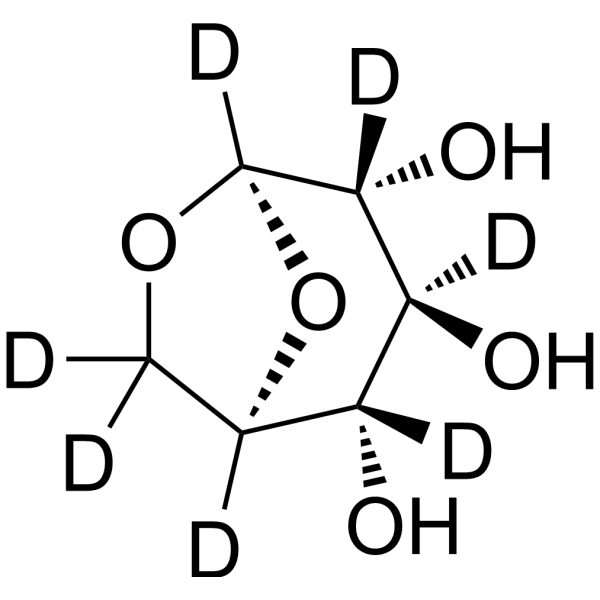
Levoglucosan-d7 is the deuterium labeled Levoglucosan. Levoglucosan (1,6-Anhydro-β-D-glucopyranose) is an anhydrosugar produced through glucan pyrolysis and is widely found in nature .
|
-
-
- HY-22306S
-
|
|
|
β-D-Glucose pentaacetate- 13C6 is the 13C labeled β-D-Glucose pentaacetate[1]. β-D-Glucose Pentaacetate (Penta-O-acetyl-β-D-glucopyranose) is used in biochemical reaction.
|
-
-
- HY-W748418
-
|
|
|
1-Thio-β-D-glucose Sodium Salt Dihydrate- 13C6 is the 13C-labeled 1-Thio-β-D-glucose sodium (HY-115419). 1-Thio-β-D-glucose sodium is the sodium salt form of 1-Thio-β-D-glucose. 1-Thio-β-D-glucose forms hydrophilic self-assembled monolayer with metal, stablizes the lipid bilayer and protects the proteins from denaturation .
|
-
-
- HY-W050145S2
-
|
|
|
Levoglucosan- 13C6 is the 13C labeled Levoglucosan . Levoglucosan (1,6-Anhydro-β-D-glucopyranose) is an anhydrosugar produced through glucan pyrolysis and is widely found in nature .
|
-
| Cat. No. |
상품명 |
|
Classification |
-
- HY-140012
-
|
|
|
PROTAC Synthesis
Azide
|
|
Azido-PEG4-beta-D-glucose is a PEG-based PROTAC linker that can be used in the synthesis of PROTACs . Azido-PEG4-beta-D-glucose is a click chemistry reagent, it contains an Azide group and can undergo copper-catalyzed azide-alkyne cycloaddition reaction (CuAAc) with molecules containing Alkyne groups. It can also undergo strain-promoted alkyne-azide cycloaddition (SPAAC) reactions with molecules containing DBCO or BCN groups.
|
-
- HY-141131
-
|
|
|
Alkynes
|
|
Propargyl-PEG2-beta-D-glucose is a PEG-based PROTAC linker that can be used in the synthesis of PROTACs .
|
-
- HY-141132
-
|
|
|
Alkynes
|
|
Propargyl-PEG4-beta-D-glucose is a PEG-based PROTAC linker that can be used in the synthesis of PROTACs .
|
-
- HY-141133
-
|
|
|
Alkynes
|
|
Propargyl-PEG4-tetra-Ac-beta-D-glucose is a PEG-based PROTAC linker that can be used in the synthesis of PROTACs .
|
-
- HY-141127
-
|
|
|
PROTAC Synthesis
Azide
|
|
Azido-PEG4-tetra-Ac-beta-D-glucose is a PEG-based PROTAC linker that can be used in the synthesis of PROTACs . Azido-PEG4-tetra-Ac-beta-D-glucose is a click chemistry reagent, it contains an Azide group and can undergo copper-catalyzed azide-alkyne cycloaddition reaction (CuAAc) with molecules containing Alkyne groups. It can also undergo strain-promoted alkyne-azide cycloaddition (SPAAC) reactions with molecules containing DBCO or BCN groups.
|
Your information is safe with us. * Required Fields.
Inquiry Information
- 상품명:
- Cat. No.:
- 수량:
- MCE Japan Authorized Agent:

