



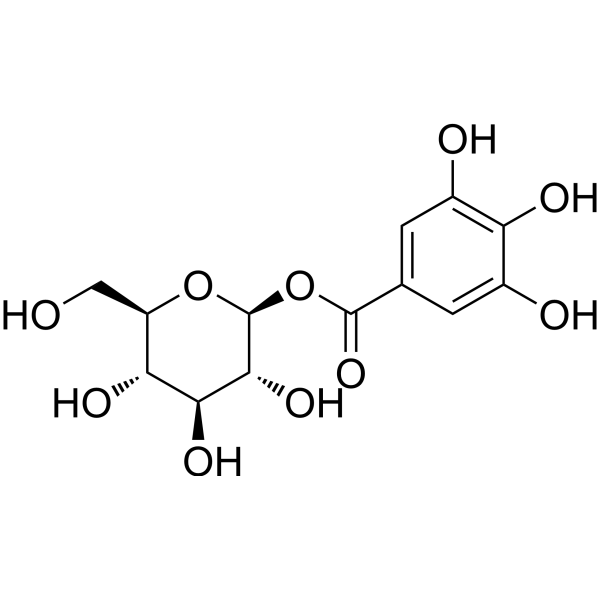
β-Glucogallin
Based on 1 publication(s) in Google Scholar
β-Glucogallin is an orally active and selective aldose reductase (AKR1B1) inhibitor with an IC50 value of 58 μM when using Glyceraldehyde (HY-128748) as AKR1B1 substrate. β-Glucogallin reduces ROS, PDGF, RAGE, and NF-κB. β-Glucogallin increases SOD. β-Glucogallin has antioxidant and hepatoprotective effects. β-Glucogallin can be used in retinal research.
For research use only. We do not sell to patients.
- Purity : 99.82%
- CAS No.: 13405-60-2
- Formula: C13H16O10
- Molecular Weight:332.26
-
Storage:Powder -20°C, 3 years ; In solvent -80°C, 6 months , -20°C, 1 month

To place orders, for customer services and technical support, please contact: MedChemExpress USA
Tel: 609-228-6898 E-mail: [email protected] [email protected]


-
 Biological Activity
-
Chemical Information
-
Solvent & Solubility
- Protocols
- Purity & Documentation
- References
-
 Help & FAQs


-
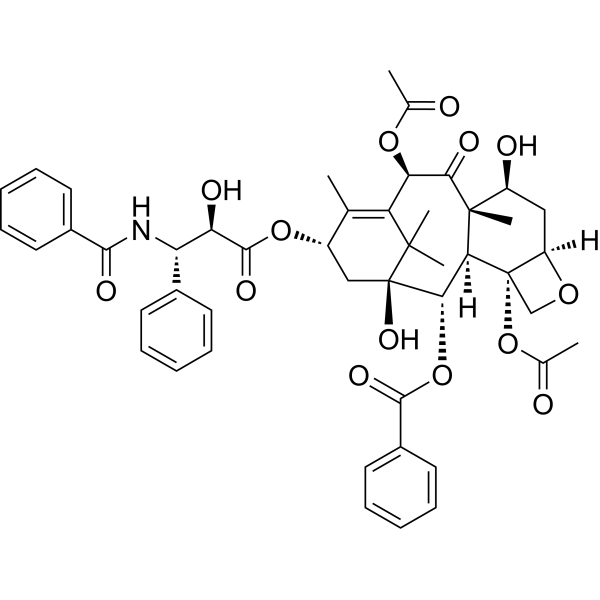
HY-B0015
PaclitaxelAntitumor Agent -
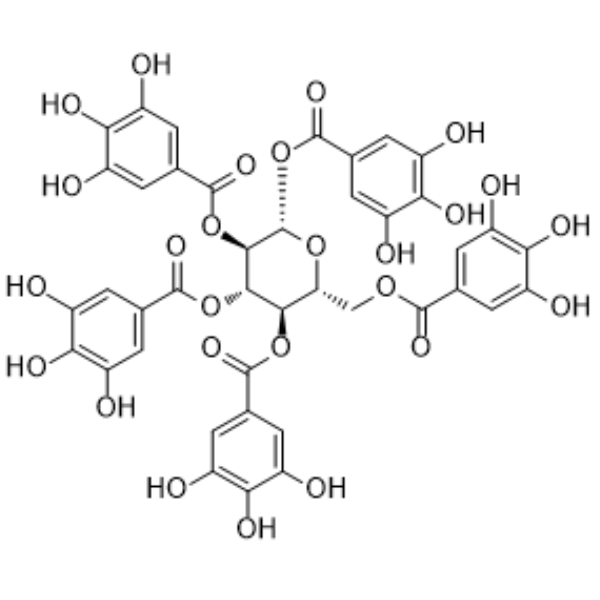
HY-N0527
PentagalloylglucoseAntioxidant -
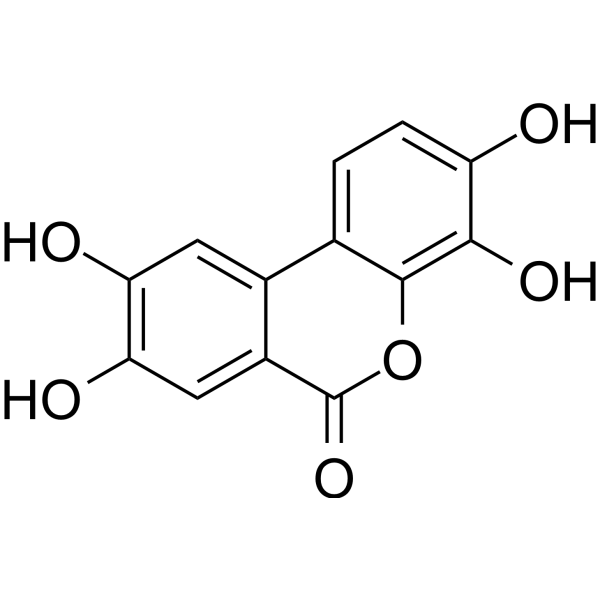
HY-133178
Urolithin DEphA Receptor Antagonist -
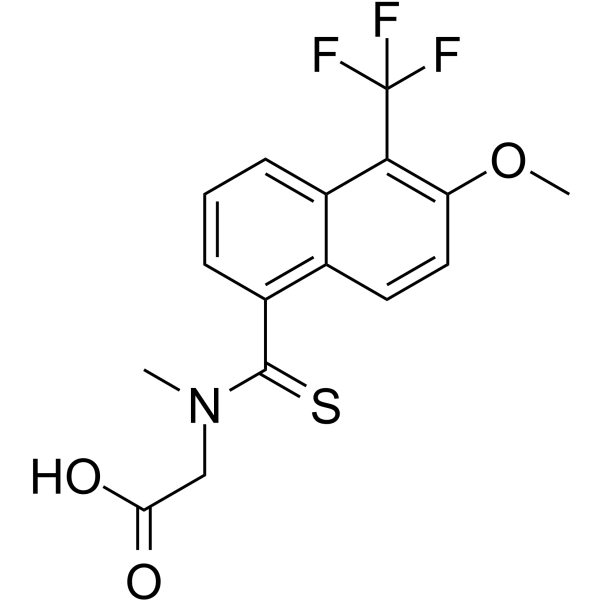
HY-16500
TolrestatAldose Reductase Inhibitor -

HY-16500R
Tolrestat (Standard)Aldose Reductase Inhibitor -
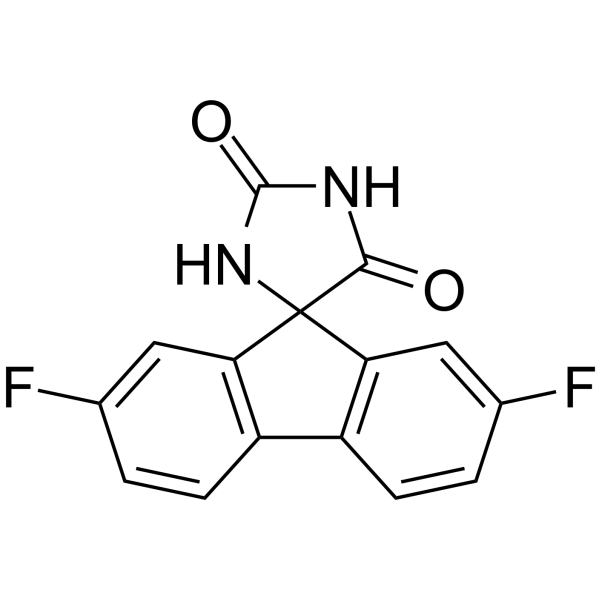
HY-16255
ImirestatAldose Reductase Inhibitor -

HY-16255R
Imirestat (Standard)Aldose Reductase Inhibitor -
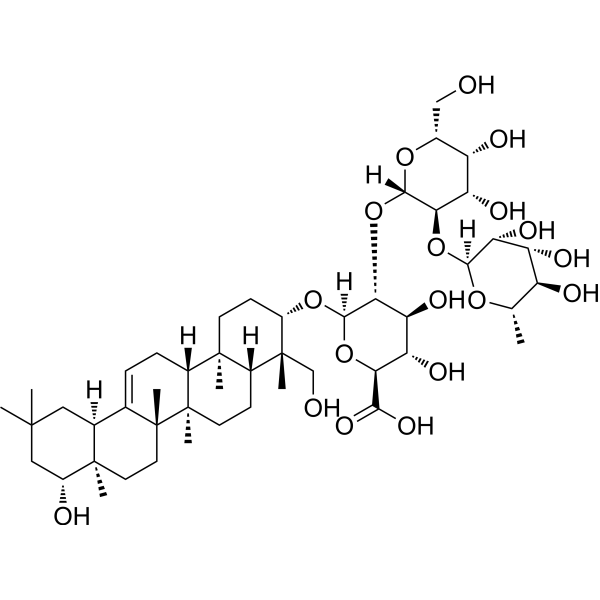
HY-N0310
Soyasaponin BbAldose Reductase Inhibitor -
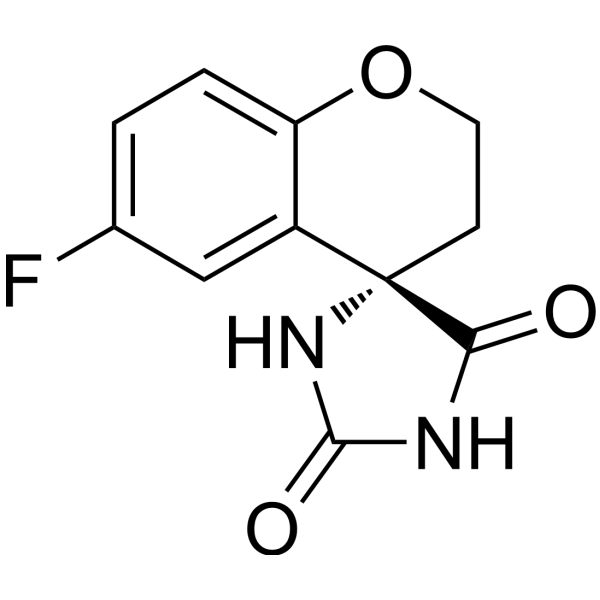
HY-50289
SorbinilAldose Reductase Inhibitor -
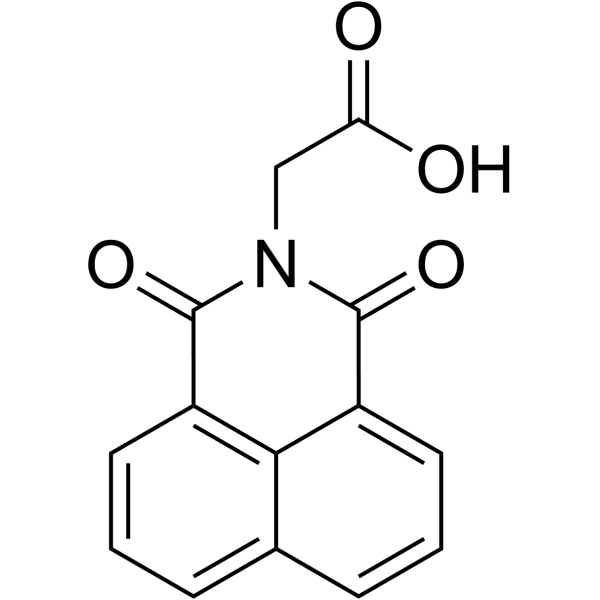
HY-B1202
AlrestatinAldose Reductase Inhibitor -
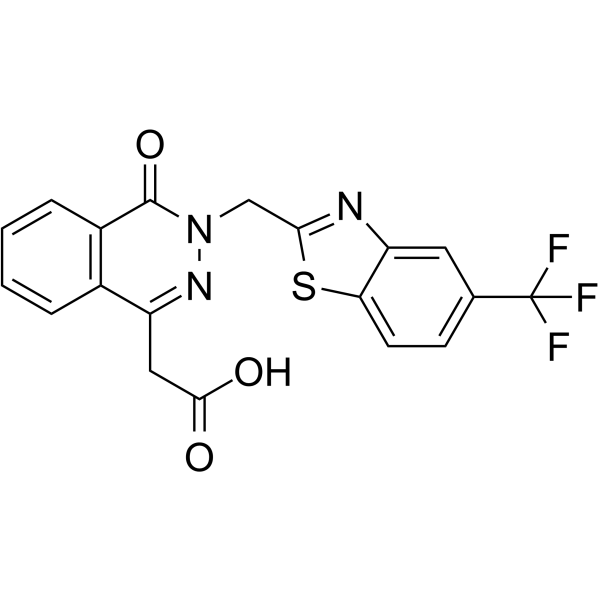
HY-19687
ZopolrestatAldose Reductase Inhibitor -
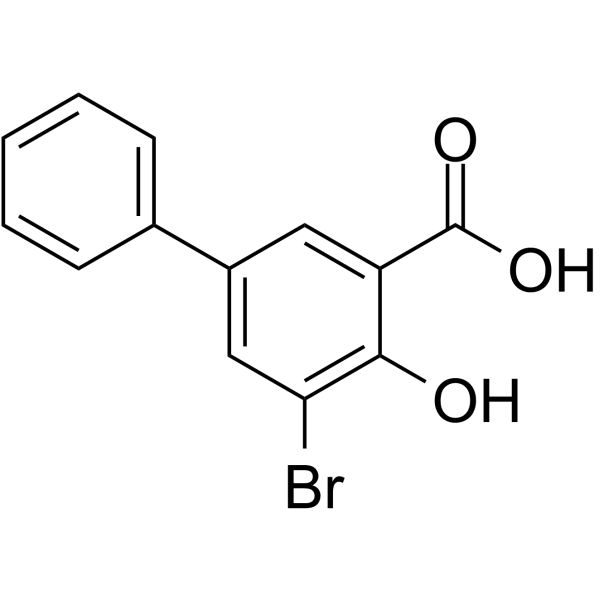
HY-114009
AKR1C1-IN-1AKR1C1 Inhibitor
Publications Citing Use of MedChemExpress (MCE) β-Glucogallin
More

Biological Activity
Description
IC50 & Target
IC50: 58 μM (AKR1B1) when using Glyceraldehyde (HY-128748) as AKR1B1 substrate
Cellular Effect
|
Cell Line

|
Type | Value | Description | References |
|---|---|---|---|---|
| A549 | ED50 |
>10 μg/mL
Compound: 4
|
Cytotoxicity against human A549 cells by tetrazolium salt-based colorimetric assay
Cytotoxicity against human A549 cells by tetrazolium salt-based colorimetric assay
|
[PMID: 1431932] |
| HCT-8 | ED50 |
>10 μg/mL
Compound: 4
|
Cytotoxicity against human HCT8 cells by tetrazolium salt-based colorimetric assay
Cytotoxicity against human HCT8 cells by tetrazolium salt-based colorimetric assay
|
[PMID: 1431932] |
| KB | ED50 |
>10 μg/mL
Compound: 4
|
Cytotoxicity against human KB cells by tetrazolium salt-based colorimetric assay
Cytotoxicity against human KB cells by tetrazolium salt-based colorimetric assay
|
[PMID: 1431932] |
| TE-671 | ED50 |
>10 μg/mL
Compound: 4
|
Cytotoxicity against human TE671 cells by tetrazolium salt-based colorimetric assay
Cytotoxicity against human TE671 cells by tetrazolium salt-based colorimetric assay
|
[PMID: 1431932] |
In Vitro
β-Glucogallin (100 μM; 2 h) can reduce Methylglyoxal-induced oxidative stress in human retinal epithelial cells ARPE-19, decreasing intracellular ROS levels[1].
β-Glucoside inhibits AKR1B1 with Glyceraldehyde (HY-128748) as substrate, with an IC50 value of 58 μM[2].
β-Glucogallin (30 μM; 72 h) can inhibit sorbitol accumulation under hyperglycemic conditions in a transgenic mouse lens organ culture model, with an inhibition rate of 73%[2].
β-Glucogallin can inhibit the activity of AKR1B1 and prevent Sorbitol (HY-B0400) accumulation in RAW264.7 murine macrophage cells, with an inhibition rate of approximately 50%[3].
MedChemExpress (MCE) has not independently confirmed the accuracy of these methods. They are for reference only. Further protocols information, click here.
-
Cell Line:ARPE-19 (human retinal epithelial cell line)
-
Concentration:100 μM
-
Incubation Time:Pre-treated for 2 h
-
Result:Decreased the expression levels of AR, αB-crystallin, PDGF, RAGE, and NF-κB.
In Vivo
MedChemExpress (MCE) has not independently confirmed the accuracy of these methods. They are for reference only.
-
Animal Model:Female Wistar rats (weight 60-80 g), Carbon tetrachloride-induced liver injury model[4]
-
Dosage:300 mg/kg, 600 mg/kg, 1200 mg/kg
-
Administration:Oral gavage (p.o.), once daily for 10 days
-
Result:Significantly increased the levels of hepatic GSH, SOD, catalase, and GPx.
Reduced lipid peroxidation as indicated by the decrease in TBARS levels.
Improved the levels of serum transaminases AST and ALT.
Reduced central zone necrosis, vacuolation of hepatocytes, and inflammatory cell infiltration.


Chemical Information
-
CAS No. 13405-60-2
-
Appearance Solid
-
Molecular Weight 332.26
-
Formula C13H16O10
-
Color White to off-white
-
SMILES
O[C@H]1[C@H](OC(C2=CC(O)=C(O)C(O)=C2)=O)O[C@H](CO)[C@@H](O)[C@@H]1O
-
Synonyms
Glucogallin; 1-O-Galloyl-β-D-glucose
-
Structure Classification
-
Initial Source
-
Shipping
Room temperature in continental US; may vary elsewhere.
-
Storage
Powder -20°C 3 years In solvent -80°C 6 months -20°C 1 month


Publications (1)
-
Journal Impact Factor
-
Most Recent


Solvent & Solubility
In Vitro:
DMSO : 100 mg/mL (300.97 mM; Need ultrasonic; Hygroscopic DMSO has a significant impact on the solubility of product, please use newly opened DMSO)
H2O : 4.17 mg/mL (12.55 mM; Need ultrasonic)
Please refer to the solubility information to select the appropriate solvent. Once prepared, please aliquot and store the solution to prevent product inactivation from repeated freeze-thaw cycles.
Storage method and period of stock solution: -80°C, 6 months; -20°C, 1 month. When stored at -80°C, please use it within 6 months. When stored at -20°C, please use it within 1 month.
* Note: If you choose water as the stock solution, please dilute it to the working solution, then filter and sterilize it with a 0.22 μm filter before use.
Please refer to the solubility information to select the appropriate solvent. Once prepared, please aliquot and store the solution to prevent product inactivation from repeated freeze-thaw cycles.
Storage method and period of stock solution: -80°C, 6 months; -20°C, 1 month. When stored at -80°C, please use it within 6 months. When stored at -20°C, please use it within 1 month.
* Note: If you choose water as the stock solution, please dilute it to the working solution, then filter and sterilize it with a 0.22 μm filter before use.
Concentration (start) × Volume (start) = Concentration (final) × Volume (final)
In Vivo:
Select the appropriate dissolution method based on your experimental animal and administration route.
- For the following dissolution methods, please ensure to first prepare a clear stock solution using an In Vitro approach and then sequentially add co-solvents:
- To ensure reliable experimental results, the clarified stock solution can be appropriately stored based on storage conditions. As for the working solution for In Vivo experiments, it is recommended to prepare freshly and use it on the same day.
- The percentages shown for the solvents indicate their volumetric ratio in the final prepared solution. If precipitation or phase separation occurs during preparation, heat and/or sonication can be used to aid dissolution.
Add each solvent one by one: 10% DMSO 40% PEG300 5% Tween-80 45% Saline
Solubility: ≥ 2.5 mg/mL (7.52 mM); Clear solution
This protocol yields a clear solution of ≥ 2.5 mg/mL (saturation unknown).
Taking 1 mL working solution as an example, add 100 μL DMSO stock solution (25.0 mg/mL) to 400 μL PEG300, and mix evenly; then add 50 μL Tween-80 and mix evenly; then add 450 μL Saline to adjust the volume to 1 mL.
Preparation of Saline: Dissolve 0.9 g sodium chloride in ddH₂O and dilute to 100 mL to obtain a clear Saline solution.
Add each solvent one by one: 10% DMSO 90% (20% SBE-β-CD in Saline)
Solubility: ≥ 2.5 mg/mL (7.52 mM); Clear solution
This protocol yields a clear solution of ≥ 2.5 mg/mL (saturation unknown).
Taking 1 mL working solution as an example, add 100 μL DMSO stock solution (25.0 mg/mL) to 900 μL 20% SBE-β-CD in Saline, and mix evenly.
Preparation of 20% SBE-β-CD in Saline (4°C, storage for one week): 2 g SBE-β-CD powder is dissolved in 10 mL Saline, completely dissolve until clear.
In Vivo Dissolution Calculator
Please enter the basic information of animal experiments:
-
-
-
-
Recommended: Prepare an additional quantity of animals to account for potential losses during experiments.
Please enter your animal formula composition:
-
%DMSO +
Recommended: Keep the proportion of DMSO in working solution below 2% if your animal is weak.
-
%+
-
+%Tween-80 + +
-
%Saline +
The co-solvents required include: DMSO, . All of co-solvents are available by MedChemExpress (MCE). , Tween 80. All of co-solvents are available by MedChemExpress (MCE).
Working solution concentration: 0.22 mg/mL
Method for preparing stock solution: mg drug dissolved in μL DMSO. Stock solution concentration: mg/mL.
1. Take μL DMSO stock solution;
2. Add μL .
μL , mix evenly;
3. Then add μL Tween 80, mix evenly;
4. Then add μL
Please ensure that the stock solution in the first step is dissolved to a clear state, and add co-solvents in sequence. You can use ultrasonic heating (ultrasonic cleaner, recommended frequency 20-40 kHz), vortexing, etc. to assist dissolution.

Protocols
-
Cell Cytotoxicity Assay
Cytotoxicity assays are usually based on the assessment of cell membrane damage, which can also be indirectly detected by measuring cell viability. Detection methods include MTT assay, CKK-8 assay, LDH assay and ATP assay, etc.
-
ROS/oxidative-stress fluorescent staining
ROS/oxidative-stress fluorescent staining uses cell-permeant fluorogenic probes that become fluorescent after oxidation inside cells or tissues; commonly used examples include DCFH-DA/DCFDA for broad cellular oxidant detection, DHE for superoxide-related signal detection, MitoSOX for mitochondrial superoxide-related signal detection, and CellROX probes for oxidative-stress-associated fluorescence readouts. The assay detects probe oxidation rather than a single ROS species unless the probe and analysis method have been chemically validated for that species. DCFH-DA enters cells, is deacetylated by intracellular esterases to DCFH, and produces fluorescent DCF after oxidation, so the readout is used as an operational measure of total cellular oxidative stress rather than a species-specific ROS measurement. DHE and MitoSOX can report superoxide-related oxidation, but red fluorescence alone can include non-specific ethidium-like oxidation products; HPLC or optimized spectral approaches are
-
Research Protocol for Inflammation-related Diseases
The NLRP3 inflammasome is a cytosolic innate immune signaling platform that integrates priming signals and danger-signal activation to promote caspase-1 activation, maturation of IL-1β and IL-18, and gasdermin D-mediated pyroptotic cell death. The core experimental logic is to determine whether inflammatory disease phenotypes are driven by increased NLRP3 expression, ASC-containing inflammasome assembly, caspase-1 cleavage, GSDMD cleavage, and extracellular release of IL-1β/IL-18 rather than by nonspecific cell injury alone. The pathway is strongly linked to inflammation-related disease phenotypes because monosodium urate crystals activate NALP3/NLRP3 inflammasome signaling in gout-like crystal inflammation, cholesterol crystals activate NLRP3 inflammasomes in atherogenesis models, and DSS-induced intestinal inflammation has been reported to involve NLRP3 inflammasome activity. However, experimental colitis studies also show context-dependent protective effects of NLRP3 inflammasome co


Purity & Documentation
-
Data Sheet (281 KB)
-
SDS (394 KB)
- English - EN (394 KB)
- Français - FR (394 KB)
- Deutsch - DE (394 KB)
- Norwegian - NO (394 KB)
- Español - ES (394 KB)
- Swedish - SV (394 KB)
- Italian - IT (394 KB)
- Korean - KR (394 KB)
- Portuguese - PT (394 KB)
-
Handling Instructions (2659 KB)
References
[1]. Ma Y, Liu F, Xu Y. Protective Effect of β-Glucogallin on Damaged Cataract Against Methylglyoxal Induced Oxidative Stress in Cultured Lens Epithelial Cells. Med Sci Monit. 2019 Dec 7;25:9310-9318. [Content Brief]
[2]. Puppala M, Ponder J, Suryanarayana P, Reddy GB, Petrash JM, LaBarbera DV. The isolation and characterization of β-glucogallin as a novel aldose reductase inhibitor from Emblica officinalis. PLoS One. 2012;7(4):e31399. [Content Brief]
[3]. Li L, Chang KC, Zhou Y, Shieh B, Ponder J, Abraham AD, Ali H, Snow A, Petrash JM, LaBarbera DV. Design of an amide N-glycoside derivative of β-glucogallin: a stable, potent, and specific inhibitor of aldose reductase. J Med Chem. 2014 Jan 9;57(1):71-7. [Content Brief]
[5]. Li L, et al. Design of an amide N-glycoside derivative of β-glucogallin: a stable, potent, and specific inhibitor of aldose reductase. J Med Chem. 2014 Jan 9;57(1):71-7. [Content Brief]


Complete Stock Solution Preparation Table
Please refer to the solubility information to select the appropriate solvent. Once prepared, please aliquot and store the solution to prevent product inactivation from repeated freeze-thaw cycles.
Storage method and period of stock solution: -80°C, 6 months; -20°C, 1 month. When stored at -80°C, please use it within 6 months. When stored at -20°C, please use it within 1 month.
| Optional Solvent | Concentration Solvent Mass | 1 mg | 5 mg | 10 mg | 25 mg |
|---|---|---|---|---|---|
| H2O / DMSO | 1 mM | 3.0097 mL | 15.0485 mL | 30.0969 mL | 75.2423 mL |
| 5 mM | 0.6019 mL | 3.0097 mL | 6.0194 mL | 15.0485 mL | |
| 10 mM | 0.3010 mL | 1.5048 mL | 3.0097 mL | 7.5242 mL | |
| DMSO | 15 mM | 0.2006 mL | 1.0032 mL | 2.0065 mL | 5.0162 mL |
| 20 mM | 0.1505 mL | 0.7524 mL | 1.5048 mL | 3.7621 mL | |
| 25 mM | 0.1204 mL | 0.6019 mL | 1.2039 mL | 3.0097 mL | |
| 30 mM | 0.1003 mL | 0.5016 mL | 1.0032 mL | 2.5081 mL | |
| 40 mM | 0.0752 mL | 0.3762 mL | 0.7524 mL | 1.8811 mL | |
| 50 mM | 0.0602 mL | 0.3010 mL | 0.6019 mL | 1.5048 mL | |
| 60 mM | 0.0502 mL | 0.2508 mL | 0.5016 mL | 1.2540 mL | |
| 80 mM | 0.0376 mL | 0.1881 mL | 0.3762 mL | 0.9405 mL | |
| 100 mM | 0.0301 mL | 0.1505 mL | 0.3010 mL | 0.7524 mL |
* Note: If you choose water as the stock solution, please dilute it to the working solution, then filter and sterilize it with a 0.22 μm filter before use.


β-Glucogallin Related Classifications
HY-133708 Related Classifications
 Powered by Bioz