Search Result
Results for "
2,5-dihydroxy-4,9,10-trimethoxyphenanthrene
" in MedChemExpress (MCE) Product Catalog:
1
Biochemical Assay Reagents
6
Isotope-Labeled Compounds
| Cat. No. |
Product Name |
Target |
Research Areas |
Chemical Structure |
-
- HY-W010323
-
|
DHBQ
|
Endogenous Metabolite
Fungal
|
Others
|
|
2,5-Dihydroxy-1,4-benzoquinone (DHBQ) is a redox-active quinone-based organic ligand with antibacterial activity that can be obtained from fungal metabolites. After 2,5-Dihydroxy-1,4-benzoquinone is incorporated into the Fe (dhbq) metal-organic framework, a two-electron redox process occurs, which helps improve the discharge capacity of Li +-ion battery cathodes. 2,5-Dihydroxy-1,4-benzoquinone can be used to construct conductive metal-organic frameworks suitable for Li +-ion battery cathodes .
|
-
-
- HY-N4102
-
|
|
Apoptosis
JNK
FOXO
Reactive Oxygen Species (ROS)
Caspase
|
Neurological Disease
|
|
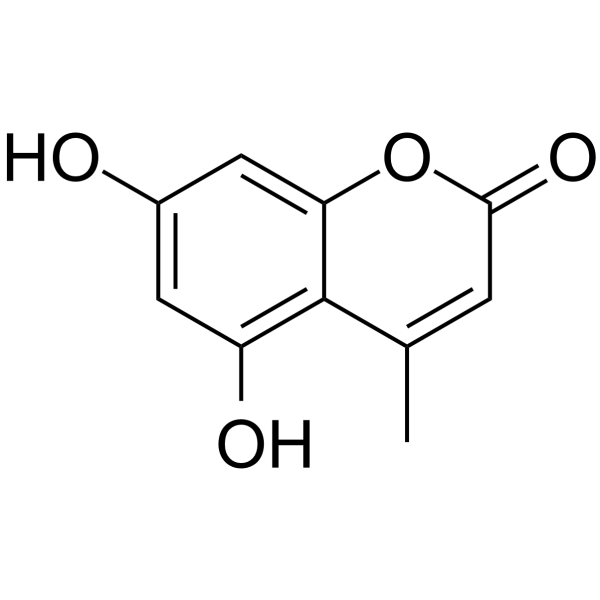
5,7-Dihydroxy-4-methylcoumarin is an antioxidant. 5,7-Dihydroxy-4-methylcoumarin protects mouse cochlear hair cells from Cisplatin-induced damage, enhances cell viability and inhibits apoptosis. 5,7-Dihydroxy-4-methylcoumarin downregulates phosphorylated JNK levels, increases the ratio of phosphorylated FoxO1 to total FoxO1, scavenges free radicals, reduces ROS accumulation, maintains mitochondrial membrane potential and alleviates mitochondrial dysfunction. 5,7-Dihydroxy-4-methylcoumarin downregulates the expression of caspase-3 and improves cell viability. 5,7-Dihydroxy-4-methylcoumarin can be used in studies related to ototoxicity .
|
-
-
- HY-W007416
-
-
-
- HY-76801
-
-
-
- HY-76915
-
-
-
- HY-W014701
-
-
-
- HY-N8796
-
|
|
Endogenous Metabolite
|
Cancer
|
|
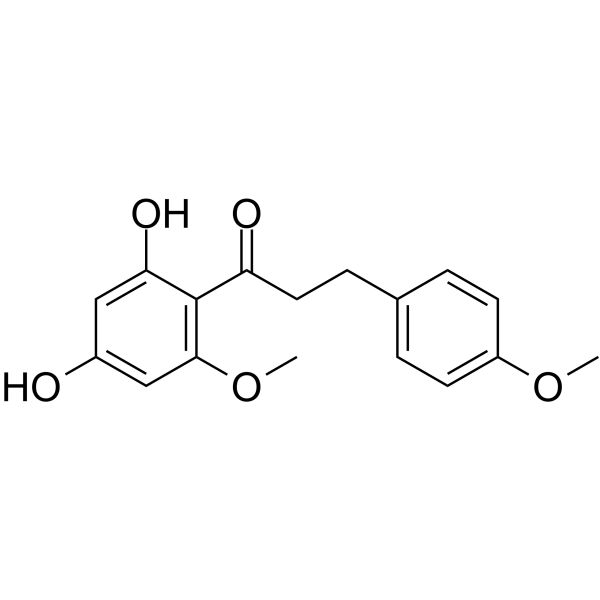
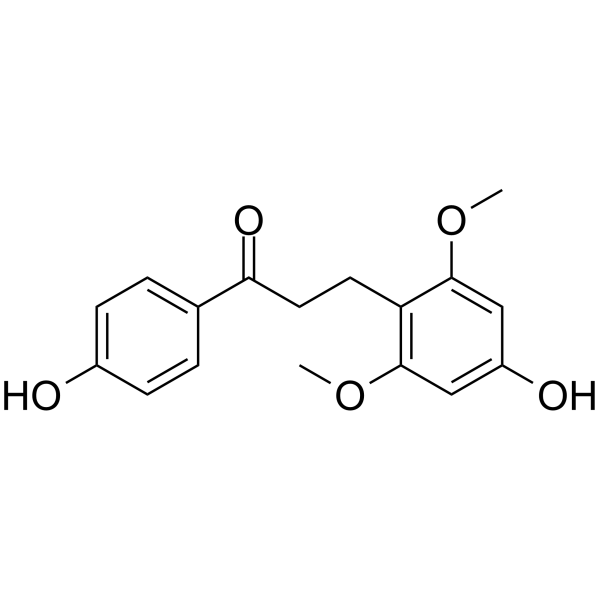
2',4'-Dihydroxy-4,6'-diMethoxydihydrochalcone is a dihydrochalcone compound isolated from Iryanthera juruensis Warb. 2',4'-Dihydroxy-4,6'-diMethoxydihydrochalcone is a major cytotoxic metabolite when tested against a panel of cancer cell lines .
|
-
-
- HY-N7509
-
|
Gallacetophenone-4-methyl ether
|
Others
|
Neurological Disease
|
|
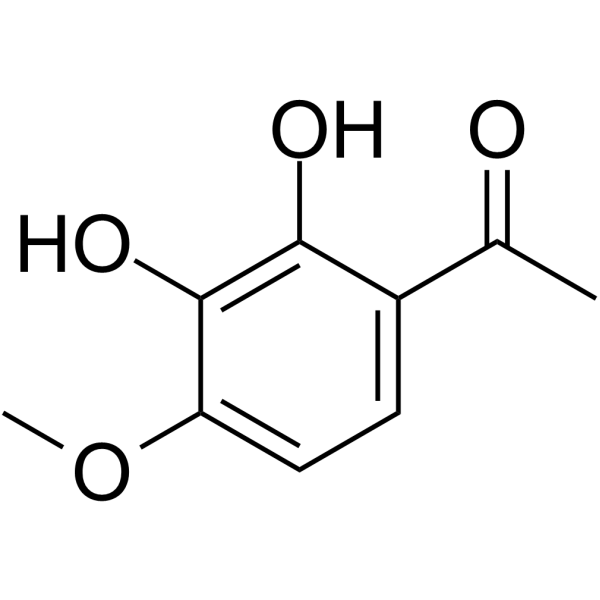
2,3-Dihydroxy-4-methoxyacetophenone is a neuroprotective compound from Cynenchum paniculatum. 2,3-Dihydroxy-4-methoxyacetophenone improves cognitive function and may has the potential for the treatment of Alzheimer's disease research .
|
-
-
- HY-N1667
-
|
|
Parasite
|
Infection
|
|
2',4'-Dihydroxy-6'-Methoxyacetophenone is a phenolic acetophenone from Artemisia annua. Artemisia annua is an analog of Artemisinin that is effective in the research of malaria .
|
-
-
- HY-N8184
-
-
-
- HY-44342
-
-
-
- HY-N12792
-
|
|
Others
|
Cancer
|
|
5,8-Dihydroxy-3',4',6,7-tetramethoxyflavone (Compound 8) is a flavonoid with anticancer activity. 5,8-Dihydroxy-3',4',6,7-tetramethoxyflavone can be isolated from Euryops arabicus .
|
-
-
- HY-N10853
-
|
|
Others
|
Cancer
|
|
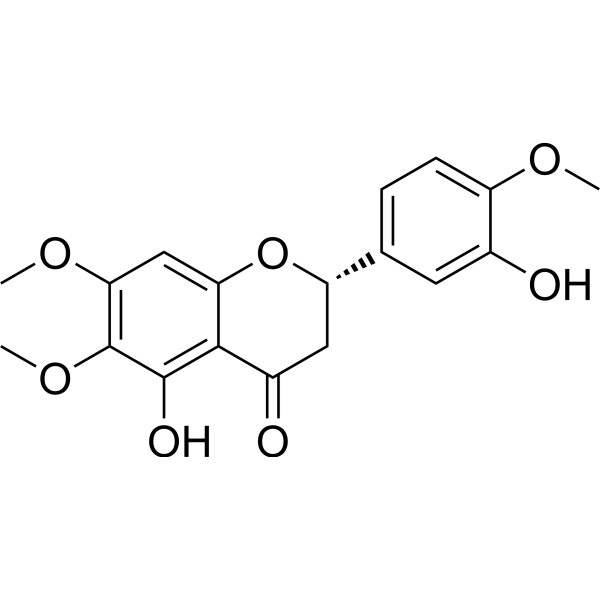
3′,5-Dihydroxy-4′,6,7-trimethoxyflavanone is a nature product that could be isolated from the fruits of Vitex rotundifolia. 3′,5-Dihydroxy-4′,6,7-trimethoxyflavanone has potent cytotoxic activity against A549 and HepG-2 cell lines .
|
-
-
- HY-N10692
-
|
|
Others
|
Cancer
|
|
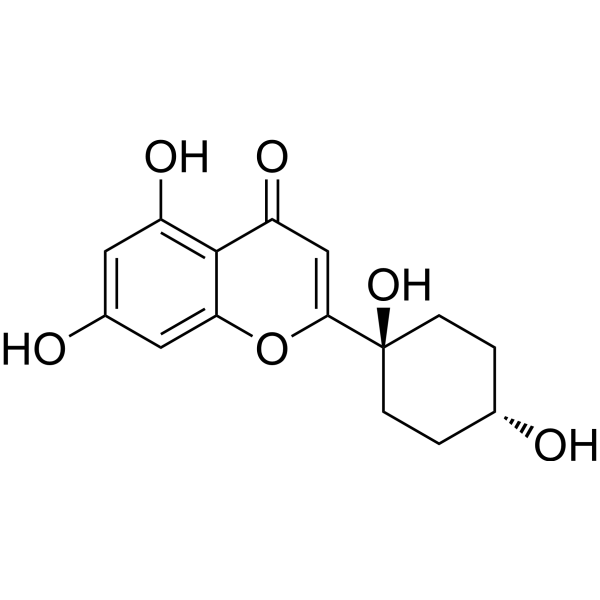
2-(trans-1,4-Dihydroxy-cyclohexyl)-5,7-dihydroxy-chromone is a flavone derivative that can be found in macrothelypteris torresiana. 2-(trans-1,4-Dihydroxy-cyclohexyl)-5,7-dihydroxy-chromone shows cytotoxic .
|
-
-
- HY-N9736
-
|
|
Calcineurin
|
Infection
Neurological Disease
Inflammation/Immunology
|
|
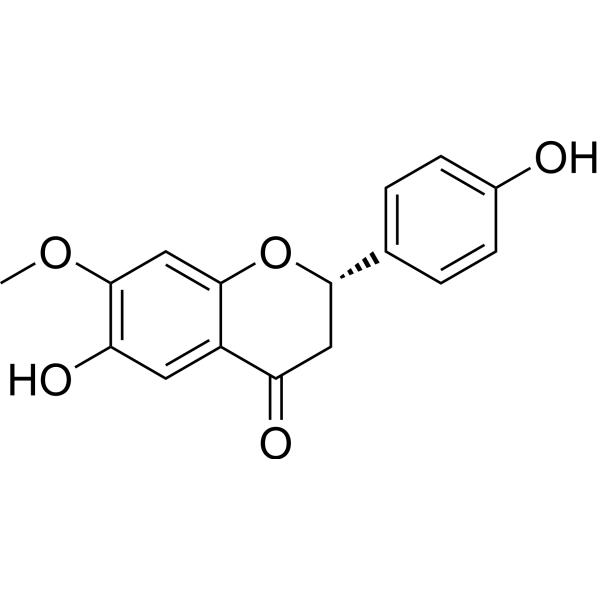
6,4'-Dihydroxy-7-methoxyflavanone, a flavonoid, is a nature product that could be isolated from Heartwood Dalbergia odorifera. 6,4'-Dihydroxy-7-methoxyflavanone inhibits receptor activators of nuclear factor kappa-B ligand (RANKL) induced osteoclastogenesis. 6,4'-Dihydroxy-7-methoxyflavanone has antioxidant, anti-inflammatory and neuroprotective effects. 6,4'-Dihydroxy-7-methoxyflavanone can be used in research of osteoporosis .
|
-
-
- HY-W036197
-
|
2,5-dihydroxy-p-benzenediacetic acid
|
MOFs
|
Others
|
|
2,2'-(2,5-Dihydroxy-1,4-phenylene)diacetic acid (2,5-Dihydroxy-p-benzenediacetic acid) is a metal-organic framework (MOF).
|
-
-
- HY-W102837
-
|
|
Biochemical Assay Reagents
|
Others
|
|
2,3-Dihydroxy-6,7-Difluoroquinoxaline (Compound 2) is an intermediate in organic synthesis. 2,3-Dihydroxy-6,7-Difluoroquinoxaline can be used in research on polymer solar cells .
|
-
-
- HY-N7181
-
|
Pterosonin E
|
Others
|
Cancer
|
|
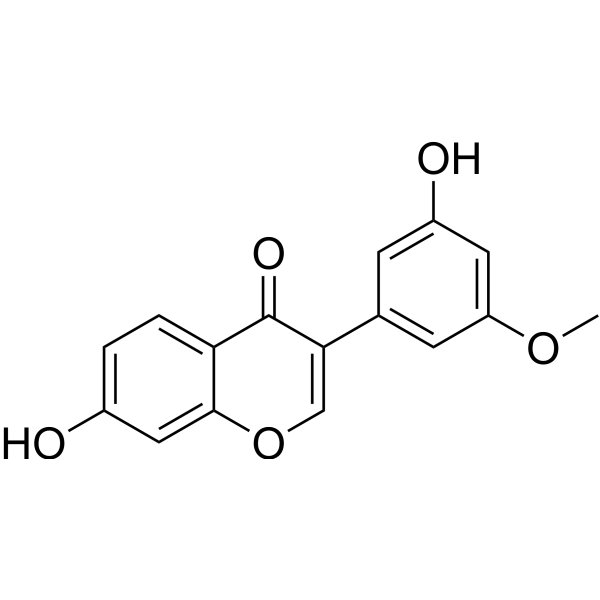
7,3'-Dihydroxy-5'-methoxyisoflavone (Pterosonin E) is an arylcoumarin. 7,3'-Dihydroxy-5'-methoxyisoflavone can be used for various biochemical studies .
|
-
-
- HY-166316
-
-
-
- HY-N9498R
-
-
-
- HY-N16606
-
|
|
Drug Derivative
NO Synthase
|
Inflammation/Immunology
|
|
2,4-Dihydroxy-6-methoxy-3,5-diprenylacetophenone (Compound 8) is an Acetophenone (HY-Y0989) derivative found in Acronychia oligophlebia. 2,4-Dihydroxy-6-methoxy-3,5-diprenylacetophenone exhibits anti-inflammatory and antioxidant activities. 2,4-Dihydroxy-6-methoxy-3,5-diprenylacetophenone can inhibit LPS (HY-D1056)-induced NO production (IC50 = 34.5 μM) and scavenge DPPH free radical (SC50 = 0.15 mM). 2,4-Dihydroxy-6-methoxy-3,5-diprenylacetophenone can be used for the research of inflammation .
|
-
-
- HY-N4291
-
|
|
Others
|
Neurological Disease
|
|
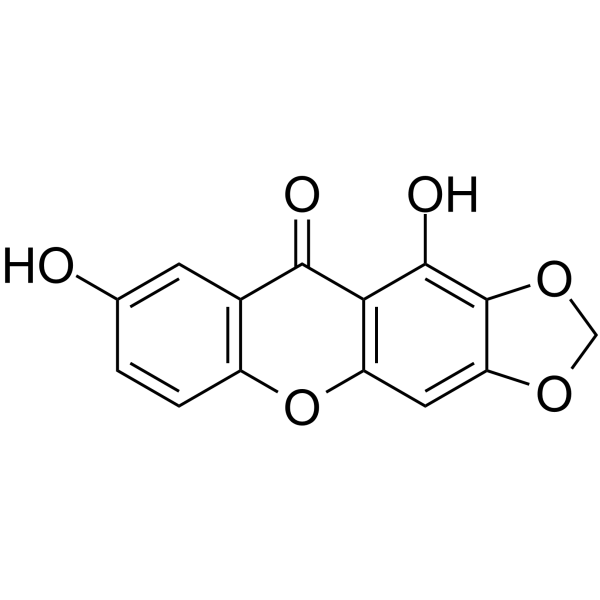
1,7-Dihydroxy-2,3-methylenedioxyxanthone is found in Polygala cyparissias which is a small herb found in Brazil, Argentina and Uruguay.
|
-
-
- HY-N1667R
-
|
|
Reference Standards
Parasite
|
Infection
|
|
2',4'-Dihydroxy-6'-Methoxyacetophenone is a phenolic acetophenone from Artemisia annua. Artemisia annua is an analog of Artemisinin that is effective in the research of malaria .
|
-
-
- HY-CE00465
-
|
1,4-dihydroxy-2-naphthoyl-coenzyme A
|
Biochemical Assay Reagents
|
Metabolic Disease
|
|
1,4-Dihydroxy-2-naphthoyl-CoA (1,4-Dihydroxy-2-naphthoyl-coenzyme A) is an acyl-CoA that results from the formal condensation of the thiol group of coenzyme A with the carboxy group of 1,4-dihydroxy-2-naphthoic acid.
|
-
-
- HY-N9695
-
|
|
Fungal
|
Infection
|
|
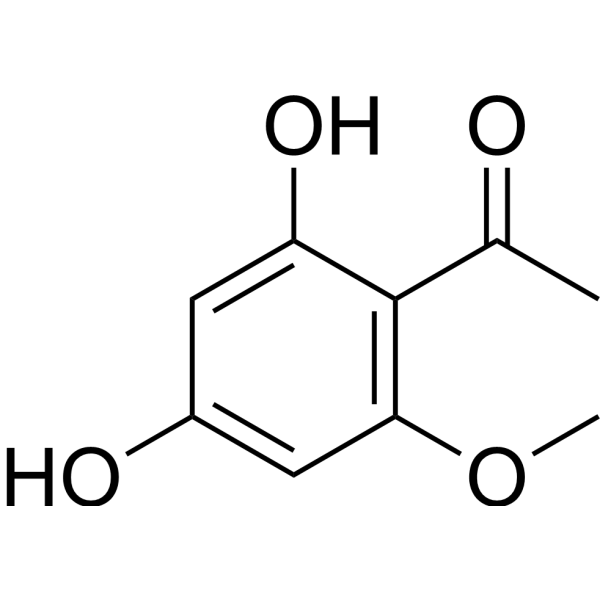
2,6-Dihydroxy-4-methoxyacetophenone is a phytoalexin, that can be isolated from the root tissue of Sanguisorba minor. 2,6-Dihydroxy-4-methoxyacetophenone exhibits antifungal activity. 2,6-Dihydroxy-4-methoxyacetophenone is a strong germination inhibitor on B. cinerea .
|
-
-
- HY-170041
-
-
-
- HY-N4102R
-
|
|
Reference Standards
Fungal
Bacterial
|
Infection
|
|
5,7-Dihydroxy-4-methylcoumarin (Standard) is the analytical standard of 5,7-Dihydroxy-4-methylcoumarin. This product is intended for research and analytical applications. 5,7-Dihydroxy-4-methylcoumarin is a coumarin derivative from Mexican tarragon. 5,7-Dihydroxy-4-methylcoumarin possesses antifungal and antibacterial activities .
|
-
-
- HY-CE00632
-
-
-
- HY-143930S
-
-
-
- HY-D0064
-
|
|
Aldose Reductase
|
Metabolic Disease
|
|
6,7-Dihydroxy-4-coumarinylacetic acid is a potent and selective inhibitor of ALR2. 6,7-Dihydroxy-4-coumarinylacetic acid inhibits ALR2, SDH andALR1 with IC50s of 9.6, 288 and 66.3 μM, respectively. 6,7-Dihydroxy-4-coumarinylacetic acid clearly suppresses galactitol accumulation .
|
-
-
- HY-134628S
-
-
-
- HY-W670700
-
|
|
MMP
|
Others
|
|
2,5-Dihydroxy-4-methoxyacetophenone (compounds 3) can be isolated from the 80% methanol extract of roots of Cynanchum paniculatum Kitagawa. 2,5-Dihydroxy-4-methoxyacetophenone inhibits glutamate-induced cytotoxicity in hippocampal HT22 cell line . 2,5-Dihydroxy-4-methoxyacetophenone significantly inhibites MMP-13 expression in SW1353 cells, and have the potential for alleviating cartilage degradation .
|
-
-
- HY-W014701R
-
|
|
Reference Standards
Aryl Hydrocarbon Receptor
Cytochrome P450
Apoptosis
Interleukin Related
|
Neurological Disease
Inflammation/Immunology
Endocrinology
|
|
1,4-Dihydroxy-2-naphthoic acid (Standard) is the analytical standard for 1,4-Dihydroxy-2-naphthoic acid (HY-W014701). 1,4-Dihydroxy-2-naphthoic acid is an orally active aryl hydrocarbon receptor (AhR) agonist and a bifidogenic growth stimulator. 1,4-Dihydroxy-2-naphthoic acid can improve the motor dysfunction in parkinson's disease (PD) model through AhR-dependent and -independent pathways. 1,4-Dihydroxy-2-naphthoic acid exerts anti-inflammatory effects by regulating the gut microbiota (such as promoting the proliferation of Bifidobacterium) and directly regulating the host immune system. 1,4-Dihydroxy-2-naphthoic acid induces apoptosis through G0/G1 cell cycle arrest in human keratinocyte to inhibit psoriasis .
|
-
-
- HY-N8691
-
|
|
Parasite
|
Infection
Inflammation/Immunology
|
|
2',6'-Dihydroxy-4'-methoxydihydrochalcone is an orally active dihydrochalcone compound with antiplasmodial and anti-inflammatory activities. 2',6'-Dihydroxy-4'-methoxydihydrochalcone reduces the IL-1β, TNF, and nitrite levels in vitro .
|
-
-
- HY-N8577
-
-
-
- HY-166025
-
-
-
- HY-N9311
-
|
|
Drug Intermediate
Drug Derivative
|
Others
|
|
2,3-Dihydroxy-4-methoxybenzoic acid is a Benzoic acid (HY-N0216) derivative that can be isolated from extracted from sweet cherry fruits (Prunus avium). 2,3-Dihydroxy-4-methoxybenzoic acid can be used as an organic synthesis intermediate used for the synthesis of active molecules .
|
-
-
- HY-N8690
-
-
-
- HY-132383S
-
-
-
- HY-148677S
-
-
-
- HY-N12786
-
|
|
Others
|
Others
|
|
1,3-Dihydroxy-2-methoxyxanthone is a xanthone and can be isolated from Polygala caudata .
|
-
-
- HY-W752433
-
|
|
Others
|
Others
|
|
7,4'-Dihydroxy-3'-methoxyflavanone is a flavonoid isolated from the seeds of A. nanus and A. mongolicus .
|
-
-
- HY-Z9082
-
-
-
- HY-N12321
-
|
|
Others
|
Metabolic Disease
|
|
2',3'-Dihydroxy-4',6'-dimethoxychalcone (compound 1) can inhibit Amyloid β-protein (Aβ42) fibrillization and aggregation. 2',3'-Dihydroxy-4',6'-dimethoxychalcone has oral activity and can be detected in the brain .
|
-
-
- HY-N14557
-
|
|
Fungal
|
Infection
|
|
1,6-Dihydroxy-2-chlorophenazine has weak anti-fungal and anti-yeast activity .
|
-
-
- HY-21297
-
|
|
iGluR
|
Neurological Disease
|
|
3,5-Dihydroxy-2-naphthoic acid is a Naphthoic acid derivative. Naphthoic acid is a NMDA receptor allosteric modulator .
|
-
-
- HY-108416
-
|
|
Drug Intermediate
|
Others
|
|
5,7-Dihydroxy-4-methylphthalide is a key intermediate in the synthesis of Mycophenolic acid and a secondary metabolite of Aspergillus flavus .
|
-
-
- HY-N8665
-
|
|
Others
|
Others
|
|
1,7-Dihydroxy-4-methoxyxanthone is a Xanthones product that can be isolated from the woods of Cratoxylum maingayi. .
|
-
-
- HY-N9732
-
|
|
Others
|
Others
|
|
3,4-Dihydroxy-2-methoxyxanthone is a natural product, that can be isolated from the roots of Hypericum oblongifolium .
|
-
-
- HY-N12803
-
|
|
Others
|
Others
|
|
2,5-Dihydroxy-7-methoxyflavanone is a flavonoid compound that can be isolated from the stem bark of F. enghiana .
|
-
- HY-N9269
-
|
|
Others
|
Others
|
|
1,7-Dihydroxy-2,3-dimethoxyxanthone is a xanthone that can be found in Polygala cyparissias .
|
-
- HY-166321
-
-
- HY-N1665
-
|
|
Others
|
Cancer
|
|
2',4'-Dihydroxy-3',6'-dimethoxychalcone is a natural product that can be isolated from Polygonum Lapathifolium. 2',4'-Dihydroxy-3',6'-dimethoxychalcone inhibits the growth of CCRF-CEM leukaemia cells and CEM/ADR5000 cells, with IC50 values of 10.67 and 18.60 μM, respectively .
|
-
- HY-N11999
-
|
|
Glycosidase
|
Others
|
|
5,4'-Dihydroxy-3,4,3'-trimethoxybibenzyl (compound 8) can be isolated from Dendrobium infundibulum (D. infundibulum). 5,4'-Dihydroxy-3,4,3'-trimethoxybibenzyl has no inhibitory activity against α-glucosidase and pancreatic lipase .
|
-
- HY-N3291
-
|
|
Others
|
Others
|
|
Methyl-3-(2,4-dihydroxy phenyl) propanoate is a phenylpropanoic ester with antifeedant activity .
|
-
- HY-N9739
-
|
|
Others
|
Others
|
|
(2S)-6,4'-Dihydroxy-7-methoxyflavan is a natural product .
|
-
- HY-N2738
-
|
|
Others
|
Others
|
|
(2S)-7,4'-Dihydroxy-3'-prenylflavan is a natural product .
|
-
- HY-N12371
-
|
|
Others
|
Others
|
|
5,8-Dihydroxy-6,7-dimethoxyflavone, isolated from aerial parts of Gnaphalium gaudichaudianum, has antitumor activity .
|
-
- HY-132699S
-
-
- HY-N2660
-
|
|
Others
|
Others
|
|
5,7-Dihydroxy-2-isopropylchromone (Compound 9) is a chromone derivative. 5,7-Dihydroxy-2-isopropylchromone can be isolated from the leaves of Hypericum ascyron .
|
-
- HY-N17885
-
|
|
Others
|
Others
|
|
16a,17-Dihydroxy lepenine (compound 1) is a C20 diterpenoid alkaloid with an atisine-denudatine skeleton. 16a,17-Dihydroxy lepenine can be isolated from the lateral roots of Aconitum carmichaelii .
|
-
- HY-N9907
-
|
|
Bacterial
|
Infection
|
|
7,3′-Dihydroxy-8,4′-dimethoxyisoflavone is an isoflavone Antibacterial agent. 7,3′-Dihydroxy-8,4′-dimethoxyisoflavone is isolated from the stems of S. parviflorus. 7,3′-Dihydroxy-8,4′-dimethoxyisoflavone exhibits weak antibacterial activity against Gram-positive and Gram-negative bacterial strains. 7,3′-Dihydroxy-8,4′-dimethoxyisoflavone can be used in the research of bacterial infections .
|
-
- HY-E71156
-
|
|
Biochemical Assay Reagents
|
Others
|
|
1,4-Dihydroxy-2-naphthoate polyprenyltransferase (EC 2.5.1.74) catalyses a step in the synthesis of menaquinone, in which the prenyl chain synthesized by polyprenyl diphosphate synthase is transferred to 1,4-Dihydroxy-2-naphthoate (DHNA) . 1,4-Dihydroxy-2-naphthoate polyprenyltransferase (EC 2.5.1.74) is an inner membrane protein, with the C-terminus located in the periplasm. 1,4-Dihydroxy-2-naphthoate polyprenyltransferase (EC 2.5.1.74) is highly specific for DHNA but not for a specific length of the prenyl chain.
|
-
- HY-CE00132
-
|
(3R)-3,5-dihydroxy-3-methylpentanoyl-coenzyme A
|
Biochemical Assay Reagents
|
Others
|
|
(3R)-3,5-Dihydroxy-3-methylpentanoyl-CoA ((3R)-3,5-Dihydroxy-3-methylpentanoyl-coenzyme A) is a derivative of Coenzyme A (HY-128851).
|
-
- HY-N9034
-
-
- HY-N9822
-
-
- HY-N8949
-
-
- HY-N17843
-
|
|
Others
|
Inflammation/Immunology
|
|
3,8-Dihydroxy-1,2-dimethoxyanthraquinone is an anthraquinone found in the roots of Morinda officinalis How. 3,8-Dihydroxy-1,2-dimethoxyanthraquinone does not inhibit LPS (HY-D1056)-stimulated NO production with an IC50 >50 μM .
|
-
- HY-N13654
-
|
|
Others
|
Others
|
|
1,3-Dihydroxy-2,4-diprenylacridone is a natural product .
|
-
- HY-N13815
-
-
- HY-N13640
-
|
|
Others
|
Others
|
|
7,4'-Dihydroxy-6,8-diprenylflavanone is a natural product .
|
-
- HY-N13674
-
|
|
Others
|
Others
|
|
1,5-Dihydroxy-6,7-dimethoxyxanthone is a natural product .
|
-
- HY-N2737
-
|
|
Others
|
Others
|
|
7,3'-Dihydroxy-4'-methoxyflavan is a Flavonoids product that can be isolated from the branches of Broussonetia papyrifera .
|
-
- HY-N8702
-
|
|
Others
|
Others
|
|
2,5-Dihydroxy-1-methoxyxanthone is a Xanthones product that can be isolated from the twigs of Mammea siamensis. .
|
-
- HY-N14558
-
|
|
Others
|
Neurological Disease
|
|
3',8-Dihydroxy-4',6,7-trimethoxyisoflavone is found in the strain of Streptomyces sp. 3',8-Dihydroxy-4',6,7-trimethoxyisoflavone is a catechole-O-methyltransferase inhibitor (IC50 is 0.2 g/mL) .
|
-
- HY-N9498
-
|
|
Others
|
Others
|
|
3,5-Dihydroxy-4-methoxybenzoic acid is a Phenols product that can be isolated from From Rhus chinensis Mill. .
|
-
- HY-N9286
-
|
|
Others
|
Others
|
|
7,4'-Dihydroxy-8-methylflavan is a Flavonoids product that can be isolated from the red resin of Dracaena cochinchinensis. .
|
-
- HY-E71158
-
|
|
Biochemical Assay Reagents
|
Others
|
|
1,4-Dihydroxy-2-naphthoyl-CoA synthase (EC 4.1.3.36) is involved in the synthesis of 1,4-Dihydroxy-2-naphthoate, a branch point metabolite leading to the biosynthesis of menaquinone (vitamin K2, in bacteria) , phylloquinone (vitamin K1 in plants) , and many plant pigments.The coenzyme A group is subsequently removed from the product by EC 3.1.2.28, 1,4-Dihydroxy-2-naphthoyl-CoA hydrolase.
|
-
- HY-30229R
-
|
5-Methoxyuracil (Standard)
|
Reference Standards
|
|
|
2,4-Dihydroxy-5-methoxypyrimidine (Standard) is the analytical standard of 2,4-Dihydroxy-5-methoxypyrimidine. This product is intended for research and analytical applications.
|
-
- HY-W754698
-
-
- HY-N17366
-
|
|
Others
|
Others
|
|
2,5-Dihydroxy-4-methylacetophenone (compound 39) is a phenolic compound that can be found in the essential oil of Flos Sophorae Immaturus .
|
-
- HY-N13737
-
-
- HY-N10982
-
|
|
Others
|
Others
|
|
3,8-Dihydroxy-1,2-dimethoxyxanthone is a xanthone compound found in the leaves and stems of Hypericum geminiflorum .
|
-
- HY-N13180
-
|
|
Others
|
Others
|
|
8,3′-Dihydroxy-7,4′-dimethoxyisoflavone is an isoflavone compound that has the ability to enhance immune function .
|
-
- HY-E71157
-
|
|
Biochemical Assay Reagents
|
Others
|
|
1,4-Dihydroxy-2-naphthoyl-CoA hydrolase (EC 3.1.2.28) participates in the synthesis of menaquinones, phylloquinone, as well as several plant pigments. 1,4-Dihydroxy-2-naphthoyl-CoA hydrolase (EC 3.1.2.28) does not accept benzoyl-CoA or phenylacetyl-CoA as substrates.
|
-
- HY-N8866
-
|
|
Others
|
Others
|
|
3,2'-Dihydroxy-4,4'-dimethoxychalcone is a Chalcones product that can be isolated from the resins of Xanthorrhoea hastilis .
|
-
- HY-N9136
-
|
|
Others
|
Others
|
|
2',6'-Dihydroxy-4,4'-dimethoxychalcone is a Chalcones product that can be isolated from the herbs of Cephalotaxus sinensis .
|
-
- HY-N1744
-
|
|
Others
|
Others
|
|
4,4'-Dihydroxy-2',6'-dimethoxychalcone is a Chalcones product that can be isolated from the herbs of Alpinia galanga .
|
-
- HY-N2734
-
|
|
Others
|
Others
|
|
2',7-Dihydroxy-5,8-dimethoxyflavanone is a Flavonoids product that can be isolated from the herbs of Scutellaria barbata .
|
-
- HY-N9764
-
-
- HY-N9874
-
|
|
Others
|
Others
|
|
2,6-Dihydroxy-3-methyl4-methoxyacetophenone is a natural product .
|
-
- HY-N9177
-
|
|
Others
|
Others
|
|
3',4'-Dihydroxy-2-O-methylanigorufone is a Phenols product that can be isolated from the rhizomes of Musa acuminata var. .
|
-
- HY-157884S
-
-
- HY-179977
-
-
- HY-N17158
-
-
- HY-179978
-
-
- HY-N13842
-
-
- HY-Z8144
-
|
24,25-dihydroxy Fusidic acid
|
Drug Intermediate
|
Others
|
|
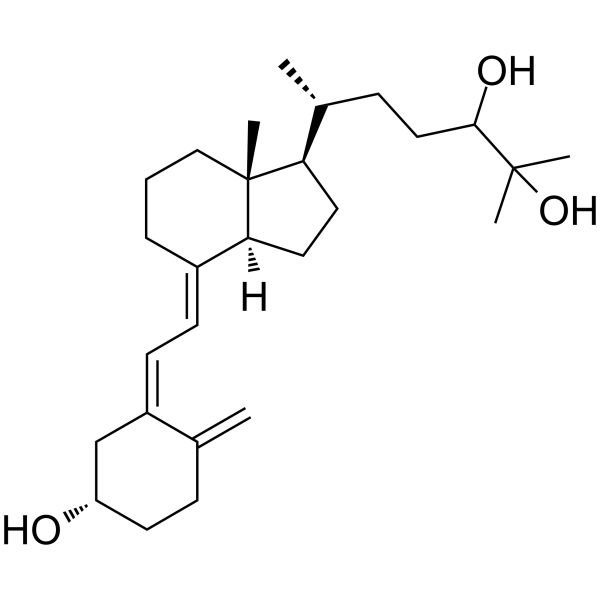
Fusidic acid impurity 5 (24,25-Dihydroxy Fusidic acid) is an impurity of Fusidic acid.
|
-
- HY-180775
-
-
- HY-180601
-
-
| Cat. No. |
Product Name |
Type |
-
- HY-D0064
-
|
|
Fluorescent Dyes
|
|
6,7-Dihydroxy-4-coumarinylacetic acid is a potent and selective inhibitor of ALR2. 6,7-Dihydroxy-4-coumarinylacetic acid inhibits ALR2, SDH andALR1 with IC50s of 9.6, 288 and 66.3 μM, respectively. 6,7-Dihydroxy-4-coumarinylacetic acid clearly suppresses galactitol accumulation .
|
| Cat. No. |
Product Name |
Type |
| Cat. No. |
Product Name |
Category |
Target |
Chemical Structure |
-
- HY-N4102
-
|
|
Infection
Structural Classification
other families
Classification of Application Fields
Coumarins
Phenols
Polyphenols
Phenylpropanoids
Plants
Disease Research Fields
Source Classification
|
Apoptosis
JNK
FOXO
Reactive Oxygen Species (ROS)
Caspase
|
|
5,7-Dihydroxy-4-methylcoumarin is an antioxidant. 5,7-Dihydroxy-4-methylcoumarin protects mouse cochlear hair cells from Cisplatin-induced damage, enhances cell viability and inhibits apoptosis. 5,7-Dihydroxy-4-methylcoumarin downregulates phosphorylated JNK levels, increases the ratio of phosphorylated FoxO1 to total FoxO1, scavenges free radicals, reduces ROS accumulation, maintains mitochondrial membrane potential and alleviates mitochondrial dysfunction. 5,7-Dihydroxy-4-methylcoumarin downregulates the expression of caspase-3 and improves cell viability. 5,7-Dihydroxy-4-methylcoumarin can be used in studies related to ototoxicity .
|
-
-
- HY-76915
-
-
-
- HY-W014701
-
-
-
- HY-N7509
-
-
-
- HY-N1667
-
-
-
- HY-N8184
-
-
-
- HY-N12792
-
-
-
- HY-N10853
-
-
-
- HY-N10692
-
-
-
- HY-N9736
-
|
|
Flavonoids
Dalbergia odorifera T. Chen
Flavones
Leguminosae
Plants
Source Classification
|
Calcineurin
|
|
6,4'-Dihydroxy-7-methoxyflavanone, a flavonoid, is a nature product that could be isolated from Heartwood Dalbergia odorifera. 6,4'-Dihydroxy-7-methoxyflavanone inhibits receptor activators of nuclear factor kappa-B ligand (RANKL) induced osteoclastogenesis. 6,4'-Dihydroxy-7-methoxyflavanone has antioxidant, anti-inflammatory and neuroprotective effects. 6,4'-Dihydroxy-7-methoxyflavanone can be used in research of osteoporosis .
|
-
-
- HY-N7181
-
-
-
- HY-N9498R
-
-
-
- HY-N16606
-
-
-
- HY-N4291
-
-
-
- HY-N1667R
-
-
-
- HY-N4102R
-
-
-
- HY-W670700
-
-
-
- HY-W014701R
-
|
|
Structural Classification
Microorganisms
Ketones, Aldehydes, Acids
Source Classification
|
Reference Standards
Aryl Hydrocarbon Receptor
Cytochrome P450
Apoptosis
Interleukin Related
|
|
1,4-Dihydroxy-2-naphthoic acid (Standard) is the analytical standard for 1,4-Dihydroxy-2-naphthoic acid (HY-W014701). 1,4-Dihydroxy-2-naphthoic acid is an orally active aryl hydrocarbon receptor (AhR) agonist and a bifidogenic growth stimulator. 1,4-Dihydroxy-2-naphthoic acid can improve the motor dysfunction in parkinson's disease (PD) model through AhR-dependent and -independent pathways. 1,4-Dihydroxy-2-naphthoic acid exerts anti-inflammatory effects by regulating the gut microbiota (such as promoting the proliferation of Bifidobacterium) and directly regulating the host immune system. 1,4-Dihydroxy-2-naphthoic acid induces apoptosis through G0/G1 cell cycle arrest in human keratinocyte to inhibit psoriasis .
|
-
-
- HY-N8691
-
-
-
- HY-N8690
-
-
-
- HY-N12786
-
-
-
- HY-W752433
-
-
-
- HY-N12321
-
-
-
- HY-N14557
-
-
-
- HY-N8665
-
-
-
- HY-N9732
-
-
-
- HY-N12803
-
-
-
- HY-N9269
-
-
-
- HY-N1665
-
-
-
- HY-N11999
-
-
-
- HY-N3291
-
-
-
- HY-N9739
-
-
-
- HY-N2738
-
-
-
- HY-N12371
-
-
-
- HY-N2660
-
-
-
- HY-N17885
-
-
-
- HY-N9907
-
-
-
- HY-N9034
-
-
-
- HY-N9822
-
-
-
- HY-N8949
-
-
-
- HY-N17843
-
-
-
- HY-N13654
-
-
-
- HY-N13815
-
-
-
- HY-N13640
-
-
-
- HY-N13674
-
-
-
- HY-N2737
-
-
-
- HY-N8702
-
-
-
- HY-N14558
-
-
-
- HY-N9498
-
-
-
- HY-N9286
-
-
- HY-W754698
-
-
- HY-N17366
-
-
- HY-N13737
-
-
- HY-N10982
-
-
- HY-N13180
-
-
- HY-N8866
-
-
- HY-N9136
-
-
- HY-N1744
-
-
- HY-N2734
-
-
- HY-N9764
-
-
- HY-N9874
-
-
- HY-N9177
-
-
- HY-N17158
-
-
- HY-N13842
-
-
- HY-180775
-
-
- HY-180601
-
-
| Cat. No. |
Product Name |
Chemical Structure |
-
- HY-143930S
-
|
|
|
Dihydroxy Bendamustine-d8 is the deuterium labeled Dihydroxy Bendamustine .
|
-
-
- HY-134628S
-
|
|
|
(Rac)-8,14-Dihydroxy Efavirenz-d4 is the deuterium labeled (Rac)-8,14-Dihydroxy Efavirenz .
|
-
-
- HY-132383S
-
|
|
|
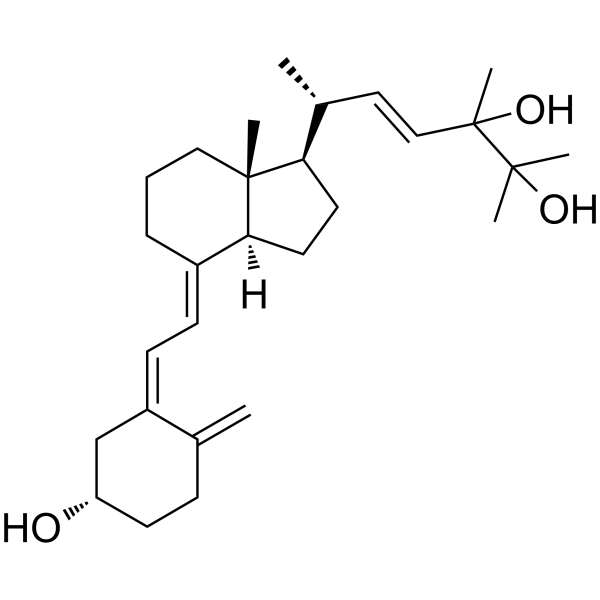
24,25-Dihydroxy Vitamin D2-d3 is the deuterium labeled 24,25-Dihydroxy Vitamin D2 .
|
-
-
- HY-148677S
-
|
|
|
2,3-Dihydroxy-2-methylbutanoic acid-d3 is the deuterium labeled 2,3-Dihydroxy-2-methylbutanoic acid .
|
-
-
- HY-132699S
-
|
|
|
6,10-Dihydroxy Buspirone-d8 is the deuterium labeled 6,10-Dihydroxy Buspirone .
|
-
-
- HY-157884S
-
|
|
|
10,11-Dihydro-10,11-dihydroxy carbamazepine-d4-1 is the deuterium labeled 10,11-Dihydro-10,11-dihydroxy carbamazepine.
|
-
Your information is safe with us. * Required Fields.
Inquiry Information
- Product Name:
- Cat. No.:
- Quantity:
- MCE Japan Authorized Agent:

