53 Results for "

A549 xenograft model

" in MedChemExpress (MCE) Product Catalog:
Products (53)

53 Results for "A549 xenograft model" in MCE Product Catalog:

2
2 Cited Publications
Cat. No.: HY-12757
CAS No.: 912287-56-0
Purity:  99.65%
Target:  

BCRP

Research Areas:  

Cancer

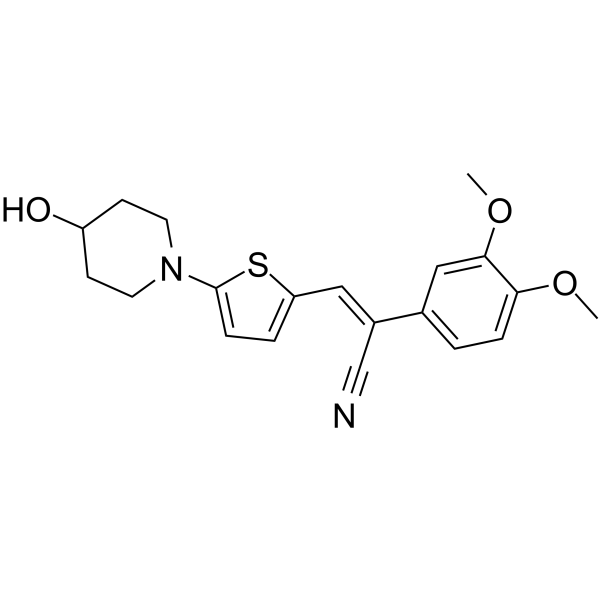
YHO-13177, a acrylonitrile derivative, is an orally active, potent and specific inhibitor of breast cancer resistance protein (BCRP) and ABCG2 with an IC50 value of 10 nM. YHO-13177 potentiates the cytotoxicity of SN-38 in HCT116 and A549 cells that express BCRP. YHO-13177 combined with Irinotecan (HY-16562) significantly suppresses the tumor growth in an HCT116/BCRP xenograft model .
loading...
    loading...
1
1 Cited Publications
Cat. No.: HY-N3980
CAS No.: 489-86-1
Synonyms: Champacol; Guaiac alcohol
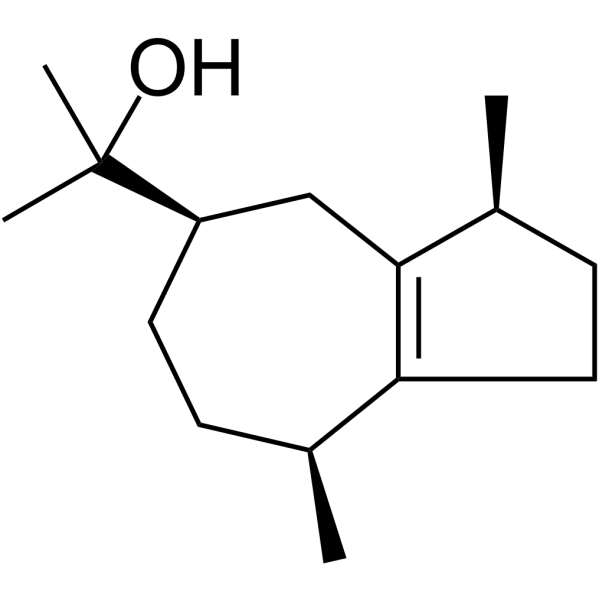
Guaiol is a sesquiterpenoid alcohol with oral activity found in various traditional Chinese medicines, exhibiting biological activities such as anti-proliferative, autophagy-promoting, insecticidal, anti-anxiety, anti-inflammatory, diuretic, and blood pressure-lowering effects. Guaiol induces apoptosis in non-small cell lung cancer cells by regulating the stability of RAD51 through autophagy modulation. Guaiol can also act directly on parasites, inhibiting their growth by affecting the kinetoplast, mitochondrial matrix and plasma membrane of the promastigotes. Guaiol kills amastigotes at an IC50 of 0.01 µg/mL. Guaiol can be used in research related to cancer, infections, cardiovascular diseases, and inflammatory conditions [4]
loading...
    loading...
1
1 Cited Publications
Cat. No.: HY-N7694
CAS No.: 97871-44-8
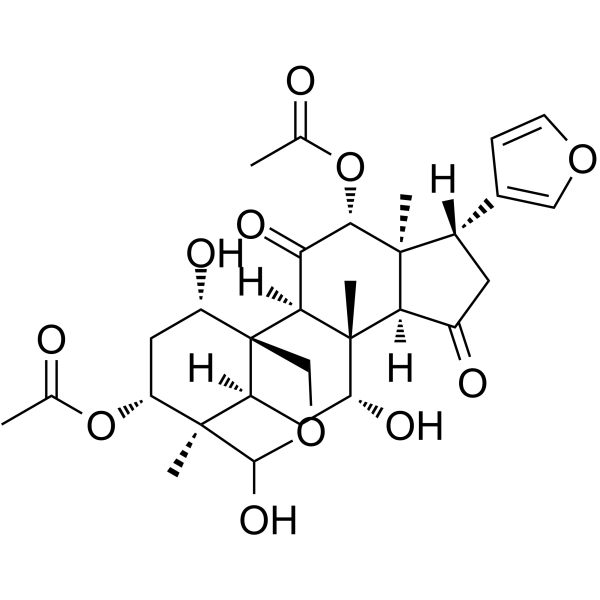
Isotoosendanin is an orally active TGFβR1 inhibitor and abrogating its kinase activity (IC50 = 6732 nM). Isotoosendanin inhibits the JAK/STAT3 signaling pathway by directly targeting SHP-2, enhancing its stability, and reducing its ubiquitination. Isotoosendanin inhibits TGF-β-induced reduces the migration, invasion, and metastasis in triple-negative breast cancer (TNBC) cells. Isotoosendanin exhibits anti-tumor efficacy in TNBC xenograft models and A549 xenograft tumors. Isotoosendanin exhibits significant anti-inflammatory effects in acetic acid-induced vascular permeability and λ-carrageenan-induced hind paw edema tests. Isotoosendanin can be used for the study of non-small cell lung cancer (NSCLC), TNBC and inflammation .
loading...
    loading...
Cat. No.: HY-156568
CAS No.: 3033109-92-8
Purity:  99.91%
Target:  

PROTACs SWI/SNF Complex

Research Areas:  

Cancer

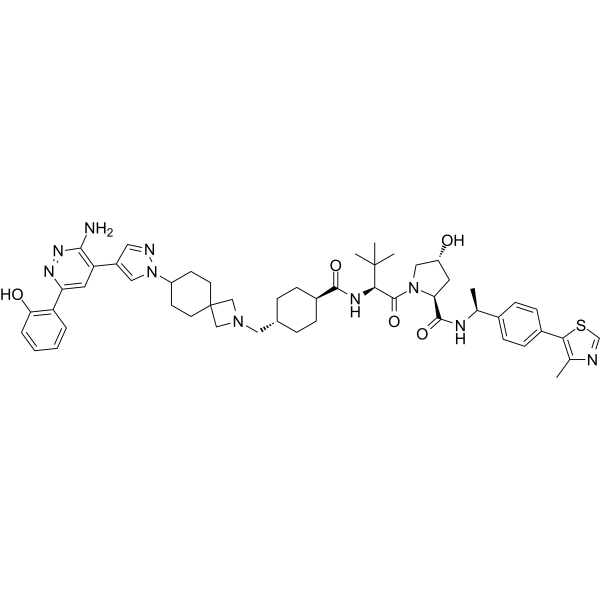
SMD-3040 is a potent and selective SMARCA2 PROTAC degrader (DC50: 12 nM; Dmax: 91%). SMD-3040 can inhibit tumor cell proliferation and exhibits antitumor activity. SMD-3040 can be used in the study of tumors such as melanoma .
loading...
    loading...
Cat. No.: HY-175252
Research Areas:  

Cancer

PROTAC EGFR degrader 14 is a EGFR PROTAC degrader, with a DC50 of 2.9 nM against EGFR L858R/T790M/C797S. PROTAC EGFR degrader 14 forms a stable ternary complex by bridging the ATP-binding pocket of the target protein EGFR with VHL E3 ubiquitin ligase, induces efficient and specific degradation of EGFR mutants via the ubiquitin-proteasome system, and ultimately induces cell cycle arrest and apoptosis. PROTAC EGFR degrader 14 can be used in studies related to non-small cell lung cancer carrying the EGFR C797S drug-resistant mutation .
loading...
    loading...
Cat. No.: HY-155887
CAS No.: 474922-26-4
Synonyms: DSPE-PEG-NH2, MW 3400 ammonium
Target:  

Liposome

Research Areas:  

Cancer

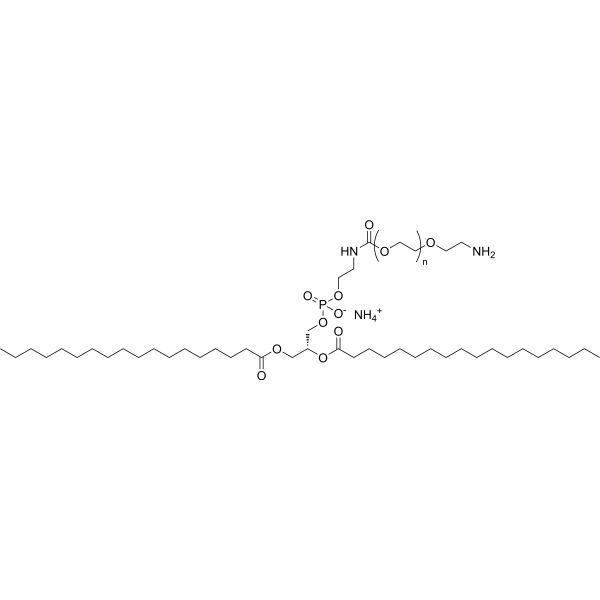
DSPE-PEG-Amine (DSPE-PEG-NH2), MW 3400 ammonium is an amino-functionalized PEGylated phospholipid. It serves not only as a key component for preparing σ receptor-targeted liposomes (such as anisamide-modified lipids) but also as a starting material for synthesizing click chemistry- and tumor-targeted lipids including DSPE-PEG-DBCO (HY-155788) and DSPE-PEG2000-TCO (HY-170704). DSPE-PEG-Amine, MW 3400 ammonium effectively modulates the ζ potential of nanoparticles, enables complexation with nucleic acids or proteins to protect DNA from nuclease degradation, and supports ligand conjugation on the nanoparticle surface. It is used in studies related to DU-145 tumors, breast cancer, and other relevant research .
loading...
    loading...
Cat. No.: HY-N2150
CAS No.: 110659-91-1
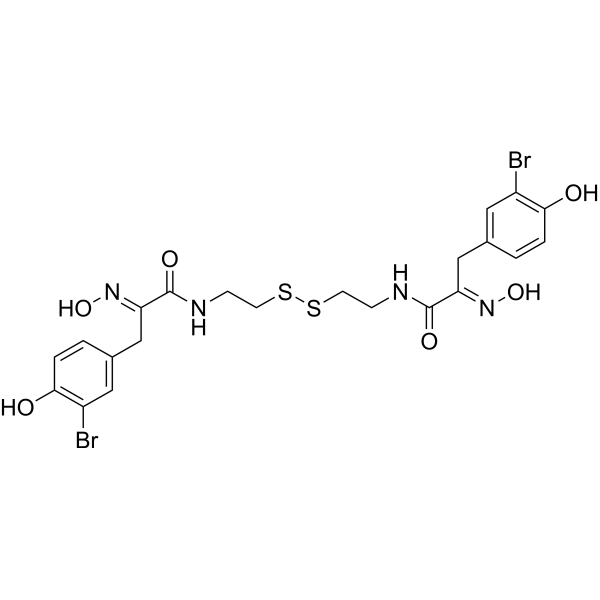
Psammaplin A is a marine metabolite. Psammaplin A is a selective HDAC1 (IC50: 45 nM), DNA methyltransferases (IC50: 18.6 nM) and aminopeptidase N (APN) (IC50: 18 μM) inhibitor. Psammaplin A also inhibits DNA topoisomerase and farnesyl protein transferase. Psammaplin A is a PPARγ activator and induces apoptosis. Psammaplin A has antitumor and anti-inflammatory activities. Psammaplin A has antibacterial activity against Gram-positive bacteria and inhibits DNA synthesis and DNA gyrase activity. Psammaplin A inhibits angiogenesis .
loading...
    loading...
Cat. No.: HY-130133
CAS No.: 2378831-21-9
DHW-221 is a potent orally active dual PI3K/mTOR inhibitor, exhibiting low nanomolar potency against all four Class I PI3K isoforms and mTOR (PI3Kα, IC50 = 0.50 nM; PI3Kβ, IC50 = 1.9 nM; PI3Kγ, IC50 = 1.8 nM; PI3Kδ, IC50 = 0.74 nM; mTOR, IC50 = 3.9 nM). DHW-221 exerts antitumor effects by blocking the PI3K/Akt/mTOR pathway and inducing mitochondrial apoptosis and paraptosis (via Endoplasmic Reticulum (ER) stress and MAPK signaling) and arrests cell cycle, thereby inhibiting cell migration, invasion and angiogenesis. DHW-221 inhibits tumor growth in both the A549/Taxol (HY-B0015) and the HCC827 xenograft mouse models. DHW-221 can be used for non-small cell lung cancer (NSCLC), colon and breast cancer research .
loading...
    loading...
Cat. No.: HY-P10988
CAS No.: 2197957-07-4
Research Areas:  

Cancer

LVTX-8 is a peptide toxin, exacted from Lycosa vittata. LVTX-8 has potent anticancer and and anti-metastasis activities towards lung cancer with strong cytotoxicity. LVTX-8 significantly induces apoptosis and inhibits the proliferation, invasion and migration of lung cancer cells through P53 hypoxia pathways and integrin signaling. LVTX-8 significantly inhibits the tumor growth and metastasis in A549/H460 xenograft mice model .
loading...
    loading...
Cat. No.: HY-P10994
CAS No.: 1988684-26-9
Synonyms: Eps8(327-335)
Eps8 peptide 327 is an HLA-A*2402-restricted peptide antigen derived from Eps8 protein. Eps8 peptide 327 has potent antitumor activity with significant cytotoxicity. Eps8 peptide 327 effectively inhibits cancer cells proliferation, induces apoptosis and disrupts EGFR signal pathway by inhibiting downstream signals (such as IL-2, TNF-α and IFN-γ) expression and the Eps8/EGFR interaction. Eps8 peptide 327 significantly inhibits tumor growth in HT-29 xenograft mcie models .
loading...
    loading...
Cat. No.: HY-162098
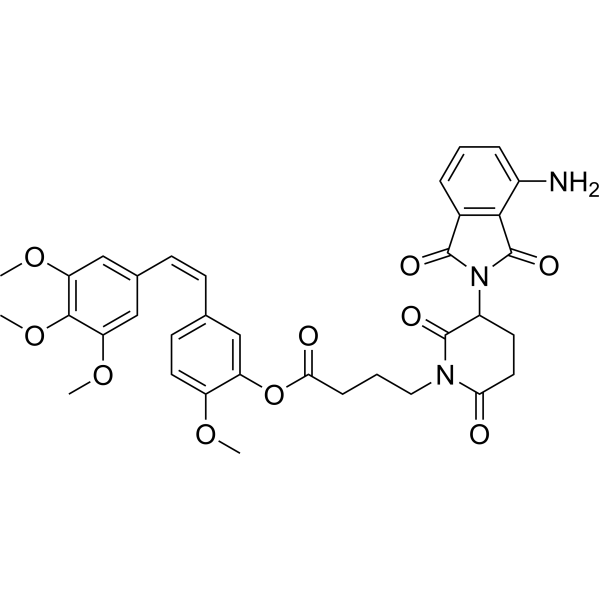
PROTAC tubulin-Degrader-1 is a α/β/β3-tubulin PROTAC degrader. PROTAC tubulin-Degrader-1 exhibits potent anti-proliferative activity against multiple human tumor cell lines. PROTAC tubulin-Degrader-1 induces G2/M phase arrest and apoptosis and inhibits colony formation in A549 and A549/Taxol cells. PROTAC tubulin-Degrader-1demonstrates potent anti-tumor efficacy in A549 and A549/Taxol (Taxol-resistant) xenograft model. PROTAC tubulin-Degrader-1 can be used for the study of non-small cell lung cancer (NSCLC). (Pink: Tubulin ligand (HY-N2146), Blue: CRBN Ligand (HY-10984), Black: Linker (HY-N6056)) .
loading...
    loading...
Cat. No.: HY-146462
CAS No.: 2366170-11-6
Target:  

Apoptosis ROS Kinase

Research Areas:  

Cancer

Anticancer agent 59 (compound 11) has inhibitory activity against kinds of cancer cell lines, especially in A549 with IC50 of 0.2 μM. Anticancer agent 59 induces apoptosis and an increase of Ca 2+ and ROS in cancer cells. Anticancer agent 59 significantly decreases mitochondrial membrane potential. Anticancer agent 59 can suppress tumor growth in A549 mouse xenograft model .
loading...
    loading...
Cat. No.: HY-168300
CAS No.: 2527888-07-7
Antiangiogenic agent 7 (Compound 1) can induce cell apoptosis, increase Reactive Oxygen Species, and inhibit the intracellular enzyme thioredoxin reductase. Antiangiogenic agent 7 has anti-cancer activity, with an IC50 of 0.08-3.5 μM against cervical cancer cells HeLa, prostate cancer cells PC-3, and non-small cell lung cancer A549. Antiangiogenic agent 7 inhibits tumor growth in mouse xenograft models .
loading...
    loading...
Cat. No.: HY-146461
Research Areas:  

Cancer

Anticancer agent 58 (compound 16) has inhibitory activity against kinds of cancer cell lines, especially in A549 and T24 with IC50s of 0.6 μM and 0.7 μM, respectively. Anticancer agent 58 induces apoptosis by activating caspase 3/8/9 activity, and induces an increase of Ca 2+ and ROS in cancer cells. Anticancer agent 58 significantly decreases mitochondrial membrane potential. Anticancer agent 58 can suppress tumor growth in T24 mouse xenograft model .
loading...
    loading...
Cat. No.: HY-115941
Research Areas:  

Cancer

HDAC-IN-9 is a potent and selective tubulin and HDAC dual inhibitor. HDAC-IN-9 inhibits the invasion and migration of A549 cells. HDAC-IN-9 shows potent antitumor and antiangiogenic effect in vitro and in vivo .
loading...
    loading...
Cat. No.: HY-158331
CAS No.: 3055593-64-8
Gal-ARV-771 is a galactose-modified derivative of ARV-771 (HY-100972). Gal-ARV-771 is activated in cells expressing SA-β-Gal, thereby releasing ARV-771. Gal-ARV-771 selectively induces Apoptosis. ARV-771 is a BET PROTAC degrader. Gal-ARV-771 can be used in the research of lung adenocarcinoma (Gal+linker: Gal-PAB (HY-188142); PROTAC: ARV-771 (HY-100972)) .
loading...
    loading...
Cat. No.: HY-178036
ZM484 is a potent dual p53-MDM2/TOP1 inhibitor that exhibits antiproliferative and antitumor activity both in vitro and in vivo. ZM484 effectively upregulates p53 and MDM2 proteins and maintains TOP1 inhibitory activity by the release of camptothecin (CPT) and a potent p53-MDM2 inhibitor. ZM484 induces cell cycle arrest and apoptosis by regulating the expression of key apoptosis- and cycle-related proteins, including caspase-3, Bcl-2, and Cyclin B1. ZM484 can be used for colorectal cancer research .
loading...
    loading...
Cat. No.: HY-126180
CAS No.: 1836185-18-2
Target:  

MEK

Research Areas:  

Cancer

BAY-866, a sulfamide campound, is an allosteric MEK1 inhibitor with an IC50 of 14 nM. BAY-866 inhibits cell growth of A375 (BRAF) and HCT116 (K-Ras) with IC50s of 13 nM and 277 nM, respectively. BAY-866 inhibits tumor growth in K-Ras-mutated A549 xenograft model .
loading...
    loading...
Cat. No.: HY-149352
Target:  

Thymidylate Synthase

Research Areas:  

Cancer

DG1 (Compound 8Nc) is a Thymidylate Synthase (TS) inhibitor that affects cancer angiogenesis and metabolic reprogramming in NSCLC cells. DG1 can effectively inhibit the expression of CD26, ET-1, FGF-1 and EGF. DG1 also effectively inhibits the proliferation of cancer tissue in the A549 xenograft mouse model .
loading...
    loading...
Cat. No.: HY-158156
Target:  

NF-κB Apoptosis

Research Areas:  

Cancer

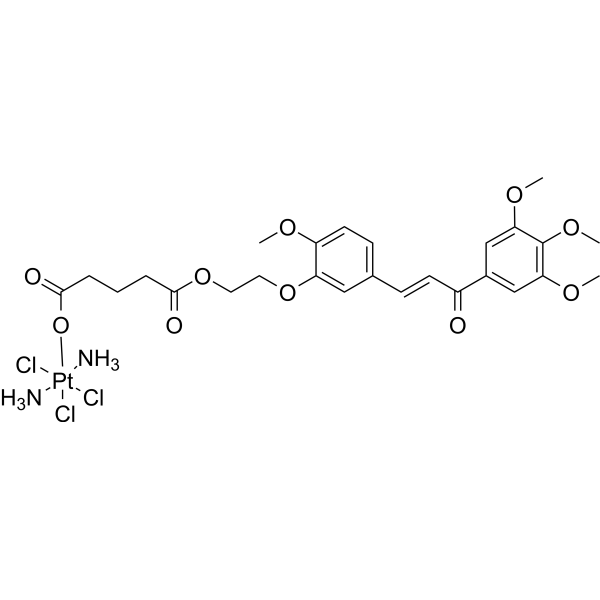
NF-κB-IN-16 (compound 9) is a complex (Pt(IV) complex) of NF-κB inhibitor and Cisplatin (HY-17394), which has high efficacy and low toxicity in anti-tumor activity. active. NF-κB-IN-16 can cause DNA damage, induce mitochondrial dysfunction, produce reactive oxygen species, and induce apoptosis through the mitochondrial pathway and endoplasmic reticulum stress. NF-κB-IN-16 potently inhibits the NF-κB/MAPK signaling pathway and disrupts PI3K/AKT signaling. NF-κB-IN-16 also exhibits excellent in vivo antitumor efficiency and low toxicity in A549 or A549/CDDP xenograft models .
loading...
    loading...

