8 Results for "

AcCoA

" in MedChemExpress (MCE) Product Catalog:
Products (8)

8 Results for "AcCoA" in MCE Product Catalog:

9
9 Cited Publications
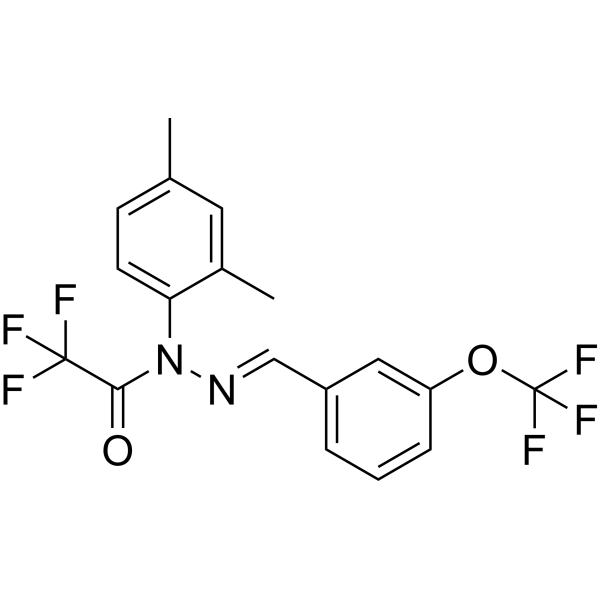
Cat. No.: HY-104032
CAS No.: 508186-14-9
Purity:  99.70%
Target:  

RSV

Research Areas:  

Infection Metabolic Disease

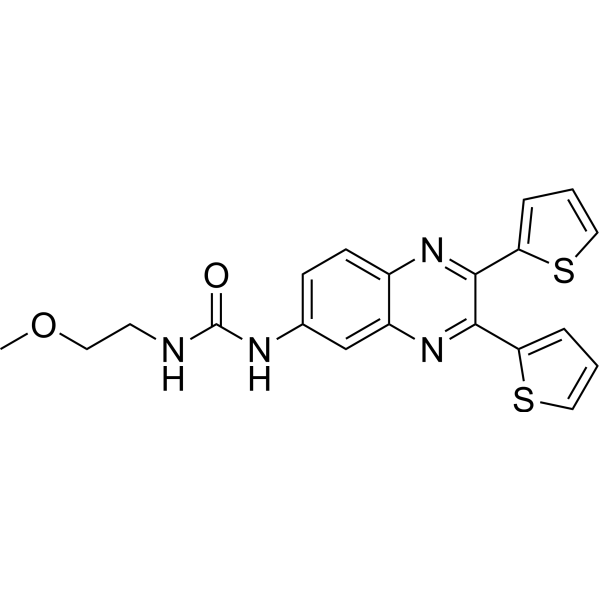
Ac-CoA Synthase-IN-1 is a potent, reversible acetate-dependent acetyl-CoA synthetase 2 (ACSS2) inhibitor with an IC50 of 0.6 μM . Ac-CoA Synthase-IN-1 inhibits the respiratory syncytial virus (RSV) .
loading...
    loading...
5
5 Cited Publications
Cat. No.: HY-145953
CAS No.: 1824637-41-3
Purity:  99.94%
Research Areas:  

Cancer

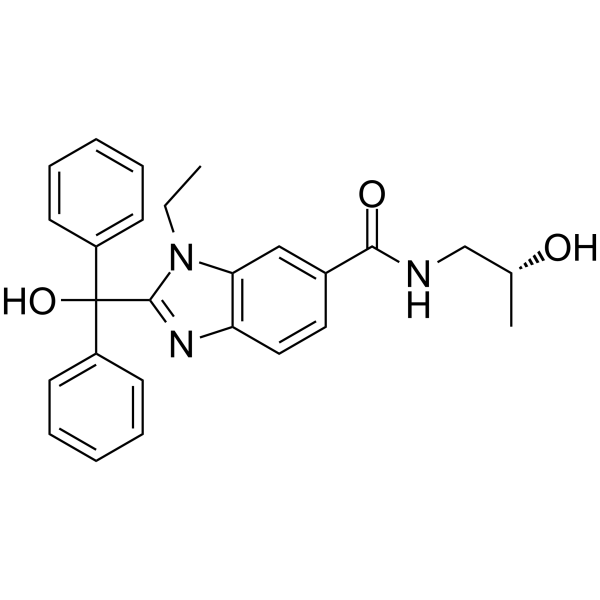
VY-3-135 is a potent, orally active, and stable ACSS2 inhibitor with an IC50 value of 44 nM. VY-3-135 is specific to ACSS2 among the AcCoA synthetase family of enzymes. VY-3-135 does not inhibit ACSS1 or ACSS3 enzymatic activity. VY-3-135 can be used for the research of breast cancer .
loading...
    loading...
Cat. No.: HY-156140
CAS No.: 2522920-65-4
Purity:  99.94%
Research Areas:  

Others

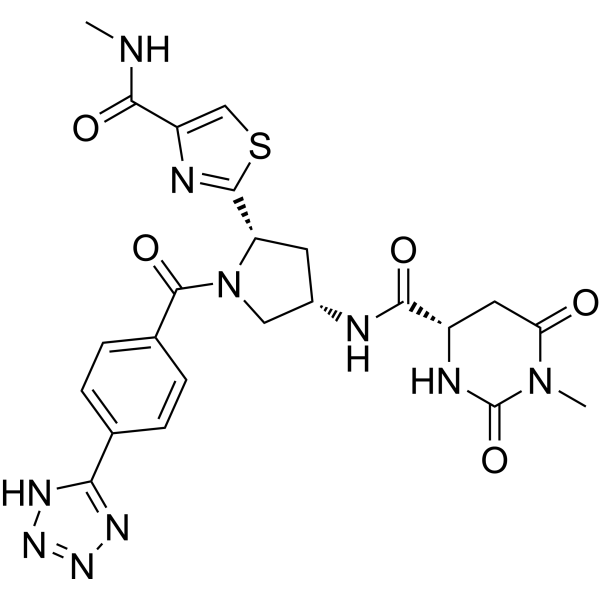
Naa50-IN-1 is an N-alpha-acetyltransferase 50 (Naa50) inhibitor with an IC50 of 7 nM against the human protein. Naa50-IN-1 exhibits selectivity toward the related enzymes Naa10 and Naa60. Naa50-IN-1 binds to the substrate-binding pocket of Naa50, and its binding affinity is enhanced by AcCoA .
loading...
    loading...
Cat. No.: HY-P2827
CAS No.: 9012-31-1
Synonyms: ACS
Target:  

Acetyl-CoA synthetase

Research Areas:  

Metabolic Disease

Acetyl-CoA synthetase (ACS) is a key enzyme that catalyzes the conversion of acetic acid to acetyl-CoA (Ac-CoA). Acetyl-CoA synthetase catalyzes the formation of a thioester bond between coenzyme A and carboxylic acid, while hydrolyzing ATP to AMP and pyrophosphate. Acetyl-CoA synthetase has two mammalian isoforms, mediates the only pathway for the conversion of free acetic acid to acetyl-CoA in mammals, serves as a marker gene for the Wood-Ljungdahl pathway, and catalyzes the exchange between carbonyl groups and CoA-acetyl-CoA. Acetyl-CoA synthetase can be used for studies of metabolism-related diseases .
loading...
    loading...
Cat. No.: HY-124609
CAS No.: 2071209-49-7
Purity:  99.39%
Research Areas:  

Neurological Disease

CAD031 is an orally active AMPK/ACC1 signaling pathway activator and a derivative of the Alzheimer's disease (AD) targeted agent J147 (HY-13779) (more active than J147 in human neural stem cell assays). CAD031 can cross the blood-brain barrier, activate AMPK and inhibit ACC1, thereby increasing ac-CoA levels, improving mitochondrial function and reducing free fatty acid synthesis. CAD031 has neuroprotective, neurogenesis-promoting and memory-improving activities and can be used in the study of Alzheimer's disease and aging-related neurodegenerative diseases. CAD031 effectively enhances the memory of mice, improves dendritic structure, and stimulates cell division in the germinal zone of the brain of elderly mice .
loading...
    loading...
Cat. No.: HY-183249
Research Areas:  

Infection

Ac-CoA Synthase-IN-2 is an Ac-CoA Synthase (ACS) inhibitor and antifungal agent. Ac-CoA Synthase-IN-2 binds in the ATP/acetyl-AMP pocket of fungal and human ACS enzymes to exert competitive inhibition with ATP, and inhibits Cryptococcus neoformans CnKbc1-mediated acetoacetate-to-aceto-acetyl CoA conversion. Ac-CoA Synthase-IN-2 can be used for the research of fungal infections .
loading...
    loading...
Cat. No.: HY-104032R
CAS No.: 508186-14-9
Target:  

Reference Standards RSV

Research Areas:  

Infection Metabolic Disease

Ac-CoA Synthase-IN-1 (Standard) is the analytical standard of Ac-CoA Synthase-IN-1 (HY-104032). This product is intended for research and analytical applications. Ac-CoA Synthase-IN-1 is a potent, reversible acetate-dependent acetyl-CoA synthetase 2 (ACSS2) inhibitor with an IC50 of 0.6 μM . Ac-CoA Synthase-IN-1 inhibits the respiratory syncytial virus (RSV) .
loading...
    loading...
Cat. No.: HY-114533
CAS No.: 104926-84-3
Target:  

Bacterial

Research Areas:  

Infection

GlmU-IN-1 is an inhibitor of the GlmU acetyltransferase domain in Escherichia coli and Haemophilus influenzae. GlmU-IN-1 acts as a competitive inhibitor of AcCoA and a non-competitive inhibitor of GlcN-1-P. GlmU-IN-1 targets the acetyltransferase domain of bacterial GlmU, interferes with the biosynthesis of UDP‑GlcNAc, and impairs bacterial cell wall integrity. GlmU-IN-1 can be used for the research of Gram-negative bacterial infections .
loading...
    loading...

